


Tankless Water Heater Installation in Allen: Is Your Home Ready?
Find out if tankless is right for your home before you buy, with the assessment, permits and code requirements covered.
What’s Covered on This Page
- Deciding Between Tankless and a Standard Tank Replacement
- What a Home Assessment Checks Before Installation
- Permits and Code Requirements for Allen Installations
- Gas vs. Electric Tankless: What Changes During Install
- What’s Included in Your Tankless Installation Quote
- How long does a tankless water heater installation take in Allen?
- Do I need to flush my tankless water heater regularly in Allen?
- Can a tankless water heater go in my attic in Allen?
- Will switching to tankless fix slow hot water at a far bathroom?
Deciding Between Tankless and a Standard Tank Replacement
Here’s the honest truth. Tankless isn’t the right choice for every home. It’s a great upgrade in the right house, and an expensive headache in the wrong one. Your job is to figure out which one you’ve got, and ours is to tell you straight.
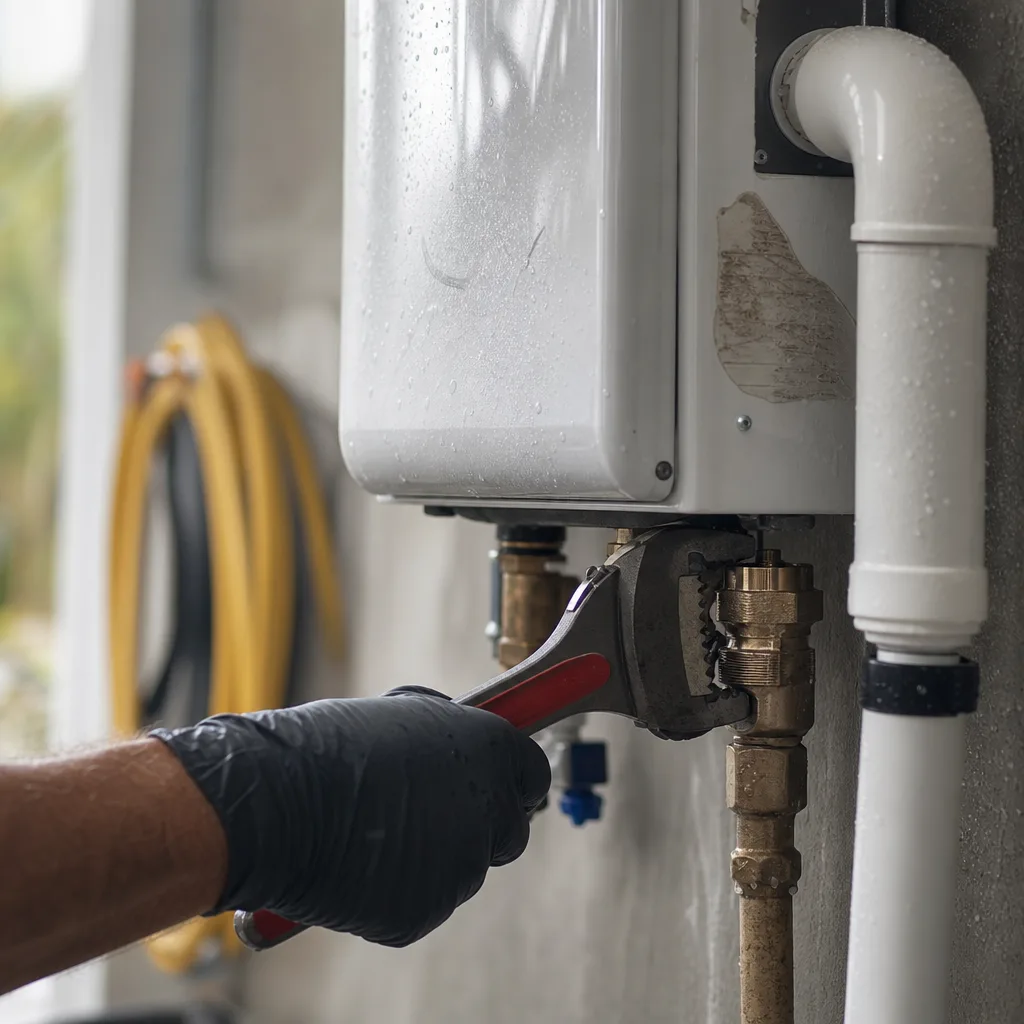
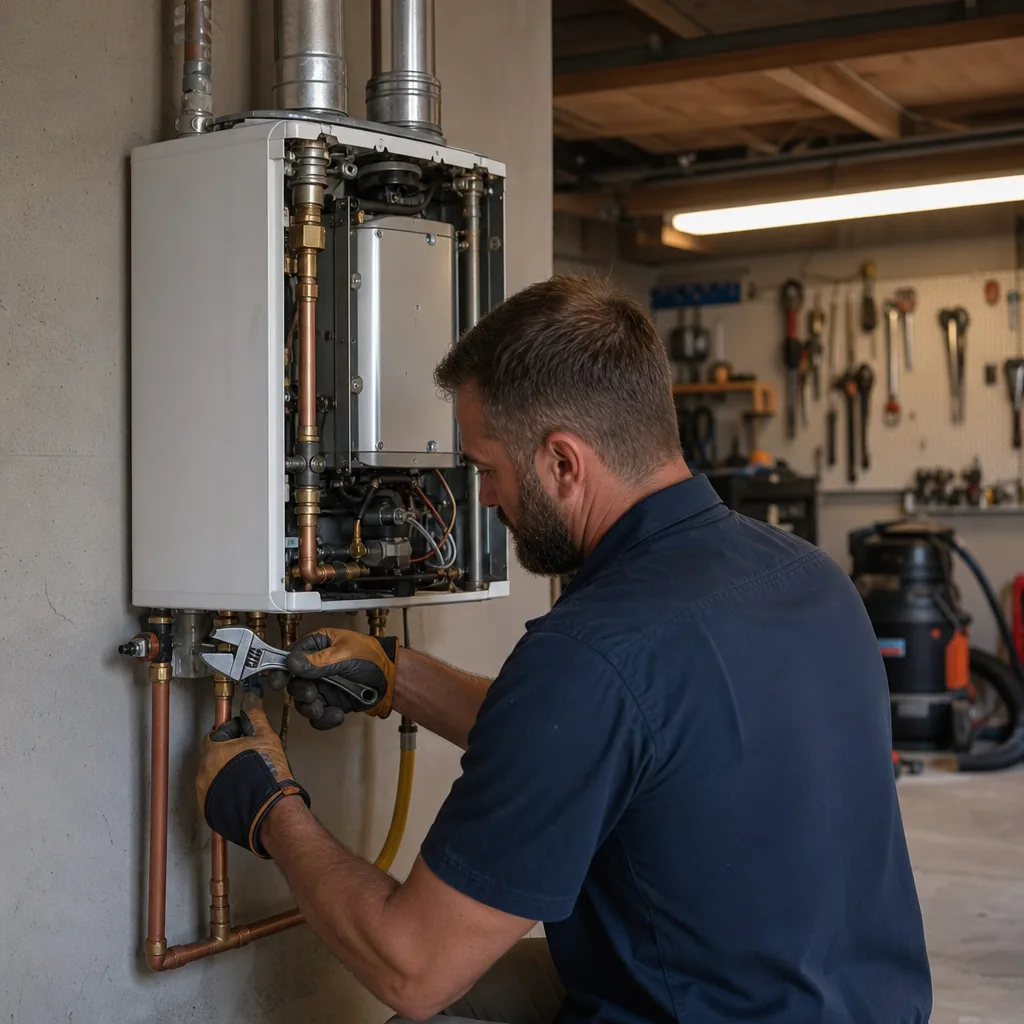
A tankless unit heats water only when you turn on a tap. There’s no big tank keeping 40 or 50 gallons hot all day. That means you don’t run out halfway through a shower, and you aren’t paying to reheat water nobody’s using. It also frees up the closet or garage corner the old tank took over.
Tankless tends to make sense when:
- Your family runs out of hot water with the tank you have now.
- You plan to stay in your home for years, so the higher upfront cost has time to pay you back.
- You already have a gas line and venting that can handle it, or you’re fine with upgrading them.
- You want the space back where your tank sits now.
A standard tank is often the better call when:
- Your tank just failed and you need hot water back today with the least work possible.
- You’re planning to sell soon and won’t be around long enough to see the savings.
- Converting would mean a bigger gas line, new venting through the roof or a wall, or electrical work your home isn’t set up for.
- Your household rarely runs more than one shower or appliance at a time, so a tank already keeps up fine.
The part most people don’t hear upfront is what changes when you switch from a tank to tankless. A gas tankless unit usually needs more gas than an old tank did, and it vents differently. That’s why our standard pricing notes that gas tankless includes venting, and why gas line, plumbing, or electrical changes, code corrections, and permits aren’t part of a simple like-for-like swap unless they’re stated. We’ll look at your setup and tell you exactly what your home needs before any work starts, with upfront flat-rate pricing so there’s no guessing.
There’s one more Allen factor worth thinking about. North Texas water is hard, and that mineral buildup is tough on any water heater. A tankless unit’s small heat exchanger feels it fast, so it needs regular flushing to keep working well. If scale is already showing up on your faucets and shower glass, pairing tankless with a water softener can help protect it. That’s not required, but it’s worth a conversation.
Still on the fence? That’s normal. If you’re not sure your gas line, venting, or hot water use fits tankless, our licensed and insured technicians can check it in person and give you an honest recommendation, even if that means sticking with a tank.
What a Home Assessment Checks Before Installation
A good assessment answers one question: can your home run a tankless unit well, and what will it take to get there? You should get that answer before anyone touches a pipe. Here’s what a careful look at your home should cover.
- Gas supply. Because tankless needs more gas than your old tank, the assessment checks your gas meter, the size and length of the line to the heater, and what else runs on gas at the same time. Your furnace, range, and dryer all pull from the same supply.
- Venting path. The old metal flue from a tank usually can’t be reused. The question is how far the new unit sits from an outside wall or the roof, and whether a clean vent route exists there.
- Electrical. A gas tankless unit needs a standard outlet nearby for its controls and fan. An electric tankless unit is a different story. It can need large dedicated circuits and enough room in your panel, so the panel gets checked before electric is even on the table.
- Where the unit will go. In many Allen homes the water heater sits in the garage or the attic. An attic spot needs freeze protection for North Texas cold snaps, a safe drain path, and enough room for someone to reach the unit for flushing.
- Sizing for your real hot water use. Tankless is sized by how many gallons per minute you need at once, not by tank size. Count your showers and appliances that might run together, then size for winter, when the water coming into your home is colder and the unit has to work harder.
- Existing plumbing. Shutoff valves, pipe condition, and water pressure all matter. Service valves for flushing are worth adding now, since hard water makes regular flushing part of owning tankless.
There’s one thing people often expect tankless to fix that it won’t. If you wait a long time for hot water at a far bathroom today, a tankless unit won’t shorten that wait on its own. The water still has to travel down the same pipes. If that wait bugs you, bring it up during the assessment so it’s part of the plan instead of a letdown later.
The assessment should also sort out whether your job is a simple like-for-like install or needs extra work, such as a bigger gas line, new venting, electrical changes, code corrections, or permits. That’s the line between the most common job range of $3,700-$5,100 and a higher number within the typical $3,000-$6,500 range. You should know which side of that line you’re on before you say yes.
If the panel turns out to be the sticking point, our electrical team handles electrical panel replacement and upgrades too, so you’re not juggling a second contractor.
There’s a $26-$99 service-call fee for the visit. It’s credited toward the job if you proceed with Xtreme Air Services. Financing is available on qualifying installations and larger jobs, on approved credit, if that helps you move forward with the right setup.
Permits and Code Requirements for Allen Installations
Swapping a tank for tankless isn’t just a plumbing job. It touches your gas line, your venting, and sometimes your electrical. In Allen, as in most North Texas cities, that kind of work generally calls for a permit through the city and an inspection once the unit is in. It’s the step people skip most often, and it’s the one that protects you most.
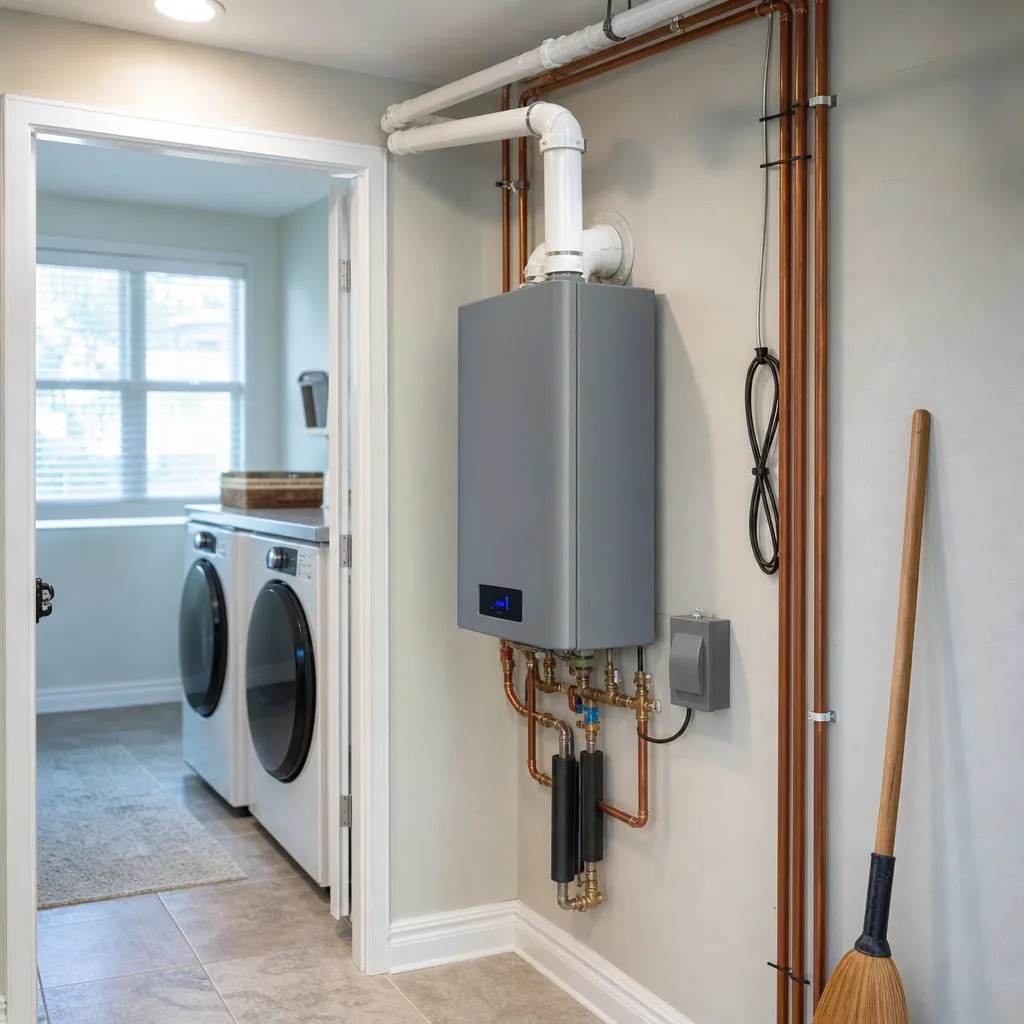
A permit isn’t a box to check. It means someone from outside the job looks at the work after it’s done. That second set of eyes matters when gas and exhaust are involved, because a small mistake you can’t see can turn into a real safety problem.
Here’s what code typically cares about on a tankless install:
- Vent route and where it ends. The vent has to run the way the maker’s instructions say, using the right pipe. It also has to end a safe distance from windows, doors, and air intakes so exhaust doesn’t drift back inside.
- Gas connection. That means a properly sized line, a shutoff valve right at the unit, and a sediment trap to catch debris before it reaches the burner.
- Pressure relief. Tankless units still need a relief valve, and its discharge line has to run somewhere safe, not just drip on the floor.
- Condensate drain. High-efficiency condensing models make a slightly acidic water. It needs a proper drain path, and often a neutralizer so it doesn’t eat away at pipes.
- Attic and garage rules. An attic unit usually needs a drain pan, a clear path to reach it, and room to service it. In a garage, how high the unit sits and how it’s protected from cars can matter.
On top of code, there’s the manufacturer’s installation manual. Inspectors check against it, and it spells out clearances, vent lengths, and gas requirements for that exact model. A unit that skips those steps may run fine at first, but it isn’t installed right.
Why should you care about paperwork? Picture selling your house in a few years. The buyer’s inspector spots a newer tankless unit and asks for the permit. If there isn’t one, you might be stuck scrambling to get it inspected after the fact, or fixing things to make it pass. A permit on file makes that conversation short. It can also help if you ever have an insurance claim tied to the water heater.
You don’t need to know every code rule yourself. You just need to ask a few simple questions before anyone starts:
- Who’s pulling the permit, and is it in the quote?
- Will the work be inspected, and will I get a copy of the result?
- Is the person doing the gas and plumbing work licensed?
If a contractor says you don’t need a permit for a gas tankless conversion, take that as a warning sign. As noted above, permits and code corrections aren’t part of our standard like-for-like price unless they’re stated. We’ll tell you upfront if your job needs them, so the cost is on the table before you decide, not added later. Our work is done by licensed and insured technicians, with plumbing handled under our master plumber, Larry Breedlove.
Ready when you are – get in touch today.
Call Today, Get Service Today. Xtreme Air Services — Allen is ready to help.
Gas vs. Electric Tankless: What Changes During Install
For most homes, the fuel you already have does most of the deciding. If your current water heater runs on gas, a gas tankless unit is usually the natural fit. If your home has no gas service, electric is the realistic path. The two installs look very different once the work starts, and knowing what changes helps you read a quote with clear eyes.
With gas, most of the work happens outside the unit itself. The new heater mounts on a wall instead of sitting on the floor, so the old tank comes out and the hookups get rerouted to the new spot. From there, three things usually change:
- Venting. This is the biggest physical change. A high-efficiency condensing unit typically vents through plastic pipe. A non-condensing unit needs a special metal vent made for its hotter exhaust. Either way, it’s a new run out a wall or through the roof, which is why gas tankless pricing includes venting.
- The gas line. If the assessment showed your line is too small for the new demand, that section gets replaced with a larger one. This is often what moves a job above the most common price range.
- Condensate. A condensing unit adds a drain line, and often a neutralizer, so the acidic water it makes has somewhere safe to go.
With electric, there’s no flue and no gas, so the install itself can look simpler. There’s no hole in the roof and no combustion to worry about. The heavy lifting moves to your electrical system. A whole-house electric tankless unit draws a lot of power the moment you open a tap, so it usually needs several large dedicated breakers and heavy wiring run straight from the panel. If your panel doesn’t have the room or capacity, that becomes part of the project.
There’s also a performance difference you’ll notice in January. When a cold front pushes through North Texas, the water coming into your home gets colder, and any tankless unit has to work harder to bring it up to shower temperature. Gas units generally handle that swing with more headroom. A whole-house electric unit can keep up in a smaller household, but two showers and a dishwasher on a cold morning may push it to its limit. That’s why electric often makes the most sense for smaller homes or for a single bathroom far from the main heater.
Here’s a simple way to picture it. Say you live in a gas-heated home and your tank sits in the garage near an outside wall. A gas tankless swap there is usually straightforward, because the vent run is short and the gas is already close. Now say your home is all electric with a panel that’s nearly full. Electric tankless is still possible, but the panel work may cost more than the heater itself.
Neither fuel is better in every house. A gas unit asks more of your venting and gas line. An electric unit asks more of your panel. Whichever one your home is already set up to support is usually the one that gives you the most hot water for the least disruption. Gas line, plumbing, or electrical changes aren’t part of a simple like-for-like swap, so we’ll tell you upfront which ones your home needs before you decide.
Watch Our Video
See How We Handle Tankless water heater installation in Allen
Xtreme Air Services — Allen
What’s Included in Your Tankless Installation Quote
A quote is only useful if you know what’s inside it. Two numbers can look close on paper and turn out very different once the work starts. Here’s what our standard tankless water heater installation covers, what it doesn’t, and what can move your price.
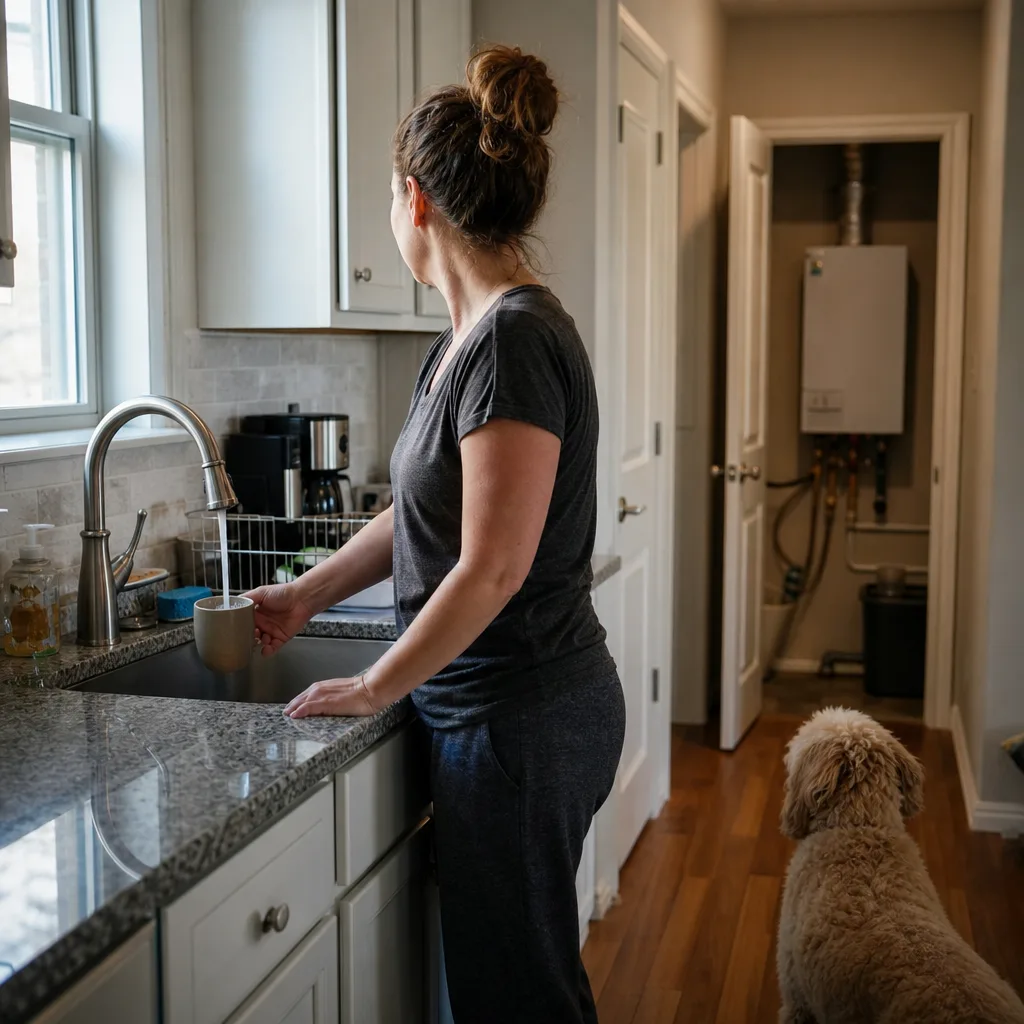
Our most common job is a like-for-like install that uses your existing connections with no major changes. That’s the $3,700-$5,100 range mentioned above. It includes:
- The equipment and materials, so the unit and the parts to hook it up are in the price.
- Professional installation by our licensed and insured team.
- Standard connections to your water and fuel supply.
- Startup and testing, so the unit is running and checked before the job is called done.
- Haul-away of your old tank. You won’t be left with a 50-gallon tank sitting in the garage or at the curb.
- Venting on gas tankless units, which is built into that pricing.
Some items aren’t part of the standard price unless your quote says so. These are duct, electrical, or plumbing modifications, code corrections, and permits. They aren’t hidden fees. They depend on your house, which is why the assessment comes first. If your gas line needs upsizing or your panel needs room for an electric unit, that shows up as its own line before you agree to anything.
Several things push a price up or down within the typical $3,000-$6,500 range:
- Size and capacity. A unit that can run three showers at once costs more than one sized for a smaller household.
- Efficiency. Higher-efficiency condensing models usually cost more upfront.
- Brand and model.
- Ease of access. A tight attic in July is a harder job than an open garage wall.
- The condition of your existing wiring and plumbing.
- Code upgrades and permits.
- Any custom fabrication your space needs.
Here’s where that matters. Picture two quotes on your kitchen counter. One comes in a few hundred dollars lower. Read the fine print and you might find it leaves out haul-away, the permit, or the venting. The lower number isn’t really lower once those come back as add-ons. Compare what each quote includes, not only the total at the bottom.
Before you sign anything, ask these questions:
- Is this the full price, or are there exclusions that apply to my home?
- Does it include removing and hauling off my old tank?
- What size unit is this, and how many fixtures can it run at once in winter?
- If something unexpected comes up, will I approve the cost before the work continues?
We give you upfront flat-rate pricing that you approve before work starts. There’s no meter running and no surprise line items at the end. Financing is available on qualifying installations and larger jobs, on approved credit, if spreading out the cost makes the right setup easier to choose.
Call 469-299-8996
Frequently Asked Questions
Common questions about Tankless water heater installation
How long does a tankless water heater installation take in Allen?
A straightforward like-for-like swap usually takes a day, but your timeline depends on your setup. If your gas line needs upsizing, new venting has to be run, or your panel needs electrical work for an electric unit, plan on extra time for those steps. The home assessment is what tells you which situation you’re in before work starts.
Do I need to flush my tankless water heater regularly in Allen?
Yes, and it matters more here than in many areas. North Texas water is hard, and that mineral buildup collects fast in a tankless unit’s small heat exchanger. Regular flushing keeps it working well, and if scale is already showing on your faucets or shower glass, it’s worth adding service valves during install to make flushing easier down the road.
Can a tankless water heater go in my attic in Allen?
Yes, many Allen homes put the tankless unit in the attic, but it needs extra protection there. An attic install needs freeze protection for our winter cold snaps, a safe drain path, and enough clearance for someone to reach the unit for regular flushing. A home assessment checks whether your attic can meet those needs before the unit goes in.
Will switching to tankless fix slow hot water at a far bathroom?
No, tankless alone won’t fix that. Hot water still has to travel through the same pipes to reach a distant bathroom, so the wait time stays about the same. If that delay bothers you now, bring it up during your home assessment so a solution can be planned alongside the install instead of becoming a surprise later.
Ready to Get Started?
Call (469) 299-8996 Today, Get Service Today.