


Generator Repair in Carrollton: Get It Fixed Right the First Visit
Standby and portable generators diagnosed and repaired, starting with the four failures we see most.
What’s Covered on This Page
- Signs Your Generator Needs a Repair Call Now
- The Four Faults Behind Most Generator Failures
- What Happens During a Generator Repair Visit
- What a Repair Visit Costs and What’s Included
- When Repair Makes Sense and When It Doesn’t
- How fast can you get to my house in Carrollton when my generator fails during an outage?
- Do you charge extra for an emergency or after-hours generator repair call?
- Is it worth repairing an older portable generator instead of a standby unit?
- Will you tell me if my generator just needs maintenance instead of a repair?
Signs Your Generator Needs a Repair Call Now
The best time to find a generator problem is before the power goes out. Most standby generators run a short self-test on their own, often once a week. That test is your early warning. If you notice something off during it, don’t wait for the next storm to find out how bad it is.
Call for a repair if you notice any of these:
- It skipped its weekly test. If you didn’t hear it run on its usual day, something stopped it.
- It clicks, cranks slowly, or won’t turn over at all. That usually points to a weak battery or a starting problem.
- It starts, then shuts itself off a few seconds or minutes later. That can be fuel, sensors, or the controls.
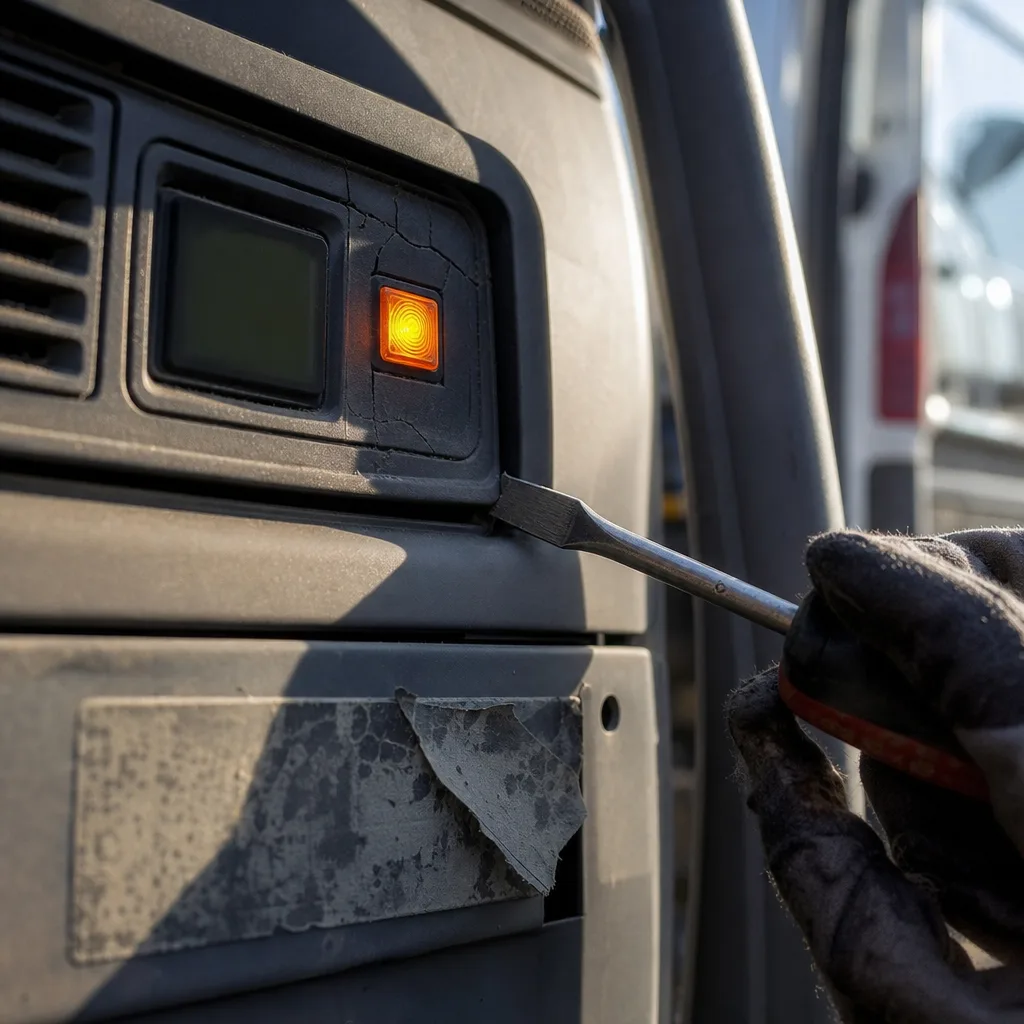
- The control panel shows a red light, an error code, or a service message you can’t clear.
- It runs during an outage but your home stays dark, or only part of it gets power. The generator may not be carrying load, or the transfer switch isn’t doing its job.
- Your lights flicker, dim, or surge while it runs.
- You hear new knocking, grinding, or rattling, or you see oil or fuel under the unit.
- You smell exhaust in your home or garage while it’s running. Treat that as urgent.
North Texas is hard on the parts that fail most. Long Carrollton summers bake the battery sitting inside that metal box, and heat wears batteries down faster. Then a hard freeze rolls in and a tired battery that limped through August can’t crank a cold engine. Spring storm season is when most folks find out, right when Oncor’s lines are down and they need backup the most.
Before you call, check two things yourself. First, look at the control panel and make sure it’s set to Auto, not Off or Manual. Someone may have bumped it during yard work or a filter change. Second, check the generator’s own main breaker and make sure it hasn’t tripped. If either one fixes it and the next weekly test runs clean, you’re fine.
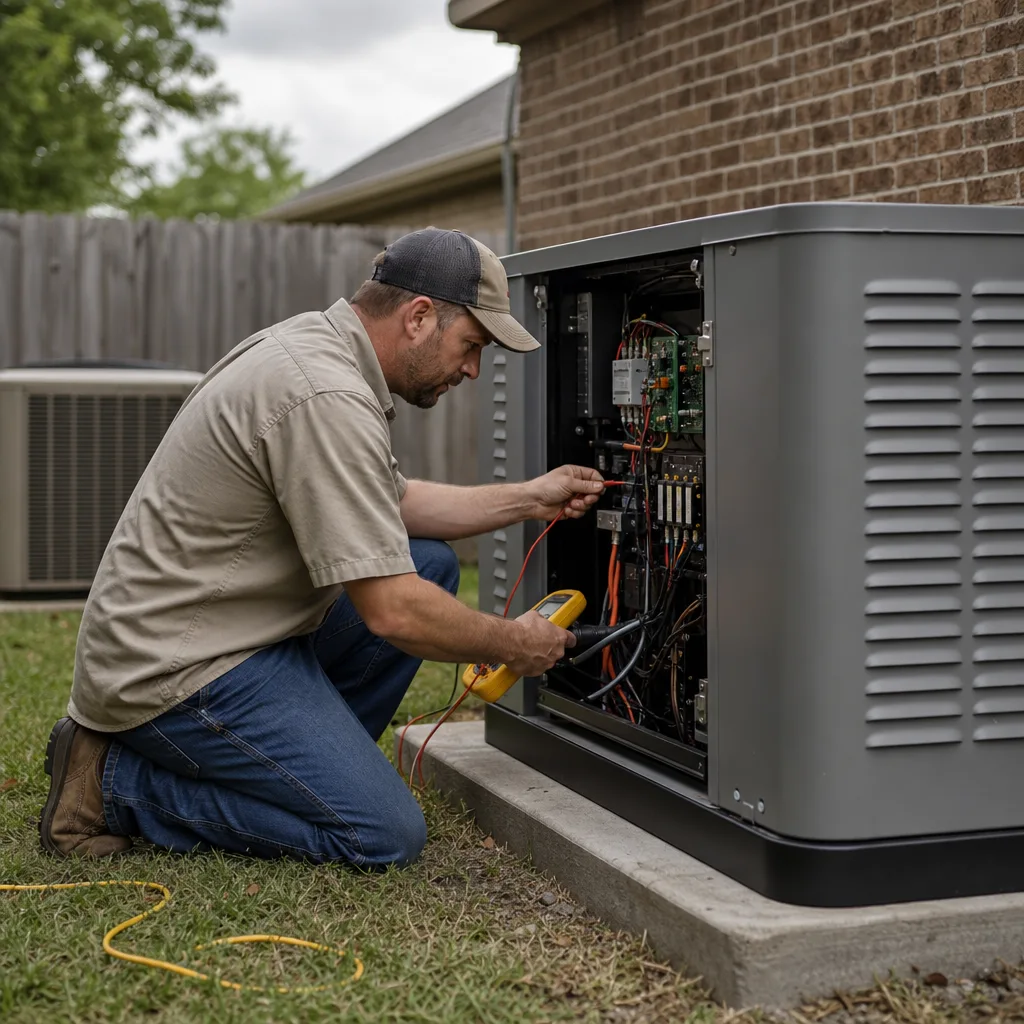
If those check out and the problem is still there, it’s time for a technician. A repair visit means finding the actual fault in the battery, fuel, controls, or starting system, replacing the part that failed, and then making sure the generator starts and carries your home’s load. Most calls are fixed on the first visit.
One more sign people miss: a generator that runs fine but hasn’t had service in a long time. It may pass its test today and still fail under a full load. If it’s been a while, our generator maintenance and load testing services can catch that before an outage does.
The Four Faults Behind Most Generator Failures
Most generator problems come down to four parts of the machine: the battery, the fuel supply, the controls, and the starting system. When one of them fails, the symptoms can look almost the same. A generator that won’t start might have a dead battery, or it might be getting no fuel. That’s why a good repair starts with finding the real fault instead of swapping parts until something works.
Here’s what each one means for your generator.
- The battery. Your generator has a battery that does one job: it cranks the engine and powers the controls when the grid goes down. It’s a lot like a car battery. As it wears out, it may still run the control panel and look fine, but it won’t have enough punch to turn the engine over. You already know North Texas weather is hard on it. Corroded or loose battery cables can cause the same trouble, even with a good battery.
- The fuel. Most home standby units in Carrollton run on natural gas or propane. If the generator isn’t getting enough fuel, it may crank and never catch, or start and then die once it tries to power your home. On propane, the cause can be as simple as a low tank or a closed valve. On natural gas, a regulator or fuel line problem can starve the engine. Portable and diesel units have another issue, because fuel that sits for months can go bad and gum up the works.
- The controls. The control board is the generator’s brain. It runs the weekly test, watches the sensors, and tells the generator when to start and stop. Severe thunderstorms bring lightning and power surges, and a surge can damage a control board or confuse a sensor. Bugs and small critters also like to nest inside warm outdoor equipment, and in Texas that includes fire ants, which can pack into electrical parts. A bad sensor can shut down a perfectly healthy engine because it thinks something is wrong.
- The starting system. This covers the parts that turn the engine over and light the fuel, like the starter motor, the spark plugs, and the parts that connect them. A worn starter often sounds like a click or a slow, tired crank. Fouled spark plugs can make the engine sputter or refuse to fire. Low oil can trip a safety shutdown, too. That shutdown is there to protect the engine, but it’ll keep your generator off until someone fixes the cause.
Sometimes two of these overlap. A weak battery can make the control board act up, or a fuel problem can look like a bad starter. Treating the symptom without finding the cause can leave you with a generator that passes one test and fails the next.
That’s why our generator repair visit covers three steps. We find the fault in the battery, fuel, controls, or starting system. We replace the part that failed. Then we verify that the generator starts and carries your home’s load. That last step is the one that matters most. A generator that only idles in the driveway hasn’t proven anything yet. You need to know it’ll keep your lights, fridge, and AC running when Oncor’s power is out.
What Happens During a Generator Repair Visit
A generator repair visit gets you two things before any work begins: a clear answer about what failed and a clear price to fix it. You’ll know what you’re paying before we pick up a tool, and you decide whether we go ahead.
A few minutes of prep on your end can make the visit go smoother:
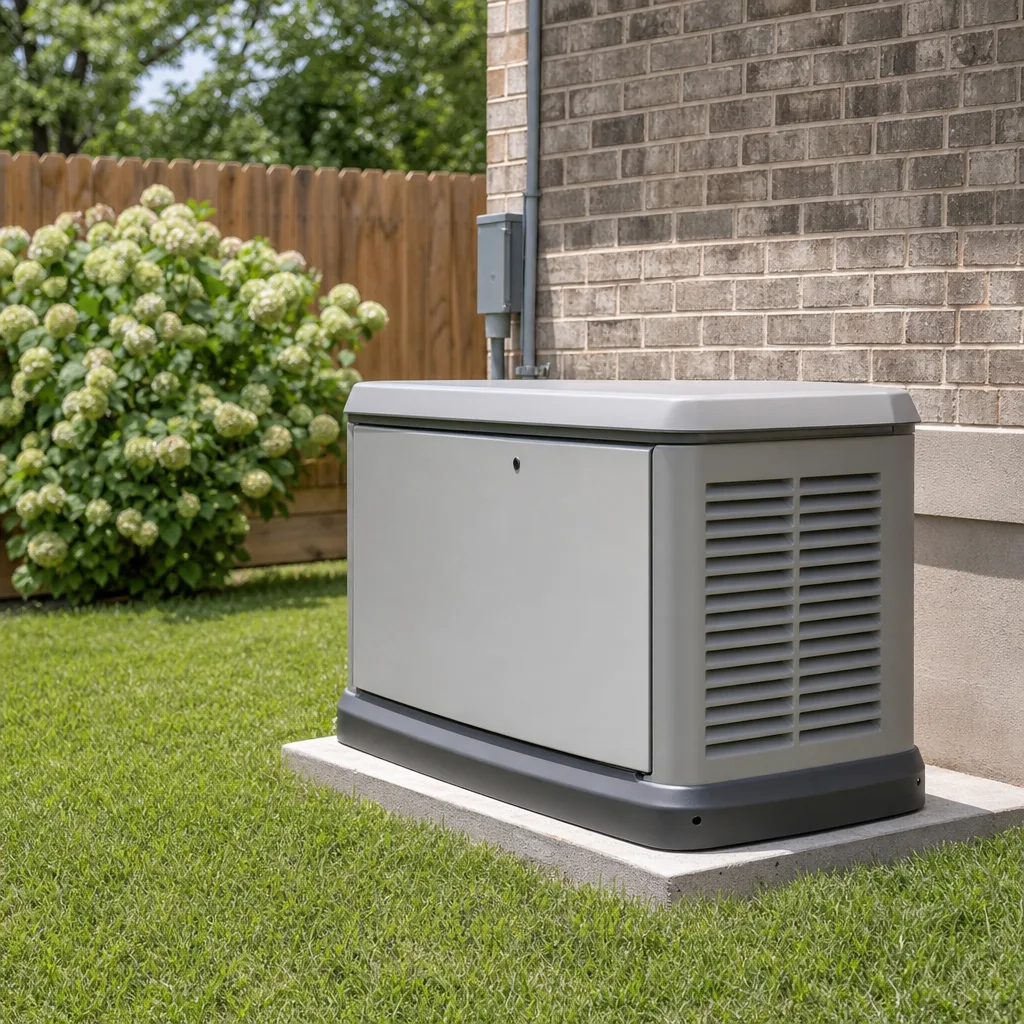
- Find the brand and model on the label on the generator. A phone photo works.
- Snap a picture of any error code or warning light on the control panel before it clears.
- Jot down what you noticed and when, like a missed weekly test or a shutdown halfway through an outage.
- Make sure your technician can reach the unit. Unlock the side gate, keep pets inside, and move anything stacked against the enclosure.
- If you’re on propane, check the tank gauge so we know where your fuel level stands.
Here’s what generator repair in Carrollton costs with us. There’s a $26 to $99 service-call fee, and it’s credited toward the repair if you go ahead with Xtreme Air Services. Our most common repair runs $200 to $525. That’s the visit where we track down a battery, fuel, control, or starting fault, swap the failed part, and confirm the generator carries your home’s load. Generator repairs overall typically fall between $200 and $900.
Where your repair lands in that range depends on a few things:
- What caused the failure
- Your generator’s brand and size
- How easy the needed part is to get
- How easy the unit is to reach
After-hours timing is often a cost driver in this trade, but not with us. We charge no extra for nights or weekends. That matters with generators, because they tend to let you down during an outage, and outages don’t wait for Monday morning.
Your repair price includes the diagnosis, the labor, the standard replacement part, and testing to prove the fix worked. It doesn’t include major components, full unit replacement, code upgrades, or permits. If your generator needs any of those, we’ll quote them separately so you can see that cost on its own and decide.
You’ll get upfront flat-rate pricing that you approve before work starts. There’s no meter running while your technician works and no surprise line on the bill. If the answer turns out to be bigger than a part swap, you’ll hear that straight, along with your options. Financing isn’t typically offered on a smaller repair like this, but it’s available on larger repairs and replacements if that’s where things end up.
The person who shows up is one of our licensed and insured technicians, background-checked and drug-tested, who’ll treat your home with respect. Same-day service is available, and most calls are fixed on the first visit. So in many cases, the generator that skipped its weekly test this morning is ready for the next storm by tonight.
Not sure what your Generator repair project needs? Ask us.
Call Today, Get Service Today. Xtreme Air Services — Carrollton is ready to help.
What a Repair Visit Costs and What’s Included
You’ve already seen our numbers. The harder question is whether any quote you get is fair, and whether your generator is worth fixing. Here’s how to judge both, whoever you end up calling.
Generator repair in this trade is usually priced one of two ways. Some companies bill by the hour plus parts. That means the final bill isn’t known until the work is done, and a slow diagnosis costs you more. Others use flat-rate pricing, where you get one price for the job before any work starts. With flat-rate pricing, you know the cost before you agree to the work. That’s the model we use, so a tricky fault takes our time, not your money.
Before you hire anyone, these questions will tell you a lot:
- Is the trip or service-call fee credited toward the repair, or is it extra?
- Will I get the full price before work starts, or is it billed by the hour?
- Does the price include testing the generator under load, or just getting it to start?
- Do you charge more for nights, weekends, or storm calls?
- What exactly failed, and can you show me?
- Are permits or code work part of this quote, or separate?
The load question matters most. A generator that idles in the yard can still fail the moment it has to run your AC. If a quote doesn’t include proving the unit carries your home’s power, you’re paying for half a repair.
Most repairs are a single failed part: a battery, a sensor, a starter, or a fuel part. Those land in the common range. The bill climbs when the problem is a major component, or when an older generator needs parts that are hard to find. In those cases, we’ll give you a separate quote. Nothing gets added to your bill without your OK.
So when does a repair stop making sense? A few honest signs point toward replacement instead:
- The same generator keeps failing, with a different part each time.
- Parts for your model are hard to get, so every repair means a long wait.
- Your home has added big loads since the generator went in, like a second AC unit or an EV charger, and the unit can’t keep up.
- The repair quote for a major part is close to what a new unit would cost to install.
If none of those fit, a repair is almost always the smarter money. If one does, we’ll lay out both paths side by side and let you choose. Financing is available on larger repairs and replacements, so a bigger answer doesn’t have to be a budget emergency. If replacement makes more sense, our whole-home standby generator installation and generator sizing services can help you get a unit that fits your home.
Call 469-269-6099
Watch Our Video
See How We Handle Generator repair in Carrollton
Xtreme Air Services — Carrollton
When Repair Makes Sense and When It Doesn’t
Not every generator problem needs a repair technician. Sometimes the fix is a phone call to someone else, or a little patience. Here’s when you can save the service-call fee.
The tank is empty or the gas is off. If you’re on propane and the gauge reads near empty, call your propane supplier first. A generator with no fuel will act broken, but nothing inside it has failed. The same goes for natural gas. If your gas service is off, or your stove and water heater won’t light either, the problem is upstream of the generator. Your gas utility handles that, not us. Once fuel is flowing again, let the next weekly test run. If it starts and runs clean, you’re done.
The light means service is due, not that something broke. Many control panels show a reminder when it’s time for routine upkeep, like an oil change or a filter. That’s not a failure, and it doesn’t call for a repair. Check your owner’s manual to see what the light or code means. If it’s a maintenance reminder, book a regular generator maintenance visit instead. It’s the right service for the job, and it costs less than chasing a fault that isn’t there.
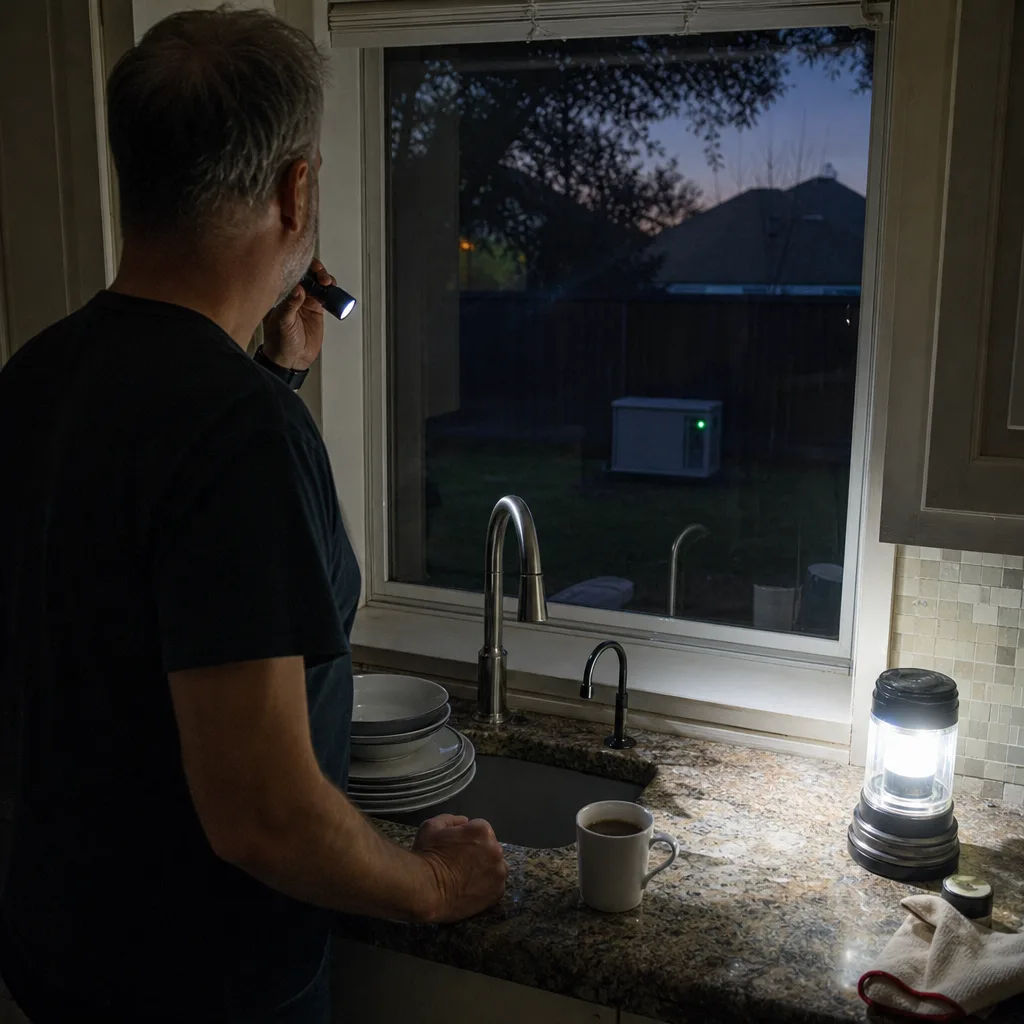
The generator is fine, but your house isn’t. Say the generator starts, runs, and the panel shows no errors, but one room or one outlet stays dead during an outage. That often points to a breaker or wiring issue inside your home, not the generator. That’s electrical troubleshooting, which is a different visit. If your home is one of Carrollton’s older houses that’s had additions over the years, a circuit may never have been hooked to backup power at all. That’s a setup question, not a broken part.
It’s a small portable unit. A basic portable generator from the hardware store is a different machine from a standby unit bolted to a pad beside your house. If a small portable won’t start after sitting all winter, old fuel is a common cause. Your owner’s manual covers basic care. For a low-cost portable, a professional repair can cost close to what the unit is worth, so be honest with yourself about whether it’s worth fixing at all.
Waiting is fine when the problem happened once and then cleared. If your generator ran its weekly test fine, kept up through a short outage, and threw one odd code that went away on its own, you don’t have to rush. Write down what you saw and when. Then watch the next couple of tests. If it comes back, or you see any of the warning signs from earlier on this page, that’s your cue.
Waiting isn’t fine if you smell exhaust inside, see fuel leaking, or the generator won’t start and a storm is on the way. Those don’t get better on their own, and you’ll want your backup working before the lights go out, not after.
Frequently Asked Questions
Common questions about Generator repair
How fast can you get to my house in Carrollton when my generator fails during an outage?
We offer same-day service, six days a week, so you’re not stuck waiting days for power to come back. Most repairs get fixed on the first visit, which matters most when Oncor’s lines are down and a storm just rolled through North Texas.
Do you charge extra for an emergency or after-hours generator repair call?
No, we don’t charge extra for nights or weekends. Generators tend to fail during an actual outage, and outages don’t wait for regular business hours, so your price stays the same any time you call.
Is it worth repairing an older portable generator instead of a standby unit?
It depends on what the repair costs compared to what the unit is worth. For a low-cost hardware store portable, a professional repair can run close to the price of a new one, so weigh that before you book a visit.
Will you tell me if my generator just needs maintenance instead of a repair?
Yes, if your control panel is showing a routine service reminder rather than a real fault, we’ll point you to a regular maintenance visit instead. That costs less than paying for a repair call to chase a problem that isn’t there.
Ready to Get Started?
Call (469) 269-6099 Today, Get Service Today.