


Transfer Switch Installation in Carrollton: Automatic or Manual?
Automatic or manual transfer switches installed to code, so your generator powers your home safely.
What’s Covered on This Page
- Automatic vs. Manual Transfer Switch: Which One Fits Your Home
- Why Panel Condition Decides What Your Installation Needs
- What Happens During a Transfer Switch Installation
- Why This Is Licensed Electrical Work, Not a DIY Project
- What Drives Transfer Switch Installation Costs
- How far can the generator sit from the transfer switch?
- Can I install a whole-house transfer switch myself?
- Do I need a permit for a transfer switch in Carrollton?
Automatic vs. Manual Transfer Switch: Which One Fits Your Home
Both kinds of switch do the same core job. They keep your home cut off from the utility lines while the generator runs, and they let you switch back safely when the power returns. The difference is who does the switching: you or the switch.
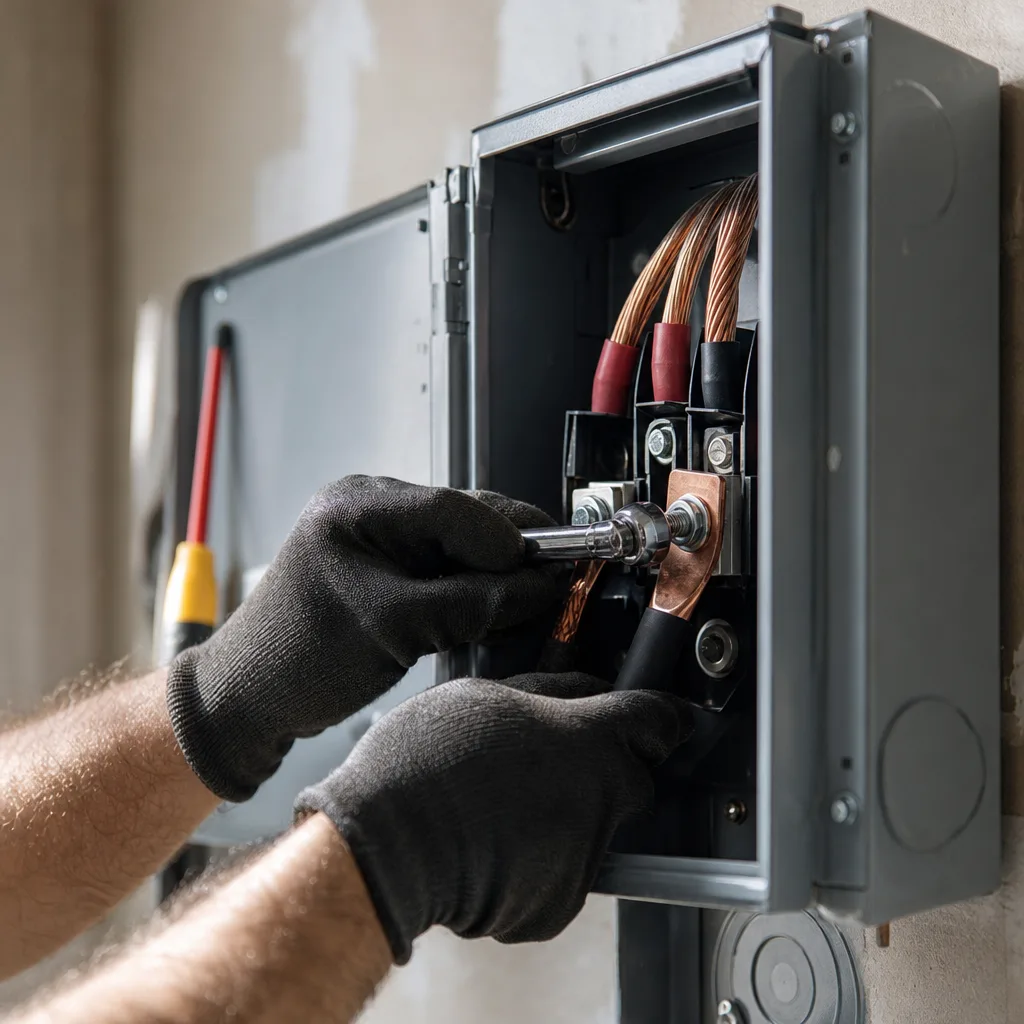
A manual transfer switch puts you in charge. When the lights go out, you roll the portable generator outside, start it, and plug it into an inlet box on the outside wall. Then you flip the switch at the panel and turn on the circuits you picked ahead of time. Those are usually things like the fridge, the furnace fan, a few lights, and the Wi-Fi.
An automatic transfer switch handles all of it on its own. It watches the utility power. When the power drops, it tells your standby generator to start, then moves your home over to generator power, usually within seconds. When the grid comes back, it switches you back and lets the generator cool down and shut off. You don’t have to be home, and you don’t have to go outside.
- A manual switch fits if you have a portable generator, you’re usually home during storms, and you’re fine with a few minutes of hands-on work to get power back.
- A manual switch fits if outages at your house are rare and short, and you only need the basics running.
- An automatic switch fits if you have or plan to buy a standby generator. Most portable generators can’t start themselves, so an automatic switch won’t do much for them.
- An automatic switch fits if someone in your home depends on powered medical equipment, or if an older family member would struggle to start a generator alone.
- An automatic switch fits if you travel and want the house protected while you’re away. That matters during a North Texas hard freeze, when losing heat can put your pipes at risk.
Here’s the honest part. Plenty of homes don’t need an automatic switch. If you already own a good portable generator and you’re fine heading out to the side yard during a storm, a manual switch is a safe and solid setup. Spending more only makes sense if hands-off backup really matters to your family.
Think about what you lose when the power’s out. In a Texas summer, that might be the AC on a 100-degree afternoon. In winter, it could be the furnace during an ice storm. Picture the last outage at your house. If you were home and could have handled a generator, manual will likely serve you well. If you were at work, out of town, or you’d rather not deal with it at all, automatic is the better match.
Switch type is one of the things that changes what the job costs, along with how many circuits you want covered. If you’re still deciding on the generator itself, our team also handles whole-home standby generator installation, portable generator hookup, and generator sizing. That way the switch and the generator get planned together and match.
Why Panel Condition Decides What Your Installation Needs
Your transfer switch is only as good as the panel it connects to. The switch decides which circuits get generator power, but your electrical panel is where that power goes. If the panel is crowded, worn out, or too small for the load, the job changes. That’s why two homes on the same street can get very different quotes for what sounds like the same work.
Here’s what matters most about your panel:
- Open space. A transfer switch needs room to connect. If every breaker slot is full, the circuits you want backed up may need to be moved around, or you may need more space added before the switch can go in.
- Capacity. Your panel has an amp rating, which is the most power it’s built to handle. If you’ve added things over the years, like a pool pump, a hot tub, or an EV charger, the panel may already be near its limit.
- Age and condition. Rust, scorch marks, loose or warm breakers, and wires doubled up under one breaker are all warning signs. Older panels can also be hard to find matching breakers for.
- Labeling. If your breakers aren’t marked, nobody can be sure which circuit runs the fridge and which runs the bedroom. Sorting that out comes first.
You can check a few of these yourself. Open the panel door and look. Do you see empty slots, or is every space taken? Are the labels readable? Have you noticed lights dimming when the AC kicks on, or a breaker that trips over and over? None of that means you can’t get a transfer switch. It just tells you the panel needs a closer look before the switch goes in.
In Carrollton, that matters because homes here range from older established houses to newer subdivisions. A newer home with open slots and clear labels is usually a simple hookup. An older panel that’s carried decades of add-ons may need work first, so the generator doesn’t run into the same weak spots.
Here’s how the money works, plainly. Our most common transfer switch installation runs $700 to $1,100, and our typical range is $500 to $1,500. That covers the transfer switch and materials, professional installation, connections, and testing. It doesn’t include the generator, panel upgrades, code corrections, or permits unless stated. Panel condition and space are among the biggest reasons a price lands higher or lower, along with distance to the generator and any code upgrades your home needs.
You’ll know where you stand before any work starts. With upfront flat-rate pricing, you approve the price first, so you’re not finding out about a panel problem halfway through the job. If your panel does need help, our licensed electricians also handle electrical panel replacement and upgrades and subpanel installation. Financing is available on qualifying installations and larger jobs, on approved credit, if a panel upgrade turns a small project into a bigger one.
A healthy panel means your generator power lands where it should, every time the lights go out. Getting that part right is what makes the whole backup setup worth having.
What Happens During a Transfer Switch Installation
Most transfer switch jobs finish the same day. You’ll be without power for part of that day, but not for long, and you won’t have walls torn open. Here’s how a typical installation goes, start to finish.
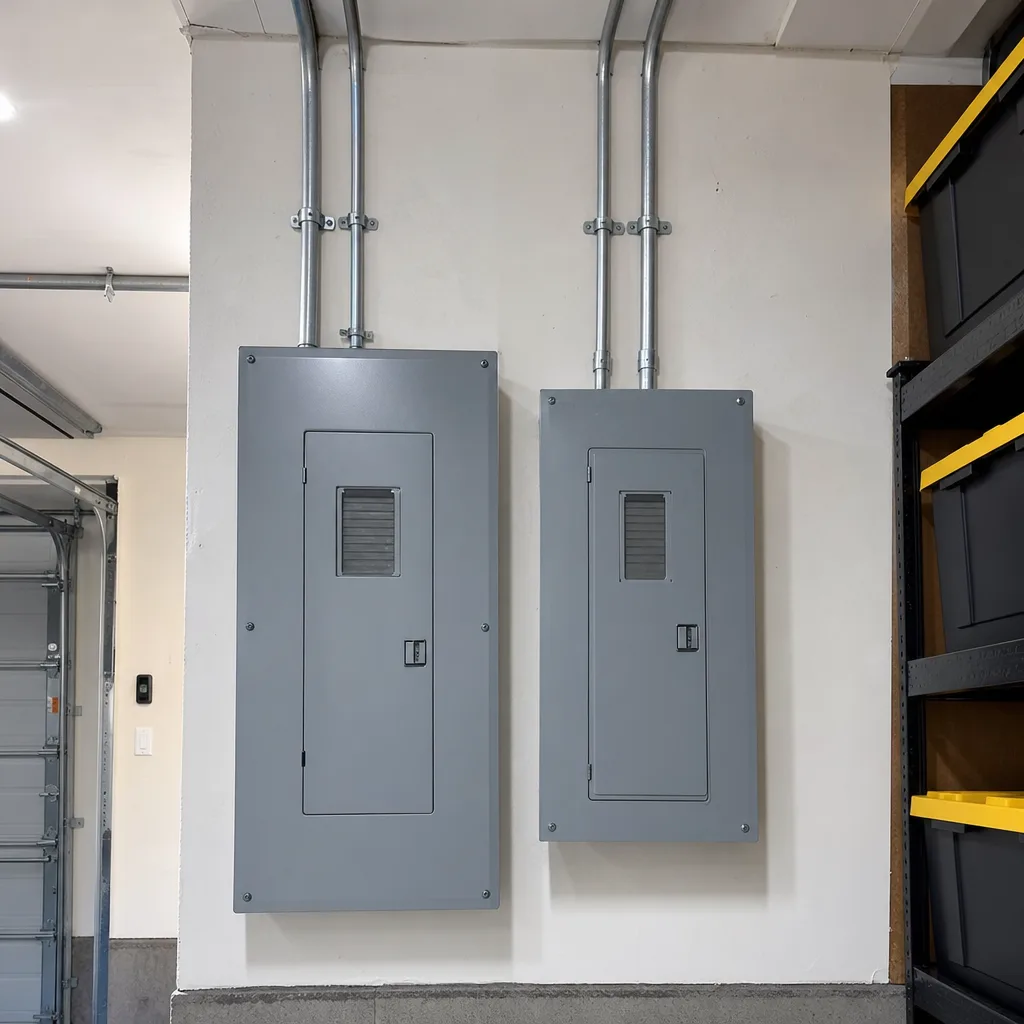
It starts with a walk-through. The technician looks at your panel, where the generator sits or will sit, and the path between the two. This is also when you talk about which circuits matter most to you. For a manual switch, that means picking a short list. For an automatic switch paired with a standby generator, it may mean most of the house. With upfront flat-rate pricing, you see and approve the price before any work begins.
After that, the work itself usually follows this order:
- Power goes off. The main breaker is shut off so the panel is safe to work in. This is the stretch when your lights, fridge, and Wi-Fi are down.
- The switch gets mounted. It usually goes on the wall right beside your panel so the wiring runs are short and neat.
- Circuits get moved over. The circuits you chose are wired through the transfer switch, so they can take power from either the utility or the generator, but never both at once.
- The generator connection goes in. A portable setup gets an inlet box on an outside wall where you’ll plug in the cord. A standby setup gets wired straight to the generator, often through conduit along the outside of the house. The farther the generator sits from the panel, the longer this part takes.
- Power comes back on. The main breaker is turned back on and your home runs on utility power like normal.
Testing is the part that counts. A transfer switch that looks right on the wall still has to prove itself. The system gets run as if the power just went out, to confirm the switch moves your home to generator power and that each chosen circuit comes on. With an automatic switch, that means watching it sense the outage, start the generator, and switch back once utility power returns. Testing is included in the job, not an add-on.
Before the technician leaves, ask them to walk you through it. If you have a manual switch, practice the steps once while it’s daylight and calm outside. That’s far easier than learning in the dark during a storm.
A little prep makes the day go smoother:
- Clear a path to your panel and the outside wall near it. Garage shelves and boxes are the usual blockers.
- Write down your must-have circuits ahead of time, like the fridge, a bedroom, or medical equipment.
- Plan around the outage. Charge your phones, and if you work from home, pick a time when a few hours offline won’t hurt.
- Ask about permits. They aren’t included in the price unless the quote says so, so it’s worth knowing up front how they’ll be handled for your address.
If you book a visit first, the $26 to $99 service-call fee is credited toward the job when you go ahead with Xtreme Air Services. Our licensed and insured, background-checked technicians treat your home like family, so you can relax while the work gets done right the first time.
Thinking about Transfer switch installation? Let’s talk.
Call Today, Get Service Today. Xtreme Air Services — Carrollton is ready to help.
Why This Is Licensed Electrical Work, Not a DIY Project
If you’re handy, it’s fair to ask why you can’t wire this yourself. The short answer is that a transfer switch exists to stop one specific danger. If the switch is installed wrong, it can create that same danger, and you won’t know until the power goes out.
That danger is called backfeed. Some people plug a generator into a dryer outlet with a cord that has a plug on both ends. Power from that generator doesn’t just stay in your house. It can flow back out through your meter and onto the utility lines. The transformer on your street can then boost that power to a much higher voltage. An Oncor line worker fixing the outage may think that line is dead. It isn’t. When utility power comes back on, that same setup can also wreck your generator or start a fire in your wiring.
That double-plug cord has its own problem. Once the generator is running, the metal prongs on the loose end are live. One slip and you’re holding a live wire.
Even with your main breaker off, parts of your panel stay energized. The big wires coming in from the meter are still live, and only the utility can shut them off. Those are the parts you’d be working right next to. Here’s what else has to be right:
- Wire size. The wires have to match the breaker and the generator’s output. Wires that are too small for the load heat up inside your walls.
- Neutral and ground. How these get handled depends on your generator and the type of switch. If they’re done wrong, you can get shock hazards or a generator that keeps tripping.
- The generator connection. The inlet box, cord, and breaker all have to be rated for what your generator can put out.
There’s also the paperwork side. Texas licenses electricians through the Texas Department of Licensing and Regulation (TDLR). Work that ties a generator into your home’s wiring often needs a permit and an inspection from the city. Ask how permits will be handled for your Carrollton address before work starts. Unpermitted electrical work can lead to awkward questions later from an insurance adjuster or a home buyer’s inspector.
Here’s the honest part. You may not need a transfer switch at all yet. Say you only want to keep a fridge and a lamp going during a short outage. You can run heavy-duty extension cords from a portable generator straight to those items, without touching your panel. It’s less convenient, but it’s a fair stopgap.
You can also do a lot of the planning yourself:
- Pick the circuits you can’t live without.
- Find the wattage on your generator’s label.
- Keep the owner’s manual handy for the technician.
That homework saves time on install day. The wiring itself should go to someone licensed.
Call 469-269-6099
Watch Our Video
See How We Handle Transfer switch installation in Carrollton
Xtreme Air Services — Carrollton
What Drives Transfer Switch Installation Costs
You’ve already seen our price range and what it covers. Where your home lands in that range depends on a few things you can mostly figure out before anyone shows up. Here’s what moves the number, and why.
- Switch type. A manual switch for a portable generator is the simpler setup. An automatic switch for a standby generator has more parts and more wiring, so it costs more to put in.
- Number of circuits. A manual switch that backs up six or eight circuits is a smaller job than one that covers most of the house. Every circuit you add has to be moved over and tested, so a longer must-have list means more work.
- Distance to the generator. A short run from the panel to an inlet box on the same wall is quick. A standby generator on the far side of the house needs a longer wire run, and often conduit along the outside wall. More wire and more labor raise the price.
- Code upgrades. When a licensed electrician opens your panel, anything that doesn’t meet current code has to be fixed before the job can pass. That might be grounding that isn’t up to today’s standard or older wiring near the panel. Code corrections are priced separately, so you’ll hear about them before any work starts.
- Permits. Permits aren’t included unless your quote says so. Ask how the permit and inspection will be handled for your Carrollton address so it’s part of the plan from day one.
Panel condition is the other big one, and we covered it above. A crowded or aging panel can turn a simple hookup into a two-part project.
Picture two homes. The first has a newer panel with open slots, a portable generator, and a short list of circuits, like the fridge, the furnace fan, a few lights, and the Wi-Fi. That job tends to land toward the lower end. The second has a standby generator set back by the fence, wants the AC covered, and has an older panel that’s been added onto for years. That job lands higher. It’s not because anyone’s padding the bill. There’s simply more work involved.
Whoever you hire, a few questions will tell you a lot before you sign anything:
- Is this a flat price, or will it change once the work starts?
- Which circuits will the switch cover, and is that written in the quote?
- Who pulls the permit, and is that cost included?
- If you find a code problem in my panel, how will you tell me, and what will it cost?
- Is testing included, and will you show me how to use the switch before you leave?
Clear answers to those questions are a good sign. If the answers stay vague, that usually means the price will be vague too.
With us, you get upfront flat-rate pricing that you approve before any work begins, and there’s no extra charge for nights or weekends. If something in your panel needs attention, you’ll hear it from us first, in plain English.
Call now
Frequently Asked Questions
Common questions about Transfer switch installation
How far can the generator sit from the transfer switch?
The shorter the distance, the simpler the job, but a standby generator can sit farther away using conduit run along the outside wall. A short run to an inlet box on the same wall as your panel is the quickest setup. Once the generator sits on the far side of the house, you need more wire and often more labor, which adds to the cost. Your technician will look at the path between the panel and the generator during the walk-through before giving you a price.
Can I install a whole-house transfer switch myself?
No, this should go to a licensed electrician because a wrong connection can cause backfeed. Backfeed happens when generator power flows back out through your meter onto utility lines, which can injure an Oncor line worker who thinks the line is dead. Even with your main breaker off, the wires coming in from the meter stay live, and only the utility can shut those off. Texas licenses electricians through the Texas Department of Licensing and Regulation, and this type of work often needs a permit and inspection too.
Do I need a permit for a transfer switch in Carrollton?
Usually yes, since wiring a generator into your home’s panel is electrical work that often requires a city permit and inspection. Permits aren’t included in a transfer switch quote unless it’s stated upfront, so ask how it will be handled for your address before work starts. Unpermitted work can also cause problems later with an insurance adjuster or a home buyer’s inspector.
Ready to Get Started?
Call (469) 269-6099 Today, Get Service Today.