


Slab Leak Repair in Carrollton: Know What’s Wrong Before You Pay to Fix It
Leaks under your slab located and fixed with a spot repair or a reroute – whichever is right for your home.
What’s Covered on This Page
Signs You Have a Slab Leak
Most Carrollton homes, like most homes across North Texas, sit right on a concrete slab. Your water lines run underneath it or through it. When one of those lines springs a leak, you can’t see the pipe. You only see what the water does on its way out.
Here’s what to watch for:
- A water bill that jumps when your habits haven’t changed. A small leak running day and night adds up fast.
- The sound of running water when every faucet, toilet, and appliance is off. It’s often easiest to hear at night when the house is quiet.
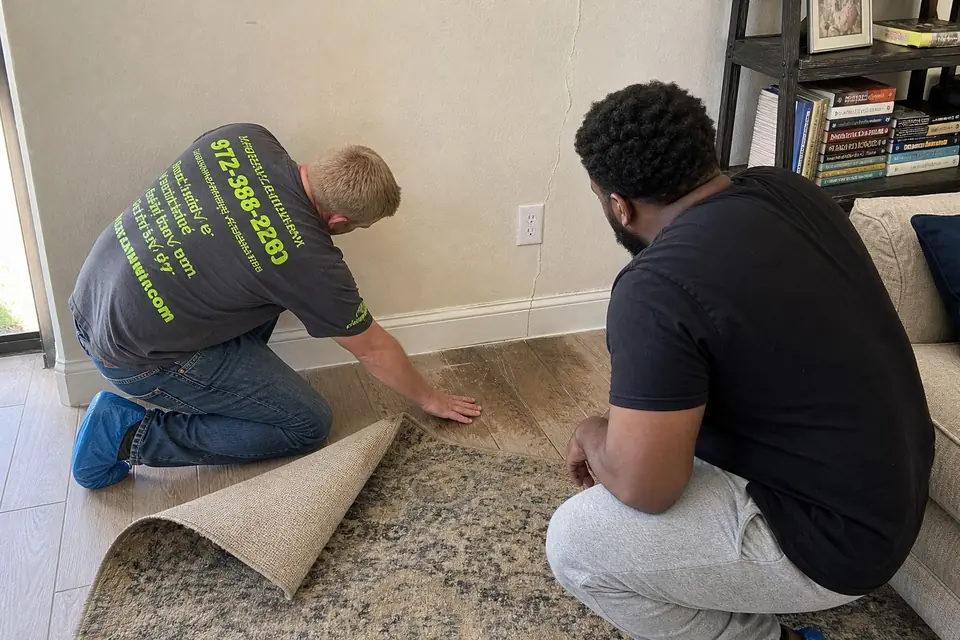
- A warm spot on the floor. If a hot water line is leaking, the concrete above it heats up. Bare feet often notice it before your eyes do.
- Damp carpet, cupped or warped wood floors, or loose and cracked tile with no spill or plumbing fixture nearby.
- A musty or mildew smell in one area that doesn’t go away after cleaning.
- Lower water pressure at your faucets or shower.
- A water heater that seems to run all the time, which can happen when hot water is leaking away under the slab.
- New cracks in the floor or walls. North Texas clay soil swells when it’s wet and shrinks when it dries, so a steady leak can make the ground under your home move.
One sign alone doesn’t prove much. Two or three together are worth taking seriously.
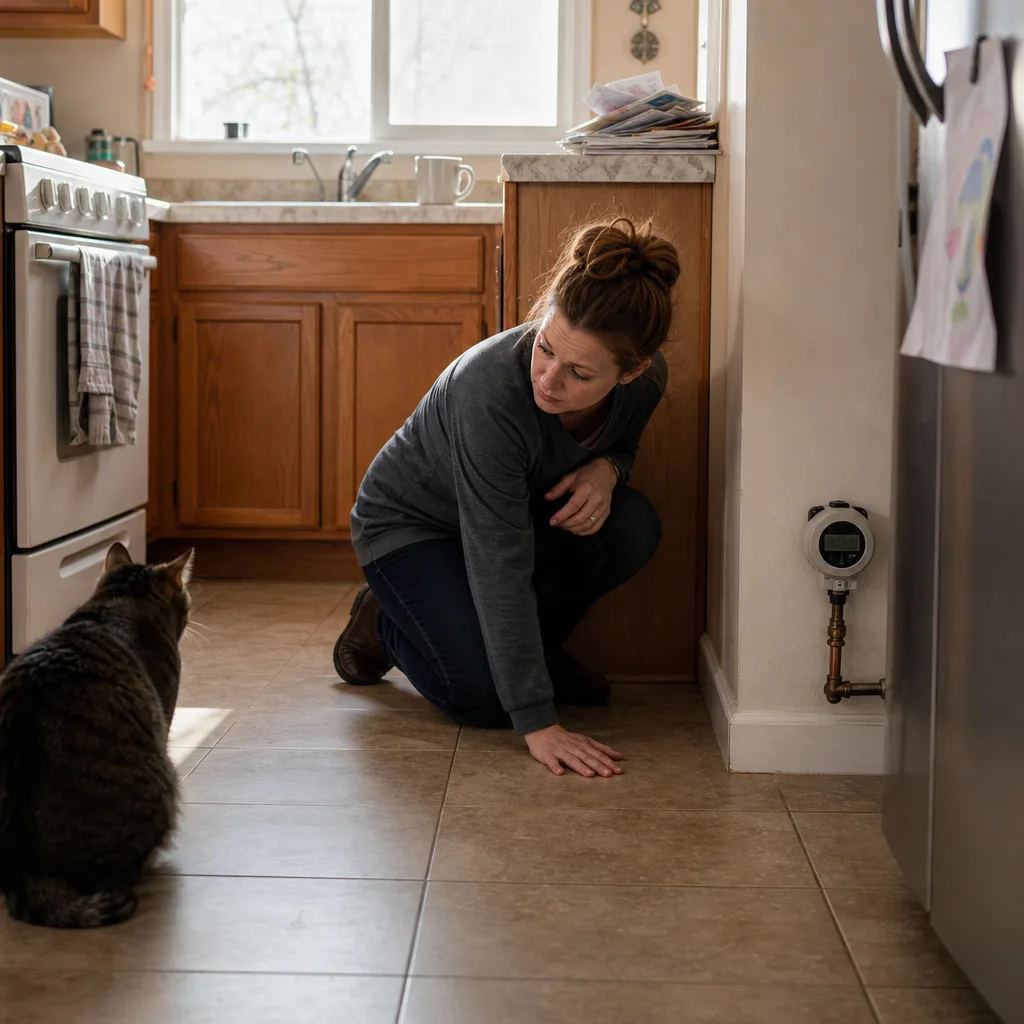
You can do a simple check yourself before you call anyone. Turn off every faucet, toilet, ice maker, and sprinkler in your home. Then find your water meter, usually in a box near the street, and look at it. If the dial or the small leak indicator is still moving, water is going somewhere it shouldn’t. Write down the reading, wait an hour without using any water, and check again. A change means you have a leak somewhere on your side of the meter.
That leak isn’t always under the slab, though. Be fair to yourself and check the easy stuff first. A toilet that keeps running or refilling on its own is one of the most common causes of a high bill. Try dropping a little food coloring in the tank. If color shows up in the bowl without flushing, the flapper is leaking, and that’s a small fix you can often handle yourself. Look at your outdoor spigots, your water heater, and any sprinkler lines in the yard too. A soggy patch of grass that never dries points to a yard line, not your foundation.
If you’ve ruled those out and the meter still moves, or you’ve got a warm floor or damp flooring with no other explanation, it’s time to have the slab checked. The sooner the leak is found, the less water ends up under your home and the more choices you’ll have for fixing it.
When It’s Not a Slab Leak
Plenty of problems look like a slab leak and aren’t. Before anyone talks about cutting into concrete, you should know the common look-alikes. Some are quick fixes. Some aren’t plumbing at all.
- Wet carpet near the AC closet. If your air handler sits in a hall closet or the garage, a clogged condensate drain line or an overflowing drain pan can spill water onto the slab. That line works hard all summer in North Texas, and the water often shows up as damp carpet along the closet wall. Clearing the drain line usually fixes it.
- Wet spots next to an appliance. A worn washing machine hose, a dishwasher supply line, or the ice maker line behind your fridge can drip for weeks and soak into the floor. Pull the appliance out and look behind it first.
- Damp floor beside a tub or shower. Cracked grout, failed caulk, or a leaking shower pan lets water creep into the next room. The giveaway is timing. It gets worse after someone showers. A slab leak runs whether anyone’s home or not.
- Wet spots by doors and windows after a storm. North Texas thunderstorms can push rain in sideways. If the damp spot shows up with the weather and dries out between storms, check the door and window seals, not the pipes.
- Low pressure at just one faucet. Hard water leaves scale that clogs faucet aerators and showerheads. Unscrew the aerator and rinse it. If the pressure comes back, you’re done.
- Low pressure across the whole house. If your home has a pressure regulator where the water line comes in, an aging one can drop pressure everywhere at once. Replacing it is a much smaller job than a slab repair.
- Running water sounds late at night. A water softener can be set to recharge on a timer overnight, and an ice maker refills on its own. Check those before you assume the noise is coming from under the floor.
- New cracks and nothing else. Clay soil also shrinks during long, dry summers, and that can move a foundation without a drop of leaking water. If your meter test came back clean and you’ve got no warm or damp spots, the crack is a foundation question. A foundation specialist is the right person to call.
There’s one more thing to know. The meter test only catches leaks in the supply lines, the pipes that carry water into your home under pressure. Drain and sewer lines under your slab aren’t under pressure, so a crack in one of them won’t make your meter move. The signs look different too. You might notice slow drains in several fixtures, a sewer smell inside, or gurgling when you flush. That calls for a sewer camera inspection, which is a different job than slab leak repair.
If you find one of these look-alikes, fix it. Then watch your water bill for a cycle and check the meter again with everything off. If the problem goes away, you didn’t have a slab leak, and you don’t need anyone breaking concrete in your home. If the meter still creeps after you’ve ruled these out, the hidden leak is real and worth tracking down.
How a Slab Leak Is Found and Fixed
Fixing a slab leak comes down to two steps: find the exact spot, then pick the repair that makes the most sense for your home. The first step decides how the second one goes. A good locate can mean one small opening in your floor instead of several big ones.
Leak detection is a process of narrowing things down. Plumbers usually use a few tools together, because each one answers a different question:
- Pressure testing. The hot and cold lines are shut off and tested one at a time. If one line loses pressure, you know which side is leaking before anyone goes looking for the exact spot.
- Acoustic listening. Water escaping a pressurized pipe makes a hiss. Sensitive listening gear placed on the floor can pick up that sound through concrete and trace it to the loudest point.
- Thermal imaging. A hot water leak warms the slab above it. An infrared camera shows that warm patch, even when you can’t feel it.
- Line tracing. This maps where the pipes run under your floor, so the leak can be matched to a real pipe path instead of a guess.
Once the leak is marked, there are three common ways to fix it.
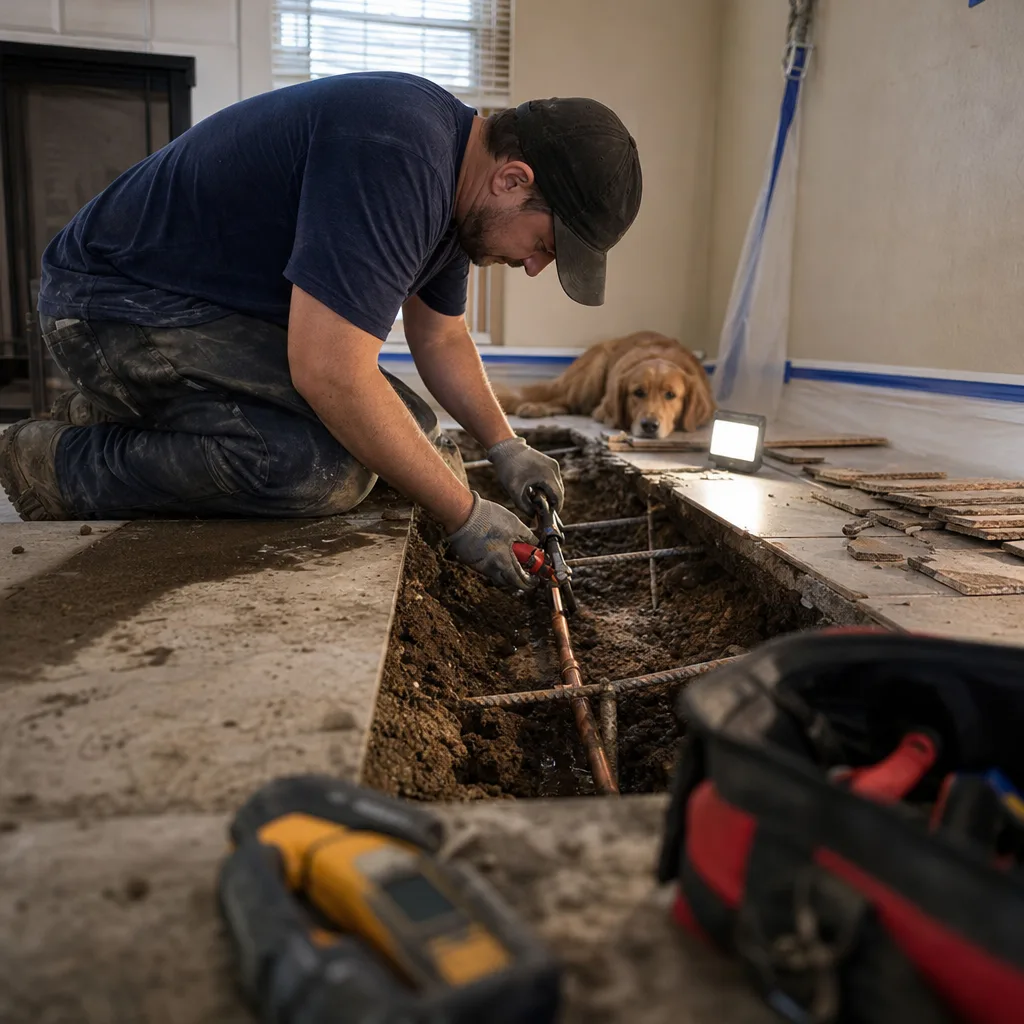
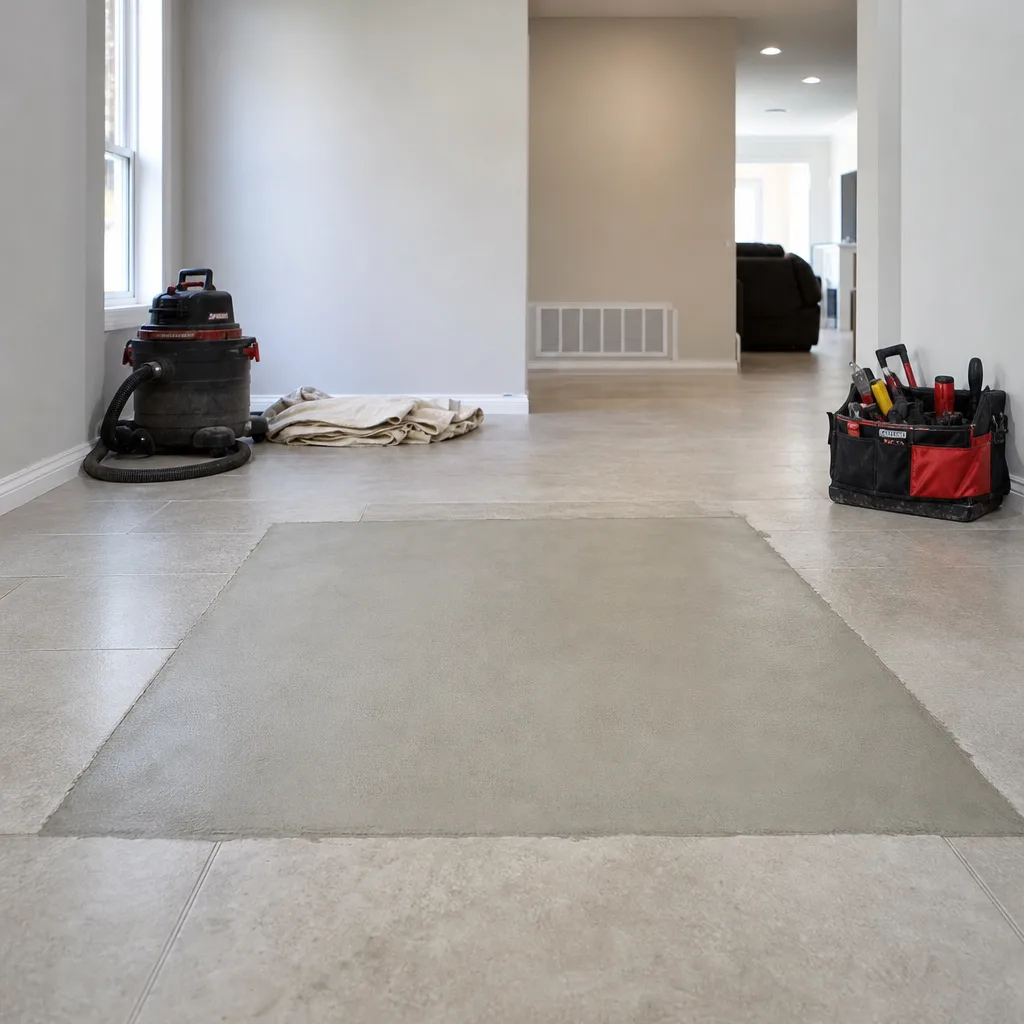
Spot repair. The plumber opens the slab right over the leak, cuts out the bad section of pipe, and splices in new pipe. This makes sense when the leak is in one place and the rest of the line is in good shape. The downside is that it means breaking concrete inside your home, often under flooring you’ll want put back.
Reroute. Instead of digging down to the old pipe, the leaking line is shut off and abandoned under the slab. A new line is run around it, usually up through a wall and across the attic or through the walls to the fixture. Your floor stays intact. In North Texas, a line run through the attic has to be insulated and protected properly, since attics bake in the summer and can drop below freezing during a hard winter cold snap.
Repiping. If your pipes are old and you’ve already had one leak, another may not be far behind. In that case, replacing more of the plumbing at once can make more sense than fixing leaks one at a time. Repiping is its own job, and it’s worth asking about if your home has had repeat leaks.
So how do you choose? Think about it like this. If the leak sits under a bathroom you just retiled and the pipe runs close to an outside wall, a reroute might save your floor. If the leak is in an open area of the slab and the pipe around it is solid, a spot repair may be simpler and more direct. The right answer depends on where the leak is, how old your pipes are, and what’s sitting on top of the slab.
Whichever repair you choose, the job isn’t done until the line is tested again. A pressure test after the fix confirms the leak is gone and the new pipe holds. Then you can run your own meter check with everything off and see it stay still. With Xtreme Air Services, leak location, the repair or reroute, and that final testing are part of the slab leak repair itself.
Have questions? We’re happy to help.
Call Today, Get Service Today. Xtreme Air Services — Carrollton is ready to help.
What Drives the Cost of Slab Leak Repair
With Xtreme Air Services, slab leak repair typically runs $2,000 to $6,000. Our most common job is finding the under-slab leak and then repairing or rerouting the line to stop it, and that job usually falls between $2,000 and $3,800. Where your repair lands depends on a few things you can’t see from the floor.
- Where the leak is and how deep it sits. A leak near an outside wall or in an open part of the slab is easier to reach than one buried under the middle of your home.
- Reroute or spot repair. The choice between the two fixes above changes the labor, the materials, and how much concrete gets touched.
- Access through the slab. Getting to the pipe under your floor, or running a new line around it, is often the biggest part of the job.
Here’s how that plays out. Say the leak is under an open area of slab near your garage wall. That’s usually a more direct job. Now say it’s under the center of your living room, beneath tile you love. Getting to it, or routing around it, takes more work, and the price reflects that.
You’ll want to know exactly what you’re paying for, so here it is plainly.
- Included: leak location, the repair or reroute, and testing to confirm the leak is gone.
- Not included: putting back your slab or flooring, work on additional lines, and permits, unless your estimate says otherwise.
That flooring piece matters. If the fix means opening the floor, plan for the cost of new tile, wood, or carpet on top of the plumbing work. This is one reason a reroute can make sense when the leak sits under finished flooring you don’t want torn up.
Our service call fee is $26 to $99, and it’s credited toward the repair if you go ahead with us. You’ll get upfront flat-rate pricing before any work starts, so there’s no meter running while we’re under your floor. Leaks don’t wait for business hours, and there’s no extra charge for nights or weekends. For larger jobs, flexible financing is available on approved credit.
Whoever you hire, ask these questions before you agree to anything:
- Is the price flat, or does it change with the hours worked?
- Is leak detection part of the price, or billed separately?
- Will you reroute or spot repair, and why is that the better choice for my home?
- Is a test after the repair included?
- Who handles the flooring, and is a permit included?
A good plumber will answer every one of those without dodging. If you’ve done the meter test and it’s still moving, the sooner the leak is found, the more choices you’ll have for fixing it.
Call 469-269-6099
Watch Our Video
See How We Handle Slab leak repair in Carrollton
Xtreme Air Services — Carrollton
Why Trust Matters for Foundation-Level Repair
A slab leak is the one plumbing job where you can’t check the work with your own eyes. The pipe is under concrete. You’re trusting someone to tell you where the leak is, whether your floor has to be opened, and which fix is right for your home. That’s a lot to hand over to someone you just met.
That’s why the wrong hire can cost you more than money. A rushed locate can mean breaking up the wrong part of your floor. A plumber who always pushes the bigger job might talk you into a reroute or a repipe you don’t need. One who always picks the quick patch might leave a weak pipe in place that leaks again a few feet away.
Carrollton homes give you one more reason to be careful. Your house sits on a slab over North Texas clay, so leaking water doesn’t just sit there. It soaks into soil that moves. You want that leak found, fixed, and tested by someone who does it right the first time.
Before you let anyone cut concrete in your home, check these things:
- A state plumbing license. Texas licenses plumbers. Ask for the license number and look it up yourself.
- Insurance. If something goes wrong while your floor is open, you shouldn’t be the one paying for it.
- A clear reason for the fix. They should show you where the leak is and explain why a spot repair or a reroute fits your home.
- A written price before work starts, with what’s included spelled out.
- Who’s coming into your home. Ask whether the technicians are background-checked.
Here’s where we stand on each of those. Xtreme Air Services is a family-owned company, licensed and insured for plumbing, HVAC, and electrical work. Our plumbing license is held under Master Plumber Larry Breedlove. Our technicians are background-checked and drug-tested, so you know who’s walking through your door and working in your home.
We’d rather you trust the proof than our word. We’ve earned a 4.8-star reputation across more than 2,900 reviews on Google, Angi, and HomeAdvisor. A lot of that comes from North Texas families who’ve called us back for the next job, and the one after that.
We’re also close by. Our Carrollton office is at 2340 E Trinity Mills Rd, and we answer the phone around the clock with same-day service available. A slab leak that keeps running costs you more water every hour, so it helps to have someone nearby who picks up.
And if what you’re seeing turns out to be one of the look-alikes from earlier, that’s a good outcome. You don’t need anyone breaking concrete in your home for a running toilet or a clogged AC drain.
Call 469-269-6099
Frequently Asked Questions
Common questions about Slab leak repair
What exactly is a slab leak?
A slab leak is a leak in a water line that runs under or through your home’s concrete foundation. Since the pipe is hidden under the slab, you won’t see dripping water. Instead you’ll notice side effects like a rising water bill, a warm spot on the floor, or the sound of running water when everything is off.
How much does a plumber charge just to find a leak?
Leak detection pricing varies by company and usually depends on the tools needed to locate the leak, such as pressure testing, acoustic listening, or thermal imaging. Ask upfront whether the detection fee is a flat rate and whether it gets credited toward the repair if you move forward, since that affects your total cost more than the hourly rate alone.
Ready to Get Started?
Call (469) 269-6099 Today, Get Service Today.