


Water Heater Installation in Carrollton: Know What’s Required Before You Hire
Like-for-like tank swaps by licensed plumbers, with what the price covers and when a permit applies spelled out.
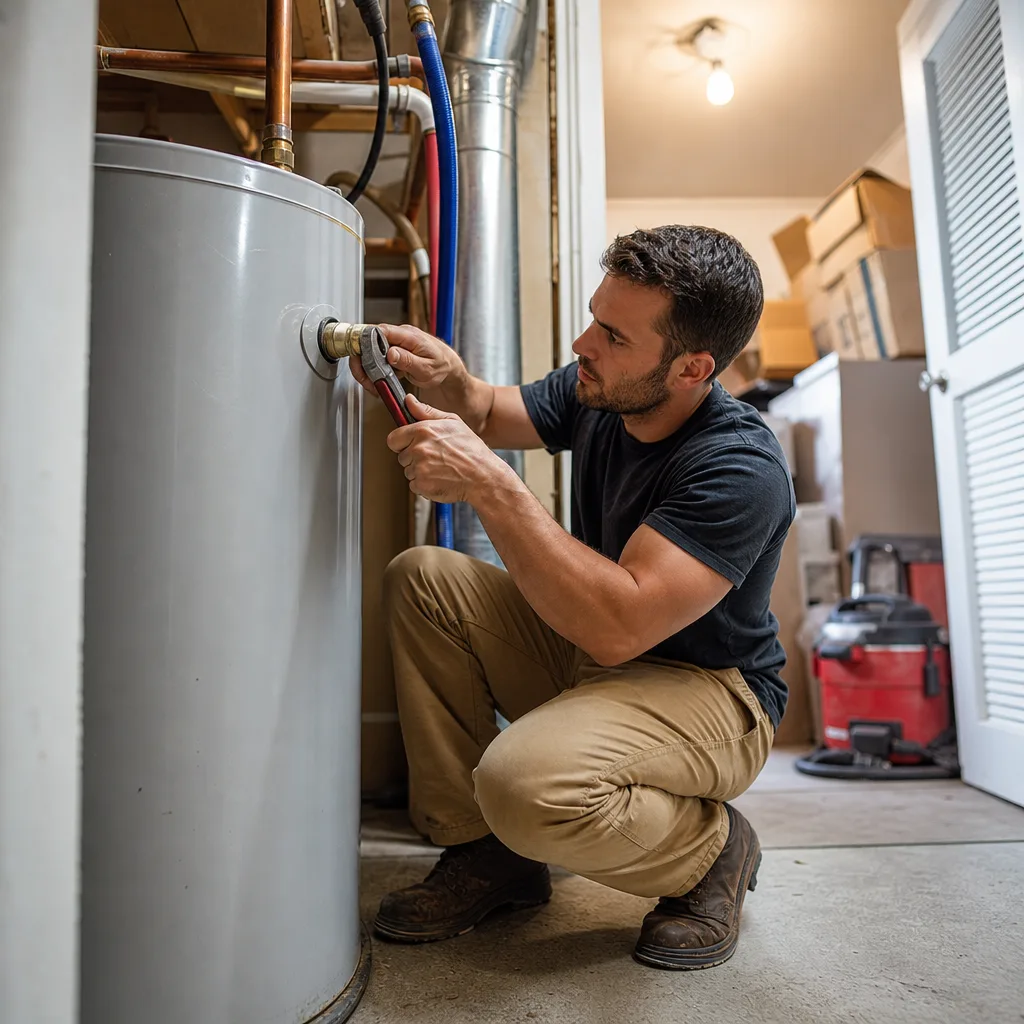
What’s Covered on This Page
- Signs Your Water Heater Needs Replacing, Not Repairing
- When a Repair Is the Right Call Instead
- Tank vs. Tankless: Choosing the Right Install for Your Home
- Why a Licensed Plumber and a Carrollton Permit Both Matter
- What Happens During a Water Heater Installation
- How long does a water heater installation take in Carrollton?
- Do I need to be home during the whole installation?
- What size water heater do I need?
- Can I install a water heater myself to save money?
Signs Your Water Heater Needs Replacing, Not Repairing
Not every water heater problem means you need a new one. Some issues come down to a single worn part. Others mean the tank itself is failing, and no repair will bring it back. Here’s how to tell the difference before anyone hands you a bill.
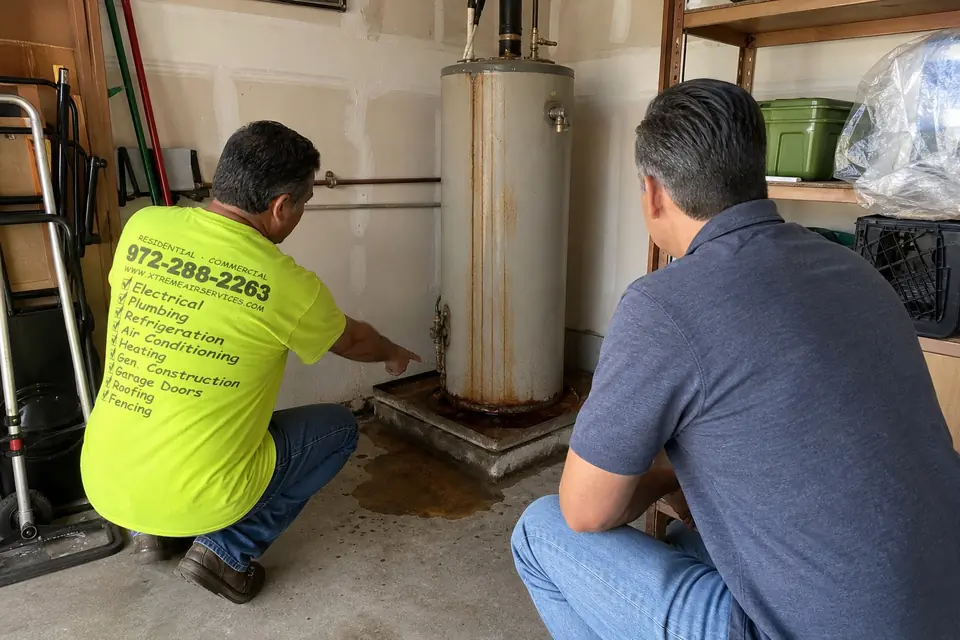
These signs usually point to replacement:
- Water is leaking from the tank body itself. A drip from a pipe fitting or valve can often be fixed. Water seeping from the bottom or sides of the tank means the steel inside has rusted through, and that can’t be patched.
- Your hot water comes out rusty or brown, but your cold water is clear. That points to rust inside the tank, not your pipes.
- The tank is around ten years old or older. Check the label on the side for the manufacture date, or look up the serial number. An older tank that starts having problems tends to keep having them.
- It rumbles, pops, or bangs while heating, even after a flush. That’s hardened mineral buildup in the bottom of the tank. North Texas water is hard, so this scale builds up faster than many people expect.
- You’ve paid for more than one repair in the past couple of years and it’s acting up again. At some point, you’re putting money into a tank that’s near the end anyway.
Location matters, too. If your water heater sits in an attic or an interior closet, a tank that’s starting to weep is more than an annoyance. When it lets go, the water heads straight into your ceiling, walls, or floors. A garage unit on a drain pan buys you a little more time to plan.
Now the honest side. These problems are often repairable, and replacing the whole unit would be overkill:
- No hot water from an electric unit. Check your breaker first. If it’s not the breaker, a failed heating element or thermostat is a common, fixable part.
- A gas unit whose pilot won’t stay lit. That’s often a worn thermocouple or another small gas control part, not a dead tank.
- A drip from the drain valve or the pressure relief valve. These parts can be replaced on their own.
- Water that’s lukewarm in a newer tank. Sometimes the thermostat setting or one bad element is all it takes.
If your tank is fairly young and the problem is one part, a repair makes sense. Spend your money there. If it’s older, leaking from the tank, or putting out rusty water, a repair is just a short delay before the replacement you’ll need anyway. A good technician should show you which situation you’re in and let you make the call.
When a Repair Is the Right Call Instead
Here’s the straight answer. If your tank isn’t leaking from the body, your hot water isn’t rusty, and the unit is still on the younger side, you probably don’t need a new water heater. You need the right part fixed, or sometimes nothing fixed at all.
A lot of hot water complaints aren’t failures. Before you pay for anything, rule these out:
- Your hot water runs out faster in winter. When a North Texas cold front comes through, the water coming into your home is a lot colder. Your tank has to work harder to heat it, so a full tank doesn’t stretch as far. That’s normal and doesn’t mean the heater is dying.
- You had a house full of guests. Back-to-back showers can empty any tank. If the hot water comes back after an hour or so, the heater is doing its job.
- Someone turned the temperature down. It happens more than you’d think, especially after a move or a visit from a curious kid. Check the setting before you assume something broke.
- A new fixture is sharing the load. A big soaking tub or a second shower head can pull more hot water than your old routine did. The tank isn’t failing. It’s being asked to do more.
There’s one honest exception. If you’re always running short because your family has grown, a repair won’t fix that. The tank isn’t broken. It’s just too small for how you live now, and that’s a sizing question, not a repair.
When a part really has failed, here’s a simple way to think about the money. Picture a fairly young tank with one bad part. Fixing it can give you years more use, so the repair is the smart spend. Now picture an older tank, a second repair in a short time, and a price that’s creeping toward the cost of a new unit. That’s where repairing stops making sense. Hard water speeds up wear in a lot of North Texas tanks, so the real age of your unit matters more than how it looks from the outside.
If someone tells you to replace a unit, you’ve got every right to ask why. Good questions to ask:
- Is the tank itself failing, or just a part attached to it?
- What would the repair cost, and what’s the price of a new unit?
- Can you show me the leak, the rust, or the failed part?
- If I fix it today, about how much life does this tank realistically have left?
A technician who knows their trade can answer all four in plain English. If you can’t get a clear answer, slow down before you sign anything.
Finding out costs you very little. When Xtreme Air Services comes out, there’s a $26-$99 service-call fee, and it’s credited toward the repair if you go ahead with us. So if the fix is a part and not a whole new heater, you’re not paying extra just to learn that. We’ll tell you which way we’d go if it were our home, and then the choice is yours.
Tank vs. Tankless: Choosing the Right Install for Your Home
The short answer: the best water heater is the one that fits your house and your routine. For many homes, that’s a new tank in the same spot as the old one. For others, tankless is worth the extra work. Here’s how to tell which group you’re in.
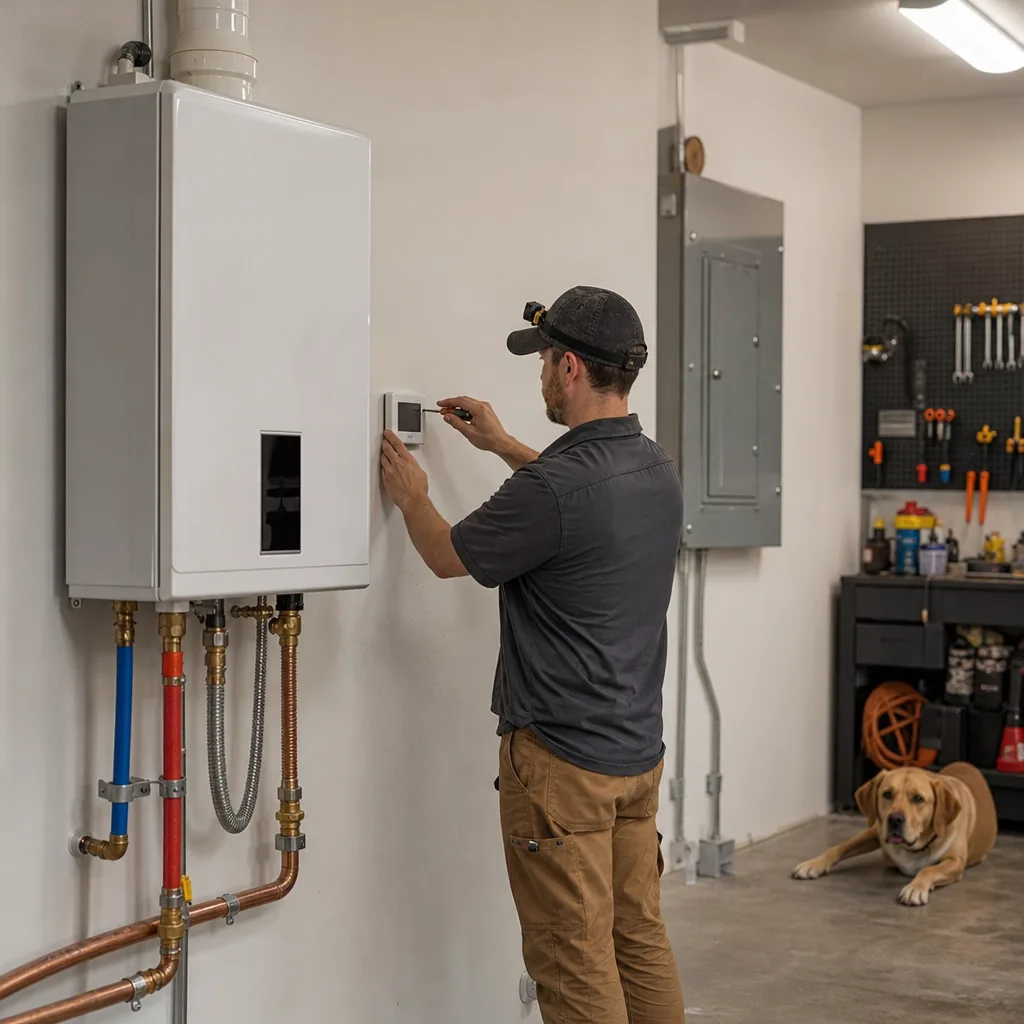
A tank heater keeps a set amount of hot water ready, usually 40 or 50 gallons in a typical home. Once it’s used up, you wait for it to heat a new batch. A tankless heater has no storage. It heats water as it flows through, so it won’t run out. It only makes so much at once, though, and that amount is measured in gallons per minute.
That difference changes how each one gets sized. A tank is sized by how much hot water your family uses in your busiest hour, like the morning rush. A tankless unit is sized by how many taps run at the same time and how much it has to warm the water. Get that wrong, and someone ends up with a cold shower either way.
A tank usually makes more sense if:
- Your current tank did the job and you just want reliable hot water back fast. A like-for-like swap uses the connections you already have.
- Your home has a standard gas line or electrical setup sized for a tank, and you don’t want to add upgrade work.
- You’d rather not keep up with yearly descaling.
Tankless usually makes more sense if:
- Your family keeps running out of hot water and a bigger tank won’t fit.
- Your heater sits in the attic or a tight closet. A wall-mounted tankless unit takes up far less room and doesn’t hold a big tank of water over your ceiling.
- You plan to stay in your home long enough for the higher upfront cost to pay off in lower standby energy use.
Here’s what often gets left out of the tankless pitch. Switching from a tank isn’t always a simple swap. A gas tankless unit often needs a larger gas line and new venting. An electric one can need heavy dedicated circuits, and some older panels can’t handle that load without an upgrade. Those changes add cost, so ask about them before you decide, not after. Since we also handle gas line installation, dedicated circuits, and panel upgrades, that work doesn’t have to involve a second company.
North Texas adds two more things to think about. Our hard water leaves scale inside both types. In a tankless unit, that scale coats the heat exchanger and cuts its output, so plan on flushing it regularly. A water softener can slow that buildup. Also, when a cold front pushes incoming water temperatures down in winter, a tankless unit has to work harder, and its flow drops. A unit sized only for summer can come up short in January.
If a new tank is the right fit for your home, we’ll tell you that. We won’t push you toward a bigger job you don’t need. If tankless fits your home, we’ll walk you through the conversion work it takes so you can weigh the full picture.
Not sure what your Water heater installation project needs? Ask us.
Call Today, Get Service Today. Xtreme Air Services — Carrollton is ready to help.
Why a Licensed Plumber and a Carrollton Permit Both Matter
A water heater looks simple. It’s a tank, a couple of pipes, and either a gas line or a power cord. In reality, it’s one of the few appliances in your home that combines scalding water, built-up pressure, and either gas or high-voltage power in one spot. That’s why Texas treats installing one as licensed plumbing work, and why most North Texas cities, Carrollton included, expect a permit for a replacement. If you’re not sure what your address needs, ask your installer or check with the city before work starts.
The license and the permit protect you in different ways.
The license is about who’s doing the work. A licensed plumber has been trained and tested on the parts of the job you can’t easily see. On a gas unit, that means how the gas line connects and how exhaust gets vented safely out of your home. On an electric unit, it means the right wire and breaker for the load. If the installer gets those wrong, the heater may still make hot water for a while, and you won’t know there’s a problem until there’s a real one.
The permit is about a second set of eyes. Once the job’s done, a city inspector looks at the safety pieces that matter most, including:
- The pressure relief valve and its discharge line. This valve lets water out if the tank gets too hot or too pressurized, and the line has to carry that water somewhere safe.
- Gas connections and venting on gas units, so exhaust leaves your home instead of building up inside.
- Electrical connections on electric units.
- Proper placement, including a drain pan where one is needed. That matters a lot for the attic and closet installs covered earlier.
Skipping the permit can come back on you later, too. Unpermitted work can show up when you sell your home and the buyer’s inspector starts asking questions. It can also complicate things if you ever need to file an insurance claim for water damage. A permit gives you a record showing the job was done right.
Here’s the money side, stated plainly so it doesn’t surprise you. In our standard pricing, permits and code corrections aren’t included unless your quote says so. Code corrections come up when an older setup doesn’t meet today’s rules, such as a relief valve line that drains to the wrong place or venting that’s no longer allowed. Some homes need nothing extra. Others need a fix or two before the new heater can pass inspection. Either way, you should know about it before the work starts, not halfway through.
So when you compare quotes, ask every company the same three things. Is the person installing this licensed? Does the price include the permit? If the old setup needs updates to pass inspection, what are they and what will they cost? A low price that leaves out those answers isn’t really a lower price.
Xtreme Air Services is a licensed and insured HVAC, plumbing, and electrical contractor. That means the gas, venting, and electrical sides of your install are handled by one accountable team instead of being split between companies.
Watch Our Video
See How We Handle Water heater installation in Carrollton
Xtreme Air Services — Carrollton
What Happens During a Water Heater Installation
A straight swap, with a new tank going in the same spot and using the same connections, usually takes part of a day. An attic unit, a tight closet, or a switch from tank to tankless takes longer because there’s more to move, reroute, or add. Here’s what a proper install looks like from start to finish, so you know what you’re paying for and what to watch for.
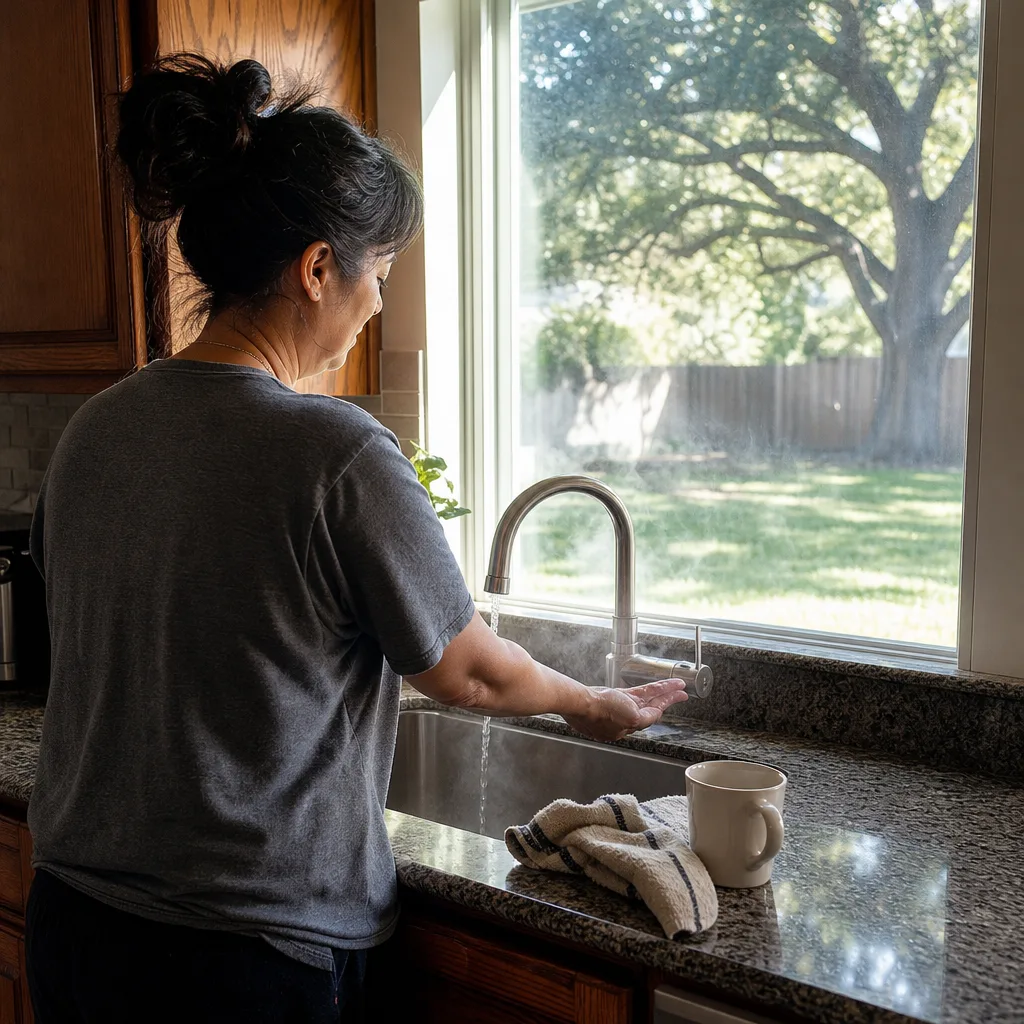
Before anyone arrives, clear a path to your water heater. If it’s in a closet or a packed garage corner, move boxes out of the way. If it’s in the attic, make sure the access hatch isn’t blocked. Plan on going without hot water for a few hours, and keep pets out of the work area.
Here are the main steps of the job:
- Shut everything off. The gas or power to the old heater gets turned off first, then the cold water supply going into the tank.
- Drain and remove the old tank. This can take a while in North Texas. Years of hard-water sediment can settle in the bottom and slow the drain or clog the valve. Once it’s empty, the old unit gets disconnected and carried out.
- Set the new heater in place. It goes on a level spot, with a drain pan where one is needed. In an attic or closet, that pan is your first line of defense against a leak.
- Make the connections. The hot and cold water lines get hooked up, along with the relief valve discharge line. On a gas unit, that also means the gas connection and the vent. On an electric unit, it means the wiring at the right breaker size.
- Fill the tank before turning it on. The tank has to be completely full of water first. Powering up an electric heater with an empty tank can burn out a brand-new heating element in seconds.
- Start it up and test it. The installer fires the unit, checks every joint for leaks, checks gas connections on gas models, makes sure exhaust is venting the way it should, and confirms hot water is reaching your taps.
Before the installer leaves, you should know three things: where the cold water shutoff is, what temperature the heater is set to, and how to turn off the gas or power in an emergency. A good installer should show you all three without being asked. If they don’t, ask. It takes two minutes, and it’s the kind of thing you’ll want to know at 2 a.m. when something drips.
On our standard install, the equipment and materials, professional installation, standard connections, startup and testing, and haul-away of your old unit are all included. You won’t be left figuring out how to get a 150-pound rusty tank to the curb. If your home needs plumbing, electrical, or venting changes beyond a standard hookup, or the job needs a permit, those items are separate unless your quote says otherwise. That’s why it pays to know about them before the day of the install.
Once the city inspection is passed, the job is truly finished. Your new heater should run quietly, hold steady temperatures, and leave nothing on the floor of the pan. If you notice dripping, rumbling, or water that isn’t getting hot in the first few days, speak up right away so it can be checked while the install is fresh.
Frequently Asked Questions
Common questions about Water heater installation
How long does a water heater installation take in Carrollton?
A straight swap into the same spot usually takes part of a day. If your unit is in an attic or tight closet, or you’re switching to tankless, plan on it taking longer since there’s more work to reroute pipes, gas lines, or wiring.
Do I need to be home during the whole installation?
You should be home when the work starts and when it finishes, so the installer can walk you through the shutoffs and settings. Clear a path to the unit beforehand, keep pets away from the work area, and expect to be without hot water for a few hours.
What size water heater do I need?
It depends on your busiest hour of hot water use, not just family size. A tank is sized to cover your peak demand, like a morning with back-to-back showers, while a tankless unit is sized by how many taps run at once and how cold the incoming water gets in winter.
Can I install a water heater myself to save money?
You can, but Texas treats water heater installation as licensed plumbing work for good reason. It combines scalding water, pressure, and gas or high-voltage power in one spot, and getting the gas venting or electrical connections wrong may not show up as a problem until much later.
Ready to Get Started?
Call (469) 269-6099 Today, Get Service Today.