


A/C System Installation in Fort Worth: Repair or Replace, and How to Size It Right
New AC systems sized to your Fort Worth home and installed right – with an honest look at whether a repair still makes sense.
What’s Covered on This Page
- Know When Full System Installation Is the Right Call
- Skip Full Replacement If It’s Just One Bad Part
- Why Correct Sizing Matters More in North Texas Heat
- Check Licensing and Permits Before You Hire
- What Happens During an A/C System Installation
- How long does a full A/C system installation take?
- Can I keep my old thermostat with a new A/C system?
- Do I need to be home during the A/C installation?
- Will a new A/C system lower my Fort Worth summer electric bill?
Know When Full System Installation Is the Right Call
Nobody wants to spend money on a new system they don’t need. So here’s the straight answer. A new install is the right call when your system keeps failing in different places, can’t keep up on hot afternoons, or costs more to run than it’s worth. One bad part on an otherwise healthy system usually isn’t a reason to replace everything.
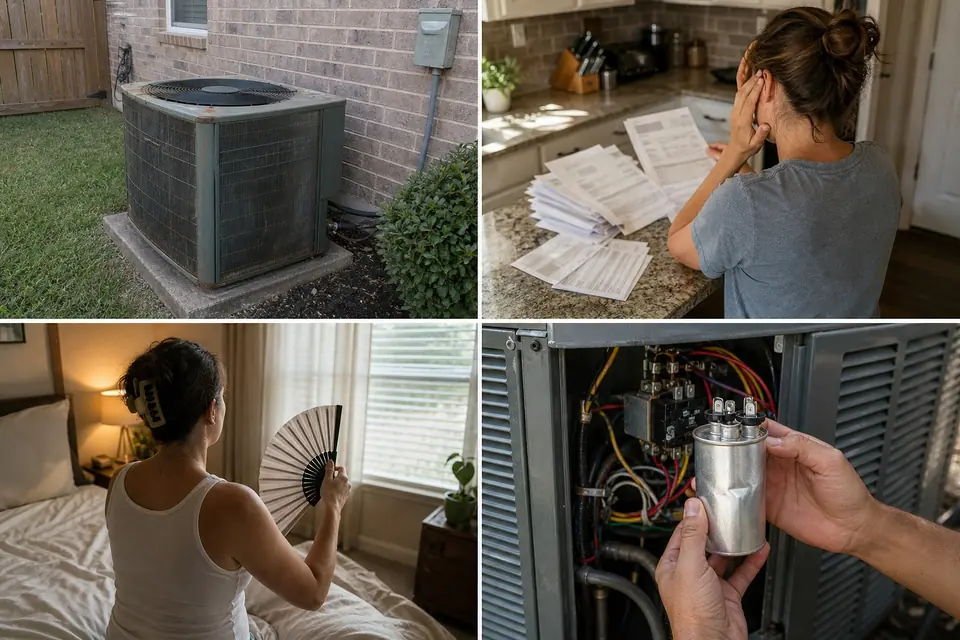
These are the signs that point toward a full installation:
- Your system is older and you’re calling for repairs every summer, each time for something different.
- It runs nonstop on a Fort Worth August afternoon and the house still won’t get below the high 70s.
- Your electric bills keep climbing even though your habits haven’t changed.
- It uses an older refrigerant that’s no longer made, so every recharge gets harder to find and more costly.
- A major part like the compressor failed on a system that’s already near the end of its life.
- Some rooms stay hot while others are fine, and the house feels sticky even when the A/C is running.
Heat is a big part of this story here. Fort Worth summers are long, and many homes have the indoor unit and ductwork up in the attic, where temperatures climb far above what you feel in the living room. A tired system works even harder in those conditions. When it’s undersized or worn down, you’ll notice it first on the hottest days of the year.
Now the other side, and we mean it. You probably don’t need a new system if:
- Your system is fairly new and this is the first real problem you’ve had.
- The issue is a single part, like a capacitor, fan motor, or clogged drain line.
- It cooled fine last summer and something changed suddenly.
- You’ve skipped a few tune-ups and the coils or filter are just dirty.
In those cases, A/C system repair is often the smarter move, and that’s what we’ll tell you. A good repair can buy you years of comfort and give you time to plan for a new system on your schedule, not in the middle of a heat wave.
If you’re not sure which side you’re on, start with a diagnostic visit. Our licensed and insured technicians will check the whole system, not just the part that quit, and explain what they find in plain English. The service-call fee runs $26 to $99, credited toward the repair if you proceed with Xtreme Air Services. You’ll get upfront flat-rate pricing on both options before any work starts, so you can compare a fix and a new system side by side.
If replacement does make sense, flexible financing is available on qualifying installations, on approved credit. That way the decision comes down to what’s right for your home, not what you can pay for this week.
Skip Full Replacement If It’s Just One Bad Part
A lot of A/C breakdowns look scary but come down to one worn part. If the rest of your system is healthy, fixing that part gets you cooling again for a fraction of what a new install costs. Here’s how to tell what you’re dealing with.
These are common one-part failures, and what you might notice at home:
- Outdoor unit hums but the fan won’t spin. This often points to a weak capacitor, a small part that helps the motors start. Fort Worth heat is hard on capacitors, and replacing one is a quick, contained fix.
- Outdoor unit is completely silent while the thermostat calls for cooling. A worn contactor, the switch that turns the unit on, can cause this. So can a wiring issue.
- Air blows from the vents but it’s weak, or the indoor fan won’t run at all. That’s often the blower motor, not the whole system.
- The system shuts off on its own, or you see water near the indoor unit. A clogged condensate drain line can trip a safety switch that stops the A/C to keep water off your ceiling.
- Ice on the copper lines or the indoor coil. A frozen coil usually comes from poor airflow or low refrigerant, and the cause can often be found and fixed.
- The thermostat screen is blank or doesn’t respond. Sometimes the A/C is fine and the thermostat is the real problem.
Before you call anyone, check two things yourself. Make sure the thermostat is set to cool and set below the room temperature, and swap in fresh batteries if it uses them. Then pull your air filter. A filter caked with dust can choke airflow badly enough to make the system freeze up or cool poorly. If a new filter and a working thermostat bring the cold air back, you don’t need us. That’s a good day.
Some failures sit in a gray zone. A failed compressor or a leaking indoor coil is a big repair, not a small one. On a younger system, replacing the compressor or the coil can still be the right move, because the rest of the equipment has plenty of life left. On an older system, especially one running on a refrigerant that’s no longer made, that same money is usually better spent on a new system you can count on for years.
A simple way to weigh it: compare the repair cost to how much life the system really has left. A modest repair on a system with years ahead of it is money well spent. A large repair on a system that’s already near the end only pushes back a decision you’ll face soon anyway, maybe in the middle of a heat wave.
Leaks deserve a special note. If your system needs refrigerant, it has a leak somewhere, because refrigerant doesn’t get used up. Topping it off without finding the leak just means you’ll be paying for the same problem again. A real refrigerant leak repair finds and seals the source first.
When our technicians find one of these single-part problems on a system that’s otherwise in good shape, we’ll tell you it’s a repair. You’ll see both prices up front, so the choice stays yours.
Why Correct Sizing Matters More in North Texas Heat
Once you know you need a new system, the most important choice isn’t the brand or the color of the box. It’s the size. A system that’s too big or too small will let you down in a Fort Worth summer, and you’ll feel it every day from June through September.
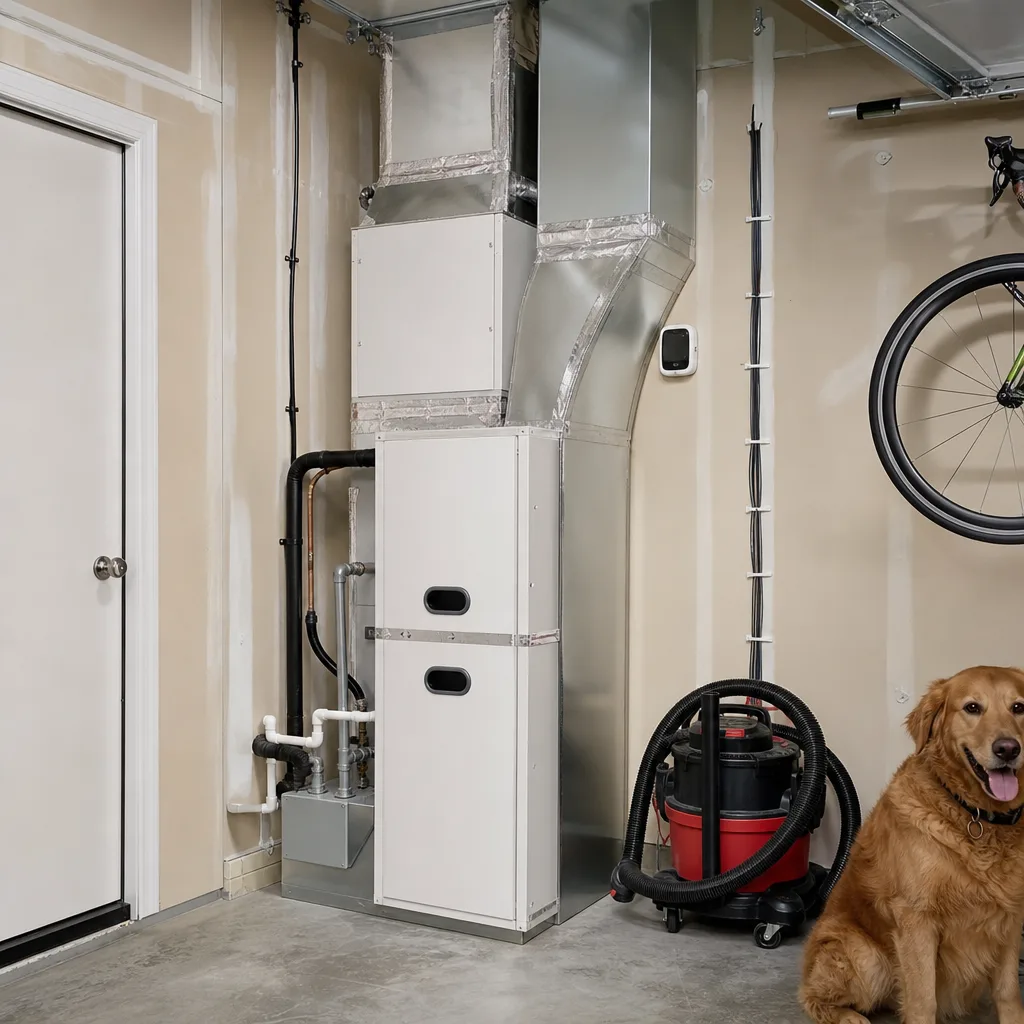
Most people assume bigger is better. It isn’t. Here’s what happens on each side:
- Too big: The system blasts cold air, hits the thermostat setting fast, and shuts off. Then it starts again a few minutes later. Those short runs don’t last long enough to pull moisture out of the air, so the house feels cool but clammy. The constant starting and stopping also wears out parts sooner.
- Too small: The system runs nonstop on hot afternoons and still can’t catch up. Your bills climb, the equipment never gets a break, and the back bedroom stays warm no matter what you do.
The heat here makes both mistakes worse. Our summers aren’t a few hot days. They’re months of high temperatures, often with sticky humidity on top. An undersized system has no slack when it’s hottest outside, and an oversized one leaves you with that damp, uncomfortable feeling all season. With ducts running through a hot attic, as covered above, there’s even less room for error.
That’s why the right size can’t come from a quick guess. Rules of thumb based only on square footage miss what heats up your house. A proper cooling load calculation looks at things like:
- How well your attic and walls are insulated
- How many windows you have, and which way they face. A wall of west-facing glass takes a beating from the late-afternoon sun.
- Ceiling height and the layout of your rooms
- Shade from trees, or the lack of it
- How tight the house is, and whether your ducts leak
- How many people live there and how you use the space
Be careful with one common shortcut, which is simply matching the size of your old unit. That old system may have been the wrong size from day one. Or your home may have changed since it went in. New windows, added insulation, a converted garage, or a room addition all change how much cooling you need. Copying the old number can carry an old mistake forward for another 15 years.
Your ductwork has to fit the new system, too. A larger unit pushing air through ducts sized for a smaller one can cause whistling vents, weak airflow in far rooms, and extra strain on the blower. Checking the ducts is part of getting the size right, not an extra.
Size also affects your price, since equipment capacity is one of the things that moves the cost of an installation up or down. Getting it right means you aren’t paying for capacity you don’t need, or living with a system that can’t keep up.
Our team offers cooling load calculation as part of A/C system consultation. Whoever you hire, ask one simple question before you sign: did they measure your home, or did they just read the label on your old unit? If the answer is the label, keep looking.
Have questions? We’re happy to help.
Call Today, Get Service Today. Xtreme Air Services — Fort Worth is ready to help.
Check Licensing and Permits Before You Hire
A new A/C system is a big purchase. The fastest way to protect it is to check two things before anyone touches your home: is the installer licensed, and will the job be permitted and inspected? Both take a few minutes to confirm. Skipping either one can cost you a lot more later.
In Texas, air conditioning contractors are licensed by the Texas Department of Licensing and Regulation, or TDLR. A real contractor will give you their license number without hesitating. You can look it up yourself on the TDLR website and see whose name it’s under and whether it’s active. Ours is HVAC License #TACLA29023C, and we’re glad to have you check it.
Why does it matter so much? An installation isn’t just setting a box on a pad. It involves high-voltage wiring, refrigerant lines, a drain line running out of a hot attic, and in many homes a connection to a gas furnace. Federal rules also require anyone who handles refrigerant to be certified. If something goes wrong on an unlicensed job, you may have little recourse, and your homeowner’s insurance may push back on a claim tied to unlicensed work.
Permits are the second half. Replacing a central air system in Fort Worth typically requires a permit from the city, followed by an inspection. That inspection is a second set of eyes on your new system, checking electrical connections, the condensate drain, and equipment clearances. It costs a little time, and it’s worth it.
Be wary if an installer says you don’t need a permit, or offers a lower price to skip it. Unpermitted work can come back to bite you when you sell your home, because a buyer’s inspector may flag it. It can also leave you on the hook for fixing problems nobody checked.
Here’s what to ask any contractor before you sign:
- What’s your TDLR license number, and whose name is it under?
- Are you insured, and can I see proof?
- Will you pull the permit, or am I expected to?
- Is the permit cost in this quote, or is it separate?
- Who will be in my home, and are they background-checked?
That fourth question matters because quotes handle permits differently. On our installations, permits aren’t included unless they’re stated in your quote, so we’ll tell you up front whether yours is in the price. With upfront flat-rate pricing, you’ll see that before work starts, not on the final bill.
Xtreme Air Services is licensed and insured, and our technicians are background-checked. We’re also a Trane Comfort Specialist. None of that should replace your own check, though. Look up the license, ask about the permit, and get the answers in writing. A contractor who’s doing right by you won’t mind the questions.
Watch Our Video
See How We Handle A/C system installation in Fort Worth
Xtreme Air Services — Fort Worth
What Happens During an A/C System Installation
Once the size is set and the paperwork is squared away, install day is where a good system turns into a good result. Most of what makes an A/C last happens out of sight: in the attic, inside the copper lines, and in the testing at the end. Here’s what a careful installation looks like, so you know what you’re paying for.

A few small things on your end help the day go smoothly. Clear a path to the attic access and the outdoor unit. Move cars out of the garage if that’s where the attic opening is. Keep pets in a closed room, since doors will be opening and closing all day.
- The old system comes out. Refrigerant is recovered into a tank, not vented into the air. Then the old outdoor unit and indoor coil are removed. On our installations, haul-away of the old unit is included.
- The new equipment goes in as a matched set. The outdoor unit and indoor coil are designed to work together. Pairing a new condenser with an old coil can cut efficiency and cause problems down the road.
- The refrigerant lines get attention. The copper lines that run between the indoor and outdoor units are either replaced or cleaned out, then joined carefully so no dirt or moisture gets inside.
- The system is pressure tested and pulled into a deep vacuum. This step checks for leaks and removes air and moisture before any refrigerant goes in. Rushing it is one of the most common ways a new system gets shortchanged.
- The drain gets set up right. With the indoor unit up in a hot attic, the condensate drain, the pan under the unit, and the safety switch that shuts things off if water backs up are what protect your ceiling.
- Power and controls get connected. Standard electrical connections are made, and the thermostat is hooked up and set.
Then comes startup and testing, included with every installation. The refrigerant charge is checked against the manufacturer’s specs, not just eyeballed. Airflow gets measured. The air coming out of your vents is compared to the air going in to make sure the system is really cooling the way it should. This is where a well-sized system proves itself.
Sometimes a crew opens up the attic and finds something the quote didn’t cover, like ductwork that’s falling apart or wiring that doesn’t meet code. Duct, electrical, and plumbing changes and code corrections aren’t part of a standard installation unless they’re stated in your quote. If something like that turns up, you should hear about it and see the price before any extra work starts. With upfront flat-rate pricing, that’s how it works with us. Nothing gets added without your okay.
Before anyone packs up, take five minutes and walk through it with them. Ask them to show you how the thermostat works and where your filter goes. Ask which filter size to buy. Check that the outdoor unit sits level on its pad and that the drain line outside is dripping when the system runs. Then feel the air at a vent in the room that used to stay warm.
A good installation should leave you with a quiet, steady system that cools evenly and pulls the sticky feeling out of the air. That’s the whole point of doing it right the first time.
Frequently Asked Questions
Common questions about A/C system installation
How long does a full A/C system installation take?
Most installations finish in one day, but attic access and duct changes can add time. A straightforward swap with easy attic access, a working pad, and matched ductwork usually moves fast. If a crew finds damaged ductwork or wiring that needs a code correction, that extra work can push the job into a second day.
Can I keep my old thermostat with a new A/C system?
Sometimes, but it depends on the thermostat and the new equipment. Older thermostats may not support newer system features or wiring, so your technician checks compatibility before hookup. If it won’t work with the new unit, you’ll know before installation day, not after.
Do I need to be home during the A/C installation?
Yes, someone should be home to grant attic access and answer questions as they come up. You’ll also want to be there at the end to walk through the thermostat settings, filter size, and check the vent airflow in rooms that used to run warm.
Will a new A/C system lower my Fort Worth summer electric bill?
Often yes, especially if your old system was oversized, undersized, or leaking refrigerant. A correctly sized system that matches your home’s insulation, windows, and duct condition runs more efficiently through the long Fort Worth cooling season, which can show up as lower bills.
Ready to Get Started?
Call (817) 677-1907 Today, Get Service Today.