


Central Air Conditioning Installation in Fort Worth: Repair, Replace, or Resize?
Central air sized to your home from day one, with what's included, what isn't, and the permits explained up front.
What’s Covered on This Page
- Signs Your Home Needs a New Central AC System
- When Repair Makes More Sense Than Replacement
- Sizing a System for Fort Worth’s Long Cooling Season
- What’s Included in a Central AC Installation Quote
- Permits, Licensing, and What Happens on Install Day
- How long does a new central AC system last before I’m looking at replacement again?
- Can I keep my old ductwork when I install a new central AC system?
- Do I need to be home during the central AC installation?
Signs Your Home Needs a New Central AC System
Let’s start with the honest part. A lot of AC problems are repairs, not replacements. A bad capacitor, a worn fan motor, a clogged drain line, or a dirty coil can make your system act like it’s dying when it really just needs one part or a good cleaning. So don’t let one hot afternoon talk you into a whole new system.
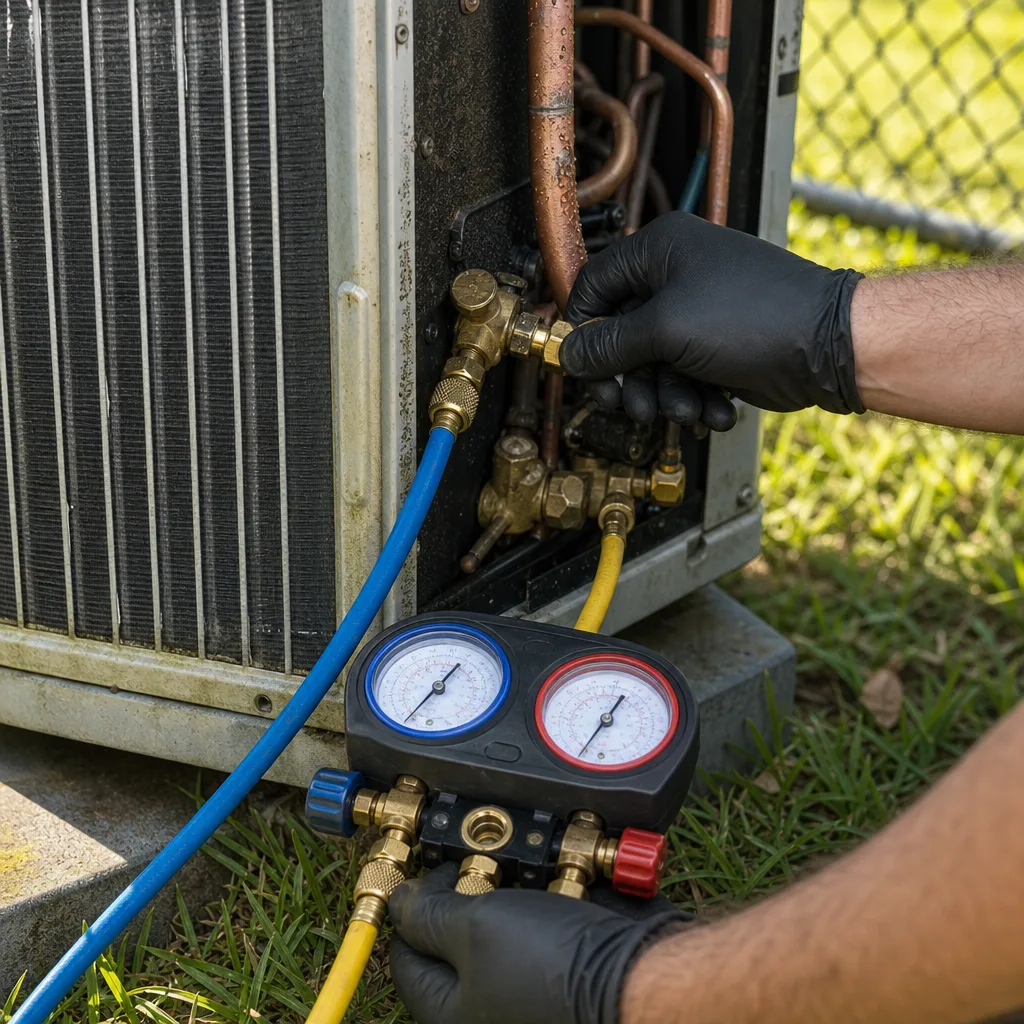
What you’re really watching for is a pattern. Here’s what that looks like in a Fort Worth home:
- Your system is well past the 10-year mark. Our long, hot cooling season works an AC hard, and older units lose efficiency and break down more often as they age.
- You’re on a first-name basis with your repair tech. Two or three service calls in one summer is a sign the system is wearing out faster than you can patch it.
- A big part just failed on an old unit. When a compressor or coil goes out on a system that’s already aging, the repair can cost a large share of what a new system would.
- The house can’t keep up on hot afternoons. The system runs nonstop, the thermostat creeps up anyway, and you’re closing blinds just to stay comfortable.
- Your electric bills keep climbing even though your habits haven’t changed. That usually means the system is working harder to do the same job.
- Some rooms never cool down, or the air feels sticky and damp even when the AC is running.
- Your system uses an older refrigerant that’s gotten hard to find and expensive to refill, which makes every leak repair cost more.
Now the flip side. If your system is under 10 years old, has been mostly reliable, and the problem is a single part, repair it. That’s the smart money move, and any good technician should tell you so. Central air conditioning repair is its own job, and a newer system often has plenty of good years left.
Pay extra attention to the last two signs on that list: rooms that never cool and air that feels muggy. Those aren’t always the old unit’s fault. They can come from a system that was the wrong size from day one, or from leaky, undersized, or poorly laid-out ductwork in a hot North Texas attic. If that’s what’s going on, dropping a brand-new unit onto the same setup won’t fix it. You’ll just have a newer system with the same old comfort problems.
That’s why replacement is your one real chance to get it right. Before anyone quotes you a new system, they should figure out how much cooling your home needs with a cooling load calculation and take a hard look at your ducts. A new AC should solve the problems that made you start shopping in the first place, not just swap the box outside.
When Repair Makes More Sense Than Replacement
If one part failed and the rest of your system is in good shape, fix the part. A working AC with a single bad component isn’t a reason to spend thousands on new equipment. Here’s how to tell when a repair is the right call.
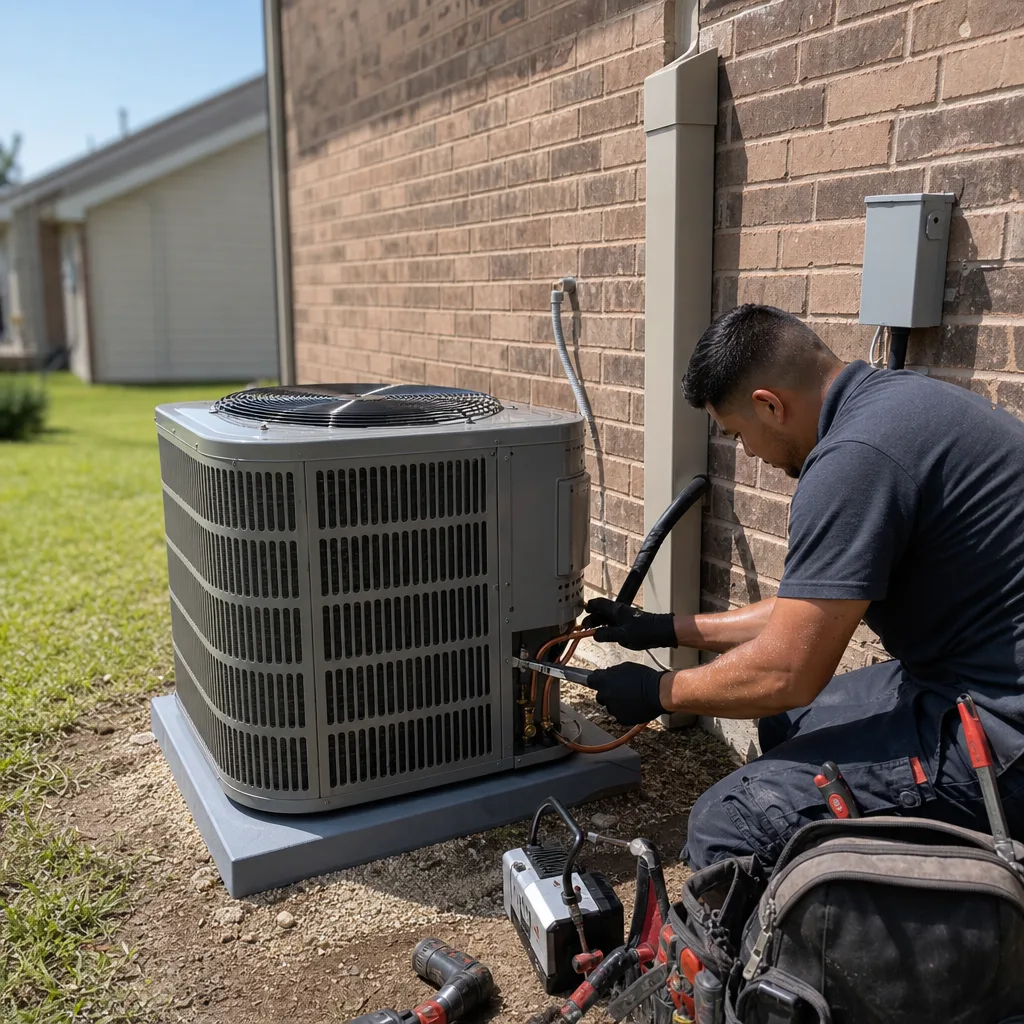
Many of the failures that make an AC look like it’s done are small parts that wear out on their own schedule. Replacing one of them puts a healthy system back to work:
- Capacitor: the small part that gives the motors a kick to start. When it fails, the outdoor unit may hum but won’t run.
- Contactor or other electrical parts: the outside unit won’t turn on, or it won’t shut off.
- Outdoor fan motor: the compressor tries to run but the fan doesn’t spin, so the system can’t push heat out.
- Clogged drain line: water backs up, a safety switch shuts the system off, or you find a wet spot near the indoor unit.
- Frozen coil: ice on the lines or the indoor coil, often from a dirty filter, weak airflow, or low refrigerant.
- Thermostat trouble: dead batteries, bad wiring, or a failing thermostat can look exactly like a broken AC.
A refrigerant leak on a newer system is often worth repairing too. A good technician will find the leak and fix it rather than just topping off the refrigerant. A system that needs a refill every summer has a leak nobody found.
Some comfort problems don’t point to the unit at all. A bedroom that won’t cool while the rest of the house feels fine is often an airflow problem. Duct sealing, duct repair, or a zoning system may fix it while you keep your current AC. Get the airflow checked before you assume you need new equipment.
When you get a repair quote, ask these questions before you decide:
- What exactly failed, and why?
- What does this repair cost, and is that price set before the work starts?
- Is anything else in the system close to failing?
- Would you make this repair on your own system?
A technician should answer all four in plain English. If a repair is quoted, and the rest of the system checks out, the repair is usually the better use of your money. If the tech also flags a worn compressor or a corroded coil, you’re back in the pattern described above, and pricing a new system makes sense.
Our team charges a $26-$99 service-call fee to diagnose the problem, and it’s credited toward the repair if you proceed with Xtreme Air Services. You aren’t paying twice just to learn what’s wrong. We give you upfront flat-rate pricing on the repair, and you decide.
There’s also a case for waiting. Your system might be getting older but still cooling your home well, with no repeat calls. In that case, you don’t need to replace it today. Keep up with seasonal maintenance, change your filter, and start planning. Shopping for a new system on a mild spring day lets you compare options calmly. That’s a lot easier than deciding in August with the house at 85 degrees.
Sizing a System for Fort Worth’s Long Cooling Season
The right size AC for your home comes from measuring your home, not from guessing by square footage or copying the old unit’s label. Size is the choice that most decides how your house feels in August. Get it wrong and even a top-of-the-line system will leave you hot, sticky, or both.
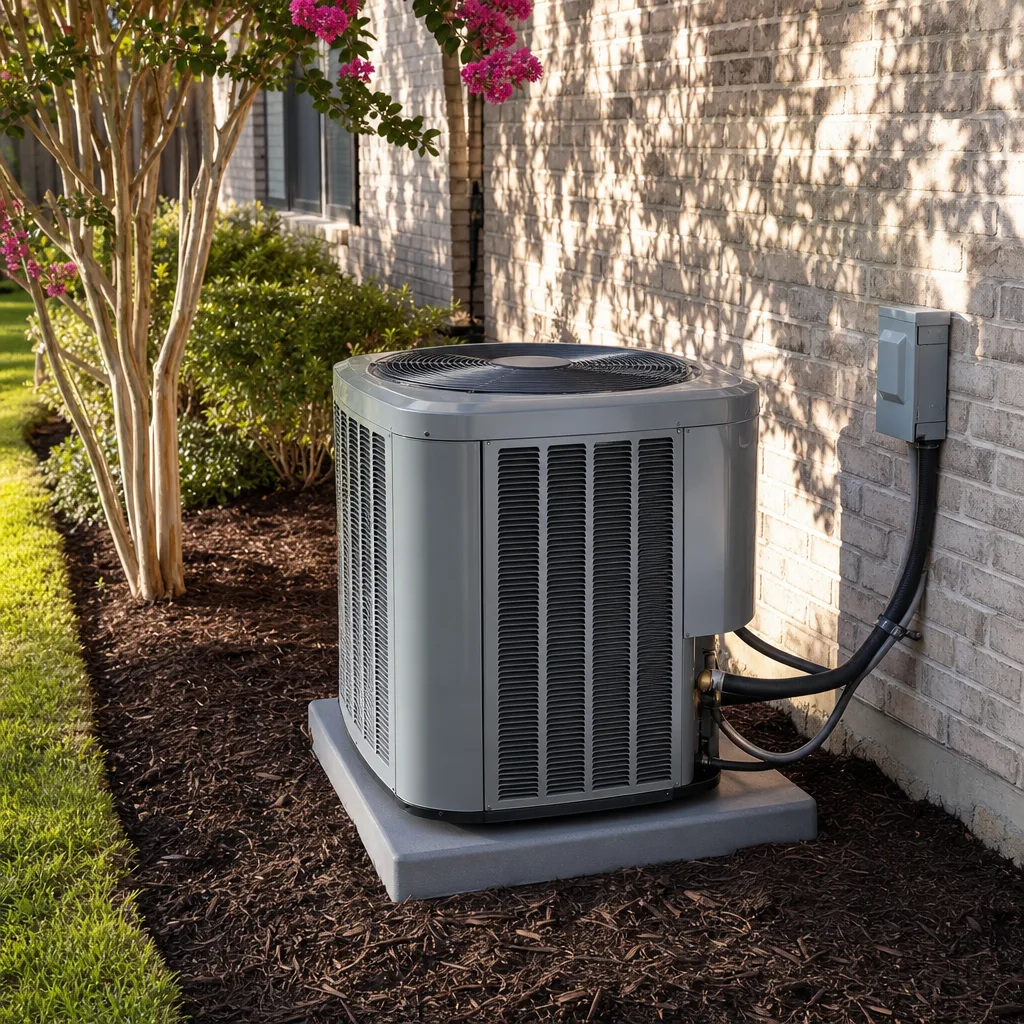
AC size is measured in tons. One ton is the cooling power needed to pull a set amount of heat out of your home every hour. Many homes use somewhere between 2 and 5 tons. The trick is finding the number that fits your house, not your neighbor’s.
Here’s why that matters so much in Fort Worth. Our cooling season starts early in spring and runs well into fall. Summer afternoons push the AC hard for hours at a time. Attics get extremely hot, and that heat presses down on your ceilings and cooks any ductwork running through it. A system has to handle all of that day after day, not just on one mild afternoon.
A real cooling load calculation looks at what your house gains in heat. A good one checks things like:
- How much insulation is in your attic and walls
- How many windows you have, how big they are, and which way they face
- Whether your home is an older build or a tighter, newer one
- Ceiling height and the layout of your rooms
- Where your ducts run and how well they’re sealed
- How many people live there and how you use the space
Two homes with the same square footage can need very different systems. An older home with original windows and thin attic insulation often needs more cooling than a newer house of the same size built tighter. A west-facing living room with big windows can need more air than the rest of the house combined.
Too big sounds safe, but it isn’t. An oversized AC cools the air fast and shuts off before it’s had time to pull moisture out. That’s called short cycling. You end up with a house that’s cool but clammy, more wear on the parts from all that starting and stopping, and higher bills. Too small has the opposite problem. The system runs nonstop on hot afternoons and still can’t hold the temperature you set.
Your ducts have to match, too. A new system can only push as much air as your ducts can carry. If you move up in size, or your old ducts were undersized from the start, the new unit may be loud, weak at the vents, or strained. That’s why the duct check matters just as much as picking the unit.
Long run times are also where variable-speed systems earn their keep. Instead of blasting on and off, they run longer at a lower speed. That evens out room temperatures and pulls more humidity out of the air, which you’ll notice on muggy summer nights.
Size also affects your price, since tonnage and efficiency are among the biggest cost drivers. When you get a quote, ask how they came up with the size. If the answer is “it’s what you had before” or a quick guess by square feet, ask for a cooling load calculation before you sign anything.
Have questions? We’re happy to help.
Call Today, Get Service Today. Xtreme Air Services — Fort Worth is ready to help.
What’s Included in a Central AC Installation Quote
A good installation quote tells you exactly what you’re paying for: the equipment, the labor, and the extras that may or may not apply to your home. If a quote is one number with no detail, you can’t compare it to anything, and you can’t tell what might get added later.
Here’s how our pricing works. Most central AC installations we quote fall between $5,500-$13,000. Our most common job is a standard like-for-like replacement that uses your existing connections with no major changes, and it typically runs $7,000-$10,000. That price includes a new condenser and coil, which is the outdoor unit and the matching indoor part that pulls heat out of your air. Replacing them together matters. A new outdoor unit hooked to an old indoor coil often won’t deliver the comfort or efficiency you paid for.
Our installation price includes:
- The equipment and materials
- Professional installation by licensed and insured technicians
- Standard connections to your existing system
- Startup and testing, so you know it’s cooling right before we leave
- Haul-away of your old unit
Some work isn’t included unless your quote says so. These depend on what we find at your home:
- Duct, electrical, or plumbing changes
- Code corrections
- Permits
Those items are where surprise charges usually come from, so they should be talked through before you sign. An older Fort Worth home might have electrical work at the outdoor unit that no longer meets today’s requirements. A system moving up in size might need the duct changes covered earlier. If any of that applies to your home, it should be written into your quote as its own line, not tacked on halfway through the job.
The rest of the price comes down to a short list of cost drivers. Those include the size and efficiency of the equipment, the brand and model, how easy your attic or closet is to reach, the condition of your existing ductwork, wiring, and plumbing, code upgrades, permits, and any custom fabrication. A high-efficiency, variable-speed system in a tight attic will cost more than a basic swap in an easy-to-reach space.
Whoever you get quotes from, ask these questions before you compare prices:
- Does this price include a new indoor coil, or only the outdoor unit?
- How did you decide on this size?
- Is the permit included, or is it extra?
- What duct, electrical, or code work does my home need, and what does each piece cost?
- Is removing the old unit part of the price?
- Is this price set before work starts?
With us, the last answer is yes. We give you upfront flat-rate pricing, and you approve it before any work begins. If a new system is a bigger bill than you planned for, flexible financing is available on qualifying installations and larger jobs, on approved credit.
Watch Our Video
See How We Handle Central air conditioning installation in Fort Worth
Xtreme Air Services — Fort Worth
Permits, Licensing, and What Happens on Install Day
A new central AC should go in under a licensed contractor, with a city permit when one is required, and it should be tested before anyone packs up. Those three things protect you more than any brand name on the box.

Start with the license. In Texas, air conditioning contractors are licensed by the Texas Department of Licensing and Regulation (TDLR). You can look up any contractor’s license number on the TDLR website before you sign. Ours is HVAC License #TACLA29023C. Our technicians are licensed and insured, plus background-checked and drug-tested, because you’re letting them into your home.
Next is the permit. In Fort Worth, replacing central AC equipment usually means pulling a permit with the city and passing an inspection afterward. The inspection gives you a second set of eyes on the electrical hookup, the drain, and the safety items. Since permits aren’t part of our standard price unless your quote says so, ask up front who pulls it and when the inspection will happen. If a contractor says you don’t need one, ask why.
Refrigerant is the other legal piece. Federal rules say the old refrigerant has to be recovered, not let out into the air. Only certified techs can handle it. It’s fair to ask about that, too.
On install day, a proper job usually covers these steps:
- Recovering the refrigerant and removing the old outdoor unit and indoor coil
- Setting the new condenser level on its pad and fitting the new coil to your indoor equipment
- Checking or replacing the copper lines that connect the two, then sealing every joint
- Pulling a deep vacuum on the system to clear out air and moisture before refrigerant goes in
- Charging the refrigerant to the maker’s specs and checking airflow at the vents
- Testing the drain line and safety switch so a clog can’t leak into your ceiling
- Hauling away the old unit, which is included in our price
A straight like-for-like swap often fits in a single day. Duct or electrical changes can add time. Fort Worth attics get brutally hot by midafternoon in summer, so a morning start is easier on everyone and on the work.
You can help the day go smoothly. Clear a path to your attic access or the indoor unit’s closet. Move anything stored right around the outdoor unit. Keep pets in a separate room. Plan for an adult to be home at the start and at the end.
Before the crew leaves, check a few things yourself. Set the thermostat a few degrees lower and feel for steady, cool air at the vents within a few minutes. Look for water dripping from the condensate line outside or at the drain, not pooling near the indoor unit. Ask what the startup testing showed and how to change your filter. Then make sure you know when the city inspection is set. A good installer won’t mind any of those questions.
Call now
Frequently Asked Questions
Common questions about Central air conditioning installation
How long does a new central AC system last before I’m looking at replacement again?
Most central AC systems hold up well for about 10-15 years with regular care, though Fort Worth’s long, hot cooling season can wear units down faster than in milder climates. Systems that run nonstop for months at a time age quicker than ones in areas with shorter summers. Keeping up with filter changes and seasonal maintenance helps you get the most years out of your investment.
Can I keep my old ductwork when I install a new central AC system?
Sometimes, but it depends on the condition and sizing of your existing ducts. If your ducts are sealed well and sized right for the new unit, you may not need changes. But leaky, undersized, or poorly laid-out ductwork in a hot attic can undercut even a brand-new system’s performance, so it’s worth having it checked before you commit to a like-for-like swap.
Do I need to be home during the central AC installation?
Yes, you should plan to have an adult present at the start and end of the job. This lets the crew get access to your attic or indoor unit closet right away, and lets you walk through the startup testing and ask questions before they leave. A straight like-for-like swap often finishes in a single day, so your time commitment is usually short.
Ready to Get Started?
Call (817) 677-1907 Today, Get Service Today.