


Generator Repair in Fort Worth: Fix the Fault, Not the Whole Unit
Standby and portable generators diagnosed and repaired, starting with the four failures we see most.
What’s Covered on This Page
- Know If Your Problem Is a Repair or a Routine Service Call
- Whole-Home Standby Repair Is Different From Portable Generator Repair
- What a Generator Repair Diagnosis Covers
- What’s Included in the Repair Cost, and What Isn’t
- Why Licensed Electrical Work Matters for Generator Repair
- What is the 80% rule for generators?
- Can I repair my own generator?
Know If Your Problem Is a Repair or a Routine Service Call
Here’s the simple way to sort it out. A repair means something has already failed. A maintenance visit means nothing has failed yet, and you want to keep it that way. Both matter, but they’re different calls, and knowing which one you need helps you get the right help faster.
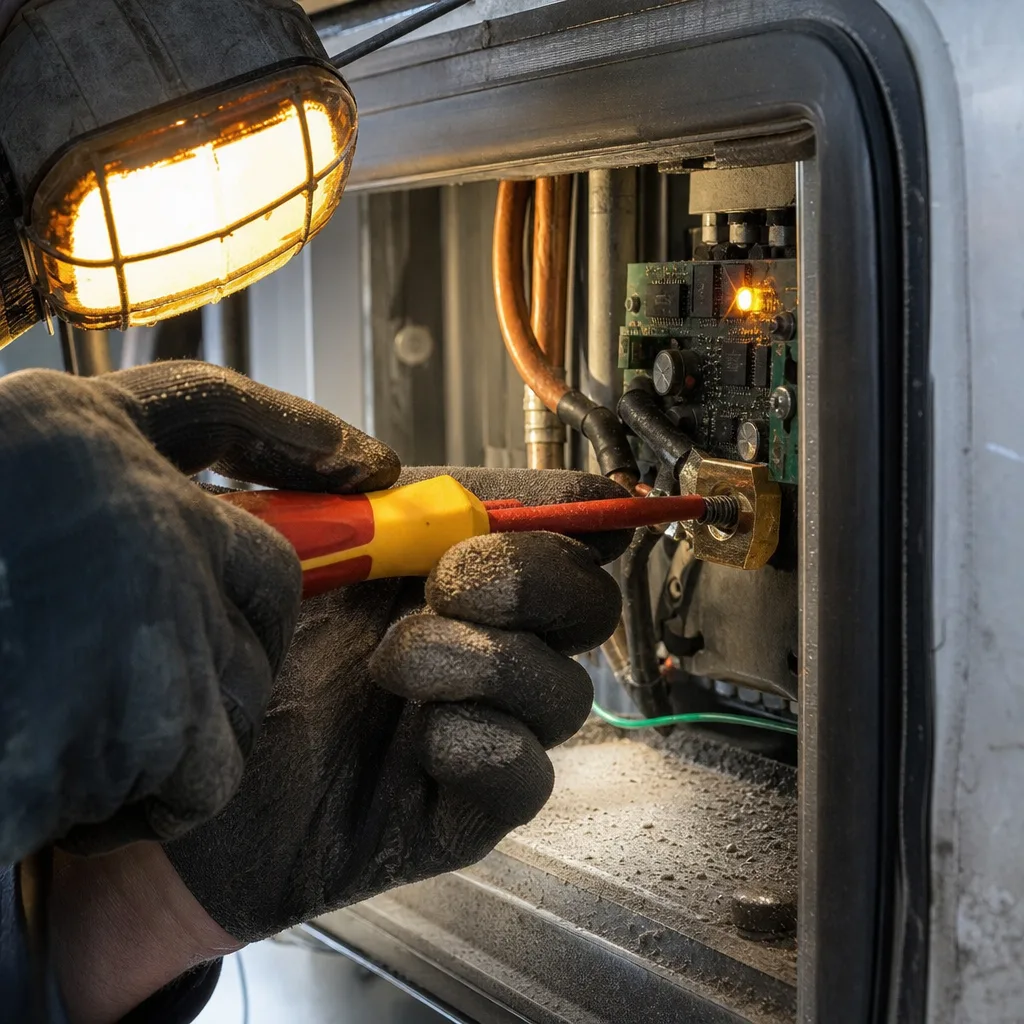
You likely need a repair if you notice any of these:
- The power went out and your standby generator never kicked on.
- It cranks but won’t start, or it starts and then dies a few minutes later.
- A warning light or fault code shows on the control panel.
- It runs, but lights flicker or big appliances like your AC won’t come on.
- You hear grinding, knocking, or a sound it didn’t make before.
- You smell fuel near the unit, or you see oil or fluid under it.
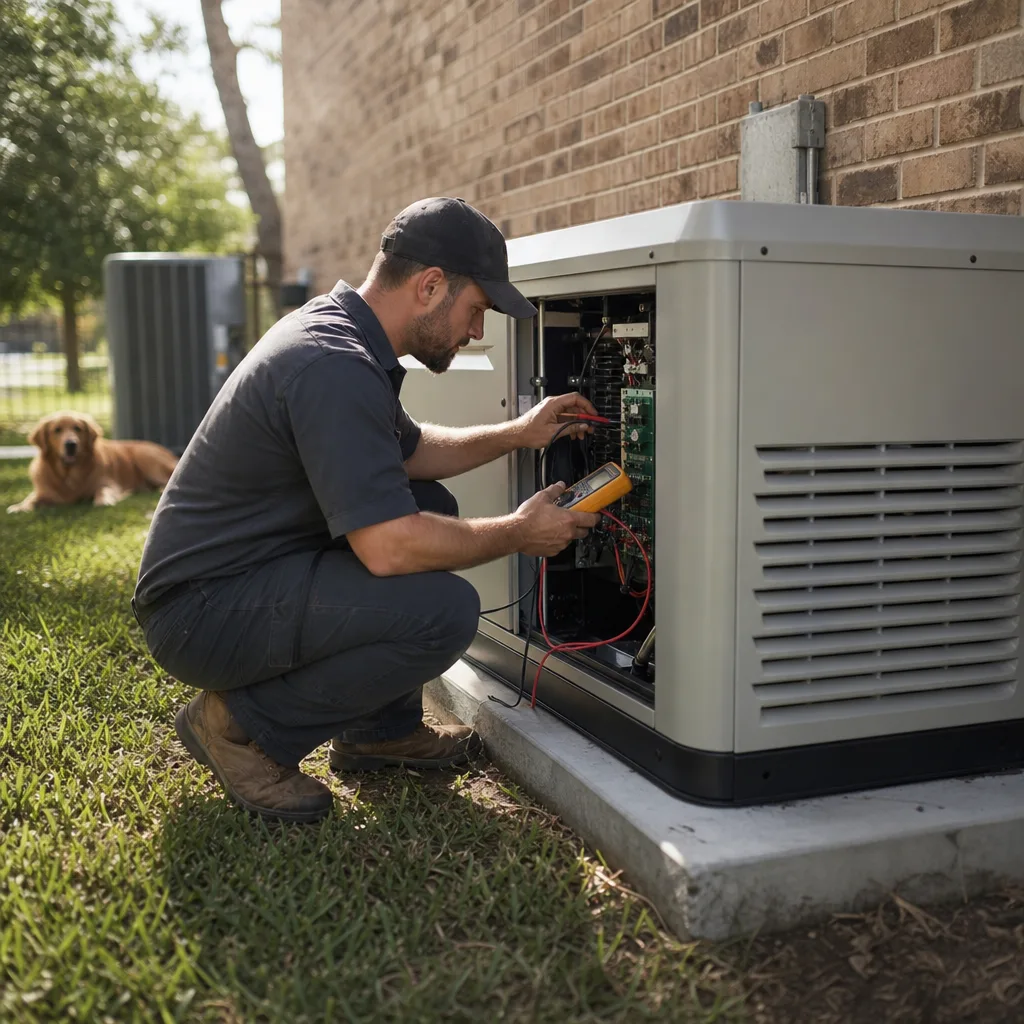
On a repair call, our job is to find the fault, whether that’s the battery, fuel, controls, or starting system. Then we replace the failed part and make sure the generator starts and carries load. Most calls are fixed on the first visit. A typical repair like this runs $200-$525, and the $26-$99 service-call fee is credited toward the repair if you go ahead with us. You’ll know the price before any work starts.
Routine service is different. If your generator seems fine but you can’t remember the last time anyone looked at it, a maintenance visit or annual service is the better fit. The same goes for load testing, which checks whether the unit can handle your home or business when it counts. That’s worth doing before storm season, not during it. North Texas gets severe thunderstorms in spring and hard freezes in winter, and you don’t want to find a weak battery or a stale fuel problem when the lights are already out.
Now for the times you may not need us at all. Most standby generators run a short, scheduled self-test, often once a week. If yours starts up on a quiet afternoon, runs for a few minutes, and shuts off with no warning light, that’s normal. Nothing’s wrong. With a portable generator, a no-start is sometimes just an empty tank or old gas sitting in it from last year. Check the simple stuff first and read your owner’s manual. If the fix is that easy, you’ve saved yourself a call.
If you’ve checked the basics and it still won’t behave, or anything involves fuel smells, wiring, or your transfer switch, that’s when a licensed technician should take a look.
Whole-Home Standby Repair Is Different From Portable Generator Repair
The kind of generator you own changes almost everything about the repair. It changes what usually breaks, who should fix it, and whether you need a licensed technician at all. A whole-home standby unit and a portable generator both make power, but they’re built and connected in very different ways.
A standby generator is a permanent part of your home. It sits on a pad outside and runs on your natural gas or propane line, so you never fill a tank. An automatic transfer switch ties it into your electrical panel. That switch senses when the utility power drops, tells the generator to start, and moves your home over to backup power without you lifting a finger. A small controller runs the whole show, and a battery gives the engine its first kick.
That design is why standby repairs usually come down to a few key parts:
- The starting battery, which can lose strength with age and weather
- The controller and its sensors, which decide when to start and when to shut down
- The transfer switch, which hands your home’s power back and forth
- The fuel supply, including the gas line and regulator feeding the engine
Every one of those parts touches your home’s wiring or its gas line. That’s not a weekend project. It calls for a licensed technician who understands both electrical and fuel systems. Because our team handles electrical work, gas line repair, and generator service, one trusted team can follow the problem wherever it leads. You won’t have to call a second company if the trouble turns out to be in the panel or the gas line.
A portable generator is a different story. It’s a small engine with its own gas tank, and most of its problems are small-engine problems:
- Old gasoline that gums up the carburetor after months of sitting
- A worn or fouled spark plug
- Low oil, which trips a safety shutoff on many models
- A worn pull cord or a dead battery on electric-start units
If your portable unit itself won’t run, your owner’s manual or a small-engine repair shop is often the right first stop. We’d rather tell you that straight than send a truck you don’t need.
Where a portable generator does need us is the connection to your home. Running extension cords through a window is one thing. Powering your furnace fan, fridge, and well pump through your panel is another. That needs a proper hookup with a transfer switch or inlet, so power flows only where it should and never back out onto the utility lines. We handle portable generator hookups and transfer switch installation for that reason.
Fort Worth weather is hard on standby units in particular. A long summer outage can mean hours of carrying a big AC load in triple-digit heat. A hard winter freeze can leave a tired battery too weak to crank the engine just when you need it most. That’s why the repair often comes down to the part that’s been working hardest.
When you reach out, it helps to know a few basics. Is it a standby or a portable unit? Does it run on natural gas, propane, or gasoline? What’s the brand and size, if you can see a label? The make and size affect parts availability and cost, so those details help us show up ready to get it running.
What a Generator Repair Diagnosis Covers
A good diagnosis answers one question before anyone spends your money: what failed, and why? Swapping parts until something works is the slow, expensive way to fix a generator. On a repair call, we look for the fault in the four places that most often stop a generator cold. Those are the battery, the fuel, the controls, and the starting system.
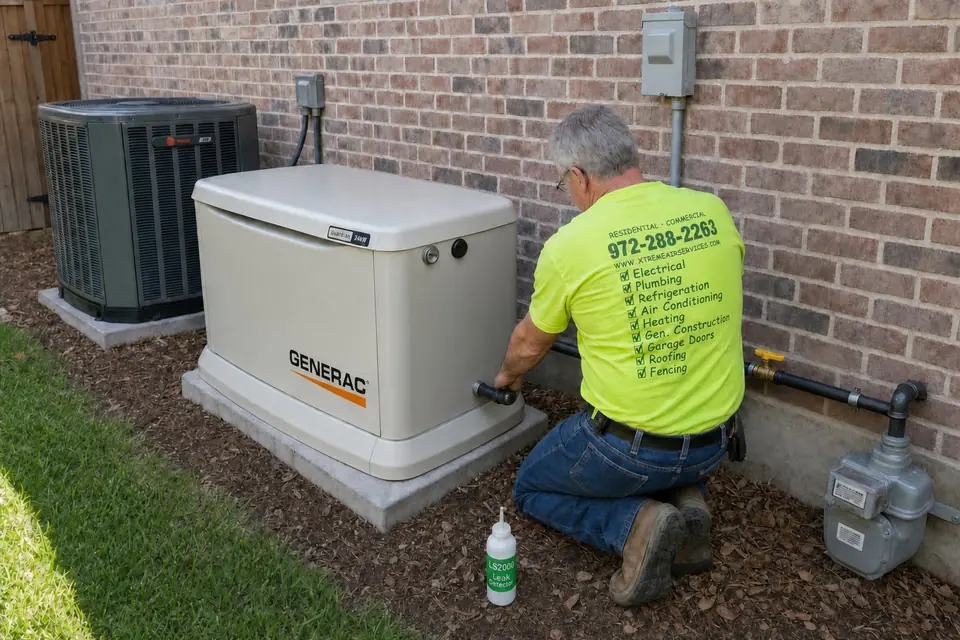
Here’s what checking each one really means:
- Battery: A battery can read fine while it’s sitting still and then fail the moment it has to crank the engine. What counts is whether it holds up under that load. Loose or corroded terminals can cause the same no-start, so they get checked too.
- Fuel: The engine needs steady fuel at the right pressure. On a standby unit, that means the gas supply feeding it. On a portable unit, it’s often old gasoline that has gummed things up.
- Controls: Most standby controllers save fault codes from the moment the generator shut down or refused to start. Those codes are clues, and they point the search in the right direction.
- Starting system: If the battery and fuel check out, the next question is whether the starter and its parts can turn the engine over.
Then comes the step that’s easy to skip and shouldn’t be. Once the failed part is replaced, the generator has to prove it can start and carry load. A unit that starts up in the driveway but stalls when your AC kicks on isn’t fixed. It’s just quiet until the next outage. Testing it under real demand is how you know it’ll run when the power drops.
You should know exactly what your repair price covers. Here’s how it breaks down:
- Included: diagnosis, labor, the standard replacement part, and testing.
- Not included unless quoted separately: major components, full unit replacement, code upgrades, or permits.
That split matters. If the diagnosis turns up something bigger than a standard part, you get a separate quote for it. Nothing outside the standard repair gets added without your say. You stay in control of the decision.
A few things can move the price up or down. They are the cause of the failure, your generator’s brand and size, how easy the part is to get, and how easy the unit is to reach. A generator tucked behind a fence or in a tight side yard can take more work than one sitting out in the open. After-hours timing is a cost driver for many companies, but not here. Xtreme Air Services charges no extra for nights or weekends, so an outage at 2 a.m. on a Sunday doesn’t cost you more than one on a Tuesday afternoon.
Financing usually isn’t offered for a smaller repair like this one. If the diagnosis shows you need a larger repair or a replacement, financing is available for that work.
Not sure what your Generator repair project needs? Ask us.
Call Today, Get Service Today. Xtreme Air Services — Fort Worth is ready to help.
What’s Included in the Repair Cost, and What Isn’t
Most generator repair jobs we handle fall in a typical range of $200-$900. The common fix, where we find the fault and swap out a standard part, sits at the low end of that range. The higher end usually means the problem took more work, the part was harder to get, or the unit was harder to reach.
So what does it look like when a job goes past a standard repair? Here’s what the excluded items mean in plain terms:
- Major components: A failed battery or a bad sensor is a standard part. A problem deep in the engine or the alternator, which is the part that makes the power, is a bigger job and gets its own quote.
- Full unit replacement: Sometimes fixing an older generator just doesn’t make sense. We’ll tell you that straight and price a replacement separately.
- Code upgrades: Older installs don’t always meet today’s electrical or gas rules. If the repair means touching that work, bringing it up to code is quoted on its own.
- Permits: Some larger jobs in Fort Worth need a permit. A simple part swap usually doesn’t. When one is needed, it’s listed separately so you can see it.
Before you approve a bigger repair on an older unit, it’s worth asking whether to fix it at all. A few honest questions help:
- Has this generator needed repairs more than once in the past couple of years?
- Are parts for this brand and model still easy to find?
- Does it still fit your home? If you’ve added a bigger AC, a pool pump, or an EV charger since it went in, it may not carry your home anymore.
If the answers point toward a new unit, our generator sizing and consultation service can help you figure out what size your home really needs. That’s also the point where financing comes into play, as mentioned above.
Whoever you call, ask these questions before you say yes to any generator repair. Is the service-call fee credited if I go ahead? Does the price include the part and a load test, or just the labor? Do nights and weekends cost more? If you find a bigger problem, do I get a new price before you do that work? A company that answers all four clearly is one you can trust with your power.
With us, those answers are already on this page. The service-call fee counts toward your repair. Testing is part of the job. Nights and weekends cost the same as any weekday. And you’ll see upfront flat-rate pricing before any work starts. Our licensed and insured technicians will explain what failed, show you the price, and let you make the call.
Call 817-677-1907
Watch Our Video
See How We Handle Generator repair in Fort Worth
Xtreme Air Services — Fort Worth
Why Licensed Electrical Work Matters for Generator Repair
A generator isn’t just an engine. It makes the same kind of power that comes into your home from the street, and it feeds that power through your transfer switch and into your electrical panel. So once a repair touches any of that wiring, it stops being a mechanical job and becomes electrical work. That’s the point where a license really matters.
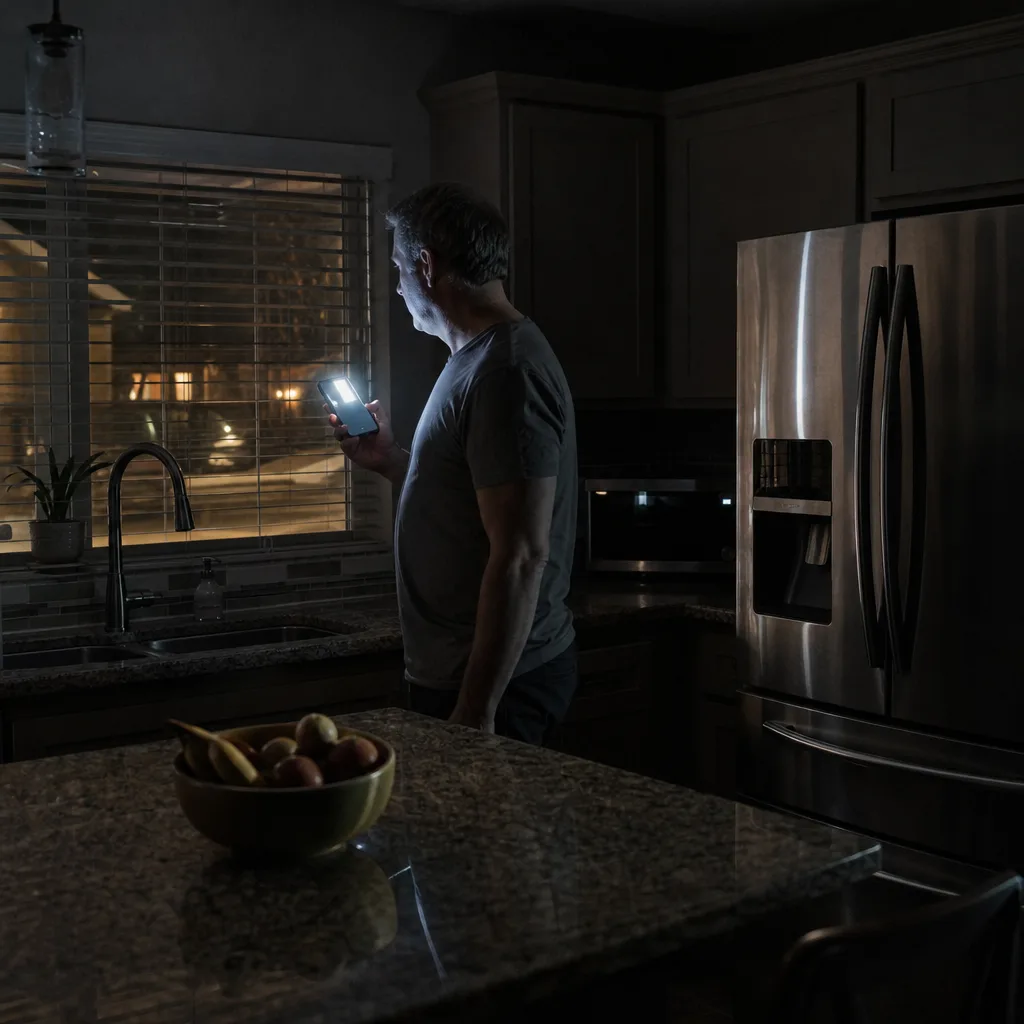
The biggest reason is something called backfeed. That’s when power from your generator flows the wrong way, out of your home and onto the utility lines. Those lines are supposed to be dead during an outage. In Fort Worth, Oncor crews are out after spring storms and winter ice working on lines they expect to be safe to touch. A miswired switch or a homemade connection can put live power on those lines and seriously hurt the person fixing them. Backfeed can also damage your generator and your home’s wiring when utility power comes back on.
Here are signs your problem is likely on the electrical side, not the engine side:
- The power came back, but your home is still running on the generator
- The generator runs, but only some rooms or circuits have power
- A breaker on the generator or in your panel keeps tripping
- You hear buzzing or smell something hot near the transfer switch or panel
- Lights dim or surge every time a big appliance turns on
None of those are a good fit for a weekend fix or a small-engine shop. They need someone trained to work safely inside a live electrical system and to test that power is going only where it should.
In Texas, electricians are licensed through the Texas Department of Licensing and Regulation, also called TDLR. That license means the person working on your panel has been trained and tested on electrical safety and code. You can look up any contractor’s license on the TDLR website before you let them start. Insurance matters too. If something goes wrong on a job, you want a company that’s insured, not a stranger with a pickup truck and a set of jumper cables.
Xtreme Air Services is a licensed and insured HVAC, plumbing, and electrical contractor, and our technicians are background-checked and drug-tested. That’s why one visit can cover the whole repair, from the battery to the transfer switch to the gas line feeding the engine, as covered above.
There are a few things you can safely do on your own. You can check whether the main breaker on the generator itself has tripped and reset it the way your owner’s manual shows. You can make sure the unit has clear space around it and nothing is blocking the vents. And you can read the fault code on the control panel and write it down. That code helps whoever comes out find the problem faster.
What you shouldn’t do is open the transfer switch, work inside your panel, or wire a portable generator straight into a dryer outlet or a wall plug. Those shortcuts are how backfeed happens. If the fix means opening any of that up, let a licensed technician handle it so your family, your home, and the crews on your street stay safe.
Frequently Asked Questions
Common questions about Generator repair
What is the 80% rule for generators?
The 80% rule means you should size a generator to run at about 80% of its maximum rated load, not 100%. Running a unit at its full rated capacity for long stretches puts extra strain on the engine and alternator. This matters most during long Fort Worth outages, when a generator may carry your AC, fridge, and other loads for hours at a time. If your generator struggles to keep up with your home, a sizing consultation can tell you whether you’ve outgrown it.
Can I repair my own generator?
You can safely handle a few basic checks yourself, like resetting a tripped breaker on the unit or clearing old gas from a portable generator’s tank. But anything involving the transfer switch, your electrical panel, or the gas line feeding a standby unit needs a licensed technician. Miswiring those parts can cause backfeed, which sends power back onto utility lines that crews expect to be dead. If the basics don’t fix it, that’s your sign to call a professional instead of digging deeper on your own.
Ready to Get Started?
Call (817) 677-1907 Today, Get Service Today.