


Transfer Switch Installation in Fort Worth
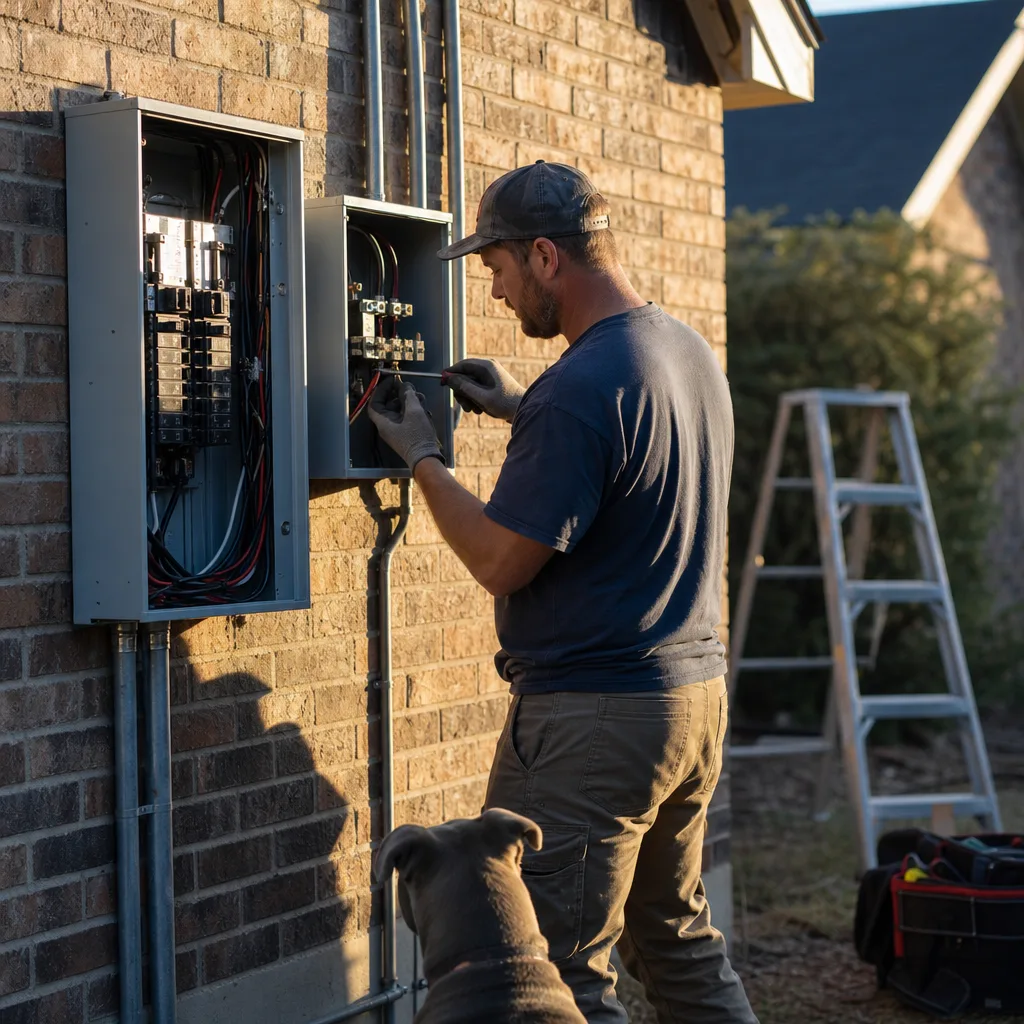
Automatic or manual transfer switches installed to code, so your generator powers your home safely.
What’s Covered on This Page
- What a Transfer Switch Does and Why It’s Required
- Automatic vs. Manual Transfer Switches: Choosing the Right Type
- Fort Worth Permit Rules for Transfer Switch Installation
- Why This Is Licensed Electrician Work, Not a DIY Project
- What Happens During a Transfer Switch Installation Visit
- What size transfer switch do I need for a 10,000 watt generator?
- Do I need an electrician to install a transfer switch?
- How much would an electrician charge to install a transfer switch?
What a Transfer Switch Does and Why It’s Required
Think of a transfer switch as a gate with only two positions. Your home can take power from the grid, or it can take power from your generator. It can never take both at once. The switch mounts next to your electrical panel and decides which source feeds your circuits.
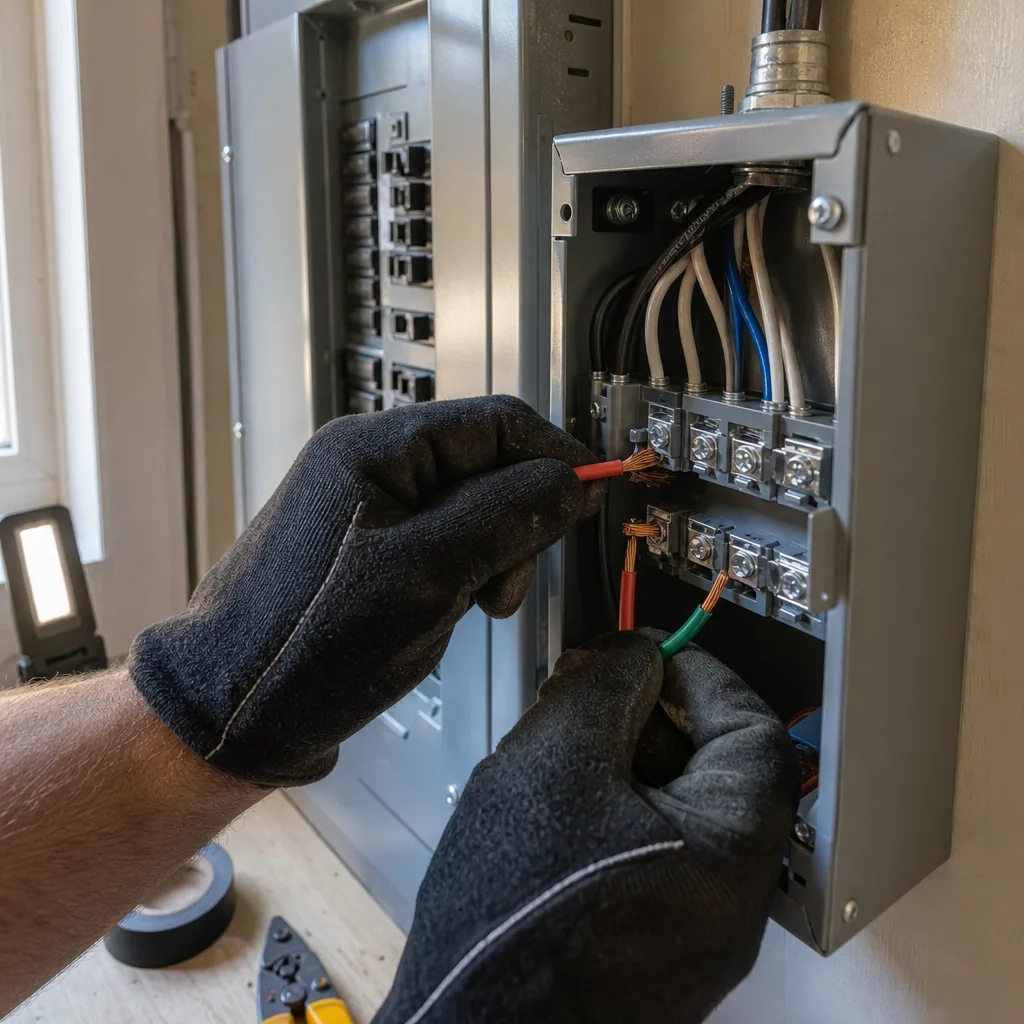
That single job matters more than it sounds. Without a switch, generator power can flow backward out of your panel and onto the street lines. That’s called backfeeding. Those lines run to a transformer, which can boost the voltage way up. An Oncor crew working to restore power after a storm may be handling a line they think is dead, and it isn’t. Backfeeding can also hurt you. When grid power comes back, it can slam into a running generator and fry it, or damage the wiring in your home.
You may have heard of people plugging a generator into a dryer outlet with a cord that has a plug on both ends. It’s a common shortcut, and it’s a dangerous one. The bare prongs on that cord are live, and nothing stops power from heading out to the street. If a neighbor suggests it, please don’t. A transfer switch does the same job the safe way.
This is also why the switch is required, not optional. The electrical code expects any generator tied into a home’s wiring to have an approved way to keep the two power sources apart. A transfer switch is the standard way to do it. Because the work ties into your panel, permits are often part of the job, and an inspector may check the setup before it’s signed off.
There are two basic kinds:
- Manual transfer switch: When the power goes out, you start your portable generator, plug it into an inlet box outside, and flip the switch yourself. It’s simple and costs less.
- Automatic transfer switch: It senses the outage, starts a standby generator, and moves your home over on its own, usually within seconds. When grid power returns, it switches back and shuts the generator down.
North Texas weather is the reason most people start asking about this. Spring thunderstorms, hail, and hard winter freezes can knock out power in Fort Worth for hours or longer. When that happens, you want your fridge, your lights, and maybe your furnace fan or a window unit running without anyone in danger. A generator gives you the power. The transfer switch is what makes it safe to use.
So if you already own a generator, the switch isn’t an add-on someone’s trying to sell you. It’s the piece that turns a machine sitting in your garage into backup power you can count on, done right the first time.
Automatic vs. Manual Transfer Switches: Choosing the Right Type
The right switch mostly comes down to one question: what kind of generator do you have, or plan to get? After that, it’s about who’s home when the power goes out and how much of your house you want running.
Start with your generator. A portable generator pairs with a manual switch. A permanently installed standby generator pairs with an automatic switch. Matching the switch to the generator is the first step. Everything else is fine-tuning.
A manual switch is probably the better fit if:
- You already own a portable generator and you’re happy to roll it out when you need it.
- Someone able-bodied is usually home and can start the generator and flip the switch.
- You only need a handful of things running, like the fridge, a few lights, the furnace fan, and a phone charger.
- You want solid, safe backup power without paying for a standby system.
An automatic switch is worth a closer look if:
- You have, or plan to buy, a whole-home standby generator.
- You travel or work long days, and the house would sit without power until you got home.
- An older parent lives with you, or someone at home relies on powered medical equipment.
- You run a business from home and can’t afford to lose an afternoon to an outage.
Here’s a real-life way to think about it. Picture a winter storm rolling through Fort Worth at 2 a.m. and taking the power down. With a manual switch, someone has to get up, head outside in the cold, wheel the generator into place, plug in the cord, start it, and flip the switch. Plenty of people don’t mind that at all. With an automatic switch, you might not even wake up. If the first picture sounds fine to you, a manual switch will serve you well.
Next, think about how many circuits you want covered. A manual switch usually powers a set group of circuits that you pick ahead of time. That’s why it’s smart to decide now which ones matter most, like the kitchen fridge, a bedroom, or the garage door. An automatic switch can be set up to run selected circuits or, with a large enough generator, much more of the home. Either way, your generator has to be big enough to carry whatever the switch sends to it. A switch can’t make a small generator do a big job.
Switch type is also one of the biggest things that moves the cost of the job. We’ll break down what drives price further down this page.
If you haven’t bought a generator yet, it’s smart to sort that out first. Our generator sizing and consultation service can help you match the generator and the switch to the way your family really uses power. That way you’re not paying for more than you need, or ending up with less than you counted on.
We install both manual and automatic transfer switches. There’s no wrong choice here, only the one that fits your home. A manual switch on a portable generator is a safe, honest setup for many Fort Worth families, and we’ll tell you so if that’s what makes sense for you.
Fort Worth Permit Rules for Transfer Switch Installation
Here’s the short answer. In Fort Worth, adding a transfer switch is electrical work that ties into your panel, so it usually needs a permit and an inspection. The permit is how the city confirms your switch keeps grid power and generator power apart the way the code expects.
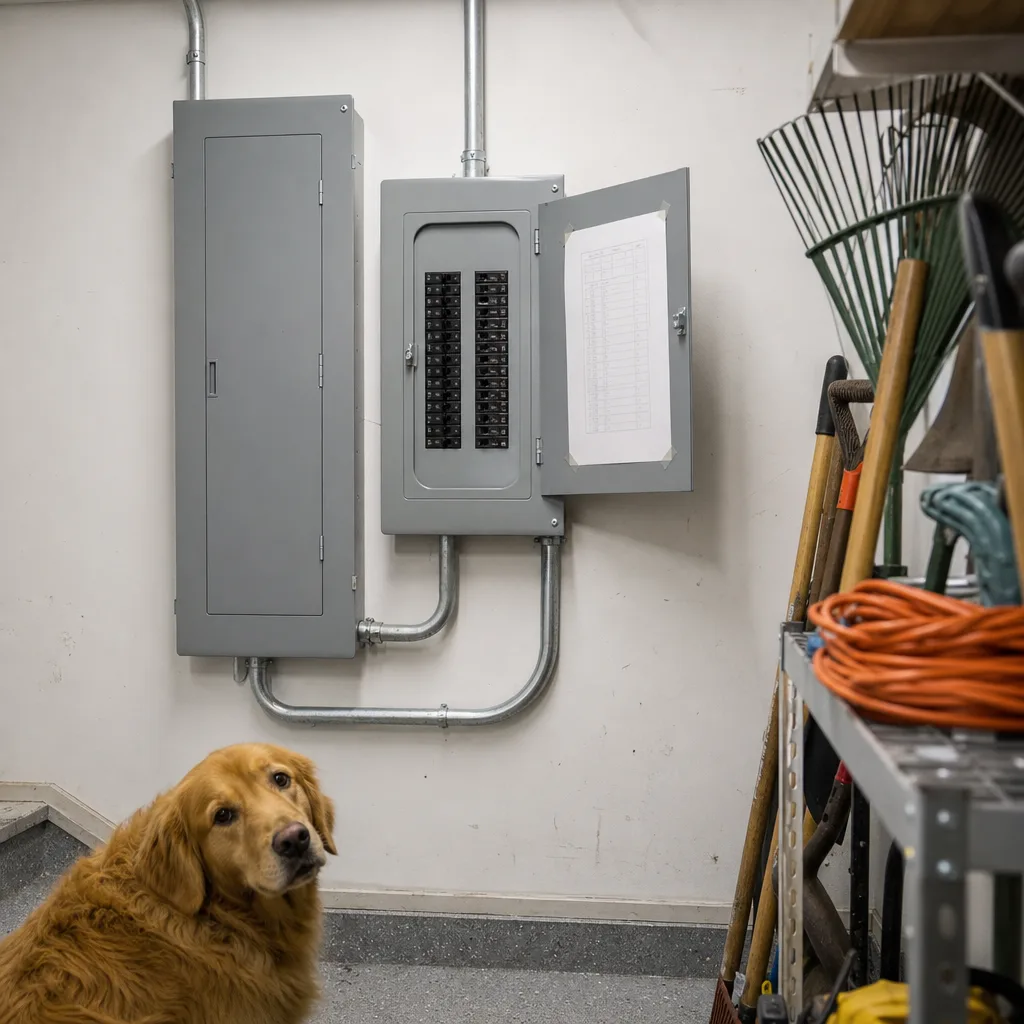
First, check who your permit office is. Plenty of homes with a Fort Worth mailing address sit inside another city, like Haltom City, Benbrook, or White Settlement, and those cities run their own permit desks. Homes outside any city limits may fall under county rules instead. A good contractor will confirm this from your address before quoting the job.
In Texas, electricians are licensed through the Texas Department of Licensing and Regulation. The permit for panel work is normally pulled by the licensed electrical contractor doing the job, not the homeowner. If someone asks you to pull the permit yourself so they can skip it, treat that as a warning sign. It often means they can’t pull one.
When the inspector comes out, they’re looking at the things you can’t easily check yourself:
- The switch is an approved type and rated for your panel and your generator.
- Wire sizes match the breakers and the load they carry.
- Grounding and bonding are done correctly, so a fault has a safe path.
- For a portable setup, the outdoor inlet box is weather-rated and in a sensible spot.
- Everything is labeled so you, or the next owner, know what each circuit does.
Why should you care about a signed-off permit? A few reasons. If your home ever has a fire or storm claim, your insurance company may ask whether the electrical work was permitted. When you sell, a buyer’s inspector may flag a generator hookup with no permit on file. And an inspection gives you a second set of trained eyes on work that sits inside your panel.
Permits can also bring old problems to light. Many Fort Worth homes have panels that have been worked on over the years. If your panel is full, worn out, or has past wiring that doesn’t meet today’s code, it may need fixing before the switch can pass. That’s simply what happens when someone finally looks closely.
This matters for your budget. Our transfer switch pricing covers the switch, materials, professional installation, connections, and testing. Permits and code corrections are excluded unless they’re stated in your quote, and so are panel upgrades if your panel needs one. That way you see exactly what you’re paying for, and nothing gets slipped in later.
Before you hire anyone, ask these questions:
- Will you pull the permit under your license?
- Is the permit fee in this quote, or separate?
- If the inspection turns up a code issue, how will you price that fix?
- Who meets the inspector, and do I need to be home?
Clear answers to those four questions tell you a lot about who you’re letting into your panel.
Thinking about Transfer switch installation? Let’s talk.
Call Today, Get Service Today. Xtreme Air Services — Fort Worth is ready to help.
Why This Is Licensed Electrician Work, Not a DIY Project
If you’re handy, you’ve probably swapped a light fixture or an outlet and wondered if this is much different. It is. A transfer switch gets wired straight into your main electrical panel. That’s where small mistakes stop being a nuisance and start being a real danger.
Here’s the part most online videos skip. Turning off your main breaker doesn’t make the whole panel safe. The thick wires coming in from Oncor’s line, and the spots where they attach, stay live no matter what that breaker says. They carry enough power to kill you, and there’s no switch inside your house that turns them off. A licensed electrician knows exactly where those live parts are and works around them with the right tools and protective gear.
Even with the power handled safely, there are several details that have to be right for the switch to work and stay safe for years:
- Wire size. Every wire has to match the breaker it’s on and the load it carries. Wire that’s too small can overheat inside your walls long before anything trips.
- Neutral and ground setup. Many portable generators tie their neutral wire to the frame. Depending on the switch you choose, that can leave your home with two bonding points instead of one. Stray current then travels where it shouldn’t, and it’s not something you’ll see or smell until there’s trouble.
- Matching circuits to the generator. Each circuit you pick adds load. Pick the wrong mix and your generator struggles, stalls, or trips the moment the AC or well pump kicks on.
- Panel condition. Loose connections, scorched breakers, or crowded wiring from past work often show up only once the cover comes off. A trained eye catches them before your new switch gets connected to them.
There’s a cheaper-looking option you may run across called an interlock kit. It’s a small plate that keeps the main breaker and the generator breaker from being on together. When it’s the right fit and installed correctly, it can be a safe way to go. It still means work inside your panel, so it belongs in the same licensed category.
Being honest, there’s plenty you can do yourself, and it’ll make the job go faster:
- Write down what you want running during an outage, like the fridge, furnace fan, a bedroom, the garage door, or a medical device.
- Find your generator’s running watts on its label or in the manual so the circuits can be matched to it.
- Clear a path to your electrical panel and the outside wall where an inlet box might go.
- Know which door the generator will roll out of and where it’ll sit during a storm.
That homework saves time on the day of the job and helps you decide which circuits are worth covering. The wiring itself is where a license matters. Our licensed and insured technicians handle the panel work, the connections, and the testing, so when the next Fort Worth storm knocks the power out, you flip the switch or let it switch itself and know it’s done right the first time.
Watch Our Video
See How We Handle Transfer switch installation in Fort Worth
Xtreme Air Services — Fort Worth
What Happens During a Transfer Switch Installation Visit
Most transfer switch jobs finish the same day. Your power will be off for part of that time, because the switch gets wired into your panel. Knowing the order of things makes the day easy to plan.
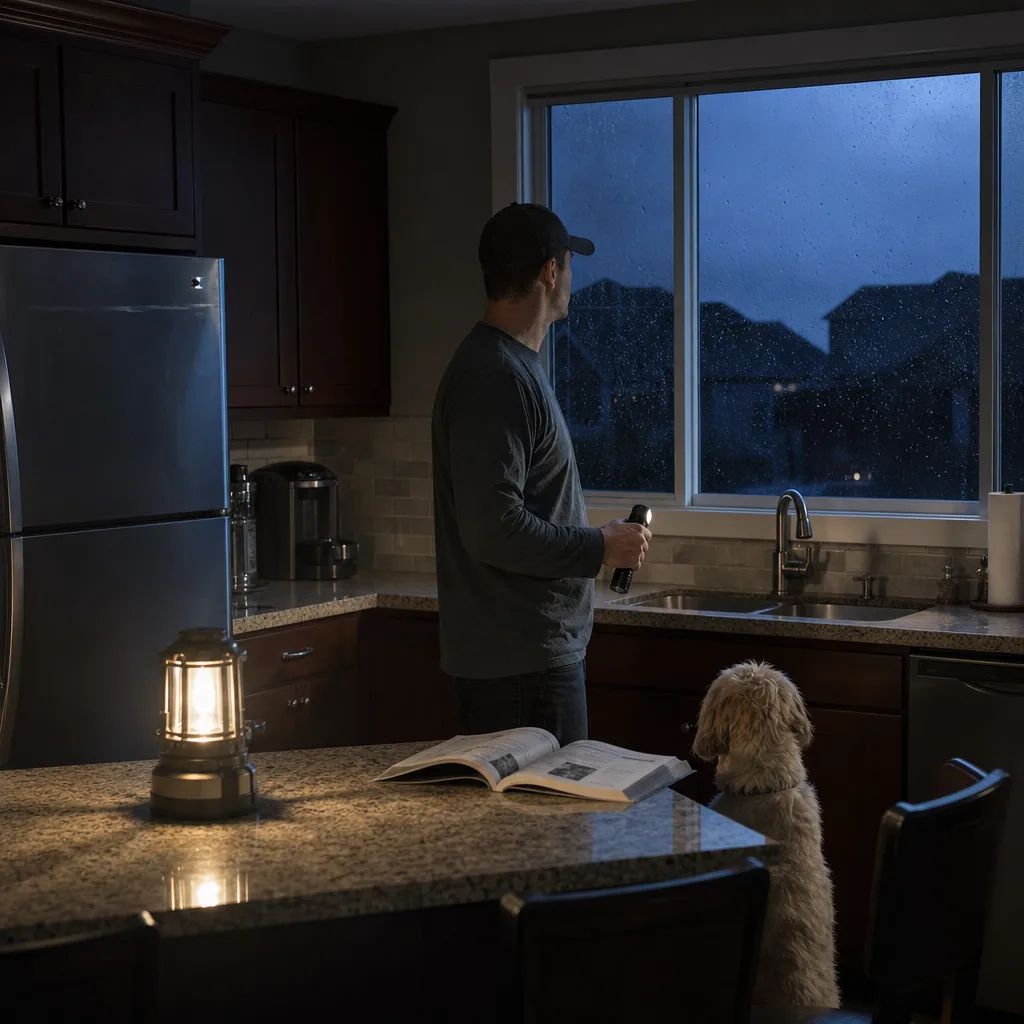
The visit starts with a look at your setup. That means your panel, your generator or where a standby unit will go, and the outside wall where a portable generator would plug in. This is when you share the list of circuits you want covered, like the fridge, a bedroom, and the furnace fan. Then you get an upfront flat-rate price, and you approve it before any work starts. There’s no meter running while the tech works.
Once you say go, a proper installation covers these steps:
- Shut off power at the main and confirm the work area is safe.
- Mount the transfer switch next to your electrical panel.
- Move each circuit you picked over to the switch, using wire sized for that circuit’s breaker and load.
- For a portable generator, mount a weather-rated inlet box outside where the generator cord will plug in. For a standby generator, connect the switch to the generator’s wiring.
- Label every circuit so anyone in your home can tell what’s covered.
- Restore power and test the whole system.
A little prep on your end helps. Charge your phones and laptops the night before. Keep the fridge and freezer closed so food stays cold. If you work from home, plan a few hours away from your desk or your Wi-Fi. In a Fort Worth summer, a morning start keeps the house cooler while the AC is off. And make sure there’s a clear path to your panel and the outside wall.
Testing is the step you should care about most, and it’s part of the job, not an extra. A real test fakes an outage. The generator starts, the switch moves your home over, and each chosen circuit gets checked to make sure it carries its load without tripping. Then grid power is brought back and the switch returns to normal. With an automatic switch, you’ll hear and see it happen on its own. With a manual switch, you’ll do the flip yourself.
Before the tech leaves, ask them to walk you through it. You should know how to roll out and plug in your generator, which way the switch goes, and what to do when the power comes back. If you don’t feel sure you could do it alone at 2 a.m. in a storm, ask again. That’s a fair request.
If your job needs a permit, the city inspection may be on a different day. Your switch is installed and tested either way, and the inspector’s sign-off is the last piece of paperwork.
Included in the job: the transfer switch and materials, professional installation, all connections, and testing. The generator itself isn’t part of it. Neither are panel upgrades, code corrections, or permits, unless they’re stated in your quote.
Frequently Asked Questions
Common questions about Transfer switch installation
What size transfer switch do I need for a 10,000 watt generator?
Your transfer switch needs to be rated to handle at least the full output of your generator, so a 10,000 watt generator calls for a switch sized to carry that load safely. The right amperage also depends on which circuits you want covered, since each one adds to the total draw. This is a sizing decision worth getting right before installation, because a switch rated too small can’t safely pass along everything your generator produces. We can match the switch size to your generator and your circuit list as part of planning the job.
Do I need an electrician to install a transfer switch?
Yes, a transfer switch has to be wired into your main electrical panel, and that’s licensed electrician work in Texas. Turning off your main breaker doesn’t make the panel safe, since the incoming utility lines stay live no matter what. Getting wire sizes, grounding, and circuit matching wrong can overheat wiring or send stray current where it shouldn’t go. That’s why this job belongs to a licensed and insured electrician, not a weekend project.
How much would an electrician charge to install a transfer switch?
The cost depends mainly on whether you choose a manual or automatic switch, how many circuits you want covered, and whether your panel needs any work first. A manual switch paired with a portable generator typically costs less than an automatic switch tied to a standby system, since the automatic setup involves more wiring and components. Permits and any code corrections your panel needs are usually priced separately from the switch installation itself. Ask for an upfront flat-rate quote before any work starts so you know exactly what’s included.
Ready to Get Started?
Call (817) 677-1907 Today, Get Service Today.