


Whole-Home Standby Generator Installation in Fort Worth
Turnkey standby generators sized to your home's real load – gas line, panel, permits and startup handled as one job.
What’s Covered on This Page
- Whole-Home Standby Power Solves a Specific Problem
- A Portable Generator May Be Enough for Some Homes
- What a Turnkey Installation Includes
- Permits Are Required, Not Optional
- What Drives the Cost of a Standby Generator Install
- Can I just plug a generator into a wall outlet?
- Can I install my own standby generator?
- What determines how much a standby generator costs?
Whole-Home Standby Power Solves a Specific Problem
The power goes out in Fort Worth, and the house starts changing fast. In summer, the AC stops and the rooms heat up within hours. In a hard winter freeze, the furnace blower quits and your pipes start to worry you. Whole-home standby generator installation fixes that one problem. You get backup power that starts on its own, runs on your natural gas line, and keeps your home working until the grid comes back.
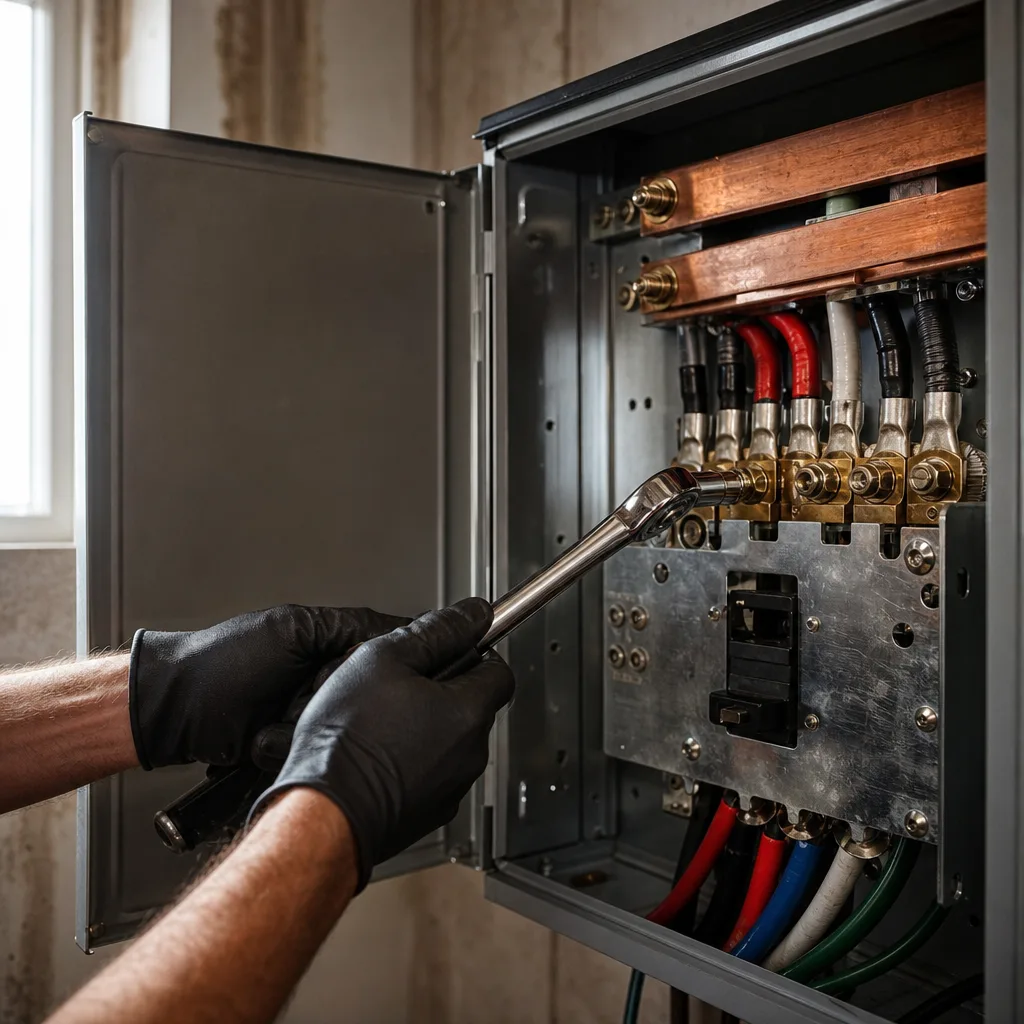
Here’s the part most people don’t hear up front. The generator is only as good as the install. A unit that’s too small can’t start your AC. A gas line that’s too narrow can starve the engine just when it’s working hardest. A transfer switch that’s wired wrong can fail to kick on, or worse, push power back onto the utility lines where Oncor crews are working. Getting the size, the gas, and the wiring right is what turns a big metal box into backup you can count on.
A standby system makes the most sense if any of these sound like your home:
- Someone in your family depends on powered medical equipment, like oxygen or a CPAP.
- You work from home and can’t lose internet, lights, or your office for a day.
- You’ve had outages during Texas heat waves or freezes and want the AC or heat to keep running.
- You travel, and you want the sump, fridge, and HVAC protected while you’re gone.
- You don’t want to haul out, fuel, and plug in a generator in the middle of a storm.
Now the honest part. Not everyone needs a whole-home system. If your outages are rare and short, and you just want to keep the fridge cold and a few lights on, a portable generator with a proper hookup can do the job for far less money. That’s a real option, and it’s a fine choice for a lot of homes. Our backup power assessment can help you sort out which one fits how you live.
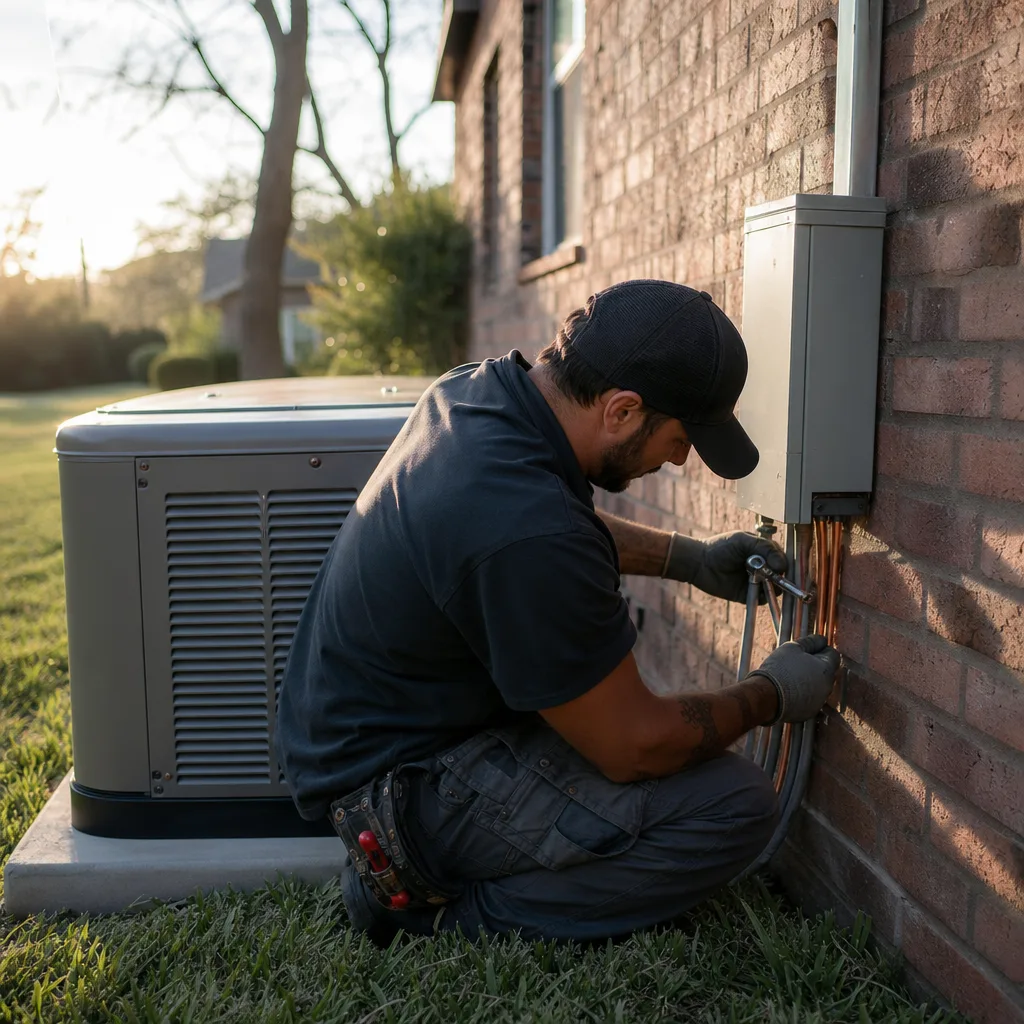
If you do go whole-home, the job crosses three trades. There’s electrical work at your panel and transfer switch, gas line work to feed the generator, and a pad set where the unit sits outside. Xtreme Air Services is a licensed and insured HVAC, plumbing, and electrical contractor, so one team handles all three. You won’t have to coordinate separate crews or wonder who’s responsible if something’s off. Our turnkey install covers the generator, transfer switch, gas and electrical connections, and startup and testing, so you know it works before we leave.
Call now
A Portable Generator May Be Enough for Some Homes
A whole-home generator is a big step, and it isn’t the right step for every house. Some Fort Worth homeowners get everything they need from a portable generator and a safe hookup. If that’s you, you should know it before you spend money on a standby system.
A portable setup is often the better fit if most of these are true:
- Your outages are rare and usually over in a few hours.
- You only need the basics: the fridge, a few lights, phone chargers, maybe the internet router.
- No one in your home relies on powered medical equipment.
- You’re home most of the time and don’t mind starting a generator yourself.
- You rent, or you plan to sell in the next year or two and won’t see the payoff.
- Your budget has other priorities right now, like an aging AC or a water heater on its last legs.
Here’s what you give up, so you can decide with your eyes open. A portable generator won’t start on its own. Someone has to roll it out, set it up outside, fuel it, and connect it, often in the rain or the dark. It also runs out of gas, so a long outage means refilling it, sometimes more than once a day. And most portable units can’t run central air. That’s fine in mild weather. It’s a harder trade in a July outage when your house is heating up by the hour.
If a portable is the right choice, the hookup still matters. Extension cords snaking through a window only reach so far, and plugging into the house the wrong way creates the backfeed problem we covered above. A proper connection, usually a power inlet outside plus a transfer switch or interlock at your panel, lets you run the circuits you pick, like the fridge, a bedroom, and the furnace blower in winter, without guessing. It’s a small electrical job compared to a full standby install.
There are also times when the smart move is to wait on any generator. If your electrical panel is old, full, or already giving you trouble, it’s usually better to sort that out first, since a generator connects right into it. If you’re planning a remodel or an addition, your power needs may change, and it’s worth sizing for the house you’ll have, not the one you have today.
None of this is a knock on portable generators. For a lot of homes, they’re exactly enough. A standby system earns its cost when you can’t afford to be without power, when you’re not home to start a generator yourself, or when keeping the AC or heat running is the whole point. If that’s not your situation, a portable unit with a safe hookup is a good, sensible answer.
What a Turnkey Installation Includes
When you hear “turnkey,” you should know exactly what that word covers. With Xtreme Air Services, a whole-home standby generator install includes the generator, the automatic transfer switch, professional installation, the gas and electrical connections, and startup and testing. It’s commissioned and tested before you count on it, so the first time you see it work isn’t during a real outage.
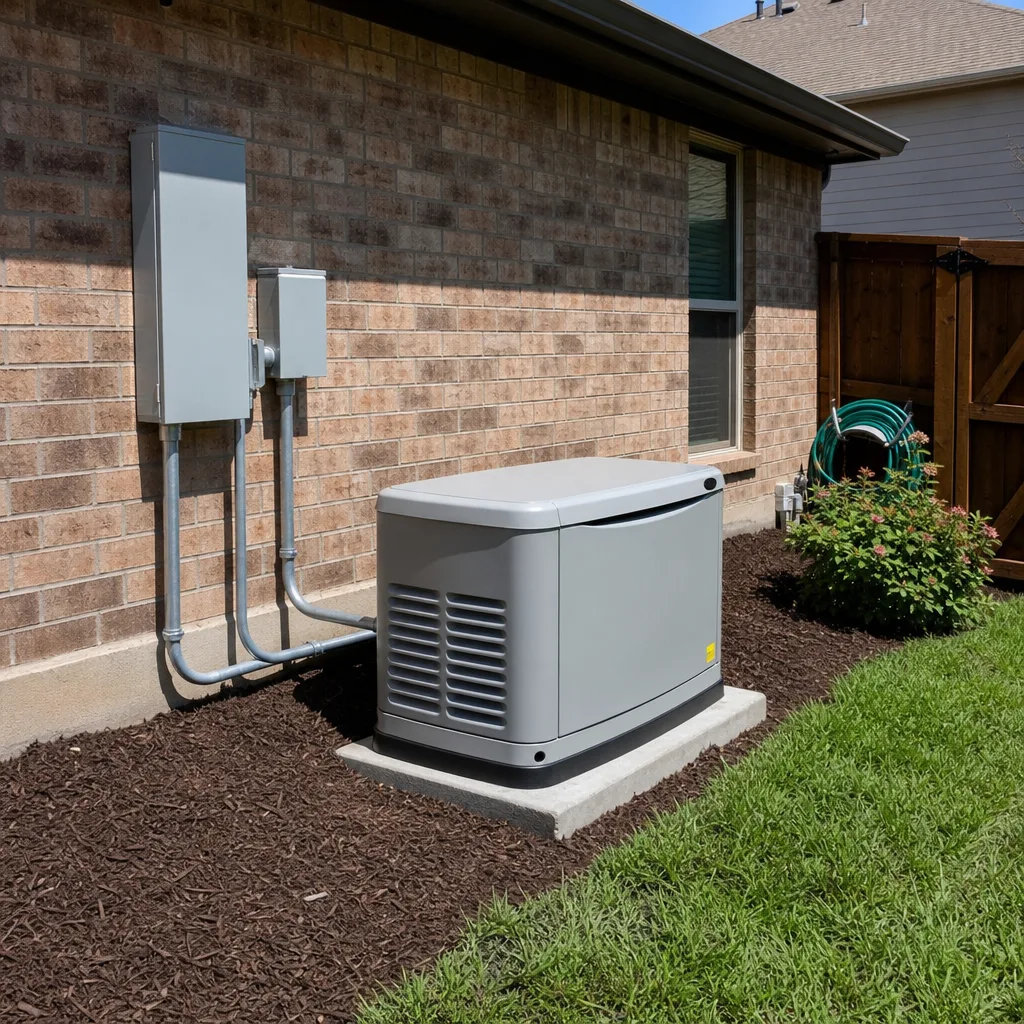
Here’s what each piece does for you:
- The generator: the unit that sits outside on its pad and makes your power when the grid goes down.
- The automatic transfer switch: the part that senses the outage, moves your home over to generator power, and switches you back when the utility power returns. You don’t have to touch a thing.
- The gas hookup: the line that feeds the generator from your natural gas supply, so you’re not hauling fuel cans in a storm.
- The pad: a solid, level base so the unit sits right and stays put.
- Startup and testing: the system is fired up and checked so you know it’s ready.
Now for the money, because you deserve a straight answer. Our most common job, a whole-home standby generator with an automatic transfer switch, gas hookup, and pad, commissioned and tested, runs $10,000 to $14,000. Across all the homes we quote, the typical range is $8,000 to $18,000.
Why such a wide range? Every house is different. These are the things that push your price up or down:
- Generator size (kW): a bigger home, or one where you want everything running, including central air, needs more power.
- Transfer switch type: switches built to run the whole house cost more than ones that cover only certain circuits.
- Gas line run and pressure: a long run from your meter, or a supply that needs more pressure, adds work.
- Pad and site prep: a flat, open side yard is simpler than a sloped or tight spot.
- Distance to your panel: the farther the generator sits from your electrical panel, the more wire it takes.
- Code upgrades and permits: if something in your home has to be brought up to code first, that adds to the job.
It’s just as important to know what’s not in the turnkey price. Extensive gas or electrical service upgrades aren’t included. Neither is landscaping around the unit, or code corrections beyond the scope of the install. Permits aren’t included unless your quote says so. If your home needs any of these, you should hear about it while you’re reviewing the quote, not after the work is done. That’s what upfront pricing means to us: you see the whole picture and approve it before anything starts.
If the number feels like a lot to pay all at once, you’ve got options. Flexible financing is available on qualifying installations and larger jobs, on approved credit. That can make it easier to put backup power in place before storm season instead of waiting another year.
Need help with Whole-home standby generator installation?
Call Today, Get Service Today. Xtreme Air Services — Fort Worth is ready to help.
Permits Are Required, Not Optional
A standby generator isn’t an appliance you plug in. It ties into your electrical panel and your natural gas line, which are the two systems in your home that can cause a fire or a gas leak if they’re done wrong. That’s why a whole-home install in Fort Worth needs permits and an inspection. It’s not paperwork for its own sake. It’s a second set of trained eyes checking the work before you trust it with your family.
When an inspector looks at a generator install, they’re checking the things you can’t easily see once the job is finished:
- The transfer switch is wired so your home can’t push power back onto the utility lines.
- The gas line is sized for the generator, with the right fittings and a shutoff where it belongs.
- The generator is grounded properly.
- The unit sits a safe distance from windows, doors, and vents, so exhaust stays out of your house.
- The wire size and breaker match the load the generator will carry.
Skipping the permit can feel like a way to save a few days. It usually costs more later. If you file an insurance claim after a fire or storm damage, an adjuster may ask whether the work was permitted. When you sell your home, a buyer’s inspector may spot a generator with no permit on file, and you could be asked to get it inspected after the fact. That can mean opening up finished work so someone can see what’s behind it. A permit closed out the first time avoids all of that.
Sometimes the inspection turns up something that was already there before the generator arrived. An older panel with no open space, a gas meter too small to feed both your furnace and a generator, or wiring from decades back that doesn’t meet today’s code are all common in older homes. It’s better to find these during planning than after the generator is sitting on its pad. Your gas utility may also need to upgrade the meter if the generator plus your other gas appliances need more than it can deliver.
Before you hire anyone for a standby generator, ask these questions:
- Who’s pulling the electrical and gas permits, and is that cost in my quote?
- Are the people doing the electrical and gas work licensed in Texas for that trade?
- Will the generator be tested again after the inspection passes?
- If the inspector flags something, how is that handled and priced?
If you live in a subdivision with an HOA, check your rules too. Many associations want to approve where the unit sits and whether it’s screened from the street, and that approval is separate from the city permit. Get it lined up early so it doesn’t hold up your install date.
Watch Our Video
See How We Handle Whole-home standby generator installation in Fort Worth
Xtreme Air Services — Fort Worth
What Drives the Cost of a Standby Generator Install
You’ve seen the price range and the list of things that move it. The more useful question is which of those things you control. Most of your final number comes down to three choices: what you want running during an outage, where the generator sits, and what your home already has in place.
The biggest lever is what you want running. If you want the whole house to feel normal in a July outage, with every AC unit, the oven, the dryer, and the pool pump, you need a larger generator and a transfer switch built to carry the full house. If you’re happy keeping one AC, the fridge, lights, Wi-Fi, and the furnace blower going, a smaller unit can do it. Some systems can also turn off a big load, like a second AC, for a few minutes while another heavy appliance starts. That can let a smaller generator cover more of your home. Be honest about how you’d live through a two-day outage. That answer sizes the system better than square footage alone.
Placement matters more than most people expect. The generator has to sit a safe distance from windows, doors, and vents. Within those rules, the closer it sits to your gas meter and your electrical panel, the shorter the gas line and wire runs. Picture two houses on the same street. One has the meter and panel on the same side of the house, next to a flat side yard. The other has the panel in the garage, the meter on the far wall, and a sloped yard. The second house can easily cost more for the same generator, just because of the trenching, the longer runs, and the extra pad prep.
What your home already has is the part you can’t change, but you can learn about it early. Older homes are more likely to have a full panel or wiring that needs updating. Newer homes often have more room in the panel and a cleaner path to the meter. Either way, it’s better to know before you pick a generator size, because those findings, covered in the permits section above, can shift the quote.
When you compare quotes, don’t stop at the bottom line. Line them up item by item:
- What size generator is quoted, and what will it run in your home?
- Is the transfer switch whole-house, or does it cover only certain circuits?
- How long are the gas line and wire runs, and is the pad prep priced in?
- Are permits and any panel or meter work included, or listed as extras?
A lower quote that leaves out the gas run or the permits isn’t really lower. It just hasn’t told you the rest yet. With Xtreme Air Services, you get upfront pricing you approve before anything starts. If paying all at once is the hard part, flexible financing is available on qualifying installations, on approved credit.
Call 817-677-1907
Frequently Asked Questions
Common questions about Whole-home standby generator installation
Can I just plug a generator into a wall outlet?
No, plugging a generator straight into a household outlet is dangerous and can send power back through the lines, which puts utility crews at risk. This backfeed danger is exactly why a transfer switch is required, whether you install a whole-home standby system or a portable hookup. A proper connection always routes power through a switch that isolates your home from the grid first.
Can I install my own standby generator?
You shouldn’t, because a standby generator ties into both your electrical panel and your natural gas line, and mistakes there can cause a fire or gas leak. The work also has to pass inspection, and an inspector checks things like transfer switch wiring, gas line sizing, and grounding that are hard to verify yourself. Having licensed electrical and gas work done together is what lets the whole job get permitted and signed off correctly.
What determines how much a standby generator costs?
Your final cost depends mainly on three things: what you want powered during an outage, where the generator sits relative to your panel and gas meter, and what your home’s existing wiring and gas supply can handle. A bigger generator built to run your whole house, including central air, costs more than a smaller unit covering just the fridge, lights, and furnace blower. Placement matters too, since a longer run between the generator, your meter, and your panel adds to the gas line and wiring work.
Ready to Get Started?
Call (817) 677-1907 Today, Get Service Today.