


A/C System Repair in Frisco: Get Your Cooling Fixed Right
Warning signs explained, quick checks to try first, and a repair price that tells you what's included.
What’s Covered on This Page
- Signs Your AC Needs a Repair Call Today
- Quick Checks Before You Call a Technician
- What Happens During a Repair Visit
- What’s Included in Your Repair Price
- Why a Licensed Frisco Technician Matters
- How long can a landlord in Texas leave a tenant without air conditioning?
- Can I keep running my AC while I wait for a repair appointment?
- Why does my AC seem to struggle more in the afternoon than in the morning?
Signs Your AC Needs a Repair Call Today
You know how your system normally sounds and feels. When that changes, pay attention. Most AC trouble starts small, and the system usually gives you a warning before it quits for good. Here’s what to watch for and what it usually means.
- Warm or room-temperature air from the vents. The fan is moving air, but nothing is cooling it. This often points to a low refrigerant charge from a leak, a failed capacitor, or an outdoor unit that isn’t starting.
- The outdoor unit hums, but the fan won’t spin. That humming is a motor trying to start and failing. A worn capacitor, the small part that gives the motors their starting kick, is a common cause.
- Weak airflow even with a clean filter. If you’ve already swapped the filter and the air still barely moves, the blower motor, a frozen coil, or a duct problem could be the reason.
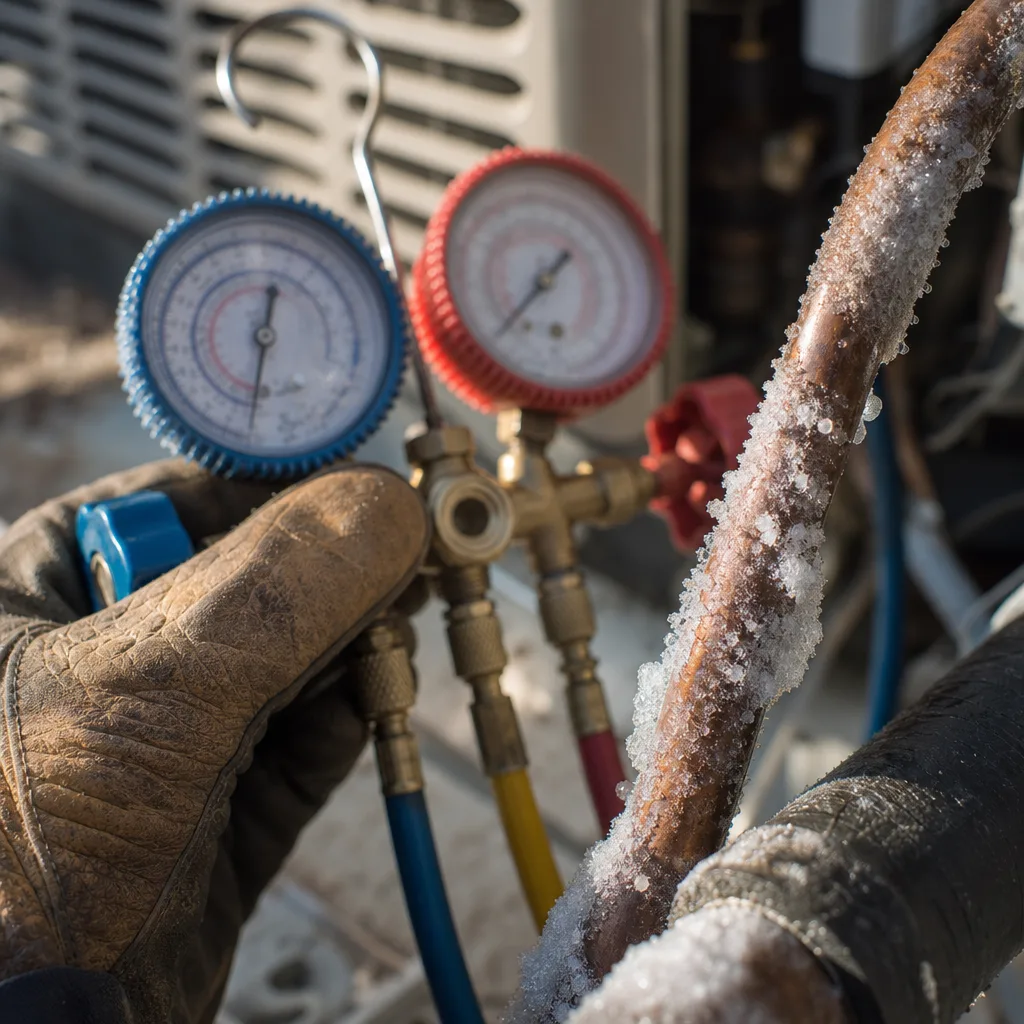
- Ice on the copper line or the indoor coil. Ice in the middle of a Texas summer sounds backward, but it’s a real sign. It usually means low refrigerant or poor airflow across the coil.
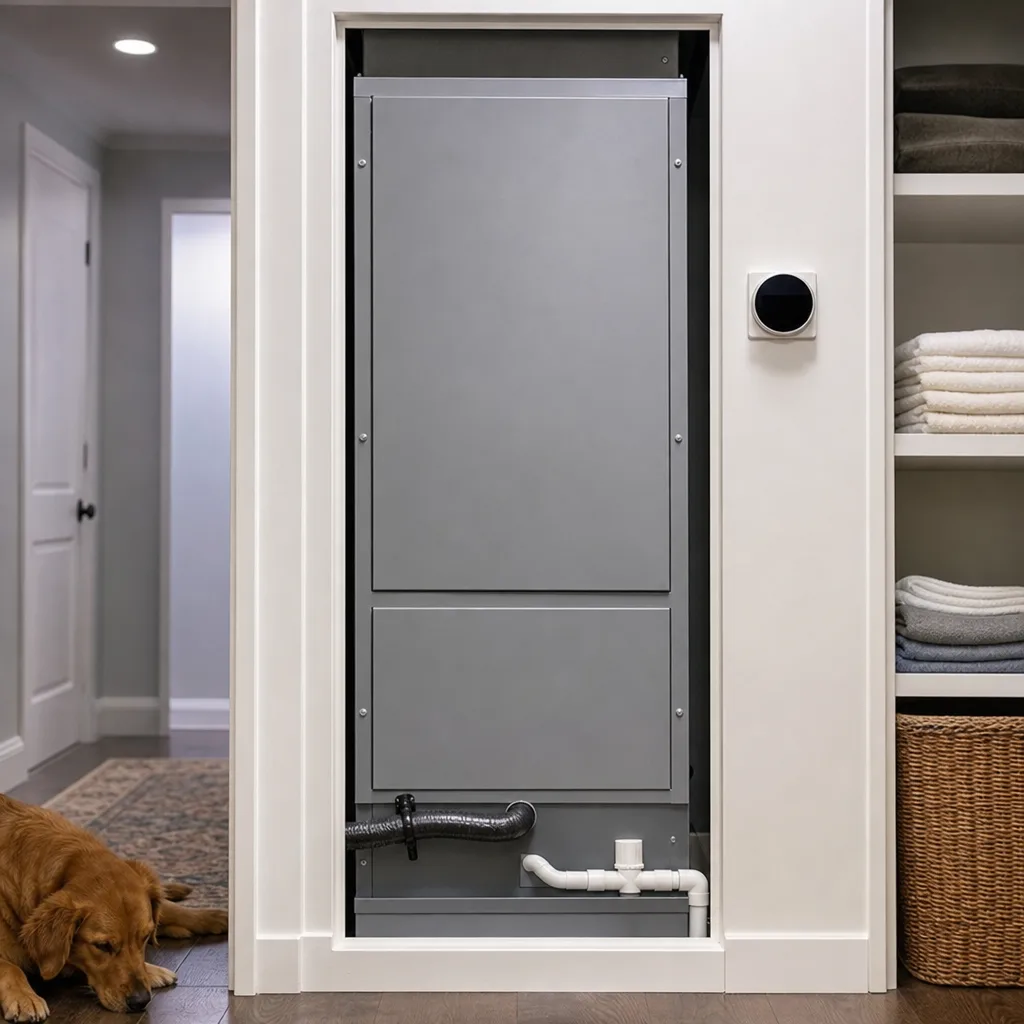
- Water where it shouldn’t be. A clogged drain line can back up and overflow the drain pan. If your air handler sits in the attic, that water can come through the ceiling below.
- New noises. Grinding, squealing, rattling, or loud clicking usually means a motor bearing is wearing out, a part has come loose, or an electrical part is failing.
- Short cycling. The system turns on and off every few minutes and never finishes a full cycle. That wears out parts faster and leaves your home sticky and warm.
- A breaker that keeps tripping. Resetting it once is fine. If it trips again, something in the system is pulling too much power, and you shouldn’t keep forcing it.
- Higher bills with no change in how you use it. When a part is failing, the system has to run longer to do the same job.
Timing matters more here than in a lot of places. On a July afternoon in Frisco, an AC that’s struggling never gets a break, so a weak part can go from limping to dead in a single hot spell. The house warms up fast once that happens, especially upstairs and in rooms under an attic that’s baking in the sun.
Ask yourself one simple question. Is this new? A sound, smell, leak, or cooling problem that showed up recently is worth a call while it’s still likely to be a single part. Waiting a few days usually doesn’t make the fix smaller.
You also don’t have to wait for a weekday to deal with it. Xtreme Air Services offers same-day service, and there’s no extra charge for nights or weekends. That means a problem that shows up on a Saturday doesn’t have to sit until Monday just to avoid an overtime bill.
Quick Checks Before You Call a Technician
Before you call anyone, take ten minutes and check the easy stuff. Some no-cooling problems aren’t repairs at all. If one of these fixes it, you’re done, and you don’t need us. We’d rather you save the service call.
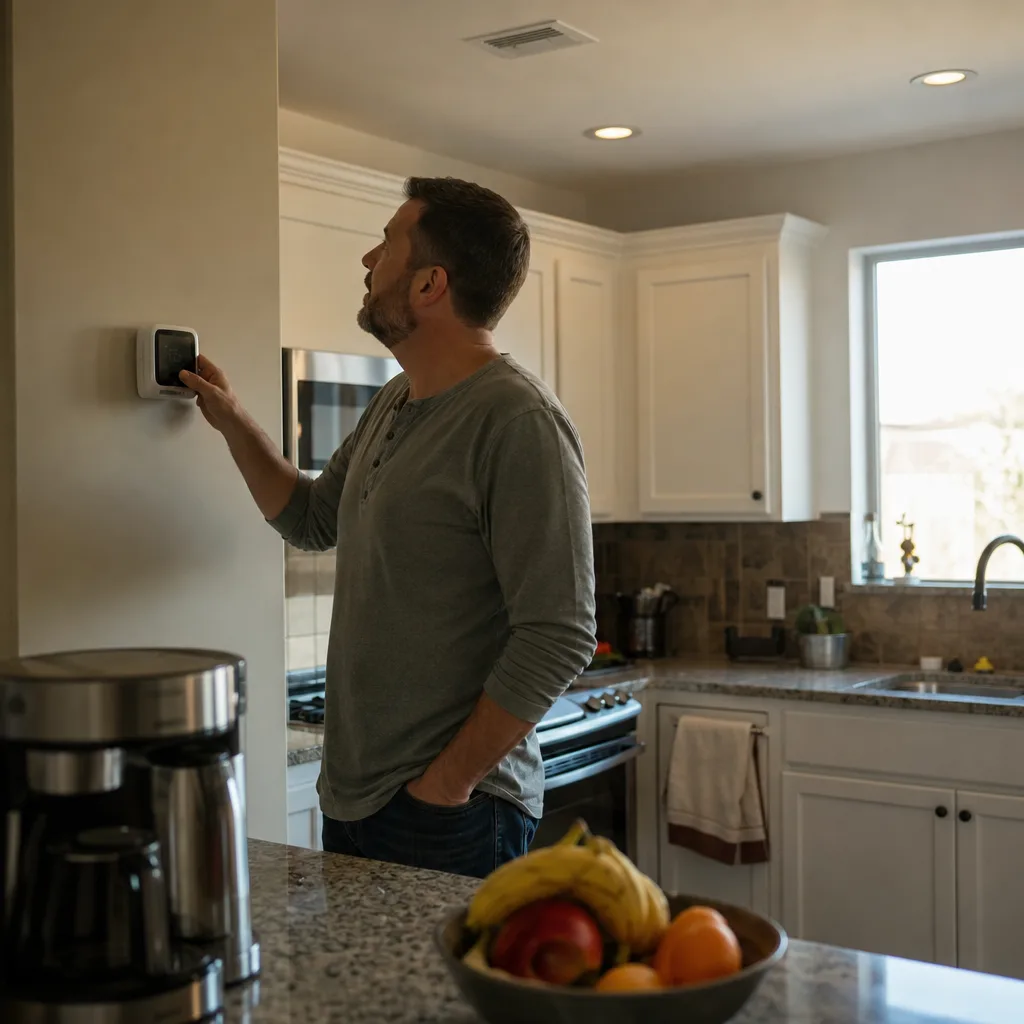
- Check the thermostat. Make sure it’s set to Cool, not Heat, Off, or Fan Only. Set it a few degrees below the room temperature so it has a reason to run. If the screen is blank or dim, put in fresh batteries. A dead thermostat looks exactly like a dead AC.
- Look at the schedule. Smart and programmable thermostats can run on a schedule or an away mode someone set months ago. If the house is warm at the same time every day, that’s worth a look before anything else.
- Change the air filter. Pull it out and hold it up to a light. If you can’t see light through it, swap it. A clogged filter chokes airflow and can make the whole system work harder than it should.
- Open the vents. Walk the house and make sure supply vents are open and return grilles aren’t blocked by a couch, a rug, or boxes. Closing too many vents doesn’t save money. It just backs up the airflow.
- Check the breakers. Your system usually has two: one for the indoor unit and one for the outdoor unit. Look for any that are tripped. As covered above, one reset is fine. A second trip means stop and call.
- Check the outdoor shutoff. There’s usually a small disconnect box on the wall near the outdoor unit. Make sure it hasn’t been switched off or bumped by a lawn crew.
- Clear around the outdoor unit. Pull back grass, weeds, leaves, and anything stacked against it. The unit needs room on every side to breathe and push heat out.
Give the system 15 to 20 minutes after you make a change. If cool air comes back and stays, that was likely the problem.
Here’s where the do-it-yourself part ends. Please don’t open the panels on the outdoor unit or the air handler. The capacitor inside can hold a strong electrical charge even with the power off, and it can hurt you. Don’t hose off a unit that’s iced over, and don’t try to add refrigerant from a store kit. If the system is low, there’s a leak somewhere, and topping it off doesn’t find or fix that leak. Refrigerant work takes a licensed technician with the right tools.
Also skip the habit of turning the system off and on over and over to see if it catches. If something is already struggling, repeated restarts can make it worse.
When you do call, tell us what you already checked. It helps the technician skip ahead and spend their time finding the real failure in your home.
What Happens During a Repair Visit
A repair visit has three jobs. Find the part that failed. Repair or replace it. Then make sure your whole system runs the way it should before anyone calls it done. Most calls come down to one common failure that gets fixed on the first visit. You don’t need to know what broke. You just need someone who’ll find it and tell you straight.
The person at your door is a licensed and insured technician. Our team members are background-checked and drug-tested, because we know you’re letting someone into your home on a stressful day.
A good diagnosis follows what your system is doing. It doesn’t start by guessing at parts. Depending on your symptoms, a technician will usually look at a few things.
- Electrical parts in the outdoor unit, like the capacitor and contactor. These are the parts that tell the motors to start.
- How the outdoor fan motor and compressor start and run.
- Refrigerant pressures and temperatures, which show whether the system is low and may have a leak.
- The indoor coil, blower motor, and airflow through the air handler.
- The condensate drain line and drain pan, especially when the air handler sits in the attic.
- Wiring and the thermostat’s signal to the equipment.
Telling us what you already checked helps a lot here. If you’ve already swapped the filter and reset the breaker once, the technician can skip those and get straight to the real problem.
Once the problem is found, you’ll hear what failed and why in plain English. You’ll get an upfront flat-rate price, and you approve it before any work starts. There’s no meter running while you decide. The service-call fee is $26-$99, and it’s credited toward the repair if you go ahead with Xtreme Air Services. If you’d rather not move forward, that’s your call to make.
The repair price covers the diagnosis, the labor, and the standard replacement part, plus testing and cleanup. Some things are quoted separately, so you’ll know about them before you say yes. These include more failed parts beyond the first one, major components, code upgrades, and permits.
Sometimes a second problem turns up. A new capacitor might get the outdoor unit running again, and then the test shows the system is also low on refrigerant. You’ll hear about that before anything more is done, with its own price. You won’t find it as a surprise on the bill.
The last step matters most on a Frisco summer day. After the fix, the system should run long enough to show it’s really cooling, not just turning on. That means cold air at the vents, a steady cycle, and no new warning signs. Then the work area gets cleaned up, whether that’s around the outdoor unit, in a closet, or up in a hot attic.
Not sure what your A/C system repair project needs? Ask us.
Call Today, Get Service Today. Xtreme Air Services — Frisco is ready to help.
What’s Included in Your Repair Price
Most A/C system repairs from Xtreme Air Services land between $150-$700. The most common job, finding one failed part, fixing or replacing it, and making sure the system runs right, usually runs $150-$400. That fits the bigger picture on this page: most breakdowns come down to one part, and one part is a repair you can plan for.
Your price includes the diagnosis, labor, standard part, testing, and cleanup described above. You’ll see the price and approve it before any work starts. That’s what upfront flat-rate pricing means. The number doesn’t climb because a job took longer than expected.
Where your repair falls in that range depends on a few real things:
- How much failed. A worn capacitor is a small, quick fix. A motor that burned out because a capacitor quit weeks ago is a bigger job.
- Part cost and availability. Some parts are common and easy to get. Others cost more or take longer to track down, and that shows up in the price.
- Your equipment’s age and brand. Older systems and certain makes can need parts that cost more than standard ones.
- Whether more than one part failed. When one weak part makes another work too hard, you can end up needing two repairs instead of one.
- When the breakdown happens. A lot of companies charge more after hours. We don’t. There’s no extra charge for nights or weekends, so a Sunday evening repair costs the same as a Tuesday morning one.
Financing usually isn’t offered on a smaller repair like this. If the problem turns out to be a larger repair or your system needs replacing, financing is available, and we’ll walk you through your options before you decide anything.
Whoever you call, it’s fair to ask a few questions before you let them start. A good contractor won’t mind answering them.
- Is the price flat-rate, or are you charging by the hour?
- Is there a trip or service-call fee, and does it count toward the repair?
- Do you charge more for nights, weekends, or holidays?
- What does the price include, and what would cost extra?
- If you find a second problem, will you tell me the price before doing more work?
- Are you licensed in Texas, and what’s your license number?
Here are our answers. Our pricing is flat-rate and approved by you first. The service-call fee gets credited toward your repair when you go ahead with us. Nights and weekends cost the same as weekdays. Anything beyond the first repair gets its own price before we touch it. And our HVAC license is #TACLA29023C, so you can check it yourself.
If you’re comparing quotes, line them up by what’s included, not just the bottom number. A lower price that leaves out testing, or adds an overtime charge at the end, isn’t really lower. You deserve to know the full cost of getting your home cool again before anyone picks up a tool.
Watch Our Video
See How We Handle A/C system repair in Frisco
Xtreme Air Services — Frisco
Why a Licensed Frisco Technician Matters
Most AC breakdowns come down to one failed part. The hard part is finding the right one. A licensed technician tests before replacing anything, so you pay for the part that failed, not three parts someone guessed at. That’s what keeps a repair you can plan for from turning into a bill that keeps growing.
In Texas, air conditioning work is licensed through the Texas Department of Licensing and Regulation, or TDLR. That license means the contractor has met the state’s standards and can be held accountable for the work. You can look it up yourself on the TDLR website before anyone climbs into your attic. Ours is the number we shared above.
A license matters because an AC repair touches three things that can go wrong fast:
- Electricity. Capacitors and contactors run on high voltage. A loose or wrong connection can ruin a brand-new motor or keep tripping your breaker.
- Refrigerant. A low system has a leak somewhere. Finding it takes the right gauges and training, not a quick top-off and a handshake.
- Water. The drain line keeps condensation out of your ceiling. A repair that skips it can leave you with a stain in the upstairs hallway a month later.
Many Frisco homes sit in newer subdivisions with the air handler up in the attic. On a summer afternoon that attic gets brutally hot, and that’s where the coil, blower, and drain pan live. Work up there needs to be done right the first time, because a sloppy fix in the attic tends to show up in your living room. If something does go wrong in your home, you want a licensed and insured contractor who answers for it.
Sometimes the problem isn’t the AC at all. It might be a worn breaker or a wiring issue at the panel. When that happens, you don’t have to start over with a new company and a new service call. Xtreme Air Services handles HVAC, plumbing, and electrical under one roof, so the team that found the problem can fix it.
Here’s who you’d be letting in. We’re a family-owned company and a Trane Comfort Specialist. We’ve earned a 4.8-star reputation across more than 2,900 reviews on Google, Angi, and HomeAdvisor, and our work is backed by a 100% satisfaction guarantee. Our Frisco office is at 6160 Warren Pkwy, Suite 100. Your neighbors trust us with their homes, and we take that seriously every time we knock on a door.
A license doesn’t make anyone perfect. What it gives you is someone trained, insured, and accountable, which is exactly what you want when your house is getting warmer by the hour.
Call 469-490-3595
Frequently Asked Questions
Common questions about A/C system repair
How long can a landlord in Texas leave a tenant without air conditioning?
Texas law doesn’t set a fixed deadline, but a landlord must make a diligent effort to repair AC once notified of the problem. Most repair requests should be addressed within a reasonable time, which courts often treat as a matter of days rather than weeks, especially during hot weather. If you’re a renter in Frisco dealing with a slow landlord, document when you reported the issue and keep requesting a timeline in writing.
Can I keep running my AC while I wait for a repair appointment?
It depends on what’s wrong, so it’s safer to turn the system off if you notice ice on the lines, a tripped breaker, or a burning smell. Running a system with a refrigerant leak or electrical fault can turn a small repair into a bigger one. If you’re only dealing with weak airflow or a slightly warm house, it’s usually fine to keep it running at a higher set temperature until a technician arrives.
Why does my AC seem to struggle more in the afternoon than in the morning?
Afternoon heat puts the most strain on a weak part because the system never gets a break once the sun has baked the roof and attic all day. A capacitor or motor that’s already wearing out often fails right when the outdoor unit is working its hardest, usually mid-to-late afternoon in summer. If your system cools fine in the morning but struggles by 3 or 4 p.m., that pattern itself is a useful clue for the technician.
Ready to Get Started?
Call (469) 490-3595 Today, Get Service Today.