


HVAC System Maintenance in Frisco: Know What’s Included Before You Book
A full inspection, cleaning and safety check on every visit, so you know exactly what you're paying for.
What’s Covered on This Page
- What’s Included in an HVAC System Maintenance Visit
- Signs Your System Is Due for Maintenance
- When You Need Repair Instead of Maintenance
- Tasks You Can Handle Before the Technician Arrives
- How Often to Schedule HVAC System Maintenance
- What is the $5,000 rule for HVAC systems?
- Is paying for HVAC maintenance worth it?
- How much does an HVAC maintenance call cost?
What’s Included in an HVAC System Maintenance Visit
When you book maintenance with us, you’re paying for three things: a full inspection, a cleaning, and a performance and safety check. That’s the whole visit. Below is what those three jobs usually mean on a home system, so you know what a thorough tune-up should cover, whether you call us or someone else.
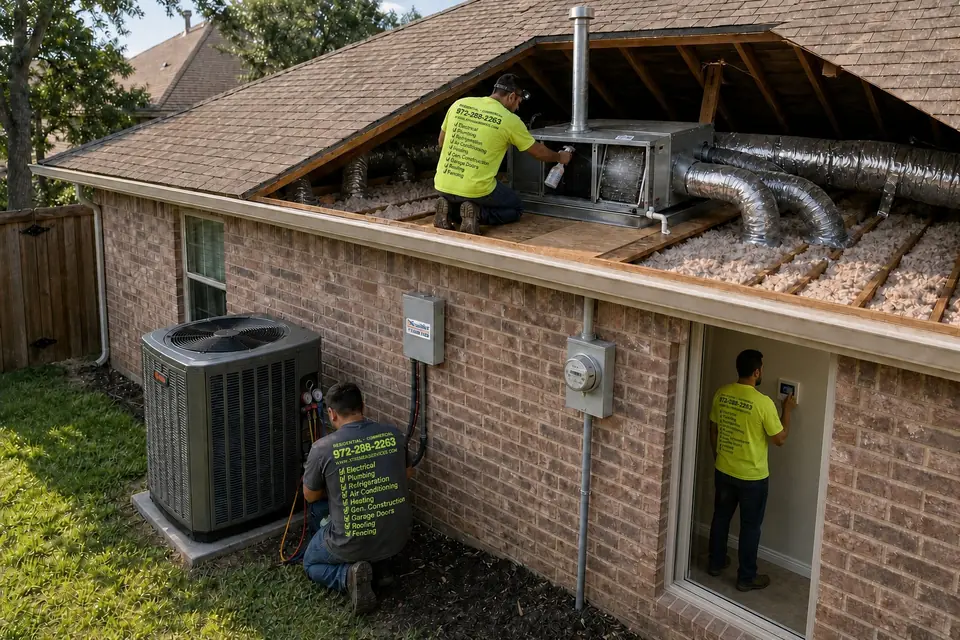
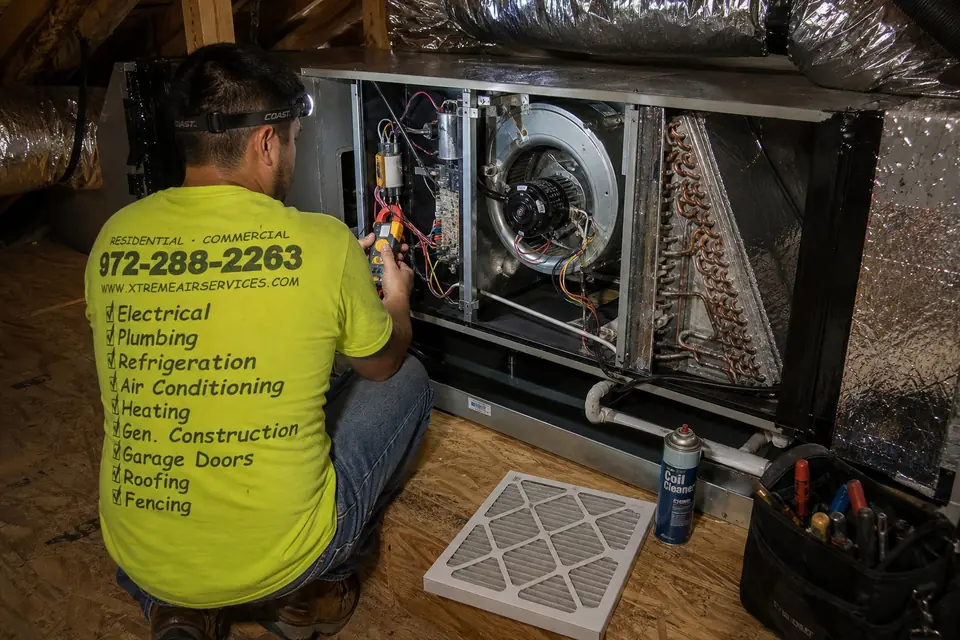
The inspection is a close look at the parts that wear out or fail first. A thorough one usually covers these:
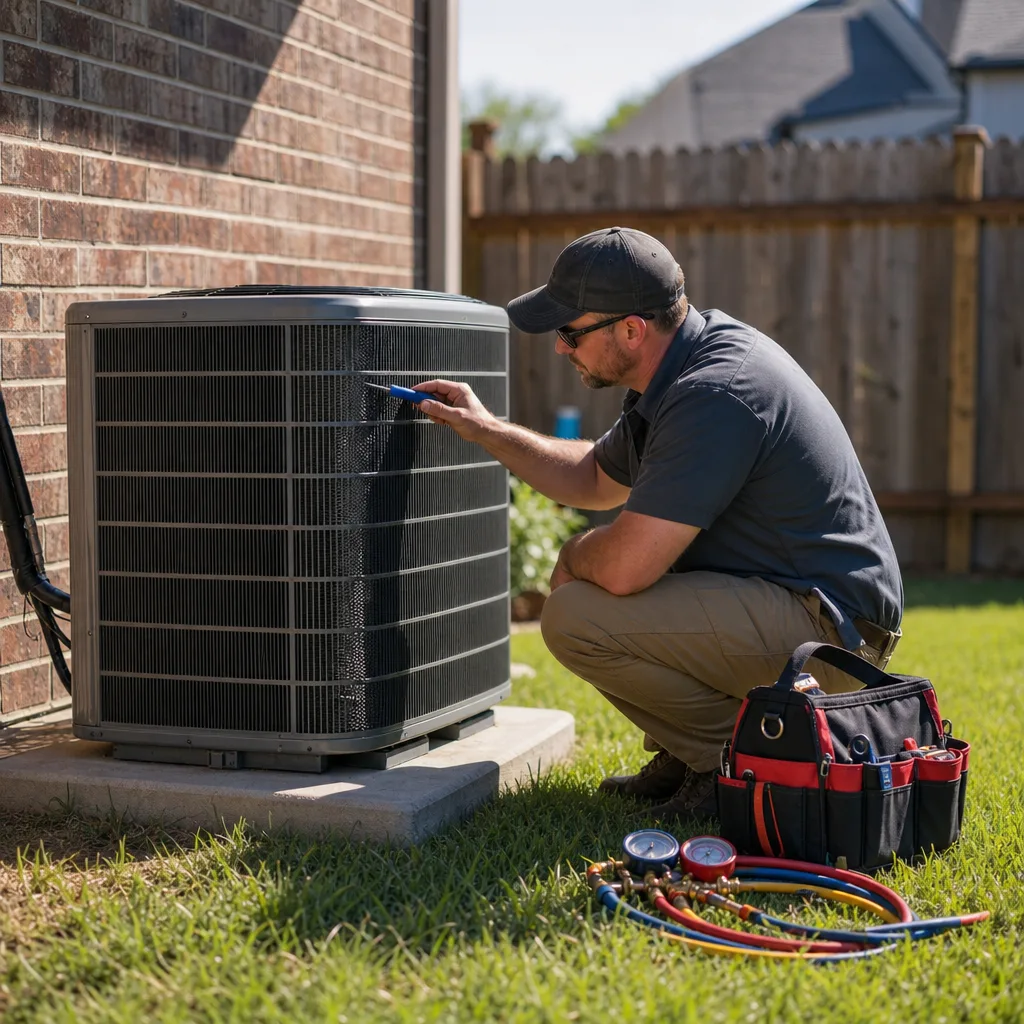
- Electrical parts like the capacitor, contactor, and wire connections. A weak capacitor is a common reason an AC won’t start on a hot afternoon.
- The blower motor and fan, which move air through your vents.
- The condensate drain line, which carries water away from the indoor unit.
- Refrigerant levels and pressures, which tell the tech whether the system is cooling the way it should.
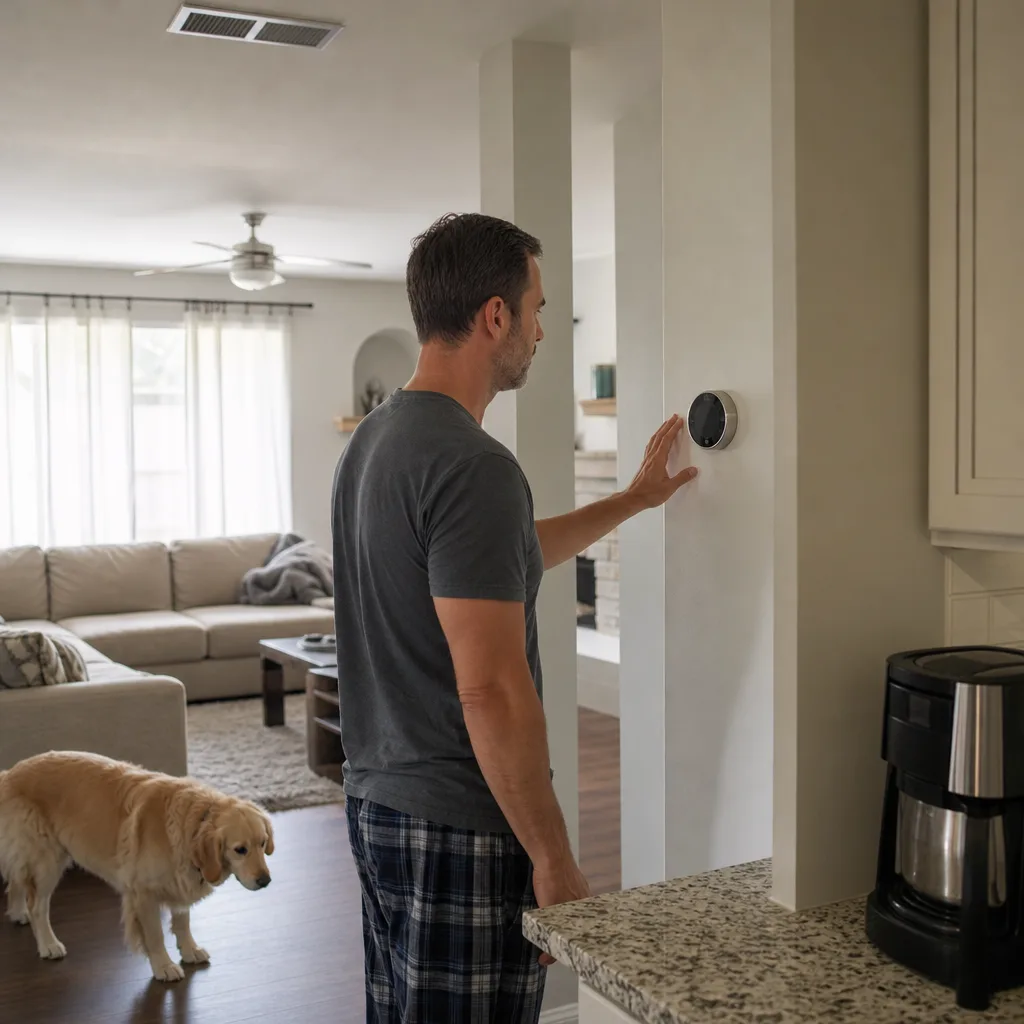
- The thermostat, to make sure it’s reading the room right and telling the system when to run.
The cleaning goes after the dirt that makes your system work harder. The outdoor condenser coil collects dust, grass clippings, and cottonwood fluff all season. When that coil is caked over, your AC can’t shed heat well, so it runs longer and costs more to cool your home. The filter gets checked, and the drain line gets cleared so water doesn’t back up.
That drain line matters a lot in Frisco. Many homes here have the indoor unit and air handler up in the attic. If the line clogs, water can overflow the pan and soak into the ceiling below. In a North Texas summer, an attic unit also sits in extreme heat, which wears on motors and electrical parts faster. Catching a clog or a tired part during a cool-morning visit is a lot easier than finding it after a ceiling stain shows up.
The performance and safety check is how you find out if the system is doing its job. On the cooling side, that means checking that the air coming out of your vents is the right amount cooler than the air going in. On the heating side, the safety part matters most. A gas furnace should get a look at the burners, the flame sensor, and the heat exchanger, plus a check for carbon monoxide.
Here’s the part people ask about most: what if the tech finds something? Repair parts and corrective work aren’t included in the maintenance visit. If something needs fixing, you’ll get a separate quote first. Nothing gets replaced unless you say yes. You might hear that your capacitor is testing weak but still working. Then it’s your call whether to swap it now or keep an eye on it.
That’s the real value of a visit like this. You get a clear picture of your system’s health, a cleaner unit that runs easier, and time to plan for any repair instead of being surprised by one in August.
Signs Your System Is Due for Maintenance
Your system usually tells you it needs attention long before it quits. The signs are small, and they’re easy to brush off. Catching them early is the whole point of maintenance. A small problem you notice in May is a lot easier to deal with than a breakdown in a 100-degree week.
Here’s what to watch for:
- Your electric bill is climbing, but your habits haven’t changed. A dirty or tired system has to run longer to do the same job, and you pay for every extra minute.
- The AC runs and runs but never quite reaches the temperature on the thermostat, or it takes much longer than it used to.
- The airflow from your vents feels weaker than it did last summer.
- Some rooms are noticeably warmer or cooler than others, especially upstairs rooms in a two-story home.
- The house feels sticky or clammy even when the air is cool. Your AC is supposed to pull moisture out of the air, not just cool it.
- The system turns on and off in short bursts instead of running steady cycles.
- You hear new sounds, like rattling, buzzing, squealing, or clicking, when it starts or shuts off.
- There’s more dust settling on furniture than usual.
- You notice water around the indoor unit, or a damp spot or stain on the ceiling under an attic unit.
Any one of these is worth a checkup. Two or three together mean your system is working harder than it should be.
Sometimes there’s no sign at all, and that’s fine too. If it’s been more than a year since anyone looked at your system, it’s due. A good rhythm is a cooling checkup in spring, before Frisco summers push your AC hard for months, and a heating checkup in fall, before the first cold front rolls through. If your home has a heat pump, that one system works year-round, so both visits matter even more.
New homes count too. A system that’s only a few years old can still have a dirty coil, a clogged drain line, or a loose connection. Newer just means you have more years to protect.
There’s also one thing you can check yourself before you call anyone: the air filter. A clogged filter causes several of the signs above, like weak airflow, longer run times, and extra dust. Pull it out and hold it up to the light. If you can’t see light through it, swap in a new one and give the system a day. If things improve, you just saved yourself a trip. If they don’t, it’s time for a full maintenance visit.
The goal isn’t to worry about every noise. It’s to notice when your system starts working harder than it should, and get it looked at while the fix is still small.
When You Need Repair Instead of Maintenance
Maintenance keeps a working system healthy. A repair fixes a system that’s already failing. If you’re seeing any of the repair warning signs from the section above, like warm air, ice on the lines, or a system that won’t start, a tune-up isn’t the right visit. A good cleaning won’t fix a dead capacitor or a refrigerant leak. You’d pay for the visit and still need the repair.
The gray area is where most people get stuck. Some problems start small and look like maintenance, then cross the line. Here’s how to tell the difference:
- Your house cools a little slower than last year. That’s usually maintenance. If it can’t get below 80 on a summer afternoon even though it runs all day, that’s a repair.
- You found a small damp spot near the indoor unit. That’s worth a maintenance visit. If water is already dripping through the ceiling, the drain has backed up and you need someone out now.
- You hear a faint new click at startup. That can wait for a checkup. A loud grinding, screeching, or banging that won’t stop calls for a repair.
- The system cycles a bit more often than it used to. That’s maintenance. If it turns on and off every minute or two, something is wrong.
When you call, just tell us what you’re seeing and hearing. You don’t need to know the part name. That way the technician comes ready to diagnose the problem instead of planning a routine cleaning.
In Frisco, a lot of indoor units sit up in the attic, where summer heat is brutal. When an attic system fails in July, the temperature inside your home can climb fast. Waiting a week for an open maintenance slot isn’t a real option. We offer same-day service, and there’s no extra charge for nights or weekends, so a breakdown on a Saturday costs the same as one on a Tuesday.
Repair pricing works differently from a tune-up. A repair visit has a $26 to $99 service-call fee. That fee gets credited toward the repair if you go ahead with Xtreme Air Services. You’ll get upfront flat-rate pricing before any work starts, so you know the number and say yes before a single part comes off the shelf.
Bigger repairs can hit at a bad time. Financing isn’t typically offered on maintenance, but it is available on larger repairs and replacements. If the fix turns out to be a big one, you have options.
Not sure which visit you need? That’s a fair question, and you don’t have to figure it out alone. Describe the problem to a real person on our team, and we’ll help you decide between a tune-up and a repair. Our licensed and insured, background-checked technicians handle both.
Call 469-490-3595
Ready when you are – get in touch today.
Call Today, Get Service Today. Xtreme Air Services — Frisco is ready to help.
Tasks You Can Handle Before the Technician Arrives
You don’t have to do anything before a maintenance visit. A few minutes of prep still helps a lot. The technician spends less time moving boxes and more time on your system. You also get a clearer answer about how it’s doing.
Start with getting to the equipment, since that’s where time slips away.
- Clear a path to the attic. In many Frisco homes the air handler sits up there, so the pull-down ladder needs open floor under it. Move cars, bikes, or storage bins out of the way. If there are boxes stacked on the walkway to the unit, shift them if you can do it safely.
- Open up space around the outdoor unit. Pull back patio furniture, trash cans, toys, and grill covers. Trim back shrubs or tall grass crowding the sides. The unit needs room to breathe, and the tech needs room to work on it.
- Unlock the side gate and put the dog inside. A locked gate or a nervous pet in the backyard can hold things up before they even start.
- Know where your filter lives. Some homes have it in a return grille on a hallway wall or ceiling. Others have it at the unit in the attic. If you have more than one return, check them all.
Next, jot down what you’ve noticed. You already know your house better than anyone. A short note on your phone is plenty.
- Any of the signs from earlier on this page, like a room that runs warm, a new sound, or a higher bill.
- When the problem shows up. Hot afternoons only? Right at startup? Only upstairs?
- When the system was last serviced, and any repairs done since then.
- The age of the system, if you know it. If not, that’s fine. The tech can read it off the label on the unit.
That last part matters more than people think. “The upstairs bedroom gets warm around 4 p.m.” points the tech to airflow and duct questions. “It clicks twice and then starts” points to electrical parts. Your notes turn a general checkup into one that looks at your actual concerns.
Leave the system set the way you normally run it, and make sure the thermostat has power. If it runs on batteries and the screen is blank or dim, swap them. The tech needs the system to turn on to test how it performs.
Here’s where to stop. Don’t take panels off the indoor or outdoor unit. Don’t pour cleaners or bleach into the drain line. Don’t spray the outdoor coil with a pressure washer, because the thin metal fins bend easily. And never try to add refrigerant yourself. All of that is part of the visit, and doing it ahead of time can hide the very thing the tech needs to see.
If you already swapped a dirty filter using the light test from earlier, just mention it. That’s useful to know. Then let the visit take care of the rest.
Watch Our Video
See How We Handle HVAC system maintenance in Frisco
Xtreme Air Services — Frisco
How Often to Schedule HVAC System Maintenance
Plan on at least one maintenance visit per system every year. Twice a year is better, with the spring cooling checkup and fall heating checkup we covered above. If you have a heat pump, it’s doing both jobs, so it really does need both visits.
The key words there are “per system.” Many two-story homes have two systems, one for upstairs and one for downstairs. Each one has its own coil, its own drain line, and its own parts wearing out. Getting one serviced doesn’t take care of the other.
Some homes need a closer eye than once a year. You may want to stay on the twice-a-year schedule, even for a straight AC and gas furnace, if any of these fit your home:
- Your indoor unit sits in the attic. It works through North Texas summers in extreme heat, which wears on motors and electrical parts faster.
- You have pets that shed. Hair and dander load up filters and coils faster.
- There’s been a remodel in your home or building work going on nearby. Fine dust finds its way into the system.
- Your system is getting older. Older parts give fewer warning signs before they fail.
- It’s been a few years since anyone looked at it. A system that skipped visits has catching up to do.
Your filter runs on its own, shorter schedule. Check it every month while the system is working hard, and use the light test from earlier to decide when it’s time for a new one. A clean filter between visits makes each visit go smoother.
How often you book also shapes what you pay. Our most common job is routine HVAC system maintenance on one system, which is $100-$200. Our typical price range for this work is $100-$300. A few things move the price up or down:
- How many systems or units you have.
- How easy the equipment is to reach.
- How much buildup or neglect the technician has to work through.
- Whether it’s a one-time visit or part of a maintenance plan.
That third point is the one you control. A system that gets looked at every year usually has less dirt and fewer surprises to deal with. Skip a few years, and the coil, the drain line, and the parts all have more to show for it.
If you’ve already skipped a year or two, don’t worry about it. Just book one visit now and get back on a regular rhythm. Expect that first visit to take a bit more cleaning than the ones after it.
Timing matters too. The best time for a cooling checkup is before the first real heat wave, while your system still has easy weeks ahead. Middle of summer is when systems are pushed the hardest, so it’s not the time you want to find out about a weak part. Booking early gives you time to plan for any repair instead of rushing it.
Call 469-490-3595
Frequently Asked Questions
Common questions about HVAC system maintenance
What is the $5,000 rule for HVAC systems?
It’s a simple way to decide between repairing or replacing your system. Multiply the repair cost by the age of your unit in years, and if that number is above $5,000, replacement usually makes more financial sense than another repair. A 12-year-old system needing a $500 repair, for example, lands right at that line. It’s a guideline, not a hard rule, so talk through your specific repair with your technician before deciding.
Is paying for HVAC maintenance worth it?
Yes, because it catches small problems while they’re still cheap to fix. A weak capacitor or a clogged drain line found during a spring checkup costs far less to address than the breakdown it causes in a 100-degree week. Regular maintenance also keeps your system running efficiently, which shows up as a lower electric bill. Skipping it tends to cost more later, not less.
How much does an HVAC maintenance call cost?
Maintenance visit costs depend on how many systems you have, how easy the equipment is to reach, and how much buildup the technician has to clean through. A home with two systems, like a two-story house with separate upstairs and downstairs units, costs more than a home with one. Signing up for a maintenance plan instead of booking one-time visits also tends to lower the cost over time, since your system stays cleaner between visits.
Ready to Get Started?
Call (469) 490-3595 Today, Get Service Today.