


HVAC System Repair in Frisco: Fix the Problem, Not Just the Symptom
Repairs that fix the cause, not just the symptom – with quick checks to try first and a clear call on what can wait.
What’s Covered on This Page
- Signs Your System Needs Repair, Not Just a Filter Change
- Check These Three Things Before You Call
- Same-Day or Can Wait: How to Tell
- What Happens During a Repair Visit
- What Repair Typically Costs and What Drives the Price
- Can I keep running my AC while I wait for a repair appointment?
- Why does my system seem to break down more in Frisco summers than other times of year?
- Is it normal for my system to run almost constantly on 100-degree days?
- What should I do if I find water in the attic near my air handler?
Signs Your System Needs Repair, Not Just a Filter Change
Let’s be honest about the easy fix first. A clogged filter chokes airflow. That can make your vents feel weak, make rooms feel stuffy, and in bad cases even let ice build up on the indoor coil. So if you can’t remember the last time you changed it, swap it before you call anyone. If the house cools back down, that was the whole problem.
When a fresh filter doesn’t change anything, the trouble is somewhere else in the system. Here’s what that usually looks like:
- Warm air from the vents while the outdoor unit is running. Your system is moving air, but it isn’t pulling heat out of your home.
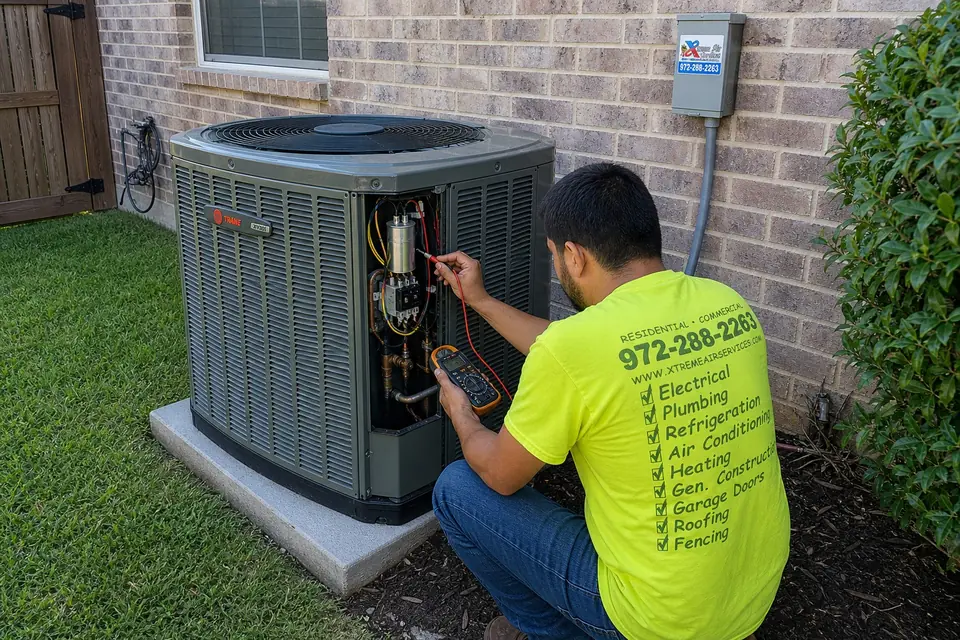
- The outdoor unit hums or buzzes but the fan on top won’t spin. That often points to a worn capacitor or a fan motor that’s given out.
- Ice on the copper lines or the indoor coil that comes back even with a new filter. That can mean low refrigerant from a leak or a blower that isn’t moving enough air.
- Water where it shouldn’t be, like a wet drain pan, a dripping line, or a stain on the ceiling under the air handler.
- The system turns on and off every few minutes and never really finishes a cycle.
- Grinding, squealing, rattling, or loud clicking that wasn’t there before.
- A burning or electrical smell when the system kicks on.
- Nothing happens at all. The thermostat is set to cool, the breaker is on, and the system still won’t start.
- Your electric bill keeps climbing while the house feels the same or worse.
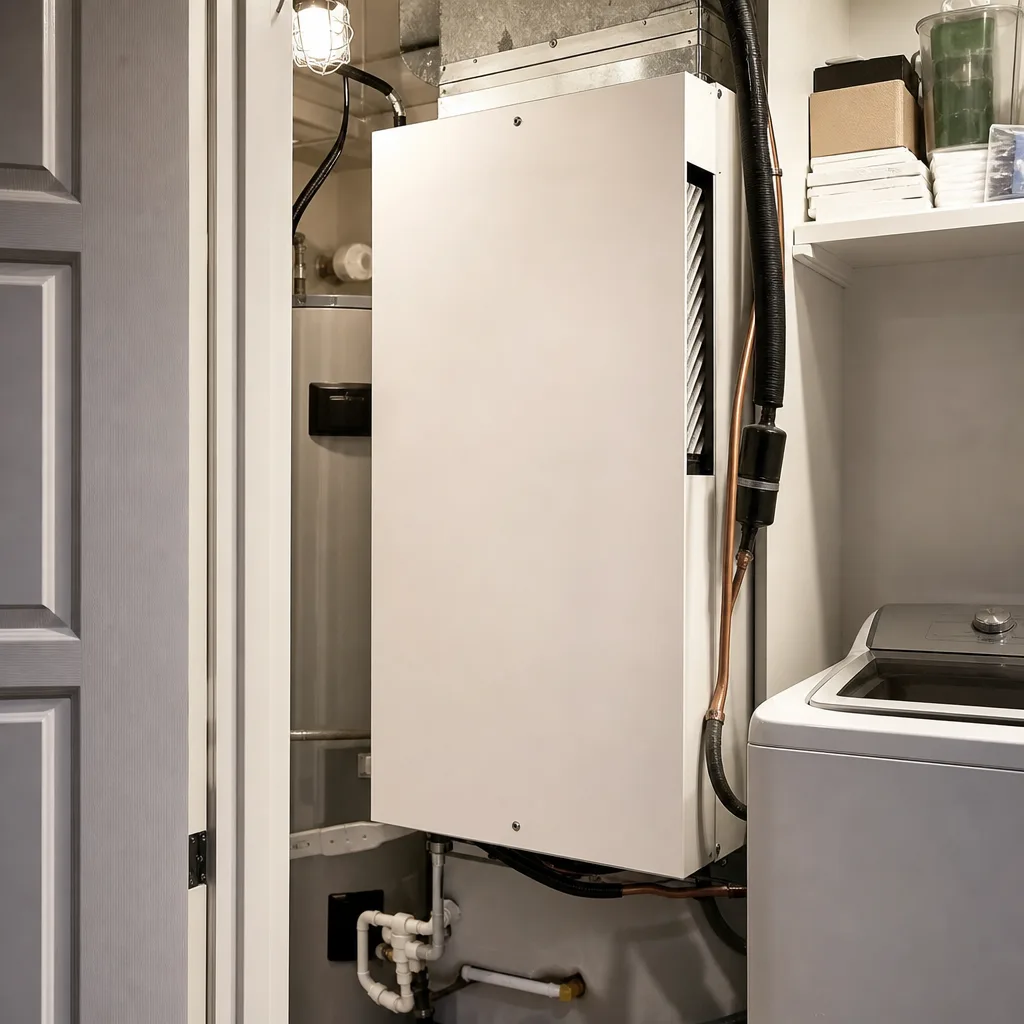
The water sign deserves a closer look in Frisco. In many North Texas homes, the air handler sits up in the attic. When a drain line clogs, the overflow has nowhere to go but down. That’s why a brown spot on a bedroom or hallway ceiling is often the first thing you notice. Clearing the drain line early is a much smaller job than fixing drywall later.
Heat makes all of these signs show up faster. On a long Frisco summer afternoon, your system may run for hours with barely a break. A part that was getting weak in spring, like a capacitor or a fan motor, is the kind of thing that finally quits when the system is working its hardest.
Here’s the good news. Most of these signs come from one failed part, not a dying system. Most calls are a single common failure fixed on the first visit. A noisy fan, a buzzing outdoor unit, or a frozen line sounds scary, but it usually points to something specific that can be found, replaced, and tested before the technician leaves.
If you’ve changed the filter and checked that the thermostat and breaker are set right, you’ve done your part. Anything past that is a job for a licensed technician with the right tools to test the system safely.
Check These Three Things Before You Call
You’ve already swapped the filter. Before you pick up the phone, take five minutes for these three checks. Each one can make a working system look broken, and each one is free to fix.
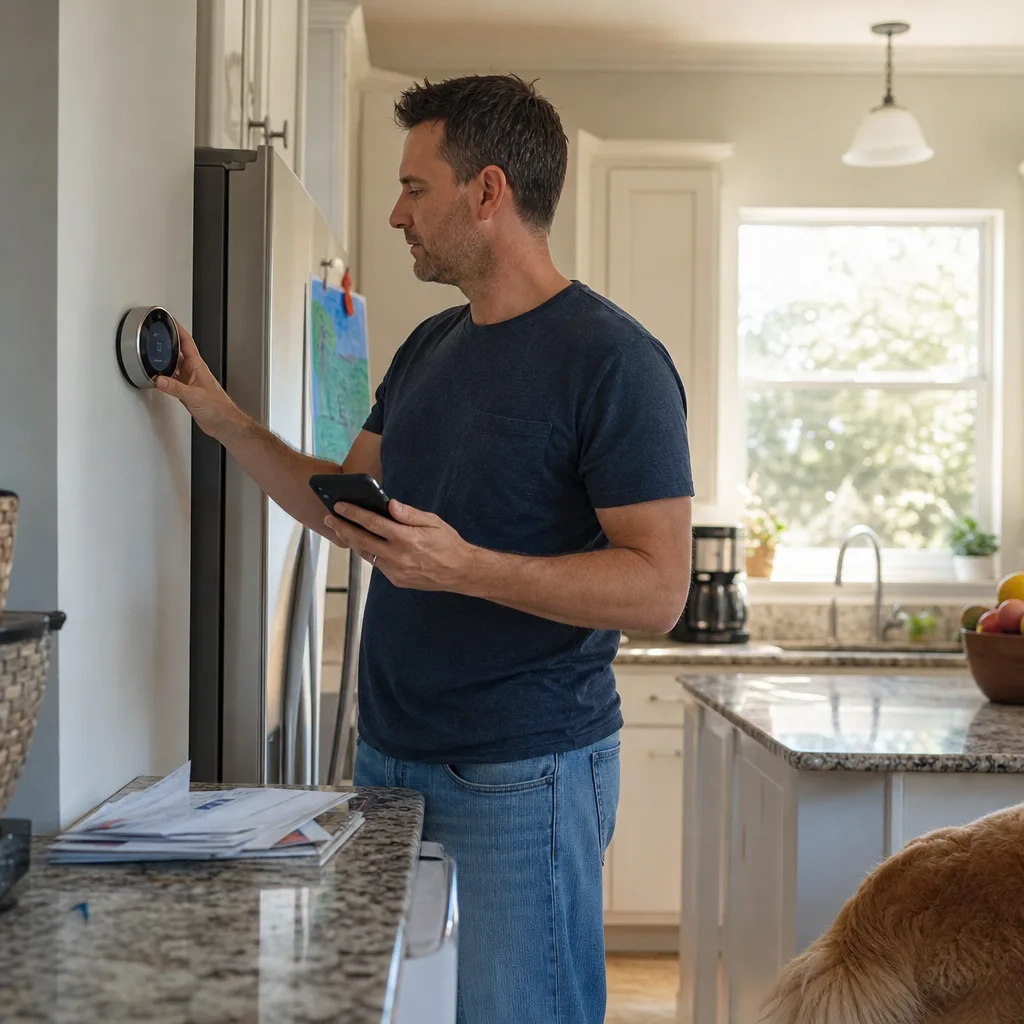
1. The thermostat. Make sure it’s set to Cool, not Heat or Off, and that the fan is on Auto. Then set the temperature three degrees below what the room feels like right now. If the screen is blank, change the batteries. Smart thermostats can also lose Wi-Fi or hold onto an old schedule, so check that nothing is overriding your setting. Once you change it, give it about five minutes. Many thermostats wait a few minutes before starting the outdoor unit to protect the compressor, so a short pause is normal.
2. The breakers and switches. Your system usually has two breakers in the main panel: one for the outdoor unit and one for the indoor unit, often labeled AC, condenser, furnace, or air handler. A tripped breaker sits stuck in the middle. Push it all the way off, then back on. There’s also a power switch near the indoor unit that looks like a regular light switch, and it’s easy to bump during holiday decorating or attic storage trips. Outside, a gray box on the wall next to the condenser is the disconnect. Make sure it’s closed and seated.
3. The drain pan safety switch. Many Frisco homes have the air handler in the attic, and many of those units have a small float switch in the drain pan or on the drain line. When water backs up, that switch shuts the whole system off to keep it from overflowing onto your ceiling. That’s the same clog behind the ceiling stains we covered above. If your system went dead with no warning, look in the pan. Standing water means the switch did its job.
If you’re comfortable with it, you can sometimes clear the clog yourself with a wet/dry vac on the outdoor end of the drain line. Once the pan drains, the switch resets and the system can start again. Go up in the morning, since a North Texas attic gets dangerously hot by afternoon. And don’t tape or bypass that switch. It’s the only thing standing between a clogged line and wet drywall.
If all three check out and you still have warm air, noise, or no power at all, you’ve ruled out the easy stuff. When you call our Xtreme Air Services team in Frisco, tell us what you checked and what you saw: a breaker that tripped twice, water in the pan, an outdoor fan that won’t spin. That helps the technician who comes to your home walk in already knowing where to start. And if it’s a Saturday or late at night, there’s no extra charge for nights or weekends, so you don’t have to sweat it out until Monday.
That same focus carries through the practical xtreme air services – frisco guidance our team provides to local families.
Same-Day or Can Wait: How to Tell
Not every HVAC problem is an emergency. Some can’t wait an hour, and some can wait until next week. The real question is simple: is waiting going to hurt someone, damage your home, or wreck a part that’s still working? If the answer is yes, get help today. If it’s no, you can book a time that works for you.
Call for same-day service if you notice any of these:
- A burning or electrical smell. Turn the system off at the thermostat and leave it off until a technician looks at it.
- A breaker that trips again after you reset it once. That’s power going where it shouldn’t, so don’t keep resetting it.
- Water coming through a ceiling or spreading across the attic floor. Every hour adds to the drywall and insulation damage.
- The outdoor unit hums or buzzes but the fan won’t spin. If it keeps running that way, the compressor can overheat. Shut the system off instead of letting it struggle.
- No cooling on a hot afternoon when someone in your home is elderly, a baby, sick, or a pet left home alone. A Frisco house can heat up fast in July and August, and that’s a health problem, not just a comfort one.
- No heat during a hard winter freeze. North Texas cold snaps don’t last long, but a night without heat is a long night.
Some problems land in the middle. Your system still runs, but it’s losing ground. Maybe ice keeps coming back on the lines, or the house won’t cool below 80 by evening. You don’t need someone at midnight, but don’t let it drag on for a week either. A system that’s struggling in a Frisco summer is working harder every day, and a small problem like a weak capacitor or a slow refrigerant leak can take down a bigger part if you leave it. Try to get it looked at within a day or two.
And here’s the honest part. These can usually wait for a regular appointment:
- Your energy bill is a little higher than last year, but the house is still comfortable.
- One room runs a few degrees warmer than the rest, and it’s been that way for a while.
- A new sound that’s quiet, steady, and isn’t getting worse.
- The system runs long on a 100-degree afternoon but still keeps up and catches up at night.
On the hottest days, long run times are normal. A system that keeps your home cool while running a lot is doing its job. If it’s keeping up, you don’t need to pay for an urgent visit. Write down what you notice and book a time that fits your schedule. If one of those small problems starts getting worse, say the noise grows louder or the house stops cooling down at night, move it up to the “soon” list.
If you’re stuck between two choices, just call and describe what’s going on. Our team answers the phone around the clock, and talking to a real person for two minutes is often the fastest way to know whether you need a technician today. When it’s urgent, same-day service is available, and as mentioned above, nights and weekends cost no extra.
Have questions? We’re happy to help.
Call Today, Get Service Today. Xtreme Air Services — Frisco is ready to help.
What Happens During a Repair Visit
A repair visit has three jobs. Find the part that failed, fix or replace it, and prove your system runs right before the technician leaves. Most calls come down to a single common failure fixed on the first visit, so for most Frisco homeowners the visit ends with cool air, not a second appointment.
The person at your door is a licensed technician who’s been background-checked and drug-tested. You’re letting someone into your home on a stressful day, and that should be one less thing to worry about.
Finding the real cause comes first. A good diagnosis means testing, not guessing. The checks you made before calling give the technician a head start. From there, a typical diagnosis can include:
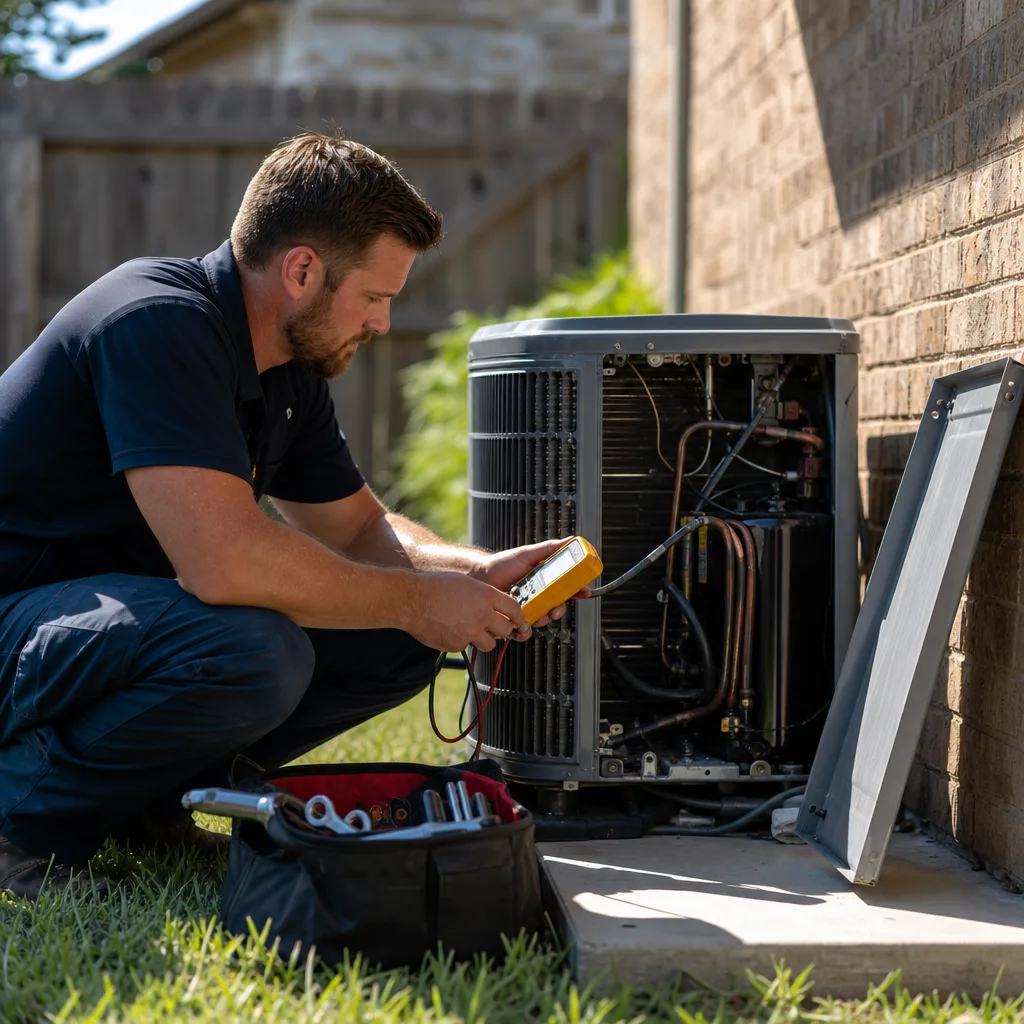
- Testing the capacitor and fan motor at the outdoor unit with a meter
- Reading refrigerant pressures to look for a leak or a low charge
- Checking the blower, coil, and drain line at the indoor unit, which in many Frisco homes means a trip into the attic
- Looking over the wiring, contactor, and control board for burned or loose connections
This matters for your wallet. A weak capacitor and a failing compressor can both make the outdoor unit hum without starting. One is a small part. The other is a major component. Testing tells them apart, so you don’t pay for a part that wasn’t the problem.
Next, you get the price before any work starts. The technician tells you what failed, what it takes to fix it, and what it costs. We use upfront flat-rate pricing, and you approve it first. There’s no meter running while the work gets done, and nothing on the bill you didn’t agree to.
The service-call fee is $26 to $99, and it’s credited toward the repair if you go ahead with Xtreme Air Services. Either way, you walk away knowing exactly what’s wrong with your system.
Here’s what the repair price covers, so you know where the lines are:
- Included: diagnosis, labor, and the standard replacement part, plus testing and cleanup
- Not included unless quoted separately: additional failed parts, major components, code upgrades, or permits
So if the technician finds a second worn part, you’ll hear about it and get its own price. You decide whether to fix it now or later. It won’t just show up on your bill.
If the problem turns out to be a major component, like a compressor, that’s a bigger decision. You’ll get the facts you need to choose between a larger repair and a replacement. Financing is available on larger repairs and replacements. It isn’t typically offered on smaller repairs.
The last step is making sure it works. After the repair, the technician runs your system and checks that it’s working correctly. You should hear the outdoor fan spinning, and you should feel cool air at the vents within a few minutes. Then the work area gets cleaned up.
Before the technician leaves, ask what failed and why. A clear answer helps you spot the same problem early next summer, before it turns into a hot night in your home.
Watch Our Video
See How We Handle HVAC system repair in Frisco
Xtreme Air Services — Frisco
What Repair Typically Costs and What Drives the Price
Here’s the number you’re probably looking for. HVAC system repair with our team typically runs $150 to $700. The most common job is finding one failed part, fixing or replacing it, and making sure the system runs right. That job usually costs $150 to $400.
So if your outdoor unit is humming but the fan won’t spin, or your system shut off because of a clogged drain line, you’re most likely looking at the lower range. Those are single-part problems. Where your repair lands depends on what the technician finds once the testing is done.
These are the things that move the price up or down:
- How much has failed. A worn part caught early costs less than one that ran until it took something else down with it.
- The part itself. Some parts are small and easy to get. Others cost more or take longer to find.
- How old your system is, and who made it. Parts for older or less common equipment can be harder to find and can cost more. Older systems built for a refrigerant that’s no longer made can also cost more to recharge.
- Whether more than one part failed. Two failed parts mean two repairs. As covered above, a second part gets its own price, and you decide on it.
- When you call. Many companies charge more after hours. We don’t. There’s no extra charge for nights or weekends, so a Saturday repair costs the same as a Tuesday repair.
That last point matters in Frisco. Systems tend to give out on the hottest afternoons and over long weekends, when they’ve been running hard for days. You shouldn’t have to choose between paying a surcharge and sweating it out until Monday.
What about the high end? A repair moves toward $700 when the failure is bigger, the part costs more, or more than one thing needs fixing. If the problem is a major component like a compressor, that’s a separate quote and a bigger decision, which we walked through in the repair visit section.
Whoever you call, ask these questions before anyone starts working. A fair company will answer them without any trouble:
- Is there a service-call fee, and does it go toward the repair if I hire you?
- Will I get a set price and approve it before you start, or am I paying by the hour?
- Do you charge more for nights, weekends, or holidays?
- What does the price include? Is testing included, and is cleanup?
- If you find another bad part, will you tell me and give me a separate price first?
Our answers are simple. The service-call fee is credited toward your repair if you go ahead with us. You get upfront flat-rate pricing and approve it before work starts. Nights and weekends cost the same as weekdays. And nothing gets added to your bill that you didn’t say yes to.
If your system isn’t keeping up and you’d like a real price before you decide anything, call and talk to a real person. Our licensed technicians serve Frisco from our office on Warren Parkway, and same-day service is available.
Call 469-490-3595
Frequently Asked Questions
Common questions about HVAC system repair
Can I keep running my AC while I wait for a repair appointment?
It depends on what’s wrong. If the outdoor fan isn’t spinning but the unit keeps humming, turn the system off instead of letting it run that way, since the compressor can overheat. If your system is just struggling to keep up on a hot day but still cycling normally, it’s fine to keep running until your appointment.
Why does my system seem to break down more in Frisco summers than other times of year?
Long, hot afternoons push your system to run for hours without a break, and that extra strain is what finally finishes off a part that was already wearing out. A capacitor or fan motor that was getting weak in spring often gives out once the system has to work its hardest in July and August.
Is it normal for my system to run almost constantly on 100-degree days?
Yes, long run times are normal on the hottest Frisco afternoons as long as your home still cools down and catches up at night. A system running a lot but keeping up with the heat is doing its job, so that alone isn’t a reason for an urgent visit.
What should I do if I find water in the attic near my air handler?
Check the drain pan for standing water, since that usually means a clogged drain line tripped the safety float switch and shut the system off. Clear the clog in the morning when the attic is cooler, and never tape over or bypass that switch, since it’s what keeps water from reaching your ceiling.
Ready to Get Started?
Call (469) 490-3595 Today, Get Service Today.