


Generator Repair in Irving: Get Your Backup Power Working Again
Standby and portable generators diagnosed and repaired, starting with the four failures we see most.
What’s Covered on This Page
- Signs Your Generator Needs Professional Repair
- What to Check Before You Call
- How Xtreme Air Services Diagnoses and Fixes a Failed Generator
- What Generator Repair Costs in Irving
- Keeping Your Generator Ready for the Next Outage
- What do you call someone who repairs generators?
- Can any generator be repaired, or do some need replacing?
- How can I tell if my generator is bad versus just needing a small fix?
Signs Your Generator Needs Professional Repair
Your generator usually tells you something’s wrong before the next storm does. You just have to know what to look for. Here are the signs that mean it’s time to have a pro take a look.
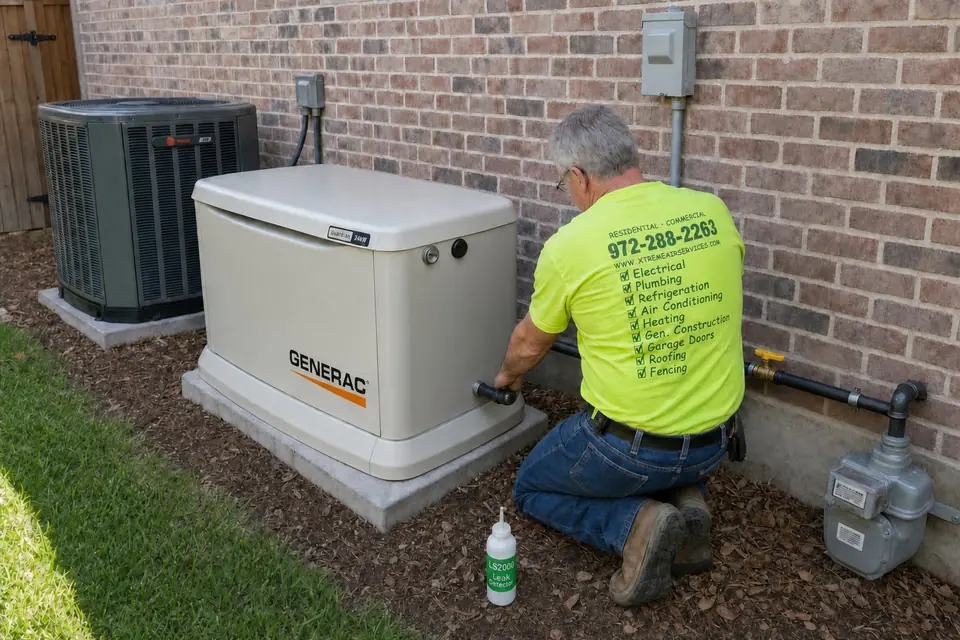
- It won’t start, or it cranks slowly. A sluggish start or just a click often points to a weak battery or a starting problem. North Texas summer heat is hard on batteries that sit outside all year.
- It starts, then shuts down. If it runs for a few seconds or minutes and quits, the cause could be fuel, a sensor, or the controls sensing a fault and shutting the unit off to protect it.
- It runs but your lights stay off. When the engine is going but power never reaches your home, the problem may be in the transfer switch or the connection between the generator and your panel.
- There’s a warning light or fault code on the controller. Many standby units show an alert when something’s off. If it comes back after you clear it, something needs fixing.
- It skipped its weekly test run. Most standby generators run a short self-test on a schedule. If you don’t hear it anymore, don’t assume it’s fine.
- You hear new noises, see smoke, or smell fuel. Knocking, rattling, heavy smoke, or a fuel smell are all reasons to stop running it and have it checked before you use it again.
Some of these show up at the worst possible time. Picture a spring storm knocking out power on a weeknight. You wait for the hum out back, and it never comes. Or it fires up, runs for a minute, and goes quiet while the house stays dark. That’s the moment most people learn their backup needed attention weeks ago.
Here’s the honest part. Not every quiet generator is broken. Before you call, look at the controller. If it’s set to Off or Manual instead of Auto, it won’t start on its own when the power drops, and switching it back may be all it needs. If that’s not it, or the fault comes right back, that’s when a technician earns their keep.
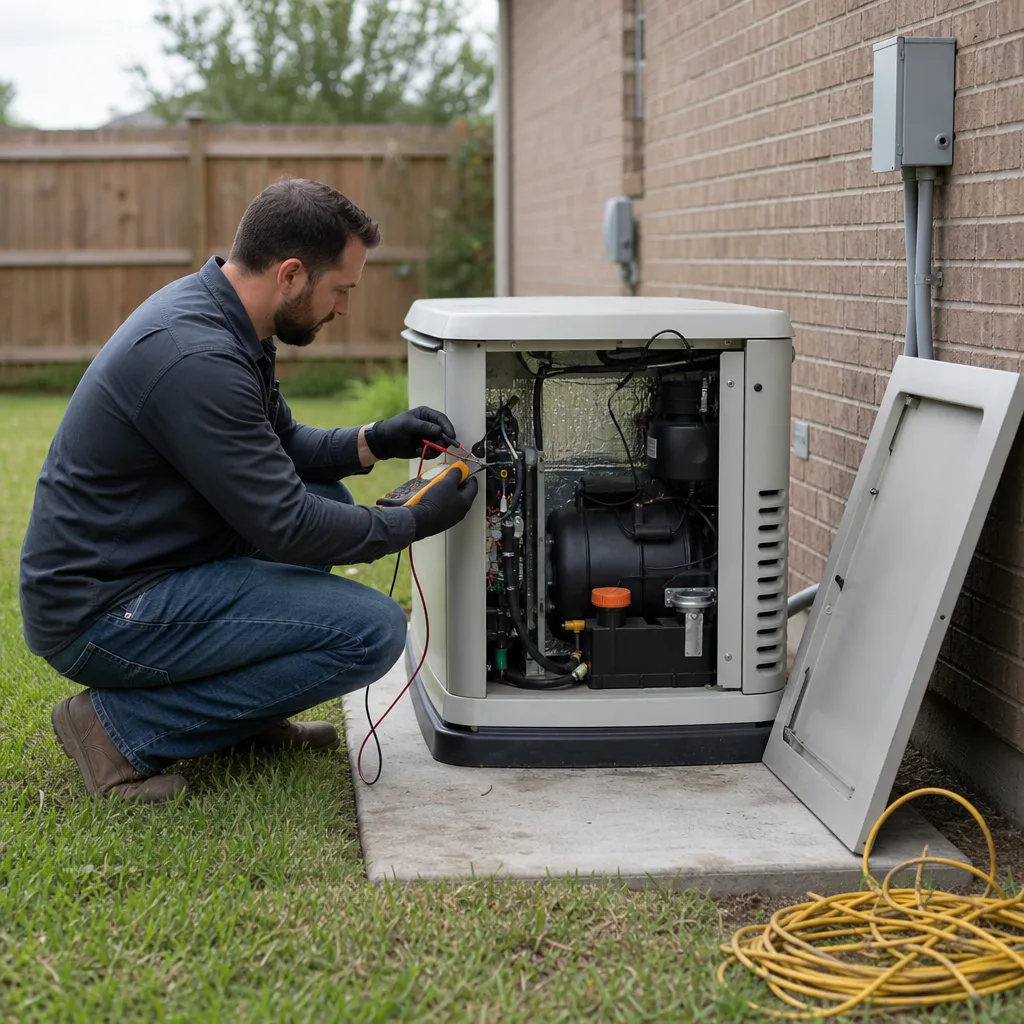
When our team comes out, the job is to find the actual fault in the battery, fuel, controls, or starting system, replace the failed part, and then make sure the generator starts and carries load. That last step matters. A generator that starts in the driveway but can’t run your AC, fridge, and lights during a July outage hasn’t really been fixed.
Hard winter freezes and long stretches of heat are both tough on this equipment. If your generator sat unused through either one and now acts differently than it used to, trust that feeling. Catching a small problem now beats finding out during the next outage.
What to Check Before You Call
A few minutes of looking around can save you a service call. If it doesn’t, it’ll make the call shorter and the fix faster. None of these checks need tools, and none of them mean opening up the generator.
- Make sure the power is out at your house. A standby generator is supposed to sit quiet while utility power is on. If your lights work and the generator isn’t running, that’s normal. If your neighbors are dark too, Oncor’s outage map can tell you whether it’s a wider outage.
- Look at the controller. You already know the mode setting matters. While you’re there, write down any fault code or warning message exactly as it shows on the screen, and note the light color if there is one. That one detail can point a technician straight to the right system.
- Check your fuel. On a propane unit, read the gauge on the tank. On a natural gas unit, see if your other gas appliances, like the stove or water heater, are working. A portable generator may simply be low on gas, or running on fuel that sat in the tank too long.
- See if the generator’s own breaker is tripped. Don’t keep flipping it. Just note what position it’s in and tell us when you call.
- Clear a path to the unit. Make sure the gate isn’t locked and that nothing is piled against the enclosure. Grass clippings, leaves, and storm debris can block airflow, and easy access helps the visit go smoothly.
If one of those turns out to be the problem, you’re done. Fix it, let the generator run its next test, and you don’t need us. That’s a good outcome.
If nothing on that list explains it, here’s what’s worth having ready before you pick up the phone:
- The brand, model, and size of your generator. The label is usually on the side of the unit or inside the service door.
- When it was last serviced, if you know.
- What happened, in order. Did it never start, start and quit, or run without powering the house?
- Any sounds or smells you noticed, and the fault code you wrote down.
This isn’t busywork. The cause of the failure, the brand and size of your unit, whether the part is easy to get, and how hard the generator is to reach are the things that shape what a repair costs. The more our technician knows up front, the better your chance of getting the right part in hand and the job finished on the first trip.
It also helps us test the right way when the repair’s done. If you tell us your generator started fine but your lights never came on, we know to look hard at what happens after the engine runs, not just whether it turns over. That’s how you end up with a generator that carries your home through the next outage, not one that only starts in the driveway.
How Xtreme Air Services Diagnoses and Fixes a Failed Generator
When you call, you talk to a real person, and a licensed, background-checked technician can get to you the same day. Our job is the one you read about above: track the fault to the battery, fuel, controls, or starting system, replace the part that failed, and prove the fix under load. Most calls are fixed on the first visit, which is why the details you gathered help so much.
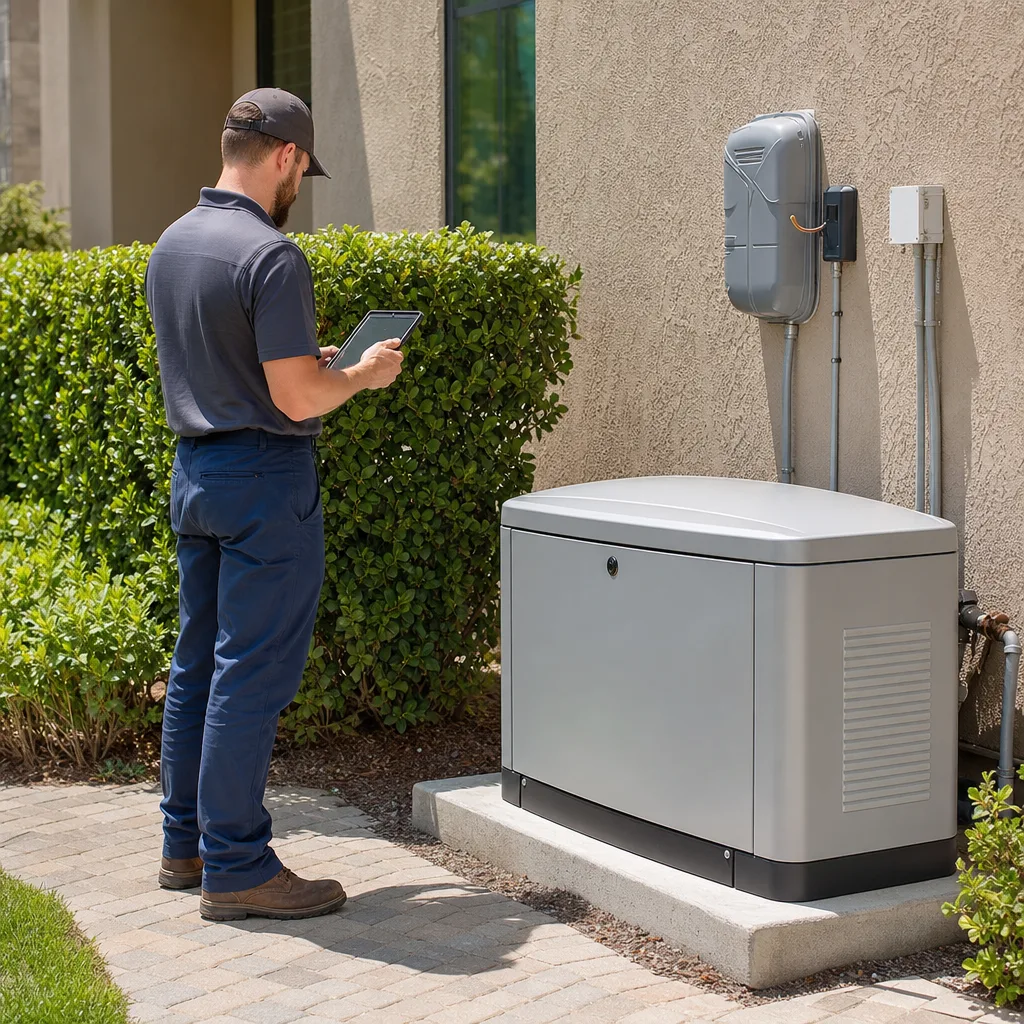
Each of those four areas leads to a different kind of repair, and it helps to know the difference before anyone quotes you a price.
- Battery: This is often the simplest fix. A battery that’s lost its strength gets swapped for a new one, and the charging side gets checked so the new battery doesn’t die the same way.
- Fuel: The problem might be a supply issue, a regulator, or old fuel in a portable unit. Sometimes it’s a part. Sometimes it’s a setup problem that needs correcting.
- Controls: Sensors and controller faults can shut a healthy engine down to protect it. Finding the real cause matters more than clearing the code and hoping.
- Starting system: Slow cranking or a click can come from more than the battery. It’s worth checking before you replace parts that weren’t the problem.
Before any work starts, you get an upfront flat-rate price to approve. No meter is running while you decide. If you’d rather wait or get another opinion, that’s your call.
Here’s what that price covers and what it doesn’t. Diagnosis, labor, the standard replacement part, and testing are included. Major components, full unit replacement, code upgrades, and permits aren’t included unless we quote them separately. If your generator needs one of those bigger items, you’ll know before anything happens, and financing is available on larger repairs and replacements.
A few things move the price up or down: what caused the failure, your generator’s brand and size, how easy the part is to get, and how hard the unit is to reach. Timing isn’t one of them. There’s no extra charge for nights or weekends, so you don’t have to sit in the dark until Monday to save money.
Sometimes a repair isn’t the smart move. If the fix costs close to what a new unit would, or the generator was never sized for your home in the first place, we’ll tell you plainly and walk you through your options. Some of those options include whole-home standby generator installation or a backup power assessment. You still decide what happens next.
Because we also handle electrical work, one team can look at the generator, the transfer switch, and the panel connection when a problem crosses between them. You won’t be passed between two companies blaming each other while your house stays dark. Our licensed and insured technicians are background-checked and drug-tested, and they’ll treat your home like their own.
Not sure what your Generator repair project needs? Ask us.
Call Today, Get Service Today. Xtreme Air Services — Irving is ready to help.
What Generator Repair Costs in Irving
You’ve already seen what our generator repairs typically run. A price only means something if you can compare it fairly, though. Here’s how to read any generator repair quote in Irving, whether it comes from us or someone else, so you know what you’re really paying for.
Most companies in this trade price repairs one of two ways. Hourly pricing bills you for the time the tech spends on the job. That sounds fair, but you won’t know your total until the work is done, and a hard-to-find fault can keep the meter running. Flat-rate pricing gives you one number for the job before any work starts. If the repair takes longer than expected, that’s on the company, not you. Either model can be honest. What matters is knowing which one you’re getting.
Before you say yes to anyone, ask these questions:
- Is the service-call fee credited toward the repair, or charged on top of it?
- Does the price include the part, the labor, and a test under real load, or just getting the engine to start?
- What’s left out of the quote, like major components, permits, or code work?
- Do nights, weekends, or storm days cost more?
- If the problem turns out to be in the transfer switch or panel, can the same company fix it?
- Will you tell me straight if replacing the unit makes more sense than repairing it?
A good company answers all six without hedging. If someone gets vague about the testing step or the after-hours rate, that’s worth noticing.
Surprise costs usually come from a few places. A part for a less common brand may need to be ordered. A unit tucked into a tight side yard, behind a locked gate, or boxed in by landscaping can take longer to reach. A fault that looked like a battery problem can turn out to be a controller issue. None of that should land on your bill without warning. You should hear about it and approve it first.
There’s also the cost of putting a repair off. A weak battery or a stubborn fault code is a small fix on a calm afternoon. That same problem is a lot harder to live with when a spring storm knocks out Oncor power across the neighborhood, the AC goes quiet in the heat, and the food in your fridge starts warming up. If you run a business in Irving, a dead backup can also mean lost hours, spoiled inventory, or a closed door. Generator maintenance or an annual service visit is the simplest way to find those small problems while they’re still small and still cheap to fix.
The goal isn’t to spend the least. It’s to pay a clear, fair price once and have a generator that carries your home or business through the next outage. Your neighbors have given us a 4.8-star reputation across 2,900+ reviews on Google, Angi, and HomeAdvisor, and our licensed and insured technicians will explain the fix and the price before anything gets touched.
Call 469-200-2166
Watch Our Video
See How We Handle Generator repair in Irving
Xtreme Air Services — Irving
Keeping Your Generator Ready for the Next Outage
A standby generator sits quiet for months, then has one job. It has to start the moment Oncor power drops and carry your home until the lights come back. A repair gets it there once. Keeping it there takes a little attention from you and a regular check from someone with the right tools.

Here’s what you can do between visits. None of it takes tools.
- Make the test run part of your week. You already know a missed test is a warning sign. Pick the day it usually runs and listen for it, the same way you’d notice the trash truck.
- Glance at the controller after yard work or a power blip. Make sure it still reads Auto. A bumped switch is an easy thing to miss.
- Keep the unit clear all year, not just before you call. Mowing season, fall leaves, and storm debris pile up fast. Trim back plants so the vents stay open.
- Check fuel before the weather turns. Read the propane gauge before spring storm season and again before a hard freeze. If you own a portable generator, don’t let gas sit in the tank for months.
- Keep a simple log. Write down service dates and any fault codes you see. It makes the next visit faster and helps spot a pattern.
Some things you can’t see from the yard. Batteries lose strength in long stretches of Texas heat. Oil and filters wear out. Vibration can loosen connections over time. A generator can also start just fine and still struggle when your AC, fridge, and lights all call for power at once. That’s why generator load testing matters. It shows whether your unit can really carry your home, not just run in the driveway.
Timing helps too. North Texas puts backup power through two tough seasons. Spring thunderstorms and hail bring sudden outages, and hard winter freezes can cut power right when you need heat the most. Booking generator maintenance or an annual service before storm season gives you time to fix a weak battery or a stubborn fault code on a calm afternoon, not in the dark.
If you run a business in Irving and depend on backup power for a cooler, a server closet, or simply keeping your doors open, ask about a backup power assessment or a generator monitoring setup. Monitoring can let you know about a fault without someone walking out to check the unit.
To be straight with you, if your generator is fairly new, runs every test, and stays clear and fueled, you don’t need us out there all the time. A regular check is the backup to your backup. It isn’t something you should feel pushed into.
Call 469-200-2166
Frequently Asked Questions
Common questions about Generator repair
What do you call someone who repairs generators?
They’re usually called generator technicians, and the best ones also understand home electrical systems. That matters because a generator problem often isn’t just the engine. It can involve the transfer switch or the connection to your home’s panel, so a tech who handles both electrical and generator work can trace the fault wherever it leads instead of guessing.
Can any generator be repaired, or do some need replacing?
Most generator problems can be repaired, since common failures trace back to the battery, fuel supply, controls, or starting system, all of which are fixable parts. Replacement only makes sense when the repair cost gets close to the price of a new unit, or when the generator was never sized right for your home to begin with. A straight answer on which situation you’re in should come before any work starts.
How can I tell if my generator is bad versus just needing a small fix?
A few warning signs point to trouble: slow cranking, starting then shutting off, running but not powering your home, a fault code that won’t clear, or a missed weekly test run. Many of these trace back to a weak battery or a tripped setting rather than a failed engine. Checking the controller mode and fuel level first can rule out the simple causes before assuming the worst.
Ready to Get Started?
Call (469) 200-2166 Today, Get Service Today.