


Whole-Home Standby Generator Installation in Irving
Turnkey standby generators sized to your home's real load – gas line, panel, permits and startup handled as one job.
What’s Covered on This Page
- What a Whole-Home Standby Generator Installation Includes
- Why This Job Requires Two Licensed Trades
- Sizing Your Generator to Your Home’s Real Load
- Where Grid Reliability Makes This Worth Planning For
- What Drives Your Installation Price Up or Down
- Can I plug a portable generator straight into a wall outlet during an outage?
- Is a whole-home standby generator a tax write-off?
- What are the downsides of a whole-home standby generator?
What a Whole-Home Standby Generator Installation Includes
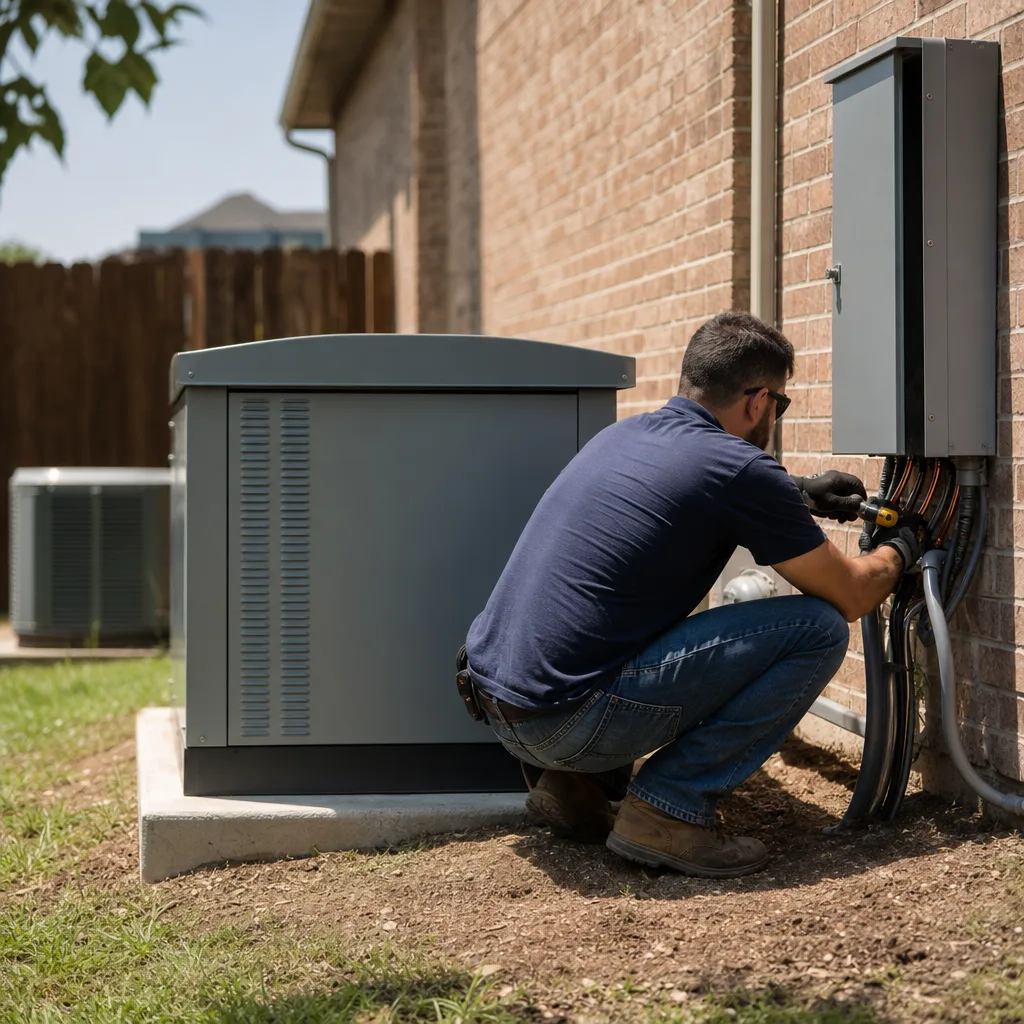
A standby generator only does its job if every piece works together. The machine on the pad is just one part. It also needs a steady fuel supply, a safe link to your electrical panel, and a switch that takes over on its own when the power drops. If any one of those is missing, you don’t really have backup power. You have a very expensive lawn ornament.
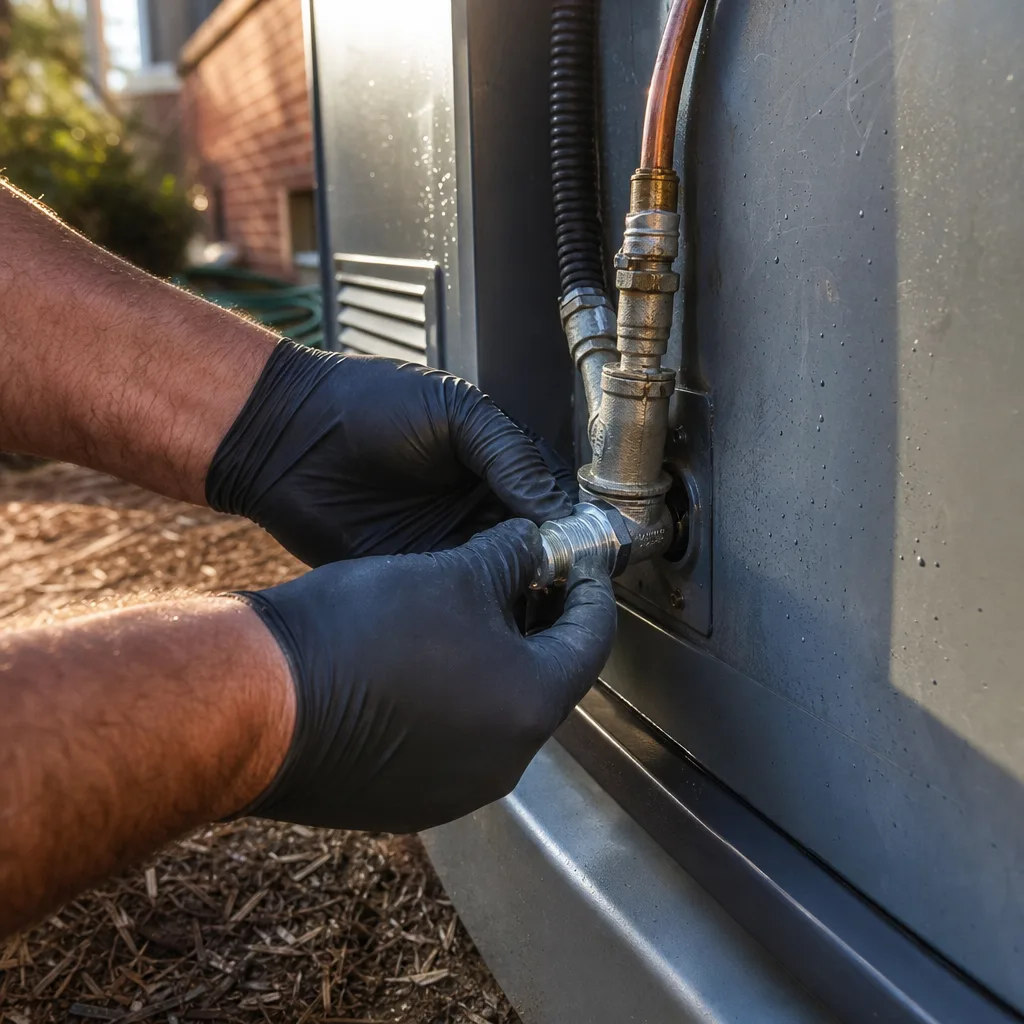
So when you get a quote from us, here’s what’s built in:
- The generator itself, sized for the parts of your home you want running in an outage.
- An automatic transfer switch. That’s the device that senses the grid went down, moves your home over to the generator, and switches you back when power returns. You don’t have to go outside in a storm and flip anything.
- Professional installation from start to finish.
- The gas and electrical connections that feed the generator and tie it into your home.
- The pad the unit sits on.
- Startup and testing, so you know it runs before we call the job done.
We want you to know what’s not in the base price, too. It’s better to hear it now than find out later. These items are excluded unless your quote states them: extensive gas or electrical service upgrades, landscaping, code corrections beyond the scope of the install, and permits.
Why would you need a gas or service upgrade? A whole-home generator burns a lot of fuel at once. If your gas line is too small or too far away, it may not deliver enough pressure. The same goes for an older electrical panel that can’t safely take a new connection. Those fixes are real work, and they’re priced separately so your base quote stays honest.
Two homes on the same Irving street can land at very different prices. Here’s what moves the number up or down:
- Generator size, measured in kW. Powering a few key circuits costs less than running the whole house, AC included.
- Transfer switch type.
- How far the gas line has to run, and what pressure it carries.
- Pad and site prep, like leveling ground or clearing space.
- How far the generator sits from your electrical panel.
- Code upgrades your home might need.
- Permits.
You’ll see the price before any work starts, with upfront flat-rate pricing and no meter running. If the total feels like a lot to pay at once, flexible financing is available on qualifying installations and larger jobs, on approved credit.
One tip when you compare quotes: ask each company to list what’s included and what isn’t, line by line. A lower number that leaves out the transfer switch, the pad, or the testing isn’t a lower price. It’s just a different job.
Why This Job Requires Two Licensed Trades
A standby generator sits in your yard, but it touches two of the most serious systems in your home: your natural gas line and your electrical panel. In Texas, those are separate licensed trades. Gas piping is plumbing work, and wiring into your panel is electrical work. A whole-home install needs both done right, and they have to work together on the first try.
Here’s what each side is responsible for.
- The gas side: running a line from your meter to the generator, checking that it can feed the generator while your furnace, water heater, and stove are running too, then testing every joint for leaks before the gas is turned on.
- The electrical side: mounting and wiring the automatic transfer switch at your panel, sizing the wire for the load, grounding the system, and making sure the generator only powers the circuits it’s built to handle.
If the gas side comes up short, which the last section touched on, the generator can start fine and then stumble the moment your AC kicks on. If the electrical side is wrong, the risk is bigger than a tripped breaker.
That risk is called backfeed. It happens when a generator sends power out through your meter and onto the street lines instead of only into your home. During an outage, Oncor line crews may be working on those lines because they believe they’re dead. A properly installed transfer switch keeps your home and the grid apart, so your generator powers your house and nothing else. That’s why the transfer switch is never a do-it-yourself part or a place to cut corners.
Now picture how the job often goes when two separate companies split it. One crew runs gas. Another wires the switch. A week later, the generator coughs under load during a summer storm. The plumber says it’s an electrical problem. The electrician says it’s the gas supply. You’re the one standing in a dark kitchen making phone calls.
When one company owns both trades, nobody gets to point at someone else. The same team that sized your gas line also wired your transfer switch, so if something isn’t right during startup and testing, we find it and fix it. That’s what we mean by done right the first time.
Xtreme Air Services is a licensed and insured HVAC, plumbing, and electrical contractor. Our plumbing work runs under Master Plumber Larry Breedlove, and our HVAC work runs under License #TACLA29023C. Our technicians are background-checked and drug-tested, so you know who’s in your yard and at your panel.
Having both trades under one roof also helps when your home needs more than the generator. If your panel is too old to accept a transfer switch, our electricians handle electrical panel replacement and upgrades. If your gas line needs to be extended, our plumbers handle gas line installation. One quote covers the whole picture, and you don’t have to coordinate anyone.
When you compare quotes, ask one simple question: who’s doing the gas work, and who’s doing the wiring? If the answer is two different companies, or a subcontractor nobody can name, you’ll know where the problems could come from later.
Sizing Your Generator to Your Home’s Real Load
The right size generator isn’t about how big your house is. It’s about what you want running when the power goes out, and how hard those things pull when they start up. Get that right and the generator carries your home without a hiccup. Get it wrong and you’ll find out during the outage, which is the worst time to learn.
Start with one honest question: what do you need to keep running? Most people land in one of two camps.
- Essentials only. Your fridge and freezer, some lights, the internet router, a few outlets, maybe a medical device or a sump pump. This takes a smaller generator, and it costs less.
- The whole house, AC included. Your home runs close to normal, even in August. This takes a bigger generator, and it’s the setup most Irving families ask about once they’ve sat through a hot summer outage.
In North Texas, your air conditioner is usually the deciding factor. It’s often the biggest single load in the house. And it doesn’t just pull steady power. When the compressor kicks on, it grabs a big burst of power for a second or two before it settles down. That startup surge is what a generator has to be ready for, not just the running load.
Here’s what that looks like when the generator is too small. The power goes out on a 100-degree afternoon. The generator starts fine. Lights come on and the fridge hums. Then the AC tries to start, the lights dip, and the generator either struggles or shuts itself down to protect itself. You’ve got backup power for everything except the one thing you needed most.
Winter matters too. If your home heats with an electric furnace or a heat pump with electric backup heat, that can pull even more than your AC during a hard freeze. Homes with a gas furnace usually need less in winter, since the generator only runs the blower fan. So how your house heats belongs in the sizing conversation, not just how it cools.
Bigger isn’t automatically better, either. An oversized generator costs more up front, burns more fuel, and asks more of your gas supply, which ties back to the gas line sizing covered earlier. You end up paying for power you’ll never use.
There’s a middle path for some homes, too. Load management lets the system hold off big appliances, like a second AC unit or an electric dryer, until there’s room for them. That can let a smaller generator handle a whole-house setup without overloading. It isn’t right for every home, but it’s worth asking about if you want whole-house coverage and a lower price.
A real sizing looks at the actual equipment in your home: how many AC units you have, how big they are, how you heat, and what else you can’t live without. Generator sizing and backup power assessment are part of what we offer, so you get a number built around your house, not a guess based on square footage.
Need help with Whole-home standby generator installation?
Call Today, Get Service Today. Xtreme Air Services — Irving is ready to help.
Where Grid Reliability Makes This Worth Planning For
In Irving, the power company isn’t really the problem. Oncor keeps the lines running most days. The weather is what knocks them down. North Texas gets severe spring thunderstorms, hail, high winds, summer heat that pushes the whole grid hard, and the occasional hard freeze that catches everyone off guard. Any one of those can leave your street dark for an hour, or for a few days.
The real question isn’t whether the power will go out. It’s what an outage costs your household when it does. For some families, that cost is a little hassle. For others, it’s a real risk.
A whole-home generator is usually worth planning for if any of these sound like your house:
- Someone at home depends on powered medical equipment, like oxygen or a CPAP machine.
- An older family member, a baby, or someone with a health condition can’t safely ride out a hot house in July or a cold one in a freeze.
- You work from home and can’t afford to lose your internet and computer for a day or two.
- You keep a full freezer or a second fridge, and losing that food adds up fast.
- You’ve already sat through more than one long outage and don’t want to do it again.
Here’s the honest other side. If your outages are rare and short, everyone at home is healthy, and you can stay with family across town when things get bad, a whole-home standby generator may be more than you need. A portable generator with a proper hookup can keep the fridge, a few lights, and some fans running for a lot less money. We offer portable generator hookup too, and we’ll tell you straight if that’s the better fit for your home. Spending $10,000 or more on backup power only makes sense if it protects something that matters to you.
If you do decide it’s worth it, the time to plan is before storm season, not during it. A standby install isn’t a same-day job. It takes a sizing visit, a quote, possible gas or panel work, and permits before the generator ever runs. When a big storm is in the forecast, it’s too late to start. Homeowners who plan in a calm month get their system tested and ready before the weather turns.
Think about the last outage you sat through. Was it just an annoyance, or did you spend it worried about someone in your home, your food, or your work? That answer tells you more than any sales pitch will.
Call 469-200-2166
Watch Our Video
See How We Handle Whole-home standby generator installation in Irving
Xtreme Air Services — Irving
What Drives Your Installation Price Up or Down
Most of what sets your price is sitting right there in your yard. Take a five-minute walk around your house and you’ll have a good idea whether your job leans toward the low or high end of our $8,000 to $18,000 range.

Here’s what to look for:
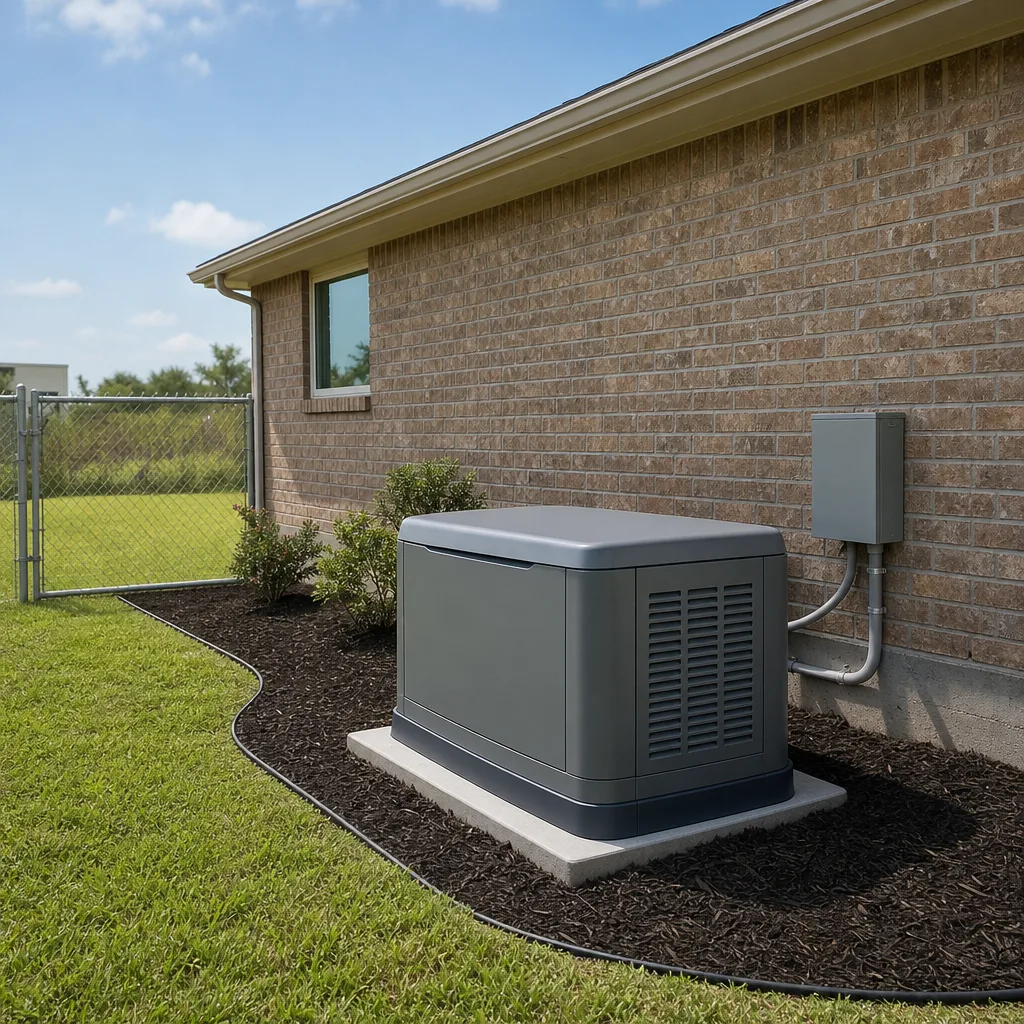
- Where your gas meter and electrical panel are. The generator usually sits somewhere between the two, a safe distance from windows and doors. If your meter is on one side of the house and your panel is on the other, someone has to cover that gap with gas pipe, wire, or both. Every extra foot adds material and labor.
- How your transfer switch will be set up. A switch that runs the whole house is a different job than one that feeds only the circuits you pick through a small subpanel. Load management parts add a little cost, but they can let you buy a smaller generator.
- What your yard looks like. Flat, open ground close to the house is the simple case. North Texas clay swells when it’s wet and shrinks when it’s dry, so a sloped or low spot may need leveling and a firm base to keep the pad from shifting. Tight side yards, fences, and your AC condenser also affect where the unit can go.
- How old your home is. An Irving house built decades ago may have a full panel, old grounding, or wiring that doesn’t meet today’s code. A newer home often goes faster because more of that is already up to date. Any code corrections beyond the scope of the install are priced on their own.
- Permits and inspections. The gas and electrical work on a generator install usually needs a permit and an inspection. That cost sits outside the base price unless your quote includes it.
Here’s how that plays out. Picture a newer home with the meter and panel on the same wall and a flat side yard with room to spare. The generator goes in a few feet away, with short pipe and wire runs and very little site prep. Now picture an older ranch home with the panel in the garage, the gas meter around the back, a sloped yard, and a panel with no open space. It’s the same generator, but there’s a lot more work to get it hooked up.
You have more control over the price than you might think. A few things that help:
- Decide whether you want the essentials or the whole house before the sizing visit, so the quote matches what you need.
- If you’re flexible on where the generator goes, tell us. A spot close to both the meter and the panel can save real money.
- Mention any past electrical or gas work, like a panel swap or an added gas line. It can change what your home still needs.
Once we’ve looked at your home, you’ll know exactly which of these apply and what they cost. You’ll get that number before anyone picks up a shovel.
Frequently Asked Questions
Common questions about Whole-home standby generator installation
Can I plug a portable generator straight into a wall outlet during an outage?
No, you should never plug a generator directly into a wall outlet. That connection can send power backward through your meter and onto the grid, which puts Oncor line crews at risk if they think those lines are dead. A transfer switch is the only safe way to connect a generator to your home’s wiring.
Is a whole-home standby generator a tax write-off?
Usually not, unless a doctor says you need it for medical equipment or it’s tied to a home office deduction. Most homeowners install one for comfort and safety during Irving storms, not for a tax break. Check with a tax professional about your specific situation before counting on any deduction.
What are the downsides of a whole-home standby generator?
The biggest downsides are the upfront cost and the ongoing fuel use, since a unit sized for your whole house burns more gas than one covering just the essentials. It also needs a dedicated gas line, an electrical connection, and a pad, which means more site work than a portable unit. For homes with rare, short outages, a portable generator with a proper hookup may cover your needs for less money.
Ready to Get Started?
Call (469) 200-2166 Today, Get Service Today.