


Chiller Installation in Dallas: Repair, Replace, or Upgrade Your Commercial Plant
Commercial chillers repaired, replaced or upgraded – with an honest call on when a full installation isn't needed.
What’s Covered on This Page
- Dallas Commercial Buildings Are Reaching Chiller Replacement Age
- Repair or Replace: How to Make the Right Call
- When You Don’t Need a Full Chiller Installation
- What Chiller Installation Involves From Start to Finish
- What Drives Chiller Installation Cost in Dallas
- Can I rent a temporary chiller while my new one is being installed?
- How long does a chiller installation take from start to finish?
- What happens to the refrigerant in my old chiller during removal?
Dallas Commercial Buildings Are Reaching Chiller Replacement Age
A chiller is the big machine that makes cold water for your building’s air conditioning. That water runs through pipes to air handlers on each floor. When the chiller struggles, the whole building feels it, from your tenants and staff to your customers and anything you keep cold.
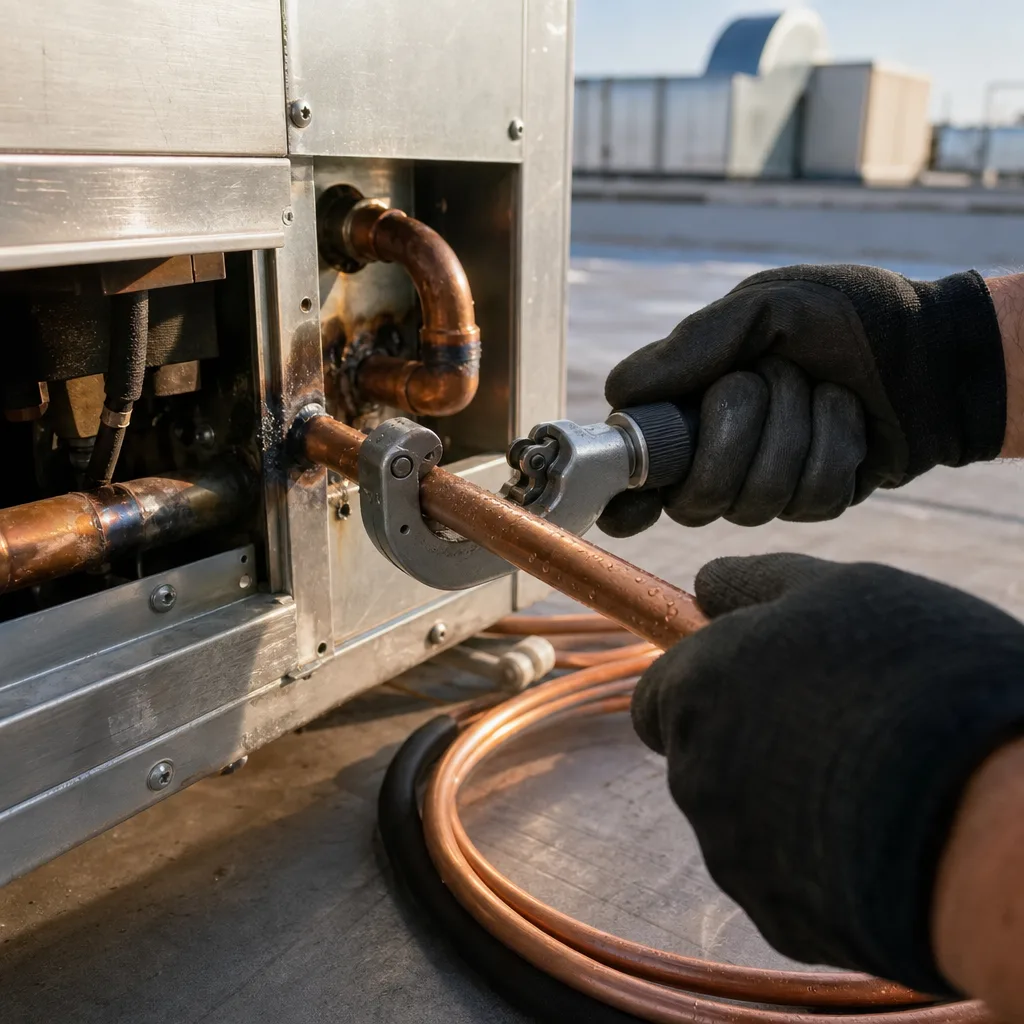
Most chillers last about 20 to 30 years with good care. That sounds like a long time until you count back. A chiller installed when your building opened, or during its last big renovation, may already be near that range. In Dallas, a chiller doesn’t get a long rest. Our cooling season starts early in spring and often runs well into fall, so the hours add up faster than they would in a milder city.
Age alone isn’t the whole story. These are the signs that an older chiller is reaching the end of its useful life:
- Repair calls are getting more frequent, and each one costs more than the last.
- Your energy bills keep rising even though the building’s use hasn’t changed.
- The chiller can’t hold your set temperature on the hottest afternoons.
- It leaks refrigerant, or it runs on an older refrigerant that’s being phased out under federal rules. Topping off that kind of refrigerant gets harder and more costly every year.
- Replacement parts take weeks to find, or the maker no longer supports your model.
- Your building has changed since the chiller went in. Added tenants, more equipment, or a server room can push cooling demand past what the old unit was sized to handle.
If you’re seeing two or three of these signs on a chiller in that age range, you’re not looking at bad luck. You’re looking at a machine that’s wearing out. Each repair buys time, but it doesn’t reset the clock.
Timing matters as much as the decision. A chiller that quits in July leaves you with very few good choices. You might pay for rental cooling, deal with unhappy tenants, close early, or rush an install with whatever equipment is available that week. When you plan ahead, you can pick the right size and efficiency, schedule the work for a cooler month, and line up financing without pressure.
Here’s the honest other side. If your chiller is well under 20 years old, has a clean maintenance history, and just had one failed part, replacing the whole system usually doesn’t make sense. Fix it, keep up with regular maintenance, and check it again in a few years. The same goes for a newer chiller that’s struggling only because the coils are dirty or the water treatment has slipped. Those are service problems, not replacement problems.
If you’re not sure which side of the line your chiller is on, our licensed team can look at its age, its repair history, and how it’s keeping up with your building’s load. Then we’ll tell you straight whether it’s time to repair or time to replace.
Repair or Replace: How to Make the Right Call
Here’s the short answer. Repair makes sense when the fix is small compared to how many good years the chiller has left. Replace when you’d be spending big money to keep an old machine limping through another summer.
The easiest way to decide is to put the repair quote right next to the cost of a new chiller. Then ask a few plain questions:
- How big is this repair? A failed sensor or valve is one thing. A compressor or a major part on an old chiller is a much bigger bet.
- How many years will the repair really buy? Divide the repair cost by those years. A big repair that buys one or two seasons often costs more per year than a new unit.
- What is the old chiller costing you to run? Newer, more efficient chillers use less power to make the same cold water. Over a long Dallas cooling season, that difference shows up on every electric bill.
- What would a breakdown cost your business? Think about lost hours, rental cooling, unhappy tenants, and anything you keep cold. That cost never shows up on a repair quote, but you’ll pay it if the chiller quits in July.
- Can you still get the parts and refrigerant? If the answer is no, the decision is already made for you.
Picture a three-story office building in Dallas with a 25-year-old chiller. The compressor fails in June. The repair quote is a large chunk of what a new chiller would cost, and the rest of the machine is just as old as the part that broke. Fixing it gets you through this summer. Replacing it gets you a machine built to last decades, uses less power, and lets you stop bracing for the next repair. In that case, replacement is usually the smarter money.
Now flip it. Say the chiller is 12 years old, the repair is a control part, and the system has been well cared for. Repair it and move on. There’s no reason to spend replacement money on a machine with plenty of life left.
To give you a real sense of scale, our chiller installation prices typically range from $15,000-$150,000. Our most common job is a standard like-for-like replacement using existing connections with no major modifications. It runs $42,000-$96,000 and covers the equipment and materials, professional installation, startup and testing, and haul-away of the old unit. Size, efficiency, access, code upgrades, permits, and any custom fabrication can move that number up or down. Flexible financing is available on qualifying installations and larger jobs, on approved credit, so the right choice doesn’t have to wait on your budget.
When the numbers come out close, look at the age of the whole system, not just the broken part. A new part in a worn-out chiller is still a worn-out chiller. Either way, you’ll get upfront flat-rate pricing approved before any work starts, so you’re comparing real numbers, not guesses.
When You Don’t Need a Full Chiller Installation
A new chiller is a big project. Sometimes it isn’t the right one. In many buildings, the chiller gets blamed for problems that start somewhere else in the system. In others, a smaller upgrade can give a healthy machine many more good years. Before you sign off on a full installation, rule these out.
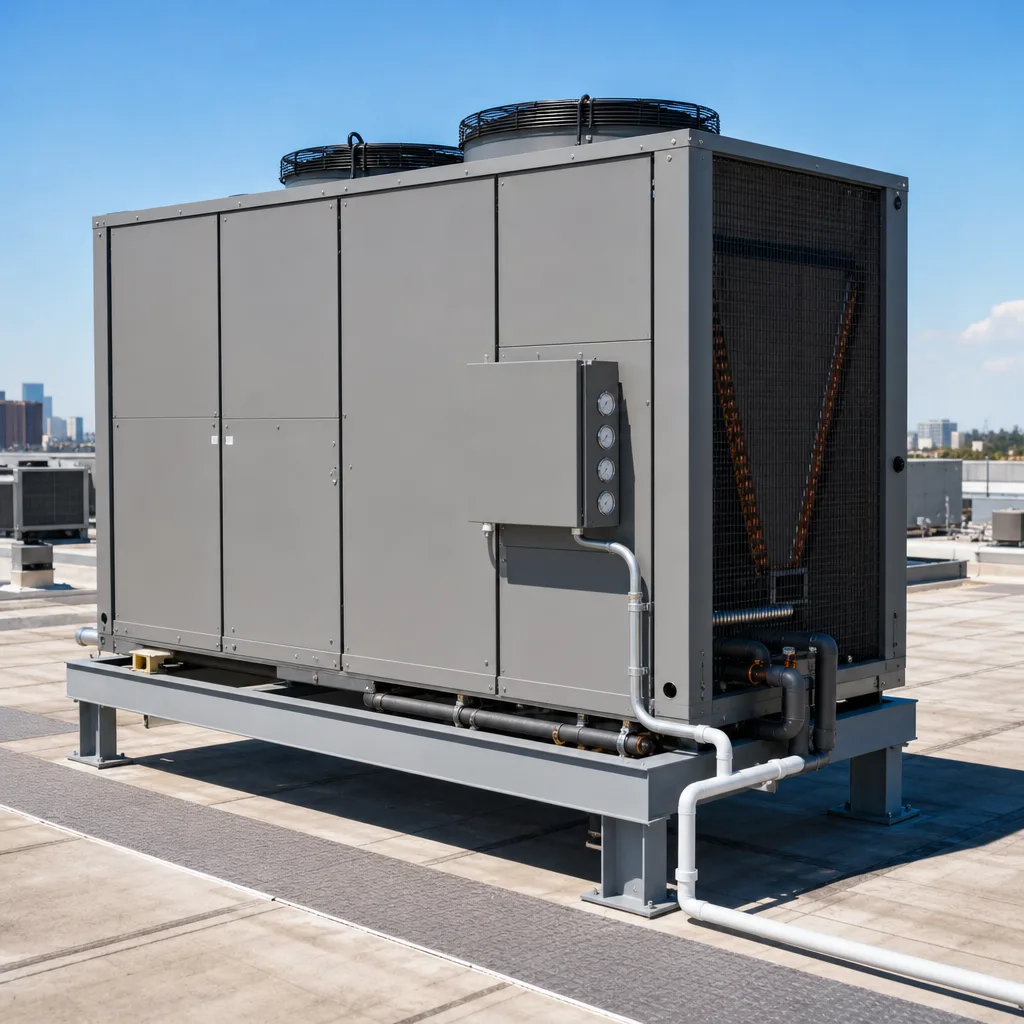
- The problem is somewhere else in the system. Your chiller makes cold water, but it depends on a team of other parts to deliver it. The cooling tower, pumps, valves, piping, and air handlers all have to do their jobs. A worn pump or a stuck valve can make a perfectly good chiller look weak. Fix the part that failed, not the whole plant.
- Some spaces are too cold and others are too warm. If one floor feels like a meat locker while another one sweats, cold water or air may not be reaching the right places. That’s usually a balancing problem. HVAC system balancing adjusts flow so each area gets its share, and it costs far less than new equipment.
- The controls are out of date. Old controls can run a good chiller badly. They may cycle it on and off too often or keep it at full power when the building only needs a little cooling. Updated controls or a building automation system can smooth that out and lower your power bill without replacing the machine.
- Your building has changed in the other direction. If you’ve lost tenants, closed off space, or cut back on equipment, your old chiller may now be bigger than you need. In a smaller building, rooftop units or a VRF system can sometimes do the job better than another chiller. A VRF system uses one outdoor unit to feed several indoor units, and each area can be set on its own. The right answer depends on your load today, not the load you had when the building opened.
Here’s a simple way to start sorting it out. Check the temperature of the water leaving the chiller. If the chiller is making cold water at the temperature it’s set for and the building is still warm, the chiller is doing its job. The trouble is downstream, in the pumps, valves, air handlers, or controls. If the chiller can’t reach that temperature, then the machine itself needs a closer look.
Picture a Dallas office building where the top floor runs hot every afternoon from June through September. The owner assumes the chiller is giving out. The chiller turns out to be making cold water just fine. A pump has lost pressure, and the water barely reaches the top floor. A pump repair solves the problem, and the chiller keeps running for years.
None of this means your chiller will last forever. It means a full installation should be the answer to a real chiller problem, not a guess. If the machine is sound and the trouble is elsewhere, the smart move is to fix what’s broken and keep the chiller you already paid for.
Ready when you are – get in touch today.
Call Today, Get Service Today. Xtreme Air Services — North Dallas is ready to help.
What Chiller Installation Involves From Start to Finish
A chiller installation is more than swapping one big machine for another. It’s a planned project with clear stages. Knowing those stages helps you plan around your tenants and your business, and helps you spot a quote that skips something important.
1. Sizing the new chiller to your building today. The old chiller was sized for the building you had years ago. A cooling load calculation looks at the building you have now, including your square footage, how many people are inside, your equipment, and how hard the Dallas sun hits your walls and roof. Getting the size right matters. A chiller that’s too small can’t keep up in August. One that’s too big turns on and off too often, wears out sooner, and wastes power.
2. Planning the job and the price. Before any work starts, you should know what’s in the job and what isn’t. With us, the standard job covers the equipment and materials, professional installation, standard connections, startup and testing, and haul-away of the old unit. Duct, electrical, or plumbing changes, code corrections, and permits aren’t included unless your quote says so. You’ll get upfront flat-rate pricing to approve first, so nothing on the bill catches you off guard.
3. Planning for downtime. Your building will be without chiller cooling while the old unit comes out and the new one goes in. That’s a big reason to schedule the work for a cooler month, as covered above. If you can’t wait, ask about temporary cooling for the changeover so your tenants and anything you keep cold stay protected.
4. Taking out the old chiller. The refrigerant has to be recovered by certified technicians under federal rules. It can’t be vented into the air. Then the old unit gets disconnected from the water piping, power, and controls and removed from the site.
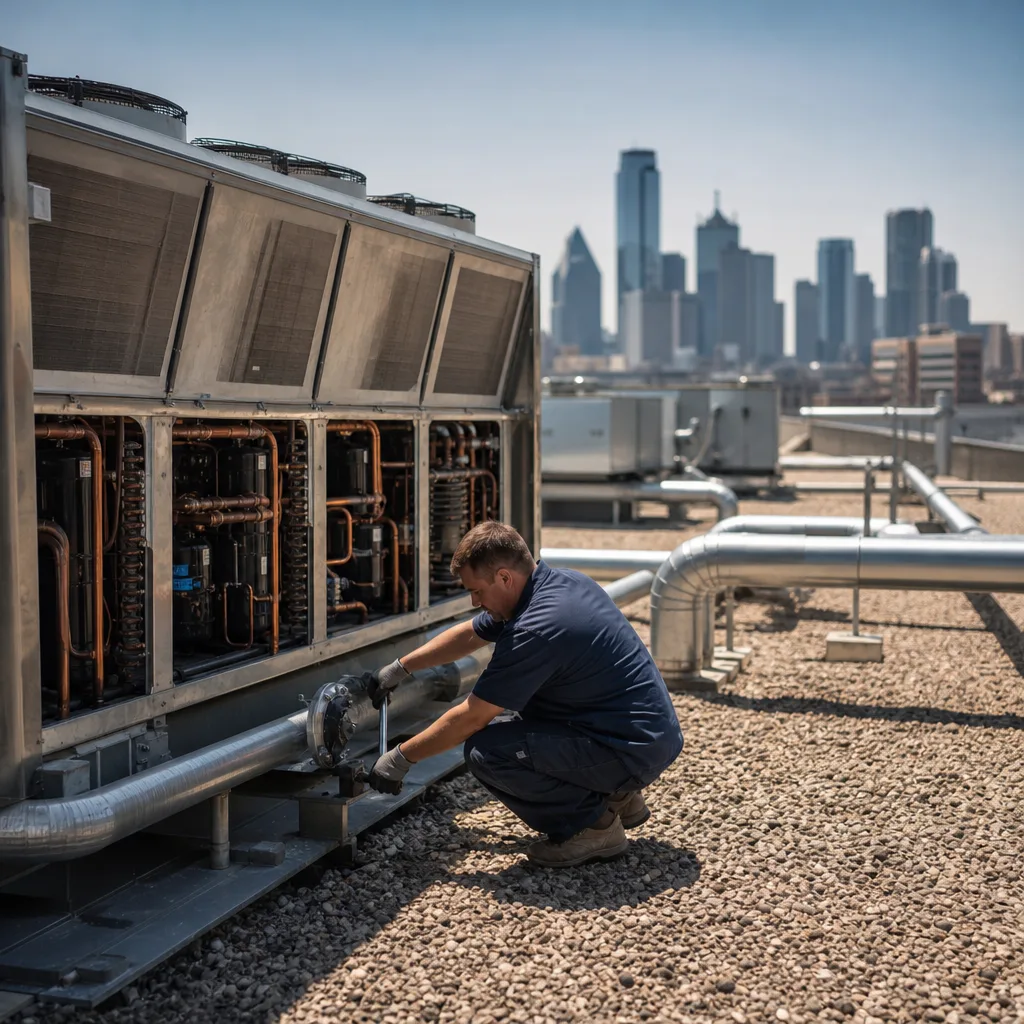
5. Setting and connecting the new chiller. Getting a chiller into place is often the hardest part of the job. A rooftop unit may need a crane. A chiller in a basement mechanical room may need a clear path through doors and hallways. Once the new unit is set, it’s connected to:
- The chilled water piping that carries cold water to your air handlers
- The condenser water lines that run to the cooling tower, if your system uses one
- The electrical supply sized for the new unit
- Your controls or building automation system, so the chiller responds to what the building needs
6. Startup and testing. This is where a good installation proves itself. The system is filled and checked for leaks. Then the chiller is started, and the team checks water flow, water temperatures, refrigerant levels, and electrical readings against the maker’s specs. The controls are set so the chiller ramps up and down with your load instead of running flat out all day.
How do you know the job was done right? Your new chiller should make cold water at its set temperature, every floor should cool evenly, and it should keep doing that on a 100-degree afternoon. If a contractor can’t explain the startup readings to you in plain English, ask them to.
Watch Our Video
See How We Handle Chiller installation in Dallas
Xtreme Air Services — North Dallas
What Drives Chiller Installation Cost in Dallas
You’ve already seen how wide the price range is for a new chiller. The reason is simple. No two buildings put the same demands on the job. Here are the things that move your number, and why each one matters.
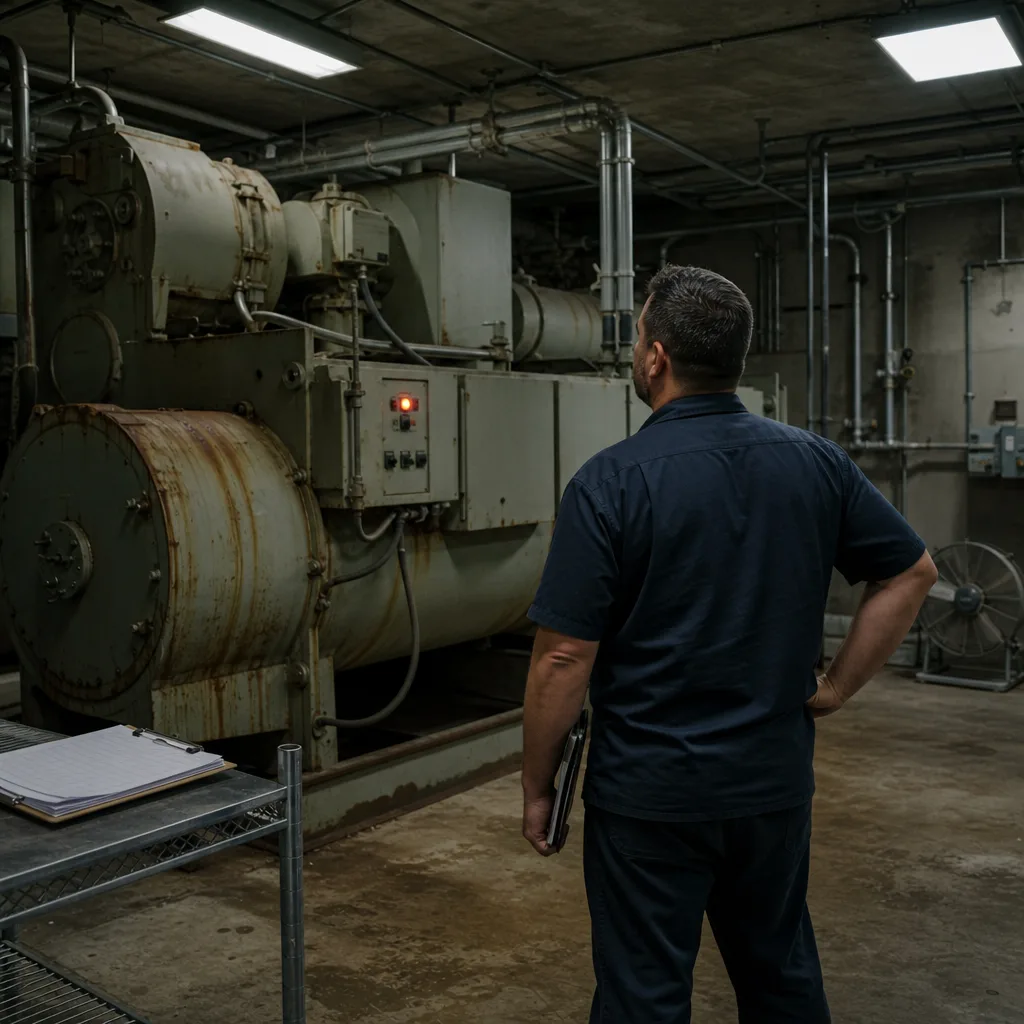
- Size and capacity. Chillers are sized in tons of cooling. A bigger building with more people, more equipment, and more glass facing the afternoon sun needs more tons, and more tons cost more. That’s why the load calculation matters. Paying for capacity you don’t need is money you won’t get back.
- Efficiency. A higher-efficiency chiller costs more up front but uses less power to make the same cold water. In Dallas, where cooling runs from spring well into fall, those savings stack up over a lot of hours every year.
- Brand and model. Different makers and product lines come at different prices, with different features and controls. The right pick depends on your building, not on the most expensive name.
- Ease of access. A chiller that rolls into a ground-level mechanical room is one kind of job. A rooftop unit that needs a crane, or a basement unit that has to come through tight doors and halls, takes more time, more people, and more equipment.
- Condition of what’s already there. A like-for-like swap on good existing connections keeps costs down. Old piping, wiring that can’t carry the new unit’s power, or worn plumbing has to be fixed before the new chiller can do its job.
- Code upgrades and permits. Rules have changed since many older chillers went in. Bringing the installation up to today’s code, and pulling the right permits, adds to the total.
- Custom fabrication. If the new chiller doesn’t line up with your existing piping or pad, parts may need to be built to fit. That’s skilled work, and it shows up on the quote.
Here’s how that plays out. Picture two Dallas buildings that need the same size chiller. One has a ground-floor mechanical room, solid piping, and an electrical supply that’s ready for the new unit. The other has its chiller on the roof, piping from the 1980s, and a power feed that needs work. Same machine, very different job. The second building will land much higher in the range, and that’s not padding. It’s the real work it takes to do the job right.
Before you hire anyone, ask these questions so you can compare quotes fairly:
- Did you do a load calculation, or are you matching the old chiller’s size?
- What’s included, and what’s listed as extra? Are permits, code corrections, and electrical or plumbing changes in this price?
- How will the old chiller come out and the new one go in? Is a crane or special rigging part of the quote?
- What efficiency rating is this unit, and what does that mean for my power bills?
- Is this a fixed price I approve before work starts?
A low quote that leaves out access, permits, or needed repairs to old connections isn’t really lower. It just moves the cost to later. With us, you’ll get upfront flat-rate pricing that spells out what’s in the job before anything starts, and flexible financing is available on qualifying installations and larger jobs, on approved credit.
Call 469-213-3107
Frequently Asked Questions
Common questions about Chiller installation
Can I rent a temporary chiller while my new one is being installed?
Yes, temporary cooling can be arranged for the changeover so your tenants and anything you keep cold stay protected while the old chiller comes out and the new one is set and connected. This matters most if you can’t wait for a cooler month to schedule the swap. Ask about this option when you plan the job so downtime doesn’t catch your building off guard.
How long does a chiller installation take from start to finish?
A chiller installation runs through several stages: sizing, planning, removing the old unit, setting and connecting the new one, then startup and testing. The exact time depends on access, since a rooftop unit needing a crane or a basement unit needing a clear hallway path takes longer than a straightforward ground-level swap. Your building will be without chiller cooling during the changeover, which is why scheduling for a cooler month matters.
What happens to the refrigerant in my old chiller during removal?
Certified technicians recover the refrigerant under federal rules before the old chiller is disconnected and removed. It cannot be vented into the air during removal. This is a required step in every installation, not an optional one, and it happens before the water piping, power, and controls are disconnected.
Ready to Get Started?
Call (469) 213-3107 Today, Get Service Today.