


Drain Cleaning in Dallas: Clear the Clog Without Guessing at the Cost
Clogs cleared, with what's included in the visit and what drives the price explained before we start.
What’s Covered on This Page
- Signs You Need Drain Cleaning, Not a DIY Fix
- When a Plunger or Hot Water Is Enough
- Drain Clog or Sewer Line Problem: How to Tell the Difference
- Why Dallas Drains Clog Again and Again
- What Happens During a Standard Drain Cleaning Visit
- Is it worth paying a professional instead of renting a drain machine myself?
- Why does drain cleaning cost more when the clog is in the main line?
Signs You Need Drain Cleaning, Not a DIY Fix
Let’s start with the honest part. Not every clog needs a plumber. If one bathroom sink is draining slowly, the culprit is often hair and soap built up right below the stopper. Pull the stopper, clean it off, and try a plunger or a cheap plastic hair snake from the hardware store. A kitchen sink that backs up after a big meal can clear the same way. If the water drains normally afterward and stays that way, you’re done. You saved yourself a service call, and that’s a good outcome.
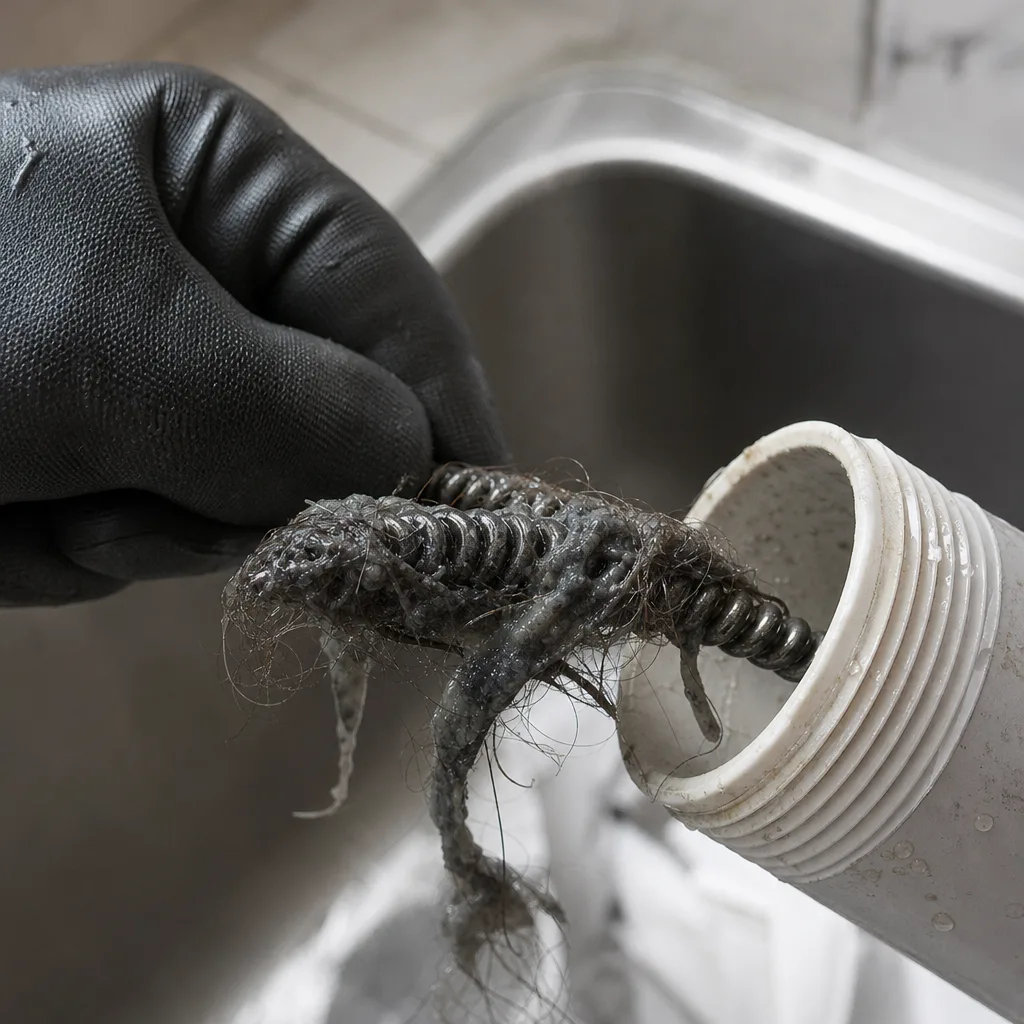
The signs below are different. They tell you the blockage isn’t sitting in one fixture. It’s farther down the pipe, where a plunger can’t reach, and pushing harder can make a mess.
- More than one drain is slow at the same time, like a tub and a toilet, or every sink on one side of the house.
- Water comes up in your tub or shower when you flush the toilet or run the washing machine.
- You hear gurgling from a drain or toilet when other water is running.
- Dirty water or sewage backs up into the lowest drain in the house, often a shower or tub.
- The same drain clogs again a few days or weeks after you cleared it.
- A sewer smell hangs around even after you clean the fixtures.
- You see a soggy spot in the yard or water around the outdoor cleanout cap.
Any one of these points to a shared line or the main sewer line, not a single sink. A store-bought snake might poke a hole through the clog and buy you a day or two, but the buildup is still there. That’s why the clog keeps coming back.
Your home’s age plays a part too. A lot of Dallas houses are older slab-on-grade homes, and North Texas clay soil swells when it’s wet and shrinks during long, dry summers. Over the years, that movement can shift buried drain pipes, leave low spots where waste settles, or open gaps where tree roots find their way in. Those clogs don’t respond to DIY tools, and roots need a different fix than a standard cleaning. If your home has big trees near the sewer line and the backups keep returning, tell us when you call so we can plan for it.
Here’s a simple rule. If you’ve plunged twice and the drain is still slow, stop there. If more than one fixture is involved, skip the plunger and call. Waiting rarely makes a main-line clog smaller, and catching it early can keep sewage off your floors.
When a Plunger or Hot Water Is Enough
If only one fixture is slow and everything else in your home drains fine, give it a real try yourself first. Most single-drain clogs sit within a foot or two of the opening. The trick is using the right tool the right way.
Start with the right plunger. A flat cup plunger works on sinks and tubs. A plunger with a flap at the bottom, called a flange plunger, is made for toilets because it seals into the curved bowl. Using a sink plunger on a toilet is the most common reason plunging doesn’t work.
- Get a seal. Leave enough water in the sink or tub to cover the plunger cup, so it pushes water instead of air.
- Block the escape routes. Stuff a wet rag in the overflow hole on a bathroom sink or tub. On a double kitchen sink, plug the other side.
- Push slow, pull hard. A gentle push in and a firm pull back, 10 to 15 times, does more than hard jabs. The pull is what loosens the clog.
- Check the trap. Under a bathroom or kitchen sink, the curved pipe is the P-trap. Set a bucket underneath, unscrew the slip nuts by hand, and clean out what’s inside. It’s messy, but it often solves the problem in five minutes.
Hot water helps in one main case: grease and soap. In a kitchen sink, a slow drain after cooking is often fats that cooled and firmed up in the pipe. Run the hottest tap water you’ve got for a few minutes, then plunge. Going forward, wipe greasy pans with a paper towel before you wash them, and run hot water for a bit after doing dishes.
Dallas has hard water, and that matters here. Minerals in the water mix with soap and form a sticky scum that coats the inside of shower and tub drains. Hair catches on that scum and builds up fast. Pulling out the drain cover and clearing that ring of gunk every month or two keeps most shower drains moving.
A few other everyday fixes are worth knowing. If your garbage disposal hums but the sink won’t drain, the disposal may simply be jammed. Turn it off and press the small reset button on the bottom. A toilet that clogs after too much paper usually clears with a few good pulls from a flange plunger. Give the bowl a minute to settle before you flush again so it doesn’t overflow.
We’d skip the bottles of harsh chemical drain opener. They often don’t reach the clog, and they leave caustic water sitting in the pipe if the drain stays blocked. If you’ve already poured some in, just let the plumber know before any work starts.
Here’s how you’ll know it worked. The drain empties at a normal speed, there’s no gurgling, and it stays that way for the next several days. If that’s what you see, you handled it, and there’s no reason to call anyone. If it slows down again within a week, the clog is farther down the line than these tools can reach.
Drain Clog or Sewer Line Problem: How to Tell the Difference
Here’s the short version. If the trouble stays in one room or one group of fixtures, it’s usually a clog in a branch drain. If it shows up everywhere, or the lowest drain in the house is the one backing up, the main sewer line is the likely spot. Both get cleared, but they’re different jobs. Knowing which one you have helps you understand what’s coming.
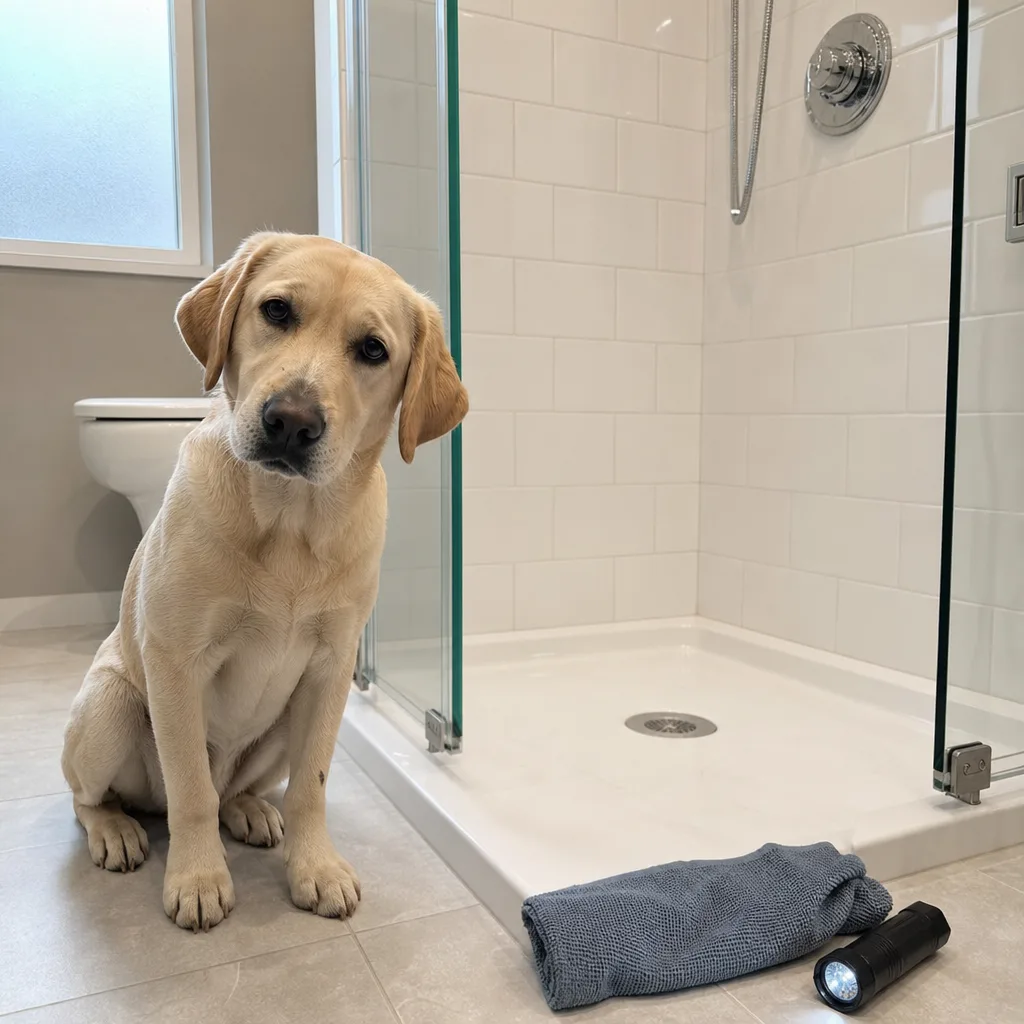
Think of your plumbing like a tree. Each sink, tub, and toilet drains into a smaller branch line. Those branches join one main line that carries everything out to the city sewer. A clog in a branch only affects the fixtures on that branch. A clog in the main line blocks the whole house, so water backs up wherever it can find the lowest exit.
- Likely a branch clog: the kitchen sink and dishwasher both back up, but the bathrooms drain fine. Or both sinks in one bathroom are slow while the rest of the house is normal.
- Likely a main line problem: toilets in different bathrooms struggle at the same time. Toilets connect closest to the main line with the widest pipe, so when they slow down, the trouble is usually downstream.
- Likely a main line problem: water rises in a tub or shower in a different room when the washing machine drains. A load of laundry sends a lot of water at once, and if it can’t get out, it comes up at the lowest drain.
You can run a simple check without any tools. Run water at one fixture for a minute and watch the others. If nothing else reacts, the problem is probably limited to that one drain or its branch. If a toilet bubbles or a tub drain fills up somewhere else, you’re likely looking at a shared line. Stop the water as soon as you see that, so you don’t push more water toward the backup.
The outdoor cleanout tells a plumber a lot. That’s the short capped pipe in your yard or near the foundation that gives direct access to the main line. If water is standing inside it, the blockage is somewhere past it, between the cleanout and the street. If it’s dry, the clog is likely between the cleanout and the house. You don’t need to open it yourself. Just tell us where it is when you call, or let us know if you can’t find one. Some older homes don’t have an easy-to-reach cleanout, and that changes how the line gets accessed.
Why does this matter to you? A branch clog is usually reached from inside the house and cleared in one go. A main line clog may need to be reached through the cleanout, and if it keeps coming back, it’s worth finding out why. That’s where a sewer camera inspection comes in. A small camera goes down the line so you can see whether it’s grease, a low spot, or roots from the soil movement we covered earlier.
If the camera finds roots or a damaged pipe, a standard cleaning won’t be the whole answer. Hydro jetting or sewer line repair might be next, and those are quoted separately, so you’ll know the price before you decide. Most of the time, a clog is just a clog. Clearing it and checking that water flows freely again is the job.
Ready when you are – get in touch today.
Call Today, Get Service Today. Xtreme Air Services — North Dallas is ready to help.
Why Dallas Drains Clog Again and Again
A drain that keeps clogging usually wasn’t fully cleared the first time, or something inside the pipe keeps catching waste. In Dallas homes, repeat clogs tend to come from four things. The clog was only partly cleared, the pipe is old and rough inside, the line has a low spot, or the same stuff keeps going down the drain.
Start with the partial fix. A small hand snake from the store pokes a hole through the middle of a clog. Water starts moving again, so it feels solved. But most of the buildup is still stuck to the pipe walls, and that narrow opening catches the next bit of hair or grease fast. That’s why the second clog often shows up sooner than the first one did.
Pipe age matters a lot here. Many Dallas homes built from the 1950s into the 1970s have cast iron drain lines running under the slab. After decades of use, the inside of cast iron rusts and turns rough and flaky. Add the hard-water scale we mentioned earlier, and those rough walls act like Velcro. Hair, paper, and food scraps hang on and pile up. Cleaning the line opens it back up, but it can’t make old pipe smooth again. If your home is in that age range and the same drain keeps backing up, the pipe itself may be part of the story.
Low spots are the next culprit. When clay soil shifts a buried line, it can leave a sag, sometimes called a belly. Water sits in that dip instead of flowing out, and solids settle there. The clog forms in the same place every time, no matter how often you clear it.
Then there’s what goes down the drain. These are the usual repeat offenders:
- “Flushable” wipes. They don’t break apart the way toilet paper does, and they snag on rough pipe or tree roots.
- Grease and food sent through the garbage disposal. The disposal chops food up, but it doesn’t make it disappear. It all still has to travel down the line.
- Coffee grounds and eggshells. They don’t dissolve, and they pack into a heavy sludge over time.
- Paper towels, cotton swabs, and dental floss in toilets. Floss wraps around everything else and holds it together.
- Small toys or objects in homes with young kids. One stuck item can catch everything that comes after it.
Tree roots follow their own pattern. Cutting them clears the line for now, but roots grow back toward the water and moisture inside the pipe. Root removal is quoted separately from a standard cleaning, so you’ll know the price before anything is done.
So how do you break the cycle? It starts with clearing the full width of the pipe, not just a path through it. Our drain cleaning includes drain clearing, flow testing, and cleanup, so you see water moving freely before we call it done. If the same drain has clogged more than once, ask about a sewer camera inspection. Seeing whether it’s rough cast iron, a belly, roots, or just a habit at the kitchen sink tells you whether a cleaning will hold or whether it’s time to look at the pipe itself. Either way, you get the real reason, and you decide what happens next.
Watch Our Video
See How We Handle Drain cleaning in Dallas
Xtreme Air Services — North Dallas
What Happens During a Standard Drain Cleaning Visit
A standard drain cleaning visit has a clear goal: clear the clogged drain and confirm proper flow. You’ll know the price before any work starts, and most calls are resolved on the first visit. Here’s what that looks like from the time you call to the time water is running freely again.
It starts on the phone. You talk to a real person, not a menu. Tell us which drains are slow, whether more than one fixture is involved, and where your outdoor cleanout is if you know. If you’ve poured a chemical opener down the drain, say so then. Same-day service is available, and there’s no extra charge for nights or weekends. A backup at 9 p.m. on a Saturday costs the same as one on a Tuesday morning.
A few things make the visit faster once a licensed and insured technician gets to your home:
- Clear out the cabinet under the problem sink so there’s room to work.
- Unlock the gate or clear a path if the cleanout is in the backyard.
- Hold off on running water, flushing, or doing laundry so the backup doesn’t spread.
- Make a note of any drain that started acting up at the same time.
Next comes the price. Our drain cleaning is upfront flat-rate pricing that you approve before work starts. There’s no meter running. The service-call fee is $26 to $99, and it’s credited toward the repair if you proceed with Xtreme Air Services. Our most common drain cleaning job runs $150 to $300, and the typical range is $150 to $500. Where your job falls depends on the severity and location of the clog, access to the cleanout, and whether a camera or hydro-jetting is needed. If you choose not to go ahead, you’re not locked into anything beyond that service call.
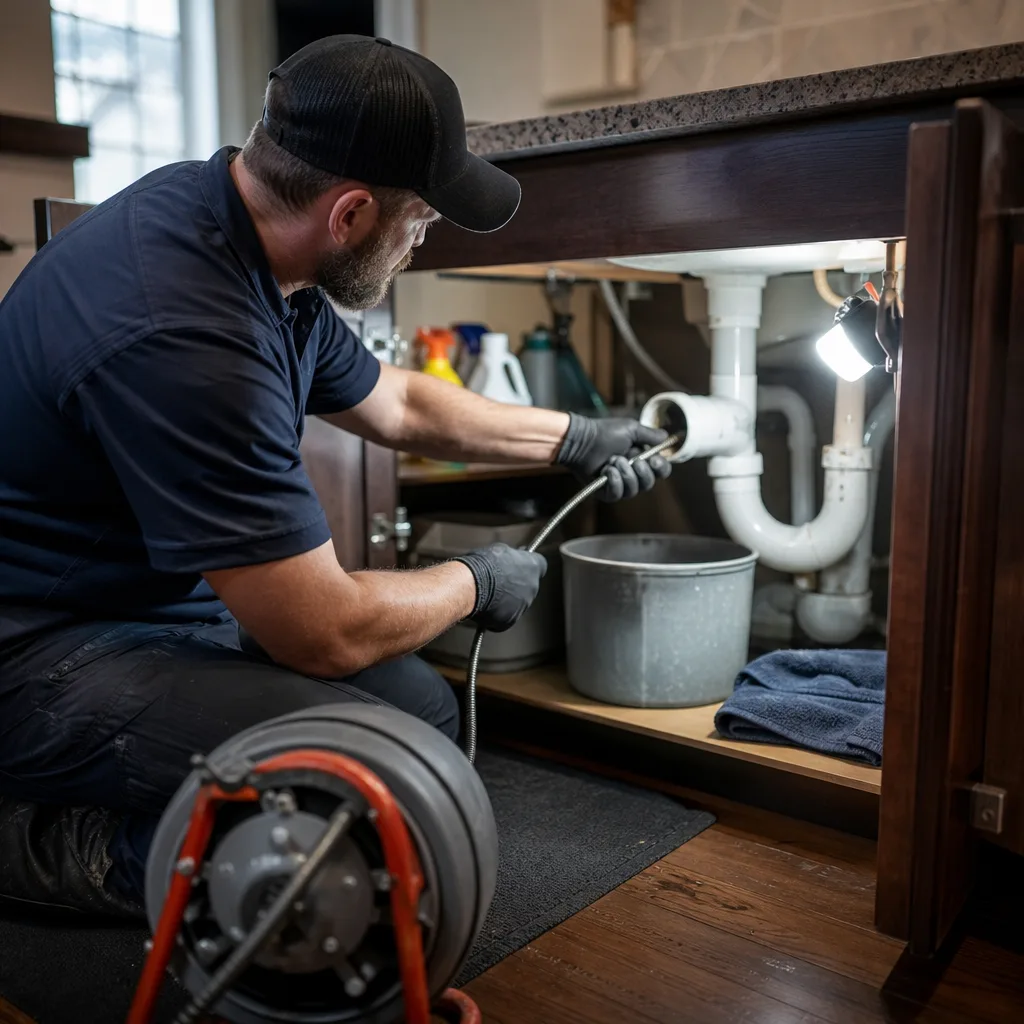
Then the clog gets cleared. In the plumbing trade, standard drain cleaning usually means feeding a powered drain cable through the fixture, the trap, or the cleanout. Its cutting head breaks up the blockage and scrapes the pipe walls instead of just poking a small hole through the clog. A branch clog is usually reached from inside the house. A main line clog is often reached through the outdoor cleanout, which is why access matters for both the time and the price.
After that comes the step that tells you the job worked: flow testing. Water runs at the drain that was clogged and at the fixtures around it, and toilets get flushed. You’re looking for the same signs covered earlier. Water should drain at normal speed, with no gurgling and nothing rising in another tub or shower. Cleanup is part of the job too, so you’re not left wiping up after the work.
Sometimes the visit turns up something a cleaning can’t fix, like heavy roots or a broken section of pipe. If that happens, you’ll hear it in plain English, along with your options. Hydro-jetting, pipe repair, and root removal are quoted separately, so nothing gets added to your bill without your say. Financing isn’t typically offered for a standard drain cleaning, but it is available on larger repairs and replacements if that’s where things end up.
Frequently Asked Questions
Common questions about Drain cleaning
Is it worth paying a professional instead of renting a drain machine myself?
Yes, for anything beyond a single slow fixture, because a rented machine without the right cutting head can miss the real blockage. A professional cable clears the full width of the pipe and scrapes the walls, not just pokes a hole through the clog. That matters most in older Dallas homes where cast iron lines have rough, rusted interiors that catch debris fast. If you rent equipment and use the wrong attachment, you risk scratching the pipe or missing roots entirely, so the clog returns within days.
Why does drain cleaning cost more when the clog is in the main line?
Main line clogs usually cost more because they take longer to reach and may need extra equipment. A branch clog under one sink is often reached quickly from inside the house. A main line clog is typically reached through the outdoor cleanout, which adds time if it’s hard to access or if roots and old pipe scale are involved. Camera inspections or hydro-jetting may also be needed to find out exactly what’s blocking the line, and those are priced separately from a standard cleaning.
Ready to Get Started?
Call (469) 213-3107 Today, Get Service Today.