


Sewer Line Repair in Dallas: Know When It’s a Clog or a Main Line Problem
Sewer line problems confirmed before anyone digs, with a step-by-step repair and a quote that shows what's included.
What’s Covered on This Page
- Signs You Have a Main Sewer Line Problem, Not a Simple Clog
- Why Dallas Clay Soil Puts Extra Stress on Buried Sewer Pipe
- When You Don’t Need Sewer Line Repair
- How a Sewer Line Repair Visit Works, From Camera Inspection to Verified Flow
- What Drives Sewer Line Repair Cost Up or Down
- Can I fix a sewer line problem myself?
- Will homeowners insurance pay for my sewer line repair?
- What does a typical sewer line repair cost depend on?
Signs You Have a Main Sewer Line Problem, Not a Simple Clog
Every drain in your home feeds into one main line that carries waste out to the city sewer. A clog sits in one branch. A main line problem sits in the trunk. That’s why the biggest clue is how many fixtures are affected.
A slow bathroom sink with a sloppy hair problem is a clog. A plunger, a hand snake, or a quick drain cleaning usually takes care of it. You don’t need sewer line repair for that, and you shouldn’t let anyone tell you otherwise.
These signs point past the branch and into the main line:
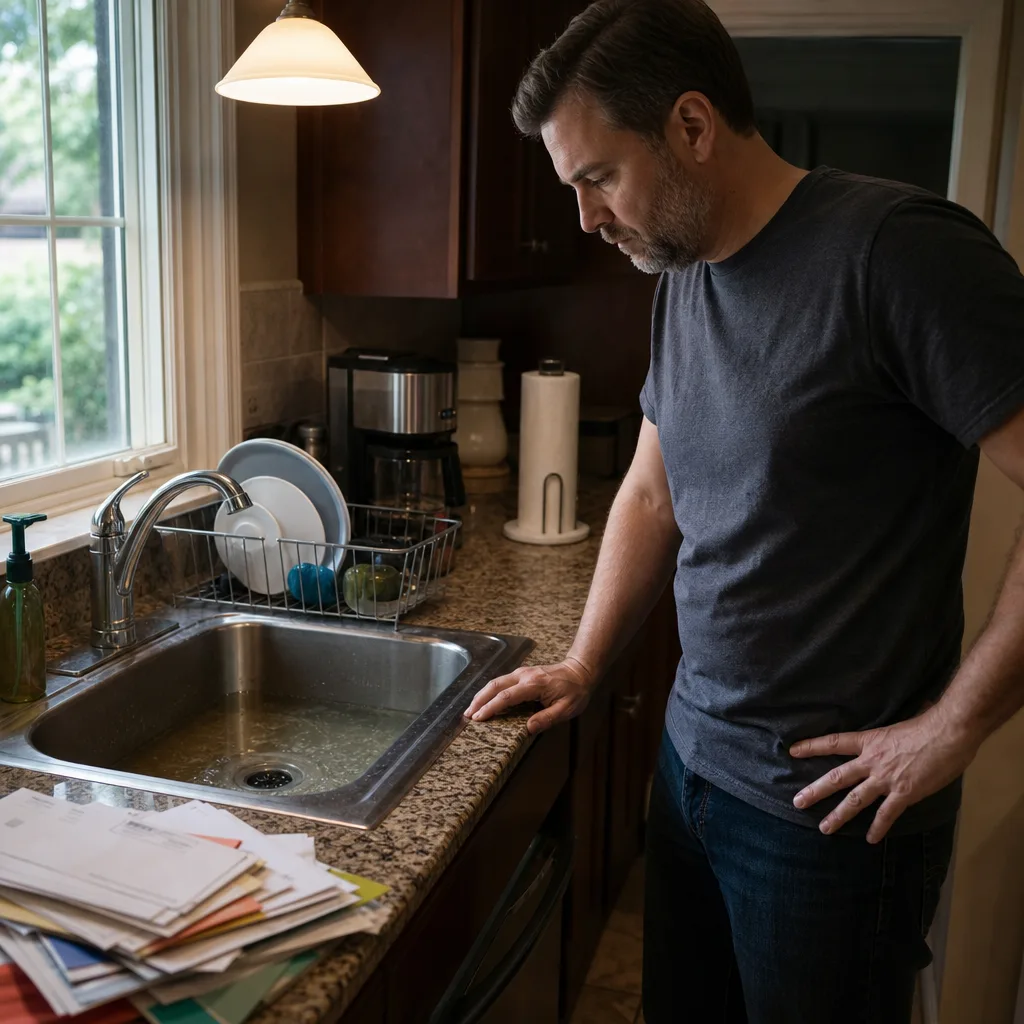
- More than one drain is slow or backing up at the same time, especially in different rooms.
- Water comes up in your tub or shower when you flush a toilet or when the washing machine drains.
- Your toilet gurgles or bubbles when you run the bathroom sink.
- You smell sewage inside the house or near the yard, even after cleaning.
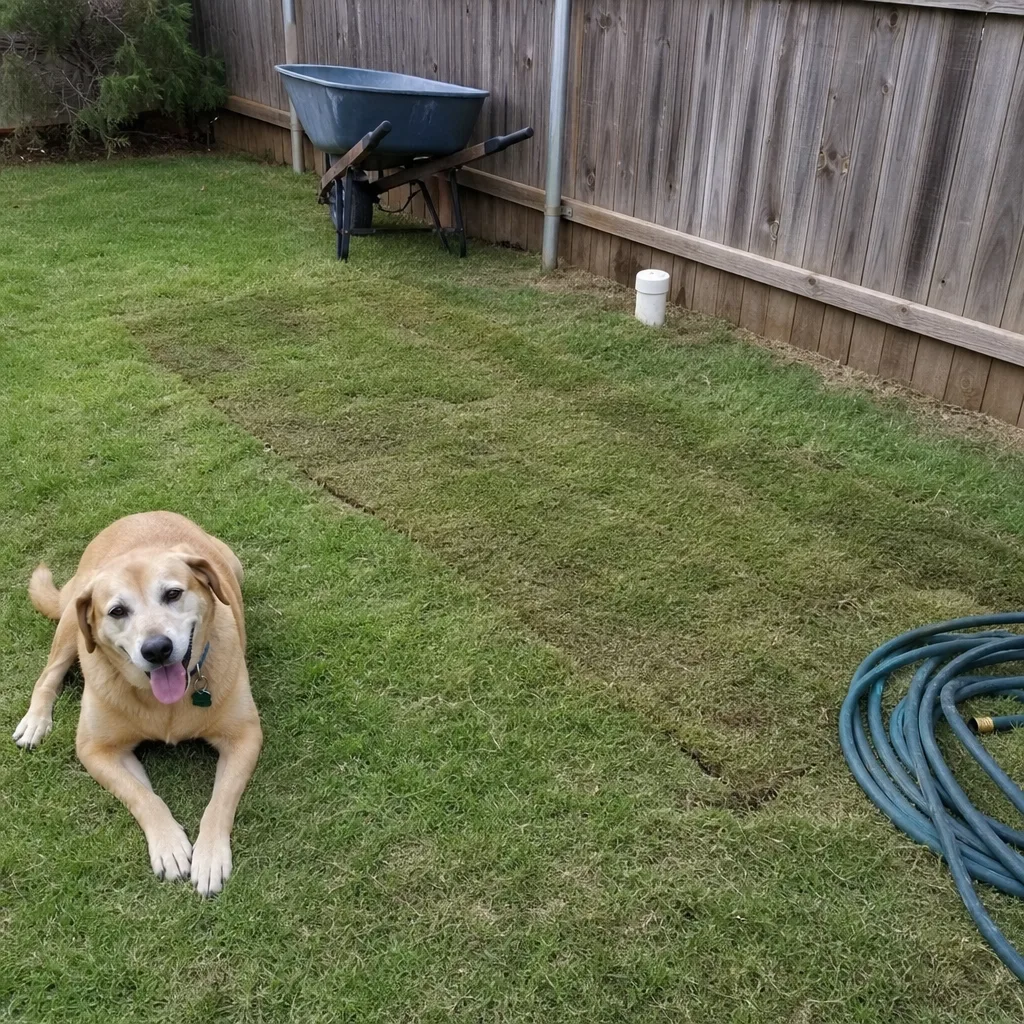
- A patch of lawn over the sewer path stays soggy or grows greener than the rest.
- The outdoor cleanout pipe has water or waste sitting in it, or it overflows.
- Clogs keep coming back a few weeks after a drain gets cleared.
Your tub, shower, and first-floor toilet sit lowest in the system, so they’re where a main line backup shows up first. Waste that can’t get out to the street looks for the nearest low opening. If your shower drain fills with dirty water every time someone flushes, that’s your house telling you the main line is blocked or damaged.
You can do a simple check yourself. Run the bathroom sink for a minute and watch the toilet. Then flush the toilet and watch the tub drain. If water rises or the toilet bubbles, the problem is shared, and that means the main line. You can also find your cleanout, usually a capped pipe in the yard near the house, and carefully look inside. Standing water there means the blockage is downstream, between your home and the street.
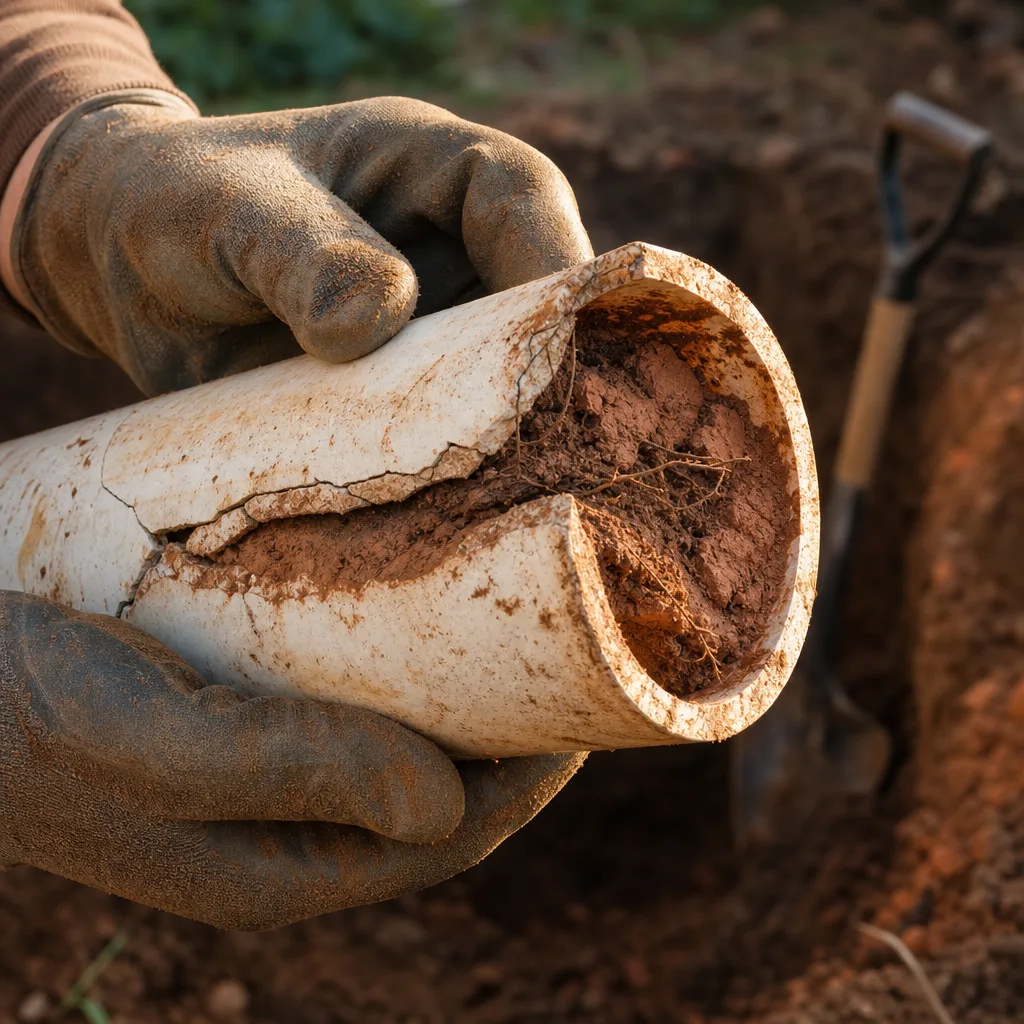
Dallas homes have a few extra reasons for main line trouble. Our expansive clay soil swells when it’s wet and shrinks during long dry summers, and that movement can shift, crack, or sag buried pipe over time. Many established neighborhoods are full of slab-on-grade ranch homes built between the 1950s and 1990s, and their original sewer lines are getting old. Mature trees in those yards send roots toward any small crack where moisture leaks out. Once roots get inside, they catch paper and grease, and the line chokes again soon after it’s cleared.
That last point matters for your wallet. If you’ve paid to clear the same backup twice in a few months, cleaning alone isn’t solving it. A sewer camera inspection shows what’s really going on inside the pipe, whether that’s roots, a crack, a sag that holds water, or a collapsed section, so the fix matches the actual damage.
Why Dallas Clay Soil Puts Extra Stress on Buried Sewer Pipe
Your sewer line sits in soil that doesn’t hold still. Most of the year in Dallas, the clay around your pipe is slowly pushing, pulling, and settling. A buried pipe is rigid, so when the ground moves and the pipe can’t, something has to give. Usually that’s the weakest spot in the line.
Clay soil damages a sewer line in a few predictable ways:
- Offset joints. Pipe comes in sections. When the soil shifts, one section can slide up or down from the next. That leaves a lip that catches paper and waste, and it opens a gap where roots can get in.
- Bellies, or sags. If the soil under part of the line settles, that stretch dips lower than the rest. Water and waste pool in the low spot instead of flowing out. This is one reason backups keep returning after a cleaning.
- Cracks and breaks. Pressure from swelling clay can split older pipe, especially where it’s already worn thin.
- Separated connections. The spot where your house line meets the pipe running to the street takes a lot of stress. Movement there can pull the connection apart.
The weather makes it worse. A long, dry Texas summer pulls moisture out of the ground, and the clay shrinks and cracks. Then heavy spring storms or a wet fall soak it again, and it swells. Every cycle works the pipe a little more. It’s common to notice a slow drain or a first backup after a big swing like that, because the line has moved since the last time it worked well.
Where your pipe runs matters too. On a slab-on-grade home, part of the sewer line runs under the foundation before it heads out to the yard. The section under the slab moves with the foundation. The section in the yard moves with the open soil, the sprinklers, and the trees. Those two stretches don’t always shift together. The point where the line leaves the house can end up carrying a lot of strain.
Older pipe materials handle this movement poorly. Many homes built in the middle of the last century have cast iron under the slab and clay tile out in the yard. Cast iron corrodes from the inside over decades. Clay tile comes in short sections with lots of joints, and every joint is a place where the line can shift or let roots in. Newer PVC handles movement better, but it can still sag if the soil underneath settles.
This is why the camera inspection matters so much here. A crack, an offset joint, and a belly can all cause the same backup, but they don’t call for the same fix. If a sag is what’s holding water, clearing the roots won’t stop the next clog. If one joint has shifted, you may only need that section repaired, not the whole line replaced. And if the soil under a stretch has settled badly, the repair has to restore a proper slope so waste keeps moving.
Knowing what the clay did to your pipe is how you avoid paying twice. The repair should fix the damage you have, in the spot where it is, in a way that holds up when the ground moves again next summer.
When You Don’t Need Sewer Line Repair
Plenty of problems look like a broken sewer line and aren’t. Before you spend money on a repair, rule these out. Some you can fix yourself. Others just need a cleaning, a call to the city, or a little patience.
A one-time backup after a clear cause usually isn’t damage. Maybe the kids flushed a toy, a guest used “flushable” wipes, or grease from a holiday meal went down the kitchen drain. If the line clears with a cleaning and drains normally for months afterward, the pipe probably did its job. A blockage is not a break. You don’t need to dig anything up because something went down that shouldn’t have.
Sometimes the problem isn’t on your property at all. If your neighbors on the same street are backing up at the same time, or the backup started during a heavy storm, the trouble may be in the public sewer main. In Dallas, the city’s water utility is responsible for the main under the street. Call the city first. A plumber can’t repair a pipe you don’t own, and you shouldn’t be billed for one.
Some signs have simpler causes:
- A sewer smell from one room, often a guest bath or a laundry floor drain nobody uses. The water in the drain’s trap has likely dried out and stopped blocking sewer gas. Run water in that drain for a minute. If the smell goes away, you’re done.
- Gurgling with no slow drains anywhere. A blocked plumbing vent on the roof, such as one packed with leaves or a bird’s nest, can make fixtures gurgle while the sewer line itself is fine.
- A soggy spot in the yard that isn’t on the sewer path. Check your sprinkler heads and irrigation lines first. In Dallas yards, a leaking sprinkler valve is a common reason for wet grass in summer.
- A wet spot that smells like clean water, not sewage. That points to a water supply leak, which is a different job from sewer work.
Light root growth doesn’t always mean you need a repair now. If a camera shows only a few fine roots at a joint and the pipe isn’t cracked or sagging, a thorough cleaning or hydro jetting can keep the line flowing. Plenty of homeowners manage minor roots this way for years. If the roots grow back fast or the backups get closer together, it’s time to look at fixing that section.
Old pipe isn’t automatically bad pipe. A home built in the 1960s may still have a sewer line in decent shape. Age alone is not a reason to replace anything. If the camera shows the line is round, joined, and draining with no standing water, you can leave it alone and keep an eye on it.
A small issue with no symptoms can often wait, too. A slight offset joint that isn’t catching waste or causing backups may hold steady for a long time. Ask for the camera footage, keep it, and compare it if problems show up later. That way you decide when to act, instead of feeling rushed into it.
Before anyone talks about repair, you should see clear proof of damage, such as a crack, a sag that holds water, a separated joint, or a collapse. If nobody can show you that, you don’t need a sewer line repair yet.
Need help with Sewer line repair?
Call Today, Get Service Today. Xtreme Air Services — North Dallas is ready to help.
How a Sewer Line Repair Visit Works, From Camera Inspection to Verified Flow
A sewer line repair has one goal. Find the damaged spot, fix that spot, and prove waste flows out to the street again. Here’s how that plays out, so you know what’s coming at every step.
Getting into the line. Most work starts at your outdoor cleanout, the capped pipe near the house. If your drains are backed up, clearing a path may come first. That lets your family use the bathroom again and gives the camera a clear view.
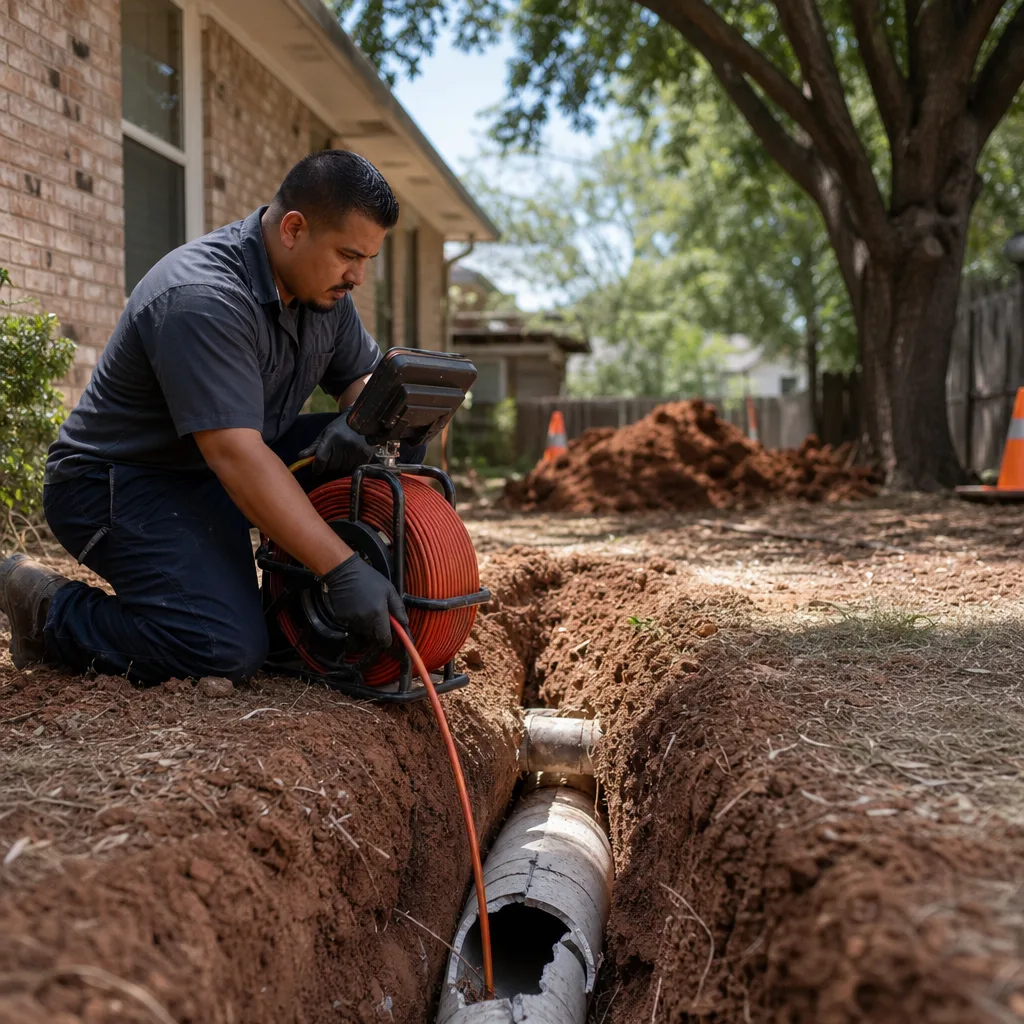
Seeing and locating the damage. A small camera on a flexible cable goes down the line and shows the inside of the pipe on a screen. A locator above ground tracks where the camera head is and how deep it sits. That turns “something’s wrong out there” into an exact spot in your yard. Locating is part of the repair job, not an extra charge on top of it.
Your price, before any digging. Once the damage is found, you get upfront flat-rate pricing to approve before work starts. No meter is running while you think it over. The service-call fee is $26-$99, and it’s credited toward the repair if you go ahead with Xtreme Air Services. Here’s what the repair covers:
- Included: locating, excavation or access to the pipe, the repair itself, and testing.
- Not included unless your quote says so: full line replacement, landscaping or concrete restoration, and permits.
Read that second line closely before you approve the work. If the damaged section sits under a sidewalk, patio, or flower bed, plan for putting that surface back. If you’re unsure whether a permit is in your quote, just ask. For larger jobs, flexible financing is available on approved credit.
Reaching the pipe. The damaged section is reached by digging down to it or by a trenchless method. With trenchless repair, the pipe is fixed through small access points instead of a long trench. Digging often makes sense when the damage sits in open yard and isn’t too deep. Trenchless sewer repair can be the better call when the bad section runs under a driveway, a mature tree, or the edge of your slab. The choice affects the cost, so it should be explained to you, not just picked for you.
Fixing the section. The cracked, offset, or collapsed piece comes out or gets repaired, and new pipe ties into the good line on each side. On Dallas clay, the ground under that new section matters as much as the pipe. If a sag caused the trouble, the repair has to bring back a steady downhill slope. Otherwise the next backup is already on its way.
Proving it works. Testing is part of the job. Water runs through your fixtures, toilets get flushed, and the cleanout gets checked so you know waste is moving freely to the street. Before you call it done, ask to see the repaired section on camera. A clean, round pipe with no standing water and smooth joints on both sides is what a finished repair should look like.
Covering it back up. On a dig repair, the trench gets backfilled once the line passes. Grass, pavers, or concrete on top fall under restoration. That’s outside the standard repair, which is why it’s worth sorting out at the pricing step and not at the end.
Watch Our Video
See How We Handle Sewer line repair in Dallas
Xtreme Air Services — North Dallas
What Drives Sewer Line Repair Cost Up or Down
Most sewer line repairs with Xtreme Air Services fall between $1,500-$7,000. Our most common job is finding the damaged section, repairing or replacing it, and checking that waste flows freely again. That job usually runs $1,500-$4,000. Where your repair lands depends on three things: how deep and how long the damaged run is, how hard it is to reach, and whether a trenchless method is used.
Here’s how each one plays out in a real Dallas yard.
- Depth. A pipe a few feet down in open lawn is a much smaller dig than one buried deep. Deeper pipe means more soil to move, and our heavy clay doesn’t move easily. It’s dense when it’s dry and sticky when it’s wet.
- Length of the damaged run. One cracked joint or a short offset is a small fix. A long sag, or several bad joints in a row of old clay tile, means more pipe and more time.
- Access and excavation. Damage under open grass is the easiest to reach. Damage under a driveway, a patio, a big shade tree, or near the edge of your slab takes more work to get to safely. On a slab-on-grade home, the stretch where the line leaves the house is often the hardest spot to reach.
- Trenchless or dig. As covered above, trenchless repair works through small access points. It can cost more or less than digging depending on the job, and it can save you from tearing up concrete or roots you’d rather keep.
This is why the camera inspection matters so much for your budget. Two homes on the same street can have the same backup and very different repairs. One might need a short section patched in the yard. The other might have a long belly running under the driveway. Nobody can price your job until they’ve seen the inside of your pipe.
Remember what’s outside the standard repair, too. Restoring landscaping or concrete is separate, and so are permits unless your quote lists them. If the bad section sits under pavers or a sidewalk, plan for that in your total cost and not only the repair price.
Before you approve any sewer quote, from us or anyone else, ask these questions:
- Can you show me the damage on camera and tell me where it is in my yard?
- How deep is it, and how long is the section you’re replacing?
- Why did you choose digging or trenchless for my line?
- Is a permit included, and what about putting my yard or concrete back?
- Does the repair fix the slope if a sag caused the backups?
Clear answers to those questions tell you you’re paying to fix the real problem one time. If a larger repair stretches your budget, flexible financing is available on qualifying larger jobs, on approved credit.
Call 469-213-3107
Frequently Asked Questions
Common questions about Sewer line repair
Can I fix a sewer line problem myself?
You can handle a simple clog yourself, but not real pipe damage. A plunger, hand snake, or store-bought drain cleaner can clear a single slow drain caused by hair or grease. Once the problem is a cracked pipe, a sagging section, or roots that have grown inside the line, digging in blind can make things worse and even damage nearby utility lines. If a cleaning doesn’t hold for more than a few weeks, that’s your sign to get a camera inspection instead of trying another DIY fix.
Will homeowners insurance pay for my sewer line repair?
Usually not, unless you added special coverage. Standard homeowners policies typically exclude damage from wear, tree roots, or ground movement, which cause most sewer line failures in Dallas clay soil. Some policies offer a separate sewer line or service line endorsement that covers exactly this kind of repair. Check your policy or call your agent before you budget for the job, since coverage details vary by insurer.
What does a typical sewer line repair cost depend on?
Your cost depends mainly on how deep the damage is, how long the bad section runs, and how hard it is to reach. A short, shallow repair in open lawn costs far less than a long sagging section under a driveway or mature tree. That’s why a camera inspection has to happen before anyone can give you an accurate number, since two homes with the same symptoms can need very different repairs.
Ready to Get Started?
Call (469) 213-3107 Today, Get Service Today.