


Refrigerant Recharge / Leak Repair in Dallas: Recharge or Real Repair?
The leak found and repaired before any refrigerant goes in – because a recharge alone won't keep your home cool.
What’s Covered on This Page
- Why Your AC Is Low on Refrigerant
- Signs You Need Recharge or Leak Repair Now
- When It’s Not a Refrigerant Problem
- Old R-22 Systems vs. Newer R-410A Systems
- How Diagnosis and Repair Works
- Is it safe to just recharge my AC myself with a can from the store?
- Can a refrigerant leak get worse if I wait to fix it?
- Does my AC use refrigerant up like a car does, needing regular top-offs?
- My AC repair tech said finding the leak is hard to do – is that normal?
Why Your AC Is Low on Refrigerant
Here’s the part a lot of folks don’t hear: refrigerant isn’t fuel. Your system moves the same refrigerant around and around in a closed loop of copper lines and coils. It picks up heat inside your home and dumps it outside. When it’s sealed right, the level shouldn’t drop on its own.
So if your AC is low, that refrigerant went somewhere. In nearly every case, that means a leak. Sometimes it’s a tiny one that takes months to show up. Sometimes it’s bigger and your house warms up fast. Either way, the low level is the symptom. The leak is the problem.
Leaks usually start at a handful of spots:
- The evaporator coil. That’s the coil inside, often in your attic or a closet. Over time, tiny pinholes can form in the copper and let refrigerant seep out.
- The outdoor condenser coil. It sits out in the weather all year, and hail can dent or damage it.
- Service valves and their small caps. These are the ports where gauges hook up. A worn valve core or a missing cap can let refrigerant slowly escape.
- Joints and fittings. Anywhere two pieces of copper are joined, a weak connection can open up as the system heats, cools, and vibrates.
- The line set. These copper lines run between your indoor and outdoor units. They can rub through on a sharp edge, a wall, or a roof jack over the years.
Dallas puts real stress on all of these parts. Your system may run hard for months straight in summer. If your air handler is in the attic, it’s working in some of the hottest air in your home. Spring storms bring hail that can hit the outdoor unit. In older slab homes, line sets may have been in place for decades. None of that guarantees a leak, but it explains why one can show up after years of running fine.
You might notice the signs before anyone tells you the number. The air from your vents feels cool but not cold. The system runs and runs but never quite reaches the thermostat setting. You might see ice on the copper line at the outdoor unit or on the indoor coil. Some people hear a soft hiss near the unit. Your power bill can also climb because the system has to work longer to do the same job.
This is why a recharge by itself is a short-term patch. Topping off refrigerant can get cold air back for a while. But if the leak is still there, that new refrigerant leaks out too. You end up paying for the same fix again. Meanwhile, your compressor works harder the whole time it’s running low. The recharge that lasts is the one that comes after the leak has been found and repaired.
There’s a less common case, too. If your system was installed or serviced without the right amount of refrigerant, it can run low from day one with no leak at all. A good technician should check for that, rather than assuming either way.
Signs You Need Recharge or Leak Repair Now
If your AC is running but can’t keep up, and you’ve ruled out the simple stuff, it’s time to have the refrigerant checked and the leak found. The signs above are your cue: cool-not-cold air, long run times, ice, or a hiss. Before you call anyone, though, it’s worth a quick look at a few problems that act a lot like low refrigerant but aren’t.
These can fool you, so check them first:
- A clogged air filter. It chokes the airflow, so your vents feel weak. It can even make the indoor coil ice up. Swapping in a fresh filter is quick and easy.
- Thermostat settings. If the fan is set to “on” instead of “auto,” it blows room-temperature air between cooling cycles. Also make sure it’s set to cool and not heat.
- An outdoor unit that isn’t running. If the fan inside blows but the unit outside is quiet, the problem is likely electrical or a failed part. Refrigerant may not be the issue.
- A dirty outdoor coil. Grass clippings, leaves, and dust packed into the fins make the system struggle, especially on the hottest days.
- Blocked vents or returns. Furniture or closed registers can starve rooms of air and make the whole system seem weak.
If all of that checks out and your house still won’t cool, refrigerant is a strong suspect. This isn’t a do-it-yourself job. Federal rules require a certified technician to handle refrigerant, and finding a small leak takes the right tools.
Some signs point to a leak more than anything else:
- You’ve had a recharge before, and the same problem came back. It doesn’t matter if that took a few weeks or until next summer. Refrigerant that disappears twice is leaking.
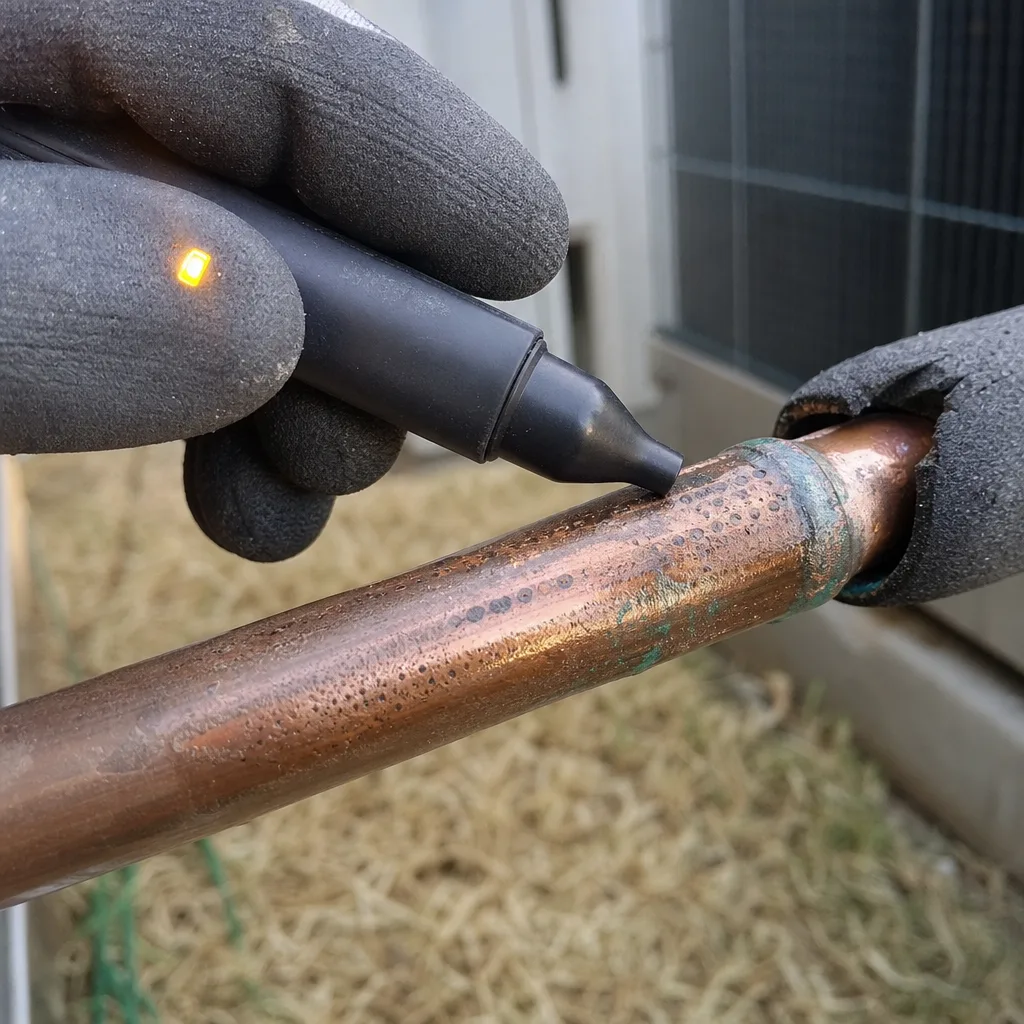
- Oily, grimy spots on copper fittings, service valves, or the coil. Refrigerant carries oil through the system, so a leak often leaves a greasy film that collects dust.
- Ice that comes back. If frost melts off the lines and then shows up again a day later, the cause hasn’t gone away.
- Your home cools fine in the morning but falls behind every afternoon. On a Dallas summer day, a system that’s a little low might hold steady at 9 a.m. and lose ground by 4 p.m., when the heat outside and in your attic peaks.
So when should you stop waiting? Get it checked when your home can’t hold the thermostat setting, when ice forms on the lines or coil, or when your symptoms come back after a recharge. You don’t need to wait for a weekday, either. Xtreme Air Services charges no extra for nights or weekends, so the timing of your call won’t change the price.
A leak won’t seal itself. Every day it runs low is another day of your compressor working harder than it should, and that’s a much bigger repair than finding a pinhole.
When It’s Not a Refrigerant Problem
Not every AC that blows warm air is low on refrigerant. Plenty of systems have exactly the right amount and still can’t cool your home. If that’s your situation, a recharge won’t help. It can even make things worse.
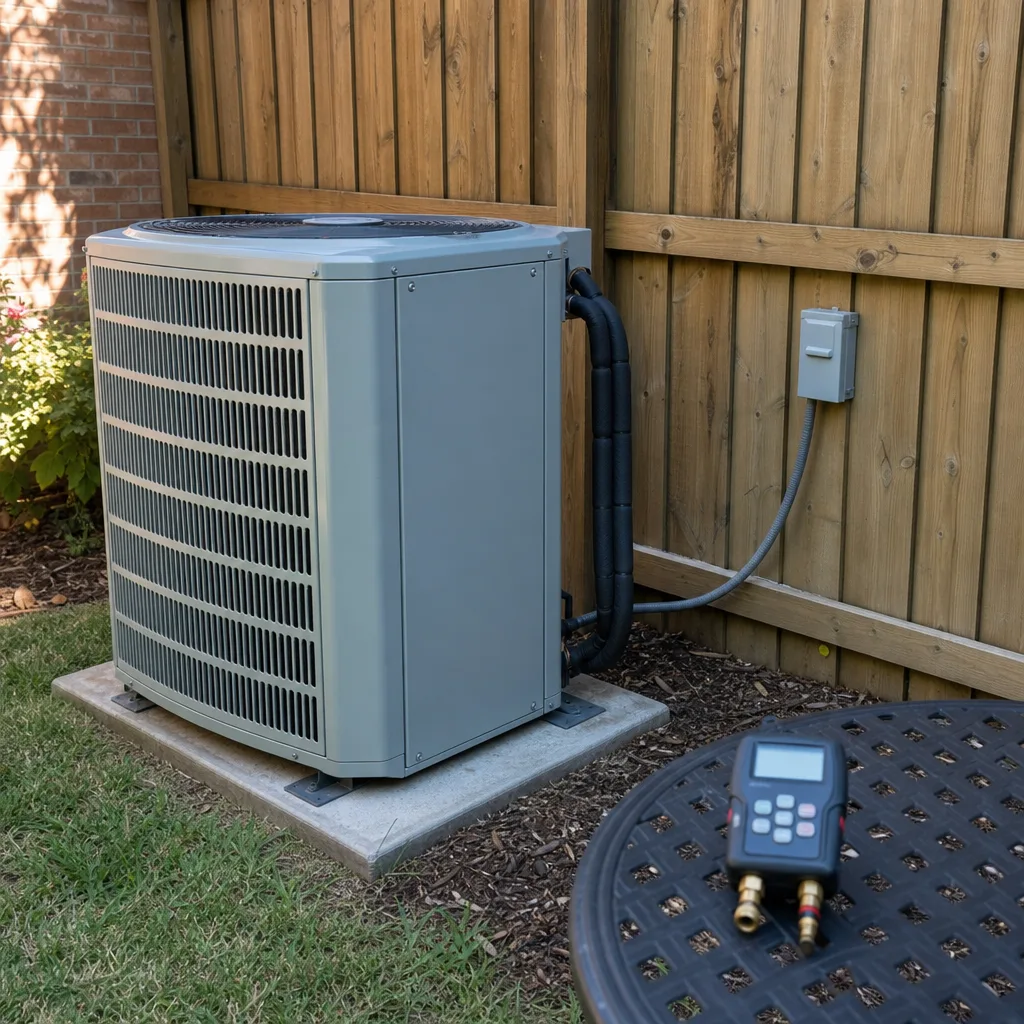
That’s the part people don’t expect. Adding refrigerant to a system that’s already full overcharges it. The extra refrigerant can flood the compressor with liquid it was never built to handle. You’d pay for refrigerant you didn’t need and put the most expensive part of your system at risk. A technician should measure your pressures and temperatures before adding anything. You can ask to see those readings.
You’ve already done the simple checks from the last section. Here’s what else can look like low refrigerant:
- The outdoor unit hums or clicks, but the fan won’t spin. This usually points to a failed capacitor or contactor. These are small electrical parts that help the motors start, and long stretches of summer heat wear them down. Replacing a capacitor is an electrical repair, not a refrigerant job.
- The indoor coil freezes, but the charge is fine. A weak blower motor, a dirty evaporator coil, or a leaky return duct can starve the coil of warm air until it ices over. The fix is restoring airflow, not adding refrigerant.
- There’s water around the indoor unit or in the drain pan. A clogged condensate drain line can trip a safety switch that shuts your system off. It can also let water back up into your ceiling if the air handler sits in the attic. The fix is clearing the drain, not adding refrigerant.
- Rooms far from the unit stay warm while others feel fine. Torn or disconnected ducts in a hot attic can dump cold air where nobody lives. That’s a duct repair.
- The thermostat reads wrong. A thermostat on a sunny wall or near a lamp can think your house is hotter than it is and keep the system running.
There’s one more case worth saying out loud. On the hottest Dallas afternoons, even a healthy system with a full charge may run nonstop and still fall a few degrees behind your thermostat setting. Most home systems are sized for a typical hot day, not the worst one of the year. If your house catches up once the evening cools off, and the problem only shows up during heat waves, your refrigerant may be fine. Closing the blinds on sunny windows and holding off on the oven can help on those days.
If one of these sounds like your problem, that’s good news. Most of them are simpler to fix than tracking down a leak. Xtreme Air Services handles capacitor replacement, blower motor repair, AC drain line cleaning, evaporator coil cleaning, duct repair, and thermostat repair, so whatever the real cause turns out to be, you can get it fixed.
The point is to find the real cause first. If someone wants to add refrigerant without checking for a leak or measuring your system, it’s fair to ask why.
Ready when you are – get in touch today.
Call Today, Get Service Today. Xtreme Air Services — North Dallas is ready to help.
Old R-22 Systems vs. Newer R-410A Systems
The kind of refrigerant in your system changes the math on a leak. If you have an older R-22 system, a leak repair and recharge costs more and makes less sense the older the unit gets. If you have an R-410A system, fixing the leak and recharging is usually a solid, sensible repair.
You can find out which one you have in about a minute. Look for the metal label, called a data plate, on the side of your outdoor unit. It lists the refrigerant type, often next to the words “charge” or “refrigerant.” You’ll see R-22, R-410A, or, on the newest equipment, a newer refrigerant like R-454B or R-32.
R-22 is the older refrigerant. It isn’t made new in the U.S. anymore because of its effect on the ozone layer. What’s still around comes from recovered and recycled supply, so it’s harder to get and costs more each time it’s needed. Plenty of Dallas homes built from the 1950s through the 1990s have had their systems replaced since then. But if your outdoor unit is 15 years old or older and has never been swapped out, check that label.
You also can’t just put a different refrigerant into an R-22 system. R-410A runs at much higher pressures and uses a different oil, so it won’t work in equipment built for R-22. Mixing refrigerants can damage the system and makes it harder to service later.
That’s why the leak matters so much on an older system. Topping off R-22 without finding the leak means paying for a scarce refrigerant and then watching it escape again. If your technician finds the leak and it’s a small, clean fix, like a valve core or a single fitting, repairing it can buy you more good years. If the leak is in a coil, or the system is near the end of its life anyway, it’s fair to ask whether that money would be better spent on a new system.
Here’s how to think about it with an older R-22 unit:
- Repair usually makes sense when the leak is small, easy to reach, and the rest of the system is running well.
- Replacement deserves a hard look when the leak is in the indoor or outdoor coil, the compressor is struggling, or you’ve already recharged once or twice.
- Either way, you should get a clear explanation of where the leak is before you decide anything.
With an R-410A system, the decision is usually simpler. The refrigerant is easy to get, and most leaks at valves, fittings, and line sets are worth fixing. A leaking coil on a younger system can often be repaired or replaced on its own without replacing the whole unit.
Newer systems that use A2L refrigerants, like R-454B, work much like R-410A systems. These refrigerants are mildly flammable, so they need technicians trained to handle them safely. If your system is new, the leak-first rule still applies the same way.
If the numbers point toward replacement, Xtreme Air Services is a Trane Comfort Specialist and offers financing on larger repairs and replacements. Still, the leak gets found and explained first, so the choice is yours to make with real information.
Watch Our Video
See How We Handle Refrigerant recharge / leak repair in Dallas
Xtreme Air Services — North Dallas
How Diagnosis and Repair Works
A real refrigerant leak repair has three jobs: find the leak, fix it, and prove the system holds and cools. The recharge comes last, not first. Xtreme Air Services describes its most common refrigerant job the same way. Locate the failed part, repair or replace it, and verify the system runs correctly. Most calls are a single common failure fixed on the first visit.

Here’s what a complete job generally looks like, start to finish:
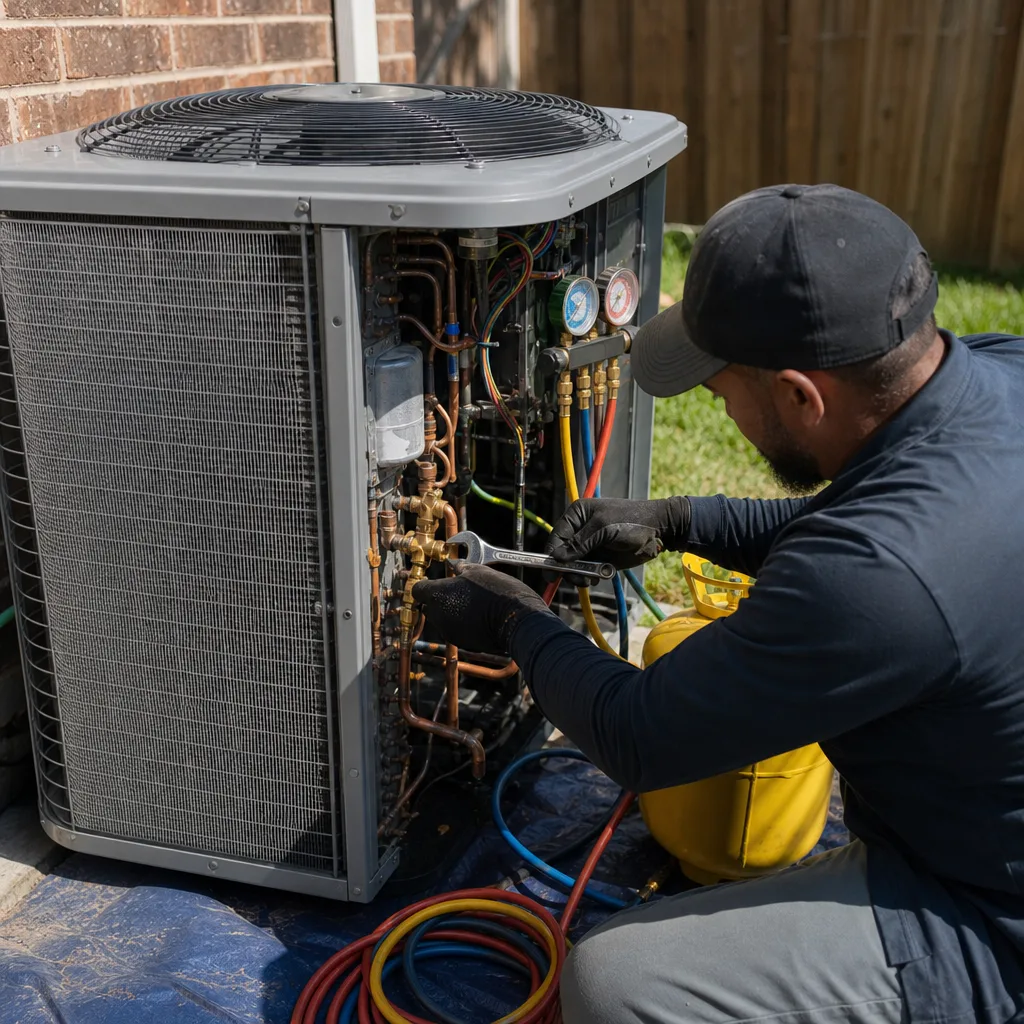
- Measure first. The technician hooks gauges to the service valves and checks pressures and line temperatures. This shows whether the system is low or whether the problem is something else.
- Hunt down the leak. An electronic leak detector “sniffs” the air for refrigerant around coils, valves, and joints. A bubble solution brushed on a fitting will foam if gas is escaping. For a leak that won’t show itself, the refrigerant may be recovered and the system filled with nitrogen to watch for a pressure drop.
- Fix the failed part. That might be a new valve core, a re-brazed joint, a repaired stretch of line set, or a new coil. A coil with pinholes in several spots is usually replaced rather than patched.
- Pull a vacuum. Once the system has been opened, a vacuum pump draws out air and moisture. Moisture left inside mixes with the refrigerant and oil and can form acid that eats at your compressor over time.
- Charge it the right way. The correct amount is weighed in using the data plate and the length of your line set, then checked against readings that show the coil is cooling the way it should. Guessing by feel is how systems end up overcharged.
- Verify and clean up. The system runs while vent temperatures are checked and the repair is rechecked for leaks.
Some leaks take longer to find than others. A loose valve core at the outdoor unit can turn up in minutes. A pinhole in an evaporator coil tucked into a Dallas attic is slower work, because the space is tight and can be brutally hot by midafternoon in July. If a coil or another part has to be ordered, the repair may need a second trip, since part availability affects both timing and cost.
You shouldn’t find out the price after the work is done. Xtreme Air Services gives you upfront flat-rate pricing that you approve before work starts, so there’s no meter running while someone searches your attic. The quoted repair includes diagnosis, labor, and the standard replacement part, plus testing and cleanup. Anything beyond that, like additional failed parts, major components, code upgrades, or permits, gets quoted separately so you can decide on it with the facts in front of you.
That’s the difference between a repair and a refill. When the leak is found and fixed, the system is dried out, and the charge is measured instead of guessed, the cold air you get back is cold air that stays.
Frequently Asked Questions
Common questions about Refrigerant recharge / leak repair
Is it safe to just recharge my AC myself with a can from the store?
No, home AC systems are not a do-it-yourself recharge job like a car. Federal rules require a certified technician to buy and handle refrigerant for home systems, and finding a small leak takes an electronic detector or nitrogen pressure test most homeowners don’t have. If you add refrigerant without finding the leak, you’ll just be paying to lose it again.
Can a refrigerant leak get worse if I wait to fix it?
Yes, a leak only gets worse the longer your system runs low on refrigerant. Your compressor has to work harder every hour it runs undercharged, and that strain can turn a simple valve or fitting repair into a much more expensive compressor replacement. A small leak today can mean a bigger repair bill in a few months.
Does my AC use refrigerant up like a car does, needing regular top-offs?
No, your AC doesn’t consume refrigerant the way a car engine burns gas. It runs in a sealed loop that should hold the same charge for the life of the system. If the level drops at all, refrigerant is escaping through a leak somewhere, not simply getting used up over time.
My AC repair tech said finding the leak is hard to do – is that normal?
Yes, some leaks are much harder to find than others, especially in tight attic spaces common in older Dallas-area homes. A loose valve core at the outdoor unit can be found in minutes, but a pinhole in an evaporator coil tucked in a hot attic takes more time and the right tools to track down.
Ready to Get Started?
Call (469) 213-3107 Today, Get Service Today.