


Transfer Switch Installation in Dallas: Connect Your Generator Safely
Automatic or manual transfer switches installed to code, so your generator powers your home safely.
What’s Covered on This Page
- Why a Transfer Switch Is Required, Not Optional
- Automatic vs. Manual Transfer Switches: Making the Right Choice
- What Drives the Cost of Your Installation
- Licensing and Permits Required for Dallas Panel Work
- What Happens During Your Installation Visit
- Can I add a transfer switch to my existing panel, or do I need a whole new panel?
- How long will my power be off during the installation?
- Will my homeowner’s insurance have a problem with my generator setup?
- Do I need a permit if I’m only adding a manual switch for a portable generator?
Why a Transfer Switch Is Required, Not Optional
Think of a transfer switch as a gate with two sides. Your home’s circuits can take power from Oncor’s lines or from your generator, but never from both at once. When the power goes out, you flip the switch, or an automatic switch does it for you. Your lights, fridge, and other chosen circuits then run on the generator, and the grid stays locked out.
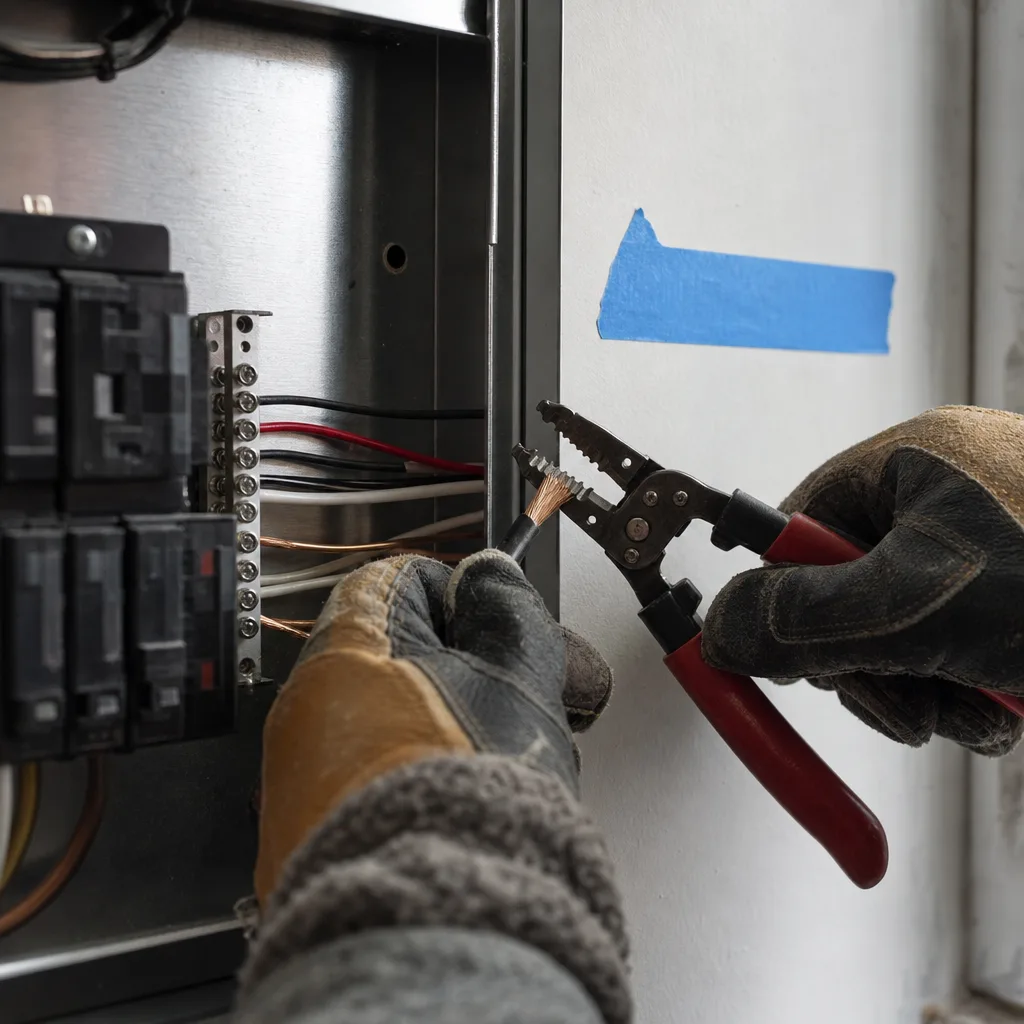
Here’s why that matters. Some folks plug a portable generator into a dryer outlet with a double-ended cord. Electricians call that a “suicide cord” for good reason. It sends generator power backward through your panel and out onto the utility lines. The transformer on the pole can step that power way up. Then a lineman who thinks the line is dead can get hurt.
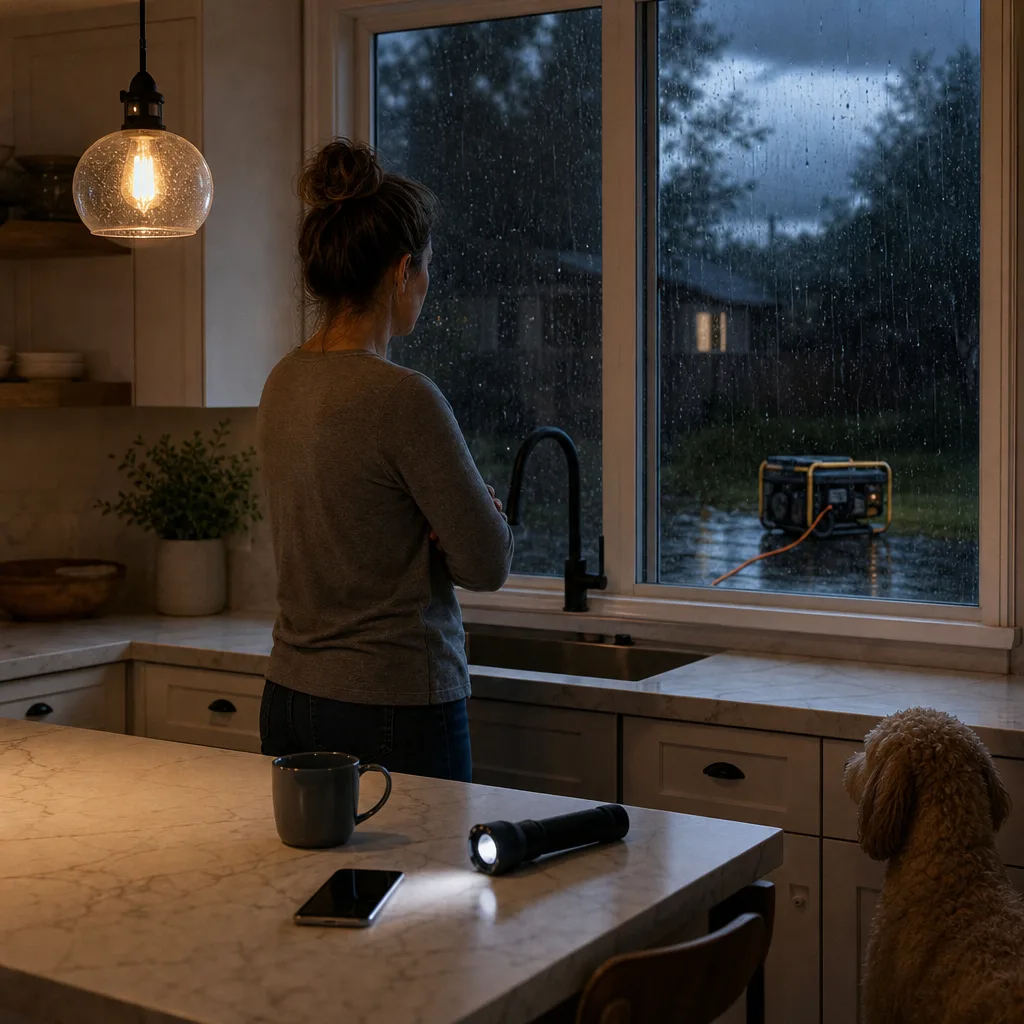
That risk is real in Dallas, where outages tend to hit whole neighborhoods at once. Spring storms with high wind and hail, and hard freezes like the February 2021 winter storm, can leave a street dark while Oncor crews work pole by pole. Those are the exact hours when people reach for a generator. They’re also the hours when line workers are most exposed.
Backfeeding can hurt you too. Here’s how it plays out:
- When grid power returns while your generator is still tied into the panel, the two sources collide. That can wreck the generator, burn up wiring, and start a fire.
- A dryer outlet or other single circuit was never built to feed a whole panel. It can overheat at the plug or inside the wall.
- With a cord setup, nothing stops someone in the house from flipping the main breaker back on at the wrong moment. A transfer switch is built so that mistake can’t happen.
There’s a legal side as well. Electrical code calls for proper transfer equipment any time a generator connects to a home’s wiring. In Texas, panel work like this is a job for a licensed electrician. A homemade hookup can also cause trouble with your insurance if something goes wrong. A properly installed switch, connected and tested, gives you a setup you can trust and show to anyone who asks.
Now for the honest part. If your plan is to run a fridge, a fan, and a few lamps with heavy-duty extension cords plugged straight into a portable generator outside, you don’t need a transfer switch. Nothing touches your panel, so nothing can backfeed. Keep the generator well away from doors and windows, and you’re set. The switch becomes a must the moment you want generator power going into your home’s wiring, whether that’s a few key circuits or the whole house.
That’s the line we draw with every customer. If the generator feeds your panel, it needs a switch, installed right. As a licensed and insured team, that’s work we do the right way, the first time.
Automatic vs. Manual Transfer Switches: Making the Right Choice
The right switch depends mostly on one thing: what kind of generator you have, or plan to buy. A portable generator almost always pairs with a manual switch. A permanent standby generator pairs with an automatic switch. After that, it comes down to how much of your home you want running and whether someone will always be there to make the change.
A manual transfer switch puts you in charge. When the power goes out, you roll your portable generator outside, plug its cord into a weatherproof inlet on the side of your house, and start it up. Then you flip the switch to generator power. When Oncor’s power comes back, you flip it back and shut the generator down. It takes a few minutes once you’ve done it a time or two.
A manual switch usually runs a handful of circuits you pick ahead of time. Most people choose the fridge, a few lights, the furnace blower, outlets for phones and a TV, and maybe the garage door. You can’t run everything at once on a portable unit, so choosing well matters more than adding more circuits.
An automatic transfer switch does the whole job for you. It watches the power coming into your home. When the grid drops, it tells your standby generator to start, waits for it to run steady, and moves your home over within seconds. When grid power returns and holds, it switches back and lets the generator cool down and shut off. You don’t have to be home, awake, or outside in a storm.
Picture a summer thunderstorm knocking out power on a weekday afternoon while you’re at work. With a manual switch, your house sits dark until you get home. In a Dallas July, that can mean a hot house, a warm fridge, and pets stuck inside. With an automatic switch, the AC and fridge are back on before you even get the text from a neighbor.
A manual switch is likely the better fit if:
- You already own a portable generator, or want backup on a tighter budget
- Someone is usually home and is comfortable starting and plugging in a generator
- You only need the essentials through a short outage
An automatic switch is likely the better fit if:
- You have or are getting a whole-home standby generator
- Someone in your home uses medical equipment that can’t wait
- You travel, work long hours, or have older family members at home alone
- You want your AC, heat, and well-sized loads running without lifting a finger
Switch type is one of the biggest things that moves the cost of the job. An automatic switch costs more than a manual one, and the number of circuits, your panel’s condition and space, and the distance to the generator all play a part too. That’s why we look at your panel and your generator before we give you a flat-rate price.
If you’re not sure which way to go, that’s a normal place to be. Our licensed and insured team handles portable generator hookups, whole-home standby generator installation, and generator sizing, so we can help you match the switch to the generator you need instead of the other way around. Either way, most transfer switch jobs finish the same day, connected and tested.
What Drives the Cost of Your Installation
Most transfer switch installations we do fall between $500 and $1,500. Our most common job is installing an automatic or manual transfer switch to connect a generator to your home’s panel safely, connected and tested. That job usually runs $700-$1,100, and most finish the same day.
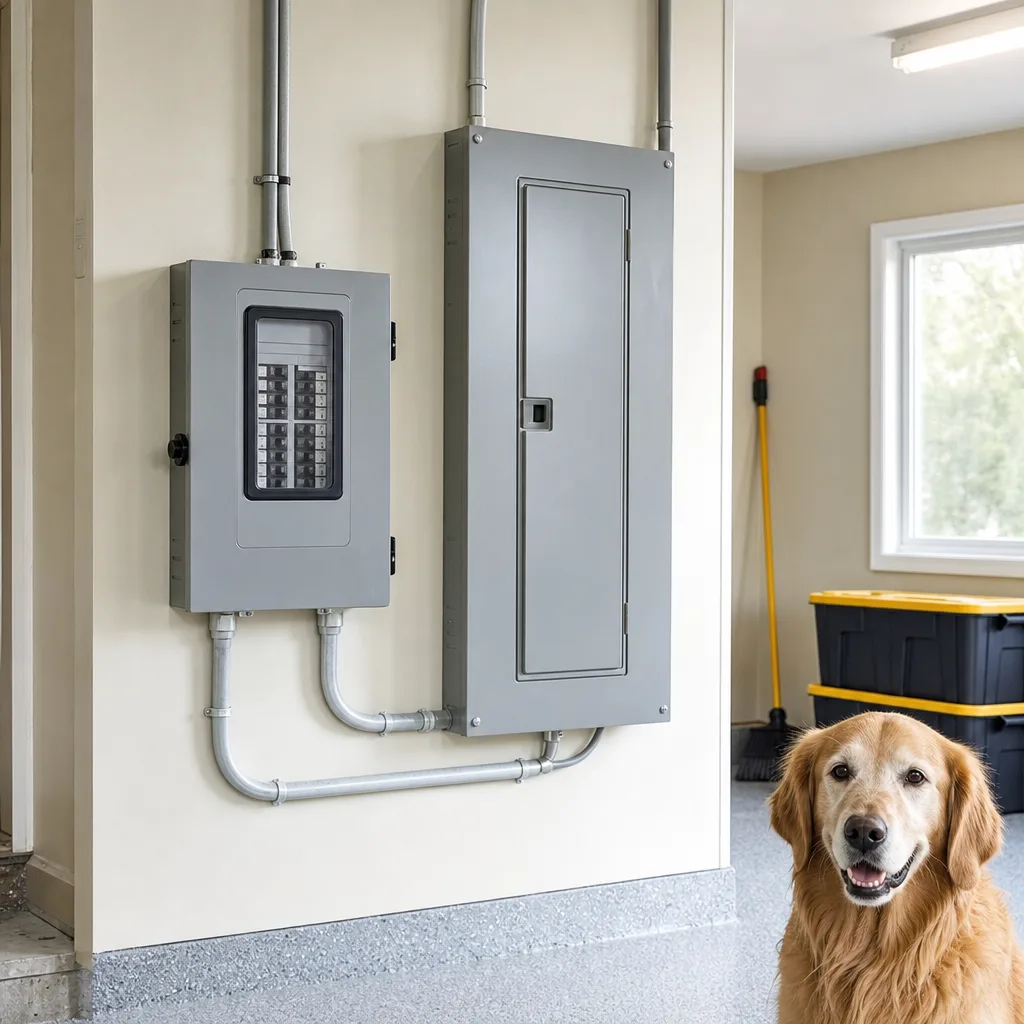
Where your job lands in that range depends on your home, not on a guess. Here’s what moves the number:
- Switch type. As covered above, an automatic switch costs more than a manual one.
- Number of circuits. A switch that runs your fridge, a few lights, and the furnace blower is a smaller job than one that backs up most of the house.
- Panel condition and space. If your panel has open room and is in good shape, the switch ties in cleanly. A crowded or worn-out panel takes more work, or may need attention first.
- Distance to the generator. The farther the generator or inlet sits from your panel, the more wire and labor it takes to get there.
- Code upgrades. Older wiring or setups that don’t meet current code may need to be brought up to standard before the switch can go in.
- Permits. Electrical work like this often needs a permit, and that cost depends on the job.
Panel condition matters a lot in Dallas. Plenty of homes here are slab-on-grade ranch houses built from the 1950s through the 1990s. Many still have their original panels. Some have no open breaker spaces left after years of added circuits, a new AC, or a kitchen remodel. A newer home in a recent subdivision often has more room to work with. We check this first, because it’s the biggest unknown until someone opens the panel cover.
We spell that out so you know exactly what you’re paying for. If we find your panel needs an upgrade or something needs a code fix, we’ll show you what we found and why, and price it separately. You decide what happens next. Nothing gets added on without you saying yes.
That’s how upfront flat-rate pricing works with us. You see the full price and approve it before any work starts. There’s no meter running while we work, and no extra charge for nights or weekends.
There is a service-call fee of $26-$99 to come out and look at your setup. If you go ahead with the work, that fee is credited toward the job, so it isn’t an extra cost on top.
If you’re pairing a new switch with a standby generator or other larger work, flexible financing is available on qualifying installations and larger jobs, on approved credit. That can make it easier to do the job right now instead of waiting until the next storm season rolls through.
Thinking about Transfer switch installation? Let’s talk.
Call Today, Get Service Today. Xtreme Air Services — North Dallas is ready to help.
Licensing and Permits Required for Dallas Panel Work
A transfer switch ties into your electrical panel, the heart of your home’s wiring. In Texas, that kind of work belongs to a licensed electrician. It also usually needs a permit and an inspection from the city where your home sits. Those two steps protect you long after the installer drives away.
Electricians in Texas are licensed through the Texas Department of Licensing and Regulation, or TDLR. A license shows the person has passed exams on electrical code and works under the rules the state sets. You can look up any electrician or electrical contractor on TDLR’s website in a minute or two. Ask for the license number, then check that the name and status match the person or company you’re talking to.
The permit is the city’s record that the work was planned and checked. If your home is inside Dallas city limits, the City of Dallas handles it. If your address falls in a neighboring city, that city’s permit office does. Rules and fees can be a little different from one city to the next, so it pays to have someone who knows which office to call.
After the switch goes in, an inspector looks over the work. They check things like how the switch is mounted and labeled, how it’s grounded, whether the wire is sized right for the load, and whether the setup can ever let generator and grid power meet. A passed inspection is your proof the job was done to code.
Here’s why that matters to you, not just the city:
- Insurance. If a fire or damage claim ever comes up, an unpermitted panel change can give your insurer a reason to ask hard questions.
- Selling your home. Buyers’ inspectors often flag generator hookups. A permit on file makes that conversation short.
- A second set of eyes. The inspector checks work you can’t see once the panel cover goes back on.
If you’re adding a standby generator that runs on natural gas, there’s a second trade involved. The gas line to the generator is plumbing work, with its own license and its own inspection. That’s where having one team for electrical and plumbing helps. We handle generator fuel line connection and gas line installation too, so you’re not juggling two contractors and two schedules.
Before you hire anyone for this job, ask a few plain questions:
- What’s your electrical license number, and can I look it up on TDLR?
- Will you pull the permit, or are you expecting me to?
- Is the inspection part of your plan, and will you be there for it?
- Are you insured if something goes wrong at my house?
A good contractor answers all four without hesitating. If someone offers to skip the permit to save you money, that’s your sign to keep looking. As noted earlier, permits are priced separately on your quote, so you’ll see that cost up front instead of finding out later.
Our team is licensed and insured, and the technicians who come to your home are background-checked and drug-tested. We’d rather walk you through the permit side now than have you wonder later whether your setup was done the right way.
Watch Our Video
See How We Handle Transfer switch installation in Dallas
Xtreme Air Services — North Dallas
What Happens During Your Installation Visit
Most transfer switch jobs we do finish the same day, connected and tested. The day itself is simpler than people expect. Here’s what a typical installation looks like from start to finish, so nothing catches you off guard.
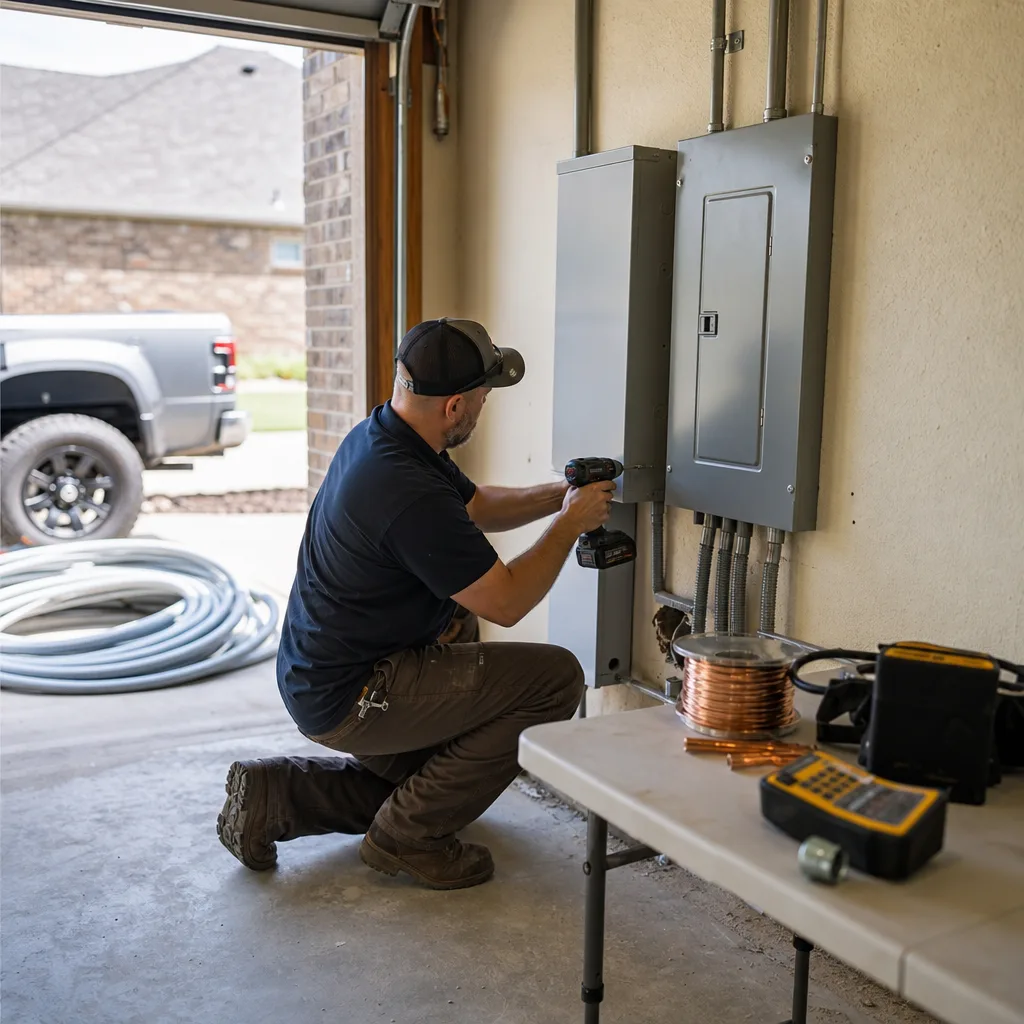
It starts with the panel and the plan. Before anything gets mounted, the installer opens your panel, checks its condition and open space, and confirms where the generator or inlet will sit. If you’re using a portable generator with a manual switch, this is when you settle which circuits get backup. Your full flat-rate price is set and approved before any work begins.
Next comes the hardware. The work depends on your setup:
- Manual switch with a portable generator: the switch mounts beside your panel, and a weatherproof power inlet goes on an outside wall where you’ll park the generator. Wire runs between the two.
- Automatic switch with a standby generator: the switch usually mounts near your panel or electric meter. Power wiring and a small control wire run out to the generator so the two can talk to each other.
Then there’s the tie-in, the one part that needs your home’s power off. The chosen circuits get moved from your panel into the switch. That shutdown often lasts a few hours, depending on how many circuits are involved and how your panel is laid out. If the switch goes in at the meter, the job may also need coordination with Oncor, since they control the meter.
In Dallas, timing matters. Your AC is off while the power’s off, and an afternoon in late July can heat a house up fast. A morning start makes the shutdown a lot more comfortable, especially if you have pets, kids, or older family members at home.
Last comes testing, and it’s the step you shouldn’t let anyone skip. A proper test acts out a real outage. With an automatic switch, grid power is cut so you can watch the generator start and the switch take over, then watch it switch back when power returns. With a manual switch, the generator gets plugged in and the switch gets flipped so you can confirm each backed-up circuit works.
Before the installer leaves, you should know how your switch works. For a manual setup, that means where the cord plugs in, the order of steps, and how to switch back. For an automatic setup, it means what you’ll hear and see when it kicks on. The permit inspection we covered earlier happens after the work is done.
You can make the day go smoother with a little prep:
- Clear a path to your electrical panel and the outside wall where the inlet or generator will go.
- Make a short list of what you can’t live without in an outage, like the fridge, a medical device, the furnace blower, or the garage door.
- Charge your phones and plan for a few hours without power during the tie-in.
- Keep pets secured, since doors and gates may be open while work is going on.
The technicians who come to your home are licensed and insured, background-checked, and drug-tested. You’ll know who’s at your door and exactly what they’re doing in your panel.
Call 469-213-3107
Frequently Asked Questions
Common questions about Transfer switch installation
Can I add a transfer switch to my existing panel, or do I need a whole new panel?
Most homes can add a transfer switch to the existing panel if there’s open breaker space and the panel is in good shape. Many Dallas ranch homes built from the 1950s through the 1990s have crowded or older panels after years of added circuits, so we check your panel’s condition first. If it’s full or worn out, it may need attention before the switch goes in, and we’ll show you that cost separately before any work starts.
How long will my power be off during the installation?
Your power is usually off for a few hours during the tie-in, depending on how many circuits you’re backing up and how your panel is laid out. We schedule a morning start when we can, since an afternoon shutdown in Dallas summer heat means no AC for a while. Everything else on install day, like mounting the switch and testing it, doesn’t require your power to be off.
Will my homeowner’s insurance have a problem with my generator setup?
A permitted, inspected transfer switch install protects you here, while a homemade hookup can raise questions if you ever file a claim. If a fire or damage claim comes up and the panel work was never permitted, your insurer may push back. A passed city inspection on file is your proof the job met code, which keeps that conversation short if it ever happens.
Do I need a permit if I’m only adding a manual switch for a portable generator?
Yes, any transfer switch tied into your home’s panel typically needs a permit, whether it’s manual or automatic. The permit office depends on where your home sits, since Dallas city limits and neighboring cities each handle their own permits and inspections. An inspector then checks the mounting, grounding, wire sizing, and that generator power can never meet grid power.
Ready to Get Started?
Call (469) 213-3107 Today, Get Service Today.