


A/C System Repair in Plano, Done Right and Explained Clearly
Warning signs explained, quick checks to try first, and a repair price that tells you what's included.
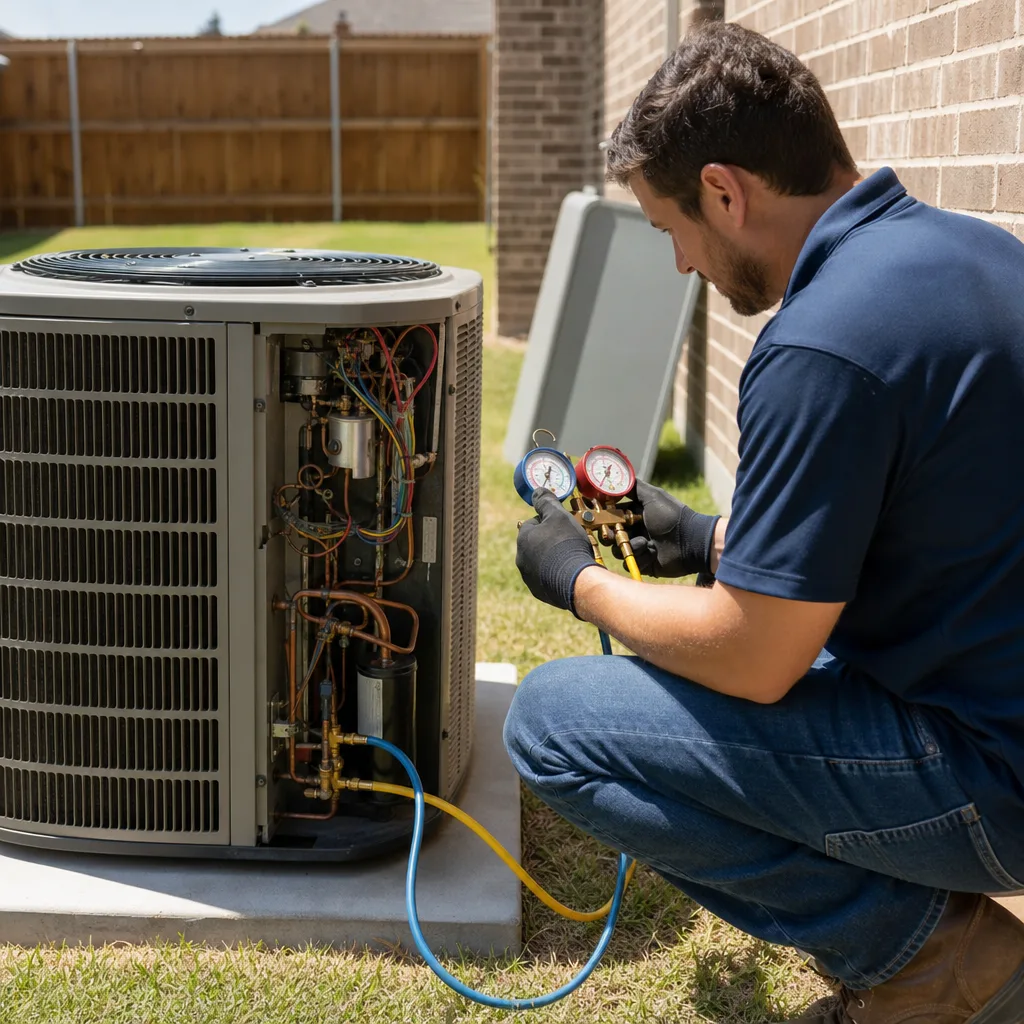
What’s Covered on This Page
- Signs Your System Needs Repair Now
- Checks to Make Before You Call
- What Happens During a Repair Visit
- What’s Included in Your Repair Price
- Why Older Plano Homes Face More Repair Calls
- What’s the most common AC repair you see in Plano?
- Can I just add refrigerant myself to fix a low AC?
- How long does a typical AC repair visit take?
Signs Your System Needs Repair Now
Your AC almost always tells you something’s wrong before it quits for good. The trick is knowing which signs mean “call today” and which mean “keep an eye on it.” Here’s how to sort them out.
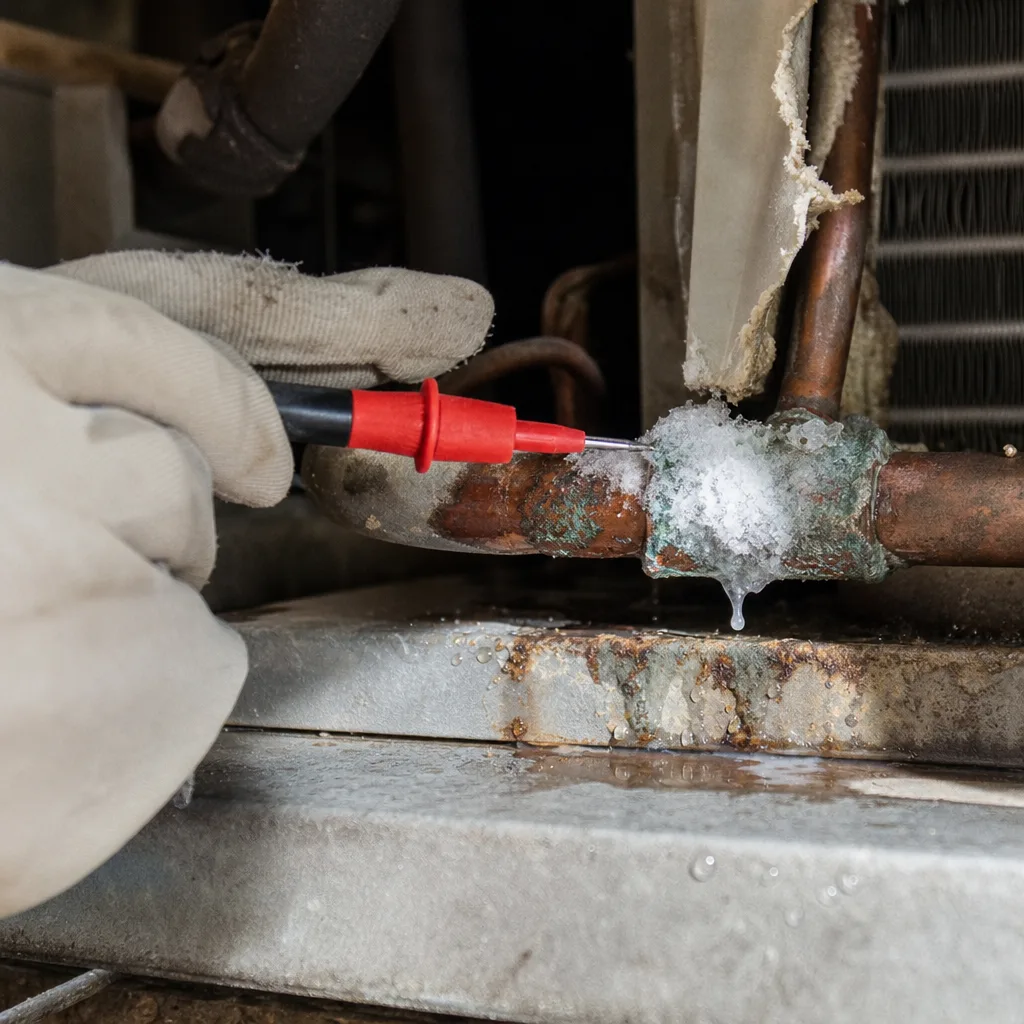
Call today if you notice any of these:
- Warm or room-temperature air from the vents. The fan is running, but nothing’s cooling. This often points to a bad capacitor, a failed outdoor fan motor, or low refrigerant from a leak.
- Ice on the copper line outside or on the indoor coil. Ice means air isn’t moving across the coil the way it should, or refrigerant is low. Running it frozen puts strain on the compressor, which is the most expensive part in the system.
- The outdoor unit hums but the fan won’t spin. That buzzing sound is a classic sign of a failing capacitor or fan motor. It’s usually a quick fix, but the longer it runs like that, the more stress it puts on everything else.
- A burning, hot-plastic, or electrical smell. That can mean wiring, a motor, or a control board is overheating. Don’t wait on this one.
- Water pooling near the indoor unit, or a new stain on the ceiling below an attic unit. A clogged drain line or a full drain pan can overflow fast. Many North Texas homes have the indoor unit up in the attic, so a drain problem can turn into drywall damage before you ever see the puddle.
- The breaker for your AC keeps tripping. Resetting it once is fine. If it trips again, something is pulling too much power, and you’ll want it checked instead of reset over and over.
These signs mean it’s time to book a visit soon:
- New noises. Grinding, squealing, rattling, or banging that wasn’t there last month usually means a motor bearing, belt, or loose part is wearing out.
- Short cycling. The system kicks on, runs a few minutes, shuts off, and starts again. That wears parts out early and leaves your home sticky.
- Weak airflow from some or all vents, even with a clean filter.
- The house can’t get down to your thermostat setting on a normal summer afternoon, or your power bill jumps when the weather hasn’t changed much.
Before you call, check the easy stuff. Make sure the thermostat is set to cool and has fresh batteries, the air filter isn’t clogged, and the breaker hasn’t tripped. If one of those fixes it, great. You just saved yourself a service call.
If it’s still not right, don’t let it ride through a Plano summer hoping it’ll recover. A small problem caught early is usually one part and one visit. Our team offers same-day service, and there’s no extra charge for nights or weekends, so you don’t have to wait for Monday or pay more because your AC picked a bad time to quit.
Checks to Make Before You Call
You already know the big three from above: thermostat, filter, and breaker. Here’s how to check each one the right way, plus a few spots people tend to miss. None of these take tools, and none of them mean opening up the unit.
- Thermostat settings. Set it to Cool, put the temperature a few degrees below what the room feels like now, and set the fan to Auto. If the screen is blank, swap the batteries. If it’s a smart thermostat, check that it hasn’t slipped into an eco mode, a hold, or an old schedule after a Wi-Fi hiccup.
- Both breakers. Most central systems have two breakers in the panel, one for the outdoor unit and one for the indoor unit. A tripped breaker usually sits in the middle, not fully on. Push it all the way off, then back on. If it trips again, leave it off and call.
- The outdoor disconnect. That’s the small gray box on the wall next to the outdoor unit. It can get bumped or switched off during yard work. Make sure the handle or switch is in the on position. Don’t go any further inside that box.
- The filter, for real this time. Pull it out and hold it up to a light. If you can’t see light through it, replace it. Check that it’s the right size and that the arrow on the edge points toward the unit.
- Vents and the return grille. Open any closed supply vents, and make sure a couch, rug, or stack of boxes isn’t blocking the big return grille where air gets pulled back in.
- Around the outdoor unit. Clear away grass clippings, leaves, and anything stacked against it. The unit needs room to breathe. Rinsing the outside is fine. Prying off panels isn’t.
If you spotted ice on the lines, turn the cooling off and let it thaw before anyone tries to figure out what’s wrong. A frozen coil hides the real problem, and a tech can’t diagnose it until the ice is gone.
Also check for water in the pan under the indoor unit. Many systems have a small safety switch that shuts off cooling when that pan fills up. If the AC stopped and there’s standing water, a clogged drain line is the likely cause. Our team handles AC drain line cleaning, and it’s a common reason for a sudden shutdown.
If one of these checks gets cold air moving again, you’re done. Enjoy it. If it comes back on but quits again in a day or two, that’s your system telling you the real problem is still there.
Either way, jot down what you checked and what you saw: the thermostat reading, whether a breaker tripped, ice, water, or noises. That short list helps a technician start in the right place instead of starting from scratch.
What Happens During a Repair Visit
A repair visit has three jobs. First, find the part that failed. Second, repair or replace it. Third, prove the system runs right before anyone calls it done. Most calls come down to one common failure that gets fixed on the first visit, so for many homes in Plano it’s one trip, not a string of return visits.
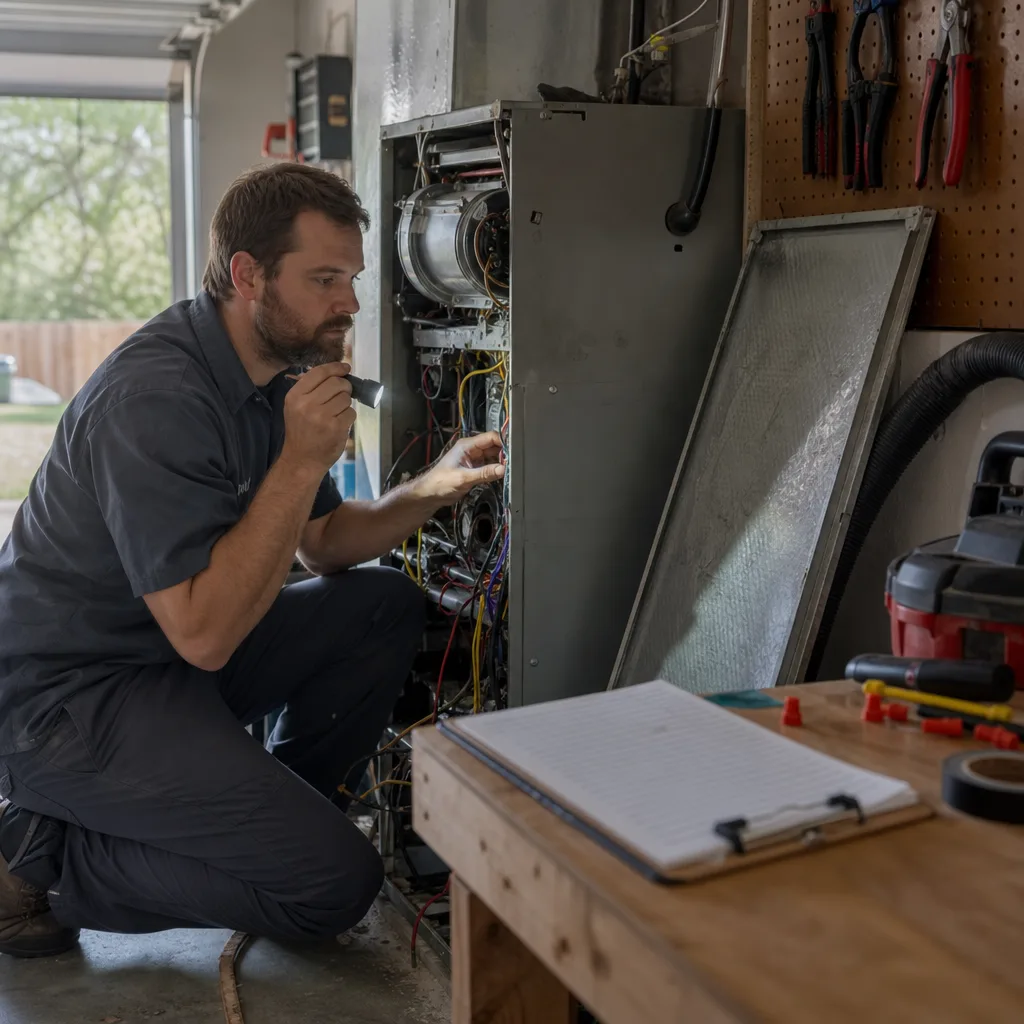
Here’s how that plays out at your home.
- You tell us what you noticed. That short list you made of the thermostat reading, the tripped breaker, the ice, the water, or the noise saves time. It points the technician to the right part of the system first.
- The system gets diagnosed, not guessed at. A real diagnosis means checking the electrical side, like the capacitor, contactor, and motors, and the cooling side, like airflow, coil condition, and refrigerant pressures. It also means looking at the drain line and pan. If your indoor unit sits in the attic, that’s part of the visit too, even on a hot July afternoon when the attic is far hotter than the yard.
- You hear what’s wrong in plain English. You should know which part failed, why it likely failed, and what happens if you leave it alone. If the cause is a refrigerant leak, you should hear that it’s a leak, not just a recommendation to top off the system.
- You get the price before any work starts. We use upfront flat-rate pricing that you approve first. There’s no meter running while the technician works, and nights and weekends cost the same as a weekday.
- The fix gets done. That means repairing or replacing the failed part, usually with the standard replacement part on hand.
- The system gets tested and the area gets cleaned up. The technician runs the AC and confirms it’s cooling, cycling, and draining the way it should. You don’t want to find out the next morning that the problem came back.
The diagnosis step is where good repairs and bad repairs split. A capacitor that failed because a fan motor was dragging will fail again if only the capacitor gets swapped. The same goes for a frozen coil. Thawing it and walking away doesn’t fix the airflow problem or the leak that caused it. Finding the real cause is what makes the fix stick.
There’s a $26-$99 service-call fee for the visit. If you go ahead with the repair through Xtreme Air Services, that fee is credited toward the repair. If the diagnosis turns up something bigger, like a failed compressor, the visit still gives you a clear answer to make your decision with. Financing is available on larger repairs and replacements.
Every technician who comes to your door is licensed, insured, background-checked, and drug-tested. You’ll be dealing with someone you can trust inside your home, who explains the problem and the price clearly, and who doesn’t leave until your house is cooling again.
Not sure what your A/C system repair project needs? Ask us.
Call Today, Get Service Today. Xtreme Air Services — North Plano is ready to help.
What’s Included in Your Repair Price
Most A/C repairs we do fall between $150 and $700. The most common job is finding one failed part, fixing or replacing it, and making sure the system runs right. That job usually runs $150 to $400. If your AC stopped cooling because of a single common failure, that’s the range you’re most likely looking at.
Those numbers cover the work described in the visit above, from diagnosis through cleanup. A major component, a second failed part, code upgrades, or permits get their own quote. So if a technician finds your compressor is done, that price won’t be hidden inside these ranges. You’ll see it on its own line and decide from there.
Two homes with the same symptom can end up with different bills. Here’s what makes the difference:
- How far the failure spread. A part caught early is one fix. A part that kept running while it failed can take other parts down with it.
- The part itself. Some parts cost more than others, and some are easier to get than others.
- Your system’s age and brand. Older units can need parts that are harder to find or cost more than a common, current part.
- How many parts failed. One bad part keeps you near the low end. Two or three adds up.
- When it breaks. With a lot of companies, a night or weekend call costs more. With us, it doesn’t. A Saturday night repair costs the same as a Tuesday morning one.
That first point is the strongest reason not to let a struggling system ride through a Plano summer. A unit that’s humming, icing up, or short cycling on a 100-degree afternoon is working harder than it was built to. The price gap between a quick fix and a bigger repair often comes down to how long it kept running before someone looked at it.
Financing isn’t usually offered on a smaller repair like this. It is available on larger repairs and replacements, so if the diagnosis turns up something bigger, you’ll have options to look at before deciding.
Whoever you call, a few questions will tell you if a quote is fair:
- Which part failed, and what made it fail?
- Is this a flat price for the whole job, or will it go up as the work goes on?
- Is the service-call fee credited toward the repair if I go ahead?
- Does the price include testing the system after the fix?
- Did you find anything else, and what would that cost on its own?
- If refrigerant is low, where’s the leak?
A good technician can answer all of these without hedging. If someone can’t tell you which part failed or why, or wants to add refrigerant without naming a leak, it’s fine to stop and get a second opinion. You’re the one paying, and you should understand what you’re paying for before any work starts.
Watch Our Video
See How We Handle A/C system repair in Plano
Xtreme Air Services — North Plano
Why Older Plano Homes Face More Repair Calls
If your home is in one of Plano’s more established neighborhoods, your AC isn’t unlucky. It’s working against age and North Texas weather at the same time. Older systems don’t usually fail all at once. They wear down one part at a time, and that’s why they need repair calls more often than a system that’s only a few years old.
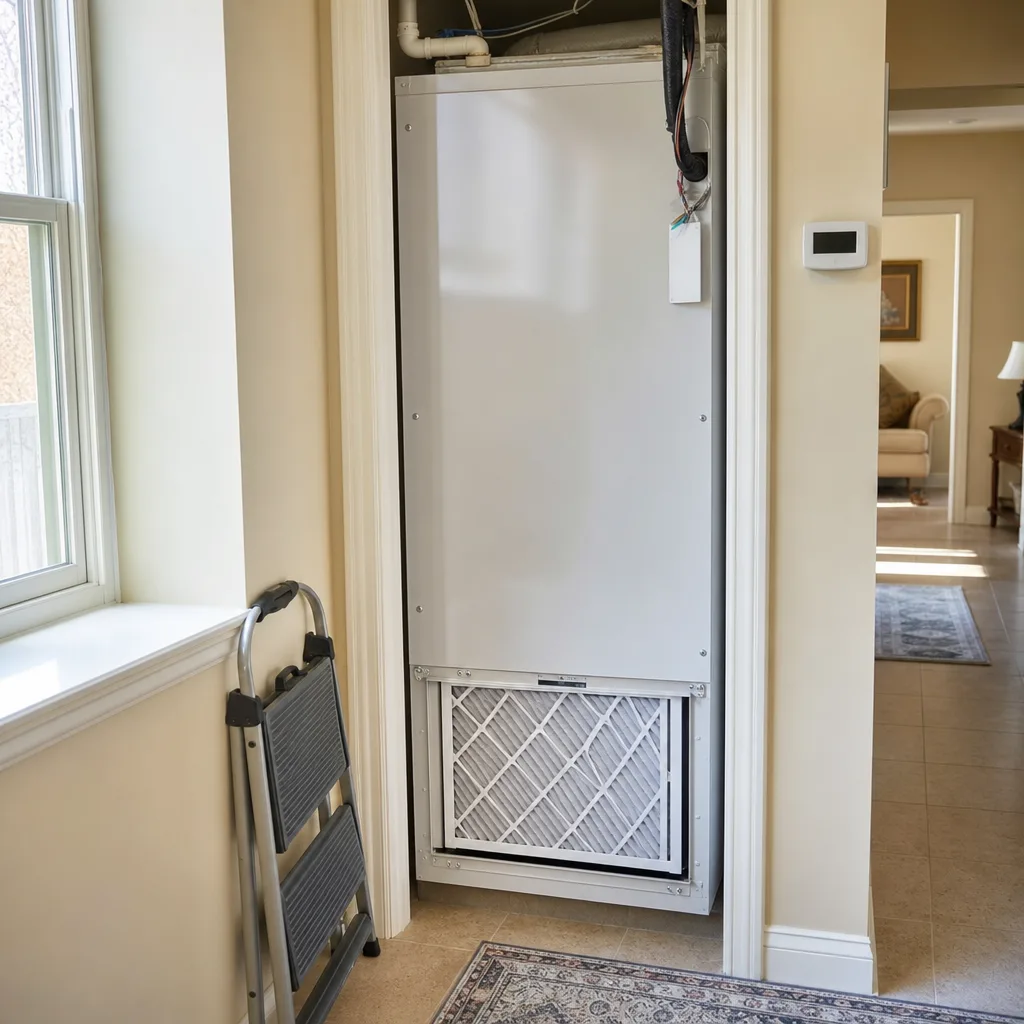
Here’s what’s working against an older system in a Plano home:
- Long, hot cooling seasons. A North Texas AC runs hard for months, not weeks. Every summer adds wear to the motors, capacitors, and contactor that switch the system on and off. Parts that were fine at year five start to tire by year twelve or fifteen.
- Attic heat. Many older slab-on-grade homes have the indoor unit and ductwork up in the attic. On a summer afternoon, that attic gets far hotter than the yard. Heat speeds up wear on wiring, motors, and the drain pan, and it can make old duct connections loosen or leak.
- Clay soil that moves. North Texas clay swells when it’s wet and shrinks when it’s dry. Over the years, that can tilt the outdoor unit’s pad and put stress on the copper refrigerant lines. That stress can lead to small leaks.
- Older refrigerant. Some older systems were built to run on a refrigerant that’s no longer made. If one of those systems develops a leak, the repair choices get narrower and the parts get harder to find.
- Drain lines that build up. An older drain line has had years to collect sludge and algae. Combine that with an attic unit, and a clog can turn into a ceiling stain.
None of this means an older system has to be replaced. Plenty of older units have years left in them, and a failed capacitor or fan motor on a 12-year-old system is still a fair, sensible repair. The question isn’t the age by itself. It’s whether the problem is one worn part or a pattern.
Think of it this way. If your system has needed one repair in the last few years and otherwise cools fine, fixing it makes sense. If you’re calling for a different problem every summer, the coil is leaking, or the compressor is struggling, it may be time to weigh the cost of another repair against what you’d put toward a new system. Our technicians will lay that out and let you make the call. You won’t get pushed into a replacement you don’t need.
If you’re leaning toward keeping your older system running, regular AC tune-ups are the best way to catch worn parts before they fail on a 100-degree day. A tech can spot a weak capacitor, a dirty coil, or a slow drain while it’s still a small fix.
Whether your AC is brand new or has seen a lot of Plano summers, you deserve a straight answer about what’s wrong and what it’ll cost. We offer same-day service, upfront flat-rate pricing, and no extra charge for nights or weekends.
Call now
Frequently Asked Questions
Common questions about A/C system repair
What’s the most common AC repair you see in Plano?
The most common repair is a failed capacitor or outdoor fan motor, often showing up as a unit that hums but won’t spin. These parts wear out fastest because Plano’s long, hot cooling season keeps them working hard for months at a time. Catching this early usually means a quick, one-visit fix instead of a bigger repair.
Can I just add refrigerant myself to fix a low AC?
No, skip the store-bought refrigerant cans and call for a proper diagnosis instead. Refrigerant doesn’t get used up over time, so if your system is low, there’s a leak somewhere in the lines or coil. Adding more only hides the problem and delays the real fix, which usually costs more the longer it runs low.
How long does a typical AC repair visit take?
Most repairs are finished in a single visit once the failed part is diagnosed. A technician checks the electrical side, like the capacitor and motors, and the cooling side, like airflow and refrigerant pressure, before replacing the failed part and testing the system. If a second issue turns up, you’ll get a separate price before any extra work starts.
Ready to Get Started?
Call (469) 527-5131 Today, Get Service Today.