


AC Replacement in Plano: Know the Cost Factors Before You Sign
An honest read on whether it's time to replace, what a standard replacement includes, and the permit step explained.
What’s Covered on This Page
- Signs Your AC Has Reached the End of Its Life
- When Repair Still Makes Sense Instead of Replacement
- What Drives AC Replacement Cost Up or Down
- What’s Included in a Standard AC Replacement – and What Isn’t
- Permits and Licensing Requirements for Plano AC Replacement
- What is the $5,000 rule people talk about with AC replacement?
- Are there AC brands I should avoid when replacing my system?
- Does it matter if my old AC uses R-22 refrigerant?
Signs Your AC Has Reached the End of Its Life
Most people start asking about replacement right after something goes wrong. That’s understandable, but a single failure doesn’t tell you much. A bad capacitor or a clogged drain line can take down a young system just as easily as an old one. A worn-out AC is different. It shows a pattern, and it usually builds over a season or two.
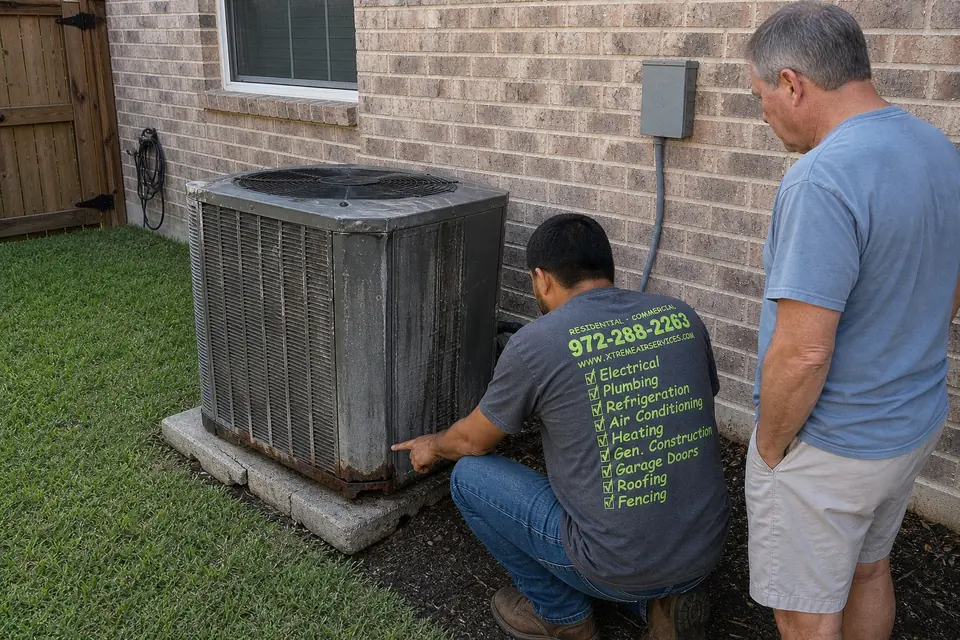
Here’s what that pattern tends to look like:
- It runs all afternoon and still can’t get the house down to your set temperature, even with the filter clean.
- You’ve paid for repairs two or three summers in a row, and each one feels like it buys less time.
- Your summer electric bills keep climbing, but you haven’t changed how you use the house.
- Some rooms stay warm and sticky while others feel fine, and the house feels humid even when the air is cool.
- The outdoor unit is louder than it used to be, or you hear grinding, buzzing, or clanking.
- You’re told it needs more refrigerant again, which usually points to a leak that keeps coming back.
- The system is old enough that parts are getting harder to find or more expensive to order.
Refrigerant deserves its own mention. Many older systems were built to run on R-22, a refrigerant that’s no longer made in the United States. If your system uses it and develops a leak, recharging it gets expensive fast. You’d be putting money into equipment that can’t be updated. That’s often the point where repair stops making sense.
Plano summers make every one of these signs worse. When your system runs nearly nonstop for weeks of hard Texas heat, worn parts wear out faster. A unit that limps through May can quit outright in August. If your system sits in the attic, it’s also working in one of the hottest spaces in your home. That adds stress to the blower, the coil, and the wiring up there.
Now the honest part. If your system is fairly young and this is its first real problem, you probably don’t need a new one. The same goes if the house cools fine and your bills are steady. A single failed part, a dirty coil, or a frozen coil from poor airflow can usually be fixed for a fraction of what replacement costs. In those cases, AC repair is the right call, and a good technician should tell you so.
A simple way to think about it: count how many items on that list fit your home. One sign usually means a repair. Three or more, especially on an older system that’s needed repairs before, means it’s time to price out a replacement before the next heat wave makes the choice for you.
If you’re not sure where your system lands, a technician can check the age, the refrigerant type, the coil, and the electrical parts in one visit. Then you can decide with real facts in front of you, not guesses.
When Repair Still Makes Sense Instead of Replacement
A lot of AC problems that feel like the end are really one small part giving out. Most of these parts are cheap compared to a new system, and a trained technician can often fix them in a single visit.
- A failed capacitor. This small part gives the motors a jolt to start. When it dies, the outdoor unit hums but won’t kick on.
- A worn contactor. This is the switch that tells the outdoor unit to run. It can burn or stick after years of heavy summer use.
- A bad condenser fan motor. The fan on top of the outdoor unit stops spinning, and the system overheats and shuts down.
- A clogged drain line or tripped float switch. Water backs up, and a safety switch turns the AC off to protect your ceiling.
- A frozen coil from a dirty filter or weak airflow. Once the airflow problem is fixed, the system often runs fine again.
- Thermostat trouble. Sometimes the AC is fine and the thermostat is the part that failed or was set up wrong.
If one of these is your problem and the rest of the system is in decent shape, fix it. Putting a new system in to solve a bad capacitor would be like buying a new car because the battery died.
A repair gets harder to justify when the broken part is a major one, like the compressor or the outdoor coil. These are the big-ticket parts. On a younger system, replacing one can still be worth it. On an older system that already shows the wear pattern described above, you’re putting serious money into equipment that may not have many summers left. The question to ask is simple: how many more good years does this repair buy you, and is that worth what it costs?
Timing matters too, and in Plano it matters a lot. If your AC fails in the middle of July and a reasonable repair will get you through the season, that can be a smart move even if replacement is coming. It lets you plan a new system in the fall or spring, when you’re not sweating and can compare options without pressure. A repair that buys you time to decide is money well spent.
There are also cases where a new AC won’t fix what’s bothering you. If certain rooms stay hot because your ducts are leaking, crushed, or too small, a brand-new unit will push cool air into the same bad ducts. Duct repair or duct sealing may solve the problem for far less. The same goes for a house that feels sticky because of humidity. That might call for a dehumidifier or a closer look at airflow, not a whole new system.
Your plans for the house count as well. If you’re selling in the next year or so, a solid repair may make more sense than a full replacement you won’t be around to enjoy.
When our team checks your system, you’ll get an upfront, flat-rate price before any work starts. The $26-$99 service-call fee is credited toward the repair if you go ahead with Xtreme Air Services. If a repair is the right answer, that’s the answer you’ll hear from us.
What Drives AC Replacement Cost Up or Down
Most AC replacements we do fall between $5,000-$12,000. The most common job is a standard like-for-like swap that uses your existing connections with no major changes. That job typically runs $6,400-$9,200. Where your home lands in that range comes down to a few things you can understand before anyone hands you a quote.
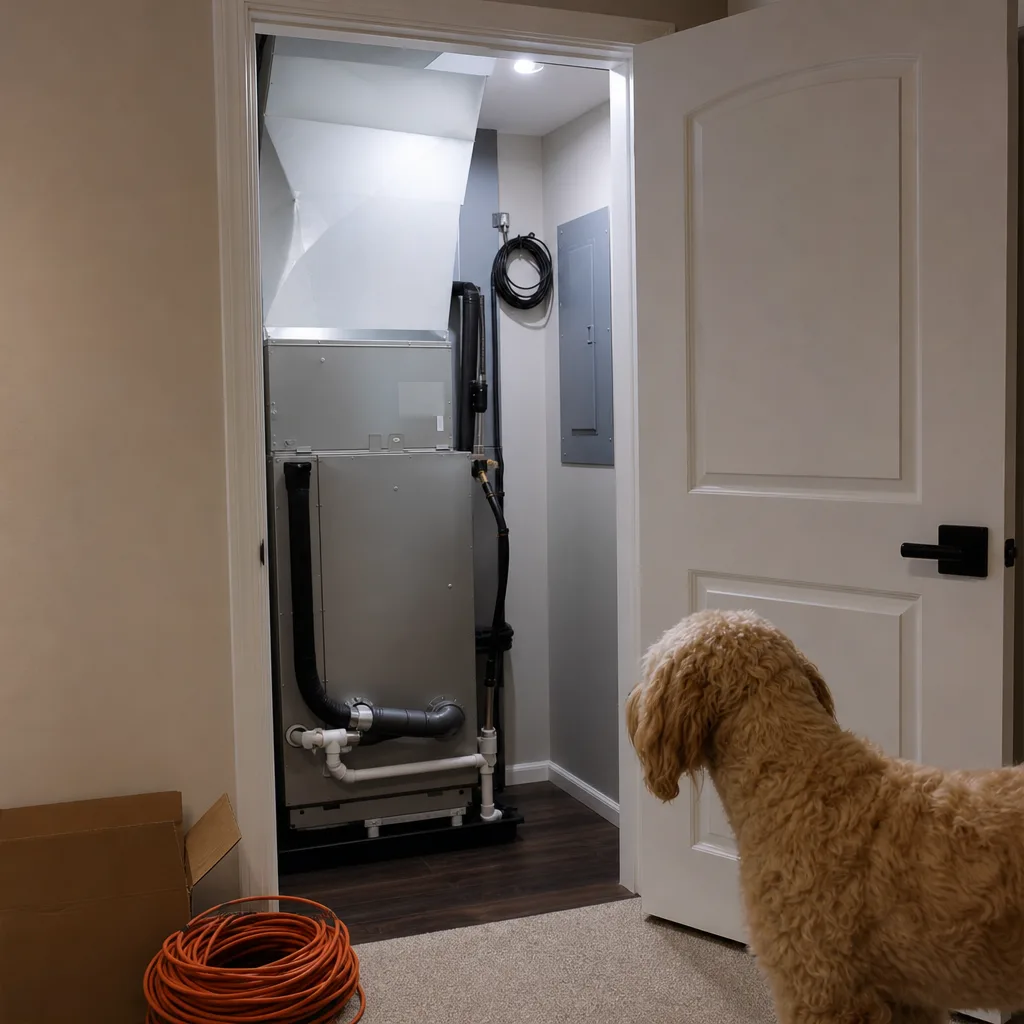
A standard replacement includes the equipment and materials, professional installation, standard connections, startup and testing, and haul-away of your old unit. It doesn’t include duct, electrical, or plumbing changes, code corrections, or permits unless the quote says so. Knowing that split up front helps you compare quotes fairly, because one company’s “low price” may leave out what another company’s price includes.
Here’s what moves the number:
- System size. AC capacity is measured in tons, and a bigger home usually needs more of it. More capacity costs more. Bigger isn’t automatically better, though. An oversized unit cools fast, shuts off before it pulls the moisture out of the air, and leaves the house cold and clammy.
- Efficiency rating. SEER2 tells you how much cooling you get for each dollar of electricity. A higher SEER2 system costs more up front but uses less power. Since your AC runs hard for months in a Plano summer, the extra efficiency has a long season to pay you back.
- Brand and model. Within any brand, a basic single-speed unit costs less than a variable-speed model. A variable-speed system runs longer at a lower, quieter speed, which helps even out hot and cold rooms and controls humidity better.
- Ease of access. A unit in a tight attic takes more time and care to swap than one sitting in a garage or closet. Many Plano homes have their equipment up in the attic, so access is a real cost factor here.
- Ductwork, wiring, and plumbing. If your ducts are leaking or undersized, or the electrical or drain lines don’t meet the new system’s needs, that work adds to the job.
- Code upgrades and permits. Older installations sometimes need corrections to meet current code before a new system can go in.
- Custom fabrication. If the new equipment doesn’t line up with your existing connections, sheet metal may need to be built to fit.
Of all these, system size, SEER2, and access drive the price the most. That’s why a fair quote starts with someone looking at your home, not a number tossed out over the phone. Getting the size right is part of that. A cooling load calculation looks at your home’s square footage, insulation, windows, and sun exposure, so the system matches the house instead of guessing from the old unit’s label.
Before you hire anyone, ask these questions. What size system are you recommending, and how did you figure it out? What SEER2 rating is this unit? Does the price include permits, haul-away, and startup testing? What would add to this number, and will I know before the work starts?
With us, you’ll get upfront flat-rate pricing that you approve before work starts, so there’s no meter running and no surprise line items at the end. If the full cost is more than you want to pay at once, flexible financing is available on qualifying installations and larger jobs, on approved credit.
Thinking about AC replacement? Let’s talk.
Call Today, Get Service Today. Xtreme Air Services — North Plano is ready to help.
What’s Included in a Standard AC Replacement – and What Isn’t
You’ve seen the short version of what’s in and what’s out. The more useful question is whether your home’s job will stay standard or pick up extras along the way. It depends on one thing: whether your new system can use what’s already there.
A like-for-like replacement means the new equipment is about the same size as the old one and sits in the same spot. It hooks into your existing ductwork, power supply, refrigerant lines, and drain line without major changes. If all of that is in good shape and the right size, the job stays simple and the price stays close to the quote.
Extras show up when something already in your home can’t support the new system. Here’s what that looks like in real houses:
- The electrical doesn’t match. A new unit may need a different breaker size or a new outdoor disconnect. If the wiring or panel can’t handle it, that’s electrical work beyond a standard swap.
- The ducts are the weak link. Leaky, crushed, or undersized ducts will choke a new system. Fixing them is a separate job, but it’s often what finally cools that one hot bedroom.
- The drain setup is outdated. Attic systems need a safe way to get rid of water. An old, rusted drain pan or a missing safety switch may need to be replaced so a clog doesn’t end up as a stain on your ceiling.
- The new unit doesn’t line up. If the new air handler or coil is a different shape than the old one, sheet metal may need to be built to connect it.
- Older installs need code fixes. Equipment put in years ago may not meet today’s rules, and that has to be corrected before the new system goes in.
In Plano, many systems sit up in the attic, so the drain, access, and duct items on that list come up more often than they would in a home with the unit in a closet or garage. That doesn’t mean your job will run over. It means those are the spots worth checking before you sign.
One more thing worth knowing: the indoor and outdoor parts of your system are built to work as a matched pair. If a quote replaces only the outdoor unit and leaves an old indoor coil in place, the system may not cool or save energy the way its rating promises. Ask which parts are being replaced and whether they’re a matched set.
Startup and testing is part of the job, and it’s the step that proves the install was done right the first time. A real startup checks more than whether cold air comes out. It confirms the refrigerant charge is correct, the airflow is right for the system’s size, the air coming out of the vents is properly cooler than the air going in, and the electrical readings are where they should be. Don’t be shy about asking to see those numbers.
If something on the extras list applies to your home, you should hear about it before work begins, with the cost spelled out, so the price you approve is the price you pay.
Watch Our Video
See How We Handle AC replacement in Plano
Xtreme Air Services — North Plano
Permits and Licensing Requirements for Plano AC Replacement
A new AC isn’t just a box swap. In Plano, replacing a central air system usually needs a permit from the city, and the work gets inspected once it’s done. The person doing the job also needs the right state license. Neither of these is red tape for its own sake. They’re how you know the system in your home was put in safely and to current code.

A permit puts a second set of eyes on the work. An inspector checks things you can’t easily check yourself, like the electrical connections, the breaker and disconnect, how the equipment is secured, and how the drain is set up. That last one matters a lot when your system sits in a hot Plano attic, because a bad drain can turn into a stain on your ceiling. Rules can change, so it’s worth confirming the current requirements for your address with the City of Plano.
Skipping the permit can come back to bite you later:
- When you sell, a buyer’s inspector may ask for proof that the new system was permitted.
- If something goes wrong with an unpermitted install, your insurance company may ask questions you’d rather not answer.
- A job done without inspection can hide wiring or drain problems until they turn into a bigger, costlier repair.
Permit fees aren’t part of a standard replacement price unless the quote says so, as covered above. So when you compare quotes, make sure you know whether the permit is included and who’s handling it.
Licensing is the other half. In Texas, air conditioning contractors are licensed by the Texas Department of Licensing and Regulation, also called TDLR. That license shows the contractor has met state requirements to do this kind of work. You can look up any contractor’s license on the TDLR website before you let them into your home. It takes about a minute.
Refrigerant has its own rule. Federal law requires anyone who handles refrigerant to hold an EPA certification. That covers safely recovering the refrigerant from your old system and charging the new one. Refrigerant shouldn’t just be vented into the air, and an uncertified installer is a real warning sign.
Xtreme Air Services is a licensed and insured HVAC contractor, and our HVAC license number is TACLA29023C. You’re welcome to look it up. We’d rather you check than take our word for it.
Before you sign with anyone, ask these questions:
- What’s your TDLR license number?
- Are you insured, and can I see proof?
- Will this job be permitted, and who’s pulling the permit?
- Is the permit fee in this price or separate?
- Are the people handling refrigerant EPA certified?
A contractor who does things the right way will answer every one of these without hesitating. If you get vague answers or someone offers to skip the permit to save you money, that’s your cue to keep looking. A cheaper install that can’t pass inspection isn’t really cheaper.
Frequently Asked Questions
Common questions about AC replacement
What is the $5,000 rule people talk about with AC replacement?
It’s a rough guideline, not an official rule: multiply the age of your AC by the repair cost, and if that number tops $5,000, replacement is usually the smarter bet. For example, a 12-year-old system facing a $500 repair lands right at that line. It’s a quick gut check, not a substitute for having a technician look at your system’s age, refrigerant type, and condition before you decide.
Are there AC brands I should avoid when replacing my system?
The brand matters less than the installation and the match between your indoor and outdoor units. A well-known brand installed poorly, sized wrong for your home, or paired with a mismatched coil will underperform no matter the name on the box. Instead of chasing a brand name, ask about the SEER2 rating, whether the parts are a matched set, and whether the installer is TDLR licensed. Those answers tell you more about how your new AC will perform.
Does it matter if my old AC uses R-22 refrigerant?
Yes, it matters a lot. R-22 is no longer manufactured in the United States, so if your system uses it and develops a leak, recharging it gets expensive fast since supply is limited. A technician can check which refrigerant your current system uses during an inspection, which helps you decide if a repair still makes sense or if it’s time to plan for replacement.
Ready to Get Started?
Call (469) 527-5131 Today, Get Service Today.