


A/C System Installation in Plano: Choosing the Right Install and the Right Installer
New AC systems sized to your Plano home and installed right – with an honest look at whether a repair still makes sense.
What’s Covered on This Page
- Signs It’s Time for a New A/C System Instead of Another Repair
- What Full System Installation Includes and What It Costs
- Why Licensing and Manufacturer Credentials Matter for This Job
- Plano’s Permit Rule and Why Installation Isn’t a DIY Project
- Sizing an A/C System for Plano’s Summer Heat Load
- What is the $5,000 rule for AC units?
- What AC brands should I stay away from?
- How much does it cost to have an air conditioner installed, and what changes the price the most?
Signs It’s Time for a New A/C System Instead of Another Repair
Let’s start with the good news. Plenty of A/C problems are simple fixes. A worn capacitor, a bad contactor, or a clogged drain line can stop your system cold, but swapping one part gets it running again. If your system is fairly young and only one part failed, a repair is usually the smart call.
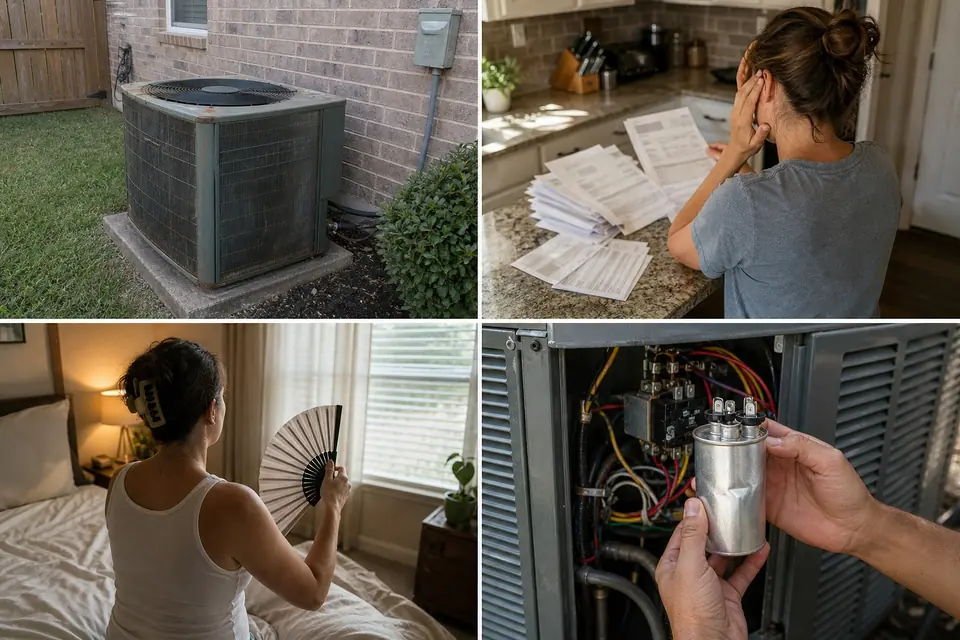
Replacement starts to make sense when the problems stack up. Here’s what to watch for:
- Your system is getting older and the repair bills keep coming. One repair is normal. Paying for a new part every summer adds up fast.
- It runs on R-22 refrigerant. Older systems often use this refrigerant, and it isn’t made in the U.S. anymore. If yours leaks, a refill costs more every year, and it doesn’t fix the leak.
- The compressor or outdoor coil has failed on an older unit. The compressor is the heart of your A/C. On an aging system, replacing it can cost close to what a new system would.
- Your summer bills keep climbing, even though nothing about how you use your home has changed.
- It runs all afternoon and still can’t keep up, or some rooms stay hot no matter what you set the thermostat to.
- Your house feels sticky or clammy even when it’s cool. A healthy A/C pulls moisture out of the air as it cools.
- You’re calling for repairs more than once a season.
Plano summers are long and hot, so your A/C works hard for months without much of a break. Many homes here also have the indoor unit up in the attic, where it bakes all day. That kind of steady strain wears parts down. It also means a system that’s barely hanging on in May may not make it to September.
One sign on its own usually isn’t enough to replace your system. Two or three together are a different story. Picture this: your unit is getting up there in age, your July bill jumped again, and now the compressor is making noise. That’s when putting more money into the old system stops making sense.
There are also times you don’t need us at all. If your A/C stops cooling, check these first:
- Your air filter. A clogged filter can choke airflow and even freeze the coil.
- Your thermostat. Make sure it’s set to cool and the batteries are good.
- Your breaker panel. A tripped breaker can shut the outdoor unit off.
If those check out and you still aren’t sure whether to repair or replace, a diagnostic visit gives you the facts before you spend real money. Our $26-$99 service-call fee is credited toward the repair if you go ahead with Xtreme Air Services. You’ll get upfront flat-rate pricing before any work starts, so you can compare a repair against a new system with real numbers in front of you.
What Full System Installation Includes and What It Costs
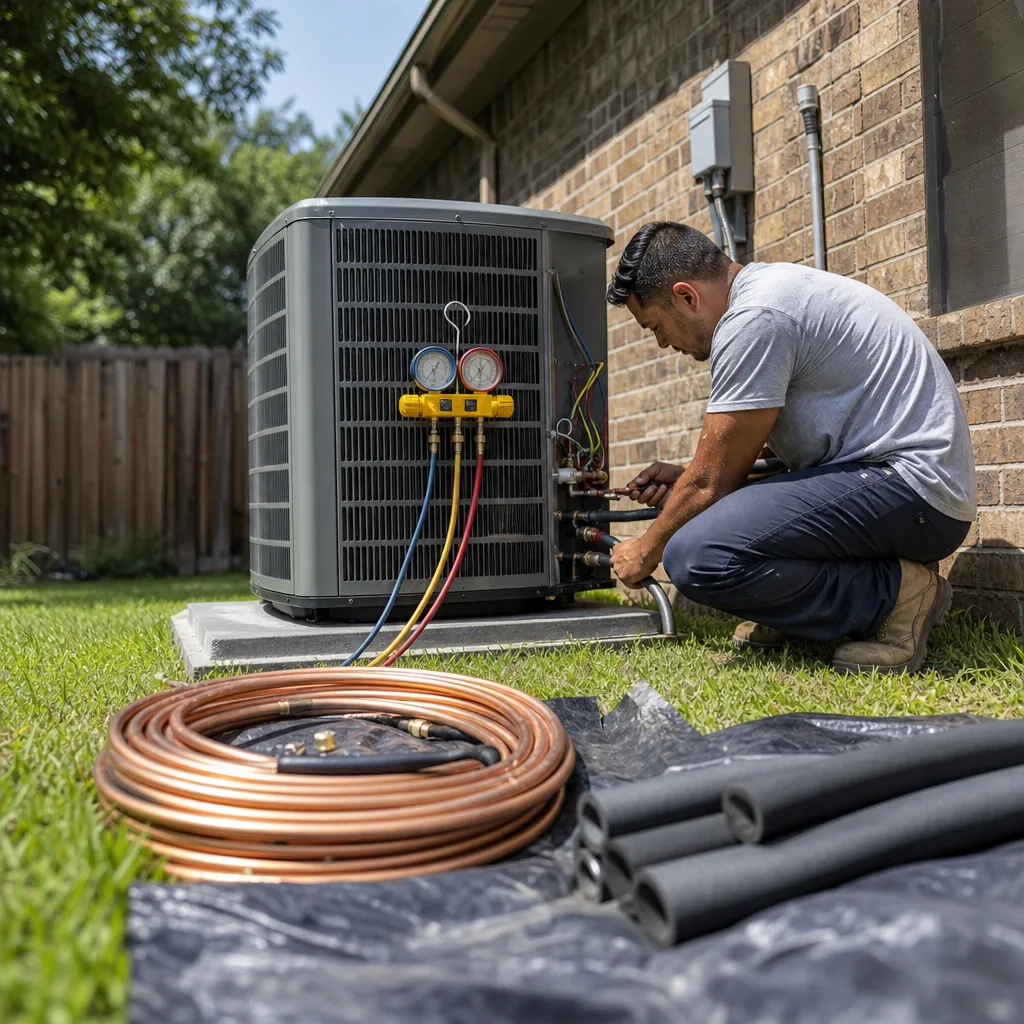
Most A/C system installations we do in Plano fall between $5,500 and $13,000. The most common job is a standard like-for-like swap. That means the new system uses your existing connections, with no major changes. That job usually runs $7,000-$10,000, and it covers the equipment, materials, professional installation, startup, and testing.
Here’s what’s included in your price:
- The new equipment and materials
- Professional installation by our licensed and insured technicians
- Standard connections to your home
- Startup and testing, so you know it’s cooling right before we leave
- Haul-away of your old unit
And here’s what isn’t included unless your quote says so:
- Changes to your ductwork, electrical, or plumbing
- Code corrections
- Permits
We spell this out because it’s where surprise costs usually hide. If a quote looks low, check whether it leaves out haul-away or skips testing. Ask what happens if your ducts or wiring need work. A good quote answers those questions before you sign, not after the old unit is gone.
So what moves your price up or down? These are the main factors:
- Size. Tonnage is how much cooling power the system has. A bigger home usually needs more of it.
- Efficiency. SEER2 is a rating that shows how much cooling you get for each dollar of electricity. A higher number costs more up front but can lower your summer bills.
- Brand and model. Features like variable-speed operation can cost more, but they help with steady temperatures and humidity.
- Ease of access. A unit in a tight, hot attic takes more time and care to swap out than one in an open closet or garage.
- Condition of your existing ductwork, wiring, and plumbing.
- Code upgrades, permits, and any custom fabrication your home needs.
Size matters more than most people think. A system that’s too big cools fast but shuts off before it pulls the moisture out, so your home feels clammy. A system that’s too small runs all afternoon and still can’t keep up in a Plano July. That’s why a cooling load calculation, one of the services we offer, is worth asking about before you pick a size. It looks at your actual home, not just the label on your old unit.
As a Trane Comfort Specialist, we can walk you through high-efficiency and variable-speed Trane options in plain English. You’ll know what each step up in price gets you in comfort and lower bills. You’ll get upfront flat-rate pricing approved before any work starts. No meter running, and no surprises when the job’s done.
If the number feels like a lot to cover at once, we offer flexible financing on qualifying installations and larger jobs, on approved credit. That way you can get a system sized right for your home without settling for the cheapest box on the truck.
Why Licensing and Manufacturer Credentials Matter for This Job
A new A/C is only as good as the install. Two homes can get the exact same equipment and end up with very different results. One stays cool and quiet for years. The other runs loud, sweats in the attic, and never hits the efficiency number on the box. The difference is the crew that put it in.
That’s why the license on the truck matters. In Texas, the Texas Department of Licensing and Regulation (TDLR) licenses HVAC contractors. A licensed contractor has met the state’s standards and answers to the state for the work. Our HVAC license number is TACLA29023C. You’re welcome to look it up before you ever call us. We’d rather you check than guess.
A good installer gets a lot right that you’ll never see once the job is done:
- The right refrigerant charge. Too much or too little and your system works harder, cools worse, and wears out sooner.
- Safe recovery of the old refrigerant. It has to be handled the right way and can’t just be vented into the air.
- Tight, clean connections between the indoor and outdoor units, so you don’t end up with a leak a few summers from now.
- Correct wiring to your panel and thermostat, so the system starts and stops the way it should.
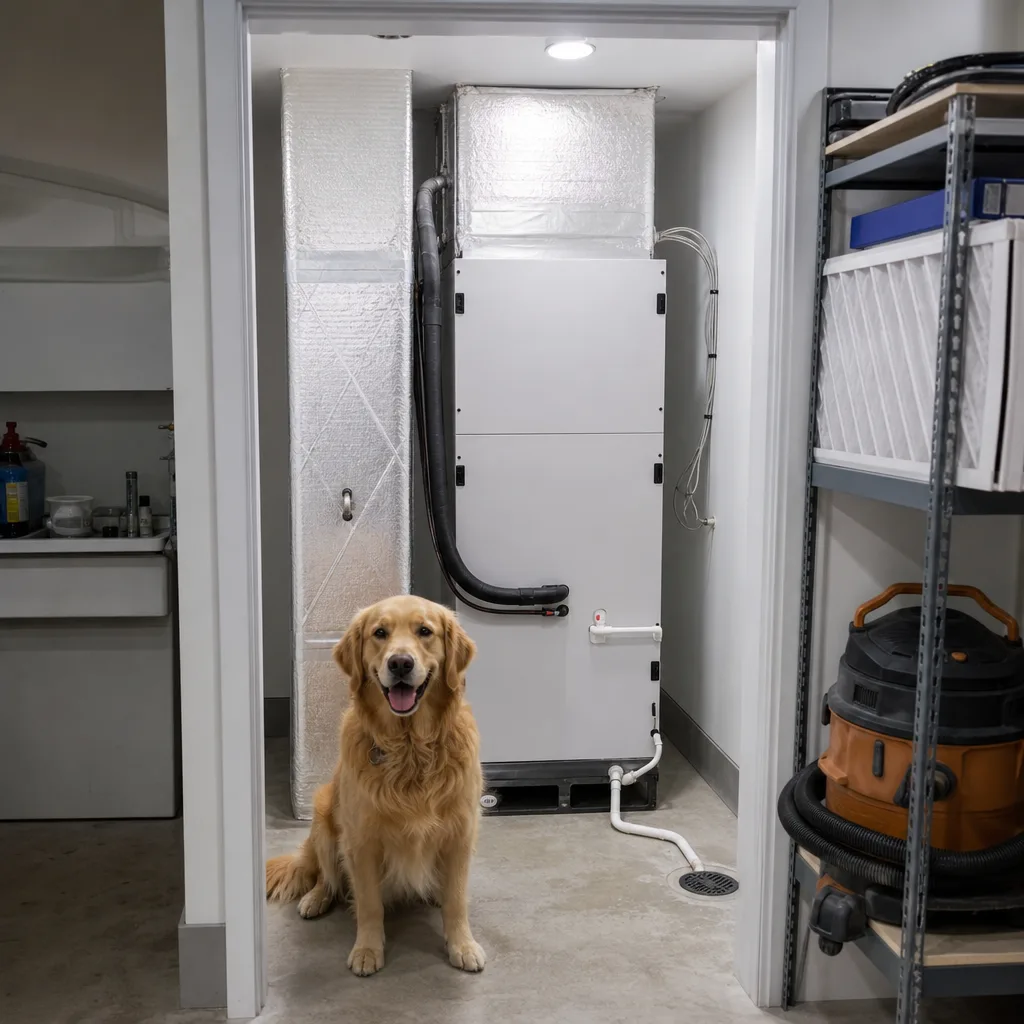
- A proper drain setup for the indoor unit. This matters a lot when it sits in a hot Plano attic above your ceilings.
None of that shows up on a quote. It only shows up later, in your power bill and in how your home feels on a 100-degree afternoon.
Manufacturer standing matters for the same reason. Xtreme Air Services is a Trane Comfort Specialist. For you, that means our team works with Trane air conditioners, heat pumps, and high-efficiency, variable-speed systems all the time, not once in a while. When we walk you through the options, you’re getting it from people who install this equipment, not someone reading a brochure.
Then there’s who’s in your home. A new system means people in your attic, your garage, and your hallways for most of a day. Our licensed and insured technicians are background-checked and drug-tested. You shouldn’t have to wonder who you just let through the front door.
Whoever you hire, ask these questions before you sign:
- What’s your TDLR license number?
- Are you insured if something gets damaged during the job?
- Who will do the install, and are they background-checked?
- Will you test the system before you leave?
- Is a permit needed for my home, and is it in the price?
A good contractor answers all five without hesitating. If you get vague answers, that tells you something.
Proof counts too. Xtreme Air Services holds a 4.8-star rating across more than 2,900 reviews on Google, Angi, and HomeAdvisor. That record comes from North Texas families who trusted us with their homes and called us back the next time.
Call 469-527-5131
Have questions? We’re happy to help.
Call Today, Get Service Today. Xtreme Air Services — North Plano is ready to help.
Plano’s Permit Rule and Why Installation Isn’t a DIY Project
In Plano, swapping out a central A/C system usually isn’t something you just do on a Saturday. Replacing the outdoor unit, the indoor coil, or the whole system typically needs a permit from the City of Plano, followed by an inspection once the work is done. Rules can change, so it’s always worth confirming with the city before work starts. A good installer will check this for you.
The permit isn’t red tape for its own sake. It means someone besides the installer looks at the work. An inspector checks things like the electrical hookup, the disconnect near the outdoor unit, and the condensate drain. These are the parts that can cause a fire risk or water damage if they’re done wrong. When the indoor unit sits in a hot Plano attic above your bedroom ceiling, a bad drain line can leak into your drywall.
Skipping the permit can come back on you later. If you sell your home, a buyer’s inspector may ask about the A/C. An unpermitted swap can slow down the sale or turn into a repair you have to pay for at closing. Some insurance claims can get harder, too, if damage traces back to work that was never inspected. As the cost section mentions, permits aren’t part of the standard price unless your quote says so. Ask about it up front so it isn’t a surprise.
So why not do the install yourself and pull the permit on your own? A few reasons:
- Refrigerant is regulated. Federal rules require certification to buy and handle it, and the old refrigerant has to be recovered with special equipment.
- The system has to be charged by measurement, not by guessing. A small mistake costs you cooling and efficiency all summer.
- You’re working with 240-volt power and a dedicated circuit. A wiring mistake can damage the new unit or hurt you.
- Most equipment makers expect a licensed contractor to do the install, so doing it yourself can create problems with the manufacturer later.
- A Plano attic in summer can get dangerously hot. Working up there for hours is a real heat-illness risk.
That said, there’s plenty you can handle yourself, and you should. Change your air filter on schedule. Keep grass, shrubs, and fencing a couple of feet back from the outdoor unit so it can breathe. Hose off cottonwood fluff and dirt from the outside coil with gentle water, not a pressure washer. Pour a cup of vinegar down the condensate line now and then to help keep it clear. None of that needs a permit or a pro, and it helps any system, old or new, last longer.
The install itself is different. It’s a job for a licensed and insured crew that handles the permit question, charges the system correctly, and tests everything before they leave your home.
Call 469-527-5131
Watch Our Video
See How We Handle A/C system installation in Plano
Xtreme Air Services — North Plano
Sizing an A/C System for Plano’s Summer Heat Load
The right size for your new A/C depends on how much heat your house picks up on a hot afternoon. Square footage alone won’t tell you that, and neither will the label on your old unit. You get the right answer by looking at the whole house, room by room.

Many people assume they should buy the same size they had before. That’s a fair guess, but it’s often wrong. Your old system may have been the wrong size from day one. Your home may also have changed since it went in. Maybe you added attic insulation, put in new windows, finished a bonus room, or closed in a patio. Each of those changes how much cooling your home needs. Matching the old label can carry an old mistake forward for another 15 years.
The other shortcut is a quick rule of thumb, like one ton for every so many square feet. It’s fast, but it treats a shaded one-story home the same as a two-story with big west-facing windows. In Plano, those two houses can feel very different by 5 p.m. in August.
A real heat load check looks at things like these:
- Which way your windows face, how many you have, and what kind of glass they use. West- and south-facing glass lets in a lot of afternoon sun.
- How much insulation is in your attic and walls.
- Where your ducts run. Ducts in a hot attic pick up heat before the air ever reaches your rooms.
- How tight the house is, and whether air leaks in around doors, can lights, and attic openings.
- Ceiling height, room layout, and whether you have a second story that collects heat.
- How many people live there and how you use the space.
Your ducts are part of the sizing decision, too. A new system can only move as much air as your ductwork lets through. If you put a bigger unit on ducts built for a smaller one, you can end up with noisy vents, weak airflow in the far rooms, and a system that never reaches its rated efficiency. Sometimes the fix isn’t more tonnage. It’s sealing leaky ducts or adding a return so the air you already pay to cool gets where it needs to go.
Long Texas summers also make the type of system part of sizing. A variable-speed system can run at a low, steady speed for most of the day and ramp up only during the hottest hours. That helps keep the temperature even and pulls more moisture out of the air. A single-speed unit is either fully on or fully off, so getting its size right matters even more.
Whoever quotes your job, ask how they chose the size. A good answer mentions your windows, insulation, and ducts. If the answer is just “same as your old one,” ask them to take a closer look before you sign.
Frequently Asked Questions
Common questions about A/C system installation
What is the $5,000 rule for AC units?
The $5,000 rule is a simple way to decide between repair and replacement. Multiply the age of your system by the repair cost, and if the total is more than $5,000, replacement usually makes more financial sense than another repair. For example, a 12-year-old system facing a $500 repair bill hits 6,000, which points toward replacing it. This works alongside the other warning signs, like climbing bills or repeat repair calls, to help you make the call with real numbers instead of guesswork.
What AC brands should I stay away from?
Instead of chasing brand names, focus on how the system is sized and installed, since that matters more than the logo on the unit. A well-known brand installed with the wrong refrigerant charge or the wrong size for your home will still run loud, cool poorly, and wear out early. Ask your installer what manufacturer standing they hold and how long they’ve worked with that equipment, since steady experience with one line of systems usually means fewer install mistakes than jumping between brands.
How much does it cost to have an air conditioner installed, and what changes the price the most?
Installation costs vary based on system size, efficiency rating, and how hard your home is to access, with attic installs often costing more than units in an open closet or garage. Older ductwork, electrical, or plumbing that needs updating can also add to the job. Before you compare quotes, ask what’s included, such as haul-away and testing, since a low number sometimes means those steps were left out.
Ready to Get Started?
Call (469) 527-5131 Today, Get Service Today.