


Central Air Conditioning Installation in Plano
Central air sized to your home from day one, with what's included, what isn't, and the permits explained up front.
What’s Covered on This Page
- Replace or Repair: How to Tell Which One You Need
- Sizing Your New System the Right Way
- What Licensing and Permits Mean for Your Installation
- What’s Included in Your Installation
- What Happens on Installation Day
- How long does a new central AC system last in Plano?
- Can I install central air in a home that never had ductwork?
- Will my homeowners insurance care if my AC was installed without a permit?
Replace or Repair: How to Tell Which One You Need
Your AC stopped cooling, and now you’re wondering if this is the big one. Here’s the honest answer: most of the time, it isn’t. A lot of breakdowns come down to one worn part, and a new system would be money you don’t need to spend yet.
Repair is likely the right call when:
- Your system is still on the younger side and has had few problems before now.
- The outdoor fan won’t spin or the unit hums but won’t start. That’s often a capacitor or fan motor, and both are quick fixes.
- Water is backing up near the indoor unit. A clogged drain line is a cleaning job, not a replacement.
- The house won’t cool but the system runs normally. Sometimes it’s the thermostat, a dirty coil, or a filter that hasn’t been changed in a while.
- It’s been running fine all summer and failed once, suddenly.
If that sounds like your situation, call for a repair, not an installation. We’d rather earn your trust on a fix today than push you into a system you don’t need.
Replacement starts to make more sense when:
- You’ve paid for repair after repair over the last couple of summers, and each one feels like it’s buying less time.
- Your system uses R-22, an older refrigerant that’s been phased out. It’s scarce and expensive, so a leak on one of these systems gets costly fast.
- The compressor failed on an older unit. That’s the heart of the system, and putting a new one into tired equipment often isn’t worth it.
- Your system runs nonstop on a Plano summer afternoon and still can’t hold the temperature you set.
- Your power bills keep climbing even though how you use your home hasn’t changed.
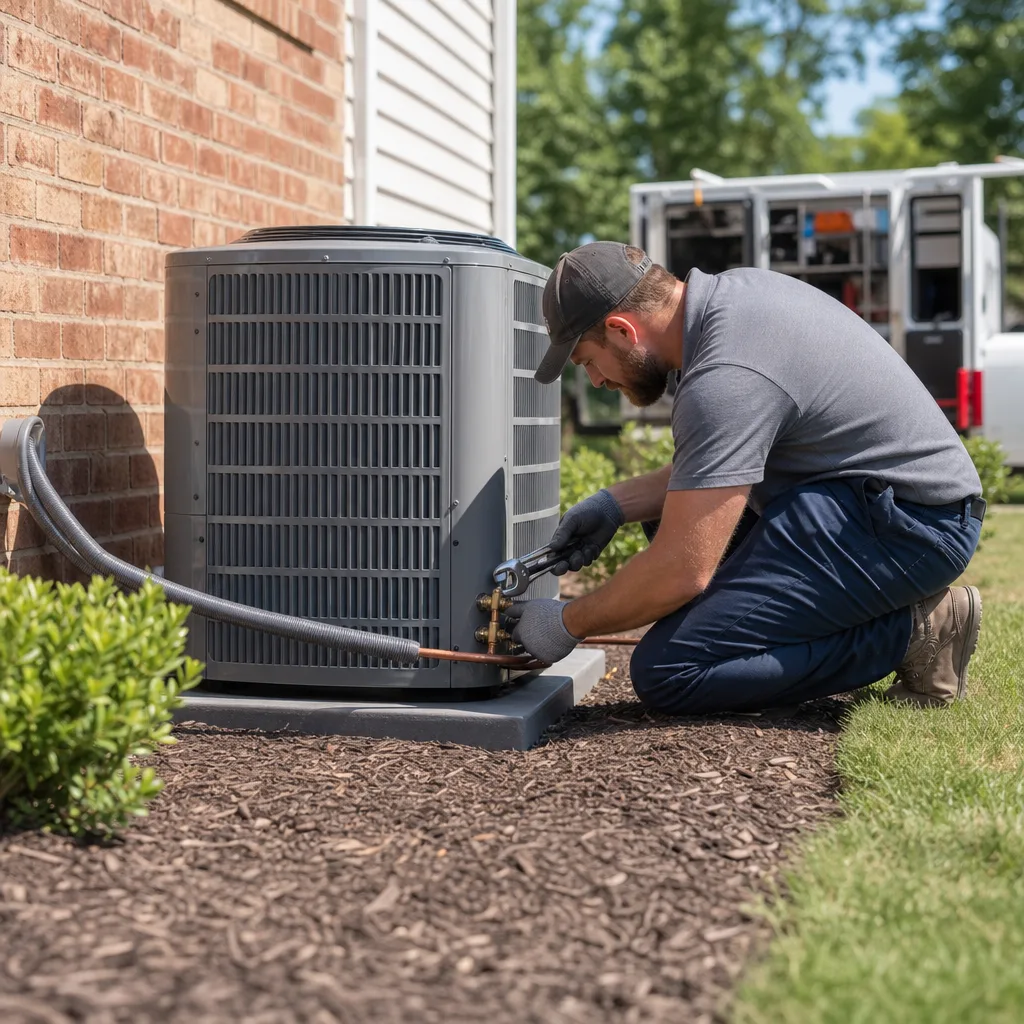
One more thing to watch for. If someone offers to swap just the outdoor unit on an older system, ask about the indoor coil too. The two are built to work as a matched pair. A new condenser connected to an old coil can’t deliver the comfort or efficiency you’re paying for. That’s why our standard installation includes a new condenser and coil together.
Not sure which side you’re on? That’s what a diagnostic visit is for. Our service-call fee runs $26 to $99, and it’s credited toward the repair if you go ahead with Xtreme Air Services. A licensed technician will look at your system, tell you what failed, and show you both options with upfront flat-rate pricing before any work starts. If a repair makes sense, you’ll hear that first. If replacement is the better long-term move, you’ll get a clear reason why, and the choice stays yours.
Sizing Your New System the Right Way
Bigger isn’t better when it comes to air conditioning. The right size is the one that matches how much heat your home picks up on a hot day. Get that right, and your new system cools evenly, pulls moisture out of the air, and doesn’t waste power. Get it wrong, and even brand-new equipment can leave you uncomfortable.
AC size is measured in tons, and it’s one of the biggest things that moves the price of a new system. So it’s worth knowing what happens when the size is off.
- Too big: The system blasts cold air, hits the thermostat setting fast, and shuts off. Those short runs don’t last long enough to pull humidity out, so your home can feel cool but clammy. All that starting and stopping is also hard on the equipment.
- Too small: The system runs and runs on a July afternoon and still can’t catch up. Your bedrooms upstairs stay warm, and your power bill shows it.
- Just right: Longer, steady cycles that cool the whole house and dry the air as they go.
Here’s where a lot of homeowners get steered wrong. Some installers size a system by square footage alone, using a quick rule of thumb. Or they just match whatever size was there before. Neither one tells you what your home needs today.
Think about it. If you’ve added attic insulation, put in new windows, or finished a bonus room since your old system went in, your home’s cooling needs have changed. Two Plano houses with the same square footage can need different size systems. One faces west and takes the full afternoon sun. The other has big shade trees and newer windows.
A cooling load calculation looks at your actual house. That’s a service we offer. A proper calculation weighs things like:
- How much insulation is in your attic and walls
- The number, size, and direction of your windows
- Ceiling heights and the layout of your rooms
- Where your ductwork runs, since ducts in a North Texas attic sit in some of the hottest air around your home
- How many people live there and how you use the space
Your ducts matter too. A new system can only move as much air as your ductwork allows. Put a larger unit on ducts that are too small, and you’ll hear it in the vents as a rush or whistle, while the far rooms still don’t get enough air. That’s why the condition of your existing ductwork is part of the sizing conversation, not an afterthought.
If humidity is a big complaint in your home, ask about a variable-speed system. Instead of running full blast or not at all, it can run at a lower speed for longer. That steady, gentle airflow is better at drying out sticky indoor air during a muggy North Texas summer.
Whoever you hire, you can ask these questions before you sign:
- How did you decide on this size? Was it a load calculation or just the old unit’s size?
- Did you look at my ductwork, and will it handle this system?
- Will this system help with humidity, or just temperature?
A good installer will be glad you asked. Clear answers to those three questions tell you a lot about whether the job will be done right the first time.
What Licensing and Permits Mean for Your Installation
A license tells you the person working on your home has been tested and is allowed to do the job in Texas. A permit tells you the city knows the work is happening and will send someone to check it. You want both. Together they’re your best protection against a shortcut you’d never see until something goes wrong.
In Texas, air conditioning contractors are licensed by the Texas Department of Licensing and Regulation, or TDLR. You don’t have to take anyone’s word for it. TDLR lets you look up a license online in a couple of minutes. Our HVAC license number is TACLA29023C, and we’d be glad for you to check it before you sign anything.
Why does it matter so much on an installation? A new central AC system isn’t just a box you set on a pad. It touches your electrical service, a refrigerant line, a drain line in your attic, and your ductwork. Each one has to be hooked up the right way. Federal rules also require anyone who handles refrigerant to be certified. An unlicensed installer may charge less up front, but if the work is wrong, you’re the one left holding it.
Replacing a central air system is the kind of work cities in North Texas, including Plano, expect to be permitted and inspected. If you’re not sure what your home needs, ask whoever you hire. A good contractor will know and won’t dodge the question.
An inspection is a second set of eyes on the work. An inspector may look at things like:
- The electrical disconnect near your outdoor unit and the breaker that feeds it
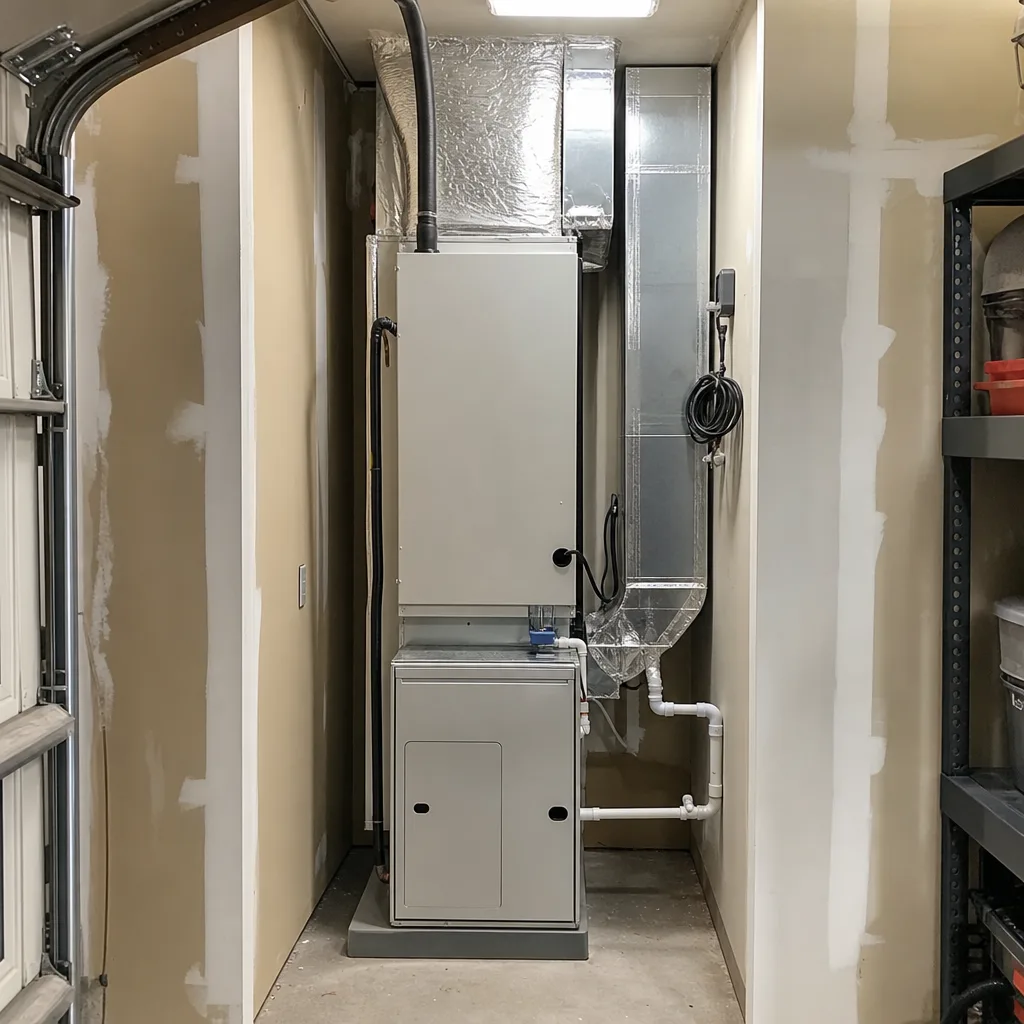
- How the condensate drain is run, so water from the attic unit goes where it should and not into your ceiling
- Whether the equipment is set and secured safely, indoors and out
- That the overall job matches what was permitted
Skipping a permit can come back on you later. When you sell your home, a buyer’s inspector may ask about an AC system that was swapped without one. It can also make an insurance claim harder if a problem ever traces back to the install.
Here’s how permits fit into our pricing, so nothing surprises you. Our standard installation covers equipment and materials, professional installation, standard connections, startup and testing, and haul-away of your old unit. Permits are not included unless your quote says they are. The same goes for duct, electrical, or plumbing changes and any code corrections. If your home needs one of those, for example a new breaker because the old one doesn’t match the new system, you’ll see it on your upfront flat-rate quote before any work starts.
Before you hire anyone, ask three simple questions. What’s your TDLR license number? Who’s pulling the permit? Is the permit included in this price? Clear answers tell you the job will be done by the book. Our licensed and insured technicians are also background-checked and drug-tested, so the person in your attic is someone you can trust in your home.
Have questions? We’re happy to help.
Call Today, Get Service Today. Xtreme Air Services — North Plano is ready to help.
What’s Included in Your Installation
Most central air installations we do fall between $5,500 and $13,000. Our most common job is a like-for-like replacement that uses your existing connections with no major changes, and it runs $7,000 to $10,000. That price covers a new condenser and coil, the materials, professional installation, startup and testing, and haul-away of your old unit.
Like-for-like means the new system goes where the old one was and hooks up to what’s already there. Your ductwork, wiring, and drain line are in good shape and can be reused. If that describes your home, you’re likely looking at the middle of the range.
Here’s what can move your price up or down:
- Size. A larger system costs more than a smaller one, which is why getting the tonnage right matters for your budget as well as your comfort.
- Efficiency. SEER2 is the efficiency rating on a new AC. A higher number means the system uses less power to cool your home. Higher-SEER2 and variable-speed systems cost more up front but can lower your power bill through a long North Texas summer.
- Brand and model. Different equipment lines come at different price points, even at the same size.
- Access. A unit that’s easy to reach goes in faster than one tucked into a tight, hot attic with little room to work.
- The shape of what’s already there. Worn ductwork, wiring that doesn’t match the new system, or a drain line that needs rerouting adds work.
- Code upgrades and permits. Some homes need changes to meet current code before a new system can go in.
- Custom fabrication. If the new coil doesn’t line up with your old duct connection, a custom sheet metal piece may be needed to join them.
The items from the licensing section, such as duct, electrical, or plumbing changes, code corrections, and permits, aren’t in the base price unless your quote says they are. If your home needs any of them, they’ll show up on your upfront flat-rate quote. You’ll see the whole number and approve it before any work starts.
When you compare quotes, it helps to line them up item by item. A lower number isn’t a better deal if it leaves something out. Check every quote for these things:
- Does it include a new indoor coil, or only the outdoor unit?
- Does it say what size and SEER2 rating you’re getting?
- Is haul-away of the old equipment included, or is that extra?
- Is startup and testing part of the price, so the system is checked after it’s running and not just set in place?
If two quotes differ by a lot, the answer is usually somewhere on that list. A quote that skips the coil might look like it saves money, but the matched-pair problem we covered earlier means you could pay for it later in comfort and power bills.
A new system is a big expense, and it often comes up at a bad time. Flexible financing is available on qualifying installations, on approved credit. That way you can choose the system that’s right for your home, not just the one that fits this month’s budget. Ask about it when you get your quote, and we’ll walk you through your options so you can decide what works for your family.
Watch Our Video
See How We Handle Central air conditioning installation in Plano
Xtreme Air Services — North Plano
What Happens on Installation Day
A standard like-for-like replacement usually takes most of one day. Your home will be without cooling for part of that time, so it helps to know what’s happening and why each step matters. Most of the steps that decide how well your new system runs for years happen where you can’t see them, inside the lines and the coil.

A few small things before the crew arrives make the day go faster:
- Clear a path to your attic access, whether it’s a pull-down ladder in the hallway or the garage.
- Move cars, grills, or patio furniture away from the outdoor unit.
- Keep pets in a closed room, since doors will open and close all day.
- In summer, run your old system early if it still works, and close the blinds. The house holds the cool longer that way while the system is off.
Here’s what a proper installation includes:
- Power off and refrigerant recovered. The old refrigerant gets pulled out into a recovery tank. It’s never vented into the air.
- Old equipment out. The old condenser comes off the pad and the old coil comes out of the attic. With our standard installation, both go away with the crew.
- New coil and condenser set. The new coil goes on top of your furnace or air handler. The new outdoor unit goes on a level pad.
- Lines connected. The copper refrigerant lines get joined to the new equipment, and the electrical and drain connections get hooked up.
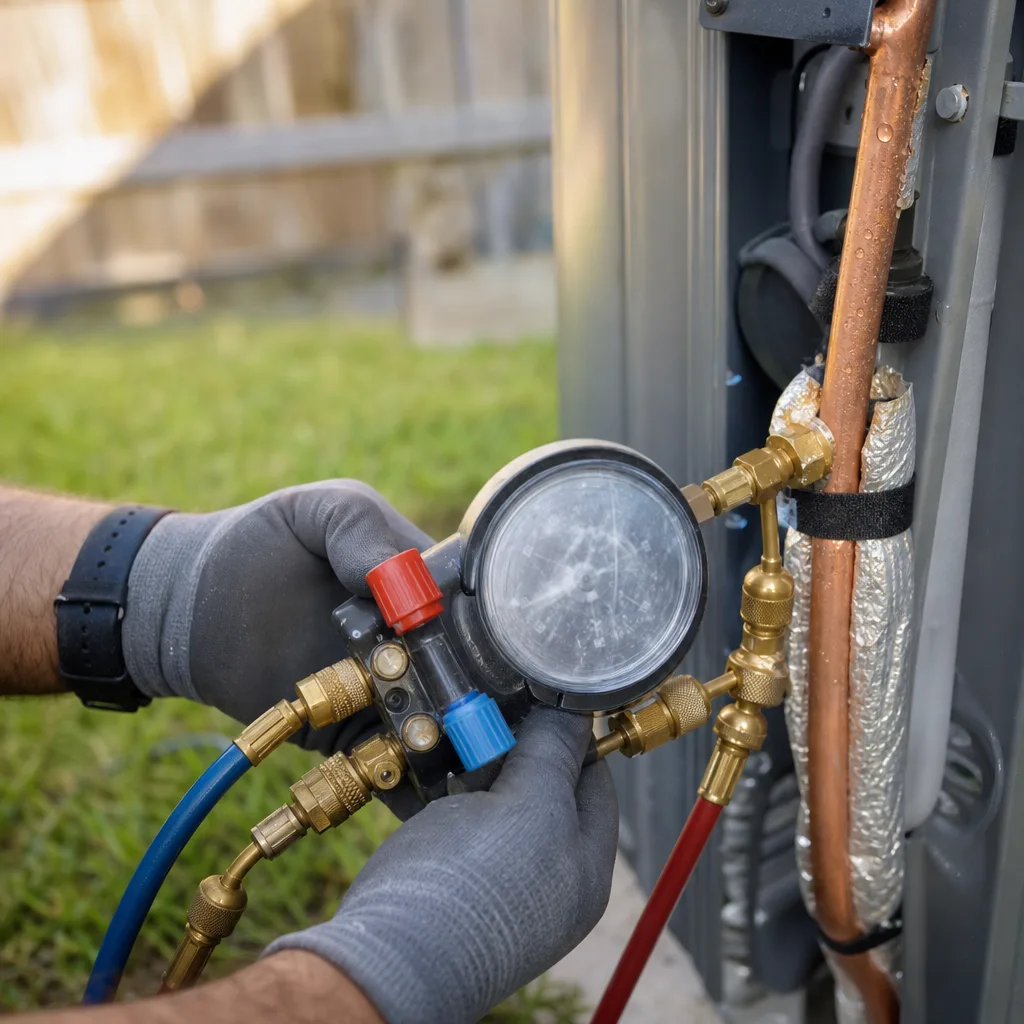
- Leak test and vacuum. The system is pressure tested to check for leaks. Then a vacuum pump pulls out air and moisture. Moisture left in the lines can damage a new compressor, so this step shouldn’t be rushed.
- Startup and testing. The system gets charged and turned on. Then it’s checked while it runs: the refrigerant charge, the airflow, the temperature of the air at the vents, and whether water drains the way it should.
That last step is the one people skip when they’re in a hurry. A system can turn on and blow cold air and still be set up wrong. Too much or too little refrigerant won’t show up on day one. It shows up later, in higher power bills and a system that wears out early. Testing the system while it runs is how you catch that before the crew leaves.
The attic part of the job deserves extra care in North Texas. On a summer afternoon, attic air gets much hotter than the air outside. The coil and drain line sit right in that heat, over your ceiling. A drain pan set level and a drain line that flows freely keep water where it belongs.
Before the installer leaves, take five minutes to check the work:
- Ask them to show you the system running and cooling at the thermostat.
- Ask what the test readings were and whether they look normal.
- Look at the outdoor unit. It should sit level on its pad with the disconnect box closed.
- Get the model and serial numbers and your paperwork, so you have them for future service.
You should feel cool air and have clear answers, not a crew that’s already backing out of the driveway. Our licensed and insured technicians are background-checked and drug-tested, and our goal is to get it done right the first time.
Call now
Frequently Asked Questions
Common questions about Central air conditioning installation
How long does a new central AC system last in Plano?
Most systems last 12 to 15 years here, but Plano’s long, hot summers can shorten that if the system runs nonstop season after season. Heat load matters more than age alone. A system that cycles constantly through a Texas summer wears faster than one sized and installed correctly. That’s why getting the right size and a clean installation matters so much for how long your new system holds up.
Can I install central air in a home that never had ductwork?
Yes, but it takes more planning than a like-for-like swap. Adding ductwork means routing it through your attic, which in North Texas sits in some of the hottest air around your home, so insulation and sealing matter even more. This kind of job costs more than a standard replacement because of the added ducts, materials, and labor. It’s worth asking for a full look at your home before getting a quote, so you know what the ductwork will involve.
Will my homeowners insurance care if my AC was installed without a permit?
It can, if a problem ever traces back to the installation. An unpermitted system means no inspector ever confirmed the electrical, drain, and equipment setup met code. If a claim comes up later, for example water damage from a drain line, the insurer may ask for proof the work was done and inspected properly. Pulling a permit protects you here, not just at resale.
Ready to Get Started?
Call (469) 527-5131 Today, Get Service Today.