


Emergency / No-Heat Furnace Repair in Plano
When the heat quits, know whether it's an emergency tonight or can wait until morning – and what a repair visit involves.
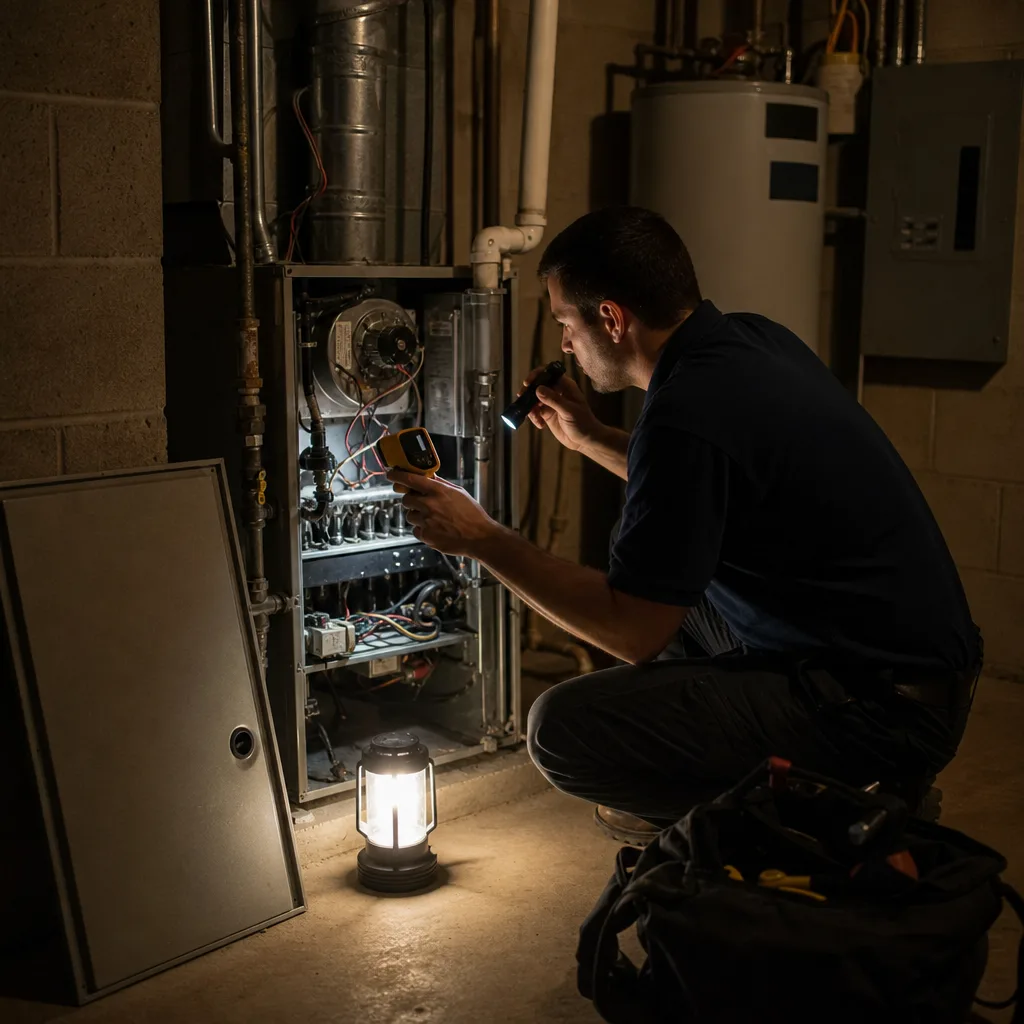
What’s Covered on This Page
- Know If Your No-Heat Problem Is a True Emergency
- Check These Four Things Before You Call for Emergency Service
- What Happens When Xtreme Air Services Answers Your Call
- Common Furnace Failures Behind No-Heat Calls
- What Emergency Furnace Repair Costs and Why Timing Doesn’t Change the Price
- Why is my furnace blowing cold air instead of heat?
- Why won’t my thermostat switch into heat mode?
- Is a no-heat furnace always an emergency that needs a call right away?
Know If Your No-Heat Problem Is a True Emergency
Not every cold house needs a technician tonight. Here’s the honest way to sort it out, so you don’t pay for a call you didn’t need or wait on one you did.
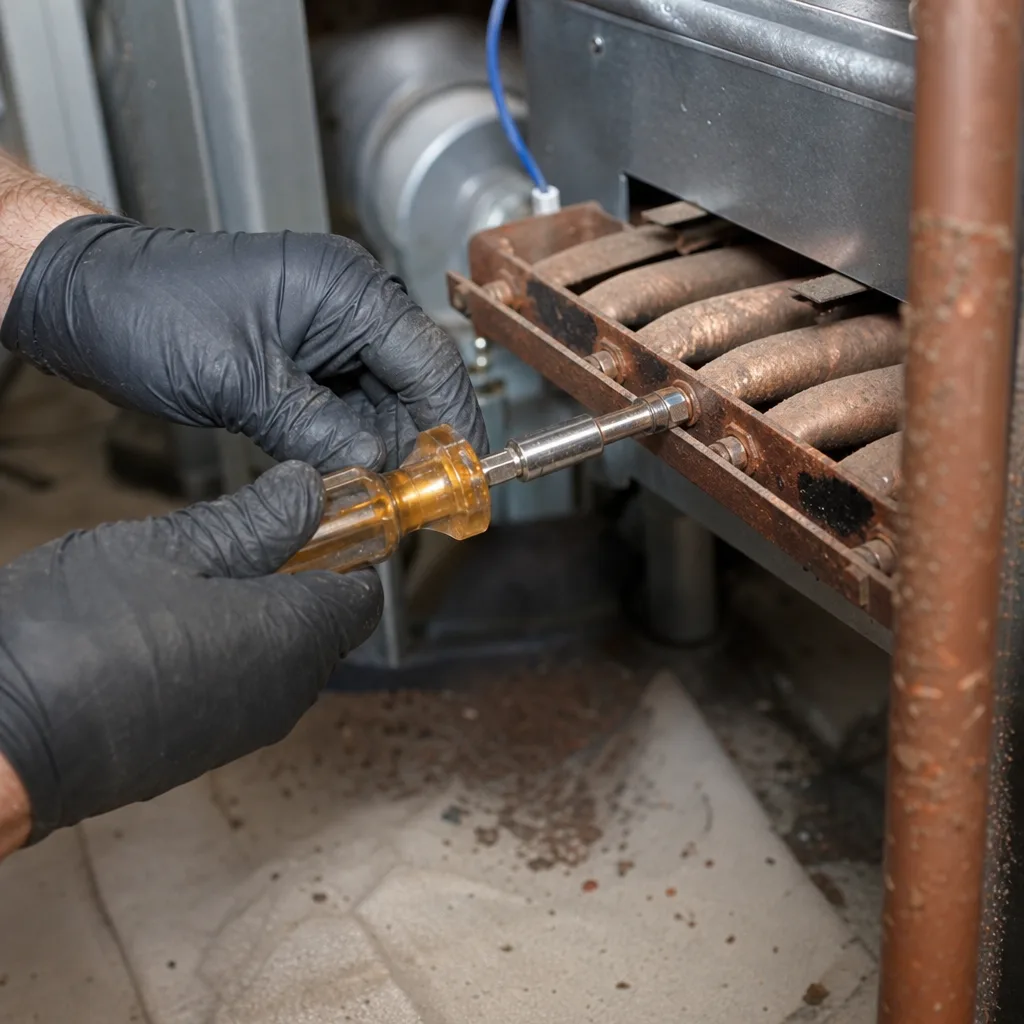
Get same-day help if any of these fit your home:
- It’s freezing outside and the temperature inside keeps dropping. North Texas cold fronts can blow in fast, and a house can lose a lot of heat overnight.
- Someone at home is a baby, an older adult, or has a health condition that cold makes worse.
- Your furnace sits in the attic and water lines run up there too. Lots of North Texas homes are built this way, and a house that stays cold through a hard freeze puts those pipes at risk.
- The furnace tries to start, clicks, then shuts off again and again.
- You hear banging or grinding, or you smell something burning when it runs.
If you smell gas or your carbon monoxide alarm goes off, don’t troubleshoot the furnace. Get everyone outside first and call for help from there. The repair can wait until your family is safe.
Before you call, try these quick checks. They take about five minutes:
- Thermostat: make sure it’s set to Heat and a few degrees above the room temperature. If the screen is blank, put in fresh batteries.
- Power: check that the furnace breaker hasn’t tripped. Also look for a switch near the furnace that looks like a regular light switch, and make sure it’s on.
- Filter: a packed, gray filter can choke airflow, and some furnaces shut themselves off to stay safe when that happens. If yours looks clogged, swap it out.
- Door panel: make sure the front cover on the furnace is closed tight. Many furnaces won’t run with that panel loose.
If one of those gets your heat going, you’re done. No call needed. If the breaker trips again right after you reset it, stop resetting it. That points to an electrical problem, and it needs a trained eye.
It’s also fine to wait when the weather is mild, your house is staying comfortable enough, and everyone at home is healthy. A regular daytime visit works just fine in that case.
Don’t hold off until Monday just to save money. Xtreme Air Services charges no extra for nights or weekends, so a Saturday night call costs the same as a Tuesday morning one. The $26-$99 service-call fee is credited toward the repair if you go ahead with us. So decide based on how cold your house is, not on what time it is.
Call now
Check These Four Things Before You Call for Emergency Service
You’ve already tried the thermostat, breaker, filter, and door panel, and the house is still cold. Now take a few more minutes to notice what your furnace is doing. You won’t be fixing anything. You’re just watching and listening. When you call, these four details help the technician narrow things down before they even pull into your driveway.
1. Watch what happens when the furnace tries to start.
Turn the heat up a few degrees and stay close. A gas furnace starts in a set order. First you’ll hear a small fan hum. Then you’ll hear a click, and some furnaces show a bright orange glow. Then the burners light, and after a minute the big blower starts pushing air. Pay attention to where that order stops. Does nothing happen at all? Does it hum and click but never light? Does it light for a few seconds and then shut off? Does the blower run but only blow cold air? Each of those points to a different part, so it’s the most helpful thing you can tell us.
2. Look for a blinking light.
Many furnaces have a small light behind a little window on the lower panel. When something goes wrong, it blinks in a pattern, like three short blinks and a pause. Count the blinks and jot the number down. You’ll often find a sticker inside the door that explains what the pattern means. You don’t need to understand it. Just pass it along when you call.
3. Check whether your other gas appliances work.
If you have a gas stove, see if a burner lights the way it normally does. If you have a gas water heater, notice whether you’re still getting hot water. If everything else works, the gas is reaching your home and the problem is likely inside the furnace. If nothing gas-powered works, that’s a different story, and it’s worth saying right away. Remember, if you smell gas at any point, stop and get everyone outside first, like we covered above.
4. Clear a path to the furnace.
Know where your furnace is and how to get to it. If it’s in the attic, which is common in North Texas homes, make sure the pull-down ladder opens and nothing’s stacked under it. If it’s in a closet or garage, move the boxes, the vacuum, or the holiday bins out of the way. Put pets in another room. On a cold night, every minute spent clearing space is a minute your house isn’t warming up.
Here’s why this matters for you. With Xtreme Air Services, most no-heat calls come down to a single common failure that gets fixed on the first visit. Good details from you help make that first visit the only one you need.
What Happens When Xtreme Air Services Answers Your Call
You’ve done the checks. The house is still cold. Here’s what happens next, step by step, so you know what you’re getting before anyone shows up at your door.
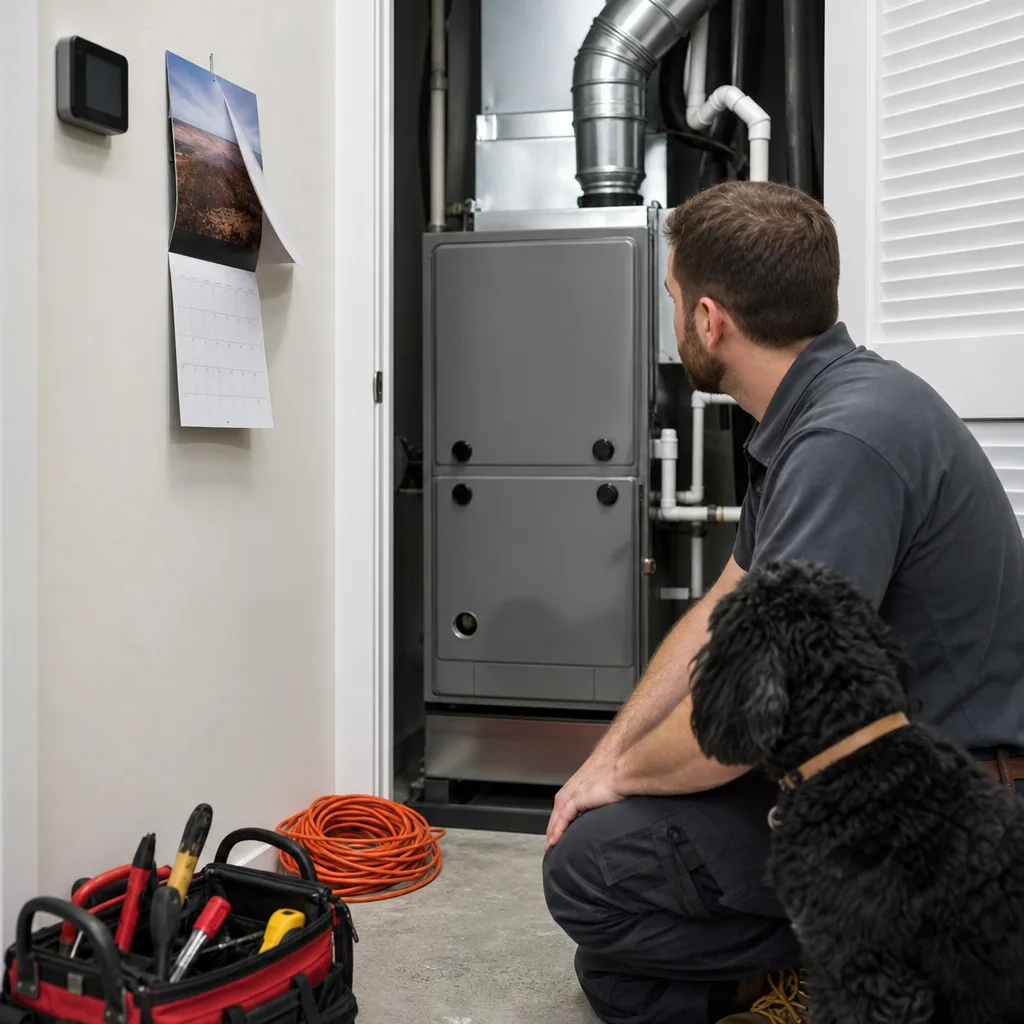
You talk to a real person. Not a phone tree. Tell them what you noticed, like where the startup stopped, the blink count, and whether your gas stove still lights. That gives the technician a head start before they reach your Plano home.
A technician comes out the same day. Every Xtreme Air Services technician who comes into your home is licensed, insured, background-checked, and drug-tested. Our HVAC work is done under Texas license #TACLA29023C. On a cold night, you shouldn’t have to wonder who’s knocking. You should feel good opening the door.
They find the part that failed. Diagnosis is part of the repair, not a separate bill. The goal is simple: find out exactly why your furnace stopped making heat. It could be a bad ignitor, a dirty flame sensor, a worn blower motor, or a control board that’s giving out. Most no-heat calls come down to one of these single, common failures.
You get a flat price before any work starts. Your technician tells you what’s wrong and what it costs to fix. Nothing moves forward until you say yes. There’s no meter running while they work, and there’s no extra charge for nights or weekends. A Sunday night repair costs the same as a Wednesday afternoon one.
Here’s what that flat price covers and what it doesn’t:
- Included: diagnosis, labor, the standard replacement part, testing, and cleanup.
- Not included unless quoted separately: additional failed parts, major components, code upgrades, or permits.
So if a second part turns out to be bad, you’ll hear about it and get a separate price. Then you decide. It won’t just show up on your bill.
They fix it and make sure it really works. Your technician repairs or replaces the failed part. Then they run the furnace and check that it lights, heats, and keeps running the way it should. A furnace that runs for two minutes and then quits again isn’t fixed, and you shouldn’t be left finding that out at 2 a.m. Before your technician heads out, they clean up the work area.
Sometimes the problem is bigger than a single part. Several parts may have failed, or a major piece of the furnace may be worn out. If that’s the case, your technician will explain your options plainly. You can repair it now, or you can talk about furnace replacement. Financing isn’t usually needed for a smaller repair, but it’s available on larger repairs and replacements. Either way, it’s your call, made with the full picture in front of you.
Call 469-527-5131
Have questions? We’re happy to help.
Call Today, Get Service Today. Xtreme Air Services — North Plano is ready to help.
Common Furnace Failures Behind No-Heat Calls
A furnace that won’t make heat usually isn’t worn out. More often, one part in the startup chain has quit, and the rest of the system is fine. Remember where your furnace stopped when you watched it try to start. That moment points straight at the likely culprit.
Here are the parts that most often leave a house cold, matched to what you’d notice.
- Ignitor: You hear the small fan hum and a click, but the burners never light. On most newer gas furnaces, the ignitor is a thin piece that glows bright orange to light the gas. It’s fragile and wears out over time. Once it cracks, it can’t get hot enough, so the furnace tries a few times and then gives up.
- Flame sensor: The burners light, run for a few seconds, then shut off. This often repeats over and over. The flame sensor is a small metal rod that checks for fire. If it doesn’t feel a flame, it shuts off the gas to keep you safe. A thin coat of dirt can fool it into thinking there’s no flame at all. Many times, a careful cleaning is all it needs.
- Pressure switch or inducer motor: You hear the small fan, but the furnace never gets to the click. The furnace first has to prove that exhaust is flowing out of your home safely. A weak inducer fan, a blocked vent, or a bad pressure switch can stop it right there.
- Limit switch: The furnace heats for a while, shuts off early, and then starts again later. This switch turns the burners off when things get too hot inside the furnace. A packed filter is a common cause. If a fresh filter didn’t fix it, the switch itself or an airflow problem could be to blame.
- Blower motor: The burners light, but little or no air comes out of your vents. You might also hear a hum or a grinding sound. The blower is the big fan that pushes warm air through your ducts, and its motor or capacitor can fail.
- Control board: The furnace does nothing at all, acts randomly, or shows a blink code that won’t clear. The board is the furnace’s brain. It tells every other part when to run. When it fails, the whole startup order breaks down.
Some of these are quick fixes. Others take a bit more time. A dirty flame sensor might need cleaning, while a blower motor or control board means replacing a bigger part. The extent of the failure and whether the right part is easy to get both affect your price. That’s why your technician names the exact part before giving you a number.
Location plays a role here too. Lots of North Texas homes have the furnace up in the attic. It sits there through months of summer heat and dust, then gets called on hard the first night a cold front rolls in. Parts that were already weak often give out on that first cold night.
One honest note: two of these problems can come from the same cause. A furnace that’s been short-cycling on a clogged filter may have strained more than one part. A good technician checks the parts around the failed one too, so the fix holds up through the rest of the winter.
Watch Our Video
See How We Handle Emergency / no-heat furnace repair in Plano
Xtreme Air Services — North Plano
What Emergency Furnace Repair Costs and Why Timing Doesn’t Change the Price
Here’s the number you’re probably wondering about. Most emergency no-heat furnace repairs with Xtreme Air Services run $200-$525. That’s the most common job: find the part that failed, repair or replace it, and make sure your furnace runs right. Across all no-heat repairs, the typical range is $200-$900. The higher end usually means a bigger part or more than one problem.
There’s also a $26-$99 service-call fee. If you go ahead with the repair, that fee is credited toward it. So you’re not paying twice just to get someone to your door.
Your price sits where it does in that range for a few plain reasons:
- How bad the failure is. Cleaning a dirty flame sensor is a small job. Swapping out a blower motor or control board is a bigger one.
- Part cost and availability. Some parts cost more, and some are harder to find on short notice.
- Your furnace’s age and brand. Older units and some brands use parts that cost more or take longer to track down.
- Whether more than one part failed. A second bad part gets its own price, and you decide on it before any work happens.
Notice what’s missing from that list: the clock. With a lot of companies, after-hours timing is one of the biggest things that pushes a repair bill up. A call at 11 p.m. or on a Sunday can cost more than the same fix on a weekday. With us it doesn’t, because we charge no extra for nights or weekends.
That matters most on the nights you need it. Say a cold front drops into Plano on a Friday evening and your furnace clicks but won’t light. You shouldn’t have to pick between a cold weekend and a higher bill. The ignitor costs the same Friday night as it would on Monday. The only thing you save by waiting is the call, and you spend it on a cold house and maybe frozen attic pipes.
You’ll also get a flat price before any work starts, covering what we laid out above. There’s no hourly meter, so a stubborn repair that takes longer won’t change what you agreed to pay.
Financing isn’t usually needed for a repair this size. If your technician finds the furnace needs a major part or a replacement, financing is available for those larger jobs.
If you’re calling any company for emergency furnace work, it’s fair to ask a few questions first. Is there a trip fee, and does it count toward the repair? Is the price flat or hourly? Does it cost more at night or on weekends? Will I approve the price before work begins? A company you can trust will answer all four in one short phone call.
Call 469-527-5131
Frequently Asked Questions
Common questions about Emergency / no-heat furnace repair
Why is my furnace blowing cold air instead of heat?
This usually means the blower is running but the burners never lit, so cold room air is just getting pushed through the vents. It often points to a bad ignitor or a dirty flame sensor that’s stopping the gas from lighting. Watch what the furnace does when it tries to start, since that detail helps your technician narrow it down fast.
Why won’t my thermostat switch into heat mode?
If the system won’t go into heat mode, start with the basics before assuming it’s a bigger problem. Make sure the thermostat is set to Heat, not Auto or Cool, and set a few degrees above room temperature. A blank screen usually just needs fresh batteries. If it’s set correctly and still won’t switch over, that points to a wiring or control issue that needs a trained eye.
Is a no-heat furnace always an emergency that needs a call right away?
Not always. It’s a real emergency when the temperature inside keeps dropping during a cold front, someone at home is a baby, an older adult, or has a health condition, or the furnace is acting unsafe, like clicking on and off or making burning smells. If your house is staying comfortable and everyone’s healthy, a regular daytime visit works fine instead of an after-hours call.
Ready to Get Started?
Call (469) 527-5131 Today, Get Service Today.