


Furnace Installation in Plano: Know When to Replace and What to Expect
Most furnace trouble doesn't need a new furnace – when it does, a correctly sized unit with permits and licensing handled.
What’s Covered on This Page
- Signs Your Furnace Needs Replacing, Not Repairing
- When Repair Beats Replacement
- Why Correct Sizing Matters More Than Brand
- Licensing and Permits for Furnace Installation in Plano
- What Furnace Installation Includes and What It Costs
- How long does a furnace installation take in Plano?
- Do I need a new thermostat when I install a new furnace?
- Can I install a furnace myself to save money?
Signs Your Furnace Needs Replacing, Not Repairing
Most furnace trouble doesn’t mean you need a new one. A furnace is a box of parts, and many of those parts are cheap and quick to swap. So before anyone talks to you about replacement, it’s fair to ask what’s wrong and whether the rest of the system is still healthy.
These are the signs that usually tip the decision toward a new furnace:
- It’s old. If the label shows your furnace has been heating your home for the better part of two decades, or you can’t remember when it went in, it’s living on borrowed time. Older units also burn more gas to make the same heat.
- The repair bills keep stacking up. One repair is normal. A new problem every winter means the parts are wearing out one by one, and each fix only buys you a little more time.
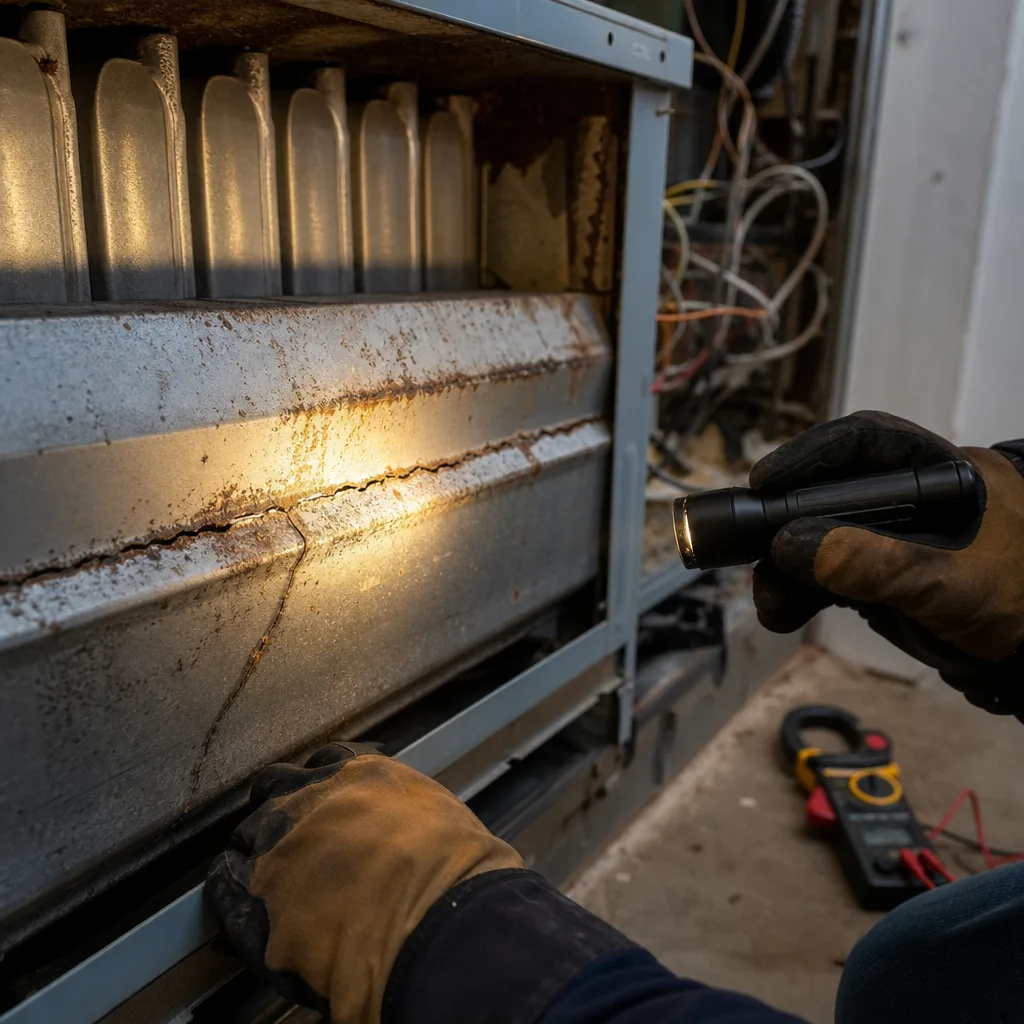
- The heat exchanger is cracked. This is the part that keeps combustion gases away from the air you breathe. A crack is a safety problem, not a patch job, and on an older furnace it’s almost always a replacement.
- Parts are hard to find. When replacement parts for your model are discontinued or take weeks to arrive, a simple fix can leave you without heat for a long time.
- It can’t keep up anymore. Rooms that never warm up, a furnace that runs and runs without reaching the thermostat setting, or one that turns on and off in short bursts can point to a system that’s worn out or was never the right size for your home.
- Your gas bills keep climbing. If your usage and the weather haven’t changed but your bills have, your furnace may be losing efficiency.
Now the other side, because it matters just as much. If your furnace is younger and the problem is a dirty flame sensor, a worn-out ignitor, or a failed blower motor, a repair usually makes more sense. Those are common, fixable parts. Swapping one out can put a solid furnace back to work for years, and replacing a good furnace over a small part would waste your money.
Here’s a simple way to think about it. Picture a cold front rolling into Plano and your furnace quits on the first chilly night. If the fix is one inexpensive part on a furnace with plenty of life left, get it repaired. If you’re already looking at your second or third big repair on an aging unit, that money is usually better spent on a new furnace that won’t keep calling you back.
Attic furnaces deserve a quick note. Many North Texas homes have the furnace up in the attic, where it bakes through long summers and then has to work hard when a winter freeze hits. Those big temperature swings are hard on equipment. If you’re not sure how old yours is or what shape it’s in, a furnace safety inspection or carbon monoxide testing can give you a clear answer before you decide anything.
When Repair Beats Replacement
A lot of furnaces that seem dead aren’t broken at all. Before you start pricing a new one, it’s worth ruling out the simple stuff. Some of it you can check yourself in a few minutes, with no tools and no service call.
Here’s what to look at first when your furnace won’t heat:
- The thermostat. Make sure it’s set to heat, not cool or off, and that the temperature is set above what the room is now. If it runs on batteries and the screen is blank or dim, swap them.
- The air filter. A filter packed with dust can choke off airflow so badly that the furnace shuts itself down to stay safe. If you can’t see light through it, replace it.
- The breaker. Check your electrical panel for a tripped breaker labeled furnace or HVAC. Even a gas furnace needs power to run its fan and controls.
- The furnace switch. Most furnaces have a switch nearby that looks just like a light switch. It’s easy for someone to flip it off by mistake, especially when the furnace is in a closet or an attic where things get stored.
If one of those gets your heat back, you’re done. You didn’t need us, and that’s a good day.
Sometimes waiting is the smart move too. Plano’s heating season is short compared with places farther north. Your furnace runs hard for a few cold stretches each winter, then sits quietly for months. So if your older furnace is still running safely but you know it’s near the end, you don’t have to replace it the moment winter ends. You can plan ahead, compare options without a cold house pushing you, and schedule the work on your own timeline.
There’s one exception. Waiting isn’t the answer when safety is in question. A cracked heat exchanger, as covered above, isn’t something to nurse through another season.
If someone has already told you that you need a new furnace, ask them a few plain questions. What exactly failed? Is that part still available for your model? What would the repair cost next to a replacement? A good technician can answer all three in plain English. If the answer is “it’s just old,” and your furnace is still heating your home and passing a safety check, that alone isn’t a reason to replace it today.
When you do call us, we’ll tell you straight if a repair makes more sense. Our service-call fee is $26-$99, and it’s credited toward the repair if you go ahead with Xtreme Air Services. That way, finding out what’s really wrong doesn’t cost you twice. If the fix is small, we’ll fix it. A furnace with good years left should stay in your home, not get hauled to the curb.
Why Correct Sizing Matters More Than Brand
Once you know you need a new furnace, it’s natural to focus on the brand. But the thing that decides how warm your home feels, what your gas bill looks like, and how long the furnace lasts is whether it’s the right size for your house. A well-made furnace that’s the wrong size will still give you trouble.
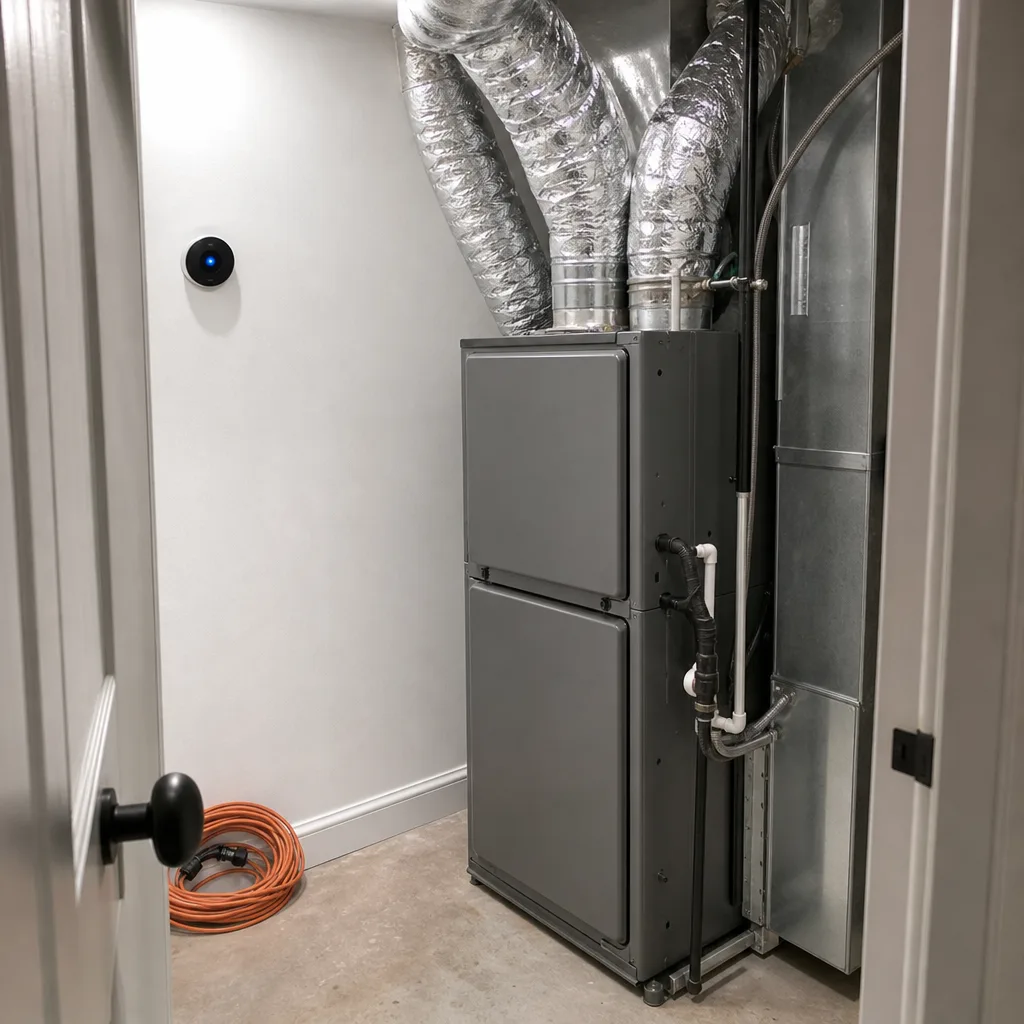
We’re a Trane Comfort Specialist, and we’ll still tell you the same thing. The equipment matters, but sizing and installation matter more.
Here’s what goes wrong when the size is off:
- Too big. A furnace with more heat than your home needs warms the air near the thermostat fast, then shuts off before the far rooms catch up. That’s the short on-and-off cycling mentioned earlier. You get hot and cold spots, more noise, and extra wear every time it starts up.
- Too small. An undersized furnace runs and runs on the coldest nights and still can’t reach the thermostat setting. It works fine on a mild day, then falls behind when a hard freeze hits.
- Wrong match for your ducts. Your furnace has to push air through the ducts you already have. If it moves more air than they can handle, you’ll hear whistling at the vents, and the furnace can run hotter than it should.
There’s a North Texas twist, too. In most homes with central air, the furnace’s blower is the same fan that pushes cool air through your house all summer. So the furnace you pick affects your AC airflow and comfort for months after the heating season is over. Getting the blower right pays off in July, not just January.
Bigger isn’t safer, either. Some installers just match the number on your old furnace, or bump it up a size to be sure. That old furnace may have been sized wrong on day one. And if you’ve added insulation, replaced windows, or finished a room since it went in, your home needs a different amount of heat now than it did then.
The right way to size a furnace is a heat-load calculation. It looks at your square footage, insulation, windows, ceiling height, and which way the house faces, then figures out how much heat your home loses on a cold night. That number, not a guess, should decide the size.
Efficiency comes after size. You’ll see an AFUE rating on every furnace. In plain English, it’s the share of the gas you pay for that turns into heat for your home. A higher rating means less gas wasted. Because Plano’s heating season is short, it’s worth asking how much a higher rating will really save you before you pay extra for it. Size and efficiency both affect your price, so it helps to know what you’re paying for.
When you’re comparing quotes, ask each installer three things:
- Did you measure my home, or just copy the size off my old furnace?
- Did you check whether my ductwork fits the new furnace?
- Why is this the right size and efficiency for my house?
If someone can’t answer those clearly, that tells you more than any brand name will.
Need help with Furnace installation?
Call Today, Get Service Today. Xtreme Air Services — North Plano is ready to help.
Licensing and Permits for Furnace Installation in Plano
A new furnace isn’t just a box you set in the attic. It connects to your gas line, your electrical system, and a vent that carries combustion gases out of your home. That’s why the person who installs it needs to be licensed, and why the job usually needs a permit and an inspection. These two things protect you more than any brand name will.
In Texas, air conditioning and heating contractors are licensed by the Texas Department of Licensing and Regulation, or TDLR. A license means the contractor has met the state’s training and testing rules and can be held accountable if the work isn’t done right. Our HVAC license number is TACLA29023C, and Xtreme Air Services is licensed and insured. You don’t have to take our word for it. You can look up any contractor’s license on the TDLR website in about a minute.
Be careful if a quote looks low because the installer says you can skip the paperwork. An unlicensed or uninsured installer leaves you holding the bag if something goes wrong in your home. A mistake on a gas connection or vent isn’t a cosmetic problem. It’s a safety problem, and it’s the kind of thing an inspection is meant to catch.
Replacing a furnace in Plano typically means getting a permit from the city before or during the work. Depending on what’s involved, the gas and electrical connections may be part of that review too. After the installation, an inspector checks the work. On a gas furnace, that usually means looking at the venting, the gas piping, and whether the furnace is getting the air it needs to burn safely. If you’re not sure what your job needs, the City of Plano’s building inspections office can tell you.
Permits pay off later too. If you sell your home, a buyer’s inspector may ask whether the furnace was installed with a permit. Having that record makes the sale go smoother. It can also help if you ever need to file an insurance claim related to your heating system.
Here’s something that trips people up when they compare quotes. Our standard furnace installation pricing doesn’t include permits unless the quote says so, and it doesn’t include code corrections either. Other installers may handle this differently. That’s why two quotes can look far apart when they’re really covering different work. If your older home has a vent, gas line, or wiring that doesn’t meet today’s code, that fix gets added to the job. It isn’t the installer padding the bill. It’s what it takes to pass inspection and keep your family safe.
Before you sign with anyone, ask these questions:
- What’s your TDLR license number, and are you insured?
- Who pulls the permit, and is the permit cost in this quote?
- Will the city inspect the work, and who meets the inspector?
- If the inspection finds something that needs fixing, how is that handled and priced?
- Does my home have any code issues you can see now that would add to the cost?
A trustworthy installer will answer every one of these without hesitating. If someone dodges the permit question or can’t give you a license number, that tells you what you need to know before they ever touch your gas line.
Watch Our Video
See How We Handle Furnace installation in Plano
Xtreme Air Services — North Plano
What Furnace Installation Includes and What It Costs
Here’s the number you came for. Furnace installation with Xtreme Air Services typically runs $3,500-$7,500. Our most common job is a standard like-for-like replacement that uses your existing connections with no major changes, and that job runs $4,300-$5,900.
That’s a wide range, and it should be. Two Plano homes on the same street can need very different jobs. Your price depends on your house, your current setup, and the furnace that fits it.
A standard installation includes:
- The new furnace and the materials to put it in
- Professional installation by our licensed team
- Standard connections to your existing setup
- Startup and testing, so you know it’s running right before we leave
- Haul-away of your old unit, so it doesn’t end up in your garage
Some work isn’t included unless your quote says so:
- Changes to your ductwork, electrical, or plumbing
- Code corrections
- Permits
We spell this out because it’s where most quote confusion comes from. If one quote seems much lower than another, check whether it covers the same work. A low number that leaves out a needed duct change isn’t really lower.
These are the things that move your price up or down:
- Size and efficiency. A furnace sized right for your home and its AFUE rating both affect cost, as covered earlier.
- Brand and model. Different furnaces come with different features and price points.
- Ease of access. A furnace in a hall closet is quicker to swap than one in a tight, hot attic, which is common in North Texas homes.
- Condition of what’s already there. Worn ductwork, old wiring, or aging gas piping may need work before a new furnace can go in safely.
- Code upgrades and permits. These depend on your home and what the city requires.
- Custom fabrication. If the new furnace doesn’t line up with your existing ducts or space, parts may need to be custom made to fit.
If the total is more than you planned to spend at once, we offer flexible financing on qualifying installations and larger jobs, on approved credit. That can let you get the right furnace now instead of settling for the wrong one.
When you get your quote, from us or anyone else, ask for it in writing and make sure it answers three questions. What exactly is included? What’s excluded? What could change the price once work starts? You should know your number before anyone picks up a tool. That’s how we work, with upfront pricing and no surprises.
Call 469-527-5131
Frequently Asked Questions
Common questions about Furnace installation
How long does a furnace installation take in Plano?
A standard like-for-like furnace swap usually takes one day. If your home needs duct changes, electrical work, or code corrections because of an older gas line or vent, the job can stretch longer. Attic installs in Plano homes often take a bit more time since the space is tight and hot, which slows the crew down compared to a furnace in a hall closet.
Do I need a new thermostat when I install a new furnace?
Not always, but it depends on your current thermostat and the new furnace’s features. An older thermostat may not support things like two-stage heating or variable-speed blowers that come on newer furnaces. Ask your installer to check compatibility before the install day so you’re not surprised by an extra line item.
Can I install a furnace myself to save money?
No, furnace installation should not be a DIY project in Plano. It involves gas line connections, electrical work, and venting that carries combustion gases safely out of your home, and the work typically requires a licensed contractor and a city permit. A mistake on a gas connection or vent is a safety risk, not just a comfort issue, which is why TDLR licensing and inspections exist for this work.
Ready to Get Started?
Call (469) 527-5131 Today, Get Service Today.