


Heating System Repair in Plano: Fast, Fair Fixes When Your Furnace Fails
Furnace and heat pump problems fixed on the first visit, with an honest call on repair versus replace.
What’s Covered on This Page
- Signs Your Furnace Needs a Repair Call
- Checks to Make Before You Call for Repair
- Deciding Between a Repair Now and Waiting
- What Happens During a Heating Repair Visit
- What Heating Repair Costs and What Changes the Price
- Can a furnace repair be done the same day you call?
- Why does my furnace seem to fail right after a cold front hits Plano?
- Do I need to be home for the whole heating repair visit?
- What if more than one part in my furnace has failed?
Signs Your Furnace Needs a Repair Call
When a North Texas cold front rolls through Plano, your furnace goes from sitting idle to running hard almost overnight. That’s when a weak part tends to give out. The good news is that a failing furnace usually tells you what’s wrong, if you know what to look and listen for.
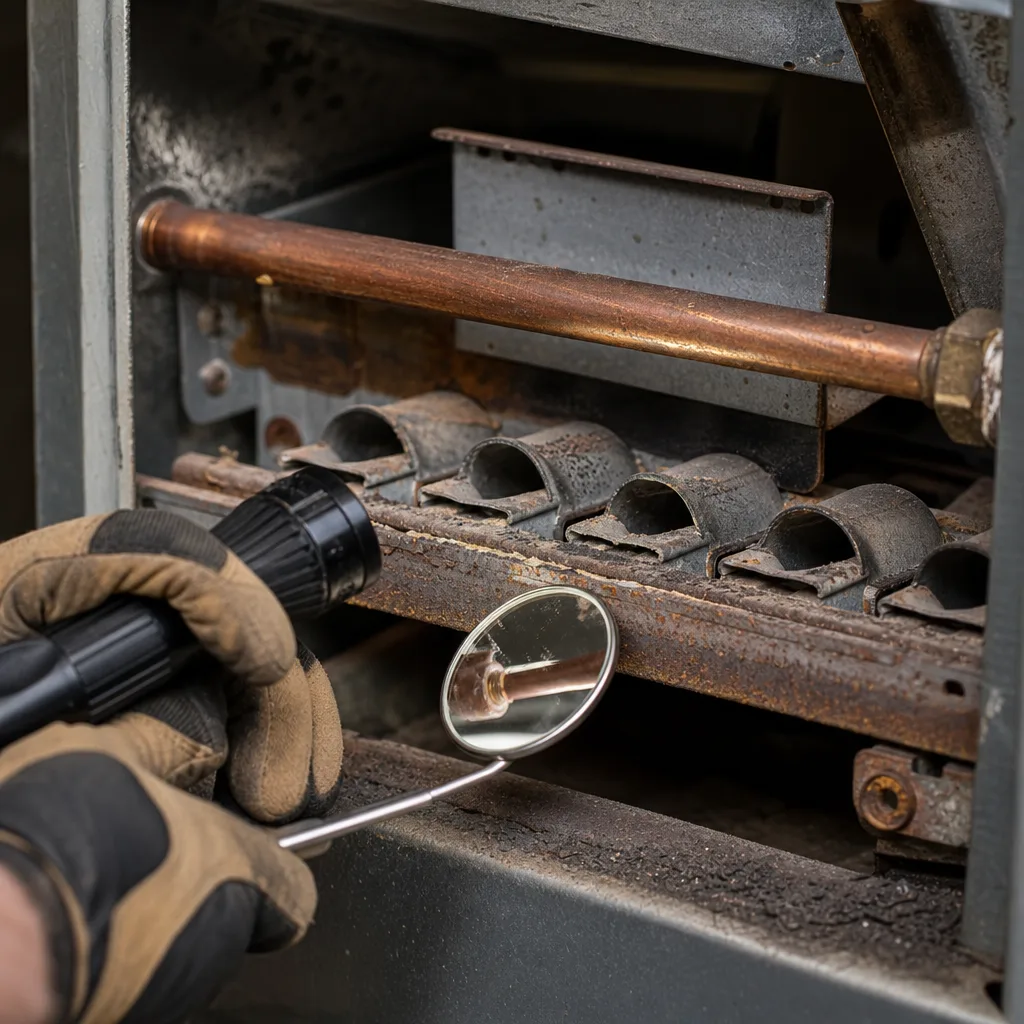
- It clicks but never lights. You hear the furnace try to start, but you never get flame or warm air. That often points to the ignitor, the small part that lights the burners.
- It lights, then shuts off a few seconds later. The burners fire and go out, over and over. A dirty or worn flame sensor is a common cause. It’s the part that tells the furnace the flame is safe to keep running.
- The fan runs, but the air is cold. Air moves through the vents, but it never warms up. The problem could be the ignition side, the gas supply to the burners, or the control board telling the parts what to do.
- Nothing happens at all. No click, no fan, and the thermostat may be blank. That can be a thermostat issue, a tripped breaker, or a failed control board.
- New noises. A squeal or screech often means the blower motor is wearing out. A loud bang when the burners light, or a steady rattle, is worth having checked rather than ignored.
- Short, choppy cycles. The furnace turns on and off every few minutes and never gets the house comfortable. Airflow trouble, an overheating part, or a thermostat problem can all cause this.
- Some rooms stay cold. The living room is fine, but the back bedrooms never catch up. Weak blower performance or duct problems are the usual suspects.
- Heat pump frost that won’t clear. A little frost on an outdoor heat pump in winter is normal, and the unit should melt it off on its own. A thick block of ice that stays, or backup heat running constantly, means something isn’t working right.
A lot of Plano homes have their furnace or air handler up in the attic. You might not see the problem until you notice the house won’t hold temperature. If you go up there, look for a blinking light on the furnace panel. Many furnaces flash a code when something fails. Note the pattern and tell us when you call. It gives the technician a head start.
Here’s what matters most. One of these signs doesn’t mean you need a new furnace. Most heating repair calls come down to a single common failure, like an ignitor, a flame sensor, or a blower motor, that gets fixed on the first visit. Our job is to find that one part, fix it, and make sure your system runs right before we leave.
If your furnace is doing more than one of these things at once, mention that too. Several problems showing up together can mean more than one part has failed. It’s better to know that up front, so the price you approve covers the full fix.
Checks to Make Before You Call for Repair
Before you pick up the phone, take five minutes and run through a few simple checks. Some no-heat calls turn out to be a setting, a switch, or a dirty filter. If one of these gets your heat back, you don’t need us, and you’ve saved yourself the $26-$99 service-call fee. We’d rather you know that up front.
- Look at the thermostat first. Make sure it’s set to Heat, not Cool or Off, and that the temperature is set a few degrees above what the room feels like now. If the screen is blank or dim, swap the batteries. Dead batteries can make a working furnace look broken.
- Check the breaker panel. Look for a breaker labeled furnace, heater, or air handler. If it’s tripped, flip it fully off and then back on one time. If it trips again, leave it off. That’s a sign of an electrical problem that needs a technician.
- Find the service switch. Most furnaces have a switch nearby that looks just like a regular light switch. In homes where the furnace sits in the attic, it’s easy for someone to flip it off by mistake while storing holiday boxes. Make sure it’s on.
- Pull the air filter. A filter that’s gray and packed with dust can choke airflow so badly that the furnace overheats and shuts itself down. In many Plano homes, the filter sits behind a return grille in a hallway ceiling or wall, or at the unit itself. If it’s dirty, put in a clean one of the same size.
- Make sure the furnace door is closed tight. Many furnaces have a safety switch under the front panel. If that panel is loose or slightly off, the furnace won’t run.
- Open your vents. Walk through the house and check that supply vents aren’t closed or blocked by furniture or rugs, especially in the rooms that feel coldest.
If you have a high-efficiency furnace in the attic, there’s one more thing worth a look. These units make water as they run, and that water drains through a small pipe. Many installs have a float switch in the drain pan or line that shuts the furnace off when water backs up. If you see standing water in the pan, a clogged drain is likely why your heat stopped. Clearing it can get you running again, but a pan that keeps filling is worth having checked.
Give the system a few minutes after each change. Furnaces often wait a short time before they try to light again.
Deciding Between a Repair Now and Waiting
If your heat still works but something feels off, waiting can be a fair choice. It depends on what the furnace is doing and what the weather is about to do. Here’s how to think it through without guessing.
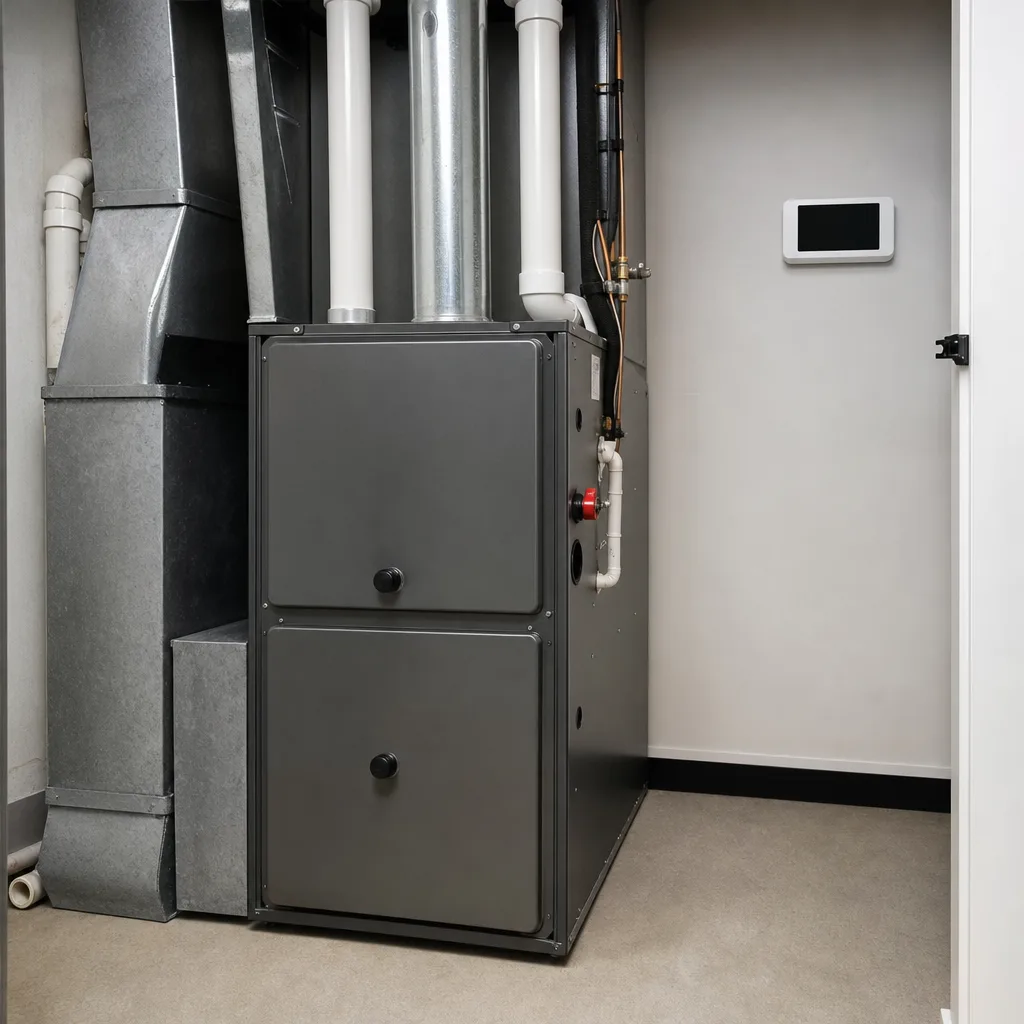
Plano winters swing back and forth. You can have a week in the 60s and then a hard freeze two days later. A furnace that’s limping along on a mild afternoon is a very different problem the night a strong front drops temperatures fast. If cold weather is in the forecast and your system is already struggling, it makes sense to get it looked at before that front arrives.
Repair it sooner rather than later when:
- The problem is getting worse. A blower that squealed once last week and now squeals every cycle is wearing down. If a motor keeps running until it burns out, a simple repair can turn into a bigger one.
- The furnace keeps short cycling. Turning on and off over and over adds strain to parts that were fine, like the ignitor and the motor.
- Your heat pump leans on backup heat all the time. Backup heat keeps you warm, but it uses a lot more electricity. Every week you wait can show up on your power bill.
- Someone in your home has a hard time with the cold. A baby, an older parent, or anyone who’s sick changes the math fast.
It’s usually fine to wait a bit when:
- The house still gets warm. One back bedroom runs a couple of degrees cooler, but nothing has changed in weeks.
- The weather is mild for the next several days and the system heats normally.
- Your heat works fine and you only want it checked before winter. That’s what a heating maintenance tune-up is for, not a repair call.
A lot of people wait for a weekday because they expect a weekend call to cost more. With us, that wait doesn’t save you anything. Xtreme Air Services charges no extra for nights or weekends, so a Saturday morning visit costs the same as a Tuesday.
Cost is the other big reason people hold off, so here are the real numbers. Our service-call fee is $26-$99, and it’s credited toward the repair if you go ahead with us. The most common heating system repair runs $150-$400, and our typical range is $150-$700. That price includes diagnosis, labor, and the standard replacement part, plus testing and cleanup. Additional failed parts, major components, code upgrades, or permits aren’t included unless we quote them separately.
This is where waiting can cost you. One of the biggest things that pushes a repair toward the higher end is when more than one part has failed. A worn part left running can take another part down with it. Catching it while it’s still one part is usually the cheaper path.
You’ll see our upfront flat-rate price and approve it before any work starts. If the fix turns out bigger than expected, like a major component on an older system, we’ll tell you plainly. Financing isn’t typically offered for smaller repairs, but it’s available on larger repairs and replacements. That way you can make the call that fits your home and your budget, today or next week.
Ready when you are – get in touch today.
Call Today, Get Service Today. Xtreme Air Services — North Plano is ready to help.
What Happens During a Heating Repair Visit
A heating repair visit comes down to three jobs. Find the failed part, fix it, and make sure the system runs right. You’ll know the price before any work starts, so nothing about the visit should leave you guessing.
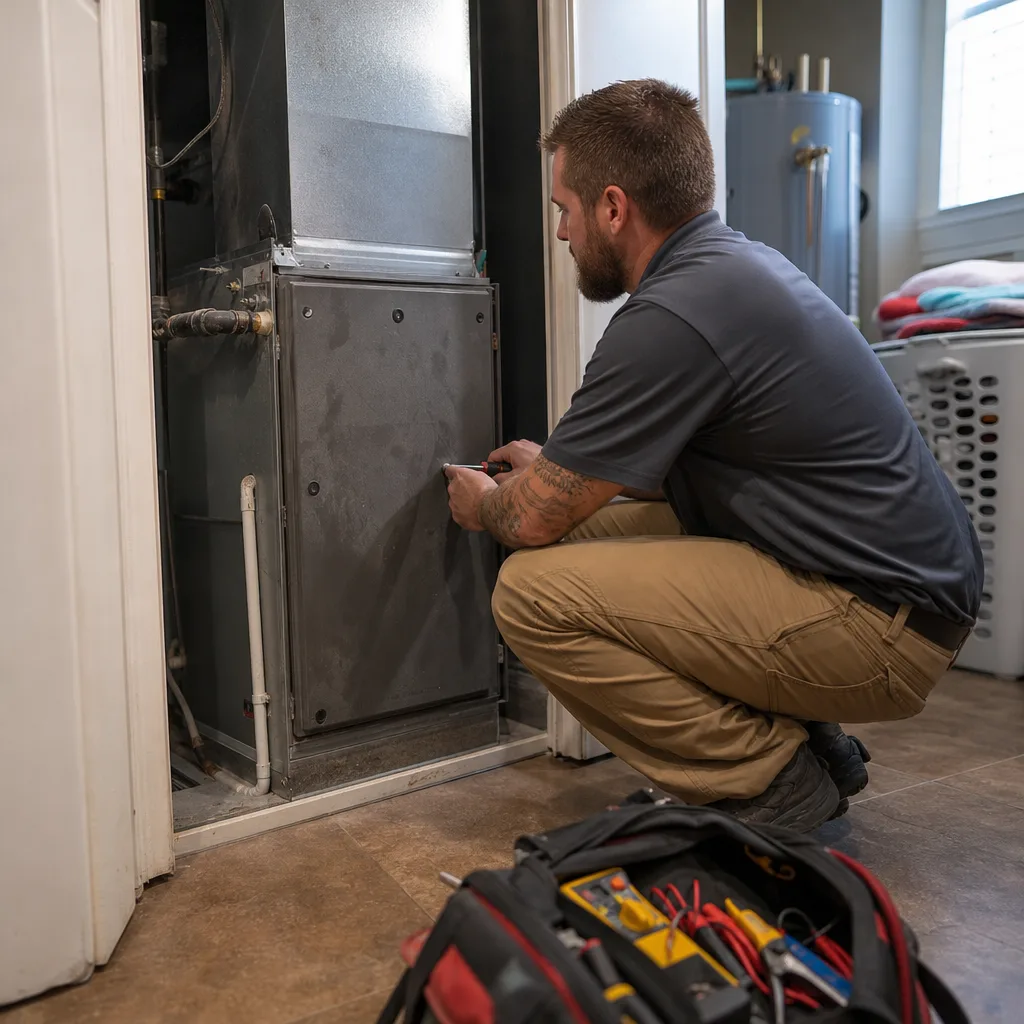
You can help the visit go faster before the technician arrives. In many Plano homes the furnace sits in the attic, so clear a path to the pull-down ladder and move any boxes stacked around the unit. Put pets in another room. Keep your notes from the checks you already made handy, along with any blinking light pattern you saw on the furnace.
The person at your door is a licensed and insured technician who has been background-checked and drug-tested. That matters when you’re letting someone into your home, especially if your kids are there or you’re home alone on a cold evening.
Diagnosis comes first, and it’s included in the repair price. A good diagnosis follows the furnace through its startup steps in order, so the technician can see exactly where it stops. A thorough heating check usually looks at:
- Whether the thermostat is calling for heat and its wiring is reaching the furnace
- Power to the unit and its safety switches, like the door switch and the drain float switch on high-efficiency models
- Any error code on the control board
- The ignitor and the flame sensor
- The burner flame and the gas reaching the burners
- The blower motor and airflow, including the filter
- On a heat pump, the defrost function and the backup heat
Once the failed part is found, you get an upfront flat-rate price for the fix. You approve it before anything gets taken apart or replaced, and there’s no meter running while you decide. If more than one part has failed, you’ll hear about it at this point, not later on the bill. If you go ahead, the service-call fee is credited toward the repair, as covered above.
Then comes the repair itself. Most calls are a single common failure, like an ignitor, a flame sensor, or a blower motor, and they get fixed on the first visit. The standard replacement part is included. If the problem turns out to be a major component, you’ll get a separate quote and make that choice with all the facts in front of you.
After the repair, the system gets tested to confirm it runs correctly. You should see the full heating cycle work the way it’s supposed to. The burners light and stay lit, the blower pushes warm air through your vents, and the furnace shuts off when the house reaches the temperature on your thermostat. Feel free to watch that cycle and ask questions. Cleanup is part of the job too, so the attic, closet, or hallway is left the way you had it.
If you have a gas furnace and you’ve ever wondered about carbon monoxide, just ask. Carbon monoxide testing and furnace safety inspections are services we offer.
Watch Our Video
See How We Handle Heating system repair in Plano
Xtreme Air Services — North Plano
What Heating Repair Costs and What Changes the Price
You already know our numbers from the section above. Most heating repairs run $150-$400, and our typical range is $150-$700. What decides where your repair lands in that range comes down to a few things you can understand before anyone touches your furnace.
Here’s what moves the price:
- How much failed. A flame sensor that just needs cleaning is a small job. A control board that runs the whole startup sequence is a bigger part and a bigger price. Both are single-part repairs, but they sit at different ends of the range.
- The part itself and whether it’s on hand. Some parts are simple and easy to find. Others are larger or harder to get. When a hard freeze hits Plano and every furnace in town is working overtime, demand for certain parts goes up at the same time.
- Your furnace’s age and brand. Some common parts fit lots of different furnaces. An older unit, or one made by a brand that’s harder to find parts for, may need a part made only for that model. That part can cost more and take longer to get.
- More than one failed part. As covered above, a worn part left running can take another part down with it. Two parts means two parts on the price.
- When you call. This one doesn’t change your price with us, since we charge no extra for nights or weekends.
It also helps to know how contractors in this trade set prices, because it changes what your final bill looks like. Some charge time and materials. That means an hourly labor rate plus the cost of parts, so the total isn’t known until the job is done. Others, like us, use flat-rate pricing. You get one price for the whole repair before work starts, and it doesn’t grow if the job takes longer than planned.
Whoever you call, these questions will tell you a lot about how you’ll be charged:
- Is the price for the whole job, or is it by the hour?
- Does the price include diagnosis, the part, and labor?
- Is the service-call fee credited toward the repair if I go ahead?
- Do you charge more for nights, weekends, or holidays?
- Will I see and approve the price before any work starts?
- What isn’t included, and how will you tell me if something else comes up?
A good contractor answers all of those without hesitating. If the answers are vague, that’s worth noticing before you say yes.
Say your heat quits on a Sunday night during a cold front. With us, your technician finds the failed part and gives you one flat-rate price. You approve it before anything gets replaced. You pay the same as you would on a Wednesday afternoon, and the service-call fee comes off the total. If the problem is a major component on an older furnace, you’ll get that quote separately, so you can decide with the full picture in front of you.
Call 469-527-5131
Frequently Asked Questions
Common questions about Heating system repair
Can a furnace repair be done the same day you call?
Most of the time, yes. A typical heating repair is a single failed part, like an ignitor, flame sensor, or blower motor, and that kind of fix is usually finished on the first visit. If a major component turns out to be the problem, that may need a separate parts order, but you’ll know this during the diagnosis before any work starts.
Why does my furnace seem to fail right after a cold front hits Plano?
A weak part that was barely holding on often gives out once your furnace has to run hard instead of sitting idle. North Texas cold fronts can drop temperatures fast, and that sudden jump in workload is exactly when a worn ignitor, flame sensor, or blower motor tends to quit. If your system has been acting up on mild days, it’s worth having it checked before the next hard freeze arrives.
Do I need to be home for the whole heating repair visit?
You don’t have to watch every step, but it helps to be there for the diagnosis and the price approval. You’ll get an upfront flat-rate price before any work starts, and after the repair you can watch the furnace run its full heating cycle to confirm it’s working right before the technician leaves.
What if more than one part in my furnace has failed?
You’ll hear about it during the diagnosis, before anything is fixed, not after the bill arrives. A worn part left running can sometimes cause a second part to fail, so if your furnace is doing more than one odd thing at once, mention all of it when you call so the technician can check for related failures.
Ready to Get Started?
Call (469) 527-5131 Today, Get Service Today.