


Reverse Osmosis System Installation in Plano: Professional vs. DIY
Find out if reverse osmosis fits your water problem before you buy – then a licensed installation.

What’s Covered on This Page
- Professional Installation Versus a Retail Under-Sink Unit
- What Professional RO Installation Includes
- Reverse Osmosis Versus Water Softening: Solving Different Problems
- Signs Your Kitchen Setup Is Ready for Installation
- What Happens During and After Installation
- How much water does a reverse osmosis system waste compared to a store-bought unit?
- Can I use my reverse osmosis water for my houseplants?
- Will a reverse osmosis system lower my water pressure at the kitchen sink?
Professional Installation Versus a Retail Under-Sink Unit
Here’s the straight answer. Plenty of people install a box-store RO system on their own and it works fine. The kits come with tubing, fittings, and a faucet. If you’ve swapped a faucet or a garbage disposal before, you already have most of the skills.
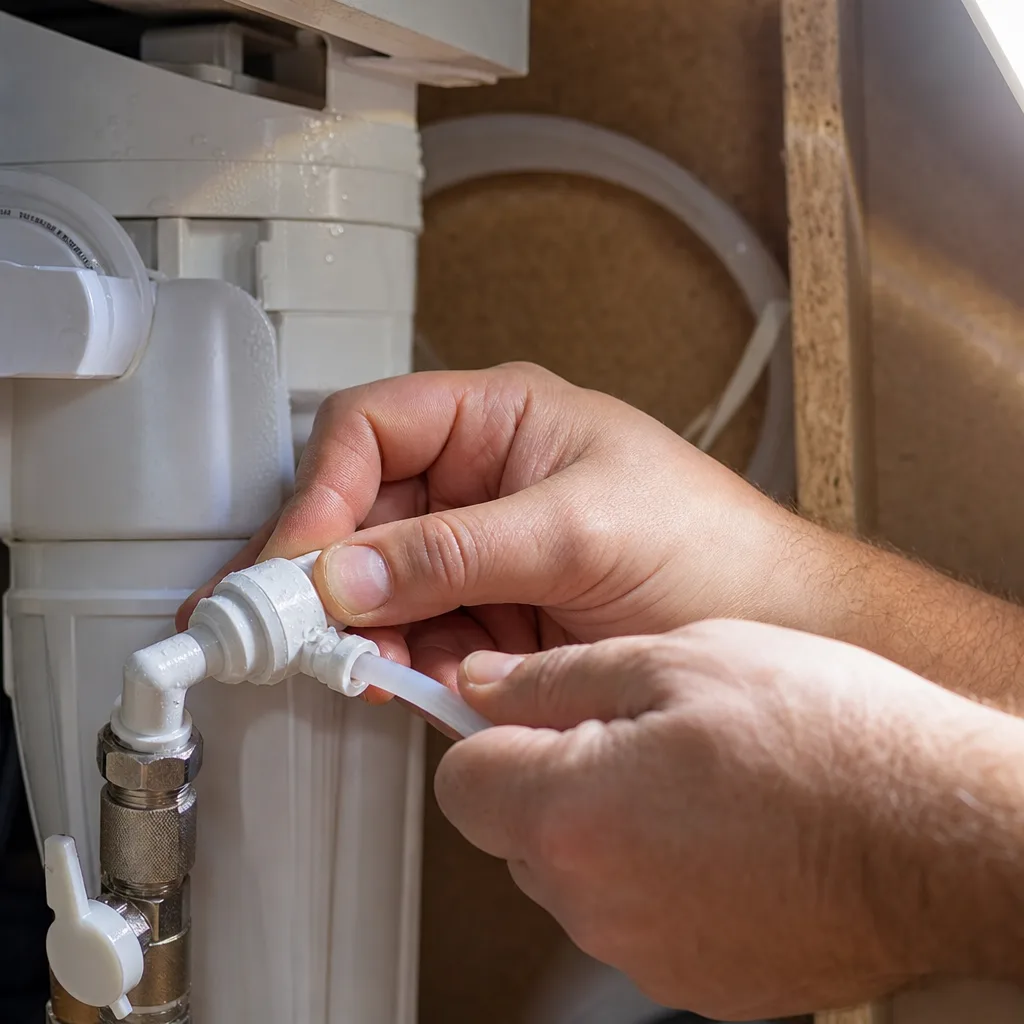
A DIY install usually goes well when:
- Your sink or counter already has an open hole for the RO faucet.
- The cold water shutoff valve under the sink turns easily and doesn’t drip.
- The drain pipe has a clear spot above the trap for the drain clamp.
- There’s room in the cabinet for the filter housings and storage tank.
- You only want water at the kitchen sink, not at the fridge or ice maker.
If that sounds like your kitchen, you may not need us. That’s okay. We’d rather you know that up front.
The trouble starts when the kitchen doesn’t match the box instructions. An RO system ties into your water supply and your drain at the same time. A loose fitting there won’t spray. It weeps. You might not notice it for weeks, until the cabinet floor is soft or swollen. Under-sink leaks matter more in North Texas homes because many sit on slab foundations, and water that gets past the cabinet has nowhere easy to go.
These are the setups where a licensed plumber earns the fee:
- No faucet hole, and your counter is granite or quartz. Drilling stone wrong can crack it.
- A garbage disposal crowds the drain line, which makes the drain connection tricky to place.
- Old or crusty shutoff valves. Hard water leaves scale that can make them stick or leak once you turn them.
- You want RO water at the fridge or ice maker, which means a longer supply run.
- You want remineralization added so the water tastes less flat.
- The tank won’t fit and you need a different tank or faucet setup.
Cost is the other side of the decision. A retail unit only covers the parts. When our team handles the most common job, installing an under-sink RO drinking-water system with faucet, membrane, and drain connection, tested for proper output, the price typically runs $475-$850. That includes the RO system and materials, professional installation, the faucet, the connections, and startup and testing. Most jobs finish same-day.
Some things aren’t included, and you should know that before anyone shows up. A dedicated line, if it’s extensive, isn’t included. Neither are cabinet modifications, code corrections, or permits unless stated. If your kitchen needs any of those, you’ll hear about it before the work starts.
So ask yourself one question as you look under your sink. Is this a simple hookup, or is it a puzzle? If it’s simple and you’re handy, go for it. If it’s a puzzle, a licensed and insured plumber can do it right the first time and test it before leaving, so you aren’t checking the cabinet floor with a flashlight every few days.
What Professional RO Installation Includes
A professional RO install is more than bolting filters to the cabinet wall. It’s four connections done in the right spots: one to your cold water, one to your drain, one to the faucet, and one to the storage tank. Then it’s a careful startup, so the first glass you pour tastes the way it should. For our team, the faucet, membrane, drain connection, startup, and testing are all part of the job you already saw priced above.
Here’s what a good install covers, in the order it usually happens.
- Checking the cold water shutoff. The system taps into the cold line under your sink. If that valve is stiff or weeping, it should be dealt with before anything gets connected to it.
- Mounting the filters where you can reach them. Most under-sink systems use a sediment filter, a carbon filter, the RO membrane, and a final polishing filter. They should hang so you can swap cartridges later without pulling everything out of the cabinet.
- Placing the drain connection. RO sends some water down the drain as it filters. That line clamps onto the drain pipe above the trap. If you have a garbage disposal, placement matters so food waste doesn’t back up toward the system.
- Setting the faucet. This means using an open hole or drilling one. Stone counters take the right bit and a slow hand.
- Setting the tank. It needs a level spot and a short, clean run to the faucet so you get a steady stream.
- Running optional lines. A fridge or ice maker hookup, or a remineralization stage, gets added here if you asked for it.
Startup is the part people skip when they do it themselves, and it’s the part you’ll notice. New carbon filters release fine black dust. New membranes need a flush. So the first tank or two of water gets drained and thrown out instead of poured into your glass. After that, the system gets checked for leaks at every fitting, and the output gets tested to make sure the membrane is doing its job.
Hard water is worth a word here, because it’s common across North Texas. The minerals that leave white spots on your shower glass also wear on an RO membrane over time. If your home has heavy scale on faucets and fixtures, ask about water testing. In some homes, a water softener ahead of the RO system helps the membrane last longer. That’s a separate service with its own page, so we’ll keep it short.
Most of these jobs finish same-day. You start the morning with tap water and end the afternoon with a working system you’ve seen tested, in a cabinet that stays dry.
Reverse Osmosis Versus Water Softening: Solving Different Problems
Here’s the short answer. A water softener protects your whole house from hard-water minerals. A reverse osmosis system gives you clean, good-tasting drinking water at one tap. They fix different problems, so buying the wrong one leaves you with the same complaint you started with.
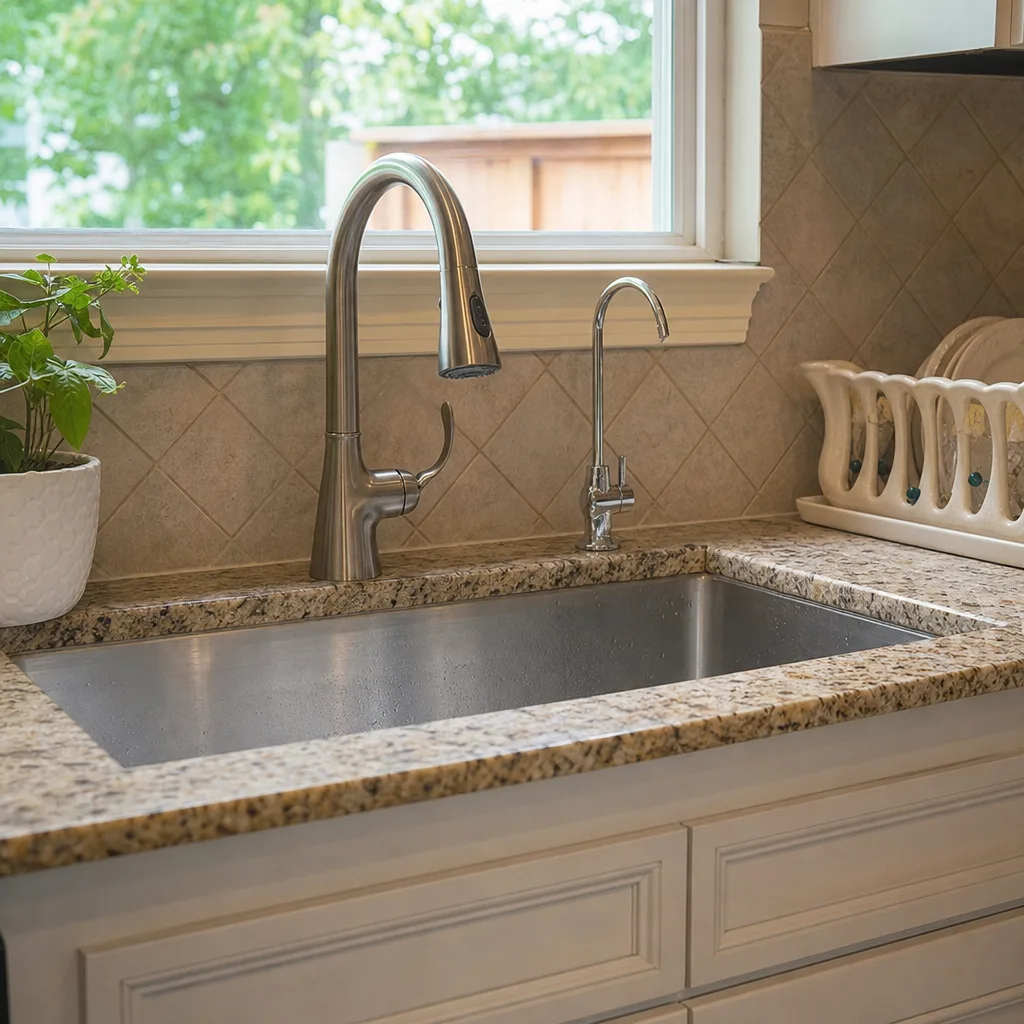
People mix these up all the time, and it makes sense. Both are water treatment, and both go in your home. But they work in very different ways.
A softener sits where water enters your house. It pulls out calcium and magnesium, the minerals that make water hard, and swaps them for a small amount of sodium or potassium. Every faucet, shower, and appliance gets softened water. A softener doesn’t make your water purer, though. It doesn’t filter out the taste of chlorine, and it doesn’t remove most of the other things dissolved in your water. It just trades one mineral for another.
RO works by pushing water through a very fine membrane that holds back most dissolved solids. That includes minerals, salts, and many things that affect taste and odor. Because RO is slow and sends some water down the drain, it’s built for drinking and cooking water, not for a whole house.
So start with what’s bugging you. Match your complaint to the fix:
- White crust on faucets and showerheads, spotty dishes, or scale building up in your water heater: that’s hard water. A softener handles it. An RO system under the kitchen sink won’t touch your shower or water heater.
- Tap water that tastes like a swimming pool, or ice cubes that come out cloudy: that’s a drinking-water issue. RO handles it. A softener won’t change the taste much.
- You’re buying cases of bottled water every week: RO is usually the fix, since it puts filtered water right at your sink.
- You have hard-water damage and you don’t like the taste: you may want both.
That last case is common in North Texas, where hard water is a fact of life. Lots of homes end up with a softener for the whole house and RO at the kitchen sink. The two work well together. The softener takes care of scale everywhere, which also helps the RO membrane, as we covered above. The RO system then takes out the extra sodium the softener adds, along with most of what’s left, so your drinking water tastes clean.
Be honest with yourself about your budget, too. If your only real problem is spotty glasses and a crusty showerhead, an RO system isn’t the right spend. Put that money toward a softener first. If your pipes and fixtures look fine and you just want better water in your glass, you don’t need a softener to get started with RO.
If you’re not sure which problem you have, water testing takes the guessing out of it. A test shows how hard your water is and what’s in it, so you can pick the system that fixes your real complaint. Water softener installation has its own page if that turns out to be the better fit for your home.
Need help with Reverse osmosis system installation?
Call Today, Get Service Today. Xtreme Air Services — North Plano is ready to help.
Signs Your Kitchen Setup Is Ready for Installation
Your kitchen is ready for an RO install when the cabinet under your sink is dry, your water pressure feels normal, and you’ve decided where you want the filtered water to go. If all three are true, the install can usually happen in one visit. If one isn’t, it’s better to sort it out first.
Open the cabinet and look before you call. These are good signs:
- The cabinet floor is firm and dry, with no stains, swelling, or musty smell.
- Your faucets and shower run with a strong, steady flow. RO filters water slowly, and low house pressure makes it slower.
- You know if you want RO water only at the sink, or at the fridge and ice maker too.
- You’ve thought about taste. Some people want a remineralization stage so the water doesn’t taste flat.
- You know what your counter is made of, such as laminate, granite, quartz, or something else.
There’s one more thing to check if you’re looking at a tankless RO unit or one with a pump. Many of those need a power outlet under the sink. If there isn’t one, tell us when you call. Adding an outlet is a separate electrical job, and it’s better to plan for it than to find out during the visit.
Now for the times you should wait. If you see a drip, a water stain, or a soft spot under your sink right now, fix that leak first. Installing new equipment on top of a hidden leak just hides it longer. Plumbing leak repair has its own page if that’s where you are.
If the whole house has weak pressure, that’s worth a look before you add RO. A worn pressure regulator can cause it, and it affects every tap you have, not just the kitchen.
Planning new countertops or a new kitchen sink in the next few months? Hold off. The RO faucet needs a hole in the counter or sink. It makes more sense to put that hole in your new counter than to drill your old one and then pay to redo it.
Once you’re ready, a little prep makes the visit faster:
- Empty the sink cabinet so there’s room to work.
- Snap a photo of the space under your sink. It helps when you call and describe your setup.
- Know where your fridge sits and how far it is from the sink, if you want a fridge line.
- Clear a path to the kitchen and put pets in another room.
That’s it. You don’t need to buy a system first or figure out the parts. When you call, tell us what you saw under the sink and what you want from your water. You’ll get upfront pricing before any work starts, so you know where you stand.
Call 469-527-5131
Watch Our Video
See How We Handle Reverse osmosis system installation in Plano
Xtreme Air Services — North Plano
What Happens During and After Installation
On install day, the biggest change you’ll notice is a short break in cold water at the kitchen sink. The system taps into the shutoff valve under that sink, so your showers, toilets, and other faucets usually keep working the whole time. You don’t need to plan your day around it. You just shouldn’t count on the kitchen sink for a few hours.
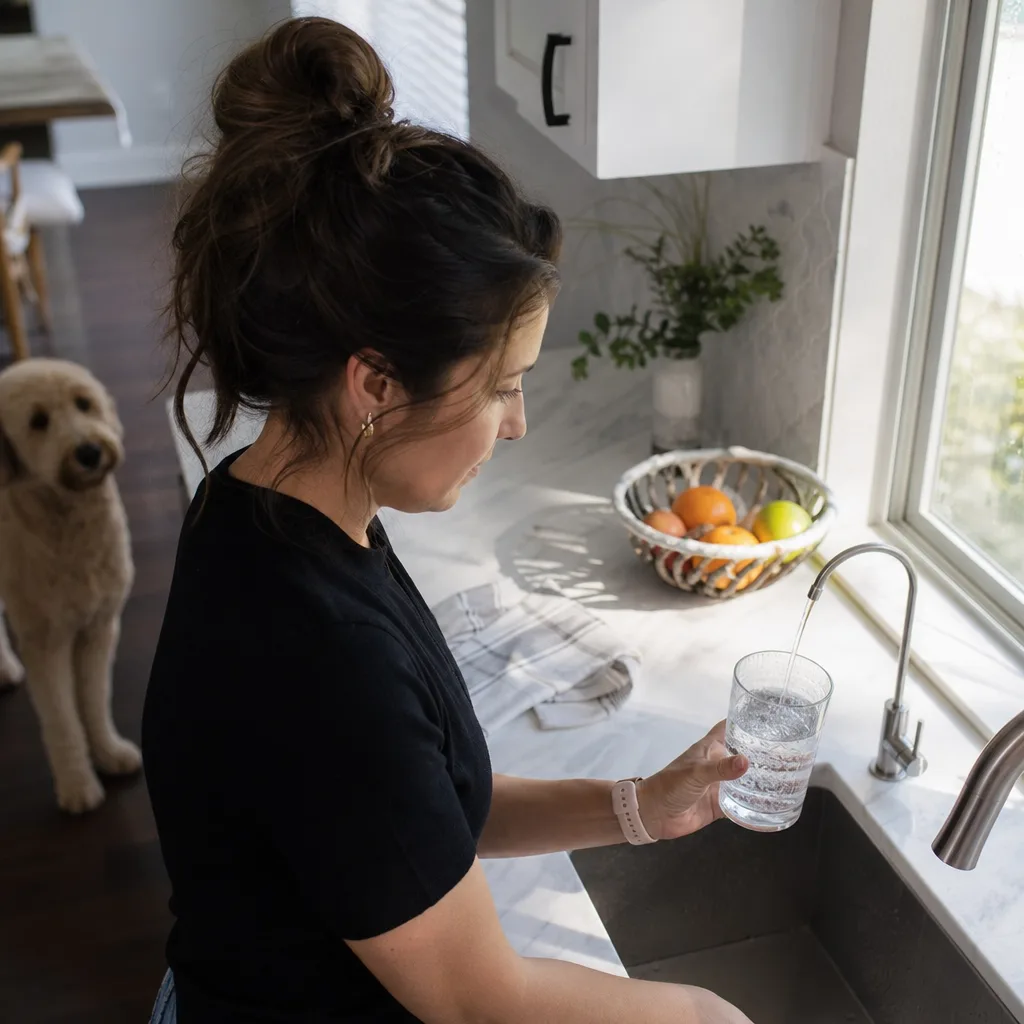
Once everything is hooked up, the storage tank has to fill. That part is slow by design. RO pushes water through the membrane a little at a time, so the first full tank can take a couple of hours. If you pour a glass right away and the stream feels weak, that’s normal. It picks up once the tank has had time to fill.
The first few days come with a few things that surprise people. None of them mean something’s wrong:
- A soft gurgle at the sink or drain. That’s filtered-out water heading down the drain while the tank refills.
- Water that looks a little cloudy in the glass and then clears in a few seconds. Those are tiny air bubbles, not dirt.
- A stream that slows down as you fill a big pot. The tank is running low and will refill on its own.
- Ice that tastes a little off at first, if your fridge is hooked up. Toss the first few batches so the new line clears out.
For the first week, open the cabinet every day or two and press a dry paper towel against the fittings. A slow weep is easy to catch early and easy to miss later. After that week, a quick look whenever you grab something from under the sink is plenty.
Long term, an RO system needs very little from you. The filters and the membrane do wear out, and they don’t all wear out at the same pace. The pre-filters get changed more often than the membrane. Follow the schedule in your system’s manual and write the install date on the housing or on your calendar. Heavy hard water can shorten the membrane’s life, as we covered above.
Here’s when you should call someone instead of waiting:
- There’s any water on the cabinet floor, even a little.
- You hear water running to the drain all day, long after the tank should be full.
- The flow drops way off and doesn’t recover overnight.
- The old chlorine taste or smell comes back before a filter change is due.
Most of those have simple fixes, like a filter that’s done, a fitting that needs snugging, or a valve that’s stuck. Catching them early keeps a small issue from turning into a soft cabinet floor.
Call 469-527-5131
Frequently Asked Questions
Common questions about Reverse osmosis system installation
How much water does a reverse osmosis system waste compared to a store-bought unit?
RO systems send some water down the drain while they filter, and this is normal for both DIY and professional setups. A properly placed drain connection, clamped above the trap, keeps that water flowing without backing up toward your disposal. If your drain line sags or kinks after install, that wastewater can pool instead of draining, which is a quick fix if caught early.
Can I use my reverse osmosis water for my houseplants?
Yes, RO water is safe for houseplants and some people notice healthier growth after switching. Since RO strips out most dissolved minerals and salts, plants that are sensitive to tap water chemicals often respond well to it. Just know this is a side benefit, not the main reason to install the system.
Will a reverse osmosis system lower my water pressure at the kitchen sink?
A properly sized RO system shouldn’t noticeably lower pressure at your other faucets, but the RO faucet itself fills slowly by design. That’s because the system pushes water through a fine membrane rather than letting it flow freely like a regular tap. If your whole house already has weak pressure, that’s worth checking before installation since it will make RO filtering even slower.
Ready to Get Started?
Call (469) 527-5131 Today, Get Service Today.