


Water Softener Installation in Plano: Know What Drives the Job Before You Book
Whole-home softeners that treat water where it enters your house, usually installed the same day.
What’s Covered on This Page
- What a Standard Water Softener Installation Includes
- Why Plano Homes Deal With Hard Water
- What Changes the Cost of Your Installation
- Signs Your Home Needs a Softener Installed
- When You Don’t Need a New Installation
- How often do I need to add salt to my water softener?
- Can a water softener be installed on a well system?
- Where does Plano’s tap water come from, and does that affect hardness?
What a Standard Water Softener Installation Includes
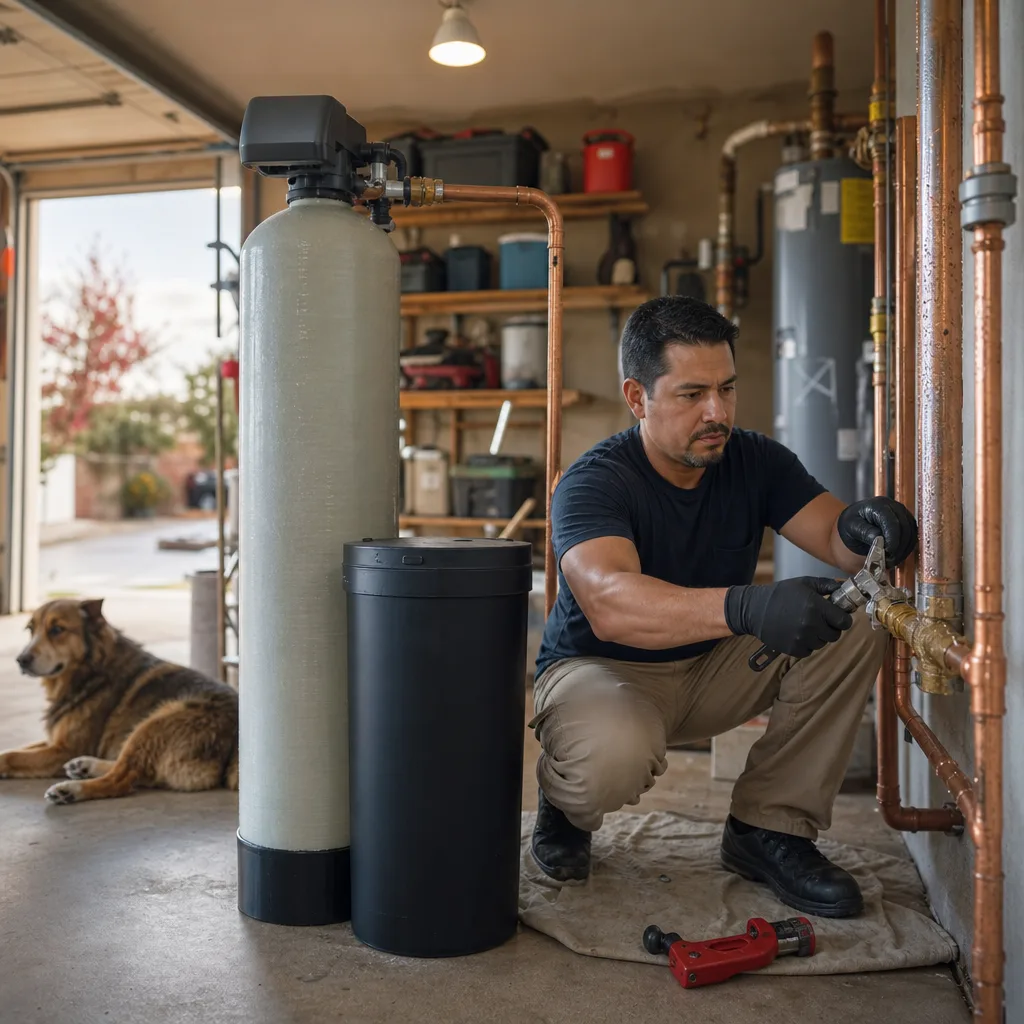
You should know what you’re paying for before anyone picks up a wrench. Here’s what our most common water softener job covers, in plain English.
- The softener and materials. You get the unit itself plus the fittings and parts needed to connect it.
- Professional installation at your main supply. The softener goes where water first enters your home, so every faucet, shower, and appliance gets softened water.
- A bypass connection. This is a valve that lets you send water around the softener. If the unit ever needs service, you can switch it off without shutting off water to the whole house.
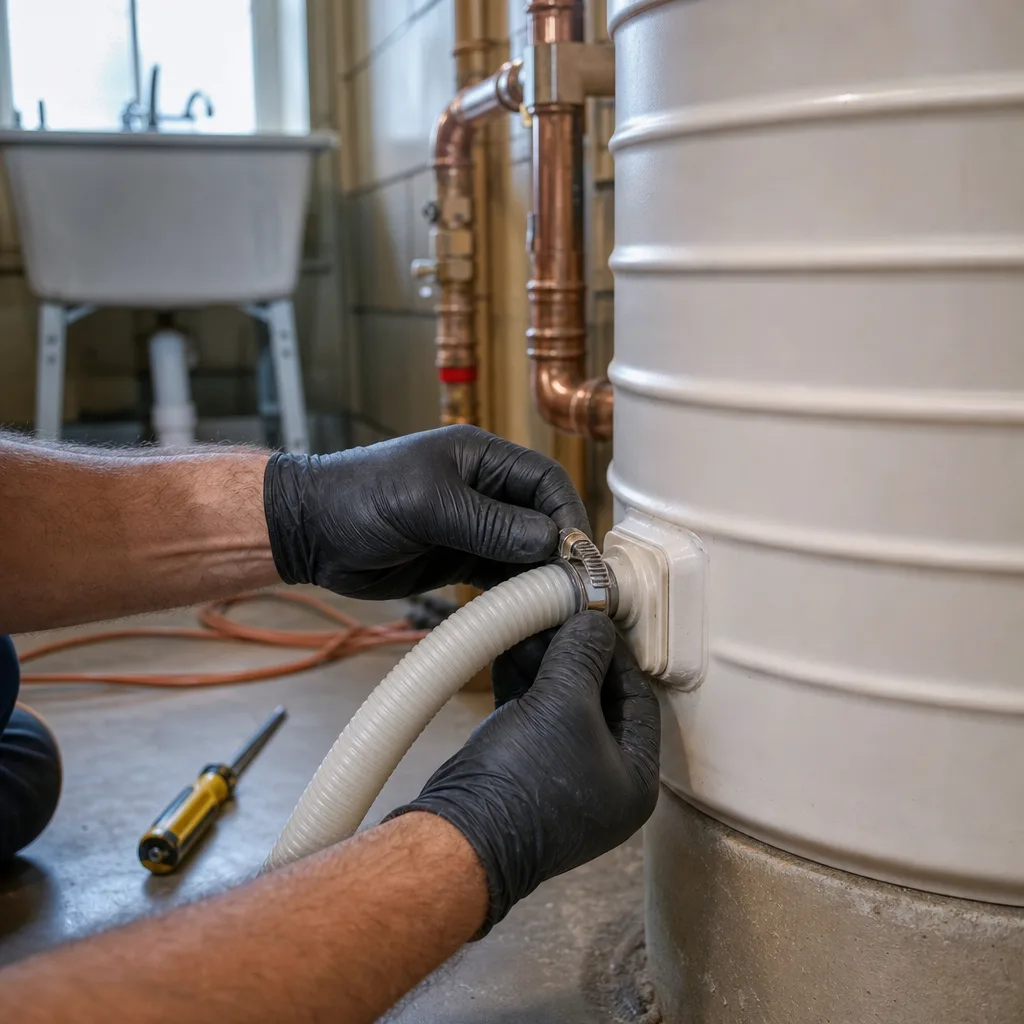
- A drain connection. Your softener cleans itself on a schedule and flushes that rinse water out. The drain line gives that water a proper place to go.
- Startup and testing. We don’t connect it and leave. The system gets started and tested before the job is called done.
- Haul-away of your old unit. If you’re replacing a tired softener, it leaves with us, so it doesn’t end up sitting in your garage.
Our typical price range for this work is $1,200-$3,500. The most common job falls at $1,700-$2,600. Where your home lands depends on a few things:
- Softener capacity and type. A bigger household that uses more water needs a unit that can keep up.
- The condition of your existing plumbing. Older or worn pipes at the hookup point can mean extra work.
- Drain access. A drain close to the softener location keeps things simple. A long run to reach one adds time and material.
- Added pre-filters or a loop. Some homes need a filter ahead of the softener, and some don’t have a place to connect one yet.
- Code upgrades. If something at the connection point needs to be brought up to code, that’s part of the cost.
Some things aren’t part of a standard install unless your quote says so. That’s so you know up front and aren’t surprised later.
- A plumbing loop, if your home doesn’t already have one. A loop is a pre-piped connection point that makes it easy to add a softener. Some homes were built with one. Others weren’t, and adding it is separate work.
- Electrical work. Many softeners need a nearby outlet to run the control head. If there isn’t one, outlet installation is its own job.
- Code corrections that fall outside the softener hookup.
- Permits, unless they’re stated in your quote.
There’s a $26-$99 service-call fee to come out. That fee is credited toward the job if you go ahead with Xtreme Air Services. If the total is more than you planned for, flexible financing is available on qualifying installations and larger jobs, on approved credit.
The point is simple. You see the scope and the price before the work starts. That way, the softener you pay for is the softener you get, hooked up right at the main line with nothing left hanging.
Why Plano Homes Deal With Hard Water
If you’re wiping white crust off your faucets every week, it’s not your cleaning. It’s your water. Hard water just means it carries a lot of dissolved minerals, mostly calcium and magnesium. Water in North Texas picks these up as it moves through the ground and the lakes the region draws from. By the time it reaches your tap in Plano, those minerals are along for the ride.
Here’s the good news first. Hard water isn’t a health problem. It’s safe to drink. The trouble is what those minerals do once they’re inside your home.
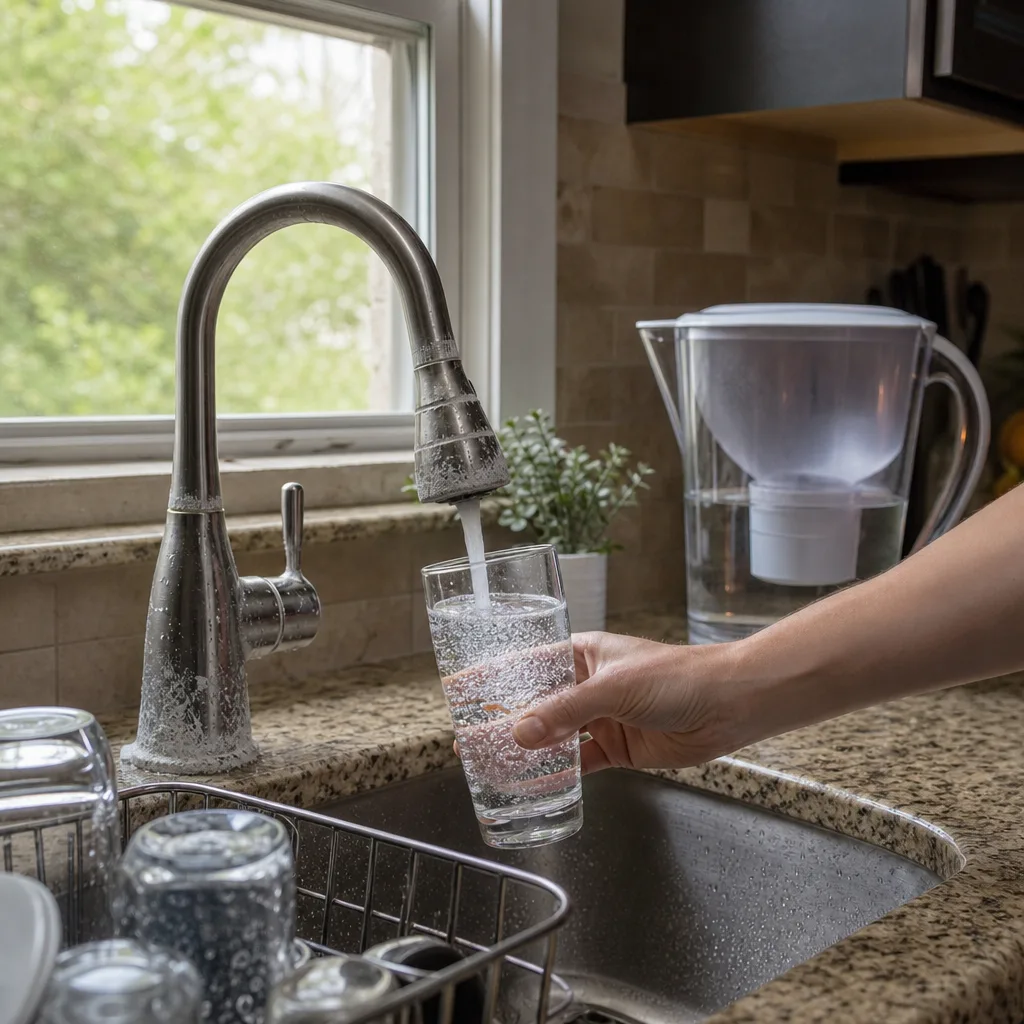
When hard water heats up or dries, the minerals get left behind as scale. That’s the chalky stuff. You notice it in places like these:
- Spots on dishes and glasses, even right out of the dishwasher.
- White buildup on showerheads, faucet tips, and glass shower doors.
- Soap and shampoo that won’t lather well, so you use more of it.
- Dry skin and dull, stiff-feeling laundry.
- A water heater that pops, rumbles, or takes longer to heat than it used to.
That last one matters most. The scale you can see on a faucet is the same scale you can’t see inside your water heater, your dishwasher, your washing machine, and your pipes. In a tank water heater, it settles on the bottom and builds a crusty layer between the burner and the water. The heater has to work harder to get through it. Over time, that adds up to wear, and to parts and appliances giving out sooner than they should.
Plano has a real mix of homes, from established neighborhoods built decades ago to newer subdivisions. In an older house, years of hard water may already have left scale inside the plumbing and fixtures. A softener won’t undo damage that’s already done, but it stops new buildup from piling on. In a newer home, you’re starting with a clean slate, so softening early helps protect appliances that are still young.
Many North Texas homes also keep the water heater in the garage or the attic. When a scaled-up heater in an attic starts to fail, it’s a bigger headache than one sitting on a garage floor. That’s one more reason to keep scale from forming in the first place.
This is why where the softener goes matters so much. A filter on one faucet only helps that one faucet. Hard water touches everything, so the fix has to start where water enters your home. When the softener sits at the main supply, every tap, shower, and appliance gets softened water, including the water heater that takes the biggest beating.
Not sure how hard your water really is? You can look up your city’s annual water quality report. Water utilities have to publish one every year. Or you can have your water tested at home. A test tells you how hard your water is, so you’re sizing a softener to your real water and your real household, not guessing. And if the numbers come back low, you’ll know you don’t need one.
What Changes the Cost of Your Installation
Two homes on the same street can get very different quotes for the same softener. That’s not guesswork or padding. The price follows your house: where the water comes in, what’s already piped, and how much softening your family needs. Once you know what to look for, you can usually tell which end of the range you’re headed for before anyone shows up.
Size is the first thing that moves the number. A softener isn’t one size fits all. It has to handle how hard your water is and how much of it your household uses each day. A couple in a smaller home needs less capacity than a family of five running laundry, showers, and the dishwasher every evening. If the unit is too small, it recharges too often and wastes salt and water. If it’s too big, you pay for capacity you’ll never use. Getting this right is where a water test earns its keep. It turns sizing into math instead of a guess.
The setup at your main line matters just as much. Here’s how two common situations compare:
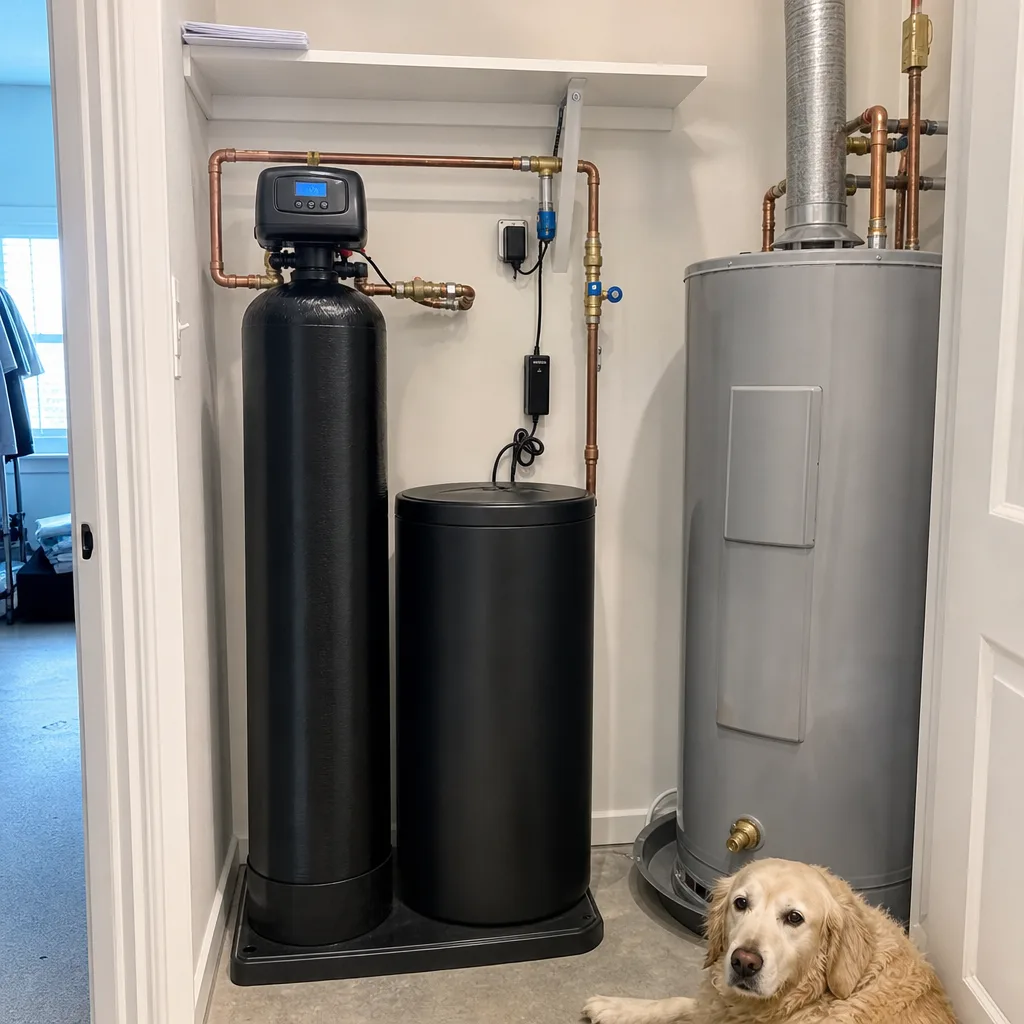
- The simple job: your home already has a softener loop, there’s an outlet close by, and a drain is a short run away. The softener connects to what’s already there, and the work stays straightforward.
- The involved job: there’s no loop, so the softener has to be tied into the main supply. The nearest drain is across the garage. The pipes at the hookup are older and need attention before anything new connects to them. Each of these adds time and material.
Neither one is wrong. They’re just different houses. A newer home may have been built ready for a softener. An older one often wasn’t, and that’s normal.
Some homes also need more than softening. If a test shows heavy sediment or iron, a pre-filter in front of the softener protects it so it lasts longer. If your water only needs softening, you shouldn’t be sold a filter you don’t need.
When you’re comparing quotes, ask each installer the same questions so you’re comparing the same job:
- How did you size this unit? Was it based on my water hardness and household size?
- Does my home already have a loop, or does your quote include adding one?
- Where will the drain line run, and is that in the price?
- Is there an outlet where the softener goes, or will I need one added?
- Does the quote cover a permit, or is that separate?
- Will you haul away my old unit?
A low quote that skips the loop, the drain run, or the outlet isn’t really lower. It’s just unfinished. The honest quote is the one that matches your actual house.
That’s why we look at your setup and give you upfront flat-rate pricing before any work starts. You’ll know whether you’re getting the simple job or the involved one, and why. No meter running, and no surprises on the bill.
Have questions? We’re happy to help.
Call Today, Get Service Today. Xtreme Air Services — North Plano is ready to help.
Signs Your Home Needs a Softener Installed
One crusty faucet doesn’t mean you need a softener. A pattern does. The question isn’t whether you have hard water. It’s whether it’s showing up all over your home and costing you something.
These signs point toward a whole-home softener:
- Scale shows up in more than one room. The kitchen faucet, the shower glass, and the dishwasher all have it. That points to the water coming into your house, not one bad fixture.
- You’ve got a softener loop and nothing hooked to it. Look near your water heater or on the garage wall for two capped pipe stubs or a short loop of pipe. Many homes were built ready for a softener that nobody ever installed.
- You just put in a new water heater or appliances. If you’re spending real money on equipment, it makes sense to keep scale off it from day one. Our water heater installation page covers that side of the job.
- A water test came back hard. That’s the clearest sign of all, because it’s a number and not a hunch.
Already have a softener? It may be the reason things look bad again. Watch for these:
- The salt level in the brine tank hasn’t dropped in weeks.
- Spots and buildup came back after a stretch of soft water.
- There’s standing water in the brine tank, or an error showing on the control head.
- Tiny beads show up in your faucet screens.
Sometimes a repair or a salt reset gets it going again. Sometimes the unit is worn out and replacement makes more sense. Either way, you’ll want to know which before you spend anything.
Here’s the part most installers skip. There are times you don’t need a softener at all.
- Your test shows low hardness. If the numbers are low, save your money. Wipe the fixtures and move on.
- The problem is one faucet. A single slow or spotty tap is often a clogged aerator. Unscrew the tip, soak it in vinegar, and rinse it. That’s a five-minute fix you can do yourself.
- Your water tastes or smells off. A softener removes hardness minerals. It doesn’t fix a chlorine taste or a rotten-egg smell. That’s a filtration job, like a carbon filter or whole-home filtration.
- You want better drinking water. If clean water at the kitchen sink is the real goal, a reverse osmosis system under the sink may be the better fit.
- You see heavy sediment or rusty stains. A softener alone may not be the answer. A sediment or iron filter might be needed first, or instead.
- You rent. A main-line install is a change to the property, so talk with your landlord first.
If you read this list and you’re still not sure, that’s normal. Start with a water test. It tells you whether you need a softener, a filter, both, or nothing. Then you can decide with real numbers instead of a sales pitch.
Watch Our Video
See How We Handle Water softener installation in Plano
Xtreme Air Services — North Plano
When You Don’t Need a New Installation
If you already have a softener and the spots are coming back, don’t assume it’s time for a new one. A lot of softeners that seem dead are fine. They’re stuck, switched off, or set wrong. Before you spend money, check a few things yourself.
- Look at the bypass valve. It’s the knob or lever on the pipes at the back of the unit. If someone bumped it during other plumbing work, your water is flowing right past the softener. Turn it back to service, and soft water should return in a day or so.
- Check the clock after a power outage. North Texas storms knock the power out every spring. Many older softeners use a timer, and a long outage can reset it. The unit then recharges in the middle of your morning shower, or not at all. Setting the time again is often the whole fix.
- Push on the salt. Sometimes salt forms a hard crust inside the brine tank, called a salt bridge. The tank looks full, but there’s an empty gap underneath, so no salty water gets made. A humid garage in a Texas summer makes this more likely. Gently tap the crust with a broom handle to break it up.
- Check the hardness setting. If you bought the house, the last owner may have set the unit for different water, or never set it at all. If a water test shows different numbers than the setting, adjust it to match.
If none of that helps, the next step is usually a repair, not a new system. Softeners have parts that wear out or clog, like the control valve, small screens and injectors, and the resin beads inside the tank that grab the minerals. When the tank is solid and the problem is one part, fixing it often makes more sense than replacing the whole thing. Simple upkeep and a proper salt setup can keep a healthy unit going for a long time.
Replacement starts to make sense when the problems stack up. Think of a cracked tank, resin that’s worn out, a control head that keeps failing, or a unit too small for the family living there now. If you’ve paid for repairs more than once in a short stretch, that’s another sign.
Even then, there’s good news. Swapping an old softener for a new one is usually simpler than a first-time install. The loop, the drain, and the outlet are often already in place from the last unit, which puts you closer to the simple end of the pricing we covered above.
The honest answer depends on what’s wrong with your unit. Is it a reset, a part, or the end of the road? A technician can usually tell you which after looking at the unit.
Call 469-527-5131
Frequently Asked Questions
Common questions about Water softener installation
How often do I need to add salt to my water softener?
Most households check the brine tank once a month and add salt when it’s less than half full. How fast you go through salt depends on your water hardness and how much water your household uses. A family running a dishwasher and daily showers will burn through salt faster than a couple in a smaller home. If the salt level hasn’t moved in weeks even though you’re using water normally, that can point to a salt bridge or a stuck unit, which we cover in the troubleshooting steps above.
Can a water softener be installed on a well system?
Yes, a softener can be installed on well water, but well water often needs more than softening alone. Well water in North Texas frequently carries iron and sediment along with hardness minerals. A water test tells you if you need a pre-filter ahead of the softener to protect it and keep it working longer. Skipping that step on well water can wear out a softener faster than city water would.
Where does Plano’s tap water come from, and does that affect hardness?
Plano draws its water from North Texas Municipal Water District sources, which pull from regional lakes and groundwater. That water picks up calcium and magnesium as it travels, which is what makes it hard by the time it reaches your tap. Your city’s annual water quality report lists the hardness numbers for your supply, but a test at your own home gives you the exact number for sizing a softener correctly.
Ready to Get Started?
Call (469) 527-5131 Today, Get Service Today.