


Emergency HVAC Service in Dallas: Fast, Honest Repairs When You Need Them
Real emergencies handled fast – with simple checks to try first and the cost explained before anyone is dispatched.
What’s Covered on This Page
- What Qualifies as an HVAC Emergency
- Signs You Can Try a Quick Fix First
- Why a Dallas Summer Turns a Broken AC Into an Emergency
- What Happens During an Emergency Service Call
- Common Failures That Trigger a Same-Day Repair Call
- Is a broken AC really considered an emergency in Texas?
- Who do I call for HVAC trouble that isn’t a true emergency?
What Qualifies as an HVAC Emergency
Here’s the simple test we’d give a neighbor. Ask yourself two questions. Is anyone in your home at risk right now? Will waiting make the damage worse? If the answer to either one is yes, don’t sit on it.
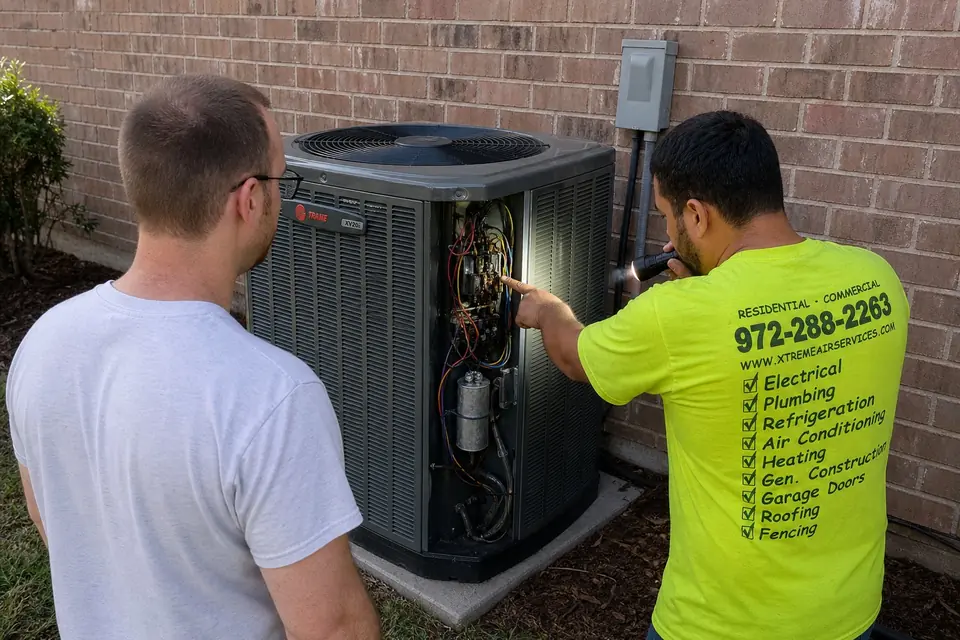
Call right away if you notice any of these:
- No cooling at all during a Dallas summer, especially if you have babies, older family members, someone with health problems, or pets at home. Upstairs rooms heat up fast once the system stops.
- No heat when a hard freeze rolls in. North Texas cold fronts can drop temperatures quickly, and a home without heat gets cold overnight.
- Water dripping through a ceiling or pooling near your indoor unit. Many Dallas homes have the air handler in the attic, so a clogged drain line or an overflowing pan can stain drywall and soak insulation before you ever see it.
- A burning, electrical, or gas smell coming from the system or the vents.
- Loud grinding, banging, or screeching, or a breaker that trips again every time you reset it.
- An outdoor unit that hums but won’t start, or a system that keeps clicking on and off every few minutes.
Some problems look scary but can wait for a regular appointment, or you can fix them yourself in a few minutes:
- The thermostat screen is blank. Try fresh batteries, and make sure it’s set to cool or heat, not off.
- The system won’t turn on at all. Check the breaker for your air handler or furnace and the outdoor unit. If it tripped once and stays on after you reset it, keep an eye on it. If it trips again, that’s a call.
- Airflow feels weak. Pull the filter. One that’s caked with dust can choke airflow and make the whole house feel warm, and swapping it costs you a few dollars.
- The system runs and blows cool air but can’t quite reach your set temperature on the hottest afternoon. That can be normal in a Texas heat wave. If it catches up by evening, book a regular repair instead.
- One room runs a little warmer than the rest. That’s usually an airflow or duct question, not an emergency.
One thing shouldn’t factor into your choice: the clock. Xtreme Air Services charges no extra for nights or weekends, so calling at 9 p.m. on a Saturday costs the same as calling on a Tuesday morning. You can decide based on what’s happening in your home, not fear of a bigger bill.
If you’re stuck between the two lists, that’s okay. Talk to a real person on our team, describe what you’re seeing and hearing, and decide together whether it needs a same-day visit or can wait until it’s convenient for you.
Signs You Can Try a Quick Fix First
You’ve already checked the thermostat, the breaker, and the filter, and the system still isn’t right. A few more checks take minutes, need no tools beyond a flashlight, and solve a surprising share of “my AC just quit” moments. If one of these works, you’ve saved yourself a visit. We’re happy to tell you that.
- The outdoor shutoff got bumped. Most outdoor units have a small gray box on the wall nearby with a switch or pull-out handle. A mower, a weed trimmer, or a curious kid can knock it to off. Make sure it’s fully on. Don’t open the unit itself.
- The furnace or air handler door isn’t seated. The blower compartment has a safety switch that keeps the system off when the panel is loose. If you just changed the filter in your attic or hall closet unit, press the door firmly back into place.
- The fan is set to on instead of auto. With the fan on, air keeps blowing between cooling cycles, so it feels warm at the vents even when the system is working. Switch it to auto and give it 15 minutes.
- The outdoor unit can’t breathe. Grass clippings, leaves, and storm debris can pack against the coil fins. Clear anything stuck to the outside and keep plants trimmed back a couple of feet so hot air can escape.
- The drain line shut things down. Many systems have a float switch that turns cooling off when the condensate drain backs up. If there’s water sitting in the pan under your indoor unit but no ceiling stain or dripping, the switch did its job. Some homeowners clear the outside end of the drain line with a wet-dry vacuum, and the system starts again once the water drops.
A frozen coil is the other common one. If you see ice on the copper line going into your outdoor unit, or frost on the indoor coil, set the thermostat to off and the fan to on. Lay a towel or two under the indoor unit for the melt water, and give it a few hours to thaw. Running a frozen system just makes the ice worse.
In winter, a heat pump that puffs steam and goes quiet for a few minutes is usually just running its defrost cycle. That’s normal, especially on damp North Texas mornings near freezing.
One firm rule: don’t remove panels on the outdoor unit or reach into wiring. Capacitors can hold a charge even with the power off. If your check means opening up the equipment, you’ve reached the point where it’s our job, not yours.
Why a Dallas Summer Turns a Broken AC Into an Emergency
A broken AC in April is a hassle. The same broken AC in a Dallas July is a different problem. The part that failed is the same, but the heat changes how fast your home gets uncomfortable and how much damage can pile up while you wait.
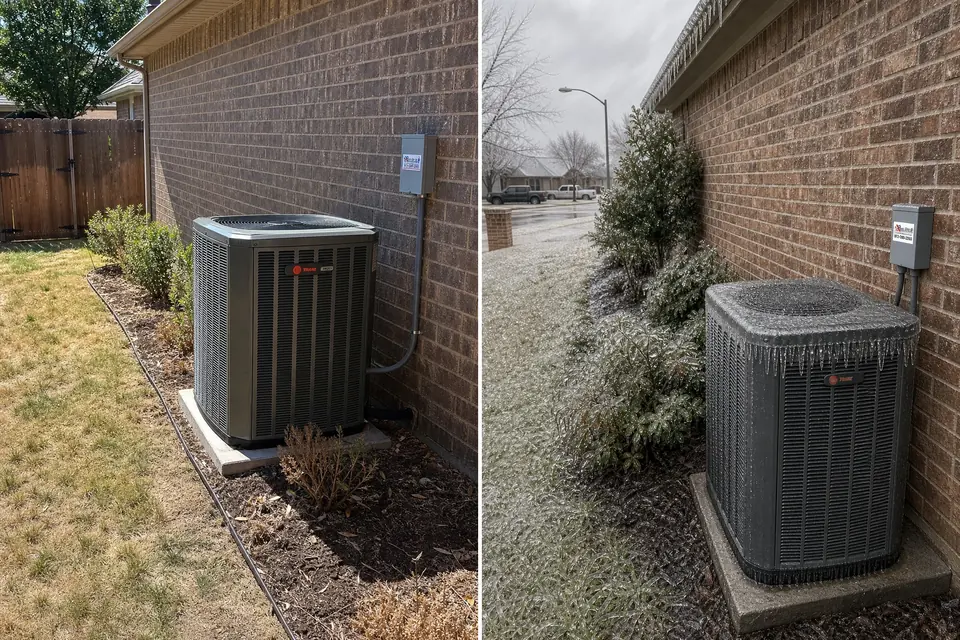
In a Dallas summer, the evening doesn’t save you. Our nights often stay warm enough that your house never gets a chance to cool off on its own. In milder places, you can open the windows after sunset and ride it out until morning. Here, a system that quits at 2 p.m. can leave you with a hot house at bedtime and a hotter one the next afternoon.
The way many Dallas homes are built adds to it. Many brick ranch homes from the 1950s through the 1990s sit on concrete slabs, with ductwork and the air handler up in the attic. Brick and concrete soak up heat all day and keep giving it back at night. The attic runs much hotter than the outside air, so the ducts that carry your cool air are sitting in an oven. Even after the repair, it takes a while for the system to pull a heat-soaked house back down to a comfortable temperature. The longer it sits off, the longer that recovery takes.
Heat is also hard on the equipment itself. On the hottest days, your AC may run almost nonstop. That’s when weak parts tend to give out. A capacitor, the small part that gives the motors a jolt to start, can fail after weeks of long run times. When one part quits, the parts around it have to work harder.
- An outdoor unit that hums but won’t start is straining. Leaving it on can put extra heat and stress on the compressor, the most expensive part of the system.
- A fan motor that stops while the compressor keeps running can let the unit overheat.
- A system that keeps shutting off and restarting wears down parts with every short cycle.
If you hear or see any of those, set the thermostat to off and leave it there. Don’t keep restarting it to see if it catches. Giving the system a rest protects the parts that still work.
This is also where your bill is decided. The size of an emergency repair depends mostly on how big the failure is and whether more than one part has gone bad. A single failed part caught early is usually a straightforward first-visit fix. That same part, left to drag down the compressor or a motor for a day or two, can turn into a bigger repair with more parts on the quote. Calling sooner isn’t about panic. It’s about paying for one problem instead of three.
Timing matters in another way too. When a heat wave hits, a lot of your neighbors’ systems are under the same stress as yours. Calling as soon as you know something’s wrong, rather than waiting to see if it fixes itself by dinner, gives you the best shot at a same-day visit. Because there’s no extra charge for nights or weekends, waiting for a cheaper hour doesn’t save you anything.
Have questions? We’re happy to help.
Call Today, Get Service Today. Xtreme Air Services — Oak Lawn is ready to help.
What Happens During an Emergency Service Call
You call, and a real person answers. We’ll ask what you’re seeing, hearing, or smelling, and whether anyone at home is at risk. That helps us know what we’re walking into before we get there. Then we get a licensed, background-checked, drug-tested technician headed your way, with same-day service available.
While you wait, a few small things make the visit faster:
- Clear a path to your indoor unit. In a lot of Dallas homes, that means the attic hatch or pull-down stairs in a hallway or garage, so move anything stacked underneath.
- Make sure the gate to the outdoor unit is unlocked and pets are put away.
- Jot down what happened and when. Did it quit all at once? Was there a noise, a smell, or a tripped breaker first? Did you reset anything? These details point us toward the problem faster.
- If you shut the system off to protect it, leave it off. We’d rather start with it resting.
When the technician arrives, the first job is finding the failed part. That means testing, not guessing. A good diagnosis confirms what broke and checks whether anything else got hurt along with it. Remember the hum, the frozen coil, or the short cycling you noticed? That’s the kind of clue that helps narrow it down. Most calls turn out to be a single common failure that gets fixed on the first visit.
Before any work starts, you get the price. We use upfront flat-rate pricing, so you see the cost of the repair and approve it first. No meter runs while we work, and the price doesn’t climb because the job took longer than expected. If you’d rather not go ahead, you can say no. There’s a service-call fee of $26 to $99, and it’s credited toward the repair if you move forward with us.
For the most common emergency job, finding the failed part, repairing or replacing it, and making sure the system runs right, the price is usually $200 to $525. That covers the diagnosis, the labor, the standard replacement part, testing, and cleanup. If we find a second failed part, a major component, or work that needs a code upgrade or a permit, we’ll quote that separately and explain why. You decide before anything changes.
After the repair, the technician runs the system and checks that it’s doing its job, not just turning on. You should feel cool air at the vents in summer or warm air in winter, and the outdoor unit should start and run without straining. Then we clean up the work area, whether that’s the attic, the closet, or the side yard.
Before the tech leaves, you’ll know what failed, what was replaced, and whether anything else is worth watching. If your system is older and the visit turned up bigger concerns, you’ll hear that plainly, along with the option to handle it later. Financing isn’t usually needed for a smaller repair like this, but it’s available if a larger repair or replacement ever becomes the right call.
Watch Our Video
See How We Handle Emergency HVAC service in Dallas
Xtreme Air Services — Oak Lawn
Common Failures That Trigger a Same-Day Repair Call
Most emergency breakdowns come down to a short list of parts. Knowing them helps you describe what’s happening when you call. It also gives you a rough idea of whether you’re looking at a single-part fix or a bigger repair.
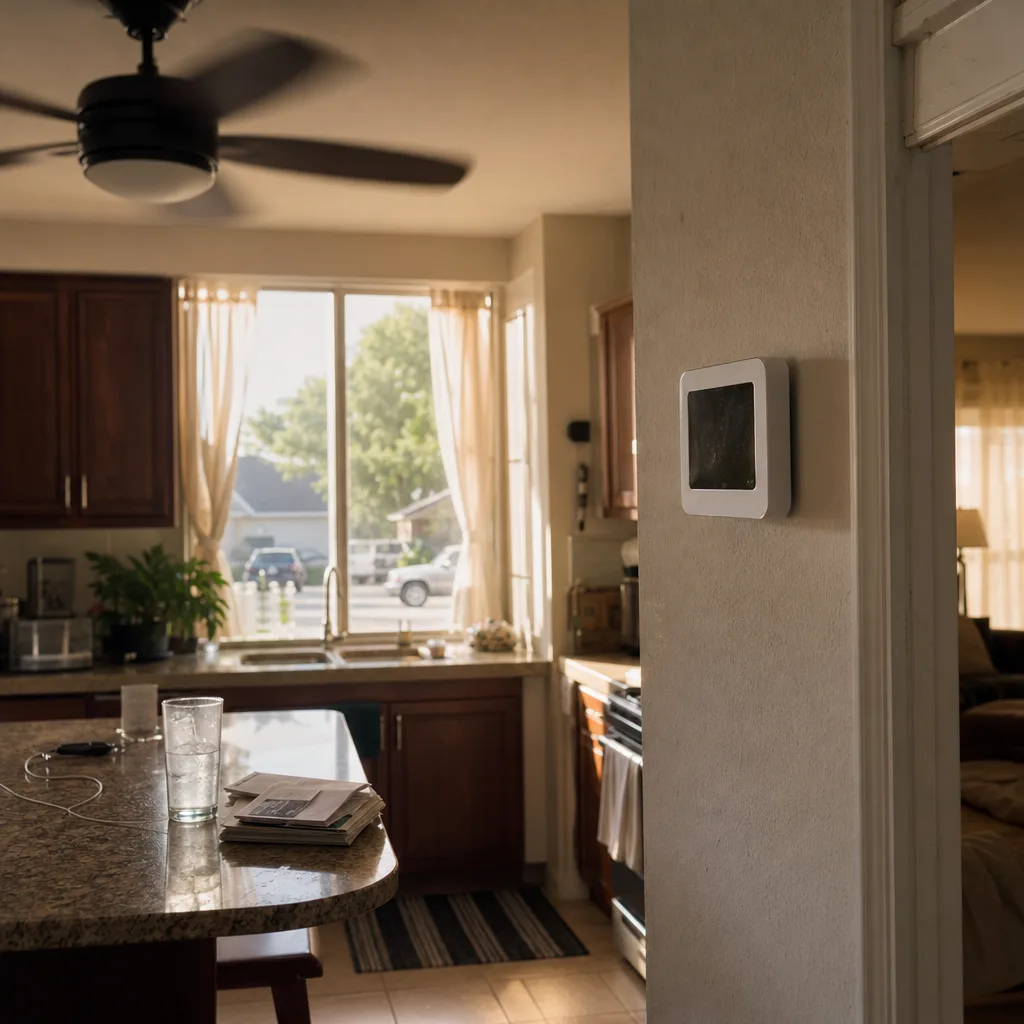
In summer, these are the usual suspects:
- Capacitor. This is the part behind that hum-but-won’t-start outdoor unit described above. Long run times in Dallas heat wear capacitors out, and a swap is usually a straightforward AC capacitor replacement.
- Contactor. This is the switch inside the outdoor unit that tells it when to run. Its contacts can get pitted or stuck. You might notice the outdoor unit won’t come on at all, or it keeps running after the house is cool. Bugs and ants sometimes get inside and cause the same trouble.
- Condenser fan motor. The compressor hums, but the big fan on top of the outdoor unit doesn’t spin, or it spins slowly. Without that fan, heat can’t escape and the unit overheats. This is a fan motor replacement, not a new system.
- Blower motor. The outdoor unit runs, but little or no air comes out of your vents. That points to the motor that pushes air through your ducts. It sits in the attic or hall closet unit and may need repair or replacement.
- Refrigerant leak. The system runs but blows warm or barely cool air, or the coil keeps icing over after you’ve thawed it. Refrigerant isn’t used up like gas in a car. If it’s low, there’s a leak, and the real fix is finding and repairing the leak, not just topping it off.
- Clogged condensate drain. This is the float-switch shutdown or attic overflow covered earlier. A professional AC drain line cleaning clears the clog deeper in the line so it doesn’t keep coming back.
- Control board. The system acts erratic, won’t respond to the thermostat, or shuts off for no clear reason. Storms and power surges can damage these boards. A circuit board replacement is usually needed.
In winter, when a North Texas cold front moves in, the common ones change:
- Ignitor. Your gas furnace clicks and tries to start, but never lights. Ignitors crack with age, and furnace ignitor replacement is a quick part swap.
- Flame sensor. The burners light for a few seconds and then shut off, over and over. A dirty sensor can’t confirm there’s a flame, so the furnace shuts itself down for safety. Flame sensor cleaning often fixes it.
- Heat pump problems. A heat pump that blows cool air during a freeze, or one that ices over and never clears, may have a failed defrost control or a refrigerant issue. Neither is the normal defrost cycle mentioned earlier.
A part like a capacitor, contactor, ignitor, or flame sensor is often the kind of single failure that’s fixed in one visit. The compressor is different. It’s the heart of the outdoor unit, and if it’s failed, that’s a major component. It gets its own separate quote and a plain talk about whether repair or replacement makes more sense for your system’s age.
Hail is worth one more mention. A North Texas storm can flatten the thin metal fins on your outdoor coil, so the unit can’t shed heat on the next hot day. If your system started struggling right after a hailstorm, tell us. It helps point the diagnosis in the right direction.
Frequently Asked Questions
Common questions about Emergency HVAC service
Is a broken AC really considered an emergency in Texas?
Yes, no cooling during a Dallas heat wave counts as an emergency, especially with kids, older family members, or pets in the home. Texas summers push indoor temperatures up fast once a system quits, and a home that can’t stay safe or livable is exactly what emergency service is for. If your house is heating up with no relief in sight, that’s a same-day call, not a wait-and-see situation.
Who do I call for HVAC trouble that isn’t a true emergency?
If your system is still running but just needs a tune-up or a non-urgent repair, you can schedule a regular appointment instead of an emergency visit. Things like one slightly warm room, weak airflow from a dirty filter, or a system that struggles only on the hottest afternoon but catches up by evening usually fall into this category. Saving the emergency call for true no-cooling, no-heat, or water-leak situations helps everyone get seen faster.
Ready to Get Started?
Call (469) 269-6373 Today, Get Service Today.