


HVAC System Maintenance in Dallas That Covers the Whole System, Not Just a Filter
A full inspection, cleaning and safety check on every visit, so you know exactly what you're paying for.
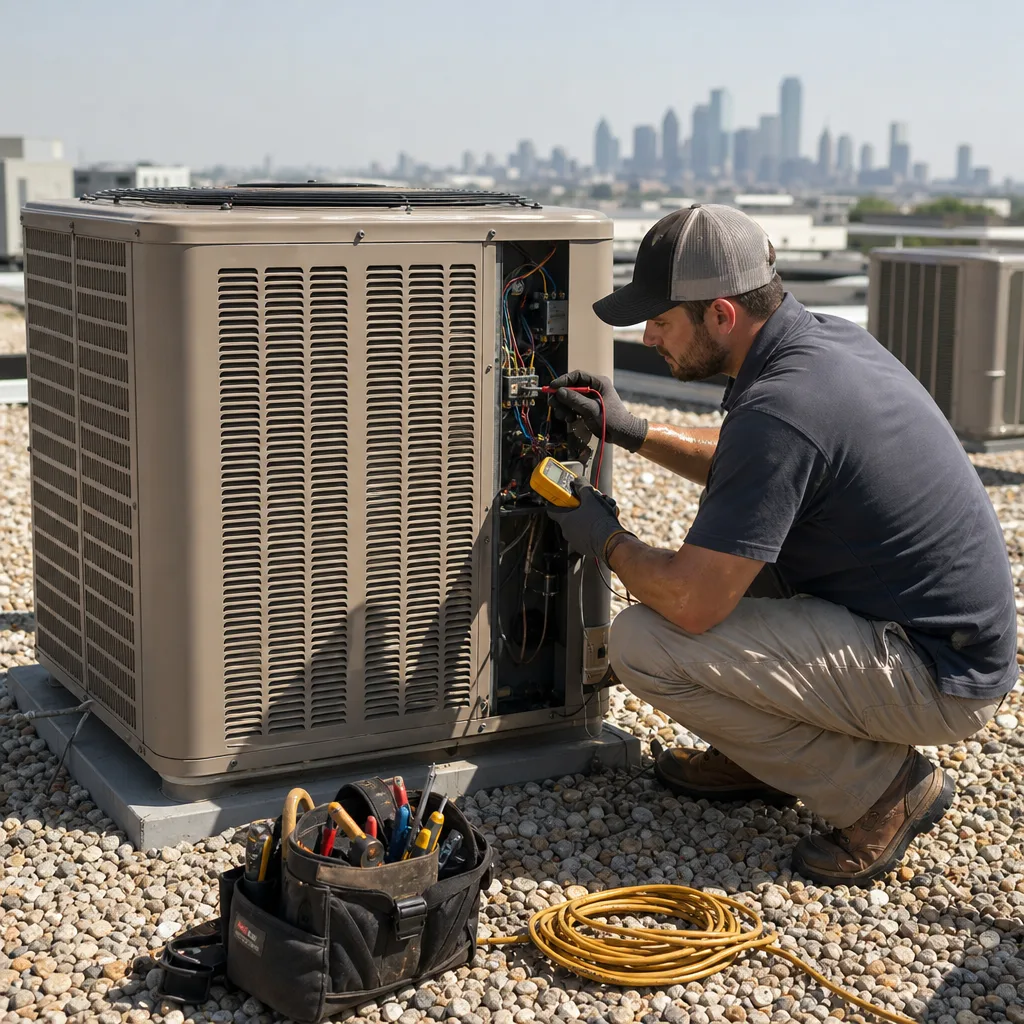
What’s Covered on This Page
- What a Full HVAC Maintenance Visit Covers
- Why Dallas Summers Put More Strain on HVAC Systems
- Signs Your System Is Due for a Maintenance Visit
- When Maintenance Is Not the Right Call
- How Often to Schedule HVAC Maintenance in Dallas
- Can I do HVAC maintenance myself instead of hiring someone?
- Does HVAC maintenance help lower my energy bills?
- What’s the difference between a maintenance visit and a repair visit?
- Will scheduling maintenance in spring really help avoid summer breakdowns?
What a Full HVAC Maintenance Visit Covers
A real tune-up is more than a new filter and a glance at the thermostat. The point is to find the small stuff, like a worn part, a dirty coil, or a slow drain, while it’s still small. That’s how you keep a July afternoon from turning into a no-cool emergency.
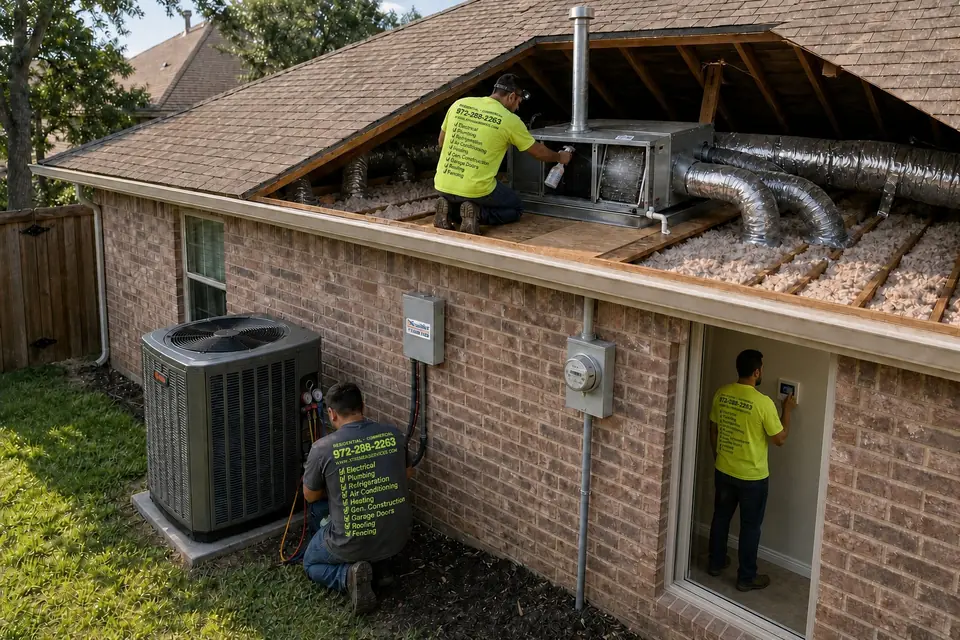
Our maintenance visit covers three things: a full inspection, cleaning, and a check of how well and how safely your system is running. In general, a thorough tune-up on a home system touches these areas:
- Inspection: looking over the outdoor unit, the indoor unit, the wiring connections, and the parts that wear out over time, so problems get caught early.
- Cleaning: clearing dirt and debris that block airflow and make the system work harder than it needs to.
- Airflow and filter: checking that air moves freely through the system, because a clogged filter or a blocked return can starve it.
- Condensate drain: making sure the water your AC pulls out of the air drains away instead of backing up.
- Performance check: running the system to see if it’s cooling or heating the way it should.
- Safety check: looking for anything that could put your home or family at risk, which matters most on heating equipment.
Dallas homes add a few wrinkles. In a lot of houses here, the indoor unit sits up in the attic, and attics bake through a long Texas summer. Heat is hard on parts, and an attic unit is easy to forget about because you never see it. A slow or clogged drain line up there can leak into the ceiling below before anyone notices. That’s why the drain and the attic equipment deserve real attention, not a quick look from the ladder.
Here’s the part people worry about: what happens if the tech finds something? The maintenance price covers the inspection, cleaning, and checks. It doesn’t cover repair parts or corrective work. If something needs fixing, you’ll get that price separately, with upfront flat-rate pricing that you approve before work starts. No meter running, and no surprise line on the bill. You can say yes, ask questions, or think it over.
No matter who you hire, ask what they found when the visit’s done. Which parts look worn? Is anything close to failing? Is it urgent, or can it wait until the off-season? A good tech will answer in plain English and tell you when something can wait. If all you hear is “everything’s fine” after a few minutes in the driveway, you didn’t get a full maintenance visit.
Why Dallas Summers Put More Strain on HVAC Systems
Your AC in Dallas doesn’t get a few hot weeks and then a break. It runs hard for months, often all afternoon and well into the night. More hours mean more wear on the same parts every single season. That’s why a yearly check before summer pays off more here than it does in a milder place.
Think of it like miles on a car. The capacitor, which gives the motors a jolt to start, wears down with use. So do the fan motors and the contactor, the switch that turns your outdoor unit on and off. Each one wears a little with every start and every hour of running, and heat speeds that up. A part that’s getting weak in April may hold on for a while. Then the first long heat wave hits, and that’s often when it quits. That’s also the week every HVAC company in town is busiest.
On top of the long runtime, North Texas throws a few extra problems at your system:
- Hail and spring storms: hail can flatten the thin metal fins on your outdoor unit. Bent fins block airflow, so the unit has to run longer to cool the same house.
- Dust, pollen, cottonwood fluff, and grass clippings: these mat onto the outdoor coil. A dirty coil can’t get rid of heat well, so your system works hardest on the days you need it most.
- Shifting clay soil: our clay swells when it’s wet and shrinks during dry spells. That movement can tip the outdoor unit’s pad out of level and put stress on the copper lines running into the house.
- Attic heat: as we covered above, an indoor unit in a baking attic takes a beating that’s easy to miss.
Humidity adds to the load, too. Your AC doesn’t just cool the air. It pulls water out of it. On a muggy summer day, that can mean a lot of water heading down the drain line, which is one more reason that drain needs a real check.
The age of your home plays a part. Many Dallas houses are older ranch homes with systems and ductwork that have logged a lot of summers. Newer homes often have higher-efficiency equipment, but that equipment only saves you money when the coils are clean and air moves freely. Either way, the Texas heat finds the weak spot.
Summer isn’t the only test. Your heater can sit unused for months. Then a sudden cold front rolls in, and it gets switched on all at once. That’s why heating equipment deserves its own look in the fall, with the safety check up front.
Timing is the key. The best window for AC maintenance is spring, before the first long stretch of heat. If a weak part turns up then, you can decide on it calmly, on your schedule, with the price in front of you. That beats finding out at 4 p.m. on a 100-degree afternoon with a warm house and a long wait.
Signs Your System Is Due for a Maintenance Visit
Most systems don’t quit without warning. They drop hints for weeks first. If you know what to look for, you can book a calm maintenance visit instead of waiting for a breakdown.
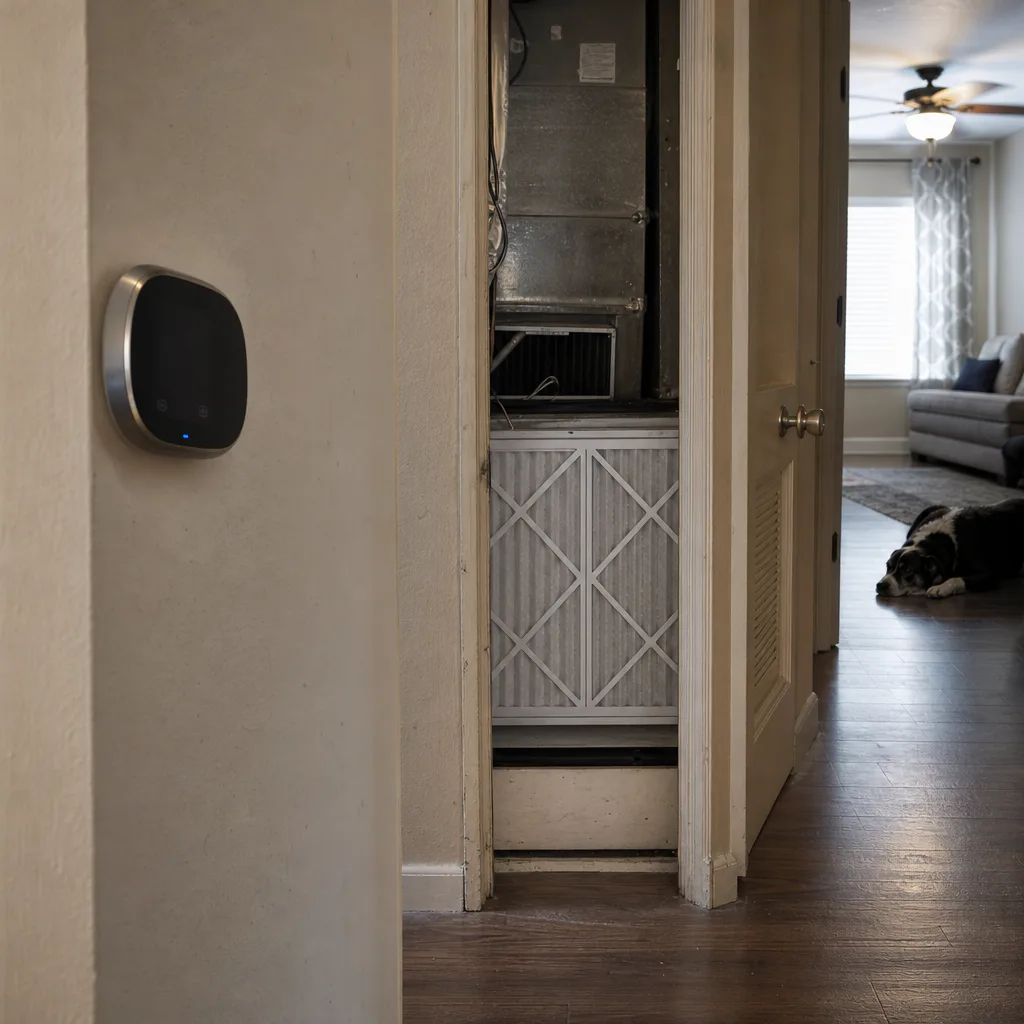
Here are the signs that your system is asking for attention:
- Your bill jumped and the weather didn’t. Compare this month to the same month last year. If your power bill climbed and your habits didn’t change, your system is likely working harder to do the same job.
- It runs and runs. A system that barely shuts off on a mild 85-degree day is struggling. It should cycle on and off in a steady rhythm.
- It turns on and off too fast. Short bursts of running followed by a quick shutoff, over and over, are called short cycling. That wears parts out faster and rarely cools the house well.
- Some rooms never feel right. A back bedroom that’s always warmer, or weak air from a few vents, can point to dirty parts, a clogged filter, or airflow trouble.
- The house feels sticky. If it’s cool but clammy inside, your AC may not be pulling enough moisture out of the air.
- New noises. Rattling, buzzing, clicking, or squealing that wasn’t there last summer is worth a look.
- Ice on the copper line or the indoor coil. Frost in the middle of summer means something is off with airflow or refrigerant.
- Water where it shouldn’t be. Drips near the indoor unit, a damp spot on the ceiling, or a full drain pan are signs the drain needs attention.
- It’s been more than a year. Even with no symptoms, a system that hasn’t had a full check since last summer is due.
On the heating side, a dusty smell for the first few minutes of the season is common. That’s usually dust burning off. A smell that lingers, a burner that struggles to light, or a furnace that clicks without starting is different. Have a pro look at those.
It also helps to know when maintenance isn’t the right call. If your system won’t turn on at all, or it’s blowing warm air on a hot afternoon, you’re past tune-up territory. That’s a repair, and you’ll want it handled the same day, not added to a maintenance schedule.
Picture this. It’s late May. Your upstairs feels a couple of degrees warmer than it did last year, and the outdoor unit hums a little louder than you remember. Nothing is broken, and the house is still livable. That’s the perfect time for a maintenance visit, because you still have choices. Wait until the first 100-degree week, and that same small problem could leave you sweating it out while you wait for help.
Ready when you are – get in touch today.
Call Today, Get Service Today. Xtreme Air Services — Oak Lawn is ready to help.
When Maintenance Is Not the Right Call
A maintenance visit is a great tool, but it isn’t the answer to every problem. Here’s when we’d tell you to skip it or book something else.
You already had it done this year. If your system got a full check in the last 12 months and you haven’t noticed any of the signs above, you don’t need another one yet. Paying twice in one year won’t make your system last longer. Save your money and plan the next visit for spring.
Your system is brand new. A system installed in the last year or so has fresh parts, clean coils, and a clean drain. It still needs regular filter changes, but it usually doesn’t need a full tune-up in its first season. If something seems off with new equipment, call the company that installed it first.
Something has already broken. As we covered above, no cooling or warm air on a hot day calls for a repair, not a tune-up. The same goes for a system that trips the breaker, a burning smell, or any smell of gas. Those aren’t maintenance questions, and they shouldn’t wait for a scheduled visit. With us, a repair visit has a $26-$99 service-call fee, and that fee is credited toward the repair if you go ahead with Xtreme Air Services.
Your system is worn out. A tune-up can catch problems early and keep a healthy system running well. It can’t reverse years of wear. If your system has needed repair after repair, and your bills keep climbing even after it’s been serviced, cleaning won’t change that. At that point, the real question is repair versus replacement. That’s a different conversation, and a good tech will tell you so plainly.
A room has never felt right. A tune-up can fix airflow lost to dirt and clogs. It can’t fix a room that was never set up to cool well in the first place. Many older Dallas ranch homes have had rooms added or garages closed in over the years, and the ductwork wasn’t always extended to match. If that back room has been hot since the day you moved in, the fix is likely in the ducts or a zoning setup, not a cleaning.
Before you call anyone, check these things yourself. They’re free and they take a few minutes:
- Make sure the thermostat is set to cool or heat, set to the right temperature, and not stuck on a schedule you forgot about.
- Swap the thermostat batteries if the screen is blank or dim.
- Look at the outdoor unit. Pull back weeds, bushes, and piles of grass clippings so air can move freely around it.
- Make sure the supply vents and the big return grille aren’t blocked by furniture, rugs, or curtains.
If one of these fixes it, you’re done, and you didn’t need us. If the problem is still there, you’ll know it’s real, and you’ll know whether to ask for a tune-up or a repair.
Watch Our Video
See How We Handle HVAC system maintenance in Dallas
Xtreme Air Services — Oak Lawn
How Often to Schedule HVAC Maintenance in Dallas
For most Dallas homes, the answer is simple. Get each system checked once a year at minimum. If your system heats and cools, or you have more than one, the schedule changes a little. Here’s how to figure out yours.

- Central AC with a gas furnace: two short visits a year, one for each piece of equipment. The AC gets its check in spring, before the heat. The furnace gets its check in fall, before the first cold front.
- Heat pump: plan on twice a year. A heat pump does both jobs with the same outdoor unit, so it works hard in July and again in January. That’s double the hours on the same parts, and the outdoor unit faces the same hail, dust, and shifting clay soil all year.
- Two or more systems: many larger Dallas homes have one system for downstairs and another for upstairs. Each one needs its own check. The upstairs unit often lives in the hottest part of the attic, so don’t skip it just because the downstairs unit seems fine.
- An older system that’s still running well: once a year is still the floor. Some owners of older equipment like a check before summer and another before winter, so a worn part gets caught before it fails.
Between visits, your job is the air filter. Check it every month during summer, when your system runs the most. If you can’t see light through it, change it. That one habit protects your system more than anything else you can do on your own.
Cost depends on what you’ve got. Our most common job is routine maintenance on one system, which runs $100-$200. That covers a full inspection, cleaning, and a performance and safety check. Our typical range for maintenance is $100-$300. Your price can move up or down based on a few things:
- How many systems or units you have.
- How easy the equipment is to reach, like a unit tucked into a tight attic.
- How much buildup or neglect the tech finds.
- Whether it’s a one-time visit or part of a maintenance plan.
If you’d rather not keep track of the calendar yourself, ask us about our preventative maintenance plans. If a once-a-year visit fits you better, that’s fine too. The goal is the same either way. Your system gets looked at before Dallas weather puts it to the test, not after.
Any repair parts or fixes the tech finds aren’t part of the maintenance price. You’ll get those quoted separately, and you’ll approve the price before any work starts. Financing isn’t usually offered on a small job like a tune-up. It is available on larger repairs and replacements if a visit turns up something bigger.
Not sure when your system was last checked? That alone is a good reason to book. A tune-up now gives you a clean starting point and a real answer on how your equipment is holding up.
Call 469-269-6373
Frequently Asked Questions
Common questions about HVAC system maintenance
Can I do HVAC maintenance myself instead of hiring someone?
You can handle a few basics yourself, like checking your filter every month and clearing weeds and clippings away from the outdoor unit. But a full tune-up means opening up the equipment, checking electrical connections, and testing refrigerant performance, which calls for a trained tech. If you’ve already swapped a dirty filter and the problem is still there, that’s a sign to book a real visit instead of guessing further.
Does HVAC maintenance help lower my energy bills?
Yes, a clean, well-running system uses less energy to do the same job. Dirty coils, clogged filters, and worn parts all make your system work harder, which shows up as a higher bill even when the weather hasn’t changed. If your bill jumped and your habits didn’t, that’s often a sign your system needs attention.
What’s the difference between a maintenance visit and a repair visit?
A maintenance visit inspects, cleans, and checks your system’s performance and safety, while a repair visit fixes something that’s already broken. If your system won’t turn on or is blowing warm air on a hot day, that’s a repair, not a tune-up, and it should be handled the same day. Maintenance works best as a planned, once-a-year check rather than an emergency fix.
Will scheduling maintenance in spring really help avoid summer breakdowns?
Yes, spring is the best time because weak parts can be caught and decided on calmly before the heat arrives. Parts like the capacitor, fan motors, and contactor wear down with every hour of running, and a part that’s barely hanging on in April is more likely to fail during the first long heat wave. Booking ahead means you get to choose the schedule instead of waiting on a 100-degree afternoon with a houseful of warm air.
Ready to Get Started?
Call (469) 269-6373 Today, Get Service Today.