


HVAC System Repair in Dallas: Fast, Honest Fixes You Can Verify
Repairs that fix the cause, not just the symptom – with quick checks to try first and a clear call on what can wait.
What’s Covered on This Page
- What a Technician Checks First to Diagnose the Failure
- Why Dallas Summers Push AC Components to Fail
- What’s Included in a Standard Repair Visit
- Signs You Need a Repair Call Now vs. What Can Wait
- Checks to Run Before You Call for Repair
- What is the $5000 rule for HVAC?
- How much is a typical HVAC service call?
- Can I try to fix my HVAC myself before calling someone?
What a Technician Checks First to Diagnose the Failure
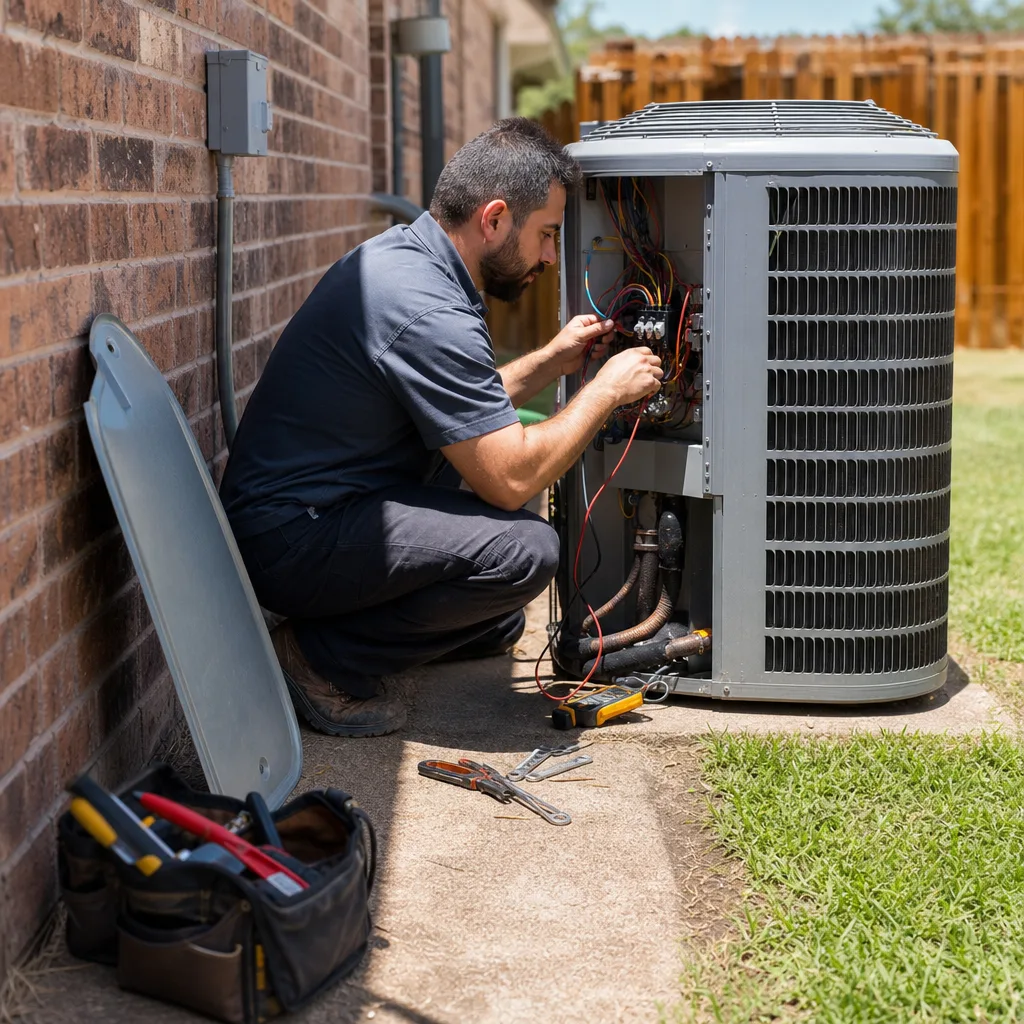
When your system quits, it’s tempting to assume the worst. Your heating and cooling system is a chain, though. Power comes in, the thermostat calls for air, the outdoor unit and the indoor blower start up, and the cool or warm air moves through your ducts. If one link breaks, the whole thing stops. A careful technician checks that chain in order, from the easiest link to the hardest, instead of guessing.
- Thermostat and power. Is the thermostat set right and getting power? Is a breaker tripped, or is the outdoor shutoff switch turned off? This sounds basic, but it rules out the simple stuff first.
- Air filter. A filter packed with dust chokes off airflow. That can cause weak air from your vents, a frozen coil, or a system that shuts itself off.
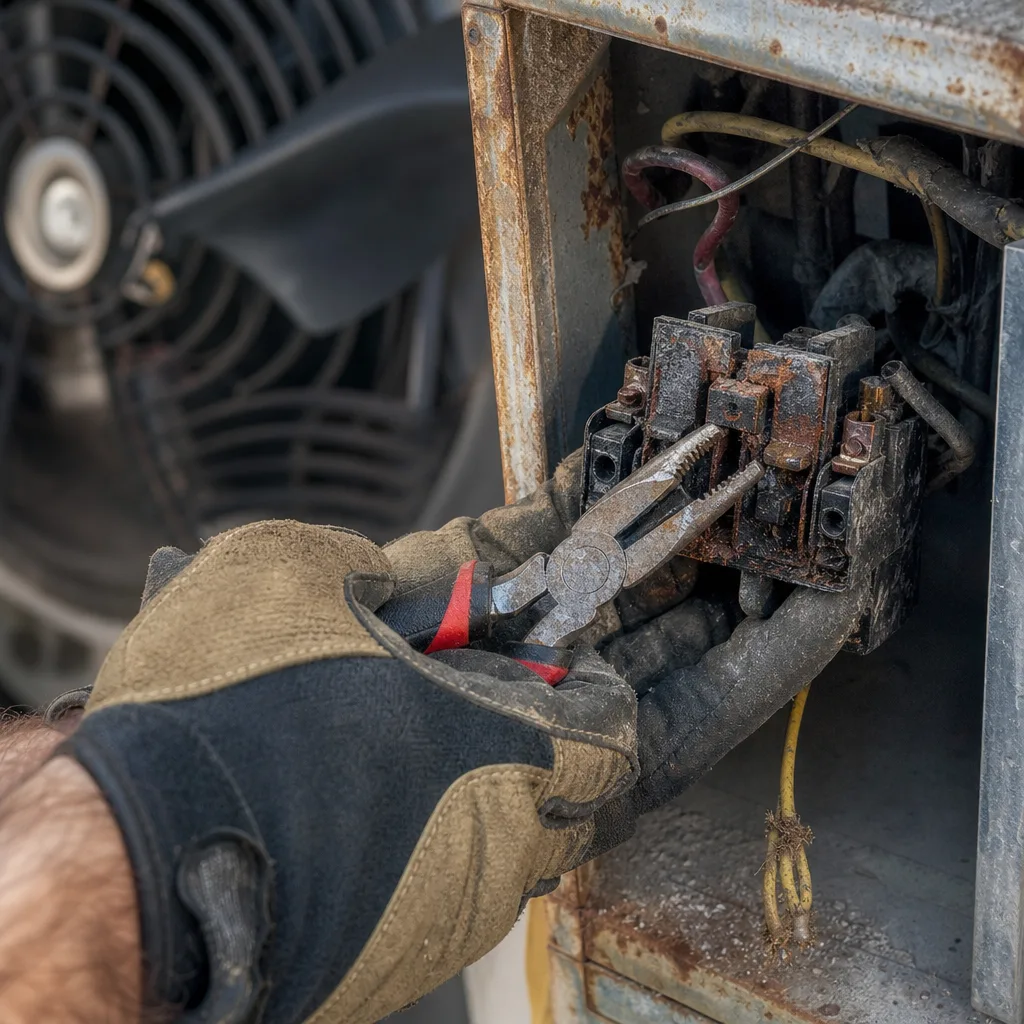
- Capacitor and contactor. These small electrical parts in the outdoor unit help the motors start. Long Dallas summers put real strain on them, so they’re common suspects when the outside unit hums but won’t run.
- Fan and blower motors. The outdoor fan pushes heat away from the unit, and the indoor blower moves air through your house. If either one is slow, noisy, or not turning, you’ll feel it at the vents.
- Drain line and safety switch. Your system pulls a lot of water out of the air. If the drain line clogs, a safety switch can shut the whole system down to keep the water from overflowing into your attic or ceiling.
- Coils and refrigerant. Ice on the indoor coil or the copper lines, or air that runs but never gets cold, points the technician toward airflow problems or a refrigerant leak.
- Control board. Many systems show error codes or blinking lights that help narrow down an electrical fault.
Many Dallas homes have the indoor unit up in the attic. That space gets very hot in summer, which is hard on wiring, motors, and drain lines. Because of that, the attic is often part of the check, not just the box in the yard.
You can help speed things up. Before the technician arrives, think about when the problem started. Did you hear a click, a buzz, or a squeal? Is there ice anywhere? Is there water near the indoor unit? What does the thermostat say? Small details like these point the check in the right direction faster.
Working in this order matters for your wallet, too. With Xtreme Air Services, diagnosis is included in the repair, and the $26-$99 service-call fee is credited toward the repair if you go ahead with us. Most calls turn out to be a single common failure that’s fixed on the first visit. A step-by-step check is how that one failed part gets found, so you pay to fix the real problem and nothing else.
Why Dallas Summers Push AC Components to Fail
Your AC doesn’t usually fail in Dallas because it’s bad equipment. It fails because a long, hot summer finds the weakest part and wears it out first. That’s good news for you. When one small part gives out, fixing that part gets you cool again without starting over.
Here’s why the heat is so hard on your system. Your AC doesn’t make cold air. It moves heat out of your house and dumps it outside. On a mild day, that’s easy. On a Dallas afternoon when it’s already blazing hot outside, the outdoor unit has to work much harder to push heat into air that’s already hot. The system runs longer, the parts get hotter, and the motors start and stop again and again. Then the evening stays warm, so the system gets little rest before the next day starts.
All that extra work lands on certain parts more than others:
- Start-up parts. Every time your system kicks on, the capacitor and contactor take a hit. More cycles in summer mean more wear, which is why they’re on the short list in the diagnosis above.
- Outdoor fan motor. It spins for hours in the sun to carry heat away. Worn bearings can make it slow down, squeal, or stop, and then the whole unit overheats.
- Condenser coil. That’s the metal grille wrapped around your outdoor unit. Grass clippings, dust, and cottonwood fluff can coat it, so heat can’t escape well. The system runs hotter and works even harder.
- Compressor. It’s the heart of the outdoor unit. Heat, dirty coils, and a struggling fan all make it strain. A compressor problem is a bigger repair, and it’s often caused by one of the smaller problems above being left alone.
- Refrigerant level. A small leak might go unnoticed in spring. In July, that small shortfall shows up as air that runs but never gets cold enough.
North Texas storm season adds its own trouble. Thunderstorms can bring power flickers that are rough on capacitors and control boards. Hail can bend the thin fins on your outdoor coil and block airflow. If your AC acted up right after a storm, tell your technician. It helps point the check in the right direction.
Humidity plays a part, too. On sticky summer days, your system pulls a lot of water out of the air. That constant moisture helps slime and algae grow in the drain line, which is why a clog that was fine in winter can shut things down in summer.
So what does this mean for you? A breakdown in August is a sign that one part reached its limit. It’s not proof your whole system is done. A worn fan motor, a weak capacitor, or a clogged drain can be fixed and you’re back in business. Age still matters. An older system with several worn parts is a different talk than a newer system with one bad part. Either way, you should know which part failed and why before anyone talks about replacement.
Some of this wear can be slowed down. Keep plants, grass, and junk clear of your outdoor unit so it can breathe, and change your filter on schedule. A yearly AC tune-up or condenser coil cleaning before the heat hits can catch a weak part while it’s still a small fix.
What’s Included in a Standard Repair Visit
A standard repair visit covers the whole job of fixing one failed part. That means finding the part, repairing or replacing it, and making sure your system runs right before anyone leaves. For the most common HVAC system repair, that job runs $150-$400. Most calls are a single common failure fixed on the first visit, so for a lot of homes this is the whole story.

Here’s what that price includes:
- Diagnosis. This is the step-by-step check covered above, so you know which part failed.
- Labor. This covers the time it takes to make the repair. There’s no extra charge for nights or weekends, so a Saturday night breakdown costs the same as a Tuesday morning one.
- The standard replacement part. If a common part is the problem, the part comes with the price. It isn’t added on afterward.
- Testing. The system is run and checked to make sure it’s working the way it should.
- Cleanup. Your home is left neat when the job is done.
Some repairs grow past one part. These items aren’t in the standard price unless they’re quoted separately:
- Additional failed parts found during the check
- Major components, like a compressor
- Code upgrades
- Permits
That split works in your favor. Say the check finds a worn capacitor and also shows the outdoor fan motor is on its way out. The capacitor fix is the standard repair. The fan motor gets its own quote, and you decide whether to do it now. With upfront flat-rate pricing approved before work starts, nothing gets added quietly and no meter runs while someone works in your hot attic.
Across all repairs, the typical range is $150-$700. A few things decide where your job lands in that range:
- How far the failure goes. A burned wire is a smaller job than a part that took others down with it.
- Part cost and availability. Some parts cost more or are harder to find.
- Equipment age and brand. Older units and certain brands can need specific parts.
- Whether more than one component failed. Two bad parts mean more parts and more labor.
Notice what’s missing from that list: the clock. After-hours timing is a big cost driver with many companies, but Xtreme Air Services charges no extra for nights or weekends. The service-call fee mentioned earlier is also credited toward the repair if you go ahead.
Financing isn’t typically offered for a smaller job like this. It is available on larger repairs and replacements. If the check shows your system needs more than a single-part fix, you’ll hear about it plainly and you’ll have options. Most of the time, though, you’ll get one clear fix with a price you agreed to before work started.
Have questions? We’re happy to help.
Call Today, Get Service Today. Xtreme Air Services — Oak Lawn is ready to help.
Signs You Need a Repair Call Now vs. What Can Wait
Call for a repair now if your system won’t run at all after you’ve checked the thermostat and breaker. The same goes for ice, water leaking inside, a burning smell, or loud grinding. Those problems can turn a one-part fix into a bigger one if the system keeps running. A lot of other problems can wait a day, and some you can fix yourself in five minutes.
These signs mean it’s time to call today:
- The outdoor unit hums or buzzes, but the fan on top isn’t spinning. Turn the system off at the thermostat. A motor that can’t start keeps heating up, and that strain can spread to the compressor.
- There’s ice on the copper lines or the indoor unit. Switch the system to off and set the fan to on so the ice can melt. Running it frozen is hard on the compressor.
- Water is dripping from a ceiling, or the pan under your attic unit is full. That’s a drain problem working its way toward drywall damage.
- You smell burning or see smoke, or a breaker trips again right after you reset it. Turn the system off and leave it off until a technician checks it.
- You hear loud grinding, banging, or screeching that wasn’t there yesterday. That’s usually a part coming apart, not a part wearing in.
These you can check yourself before you call anyone:
- A blank thermostat. Try fresh batteries first.
- A tripped breaker. Reset it one time. If it holds and the system runs normally, you may be done.
- A clogged filter. Swap it out. Weak airflow often comes back right away.
- Plants, grass, or stored stuff crowding the outdoor unit. Clear a couple of feet around it so it can breathe.
- A short wait after you change the thermostat. Many systems pause a few minutes on purpose before the outdoor unit restarts. Give it about five minutes before you worry.
- One room warmer than the rest. Make sure the vents in that room are open and not blocked by furniture or rugs.
If one of those fixes it and your system runs normally for the rest of the day, you don’t need a repair visit. That’s the honest answer.
Then there’s the middle ground. Say your AC keeps up fine overnight, but by 5 p.m. on a July afternoon your house drifts a few degrees above the setting. Or your bill climbed even though your habits didn’t change. Neither problem calls for a rush, but don’t let it ride for weeks. On a Dallas summer afternoon, a system that’s struggling is often one weak part getting weaker, as covered above, and it’s cheaper to fix before it takes another part with it. Booking within a day or two is reasonable here.
One more thing to weigh. Many people hold off on a call until Monday to dodge weekend rates. With no extra charge for nights or weekends, you don’t need to wait for the price to change. Waiting only makes sense if the problem itself can wait.
Watch Our Video
See How We Handle HVAC system repair in Dallas
Xtreme Air Services — Oak Lawn
Checks to Run Before You Call for Repair
Before you pick up the phone, take ten minutes for a few checks that aren’t on the quick list above. These catch problems that look like a broken system but aren’t. If they don’t fix it, they still help your technician get to the real problem faster.
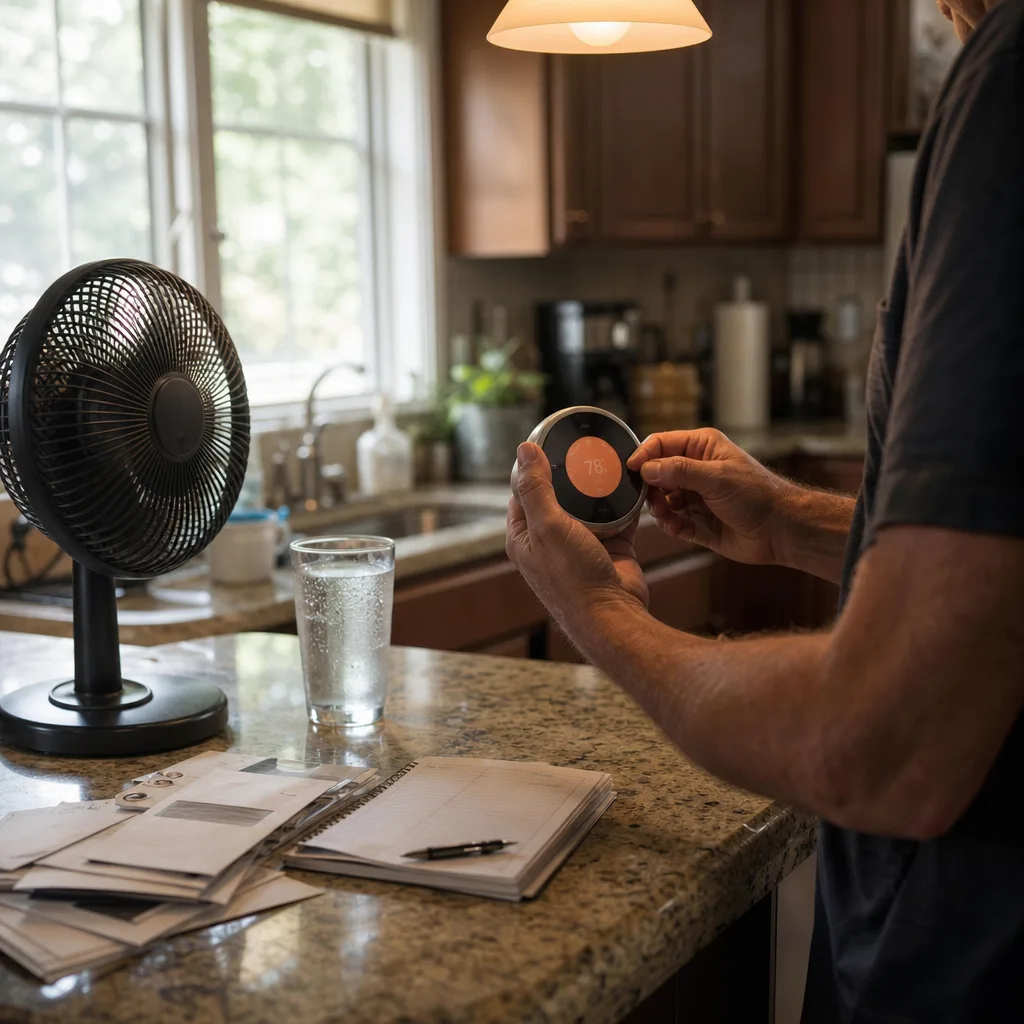
- Check the thermostat mode, not just the screen. Make sure it says Cool, not Heat or Off. The set temperature also needs to be lower than the room temperature. A schedule or a quick power flicker can change your settings, and then the system just does what it was told.
- Check the fan setting. If the fan is set to On, it blows air all the time, even between cooling cycles. That air can feel warm and make you think the AC quit. Set it to Auto and see if cold air comes back in steady bursts.
- Find the switch by the indoor unit. Many attic and closet units have a switch on the wall or on the unit that looks just like a light switch. It’s easy to flip off by mistake while you grab holiday boxes or change a bulb. Make sure it’s on.
- Check the front panel on the indoor unit. Most furnaces and air handlers have a safety switch that keeps the blower off when the panel isn’t seated. If someone changed the filter recently and the panel didn’t snap back into place, the system won’t start.
If one of these gets your system running and it keeps up for the rest of the day, you’re done. You don’t need a repair call.
If it still won’t cool, gather a few things before you call. They take five minutes and can save time once the technician is at your door.
- The model and serial number from the labels on your outdoor and indoor units. A phone photo works fine. This shows the brand and age, and both can affect which part is needed.
- A photo of the thermostat screen. If your indoor unit has a small window with blinking lights, get a photo of those too.
- A rough idea of how old the system is and when it was last serviced.
- A clear path to the indoor unit. If it’s in the attic, make sure the ladder is easy to reach and the walkway is open. Putting pets in another room helps too.
Whoever you call, ask three questions before anyone comes out. Is the service-call fee credited if you go ahead with the repair? Will you see and approve the price before work starts? Do nights or weekends cost more? With Xtreme Air Services, the answers are yes, yes, and no, as covered above. A company that answers all three plainly on the phone is a company that won’t surprise you later.
Call 469-269-6373
Frequently Asked Questions
Common questions about HVAC system repair
What is the $5000 rule for HVAC?
It’s a rule of thumb some homeowners use to decide between repair and replacement. You multiply the age of your system by the estimated repair cost, and if that number tops $5,000, replacement often makes more sense than another repair. It’s a helpful gut-check, but a worn compressor on a 6-year-old system is a very different call than the same part on an 18-year-old one, so talk through the actual failure before deciding.
How much is a typical HVAC service call?
A basic service call to diagnose your system runs $26-$99 with us, and that fee gets credited toward the repair if you move forward. From there, most common repairs land in the $150-$400 range for parts and labor, with the full range running $150-$700 depending on how many parts failed and how hard they are to source.
Can I try to fix my HVAC myself before calling someone?
Yes, a few quick checks are worth trying first. Swap fresh batteries into the thermostat, reset a tripped breaker once, change a dirty filter, and clear plants or debris from around the outdoor unit. If your system runs fine the rest of the day after one of these fixes, you likely don’t need a repair visit at all.
Ready to Get Started?
Call (469) 269-6373 Today, Get Service Today.