


Transfer Switch Installation in Dallas: Connect Your Generator Safely
Automatic or manual transfer switches installed to code, so your generator powers your home safely.
What’s Covered on This Page
- Automatic vs. Manual Transfer Switches: Which One Fits Your Home
- What Happens During a Transfer Switch Installation Visit
- What Drives Transfer Switch Installation Cost
- Why a Licensed Electrician Handles the Panel Connection
- Pairing Transfer Switch Installation With Your Generator Project
- Can I install my own transfer switch?
- How long does a transfer switch typically last?
- Do I need a licensed electrician for this, or can any handyman do it?
Automatic vs. Manual Transfer Switches: Which One Fits Your Home
The two switches do the same basic job. They keep your home on one power source at a time, either the grid or your generator, and never both. The difference is who does the switching: you or the switch.
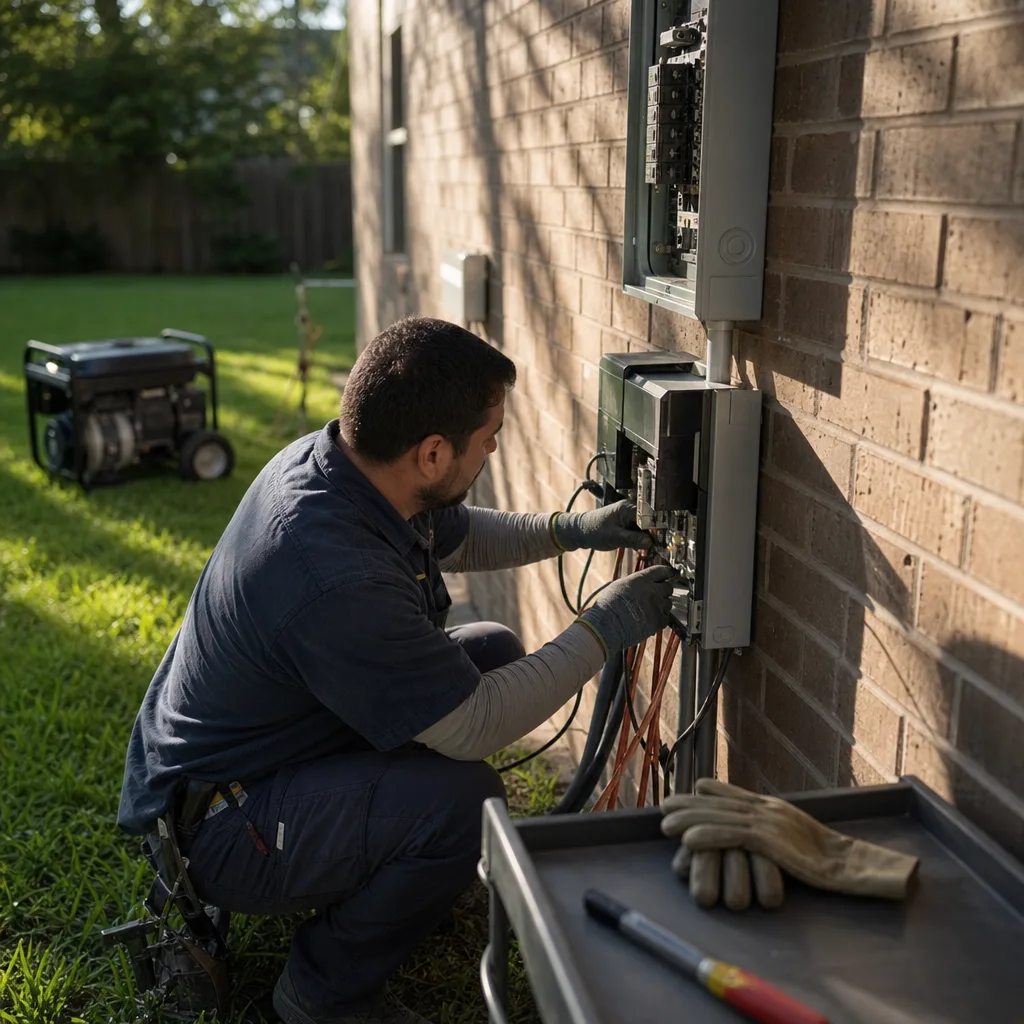
With a manual transfer switch, you’re in charge. When the power drops, you roll your portable generator outside, plug it into an inlet box on the wall, start it up, and flip the switch over. Most manual setups power a handful of circuits you pick ahead of time, such as the fridge, a few lights, the furnace fan, and a couple of outlets. When power comes back, you flip it back and shut the generator down.
An automatic transfer switch does all of that without you. It watches the power coming into your home. When the grid goes down, it tells your standby generator to start, then moves your home over to it, usually within seconds. When the grid comes back and holds steady, it switches you back and lets the generator cool down and shut off.
- A manual switch makes sense if you have a portable generator, someone is usually home during storms, and you only need the basics running.
- An automatic switch makes sense if you have a standby generator, you travel or work long hours, or someone in your home relies on medical equipment that can’t wait.
- If you’re on the fence, ask which circuits you truly need during an outage. A short list points toward manual. Wanting the whole house running points toward automatic.
Here’s a real-life way to picture it. Say a summer storm knocks out power in the middle of a 100-degree Dallas afternoon while you’re at work. With a manual switch, the house sits hot until you get home and hook everything up. With an automatic switch, the AC is back on before you’ve even read the outage text. The same goes for a hard winter freeze, when every hour without heat puts your pipes at risk.
Your generator matters more than anything else here. A portable generator pairs with a manual switch. A permanently installed standby generator is built to work with an automatic one. Putting an automatic switch on a portable unit, or a manual switch on a standby unit, gives up most of what you paid for.
Cost follows the same line. Switch type is one of the biggest things that moves the price, along with how many circuits you want covered. A manual switch for a few key circuits is the lighter job. An automatic switch for a whole-home standby system takes more parts and more work at the panel.
We install both kinds, and most jobs finish the same day. We’ll look at your generator, your panel, and how your family lives through an outage, then tell you plainly which one fits. If the simpler manual switch covers what you need, that’s what we’ll recommend.
What Happens During a Transfer Switch Installation Visit
For most homes, a transfer switch installation takes one visit, and most jobs finish the same day. You’ll know the price before any wiring starts. When the work is done, the switch is installed, connected to your panel and generator, and tested.
Here’s how the work generally goes, step by step.
- A look at your setup. The technician checks your electrical panel, how much open space it has, where your generator sits or will sit, and which circuits you want powered during an outage. This is where the cost drivers covered above turn into a real number.
- A clear price before work starts. With upfront flat-rate pricing, you approve the price first. There’s no meter running. The service call is $26-$99, and that fee is credited toward the job if you go ahead with Xtreme Air Services.
- Power off for part of the job. The switch gets wired into your main panel, so the power to your home has to be off for a while. On a 100-degree Dallas day, a morning start keeps that stretch in the cooler part of the day.
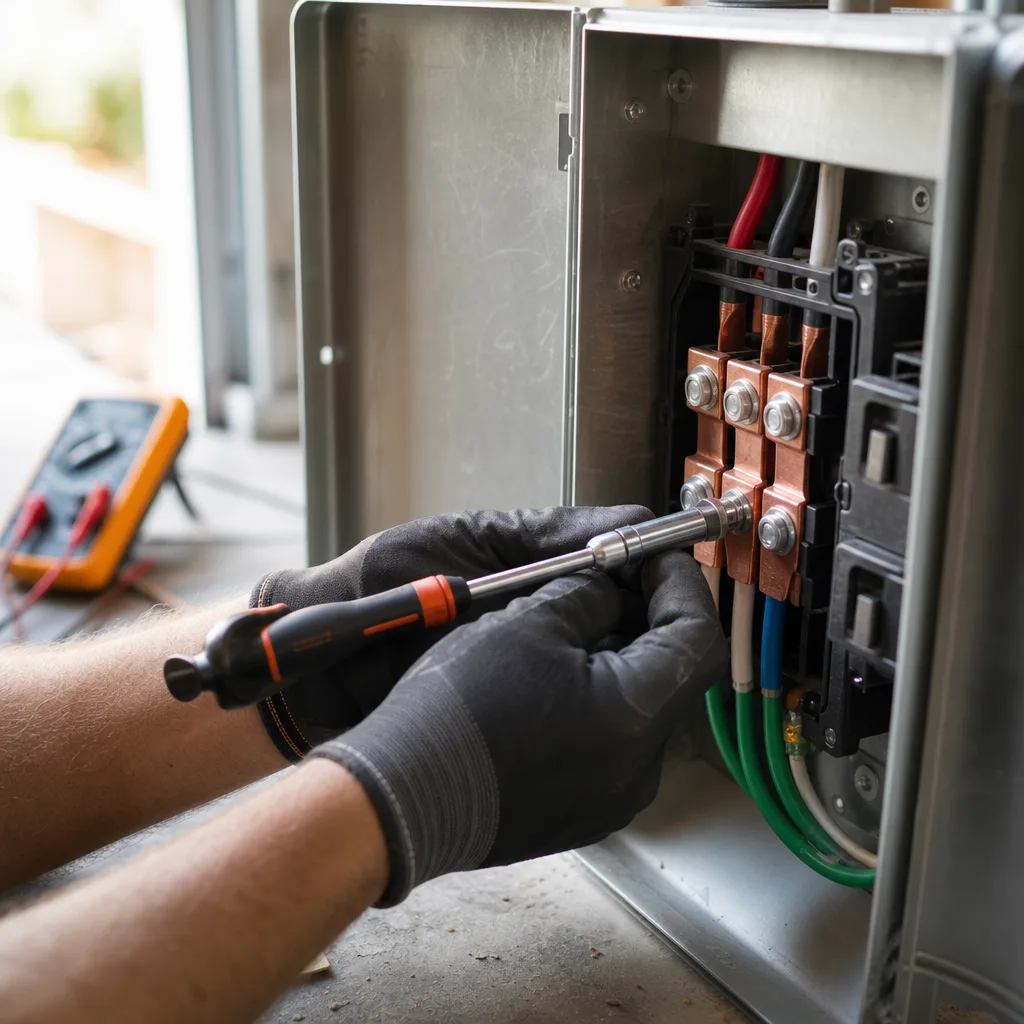
- Mounting and wiring. The switch goes in near your panel, and the circuits you chose are moved onto it. A manual setup also gets the outdoor inlet box your portable generator plugs into. An automatic setup gets wired to your standby generator.
- Testing. The system is tested so you know it will hand your home over to the generator and back again.
The price covers the transfer switch and materials, professional installation, the connections, and testing. It doesn’t cover the generator, panel upgrades, code corrections, or permits unless your quote says so. If your panel is full or worn out, you’ll hear about it before any work begins, not halfway through. If it does need more room, we also handle electrical panel replacement and upgrades.
Ask about permits when you get your price. Whether your job needs a permit and inspection depends on the work and where you live. Since permits aren’t included unless stated, it’s worth having that answer in writing up front.
A little prep makes the day go faster:
- Clear a path to your electrical panel, whether it’s in the garage, a utility room, or a closet.
- Know where your generator is, or where you’d like a standby unit to go.
- Write down the circuits you can’t do without, like the fridge, the AC or furnace fan, a medical device, or your home office.
- Plan for pets and anything that needs steady power, like a computer, while the power is off.
The person working in your panel will be one of our licensed and insured, background-checked and drug-tested technicians. Before they leave, ask to see the switch work. If you have a manual switch, flip it yourself once while they’re still there. The first time you do it shouldn’t be in the dark during a storm.
What Drives Transfer Switch Installation Cost
Most transfer switch installations we do fall between $500-$1,500. Our most common job, putting in an automatic or manual switch, connecting it to your panel and generator, and testing it, runs $700-$1,100, and most of those finish the same day. Where your home lands in that range depends on a handful of things we can usually spot in the first few minutes of looking at your setup.
Here’s what moves the number up or down:
- Switch type. As covered above, a manual switch is the lighter job and an automatic switch for a standby generator takes more.
- How many circuits you want covered. Backing up the fridge, a few lights, and the furnace fan is a smaller job than keeping the AC and the whole house running.
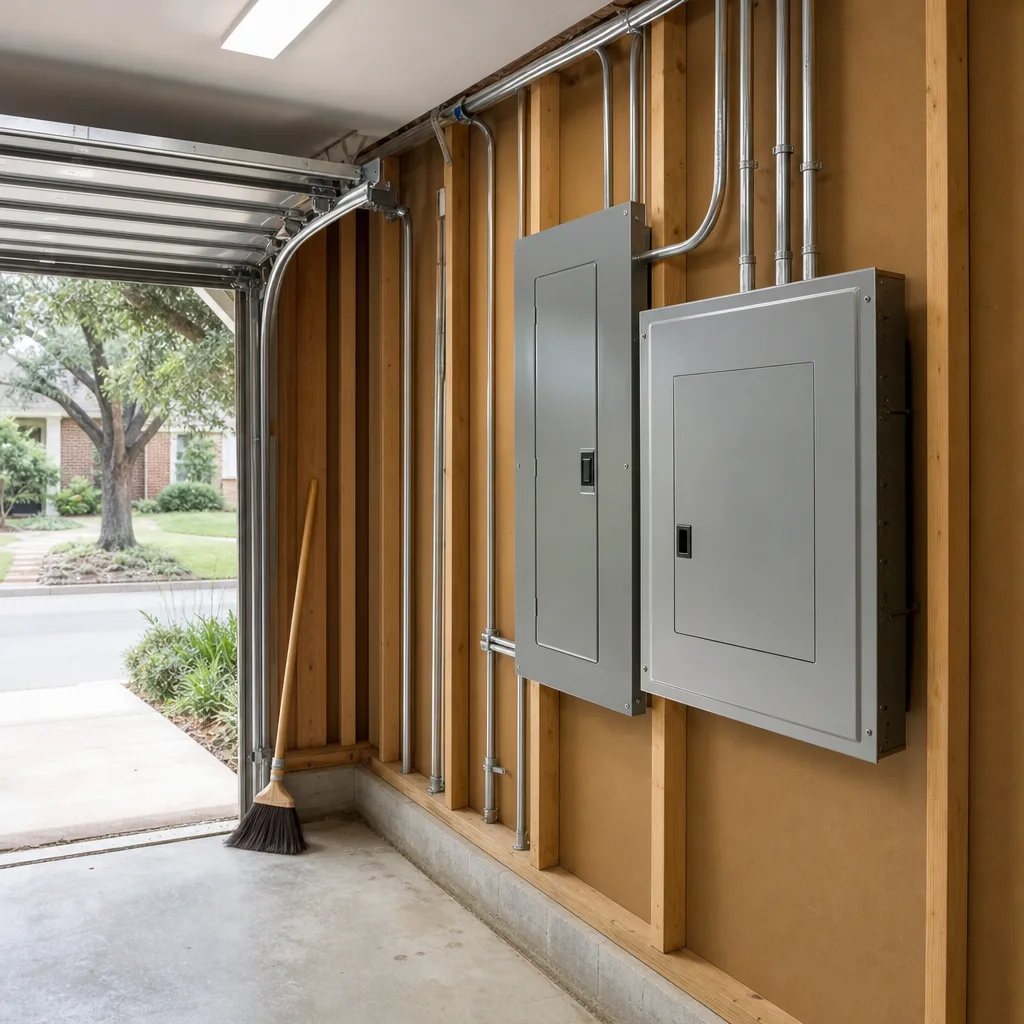
- Your panel’s condition and open space. A panel with room to spare is straightforward. A full or worn-out panel can mean extra work before the switch goes in.
- Distance to the generator. The farther the generator or inlet box sits from your panel, the more wire and conduit it takes to connect them.
- Code upgrades. If something in your existing wiring isn’t up to current code, it may need fixing before the new switch can be tied in.
- Permits. If your job needs a permit and inspection, that’s a separate cost unless your quote includes it.
The panel is where a lot of Dallas homes see the biggest swing. Plenty of houses here are slab-on-grade ranch homes built between the 1950s and 1990s, and many still have their original panel. After decades of added outlets, appliances, and maybe a pool or a window unit, those panels are often packed with no open spaces left. A home in a newer subdivision usually has a roomier panel, which tends to keep the job simpler. You don’t need to guess which one you have. We’ll open it up, take a look, and tell you plainly.
Generator placement matters too. If you’re putting in a new standby unit, where it sits on your lot affects how long the run to the panel will be. It’s worth thinking about that before the pad goes down, not after.
When you’re comparing quotes from anyone, a few questions keep things fair:
- Is this a flat price, or is it billed by the hour?
- How many circuits does this price cover, and which ones?
- Does my panel have room, or will it need work first?
- Are permits in this price or separate?
With us, you get upfront flat-rate pricing that you approve before any work starts, so the number you agree to is the number you pay. There’s no extra charge for nights or weekends. If the total is more than you want to pay at once, flexible financing is available on qualifying installations and larger jobs, on approved credit, so you don’t have to put off backup power until the next storm season.
Thinking about Transfer switch installation? Let’s talk.
Call Today, Get Service Today. Xtreme Air Services — Oak Lawn is ready to help.
Why a Licensed Electrician Handles the Panel Connection
The transfer switch itself isn’t the hard part. The connection to your panel is. That’s where your home’s power, your generator’s power, and the utility lines on your street all meet. If that connection is wrong, the danger doesn’t stay inside your house.
Here’s the big one. A generator tied into a home without a proper transfer switch can push power backward out of your panel and onto the utility lines. This is called backfeeding. The Oncor crew working to restore power on your block may think that line is dead. It isn’t. Your neighbors’ homes can be at risk too. Keeping that from ever happening is the whole reason a transfer switch exists, and it only works if it’s wired correctly.
The panel is also dangerous to work in, even with the main breaker off. The heavy wires coming in from the utility stay live. A slip with a screwdriver in the wrong spot can mean a serious shock or an arc flash. That’s not a job for a YouTube video and a free Saturday.
During a long outage, it’s tempting to try a shortcut. Here are the ones to skip:
- A double-ended plug, sometimes called a suicide cord, that runs from the generator into a wall outlet. It backfeeds your home and can shock whoever touches the other end.
- Flipping off the main breaker and hoping for the best. One mistake, or one person flipping it back on, and you’re backfeeding the grid.
- Asking a handy friend or relative to wire it in. Good intentions don’t cover sizing, grounding, or a permit if one’s needed.
There’s also detail work most people never think about. The switch has to be rated for your generator’s output. The wire between them has to be the right size for the load and the distance. And the grounding has to be set up so your generator and panel work together safely. Get one of those wrong and you can end up with tripped breakers, overheated wires, or a generator that won’t carry what you need on the day you need it.
In Texas, electricians are licensed through the Texas Department of Licensing and Regulation, also called TDLR. Before anyone opens your panel, it’s fair to ask for their license number. You can look it up yourself in a couple of minutes. Anyone who gets cagey about that question is giving you your answer.
Xtreme Air Services is fully licensed and insured, and the person working in your panel is a background-checked, drug-tested member of our team. We also handle the rest of the picture under one roof, from whole-home standby generator installation to portable generator hookup, so you’re not juggling one company for the generator and another for the wiring.
When the next storm rolls through Dallas, you want to flip one switch, or let it flip itself, and know your family and the line crew outside are both safe. Getting the connection done right the first time is how you get there.
Call 469-269-6373
Watch Our Video
See How We Handle Transfer switch installation in Dallas
Xtreme Air Services — Oak Lawn
Pairing Transfer Switch Installation With Your Generator Project
A transfer switch is only as good as the generator behind it. Treat the two as one project, not two separate purchases. That way the switch, the generator, and the circuits you want backed up all match from day one.
Where you stand with your generator changes what the plan looks like.
- You’re buying a new standby generator. Plan the switch at the same time. The generator’s size decides what the switch has to carry, and your list of must-have circuits decides the generator’s size. Pick one without the other and you can end up with a generator that’s too small for your AC, or a switch that can’t handle what the generator puts out.
- You already own a portable generator. Check two things before anything gets installed: how many watts it makes and what kind of plug it has. The inlet box and switch need to match that plug and that output. A small generator can’t run a whole house no matter what switch you put in.
- You plan to buy a generator later. You can have the switch put in now so you’re ready when the generator arrives. Just know the size and type of generator you’re aiming for, so the switch is chosen to fit it.
In Dallas, your air conditioner is usually the biggest thing you’ll want running during a summer outage. It also pulls a big burst of power the moment it starts. If keeping the AC on is the goal, say so up front. That one choice affects the generator size, the switch, and which circuits get moved over.
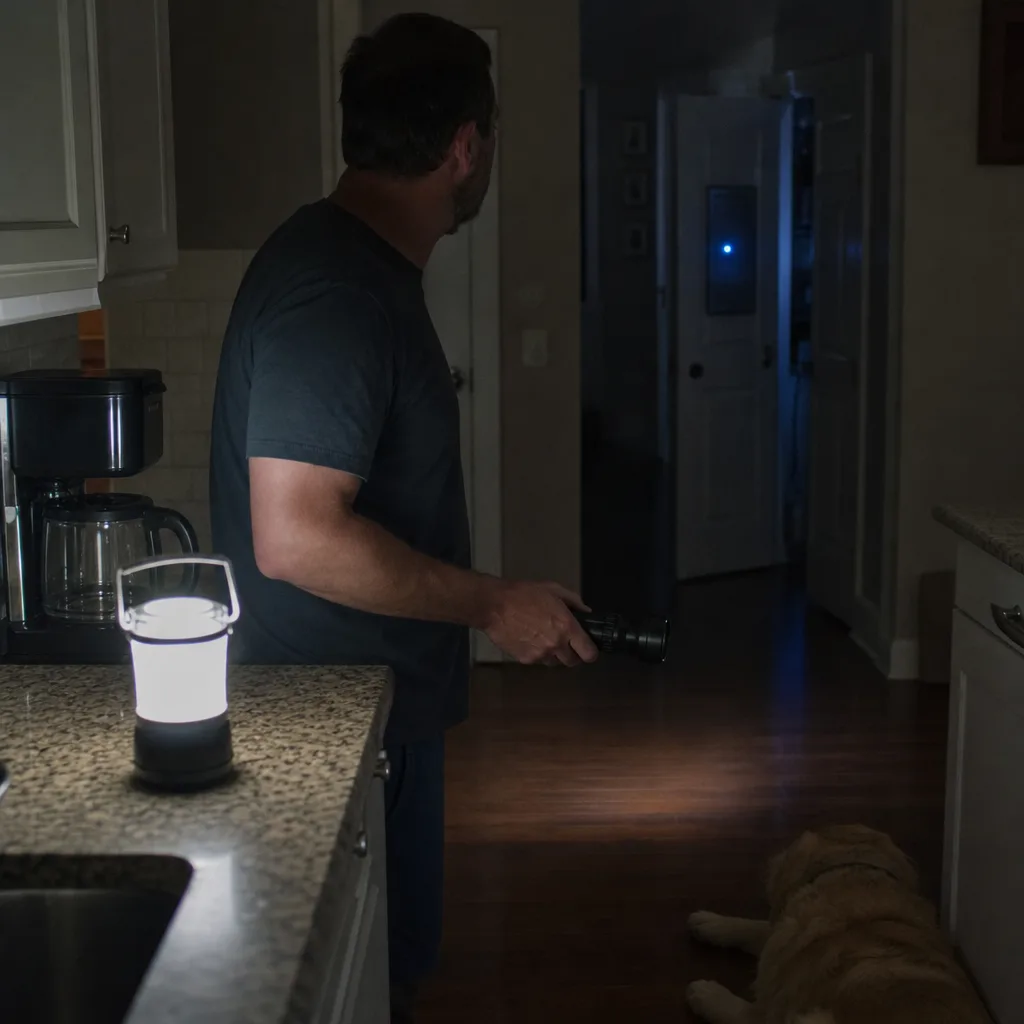
Timing matters too. North Texas storm season brings hail and severe thunderstorms in spring, then a summer of 100-degree days, and a hard freeze can hit in winter. The best time to plan backup power is before you need it, when you can think it through without the lights out.
Here’s the honest part. If you only run a portable generator now and then, and you’re happy plugging a fridge and a lamp straight into it with heavy-duty outdoor extension cords, you may not need a transfer switch yet. A switch earns its keep when you want hardwired things like your furnace, well pump, or AC to run, or when you’re tired of cords running through a cracked door.
When you do want the full setup, it helps to have one team handle all of it. We offer generator sizing and consultation, whole-home standby generator installation, generator pad and placement, generator fuel line connection, and portable generator hookup, along with the transfer switch itself. If your panel needs work, that’s under the same roof too. After it’s all in, generator maintenance and load testing help keep your system ready for the next outage.
One company means one plan, one price you approve up front, and one team to call if something isn’t right. You don’t have to get a generator dealer, an electrician, and a gas line crew on the same page by yourself.
Call 469-269-6373
Frequently Asked Questions
Common questions about Transfer switch installation
Can I install my own transfer switch?
We don’t recommend it, because the switch ties directly into your main panel where the utility wires stay live even with the breaker off. A wrong connection can backfeed power onto the grid and put line crews and neighbors at risk. The sizing, wiring, and grounding also have to match your generator’s output exactly, which is detail work best left to a licensed electrician.
How long does a transfer switch typically last?
A transfer switch is built to last for many years of normal use with no moving parts beyond the switch mechanism itself. What shortens its life is usually outside factors, like a panel that’s overloaded, corrosion from moisture, or a generator mismatched to its rated capacity. Having it tested during generator maintenance helps catch problems before an outage, rather than during one.
Do I need a licensed electrician for this, or can any handyman do it?
You need a licensed electrician, not a general handyman, because the job involves working inside a live panel and meeting Texas Department of Licensing and Regulation requirements. In Texas, you can ask for a license number and look it up yourself before anyone opens your panel. A handyman may not know the sizing, grounding, or permit rules that keep the installation safe.
Ready to Get Started?
Call (469) 269-6373 Today, Get Service Today.