


Whole-Home Standby Generator Installation in Dallas: What Drives the Price
Turnkey standby generators sized to your home's real load – gas line, panel, permits and startup handled as one job.
What’s Covered on This Page
- What’s Included in a Turnkey Standby Generator Install
- What Drives Your Installation Cost Up or Down
- Sizing Your Generator for Whole-Home Backup
- When a Portable Generator Hookup Makes More Sense
- Why Dallas Homeowners Are Prioritizing Backup Power
- Can you just hook up a generator to your house yourself?
- Does adding a standby generator increase my home’s value?
- Can I deduct the cost of a whole-house generator on my taxes?
What’s Included in a Turnkey Standby Generator Install
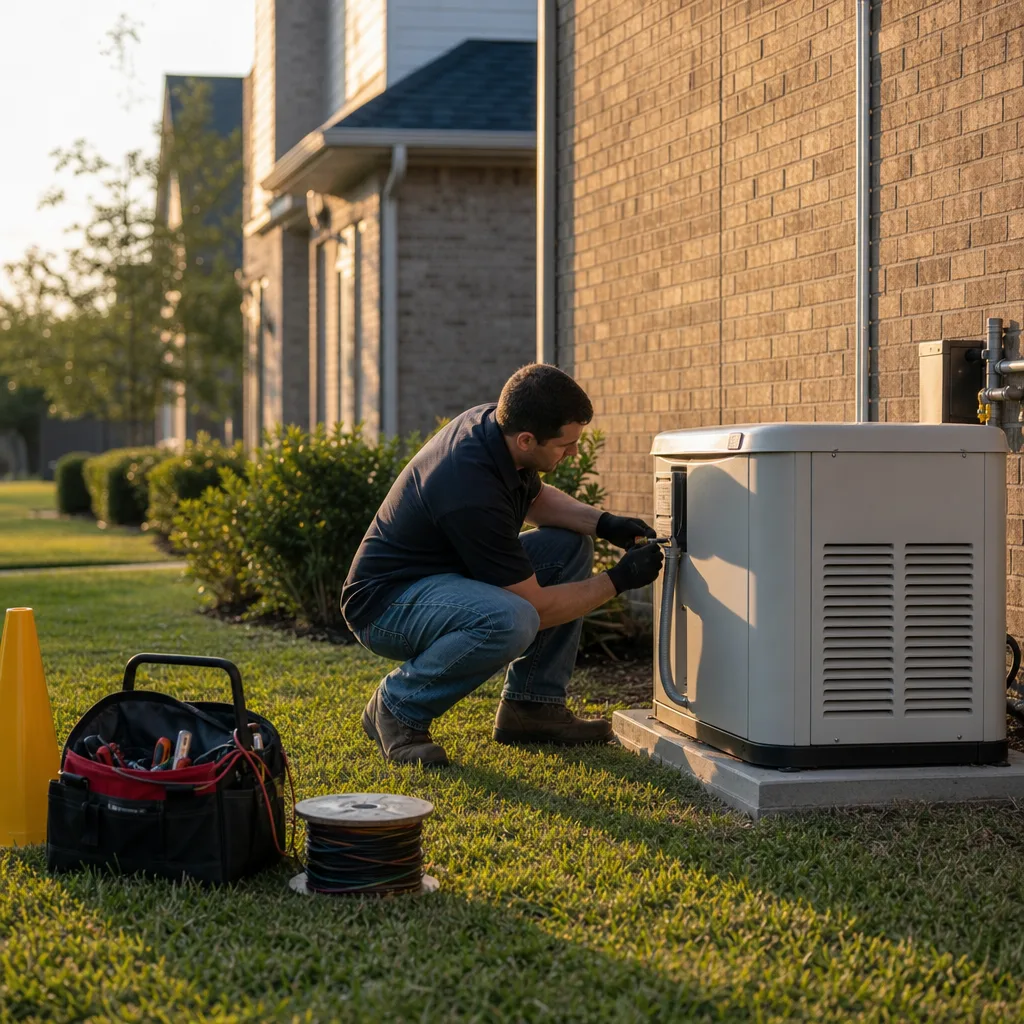
“Turnkey” means you don’t have to hire three different trades and hope they talk to each other. Our most common job is a whole-home standby generator installed with an automatic transfer switch, gas hookup, and pad, then commissioned and tested. When we leave, the system is ready to run the next time the power drops.
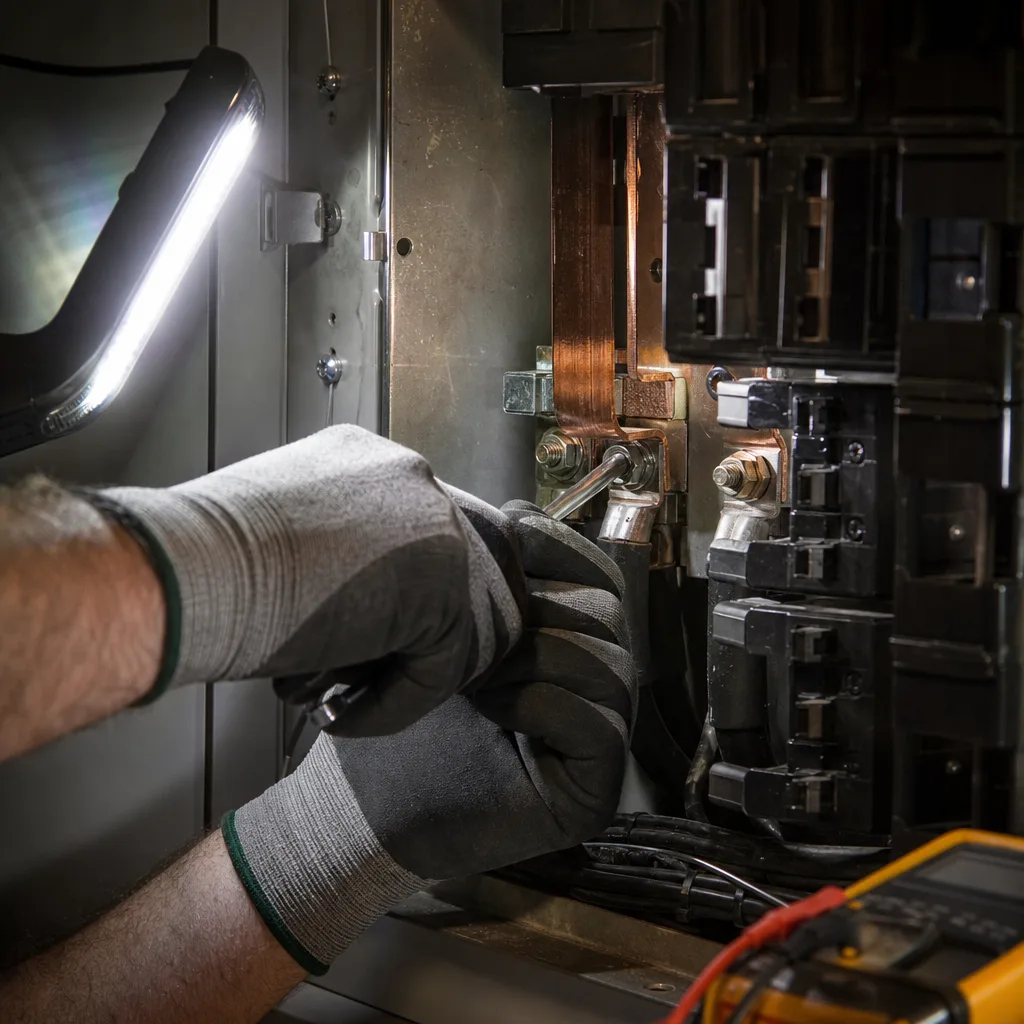
Here’s what’s included and why each piece matters.
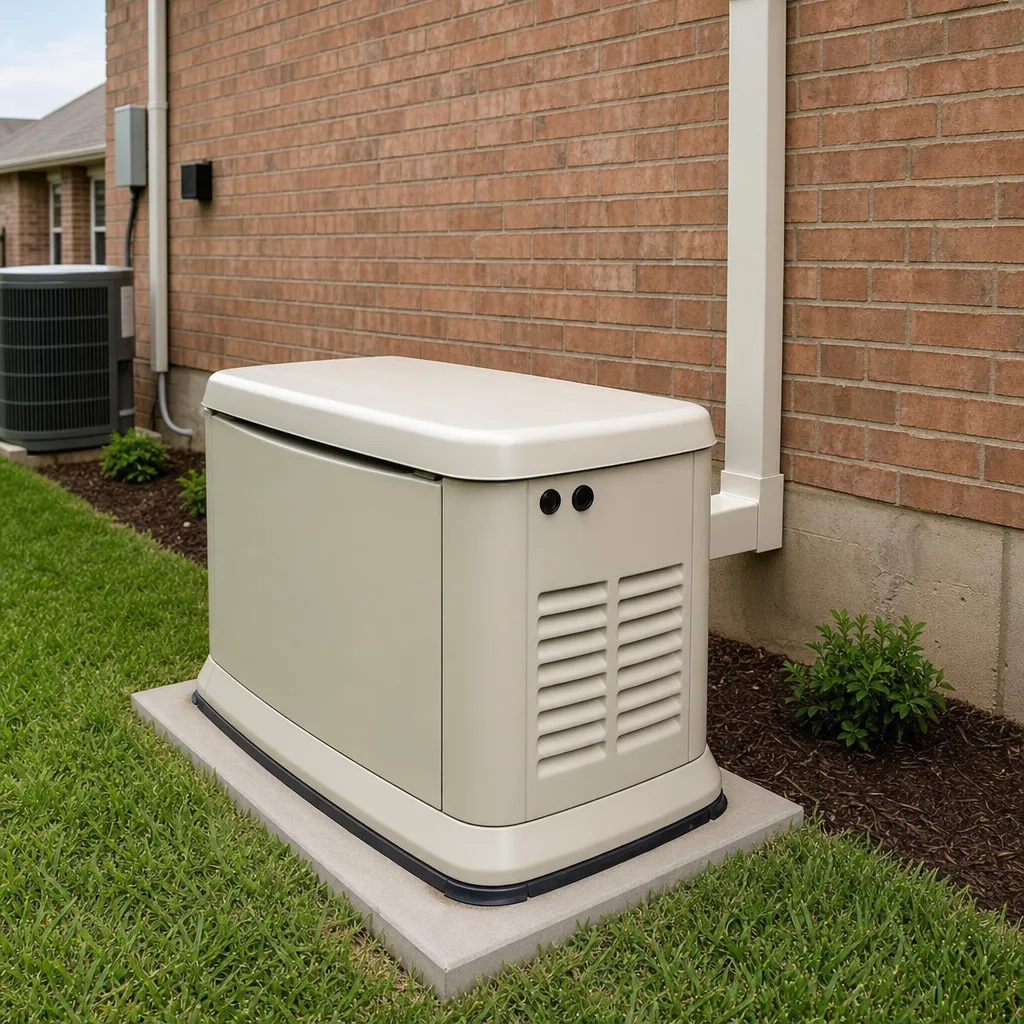
- The generator. This is the unit that sits outside your home and makes power when the grid goes down.
- The transfer switch. An automatic transfer switch is the brain of the system. It senses the outage, moves your home off the utility line, and starts the generator. When power comes back, it switches you back. It also keeps generator power from flowing out onto the utility lines, which protects line workers.
- The gas connection. A standby generator runs on your home’s natural gas, so it needs its own properly sized line. A line that’s too small can starve the generator just when your AC, furnace, or water heater is also pulling gas.
- The electrical connection. This ties the transfer switch into your panel so the circuits you count on get power.
- The pad. The generator needs a solid, level base. North Texas clay soil swells when it’s wet and shrinks when it’s dry, so a good base keeps the unit sitting level as the ground moves.
- Professional installation, startup, and testing. A generator that’s set in place but never run under real conditions is a guess. Startup and testing confirm it fires, transfers, and carries your home before you need it.
A few things fall outside the standard scope. That doesn’t mean they’ll come up for you. It means they’re priced separately if they do.
- Extensive gas or service upgrades. Some homes need a bigger gas supply or an electrical service upgrade before a whole-home generator can run safely.
- Landscaping. If shrubs, beds, or sprinklers sit where the unit or gas line needs to go, putting the yard back is a separate job.
- Code corrections beyond scope. If we find existing wiring or panel problems that aren’t part of the generator work, we’ll show you. Fixing them is a separate decision that’s yours to make.
- Permits, unless stated. Check your written quote. If permits are included, it’ll say so. If it doesn’t, ask.
Many Dallas neighborhoods are full of slab-on-grade ranch homes built between the 1950s and 1990s, and those homes are where older panels and smaller gas lines tend to turn up. If your home is one of them, ask about the panel and gas supply during the estimate. That way any upgrade is on paper before work starts, not after.
When you compare quotes, line them up item by item. A lower number that leaves out the transfer switch, the gas run, or startup testing isn’t the same job. It’s a generator sitting in your yard waiting to be finished.
What Drives Your Installation Cost Up or Down
A whole-home standby generator install with us typically runs $8,000-$18,000. Our most common job, a standby generator with automatic transfer switch, gas hookup, and pad, commissioned and tested, runs $10,000-$14,000. Where your home lands depends on a handful of things we can measure at your house. None of them are mysteries, and you’ll see each one on your quote.
Here’s what moves the number, and why.
- Generator size (kW). This is the biggest factor. A bigger generator can run more of your home at once, like your central AC, electric range, and well-used kitchen all together. A smaller unit costs less but carries less. The right size comes from what you need running in an outage, not from guessing high to be safe.
- Transfer switch type. Some switches send power to your whole panel. Others manage which big loads run at a given time, so a smaller generator can still cover your home. The switch you pick and the generator size work together, so we look at them as a pair.
- Gas line run and pressure. The generator needs enough gas, at the right pressure, while your furnace and water heater are also running. A short run from the meter costs less. A long run across the yard, or a home whose gas supply is too small for the added load, costs more.
- Pad and site prep. A flat, open spot near the house is simple. A sloped yard, tight side yard, or spot that needs grading takes more work.
- Distance to the panel. The farther the generator and transfer switch sit from your electrical panel, the more wire and labor it takes to connect them.
- Code upgrades. If your panel or wiring has to be brought up to code before a generator can tie in safely, that adds cost.
- Permits. Permit needs and fees depend on where you live, so your written quote should spell out whether they’re part of the price.
So what does that look like in real life? Picture two homes in Dallas. One is a newer house with a modern panel, the gas meter close to where the generator will sit, and a flat side yard. The other is an older ranch home with an original panel on the far side of the house and a gas meter around back. Both homeowners want whole-home backup. The second home will likely land higher in the range, not because anyone’s padding the bill, but because there’s more wire to run, more gas line to lay, and possibly a panel to update.
That’s why a phone quote can only get you so close. The real number comes from someone looking at your panel, your gas meter, and your yard. Once that’s done, we give you upfront flat-rate pricing before any work starts, so the price you approve is the price you pay for the work on that quote. No meter running.
If the total is more than you want to pay at once, flexible financing is available on qualifying installations and larger jobs, on approved credit. It’s worth asking about during your estimate, especially if the right-size generator for your home sits near the top of the range.
One good question to ask any installer is which of these factors are pushing your price up, and by how much. A clear answer tells you they’ve looked at your home.
Sizing Your Generator for Whole-Home Backup
Your generator should be sized to what you need running during an outage, not to your home’s square footage. If it’s too small, it can bog down or shut off the moment your AC kicks on. If it’s too big, you pay up front for power you’ll never use. The goal is the smallest unit that can carry the things your family counts on without strain.
So start with one question: what has to keep running? In Dallas, the weather shapes most of the answer. Summer storms can knock out power on triple-digit days, and hard winter freezes make heat just as important. Here’s what matters most when you add it up.
- Central air conditioning. This is usually your biggest load. When the compressor starts, it pulls a short burst of power that’s much higher than what it uses while running. The generator has to handle that startup burst, not just the steady draw. If your home has two AC systems, both count.
- Electric vs. gas appliances. An electric range, dryer, or water heater asks a lot of a generator. A gas furnace, gas water heater, and gas stove barely use any electricity. A home that cooks and heats with gas usually needs less generator than an all-electric home of the same size.
- Extra big loads. A pool pump, an EV charger, or a workshop all add up fast.
- The basics. These include your refrigerator and freezer, lights, internet, garage door, and any medical equipment someone in your home relies on.
You don’t always need everything running at the same time. With a load-managing transfer switch, the setup we covered in the cost section, a smaller generator can take turns with your big loads. Say the AC is running hard on a hot afternoon. The dryer can wait a few minutes. Most families never notice the handoff, and the smaller unit can save real money.
Here’s the honest part. If all you want is a working fridge, a few lights, and a fan through a short outage, a whole-home standby generator may be more than you need. A portable generator hookup can cover those basics for a lot less. Whole-home backup makes the most sense when you want your AC or heat, your kitchen, and your daily routine to keep going without you lifting a finger.
Be careful with any quote that sizes your generator from square footage alone. Two 2,400-square-foot homes on the same Dallas street can need very different generators. One might be all-electric with two AC systems. The other might have one system and gas appliances. A real sizing looks at what’s in your home.
To make your generator sizing go faster, have these answers ready:
- Which items you can’t go without during an outage
- How many AC systems your home has
- Which of your appliances run on gas and which run on electric
- Any plans to add a pool, an EV charger, or another big load in the next few years
Then ask your installer to put the load math in writing. You should be able to see which loads they counted and why they picked that size. A clear answer means the generator fits your home, not a rule of thumb.
Need help with Whole-home standby generator installation?
Call Today, Get Service Today. Xtreme Air Services — Oak Lawn is ready to help.
When a Portable Generator Hookup Makes More Sense
A whole-home standby generator isn’t the right answer for every house. Sometimes a portable generator hookup gives you what you need for a lot less money. Here’s how to tell which group you’re in.
A portable generator hookup is a safe, permanent way to plug a portable generator into your home. You get a connection on the outside wall that ties into your panel. During an outage, you roll the generator out, plug it in, start it, and switch over a few chosen circuits. It’s not the same as running extension cords through a cracked window. It’s a real setup, just a smaller one.
A portable hookup often makes more sense if:
- Your outages are short and rare. If the lights come back within a few hours, keeping the fridge cold and the phones charged may be all you really need.
- You can live without central AC for a while. Most portable generators can’t carry a central air system. If a fan and a cool room are enough for you, that changes the math.
- You’re planning to move in the next few years. A standby generator stays with the house. A portable unit goes with you.
- Your gas supply or panel would need a big upgrade. If your home needs major gas or service work before a standby unit could tie in, the full cost may not be worth it for your situation.
- You’d rather keep the budget for something else. That’s a fair call. Backup power is about peace of mind, not about having the biggest system on the block.
Now the honest tradeoffs, because a portable setup asks more of you.
- Someone has to be home. A portable generator doesn’t start itself. If the power drops while you’re at work or out of town, nothing happens until you get back.
- You have to set it up in the weather. Dallas outages tend to come with summer thunderstorms, hail, or hard winter freezes. That’s when you’ll be hauling the generator out and hooking it up.
- You’ll need fuel on hand. Most portables run on gasoline, so you’ll be storing fuel and refilling it during longer outages. A standby unit runs on your home’s natural gas line.
- You only get a few circuits. You pick a handful of things to power, and the rest of the house stays dark.
Think about who lives in your home, too. If someone relies on medical equipment, or an older family member can’t handle the heat during a long July outage, the automatic part of a standby system matters a lot more. The same goes if you travel often and don’t want to leave the house unprotected.
If you read that list of tradeoffs and thought, “I can live with that,” a portable hookup is probably the smarter buy for you. We do those installs too, and we’ll tell you so if that’s the better fit for your home and your budget.
Watch Our Video
See How We Handle Whole-home standby generator installation in Dallas
Xtreme Air Services — Oak Lawn
Why Dallas Homeowners Are Prioritizing Backup Power
Most Dallas homeowners don’t start looking at generators on a calm spring day. They start after sitting in a dark, hot house, waiting for the lights to come back. The weather here can knock out your power in both summer and winter. That’s why more families see backup power as part of keeping the house livable, not as a luxury.
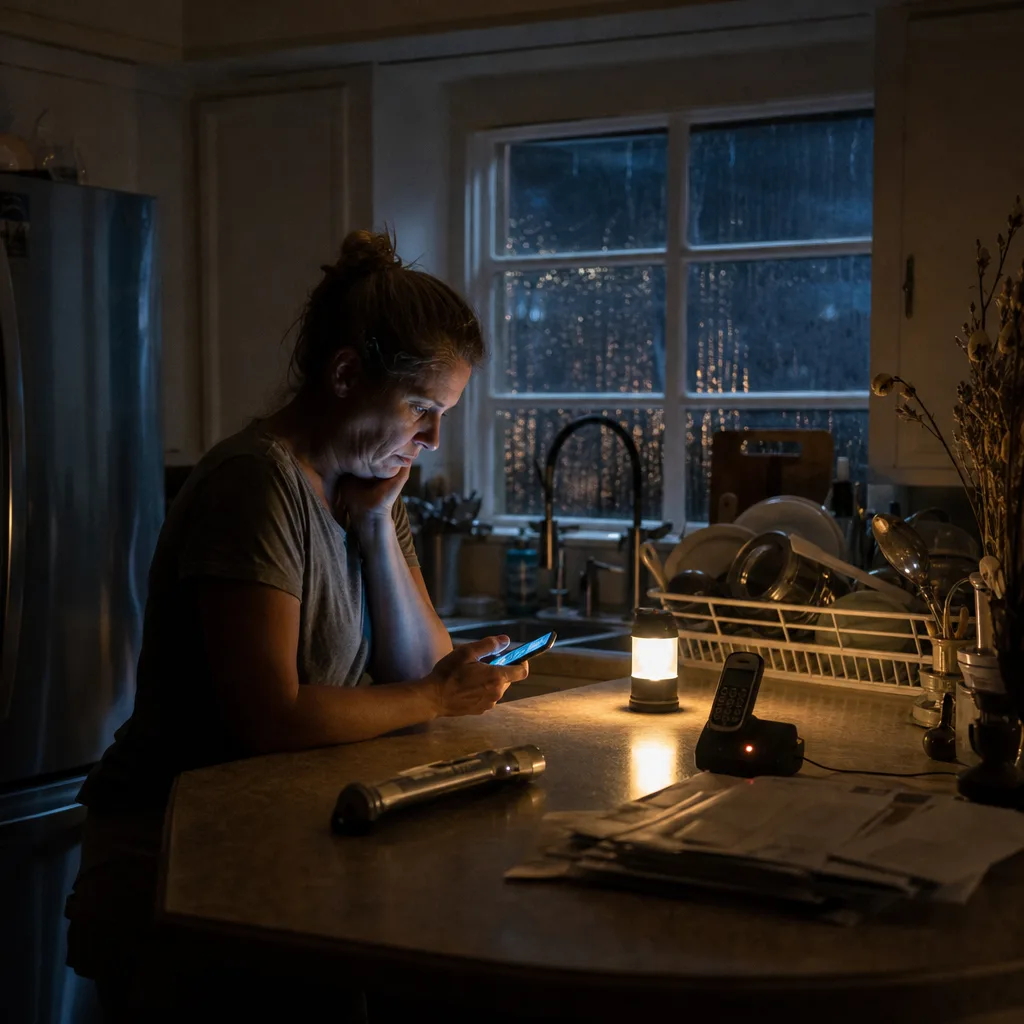
Summer is the obvious threat. Strong thunderstorms roll across North Texas with high winds and hail that can bring down limbs and power lines. When that happens on a triple-digit afternoon, your home heats up fast. With the AC off, a slab-on-grade ranch house can get stuffy within a couple of hours, and the attic keeps baking long after the sun goes down.
Winter is the threat people underestimate. Hard freezes don’t come often here, but many Dallas homes weren’t built with them in mind. Water lines often run through attics and outside walls. If your heat is out for a day or more during a freeze, those pipes can split. Then you’re dealing with a burst pipe repair on top of the outage. In a freeze, keeping your furnace running protects the house itself, not just your comfort.
Comfort is only part of it. Here’s what else is on the line when the power stays off:
- Your food. A full fridge and freezer can be a few hundred dollars’ worth of groceries, and you lose it all if the outage drags on.
- Medical equipment. A CPAP, an oxygen concentrator, or medicine that has to stay cold can’t wait for the utility crews.
- Your work. If you work from home, losing your internet and charging for a day or two costs you more than the inconvenience.
- Older family members. Heat is hard on seniors and young kids, especially when an outage stretches into the evening.
- An empty house. If you travel, a standby system starts on its own, so your home is protected whether you’re there or not.
Here’s the honest truth. A generator won’t stop the storms, and you might go years without a long outage. What it buys you is not having to worry about it. That only works if the system is built for what Dallas weather asks of your home: your AC on a July afternoon and your heat during a hard freeze. A generator that can’t carry those loads gives you peace of mind on paper only.
A standby generator also touches several parts of your home at once: your gas line, your electrical panel, and your heating and cooling system. We handle HVAC, plumbing, and electrical under one roof. That means the team planning your generator also understands the AC and furnace it needs to keep running.
Call 469-269-6373
Frequently Asked Questions
Common questions about Whole-home standby generator installation
Can you just hook up a generator to your house yourself?
No, a whole-home standby generator has to be tied into your gas line and electrical panel by a licensed professional, not wired in as a DIY project. It needs a properly sized gas connection, a transfer switch that keeps generator power from backfeeding onto utility lines, and startup testing before it’s safe to rely on. Skipping any of that puts your home and utility line workers at risk.
Does adding a standby generator increase my home’s value?
A standby generator can add value, especially in a market where buyers worry about outages, but it isn’t guaranteed to return what you paid. What tends to matter more to buyers in Dallas is whether the system is sized correctly and installed with a proper transfer switch, gas line, and pad, rather than just having a generator sitting in the yard. A documented, professionally tested installation is more appealing than one with unclear scope.
Can I deduct the cost of a whole-house generator on my taxes?
That depends on your personal tax situation, so it’s a question for a tax professional, not your installer. Some homeowners may qualify for a deduction if the generator is tied to a documented medical need or home office use, but there’s no blanket rule that applies to every Dallas homeowner. Ask your accountant before you count on any tax benefit when budgeting for the install.
Ready to Get Started?
Call (469) 269-6373 Today, Get Service Today.