


Water Softener Installation in Dallas: Licensed Plumbing Work Done Right
Whole-home softeners that treat water where it enters your house, usually installed the same day.
What’s Covered on This Page
- Water Softener Installation Requires Licensed Plumbing Work
- Signs Your Dallas Home Needs a Water Softener
- When You Don’t Need a Whole-Home Softener
- What Happens During Installation
- What Drives Water Softener Installation Cost
- How long does a water softener installation take?
- Will I notice a difference in my water right away?
- Can I install a water softener myself to save money?
Water Softener Installation Requires Licensed Plumbing Work
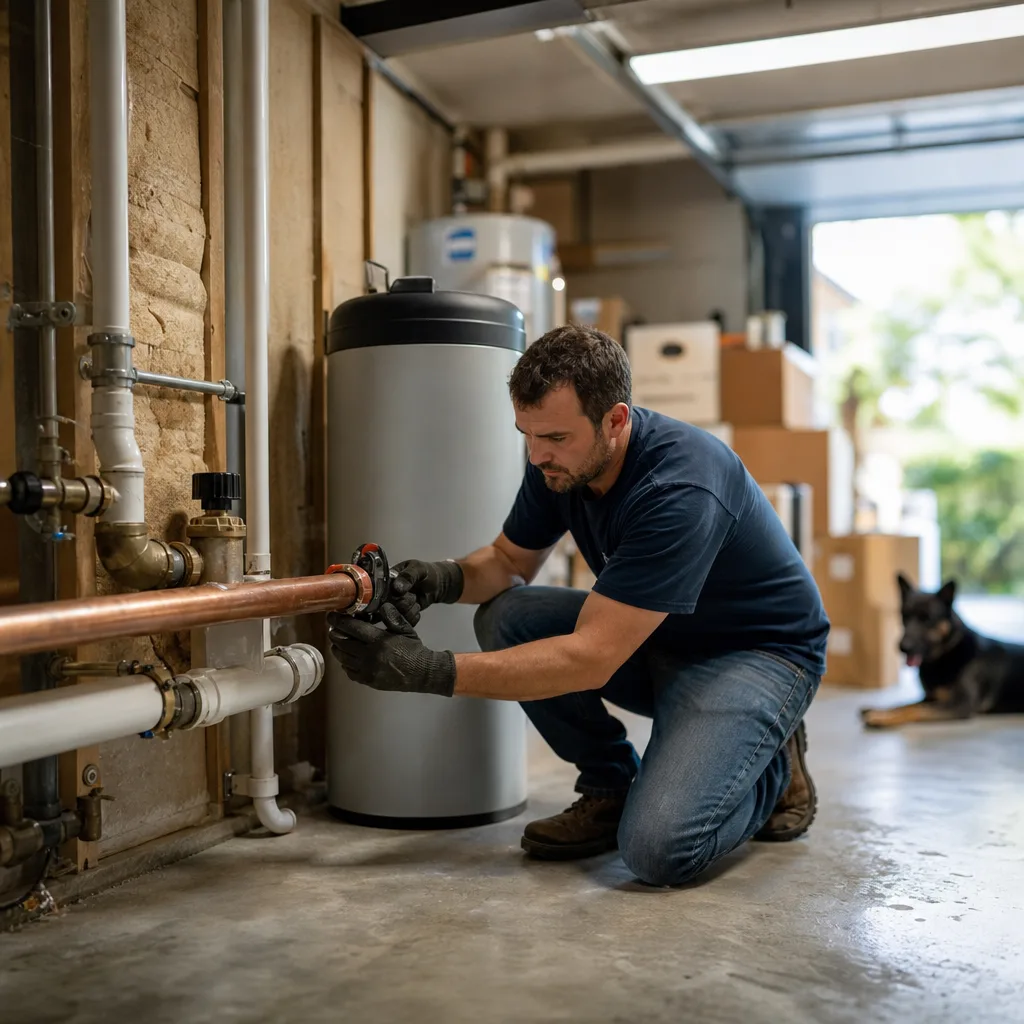
It’s easy to think of a softener as just another appliance. You see one at the hardware store, it comes in a box, and the video makes it look like an afternoon project. But the tank only works because of what’s around it. Your installer has to shut off the water to the whole house, cut into the main supply line, and tie the softener in so every drop you use passes through it first.
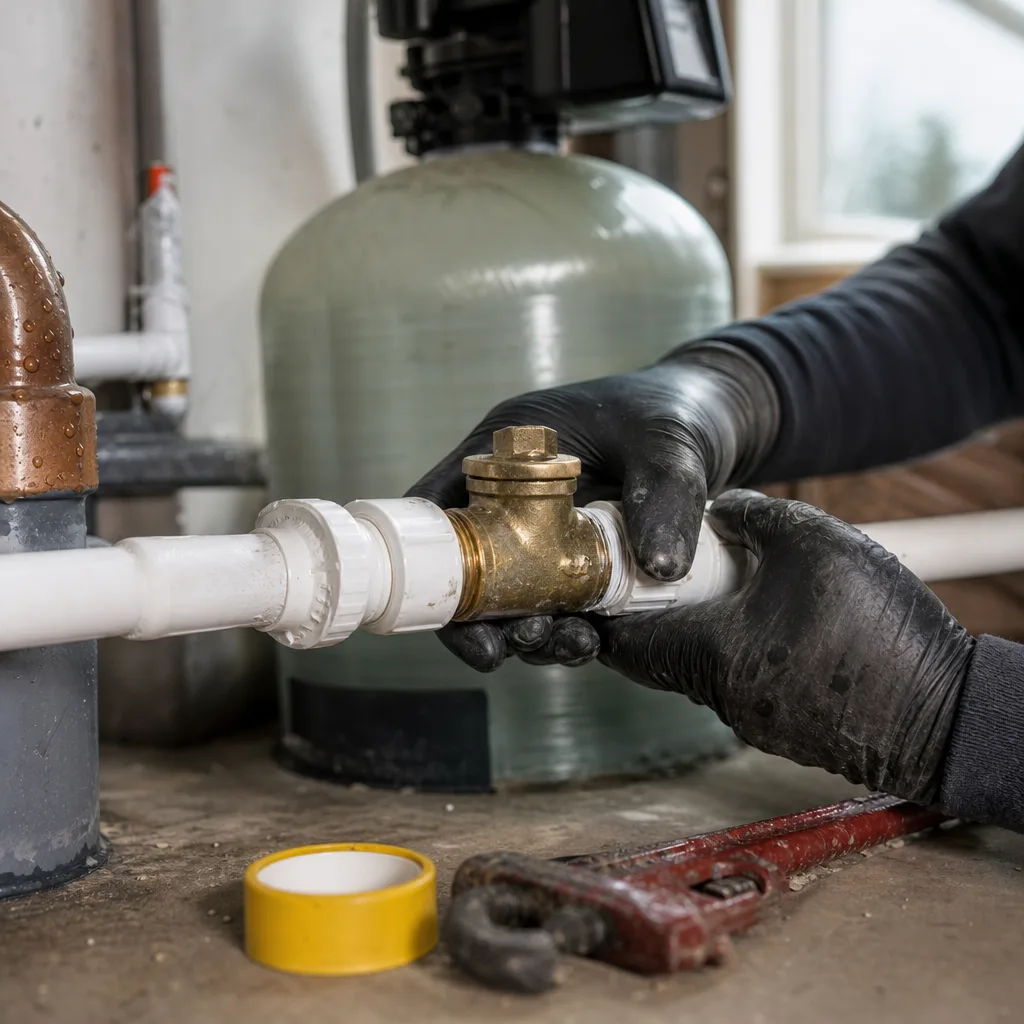
That’s the same line your water heater, showers, and kitchen sink depend on. If a fitting is off, you won’t find out at the tank. You’ll find out from a slow drip behind a wall or a puddle in the garage.
Here’s what a licensed plumber is checking and building during a softener install:
- A bypass valve, so you can send water around the softener for repairs or salt problems without shutting off water to your whole home.
- A proper drain connection. Your softener flushes salty rinse water every time it cleans itself, and that line needs a gap between the hose and the drain so dirty water can’t get pulled back into your drinking water.
- Solid connections on the main line, using the right pipe and fittings for what’s already in your home.
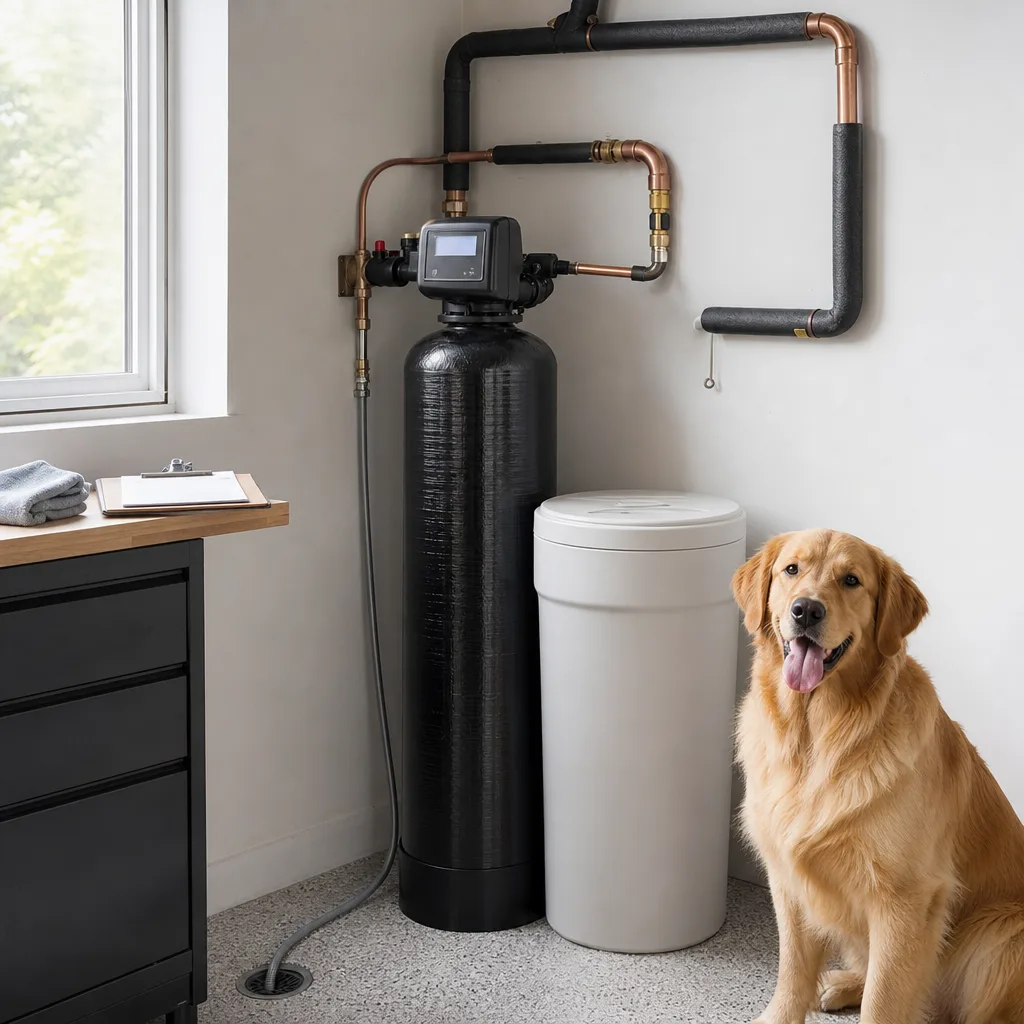
- A plumbing loop, if your home has one. Many Dallas houses do, often in the garage. Older slab homes sometimes don’t, and adding one is a bigger job.
- Startup and testing, so you know the softener is softening and nothing leaks once the water pressure comes back on.
Texas requires anyone you hire to do plumbing work like this to be licensed. That license matters because it means the person working on your water supply has been trained and tested on how to keep it safe and to code. It also gives you someone to hold accountable if something isn’t right.
Xtreme Air Services is a licensed and insured plumbing contractor, and our plumbing work is backed by Master Plumber Larry Breedlove. Our standard install covers the softener and materials, professional installation, the bypass and drain connections, startup and testing, and hauling off your old unit. Most jobs finish the same day.
We’ll also tell you up front what isn’t part of a standard install, so nothing catches you off guard. That includes building a plumbing loop if your home doesn’t have one, code corrections to old pipes we find along the way, electrical work, and permits unless your quote says otherwise. Permit rules can depend on the city and the scope of the job, so ask whether yours is included before work starts.
Most softeners need a plain outlet nearby to run the control head. If there isn’t one where your softener needs to go, our electricians can add it. You won’t have to call a second company.
Signs Your Dallas Home Needs a Water Softener
Hard water rarely shows up all at once. It builds up slowly, so most people get used to it. Then one day you’re scrubbing the shower door for the third time this week and you start to wonder if something’s wrong with your water. Here’s what to look for around your home.
- White crust on faucets and showerheads. That chalky ring is mineral left behind when water dries. If it comes back days after you clean it, your water is carrying plenty of it.
- Spots on glasses and dishes. Cloudy glasses straight out of the dishwasher are one of the most common hard water complaints.
- Soap that won’t lather. Hard water fights soap, so you use more shampoo, more dish soap, and more detergent to get the same clean.
- Dry skin and dull hair. Soap residue that won’t rinse off can leave your skin feeling tight after a shower.
- Stiff, faded laundry. Minerals stay trapped in the fabric, so towels feel scratchy and colors wear out sooner.
- A noisy or slow water heater. Scale settles in the bottom of a tank water heater. You may hear popping or rumbling, or notice hot water running out faster than it used to.
- Weak flow at certain fixtures. Over time, scale can narrow aerators, showerheads, and the small openings inside valves.
Your water heater is the sign that costs the most to ignore. Many Dallas homes keep their tank water heater in the garage or the attic, where you don’t see it every day. Scale builds up inside quietly. It makes the heater work harder to warm the same water and can shorten its life. The same minerals also coat the insides of your dishwasher, washing machine, ice maker, and coffee maker.
Dallas tap water is treated and safe to drink. Hard water isn’t a health problem. It’s a wear-and-tear problem. The minerals that leave spots on your glasses are doing the same thing inside your pipes and appliances, every day, in every room.
Our team offers water testing, and we’ll tell you straight what the results mean. If your water is only a little hard and a few spots on the glasses don’t bother you, you may not need a softener at all. A rinse aid in the dishwasher and a vinegar soak for the showerhead might be enough. If the test shows iron, sediment, or taste and odor issues, we also install sediment, iron, and carbon filtration systems that target those problems directly.
If you’re seeing several of these signs at once, especially scale in your water heater or crust that keeps coming back, a whole-home softener is usually the fix that lasts. It treats the water before it reaches any faucet, so you’re not fighting the same buildup room by room. Getting it installed on your main line the right way is what makes that work.
When You Don’t Need a Whole-Home Softener
A softener is a good fix for one specific problem. It isn’t the right buy for every home, and it’s better to hear that before one gets cut into your main line than after. Here are the times we’d tell you to hold off or go another direction.
You rent, or you live in a condo or apartment building. A whole-home softener means cutting into the main water supply, and in a rental that’s your landlord’s decision, not yours. In many condo and apartment buildings there’s no single line that feeds only your unit, so there’s nowhere to put a whole-home system even if the HOA would allow it. Ask your landlord or HOA first. If the answer is no, a whole-home softener is off the table for now, and that’s okay.
Your real complaint is how your drinking water tastes. A softener trades the hard minerals for a small amount of sodium. It doesn’t filter your water or change much about how it tastes. If what bothers you is the glass of water at the kitchen sink, an under-sink reverse osmosis system is built for that job. We install those too, and it’s a smaller project than treating the whole house.
Someone in your home watches their salt intake. Softened water carries some added sodium. If a family member is on a low-sodium diet, talk with their doctor before you buy. You still have options. Some homes keep one cold-water tap unsoftened for drinking, some add reverse osmosis at the kitchen sink, and many softeners can run on potassium chloride instead of regular salt.
You’re planning to move soon. A softener is plumbed into your home, so it stays when you leave. If you’re listing your house in the next year or so, you’ll pay for the install and the next owner gets most of the benefit. A good descaling of your water heater and fixtures might be the smarter way to spend your money for now.
You already have a softener and it just quit working. A softener that stops softening doesn’t automatically need to be replaced. Before you shop for a new one, check a few things yourself:
- Is there salt in the brine tank, and does the level drop over a few weeks?
- Push a broom handle gently into the salt. If you hit a hard crust above the water, that’s a salt bridge. Break it up and the softener may start working again.
- Check that the bypass valve isn’t set to send water around the softener.
- Make sure the clock and settings on the control head didn’t reset after a power outage.
If none of that fixes it, the problem could be a worn valve, a bad seal, or resin that’s past its life. Water softener repair or maintenance may get you years more use from the tank you already own. Replacement makes sense when the unit is old, the parts cost close to what a new one does, or it’s simply too small for your household now.
If one of these fits you, a whole-home softener might still make sense down the road. Right now, though, “not yet” is an honest answer, and it’s one we’re comfortable giving you.
Have questions? We’re happy to help.
Call Today, Get Service Today. Xtreme Air Services — Oak Lawn is ready to help.
What Happens During Installation
Most of the work happens in one visit, and most of it happens near your water line, not inside your living space. Here’s how a typical install day goes, so you can plan around it.
The right softener starts with your water test. The hardness number, plus how many people live in your home and how much water you use, tells your installer how big the softener needs to be. A unit that’s too small cleans itself too often and burns through salt. One that’s too big can sit too long between cleanings. Getting the size right before install day saves you money every month after.
Before the installer arrives, you can help in a few easy ways:
- Clear a few feet of space around the plumbing loop, or wherever the softener will sit. In many Dallas homes that’s the garage.
- Know where your main water shutoff is, in case it’s needed again later.
- Fill a pitcher or two of drinking water and run the dishwasher or laundry beforehand. The water to your whole home will be off for part of the visit.
- Move cars, boxes, or shelving that block the path to the install spot.
On install day, the work usually follows this order:
- The water to the house gets shut off and the lines are drained down.
- If you have an old softener, it’s disconnected and removed.
- The new tank is set on a flat, level spot, so it doesn’t lean or strain the connections over time.
- The softener is tied into your main line with the bypass valve, and the rinse line is run to a drain. Both are covered above.
- The brine tank is set in place and filled with salt and water.
- The water is turned back on slowly, and the tank is flushed to clear air and loose material out of the resin.
- The control head is programmed with your water’s hardness and your household size, and a first cleaning cycle is run.
- Every connection is checked for leaks under full pressure, and the water coming out of the softener is tested to confirm it’s soft.
Before the installer leaves, ask them to show you three things. How to work the bypass valve. Where the salt level should sit. What the control head screen looks like when everything is normal. Two minutes of show-and-tell saves you a call later.
The first few days can feel a little strange. Soft water feels slick on your skin, almost like the soap won’t rinse off. That’s normal. It’s what water feels like without minerals in it. You can usually cut back on soap and detergent, too.
Don’t worry if your hot water still leaves spots for a few days. Your water heater is still full of hard water from before the install. As you use it and it refills, the tank turns over to soft water on its own.
If your softener sits in an unheated garage, think about winter. North Texas can get hard freezes, and exposed lines and drain hoses in a cold garage can freeze and crack. Insulating those lines is cheap insurance against a mess on the coldest night of the year.
After that, your main job is checking the salt. Look in the brine tank once a month or so and top it off when it gets low.
Watch Our Video
See How We Handle Water softener installation in Dallas
Xtreme Air Services — Oak Lawn
What Drives Water Softener Installation Cost
Most homeowners want the number first, so here it is. Our water softener installs in Dallas typically run $1,200-$3,500. The most common job is a whole-home softener set at the main supply with a bypass and drain line, connected and tested. That job usually falls between $1,700-$2,600, and most finish the same day.
Where your home lands in that range comes down to a few things we can see once we look at your water and your setup.
- Softener capacity and type. A bigger household with harder water needs a larger unit, and that costs more. Some softener designs also cost more than others. Your water test points us to the right size, so you’re not paying for capacity you’ll never use.
- Condition of your existing plumbing. If the pipes at your install spot are in good shape, the tie-in goes quickly. Older lines, mismatched fittings, or corroded valves take more time and parts to connect safely.
- Drain access. Your softener needs a drain for its rinse water. If there’s one close by, that’s simple. If the line has to run across the garage or through a wall to reach one, the job grows.
- Added pre-filters or a plumbing loop. If your test shows sediment or iron, a pre-filter ahead of the softener protects it. If your home doesn’t have a loop, building one is extra work, as we covered above.
- Code upgrades. Sometimes the plumbing around the install spot needs to be brought up to code before the softener can go in. When we find that, we’ll show you what it is and why before we touch it.
You’ll get a price before any work starts. We use upfront flat-rate pricing, so you approve the number first and there’s no meter running while we work. Our service-call fee is $26-$99, and it’s credited toward the job if you go ahead with Xtreme Air Services.
If the full cost is more than you want to pay at once, we offer flexible financing on qualifying installations and larger jobs, on approved credit. Ask about it when you call, and we’ll walk you through it.
Whoever you hire, ask these questions before you agree to anything:
- Is the person doing the plumbing work licensed in Texas?
- Is the quote a flat price, or could it change once the work starts?
- Does the price include hauling off my old unit and startup testing?
- Is a permit included, or is that separate?
- What would make this job cost more, and will you tell me before you do it?
A good installer answers every one of those without hesitating. If you get vague answers, keep looking.
Call 469-269-6373
Frequently Asked Questions
Common questions about Water softener installation
How long does a water softener installation take?
Most installs finish in one visit. Your plumber shuts off the water, ties the softener into your main line, sets up the drain and bypass, then tests everything under full pressure before leaving. Plan to be without water to the house for part of that day, so fill a pitcher and run your dishwasher or laundry beforehand.
Will I notice a difference in my water right away?
Yes, but it takes a few days to feel complete. Soft water often feels slick on your skin at first, almost like soap won’t rinse off, and that’s normal. Your hot water may still leave spots for a few days too, since your water heater is still full of hard water until it cycles through and refills with soft water.
Can I install a water softener myself to save money?
You shouldn’t, because the job means cutting into your home’s main water line. That line feeds every faucet, your water heater, and your showers, so a bad fitting won’t show up at the tank. It shows up later as a slow leak behind a wall or a puddle in the garage. Texas requires a licensed plumber for this kind of work on your main supply.
Ready to Get Started?
Call (469) 269-6373 Today, Get Service Today.