


Whole-Home Water Filtration Installation in Dallas
Point-of-entry filtration for every tap in the house, compared honestly with softeners and reverse osmosis.
What’s Covered on This Page
- Whole-Home Filtration Treats Your Entire Water Supply
- Installing This System Is Licensed Plumbing Work
- What Happens During Installation and Startup
- What Drives the Cost of a Whole-Home System
- Permits May Apply Depending on Scope
- How long does a whole-home water filtration installation take?
- Will I be without water during the installation?
- Can a whole-home filter be added to an older home with galvanized pipe?
Whole-Home Filtration Treats Your Entire Water Supply
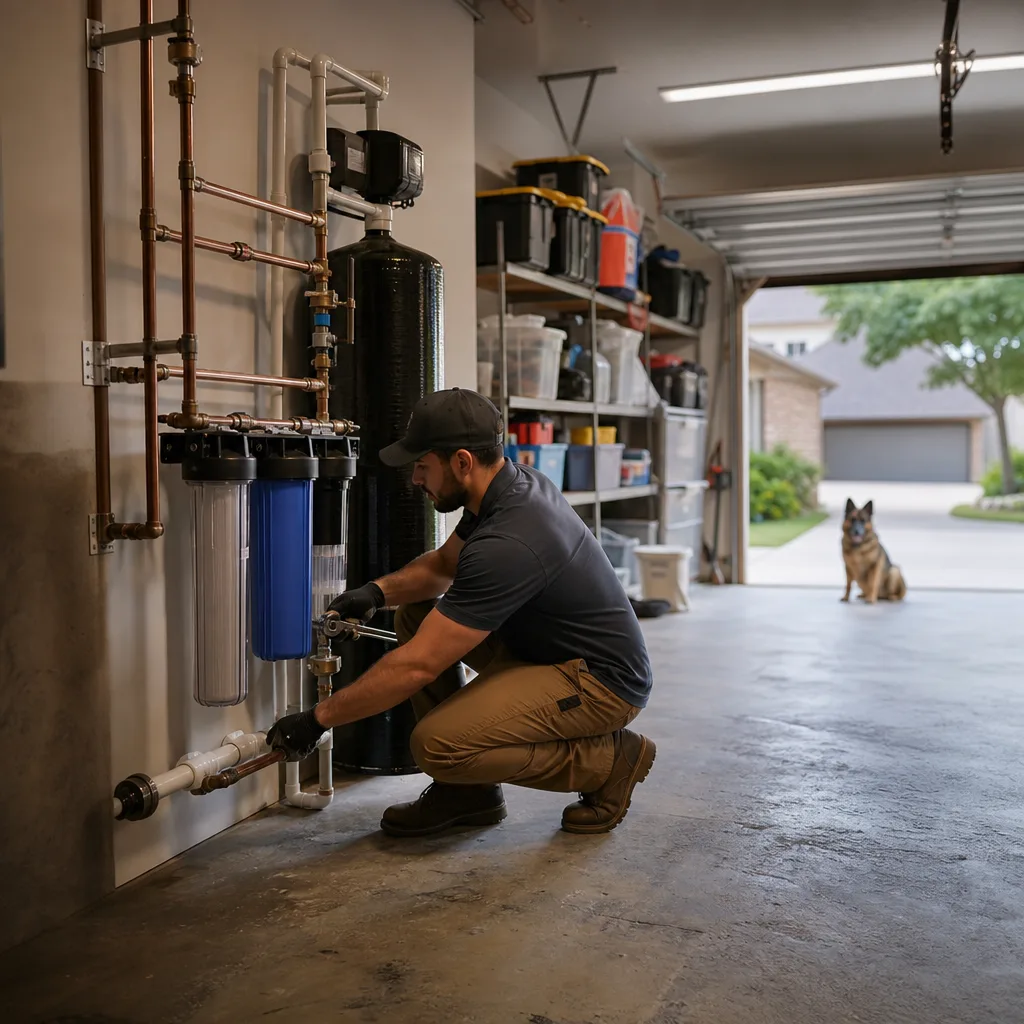
If your tap water tastes like a swimming pool, your shower leaves your skin dry, or you’re tired of refilling a pitcher filter every few days, you’re in the right place. Whole-home water filtration installation puts one system on your main water line, so you’re not filtering one glass at a time. Here’s the part most people don’t hear up front. The system only does its job when it’s matched to your water and to how your home uses it.
Plumbers call this a point-of-entry system. It connects at your main supply, before the water splits off to the kitchen, bathrooms, laundry, and water heater. Everything downstream gets treated water.
- Your kitchen sink and fridge dispenser pour filtered water without a separate gadget.
- Your showers and baths run through the filter too, not just your drinking water.
- Your washer, dishwasher, and water heater take in water with less sediment.
- Your outside spigots can be included or left off, depending on how the system is plumbed.
Pitchers and faucet filters only clean the water you drink. A whole-home system covers what you breathe in a hot shower and what your appliances use every day. If you also want extra-pure drinking water, a reverse osmosis system under the kitchen sink can work alongside it.
One thing to know before you buy: filtration and softening aren’t the same job. Carbon and sediment filters are good at cutting the taste and smell of the disinfectant the city adds, plus dirt and grit. They don’t remove the hardness minerals that leave white spots on your glass shower doors and scale inside your water heater. Hard water is a common North Texas complaint. If that’s what’s bugging you, you may need a water softener instead of a filter, or along with one. We’d rather tell you that now than sell you the wrong box.
Size matters just as much. Every filter has a flow rate, which is how much water it can pass through at one time. If yours is too small, you’ll feel it the moment someone starts the dishwasher while another person is in the shower. That’s why it makes sense to start with water testing, so the system is picked for your water and not for a sales pitch.
Xtreme Air Services is a licensed and insured plumbing, HVAC, and electrical contractor, family-owned and operated, with a 4.8-star reputation across 2,900+ reviews on Google, Angi, and HomeAdvisor. When we install a whole-home system, it goes on at your main supply, gets connected, and gets tested before we call the job done. And you’ll talk to a real person who explains your options in plain English.
Installing This System Is Licensed Plumbing Work
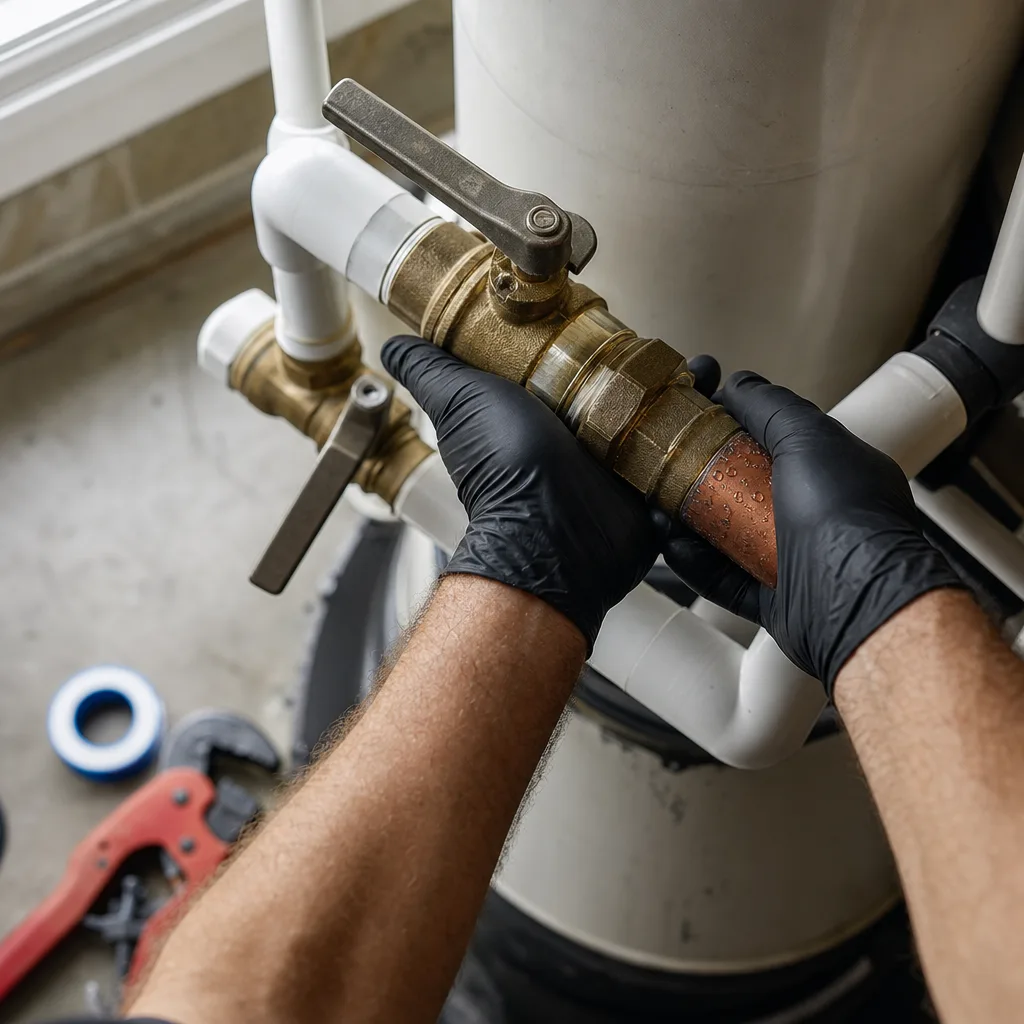
A whole-home filter isn’t a gadget you screw onto a faucet. To put one in, someone has to shut off your water, cut into your main supply line, and splice in new pipe, valves, and fittings. Every gallon your family uses runs through that spot afterward. If a joint there weeps, it weeps all day, every day, under full city pressure.
That’s why this is plumbing work. In Texas, plumbing on a home’s water supply is supposed to be done by a state-licensed plumber. Xtreme Air Services is a licensed and insured plumbing contractor, so the person tying into your main line is qualified to be there.
The install is also where a well-chosen system either keeps its promise or loses it. You can buy the right filter for your water and still end up with weak showers if it’s plumbed with undersized fittings or too many tight turns. A good installer makes the connections match your main line, so the flow rate you paid for reaches your taps.
Here’s what a proper job should cover:
- Shutoff valves on both sides of the system, so filters can be changed without draining the whole house.
- A bypass valve, so you still have water if the system ever needs service.
- A drain connection for systems that flush themselves, with the right gap so dirty water can’t back up into your clean lines.
- A grounding check. In many older homes, metal water pipe is part of the electrical grounding path. Cutting in a section of plastic or a filter housing can break that path unless a jumper wire is added.
- Startup and testing, so every connection is checked under pressure before anyone leaves.
Where the main line runs in your house matters too. Many Dallas homes sit on slab foundations, so the main usually comes up through the slab in the garage or along an outside wall instead of in a basement. That spot decides where the system can go, how much room you’ll have for filter changes, and whether there’s a drain nearby. Older homes may still have galvanized or mixed pipe at that point, and old pipe sometimes needs repair before it can safely take new fittings.
Ask about these items before you hire anyone. With Xtreme Air Services, your installation price includes the system and materials, professional installation, connections, startup and testing, and haul-away of the old unit. Some things aren’t included, and we’d rather you hear that now. A plumbing loop if your home doesn’t have one, electrical work, code corrections, and permits are extra unless your quote says otherwise. If your setup needs any of those, you’ll know before work starts.
Any installer you’re considering should be able to answer these questions plainly:
- Are you licensed for plumbing in Texas, and are you insured?
- Where will the system go, and will I be able to reach it for filter changes?
- Will you install a bypass and shutoff valves?
- Does my home need a permit or any code updates for this job?
- Will you test every connection under pressure before you leave?
If you don’t get straight answers to those, keep looking. A good installer won’t mind you asking.
What Happens During Installation and Startup
Most of the work happens before anyone picks up a pipe cutter. A water test tells you what the system needs to remove. A look at your main line and the space around it tells you where the system will sit and what size will keep up with your home. Once those two things are settled, install day is pretty simple.
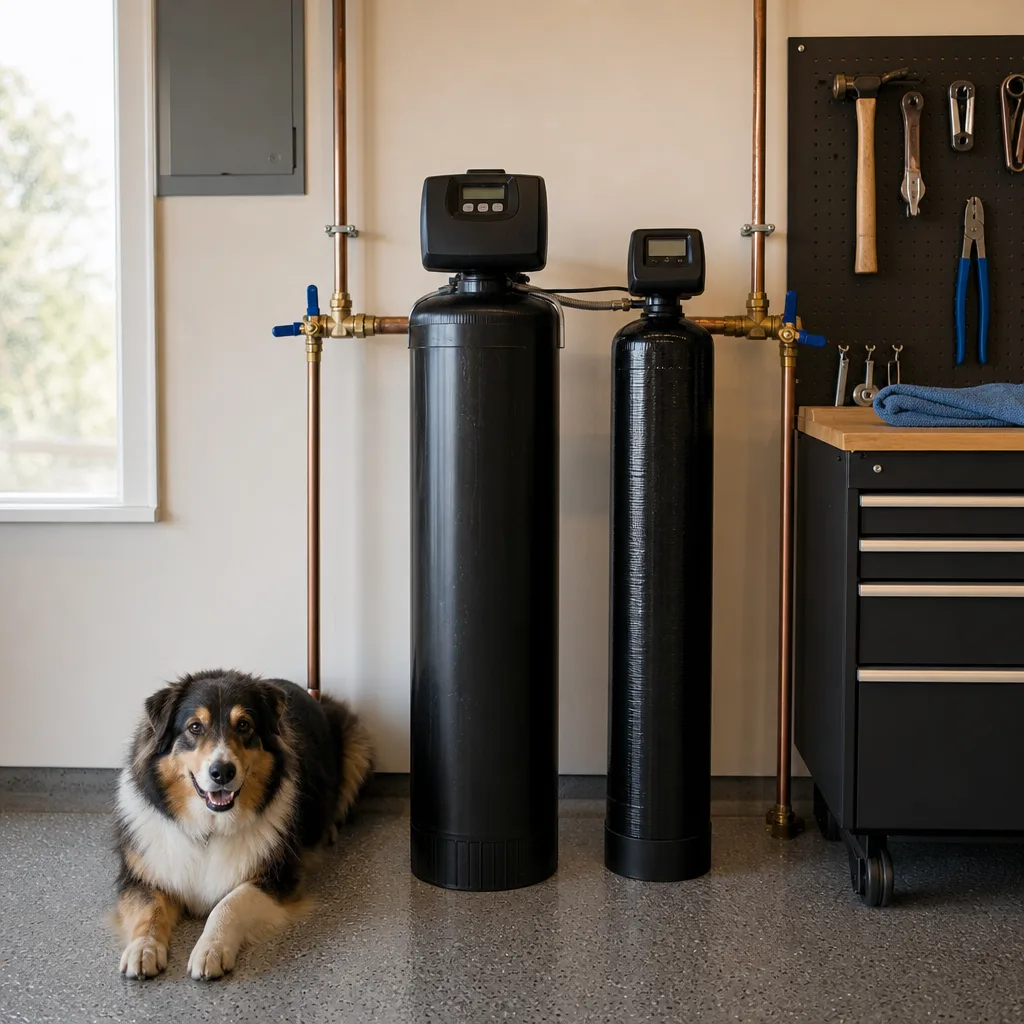
You can make it go smoother with a little prep:
- Clear a few feet of space around where your main line comes in, usually in the garage or along an outside wall. Move bikes, shelves, and boxes out of the way.
- Park your car somewhere else for the day if the system is going in the garage.
- Fill a pitcher or a pot or two before work starts. Your water will be off for part of the visit.
- Hold off on laundry, the dishwasher, and long showers until the system is running.
On the day itself, the main gets shut off and the lines drain down. The installer cuts into the supply, mounts the filter housings or tank, and connects everything to your plumbing. Systems with a tank that flushes itself also get their drain line run at this point. Then the water comes back on slowly, so pressure builds gently instead of slamming into brand-new joints.
Startup is the part that confuses people, so here’s what’s normal. New carbon filter media comes packed with fine dust. The first water through it needs to be flushed out, often to a drain or an outside spigot, until it runs clear. Tank-style systems may also go through a rinse cycle before they’re put into service. That flush is what keeps black specks out of your kitchen sink.
Once water is back on in the house, expect a few small things for the first day or so:
- Faucets may sputter and spit air when you first open them. Let them run for a minute and it stops.
- Water can look a little cloudy or milky. That’s tiny air bubbles. Fill a clear glass, and if it clears from the bottom up, it’s just air.
- Faucet screens can catch bits of grit knocked loose when the line was opened. If a faucet suddenly runs weak, unscrew the tip and rinse the screen.
Water that stays gray, keeps leaving dark specks after a full day, or smells worse than before isn’t normal. Neither is a damp spot or drip at any fitting. Call your installer about any of those instead of waiting it out.
Before the job wraps up, make sure you know three things. First, where the bypass valve is and how to turn it. Second, what filter or media your system uses. Third, roughly when it’ll need changing. Write the install date on the housing or snap a photo of the label. Months from now, that one note saves you from guessing.
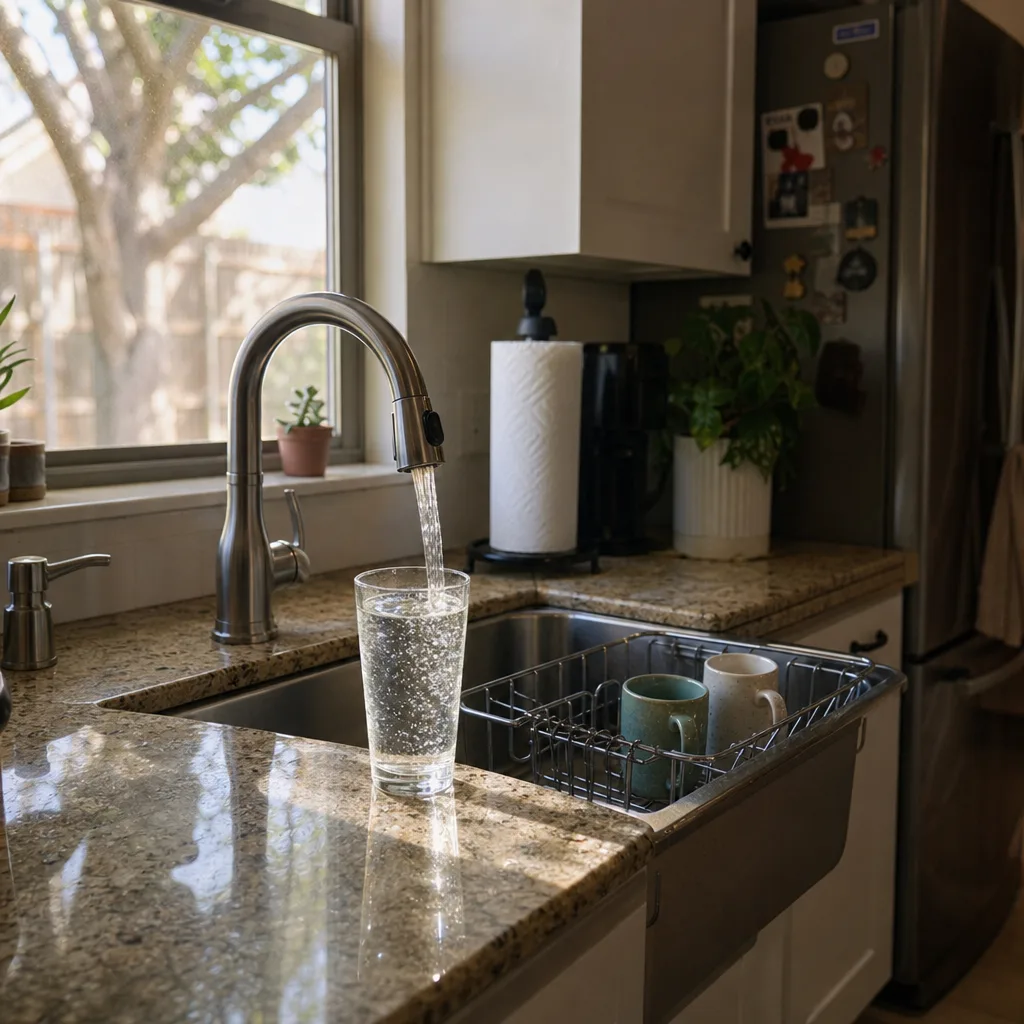
The best test is your own. Run a glass of cold water from the kitchen sink and take a sip. If the swimming pool taste is gone and the shower runs as strong as it did before, the system was matched and sized right. When we install a whole-home system, startup, testing, and hauling off the old unit are part of the job, so you’re not left cleaning up after it.
Not sure what your Whole-home water filtration installation project needs? Ask us.
Call Today, Get Service Today. Xtreme Air Services — Oak Lawn is ready to help.
What Drives the Cost of a Whole-Home System
Here are our real numbers. A whole-home water filtration installation with Xtreme Air Services typically runs $1,500 to $4,500. Our most common job is a point-of-entry system put in at your main supply, connected, and tested. That job usually lands between $2,100 and $3,300. We price it by system type, so the system your water test points to does most of the work of setting your price.
Why such a wide range? Two homes on the same street can need very different setups. Here’s what moves the number:
- Filtration type and stages. A single carbon tank costs less than a system that pairs a sediment prefilter with carbon, or adds a stage for a specific problem in your water. Each stage is more media, more housings, and more fittings.
- Flow rate and capacity. A bigger house with three bathrooms needs a system that can keep up when two showers and the washer run at once. More capacity means a larger tank or housing, and that costs more.
- Condition of your existing plumbing. If the pipe at your main is solid and easy to reach, the tie-in is simple. Old galvanized pipe or a corroded section near the main may need repair before new fittings can go on.
- Drain access. Systems that flush themselves need a drain nearby. If your main comes up in the garage far from any drain, running a line there adds time and material.
- Code upgrades. Some homes need updates to meet current code before or during the install. That can include adding a grounding jumper where plastic pipe interrupts metal pipe.
Location matters inside your house, too. Many Dallas homes built from the 1950s through the 1990s are slab-on-grade ranches, with the main line coming up through the slab in the garage or along an outside wall. A tight spot with no drain nearby costs more to work in than an open garage wall with a utility sink a few feet away.
Remember the extras we covered earlier, like a plumbing loop if your home doesn’t have one, electrical work, code corrections, and permits. Those are where a low quote can hide a higher final bill. When you compare quotes, ask each company to spell out which of those are in the price and which aren’t. A cheaper number that leaves out half the job isn’t cheaper.
Getting your price starts with a visit. Our service-call fee is $26 to $99, and it’s credited toward the work if you go ahead with Xtreme Air Services. You’ll get upfront flat-rate pricing that you approve before any work starts, so there’s no meter running while we’re in your garage.
If the right system costs more than you planned, you’ve got options. We offer flexible financing on qualifying installations and larger jobs, on approved credit. That way you can put in the system your water needs, instead of settling for one that’s too small or doesn’t fix the problem.
Call 469-269-6373
Watch Our Video
See How We Handle Whole-home water filtration installation in Dallas
Xtreme Air Services — Oak Lawn
Permits May Apply Depending on Scope
Whether your install needs a permit depends on what the job involves and where your house sits. Swapping a filter cartridge in a system you already have is routine upkeep. You can do that yourself, and no one needs to file anything. Cutting into your main supply line to add a new system is a different story. That’s work on your home’s water supply, and it’s the kind of plumbing job a city building department may want to see on paper and inspect.
The bigger the job, the more likely a permit comes into play. These are the parts of an install that tend to raise the question:
- Tying into the main line. A new point-of-entry system means new pipe, valves, and fittings on the line that feeds your whole house.
- Adding a drain connection. Systems that flush themselves need a place to send that water, and how it connects to your drain matters to an inspector.
- Adding an outlet. Some systems have a control valve that plugs in. If there’s no outlet near your main, new electrical work may need its own permit.
- Moving or rerouting pipe. If the system won’t fit where your main comes up through the slab and pipe has to be relocated, the scope grows.
- Code corrections. If old pipe or a missing grounding jumper has to be fixed along the way, that work may be reviewed too.
Who makes the call matters as much as what’s being done. If your home is inside Dallas city limits, the City of Dallas sets the rules for your job. If you’re just over the line in Highland Park or University Park, your own town’s building department decides, and its requirements and fees can be different. Even neighbors a few miles apart can get different answers, so don’t go by what a friend in the next town was told.
A permit isn’t just red tape. It means a second set of eyes checks the work on the one pipe every drop in your house runs through. It also leaves a record. If you sell your home someday, a buyer’s inspector may spot a filtration system on the main and ask whether it was done right. A permitted, inspected install is an easy answer to that question.
If a permit is needed, plan for a little extra time. An inspector may need to see the work, which can mean someone has to be home for that visit.
As we covered in the pricing section, permits aren’t included in our installation price unless your quote says they are. That’s why it’s worth asking these questions before any work starts:
- Does my address need a permit for this job?
- Who pulls the permit, you or me?
- Is the permit fee in this quote, or is it separate?
- Will this job need any electrical work, and does that need its own permit?
Because Xtreme Air Services handles plumbing and electrical under one roof, you won’t have to line up a second company if your system needs a new outlet near the main. You’ll know what your job involves and what it costs before anyone picks up a tool.
Call now
Frequently Asked Questions
Common questions about Whole-home water filtration installation
How long does a whole-home water filtration installation take?
Most installs are a one-day job, from shutting off your main to testing the last connection. The exact time depends on where your main line sits and whether your existing pipe needs repair first. Homes with an easy-to-reach main in the garage usually go faster than ones needing extra fittings or a new drain line.
Will I be without water during the installation?
Yes, your water is shut off for part of the visit while the installer cuts into the main line and connects the system. That’s why it helps to fill a pitcher or a pot or two before work starts, and hold off on laundry or showers until it’s done. Once the install is finished, water comes back on slowly so pressure builds gently into the new joints.
Can a whole-home filter be added to an older home with galvanized pipe?
Often yes, but older galvanized or mixed pipe near your main may need repair before new fittings can go on safely. This comes up more in homes built from the 1950s through the 1990s, where the main often runs through the slab in the garage or along an outside wall. An installer should check that pipe and your home’s grounding path before starting the tie-in, since cutting in plastic pipe or a filter housing can break the electrical grounding if a jumper wire isn’t added.
Ready to Get Started?
Call (469) 269-6373 Today, Get Service Today.