


A/C System Repair in Plano: Honest Diagnosis, Clear Pricing
Warning signs explained, quick checks to try first, and a repair price that tells you what's included.
What’s Covered on This Page
- What’s Wrong With Your AC
- Check These Three Things Before You Call
- How a Repair Visit Works, From Diagnosis to a Running System
- What A/C System Repair Costs and What’s Included
- Why Plano’s Summer Heat Puts Extra Strain on Older Systems
- Can my air conditioner be repaired, or is it too far gone?
- What’s the 3 minute rule people mention for AC units?
What’s Wrong With Your AC
When your house is heating up, it’s easy to assume the worst. But an air conditioner is a handful of parts working together, and when one quits, the whole system stops cooling. For most of our A/C system repair calls, it’s a single common failure we can fix on the first visit. The trick is finding which part it is.
Here’s what you might be noticing, and what’s usually behind it.
- The outdoor unit hums, but the fan won’t spin. This often points to a weak or failed capacitor. That’s a small part that gives the motors a kick to get started. In a Plano summer, it works hard every single cycle, and replacing it is a quick fix once it’s confirmed.
- Warm air is coming out of the vents, but the outdoor unit is running. You could have low refrigerant, a dirty condenser coil, or a part that isn’t starting the compressor. Refrigerant doesn’t get used up. If it’s low, there’s a leak somewhere, and topping it off without finding that leak just puts off the next breakdown.
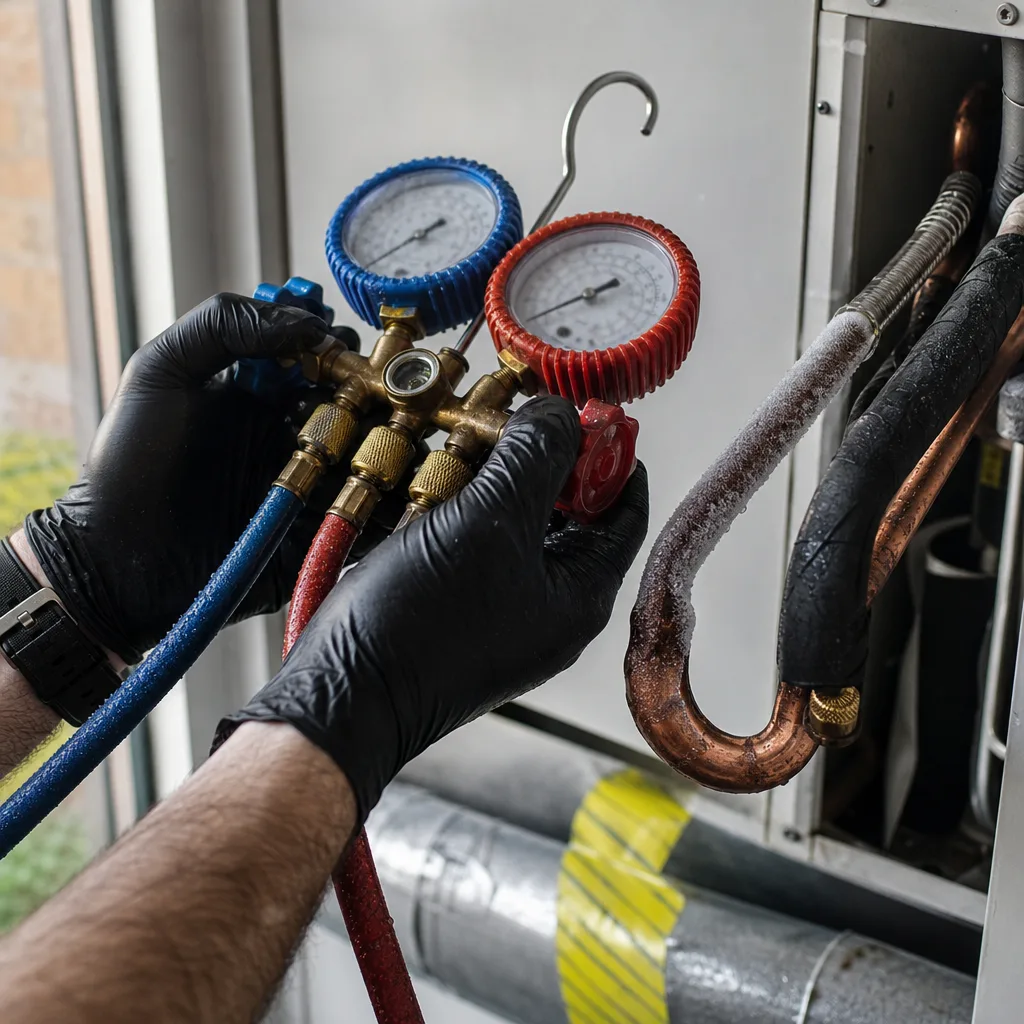
- You see ice on the copper line or the indoor coil. That’s a frozen coil. It usually happens when air can’t move across the coil well, from a clogged filter or a blower problem, or when refrigerant is low. The ice has to melt before anyone can tell which one it is.
- There’s water near the indoor unit, or the AC just shut itself off. A clogged condensate drain line is a likely cause. Many systems have a safety switch that turns the AC off when water backs up. With so many North Texas systems sitting in the attic, that switch is what keeps a clog from turning into a stain on your ceiling.
- Nothing happens at all. The trouble could be the thermostat, an electrical issue, or a failed control board. These can look the same from where you’re standing, so they need to be tested.
- Airflow is weak, even though the air feels cool. Check for a dirty filter, a failing blower motor, or a problem in the ductwork.
- You hear grinding, squealing, or rapid clicking. These sounds usually come from a fan motor, a blower motor, or an electrical part that’s starting to go.
Notice that a lot of these overlap. Warm air can come from a capacitor, a leak, or a dirty coil. That’s why our technicians test before they replace anything. You shouldn’t pay for a new part that wasn’t the problem.
Sometimes the problem is bigger. A failed compressor or a damaged coil is a major repair. When that happens, you’ll hear it from us plainly and see the price before any work starts, so you can decide what makes sense for your home and your budget.
If you can tell us what you’re seeing when you call, like ice, water, a humming noise, or no sound at all, that helps us show up ready for the most likely fix.
Check These Three Things Before You Call
Before you pick up the phone, take five minutes and check these three things. Sometimes an AC that seems broken is just set wrong, tripped, or choking on a dirty filter. If one of these fixes it, you don’t need a technician, and you’ve saved yourself the $26-$99 service-call fee.
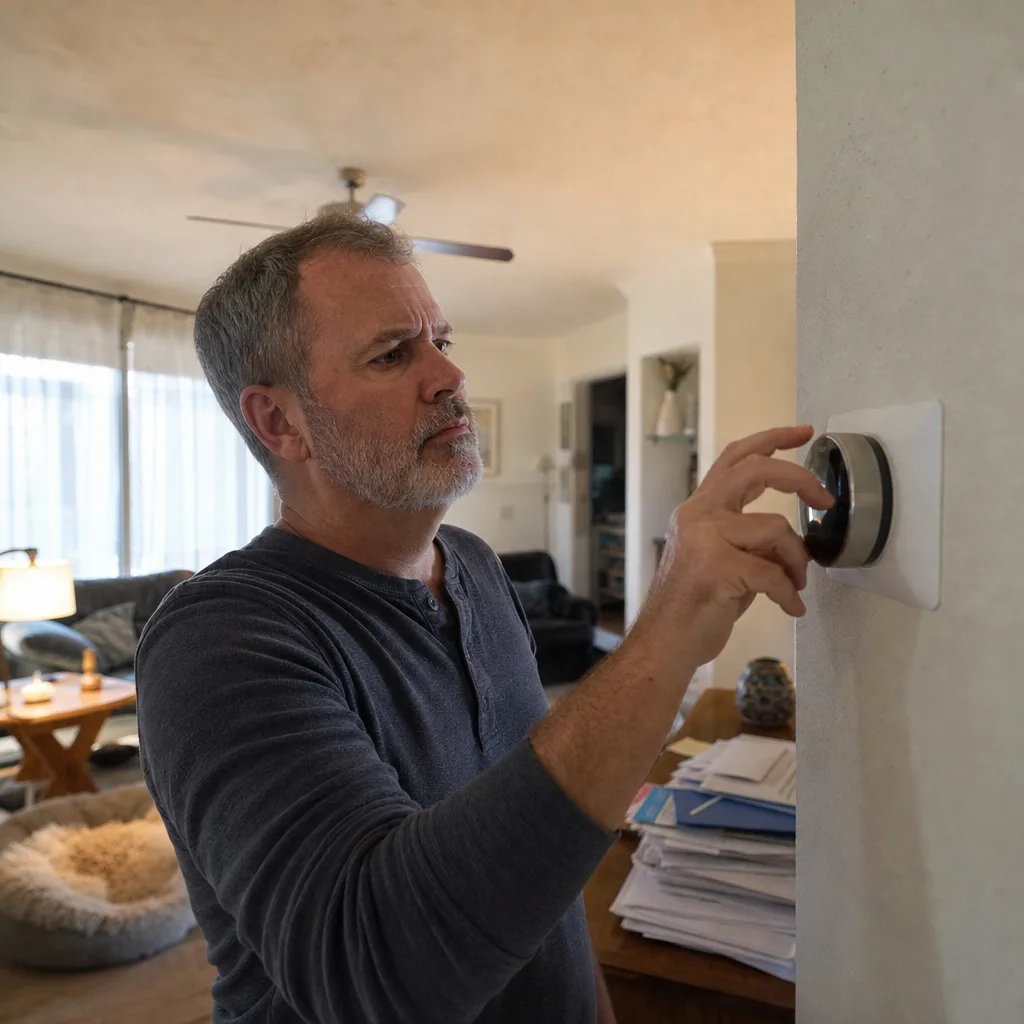
1. Your thermostat. Make sure it’s set to Cool, not Heat or Off. The set temperature should be a few degrees below what the room feels like right now. Check that the fan is on Auto. If the screen is blank or dim, swap the batteries. If you have a smart thermostat, look for a schedule, an away setting, or an energy-saving mode that may be holding the temperature higher than you think. A lot of no-cooling calls end right here.
2. Your breakers. Your AC usually has two breakers in the main electrical panel, one for the indoor unit and one for the outdoor unit. Look for one that’s flipped to the middle or the off position. Flip it all the way off, then back on. Many outdoor units also have a disconnect box mounted on the wall next to them. Make sure it hasn’t been switched off, which can happen after yard work or a visit from another trade.
3. Your air filter. Pull the filter out and hold it up to a light. If you can’t see light through it, it’s time for a new one. In a lot of Plano homes, the filter sits behind a return grille in a ceiling or wall. In others, it’s at the indoor unit itself. The size is printed on the edge of the old filter, so take it to the store with you. In a North Texas summer, your system runs nearly nonstop, so filters clog faster than the package suggests.
A clean filter fixes weak airflow. If your lines are already iced over, though, a new filter won’t bring the cooling back right away. As we covered above, that ice has to melt first.
There are also a few things you shouldn’t try yourself:
- Opening the outdoor unit’s electrical panel. Capacitors can hold a charge even with the power off.
- Adding refrigerant from a store-bought kit. If it’s low, there’s a leak, and that leak needs to be found.
- Chipping ice off a frozen coil. You can bend the fins and turn a simple fix into a coil repair.
If your thermostat is set right, the breakers are on, the filter is clean, and the house still won’t cool down, you’ve done your part. At that point, it’s almost always a part that needs to be tested, not something more you can do at home. Write down what you checked so you can tell the technician. It saves time once someone’s in front of your unit.
How a Repair Visit Works, From Diagnosis to a Running System
A repair visit has three jobs. Find the part that failed, fix or replace it, and make sure your system is really cooling again before anyone calls it done. Here’s what that looks like when you call us.
It starts with a phone call. You’ll talk to a real person, not a phone tree. Same-day service is available, and there’s no extra charge for nights or weekends. If your AC quits on a Saturday evening in August, you pay the same as you would on a Tuesday morning. Tell us what you noticed and what you already checked. That helps your technician show up ready.
There’s a $26-$99 service-call fee to get a technician to your door. If you go ahead with the repair with Xtreme Air Services, that fee is credited toward the repair. It’s not added on top.
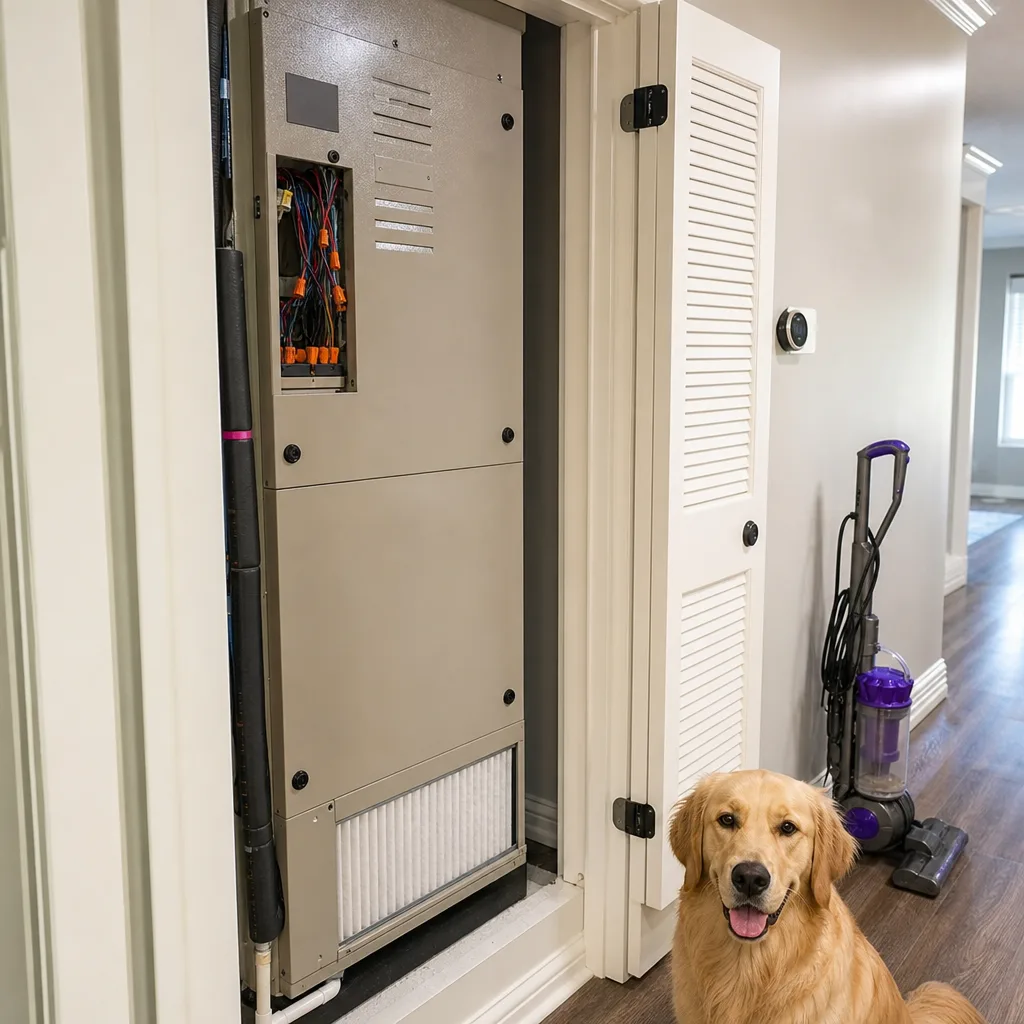
A licensed, background-checked technician then finds the failed part. Your technician will likely need to get to both the outdoor unit and the indoor unit. In many North Texas homes, the indoor unit sits up in the attic. You can save time by clearing a path to the attic opening and making sure the gate to the side yard is unlocked. If you have a dog that likes the backyard, keep it inside for a bit.
You see the price before any work starts. We use upfront flat-rate pricing that you approve first. There’s no meter running while you wait, and nothing extra appears on the bill afterward. Here’s what that price covers and what it doesn’t:
- Included: diagnosis, labor, the standard replacement part, testing, and cleanup.
- Not included unless quoted separately: additional failed parts, major components, code upgrades, or permits.
Our most common repair, where we find one failed part and fix it, runs $150-$400. Repairs in general fall between $150-$700. What moves the number is how far the failure has spread, what the part costs and whether it’s in stock, how old your equipment is, and whether more than one part has failed. If the problem turns out to be a major component, you’ll get a separate quote and time to think it over. Financing isn’t typically offered for smaller repairs like these. It is available on larger repairs and replacements.
Next comes the repair. Once you say yes, the technician repairs or replaces the part that failed. Most calls are a single common failure that gets fixed on the first visit.
Then comes the most important part. The system gets tested to make sure it runs correctly. A unit that switches on isn’t the same as a unit that’s cooling your home. You can check a few things for yourself too. Cool air should be coming from the vents, the outdoor fan should be spinning, and the house should start to feel better over the next hour or two. On a hot Plano afternoon, a house that’s climbed into the 80s takes a while to pull back down, so give it some time before you judge it.
Cleanup is part of the job, not an extra. Before the technician leaves, ask anything you want to know. Ask which part failed, why it failed, and whether anything else looked worn. You should walk away knowing exactly what you paid for and why your system works again.
Not sure what your A/C system repair project needs? Ask us.
Call Today, Get Service Today. Xtreme Air Services — West Plano is ready to help.
What A/C System Repair Costs and What’s Included
Most single-part repairs land between $150 and $400. With upfront flat-rate pricing, the price you approve is the price you pay. Since the numbers are covered above, this section helps with something else: reading a quote well enough to tell a fair one from a vague one.
Whoever you call, a good quote names the part that failed, tells you how it was confirmed, and gives you one total for the whole job. Before you say yes to anyone, ask:
- Which part failed, and how did you test it?
- Is this a flat price for the whole job, or are you charging by the hour?
- Do nights or weekends cost more?
- Does the service-call fee count toward the repair?
- Will I likely need anything this price doesn’t cover, like a second part or a permit?
- Is your company licensed? In Texas, HVAC contractors are licensed through the Texas Department of Licensing and Regulation (TDLR).
Here are our answers. You get one flat price, and nights and weekends cost the same as weekdays. The service-call fee is credited toward the repair if you go ahead with us. Our HVAC license number is TACLA29023C, and you’re welcome to look it up.
Sometimes a repair turns into a bigger job. A refrigerant leak is a good example. The cost depends on where the leak is and how hard it is to reach, not just on the refrigerant. Paying to refill the system without fixing the leak means you’ll likely pay for it again later. A failed compressor or a damaged coil is a major component, so it gets its own quote. On an older system, ask whether repairing it or replacing the unit makes more sense for your home. Financing is available on larger repairs and replacements. If replacement is the better choice, that’s a separate conversation about AC replacement, with no pressure either way.
It also helps to know why one problem can turn into two. A weak capacitor makes the motors strain every time they start. A clogged filter starves the coil of air until it ices over. In a Plano summer, your system runs almost all day, so a small problem has more chances to wear down the parts around it. That’s why the price range runs up to $700. A system with more than one worn part costs more to fix, and catching the first problem early helps you avoid the second.
You’ll always see what’s wrong and what it costs before any work starts. The choice stays yours.
Call now
Watch Our Video
See How We Handle A/C system repair in Plano
Xtreme Air Services — West Plano
Why Plano’s Summer Heat Puts Extra Strain on Older Systems
An older AC can handle a mild day just fine. A Plano summer is a different test. Weeks of hot afternoons and warm nights mean your system barely gets a break, and every worn part feels that load at once. That’s why an older unit often seems fine in May and then quits in July.
Here’s where the heat hits an aging system hardest.
- The attic. When your indoor unit and ductwork sit in the attic, they’re working in the hottest part of your home. Older duct joints loosen over time, and a small gap can pull in attic air that your system then has to cool all over again.
- The outdoor coil. Your outdoor unit’s job is to push heat out of your home. The hotter it is outside, the harder that gets. Add years of dust, grass clippings, and cottonwood fluff packed into the fins, and the unit runs hotter and longer just to keep up.
- Electrical parts. Heat is hard on wiring, contacts, and motor windings. Thousands of on-and-off cycles over many summers wear these parts down. That’s often why an older system fails on the hottest afternoon of the year. The part was already tired, and the heat finished it off.
- Older refrigerant. Many systems installed years ago use a refrigerant that’s no longer made. If one of those systems develops a leak, refilling it can cost a lot more than it would on a newer unit.
None of this means your older system is done. Plenty of aging units keep running well after a single repair. But it helps to know the signs that the system itself, not just one part, is wearing out:
- You’ve needed more than one repair in the same season.
- The house cools fine in the morning but can’t keep up by late afternoon.
- Your summer electric bills keep climbing even though your habits haven’t changed.
- The repair you need is a major part, like the compressor or a coil.
If one of these fits, it’s worth asking the repair-or-replace question before you approve the fix. Our technicians will give you a straight answer. If a repair makes sense, we’ll fix it and get you cooling again. If putting money into an aging system doesn’t add up, we’ll tell you that too, and you can decide in your own time. As a Trane Comfort Specialist, we can walk you through replacement options when you’re ready. Financing is available on larger repairs and replacements. There’s no pressure either way. It’s your home and your budget.
If your older system just quit in the heat, the first step is still the same. Find out which part failed and what it’ll take to fix it.
Call 469-217-9095
Frequently Asked Questions
Common questions about A/C system repair
Can my air conditioner be repaired, or is it too far gone?
Most AC problems can be repaired, since a breakdown usually traces back to one failed part like a capacitor, clogged drain line, or dirty coil. A technician tests the system first to confirm which part failed before recommending a fix. Only when a major part like the compressor or coil fails, or the unit has needed repeated repairs in one season, does replacement usually make more sense than another repair.
What’s the 3 minute rule people mention for AC units?
The 3 minute rule means you should wait at least three minutes before restarting your AC after it shuts off, whether from a power blip or you turning it off yourself. Restarting too fast can strain the compressor, since pressure in the system needs a moment to equalize. If your thermostat or breaker just got reset, give it a few minutes before expecting the system to kick back on.
Ready to Get Started?
Call (469) 217-9095 Today, Get Service Today.