


AC Replacement in Plano: Know When It’s Time to Replace
An honest read on whether it's time to replace, what a standard replacement includes, and the permit step explained.
What’s Covered on This Page
- Repair or Replace: How to Decide
- Signs Your System Doesn’t Need Full Replacement Yet
- What Drives AC Replacement Cost Up or Down
- What Happens During an AC Replacement
- Questions to Ask Before You Hire for AC Replacement
- Can I replace my own AC instead of hiring someone?
- How long does a typical AC replacement take to complete?
- What should I do with my pets and family during the installation?
Repair or Replace: How to Decide
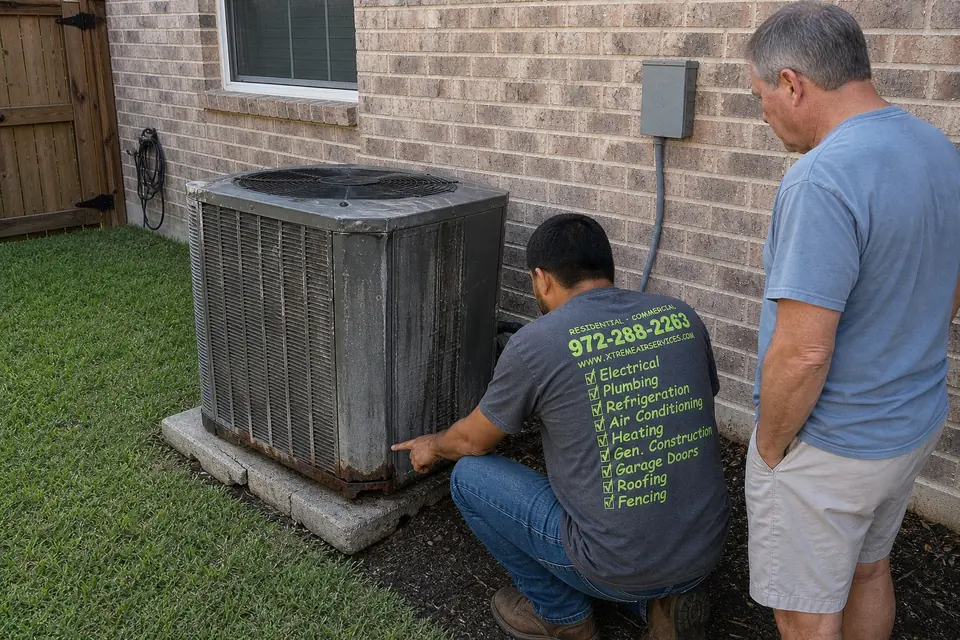
Not every broken AC needs to be replaced. A lot of summer breakdowns come down to one worn part. If your system is under about 10 years old and the problem is a capacitor, a fan motor, a clogged drain line, or a small electrical issue, fixing it is usually the smart move. Those repairs are common and fairly small. Once they’re done, a healthy system can keep cooling your home for years.
Replacement starts to make sense when the signs stack up:
- Your system is 15 years old or more and starting to need regular fixes.
- A big part has failed, like the compressor or the coil, on an older unit.
- You’ve paid for repairs more than once in the last couple of summers.
- Your system runs on R-22, an older refrigerant that’s no longer made, so recharging it gets expensive.
- It runs nonstop on hot Plano afternoons and still can’t keep the house cool, or some rooms stay warm and sticky.
- Your summer electric bills keep climbing even though your habits haven’t changed.
Here’s a simple way to think about it. A repair buys you time. On a young system, that time can be years. On an old one, a big repair bill may only get you to next summer, because the parts that didn’t break are just as worn as the one that did.
Picture this. It’s July, your thermostat reads 85, and the tech finds a dead compressor on a 16-year-old unit. That one repair can cost a large share of a new system, and the coil, fan, and wiring are all the same age. In that spot, putting the money toward a new, more efficient system often makes more sense than patching the old one.
There’s also a case for waiting. If your AC still cools your home and just isn’t as efficient as it used to be, you don’t have to replace it in the middle of a heat wave. You can plan the job for spring or fall, when you have time to compare options without a hot house pushing you.
Whatever you’re told, ask for the repair price and the replacement price together. When our licensed technicians look at your system, you get upfront flat-rate pricing that you approve before any work starts. There’s a $26-$99 service-call fee, and it’s credited toward the repair if you proceed with Xtreme Air Services. If a repair is the right answer, we’ll tell you so.
Signs Your System Doesn’t Need Full Replacement Yet
Some problems look like the end of your AC when they’re really something small. Others are real comfort problems that a brand-new system won’t fix. Before anyone talks to you about replacement, it’s worth ruling these out.
Start with a few quick checks you can do yourself. They take about five minutes and need no tools.
- Look at your air filter. A clogged filter chokes airflow. That can make the house feel warm and can even cause the indoor coil to freeze up. Swap it and give the system some time.
- Check the thermostat. Make sure it’s set to Cool, not Heat or Fan Only, and that the set temperature is below the room temperature. If the screen is blank, try fresh batteries.
- Check the breaker. If the AC breaker has tripped, flip it fully off and then back on once. If it trips again right away, leave it off. That points to an electrical problem a tech needs to find.
- Walk around the house. Closed or blocked vents and a closed return grille can leave rooms warm even when the system is running fine.
- Look at the outdoor unit. Grass clippings, cottonwood fluff, and leaves packed against the coil make it work harder on hot days. Gently rinsing it with a garden hose (not a pressure washer) can help.
If your system shut off and you see water near the indoor unit, a clogged condensate drain may have tripped a safety switch. That’s a drain line cleaning job, not a new AC.
Some comfort problems aren’t the AC at all. A new unit won’t help if the air never reaches the room. In a lot of North Texas homes, the ductwork runs through the attic. On a summer afternoon that attic can get far hotter than outside. A loose or torn duct up there can dump cold air into the attic and pull hot attic air back in. You’ll notice one or two rooms that never cool down, dusty vents, or bills that climb even though the system seems to run normally. Sealing or repairing those ducts often fixes the real problem.
The same goes for a two-story home where the upstairs is always warmer than downstairs. Heat rises, and a single thermostat downstairs can’t tell what’s happening upstairs. Duct balancing or a zoning system may solve it without touching the outdoor unit.
Some signs mean your system has life left in it. It still holds the set temperature on most days. It shuts off and rests between cycles instead of running nonstop. It isn’t leaking refrigerant again and again. And the repair you’ve been quoted is a small part, not the compressor or the coil. If that sounds like your AC, a repair and a good tune-up are usually the right call.
Replacing a working system to fix a duct problem, a dirty coil, or a thermostat setting means spending thousands of dollars and still having the same warm bedroom. Get the real cause found first. Then decide.
What Drives AC Replacement Cost Up or Down
Most AC replacements we quote fall between $5,000 and $12,000. Our most common job is a standard like-for-like swap that uses your existing connections with no major changes, and it typically runs $6,400-$9,200. That price covers the equipment and materials, professional installation, startup, and testing.
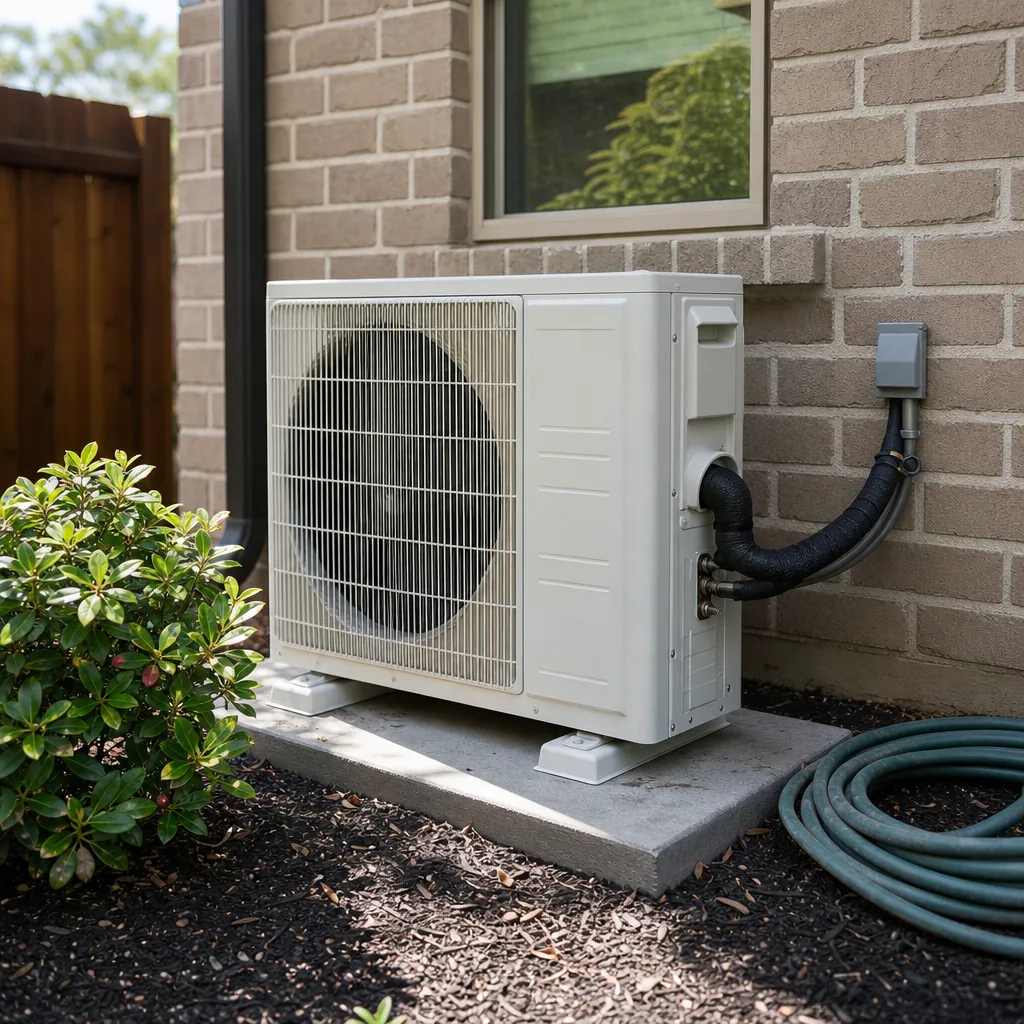
Where your home lands in that range comes down to a few things. The three that matter most are system size, efficiency, and how easy it is to reach the equipment.
- Size, or tonnage. Tonnage is how much cooling the system can deliver. A bigger home usually needs a bigger system, and a bigger system costs more. Bigger isn’t automatically better, though. An oversized unit cools fast, shuts off, and leaves the air damp and sticky. A cooling load calculation sizes the system to your actual house.
- Efficiency, or SEER2. SEER2 is a rating that tells you how much cooling you get for the electricity you pay for. A higher number costs more up front and uses less power every month. On long Plano summers, that monthly difference adds up.
- Brand and model. Within the same size and rating, models differ in features like variable-speed operation, which runs at lower, steadier speeds for more even temperatures and better humidity control.
- Ease of access. A unit in a tight or hard-to-reach attic takes more time and labor to swap out than one that’s easy to get to.
- Condition of what’s already there. If the ductwork, wiring, or drain plumbing is worn out or doesn’t fit the new system, it has to be fixed or changed.
- Code upgrades, permits, and custom fabrication. Some installs need work brought up to current code, a permit, or custom-made parts to make everything fit.
Know what a quote covers before you compare it to another one. A low number can look good until the extras show up later.
With us, a replacement includes the equipment and materials, professional installation, standard connections, startup and testing, and haul-away of your old unit. Duct, electrical, and plumbing modifications, code corrections, and permits are not included unless the quote says they are. If your home needs any of those, you’ll see them listed before you agree to anything. That’s what upfront flat-rate pricing means. You approve the price before any work starts.
When you’re comparing quotes from different contractors, ask each one the same questions:
- What size system are you quoting, and how did you figure that size?
- What SEER2 rating is it?
- Does the price include removing and hauling away the old unit?
- Are permits included, or extra?
- Did you check my ductwork and wiring, and is any work on them in this price?
If two quotes are thousands of dollars apart, the answers usually explain why. One may be quoting a different size or efficiency, or leaving out work the other one included.
If the total is more than you want to pay at once, we offer flexible financing on qualifying installations and larger jobs, on approved credit. That can let you pick the system that fits your home instead of the one that fits this month’s budget.
Thinking about AC replacement? Let’s talk.
Call Today, Get Service Today. Xtreme Air Services — West Plano is ready to help.
What Happens During an AC Replacement
A new AC is only as good as the install. The same equipment can cool your home well for years or struggle from day one, depending on how it’s put in. Here’s what a proper replacement looks like, so you know what to expect and what to ask about.
Before install day, the system should be sized to your house, not just copied from the old label. You should also have a written price you’ve approved. With us, that’s upfront flat-rate pricing you okay before any work starts, so nothing on install day comes as a surprise.
On install day, the work usually goes in this order:
- Power off and refrigerant recovered. The old refrigerant gets pulled out with recovery equipment. It should never be let loose into the air.
- Old equipment out. The outdoor unit comes off its pad. In most cases the indoor coil comes out too, so the inside and outside parts match. A new outdoor unit paired with an old coil often can’t deliver the efficiency or comfort you paid for.
- New equipment set. The outdoor unit goes on a level pad, and the new coil or air handler goes in, often up in the attic in North Texas homes.
- Connections made. The copper refrigerant lines, wiring, and condensate drain get hooked up to the new system. The drain line and its safety switch matter a lot in an attic, because that’s what keeps a clog from turning into a stain on your ceiling.
- Pressure test and vacuum. The sealed system gets pressure tested to check for leaks. Then a vacuum pump pulls out air and moisture before refrigerant goes in. Skip this step, and moisture left in the lines can shorten the system’s life.
- Refrigerant charge. The system is charged to the maker’s specs for your setup.
Attic work in Plano is hard work in July. On a summer afternoon, the attic can be much hotter than outside. That’s one reason access affects the price, as we covered above. It’s also why careful work up there matters. A rushed connection in a hot attic is easy to get wrong and hard to spot later.
Startup and testing come last. They’re part of every replacement we do. The system runs while the tech checks the air coming out of your vents, the airflow, the refrigerant charge, and that water drains the way it should. Then your old unit gets hauled away, so it doesn’t sit beside your house.
A simple like-for-like swap is often done in a day. If your ductwork, wiring, or drain needs changes, it can take longer, and those items should already be on your approved quote.
You can make the day go smoother with a few small steps. Clear a path to the attic access and the outdoor unit. Keep pets in a closed room. Plan for the house to warm up while the AC is off. Before the tech leaves, ask them to show you the new thermostat settings and where the filter goes. It’s also fair to ask if they ran a pressure test and pulled a vacuum. A good installer is happy to say yes and explain it.
Call now
Watch Our Video
See How We Handle AC replacement in Plano
Xtreme Air Services — West Plano
Questions to Ask Before You Hire for AC Replacement
The price questions tell you what you’re buying. These questions tell you who you’re buying it from. A new AC is a big purchase, and it’s going into your attic and onto your slab for the next 15 years or so. It’s fair to ask hard questions before anyone starts work.
- Are you licensed in Texas, and what’s your license number? HVAC work in Texas requires a state license through the Texas Department of Licensing and Regulation (TDLR). A good contractor will give you the number without a second thought, and you can look it up yourself. Ours is HVAC License #TACLA29023C.
- Are you insured? Your installer will be working in a hot attic, carrying heavy equipment, and handling high-voltage wiring. If someone gets hurt or something gets damaged, you want their insurance to cover it, not yours.
- Who’s coming to my home? Ask if the people doing the install are background-checked. You’re letting strangers into your house for most of a day, often with your family home.
- If my panel or wiring needs work, who handles it? A new system sometimes needs a new breaker or other electrical changes. Some HVAC companies have to bring in a separate electrician, which can mean another visit and another bill to track.
- What happens if the house still isn’t cooling right after you leave? You want a clear answer about who you call and how fast someone comes back out.
- If I finance, what are the terms? Ask about the rate, the monthly payment, and the length of the loan in plain numbers before you sign.
Watch for a few red flags, too. Be careful with anyone who gives you a firm replacement price over the phone without looking at your home. Be careful with anyone who pushes you to sign today or the price goes up. And be careful with anyone who can’t tell you why they picked the system they’re quoting. A good contractor wants you to understand the job, not rush through it.
Here’s how we answer those questions. Xtreme Air Services is licensed and insured, and our technicians are background-checked and drug-tested. We’re a Trane Comfort Specialist, and we hold a 4.8-star rating across more than 2,900 reviews on Google, Angi, and HomeAdvisor. Because we do HVAC, plumbing, and electrical under one roof, the same company handles it if your replacement needs electrical or drain work. That means one team, one price you’ve approved upfront, and one number to call. You get no extra charge for nights or weekends, flexible financing on qualifying installations (on approved credit), and our 100% satisfaction guarantee.
Ask us every question on this list. You should feel sure about the people in your home before you feel sure about the system.
Call 469-217-9095
Frequently Asked Questions
Common questions about AC replacement
Can I replace my own AC instead of hiring someone?
We don’t recommend it. A full AC replacement involves recovering old refrigerant, brazing copper lines, pulling a vacuum, and charging the system to exact specs, all work that requires a Texas HVAC license through TDLR. Mistakes here can shorten the life of your new system or create a safety hazard. Hiring a licensed crew protects the investment you’re making in a system meant to last 15 years or more.
How long does a typical AC replacement take to complete?
A simple like-for-like swap is often finished in a single day. If your home needs duct repairs, electrical changes, or drain line work, the job can take longer, and those extra steps should already be listed on your approved quote before work starts. Clearing a path to your attic access and outdoor unit ahead of time helps keep the day on schedule.
What should I do with my pets and family during the installation?
Keep pets in a closed room away from the work area, since technicians will be moving equipment in and out of the house and attic most of the day. Plan for the house to warm up while the old system is disconnected and the new one gets installed. It’s also smart to clear a path to the attic access and the outdoor unit before the crew arrives.
Ready to Get Started?
Call (469) 217-9095 Today, Get Service Today.