


Central Air Conditioning Installation in Plano: What’s Included
Central air sized to your home from day one, with what's included, what isn't, and the permits explained up front.
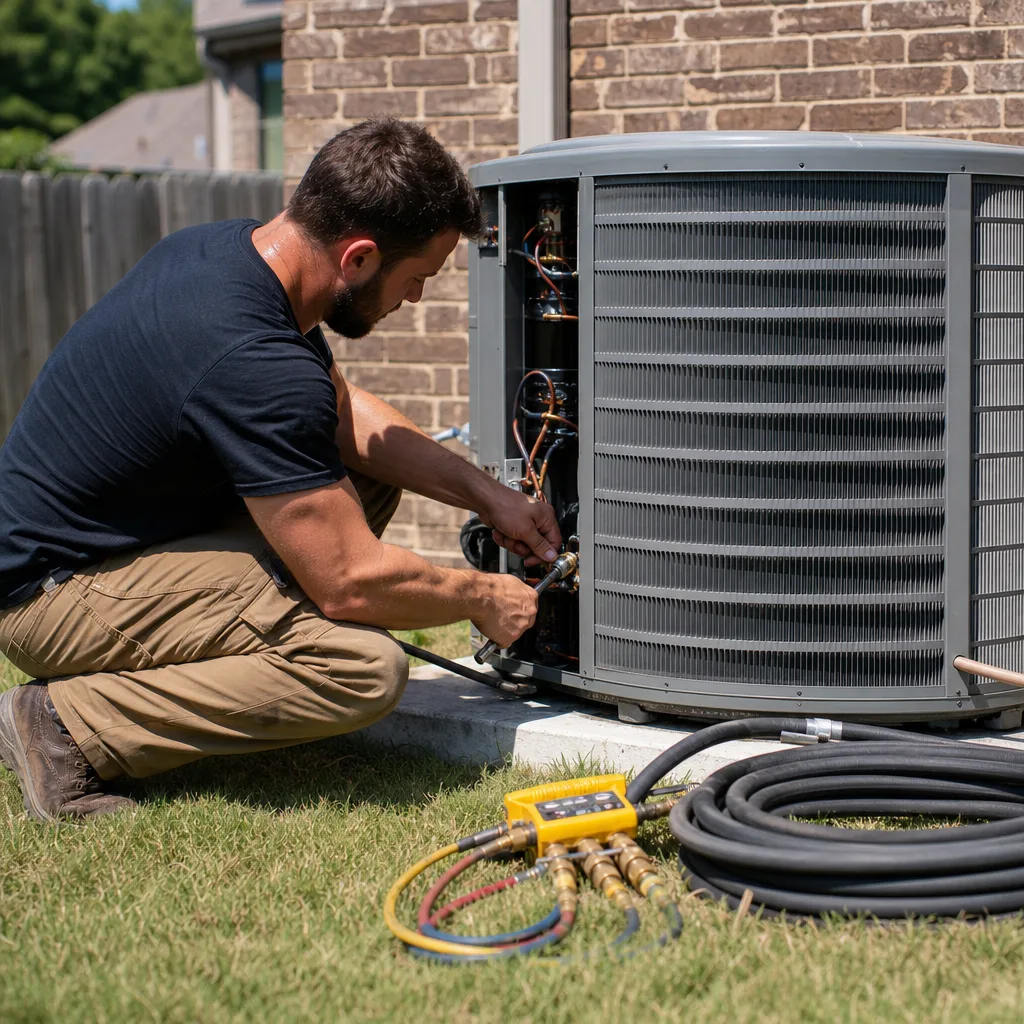
What’s Covered on This Page
- Signs Your System Needs Full Replacement, Not a Repair
- When a Repair Still Makes Sense Instead of Replacement
- What a Standard Installation Includes and What Costs Extra
- The Plano Mechanical Permit Requirement for AC Installation
- How Sizing and Equipment Selection Affect Your New System
- What is the $5,000 rule for AC units?
- Will HVAC equipment prices go down in 2026?
- How long does a central AC system typically last in Plano before needing replacement?
Signs Your System Needs Full Replacement, Not a Repair
Nobody wants to hear “you need a new system” when they called about warm air. You also don’t want to keep paying to patch something that’s on its way out. Here’s how to tell the difference, in plain terms.
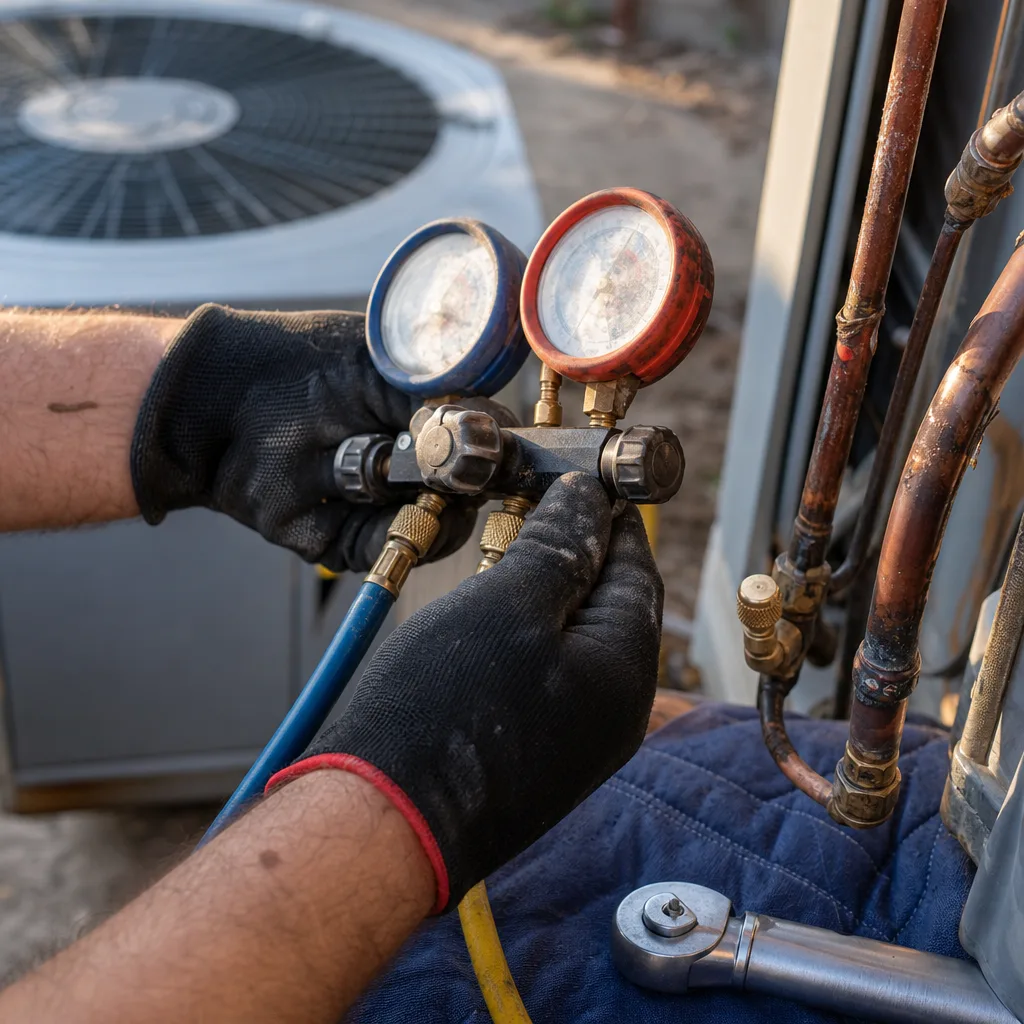
- The compressor or the outdoor coil fails on an older unit. The compressor is the heart of your AC. When it goes on a system that’s already up in years, a repair can run close to the cost of new equipment, and you’d still have old parts everywhere else.
- Your system uses R-22 refrigerant. Older systems were built around a refrigerant that’s been phased out, so it keeps getting harder and pricier to find. If yours has a leak and needs a recharge, putting money into it rarely pays off.
- You’re calling for repairs every summer. One breakdown isn’t a pattern. Two or three in a couple of seasons usually means the whole system is wearing out, not just one part.
- Your bills keep climbing while comfort drops. If you’re running the AC harder, paying more each month, and the house still feels sticky, the system has likely lost the efficiency it had when it was new.
- Only part of the system was replaced in the past. A new outdoor unit paired with an old indoor coil can be a poor match. That’s why a full installation includes a new condenser and coil that are made to work together.
Texas heat makes all of this matter more. In Plano, your AC can run for hours a day from late spring well into fall. If the system sits in your attic, it’s working in some of the hottest air in the house. Long run times and attic heat wear parts out faster, so an older system tends to show these signs sooner here than it would somewhere milder.
Now the honest part. Plenty of AC problems don’t need a new system at all. A bad capacitor, a worn fan motor, a clogged drain line, a frozen coil, or a thermostat acting up can all be fixed, often in a single visit. If your system is still fairly young, has been maintained, and cools well when it’s running right, repair it. Replacing equipment that still has good years left wastes your money, and we’d rather tell you that up front.
There’s one more case where you might not need new equipment. Rooms that stay hot while the rest of the house is fine, or air that feels weak at certain vents, can come from leaky or undersized ductwork, not a failing AC. A new unit pushing air through the same bad ducts won’t fix that. Duct sealing or duct repair may solve the problem for a lot less.
If you’re not sure which side of the line you’re on, a diagnostic visit gives you the facts. You’ll get a clear look at what failed, what it costs to fix, and what it costs to replace, so the choice is yours to make with real numbers in front of you.
When a Repair Still Makes Sense Instead of Replacement
A repair makes sense when the fix is small next to the price of new equipment, the rest of the system is in good shape, and the repair will give you dependable cooling for years, not weeks. If those three things are true, fix it and keep your money.
Here’s a simple way to judge a repair quote. Our most common central AC installation is a like-for-like swap using your existing connections. It runs $7,000 to $10,000 and includes a new condenser and coil. Use that number as your yardstick. A repair that costs a small slice of that, on a system that’s otherwise sound, is usually the smart call. A repair that eats up a big chunk of it, on a system that’s already been patched before, is money you’d likely be better off putting toward new equipment.
The repair price alone doesn’t tell you enough. What matters is what’s going on with the rest of the system. Before you decide, ask your technician a few direct questions:
- Which part failed, and what caused it?
- Is anything else close to failing, or does the rest of the system look healthy?
- What’s the full repair price, in writing, before any work starts?
- What would replacement cost for my home, so I can compare the two side by side?
- If I repair it now, what should I expect from this system over the next few summers?
A tech who’s doing right by you will answer every one of these without hedging. If the answers make you feel rushed or fuzzy, that’s your sign to slow down.
Timing matters too. Say your AC quits in the middle of a Plano July and the system is getting older but isn’t finished yet. A solid repair can get your family cool tonight and carry you through the rest of the season. Then you can plan a replacement in the cooler months, when you have time to compare options and decide without sweating it out. Repairing now and replacing later is a perfectly good plan. You don’t have to make a big decision in a hot house.
We keep the cost of finding out low. Our service call fee is $26 to $99, and it’s credited toward the repair if you go ahead with Xtreme Air Services. You get upfront flat-rate pricing approved before any work starts, so you’re never watching a meter run while you decide.
If you choose to repair, a regular AC tune-up helps the system you just fixed keep running strong. Clean coils and a checked electrical system put less strain on the parts you still have.
We sell and install new systems, and we’re glad to. But if your current AC still has good years in it, we’ll tell you so. A new system should be something you choose because it’s the right move for your home, not because someone talked you into it.
What a Standard Installation Includes and What Costs Extra
A standard central AC installation with us covers the equipment and the work to put it in and get it running. Extra costs come up only when your home needs changes beyond a straight swap, like duct, electrical, or plumbing work, code corrections, or permits. Our installations typically run $5,500 to $13,000. Where your home lands in that range depends on the system you pick and what we find once we look at your setup.
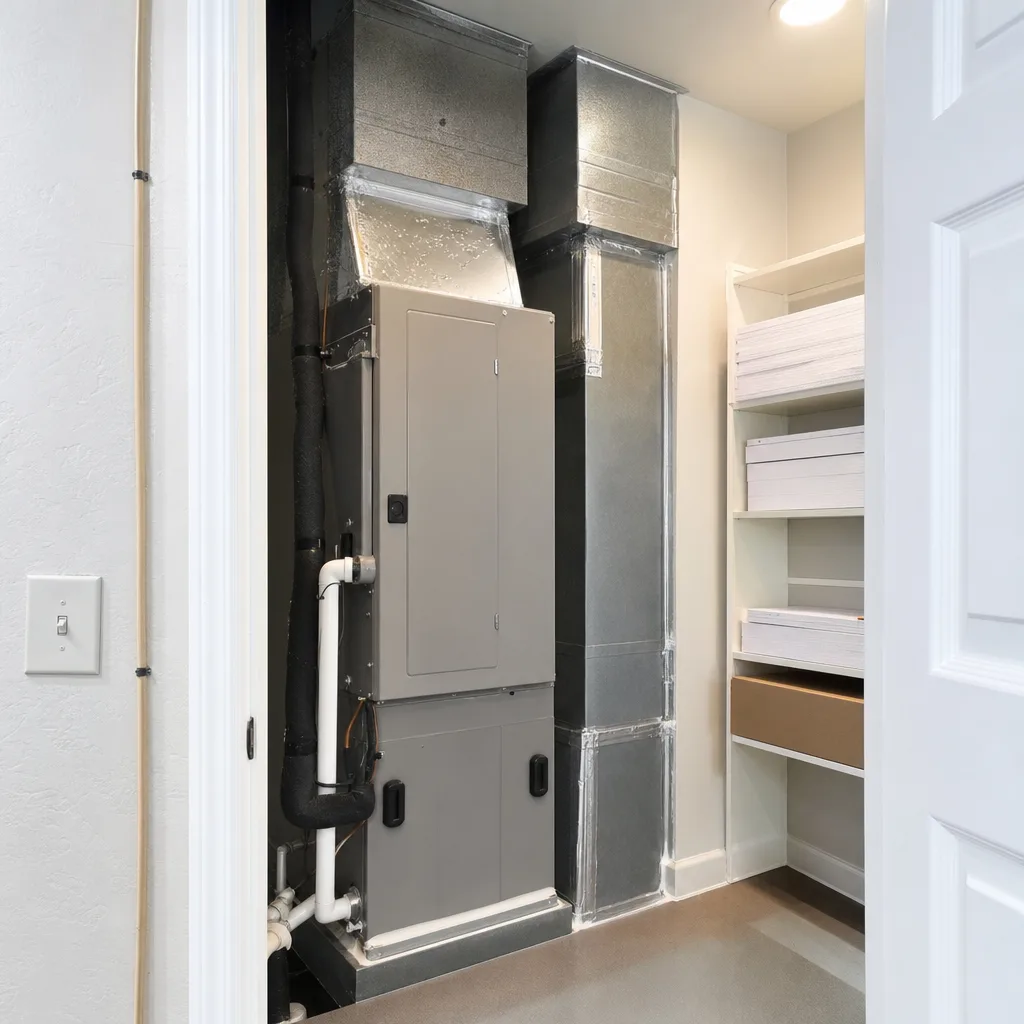
Here’s what’s included in a standard installation:
- The equipment and materials, including a new outdoor condenser and a matching indoor coil.
- Professional installation by our licensed and insured team.
- Standard connections to your existing lines and wiring.
- Startup and testing, so you know the system is cooling the way it should before we leave.
- Haul-away of your old unit, so it’s not left sitting on the side of your house.
That’s the like-for-like job we mentioned earlier, the one in the $7,000 to $10,000 range. It fits when your new system can use the connections you already have without major changes.
Here’s what isn’t included unless your quote says it is:
- Changes to your ductwork, like resizing, rerouting, or replacing damaged runs.
- Electrical changes, such as new wiring or circuit work the new equipment needs.
- Plumbing changes, like rerouting a condensate drain line.
- Code corrections, which means fixing something in the existing setup that doesn’t meet current rules.
- Permits.
None of these are tricks to pad a bill. They depend on your house, and nobody can know for sure until they’ve seen it. A newer Plano home with clean, well-sized ducts may need nothing beyond the standard job. An older home might have ducts that have been patched over the years, or wiring that wasn’t built for today’s equipment. That’s why we look first and quote second.
These are the things that move your price up or down within the range:
- Size and capacity. Your system’s size is measured in tons. A bigger home usually needs more tons, and that costs more.
- Efficiency. SEER2 is the efficiency rating for cooling, a lot like miles per gallon for your AC. A higher number costs more up front and less to run each month.
- Brand and model. Features like variable-speed operation, which runs the system at lower, steadier speeds for better comfort and humidity control, add to the price.
- Ease of access. A unit in a tight or hard-to-reach attic takes more time and care to swap out.
- Condition of your existing ductwork, wiring, and plumbing.
- Code upgrades, permits, and any custom fabrication your home needs.
You’ll get upfront flat-rate pricing, approved by you before any work starts. When you get a quote from us or anyone else, read it for two things. First, check that it lists both a new condenser and a new coil. Second, see whether it spells out permits and any duct or electrical work. If a line isn’t there, ask about it before you sign.
If the total feels like a lot to pay at once, flexible financing is available on qualifying installations and larger jobs, on approved credit.
Have questions? We’re happy to help.
Call Today, Get Service Today. Xtreme Air Services — West Plano is ready to help.
The Plano Mechanical Permit Requirement for AC Installation
Putting in a new central AC system in Plano is mechanical work, and the city expects it to be permitted and inspected. That’s true even for a straight swap where the new unit goes in the same spot as the old one. The permit is how a city inspector gets a second look at work that ties into your home’s electrical system and sits in your attic or yard for the next 15 years or so.
It’s easy to see a permit as one more line on the bill. It’s one of the few ways you get an independent check on a job you can’t easily inspect yourself. Most homeowners never climb into the attic to look at a drain pan or open a breaker panel to check a wire size. The inspector does.
An inspection commonly looks at things like these:
- The electrical disconnect at the outdoor unit and the breaker that feeds it, so the new equipment gets the power it was built for.
- The condensate drain line, plus a backup drain pan under an attic unit, so a clog doesn’t end up as a water stain on your ceiling.
- Safe access to equipment in the attic, so the next tech who services it can reach it without stepping through drywall.
- The outdoor unit’s placement and how the refrigerant lines are run and protected.
In a Plano attic, that drain setup matters a lot. Your AC pulls a steady stream of water out of humid North Texas air all summer long. If that water has nowhere safe to go, it goes into your ceiling.
Who’s doing the work matters too. In Texas, air conditioning contractors are licensed through the Texas Department of Licensing and Regulation, also called TDLR. Our HVAC license number is TACLA29023C, and you’re welcome to look it up before you hire us. Do the same with any company you’re thinking about. A licensed contractor can’t hide behind a first name and a cell number.
As we covered above, permits aren’t part of a standard installation price unless your quote says they are. So when you’re comparing quotes, ask each company these questions:
- Will this job be permitted with the City of Plano?
- Is the permit included in my price, or is it a separate charge?
- Who sets up the inspection, and do I need to be home for it?
- What happens if the inspector flags something?
If someone tells you a permit isn’t needed for a full system replacement, or offers a lower price to skip it, slow down. Skipping it might save a little now. It can also mean nobody ever checks the electrical work, and that could come up later when you sell your home or file an insurance claim.
The permit step adds a little time to the job, not a lot of hassle. It’s there to protect you. It also helps you get what you’re paying for: a system that’s installed right, cools your home the way it should, and doesn’t leave you with surprises in the attic later.
Watch Our Video
See How We Handle Central air conditioning installation in Plano
Xtreme Air Services — West Plano
How Sizing and Equipment Selection Affect Your New System
The right size for your new AC comes from your house, not from the old unit’s label or a quick guess based on square footage. A system that’s too big or too small will cost you comfort every single day, no matter how good the equipment is. Getting the size right is the most important choice in the whole job.

Bigger sounds better, but it isn’t. An oversized AC cools the air fast, hits the thermostat setting, and shuts off before it’s had time to pull moisture out of the air. You end up with a house that’s cool but clammy. All that starting and stopping is also hard on parts. An undersized AC has the opposite problem. On a 100-degree Plano afternoon, it runs and runs and still can’t catch up, so the house creeps warmer through the evening.
That’s why a straight copy of your old system’s size can be a mistake. The old unit may have been the wrong size from day one. Your home may also have changed since it went in. Maybe you added attic insulation, put in better windows, finished a bonus room, or built an addition. Any of those changes how much cooling your home really needs.
A proper cooling load calculation looks at the things that drive heat into your home:
- How much insulation is in your attic and walls
- The size of your windows and which way they face, since big west-facing windows soak up hard afternoon sun
- Ceiling heights and the layout of your rooms
- Whether your equipment and ducts sit in a hot attic
- How many people live there and how you use the space
Your ducts have to fit the size, too. Ducts built for a smaller system can’t move enough air for a bigger one. You’d get noisy vents and weak airflow, and the new equipment would strain. If your ducts are already struggling, that comes up during sizing, not after the install.
Once the size is set, you’ll choose the equipment. As we mentioned earlier, a full install pairs a new condenser with a matching coil so the two work together. Beyond that, a few choices shape how your system feels day to day:
- Efficiency level. Plano’s cooling season is long, so your AC runs a lot of hours each year. The more you run it, the more a higher SEER2 rating can trim your monthly bills.
- Single-speed or variable-speed. A single-speed unit is either fully on or off. A variable-speed system can run longer at a gentle pace, which helps with sticky North Texas humidity and evens out hot and cold spots.
- AC or heat pump. If you’re also thinking about your heating, a heat pump cools in summer and heats in winter. It’s worth asking about before you decide.
As a Trane Comfort Specialist, we’re glad to walk you through the options and what each one means for your home and your budget. The best system isn’t the most expensive one. It’s the one sized and matched to your house that keeps you comfortable without paying for more than you need.
Ask any installer three things. What size are you recommending, and how did you figure it out? Will my ducts handle it? Why this efficiency level for my home? If the answer to the first one is “same as what you had,” ask how they know the old size was right.
Frequently Asked Questions
Common questions about Central air conditioning installation
What is the $5,000 rule for AC units?
The $5,000 rule is a quick way to decide between repair and replacement. Multiply the repair cost by the age of your system in years. If that number is above $5,000, replacement usually makes more financial sense than another repair. It’s a rough guide, not a hard rule, so weigh it alongside the condition of the rest of your system.
Will HVAC equipment prices go down in 2026?
There’s no way to promise lower prices in 2026, and waiting on a failing system is risky in Plano’s heat. Equipment costs are driven by factors like efficiency standards, materials, and manufacturer pricing, which shift year to year. If your current AC is struggling now, it’s safer to get it assessed than to gamble on future pricing while your home sits uncooled.
How long does a central AC system typically last in Plano before needing replacement?
Most central AC systems last 12 to 15 years, but Plano’s long cooling season can shorten that. Your system may run for hours a day from late spring through fall, and attic-mounted units work in some of the hottest air in the house. That extra strain means older systems here often show wear sooner than in milder climates.
Ready to Get Started?
Call (469) 217-9095 Today, Get Service Today.