


A/C System Installation in Plano: Sized Right, Done to Code
New AC systems sized to your Plano home and installed right – with an honest look at whether a repair still makes sense.
What’s Covered on This Page
- Know When a Full System Install Is the Right Call
- Get a Cooling Load Calculation Before Sizing Your New System
- What Happens During a System Installation
- What Drives A/C Installation Cost Up or Down
- Verify Licensing Before Any System Goes In
- Can I install my own A/C system instead of hiring a contractor?
- How long does a full A/C system installation take?
- What size breaker or electrical setup does a new A/C unit need?
Know When a Full System Install Is the Right Call
A new system is a big decision, and it shouldn’t be the first answer to every problem. Here’s how to tell when replacing the whole thing is worth it and when it isn’t.
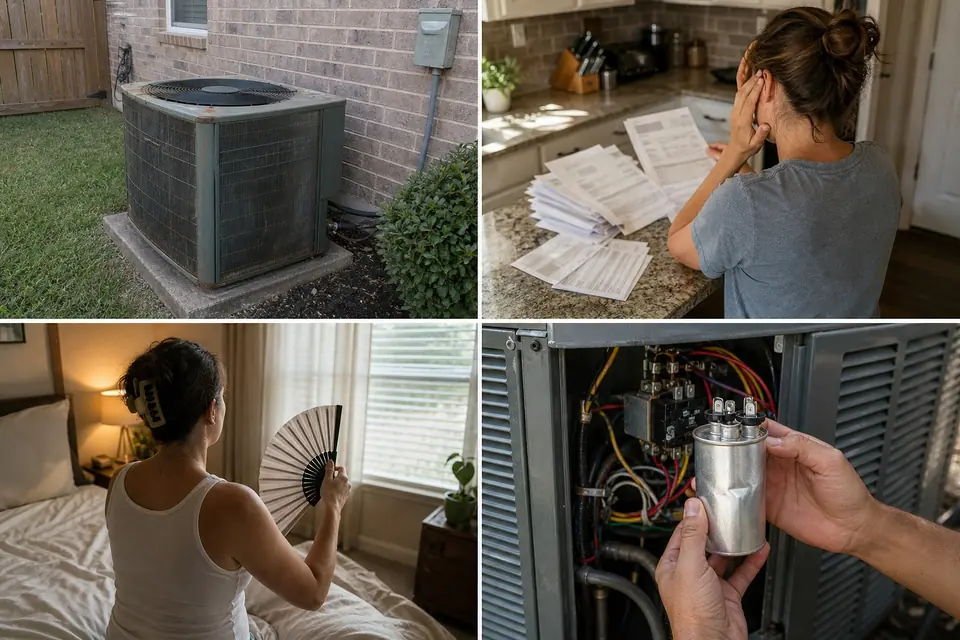
A full install is usually the right call when you notice one or more of these:
- You’re calling for repairs every summer, and the fixes keep adding up.
- The system runs all afternoon on a hot Plano day and still can’t get your home down to the temperature you set.
- A major part has failed, like the compressor or the outdoor coil, and the repair would cost a big share of a new system.
- Some rooms stay hot and sticky no matter what you do, which can mean the system is the wrong size for your home.
- Your energy bills keep climbing even though your habits haven’t changed.
- Your system uses an older refrigerant that’s hard to find and costly to refill.
There’s also the matched-system question. Your outdoor unit and the indoor coil in your attic are built to work as a pair. If one of them fails on an older system, replacing just that half can leave you with parts that don’t match well. That can hurt comfort and efficiency. In that case, replacing both together is often the cleaner fix.
Now for the other side, because it matters just as much. You probably don’t need a new system if your unit is in decent shape and one part has worn out. Capacitors, fan motors, and drain lines fail on healthy systems all the time. A repair gets you cooling again for far less money, and we’ll tell you so. If repair makes more sense, that’s what we’ll recommend.
Before you call anyone, check a few simple things yourself:
- Look at your air filter. A filter packed with dust can choke airflow and make a good system feel weak.
- Check your thermostat. Make sure it’s set to cool and that the batteries aren’t dead.
- Check your breaker panel. A tripped breaker can shut the outdoor unit down completely.
- Walk outside and look at the outdoor unit. Grass clippings, leaves, or a crowded hedge can block the airflow it needs.
If one of those fixes the problem, you just saved yourself a service call. That’s a good day.
If none of them helps, it’s time for a trained eye. A technician can look at how hard your system is working, check the parts that wear out, and give you a straight comparison of repair versus replacement. If replacement is the better path, the price depends on things you can see and ask about: equipment size and efficiency, brand and model, how easy your attic is to reach, and the condition of your existing ductwork and wiring. You’ll get the facts first, then you decide.
Get a Cooling Load Calculation Before Sizing Your New System
Before anyone tells you what size system to buy, they should figure out how much heat your home takes on during a hot day. That’s called a cooling load calculation. It’s the difference between a system sized for your house and one sized by a guess.
A lot of quotes skip this step. Some contractors match whatever size your old unit was. Others use a quick rule like one ton per so many square feet. A ton in A/C terms just means cooling power, about 12,000 BTUs of heat removed per hour. Neither shortcut tells you what your home needs today.
Bigger isn’t better here. An oversized system cools the air fast and shuts off before it’s had time to pull moisture out. You end up cool but clammy, which is the sticky feeling we talked about earlier. It also turns on and off more often, which wears parts faster, and you paid extra for power you don’t use. An undersized system has the opposite problem. It runs nonstop through a Plano afternoon in August and still falls behind.
The industry standard method is called Manual J, developed by the Air Conditioning Contractors of America. It looks at your home piece by piece, including:
- Square footage and ceiling height, room by room
- How much insulation is in your attic and walls
- Your windows, including how many there are, how big they are, and which way they face. A wall of west-facing glass soaks up hard afternoon sun.
- How tight or drafty the house is
- How many people live there and how much heat your kitchen and appliances add
- Where your ductwork runs. Ducts in a Texas attic sit in some of the hottest air around your home.
Here’s why your old system’s size might be wrong now. Homes change. Maybe you’ve replaced the windows, blown in more attic insulation, or turned a garage into a game room since the last unit went in. Any of those changes your cooling load. And the old system may have been oversized from day one.
Sizing also affects your price. Equipment size and capacity are among the biggest things that move the cost of a new system up or down. Getting the size right means you’re not paying for capacity your home doesn’t need.
When you’re comparing quotes, ask each contractor these questions:
- Did you do a load calculation, or are you matching my old unit?
- Can I see the numbers?
- Did you look at my attic, my windows, and my ductwork?
If someone names a tonnage after a two-minute walk through your living room, that’s a guess, not a recommendation. Cooling load calculation is one of the services our team offers, so you can see where the size on your quote came from.
What Happens During a System Installation
Install day goes much smoother when you know what’s coming. A standard like-for-like swap uses your existing connections and needs no major changes. It usually fits in about a day. Bigger changes can take longer. Here’s what a proper job looks like, step by step.
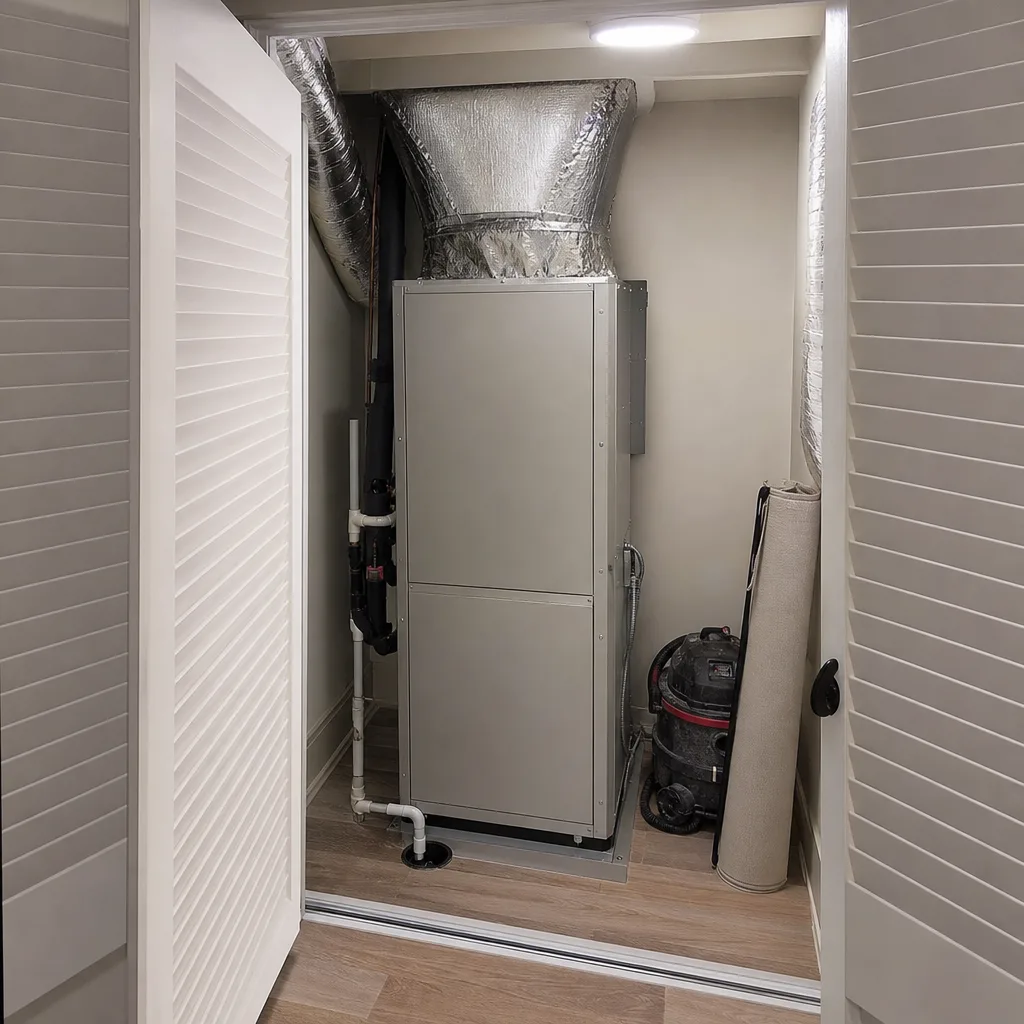
Before the crew shows up, your quote should spell out the size (backed by the load calculation we covered above) and exactly what’s included. For our standard installs, that means the equipment and materials, professional installation, standard connections, startup and testing, and hauling away your old unit. Duct, electrical, or plumbing changes, code corrections, and permits aren’t included unless your quote says so. Ask about those up front so nothing pops up halfway through the day.
You can help by clearing a path to your attic access, your outdoor unit, and your breaker panel. If your attic hatch is in a closet or the garage, moving a few boxes saves time.
Here’s what happens once work starts:
- The old system comes out. The power gets shut off, and the refrigerant in the old system is recovered with proper equipment. It should never be released into the air. Then the old outdoor unit and indoor coil are removed.
- The new outdoor unit gets set. It needs a solid, level pad. North Texas clay soil swells and shrinks with wet and dry spells, so a unit that starts out tilted only gets worse over time.
- The indoor side goes in. The new coil or air handler goes into your attic and is matched to the outdoor unit. The drain pan and condensate line get connected too. In a Plano attic, that drain setup matters, because a backed-up line above your ceiling can leak through the drywall.
- The lines and wiring get connected. The refrigerant lines and the electrical connections are hooked up. If your existing wiring or lines can’t safely be reused, that’s a modification. You should hear about it and approve it before any extra work happens.
- The system is sealed and cleaned out. The refrigerant lines are pressure tested for leaks. Then a vacuum pump pulls out air and moisture. Skipping or rushing this step can shorten the life of a brand-new compressor.
- Refrigerant gets charged. The system is filled to the amount the manufacturer calls for, not by guesswork.
Startup and testing are where you find out if the job was done right. The installer should run the system, check the air temperature at your vents, confirm good airflow, and make sure your thermostat talks to the new equipment the way it should.
Before the installer leaves, ask for these:
- Show me where the filter goes and what size it takes.
- Walk me through the thermostat settings.
- Where does the condensate drain empty, and what should I watch for?
- Is anything left on the job, like a pending inspection?
If you get clear answers to those, and your home feels cooler by evening, you know the install was handled the right way.
Have questions? We’re happy to help.
Call Today, Get Service Today. Xtreme Air Services — West Plano is ready to help.
What Drives A/C Installation Cost Up or Down
Here’s the straight answer. A full A/C system installation with Xtreme Air Services typically runs $5,500 to $13,000. Our most common job is a standard like-for-like swap that uses your existing connections with no major modifications, and it usually lands between $7,000 and $10,000. That covers the equipment, materials, professional installation, startup, and testing.
So why such a wide range? Because no two homes need the exact same thing. These are the factors that move your price:
- Size and capacity. A bigger home with more heat coming in needs more tonnage, and more tonnage costs more. That’s why the load calculation matters. It keeps you from paying for capacity you don’t need.
- Efficiency rating. SEER2 is a number that tells you how much cooling you get for each dollar of electricity. A higher number costs more up front but uses less power to keep you cool through a long Texas summer.
- Brand and model. Different lines come with different features, like variable-speed systems that run longer at low speed for steadier temperatures and better humidity control. Those features add to the price.
- How easy your equipment is to reach. A roomy attic with a clear path is quicker work than a tight attic over a low roofline or a hatch tucked in the back of a closet.
- The condition of what’s already there. If your ductwork, wiring, or drain plumbing is in good shape, it can often be reused. If it’s leaky, too small, or worn out, it needs work first.
- Code upgrades and permits. Older setups sometimes need updates to meet current code before a new system can go in.
- Custom fabrication. If the new equipment doesn’t line up with your existing connections, parts may need to be built to fit.
Those last few items are where surprise costs come from with a lot of contractors. As we covered above, duct, electrical, and plumbing modifications, code corrections, and permits aren’t part of a standard install unless your quote says so. The fix is simple. Make sure every quote you get spells out whether those items are in or out. If one quote is thousands lower than the others, check whether it’s leaving them out.
A few more questions worth asking each contractor before you sign:
- Is this price for the whole job, or could it change once you’re in the attic?
- Does the quote include hauling away my old unit?
- What efficiency rating is this system, and what does that mean for my bills?
With us, haul-away of your old unit is part of a standard install, and you get upfront pricing with no surprises. You’ll see the number and approve it before any work starts.
If the total is more than you planned for, you have options. Flexible financing is available on qualifying installations and larger jobs, on approved credit. That can let you get the right system now instead of settling for a smaller or less efficient one to save money today.
Call 469-217-9095
Watch Our Video
See How We Handle A/C system installation in Plano
Xtreme Air Services — West Plano
Verify Licensing Before Any System Goes In
A new A/C system is wired into your home’s power, charged with refrigerant, and set in an attic over your family’s heads. That’s work you want done by someone who’s licensed, insured, and easy to hold accountable. Checking takes about five minutes, and it’s worth doing before you sign anything.
In Texas, air conditioning contractors are licensed by the Texas Department of Licensing and Regulation, called TDLR for short. A licensed contractor should be able to give you a license number without hesitating. You’ll often find it on the quote, the truck, or the website. Ours is HVAC License #TACLA29023C. You can look up any number on the TDLR website and see whose name it belongs to and whether it’s active.
Here’s what to check with every contractor you’re thinking about hiring:
- The license number. Look it up yourself. Make sure the name on the license matches the company on your quote.
- Proof of insurance. Ask for it in writing. If a worker gets hurt in your attic or a drain line leaks through your ceiling, you don’t want that landing on you.
- Who’s doing the work. Ask whether the crew works for the company or is hired out to someone else. You want to know who will be in your home.
- Refrigerant handling. Anyone removing your old refrigerant or charging the new system needs federal EPA certification to do it.
- Permits and inspections. Ask whether your Plano job needs a city permit and inspection, and who pulls it. As covered earlier, permits aren’t part of a standard install unless your quote says so.
Watch for a few red flags. Be careful if someone gives you a number that doesn’t show up when you search for it. The same goes for anyone who says a permit “isn’t really needed” to save you money, or who wants cash up front with no written quote. A low price from an unlicensed installer can cost you more later if the work has to be torn out and redone.
Licensing matters most on the parts of the job you’ll never see again. Once the refrigerant lines are sealed and the attic hatch is closed, you’re trusting that the vacuum was pulled, the charge is right, and the wiring is safe. A license doesn’t promise perfect work. It does mean the person has met the state’s standard and has something to lose if they cut corners.
That’s the same reason we’re glad to show our proof up front. Xtreme Air Services is a licensed and insured contractor. Our technicians are background-checked and drug-tested before they ever come into your home. We’re also a Trane Comfort Specialist, so the people sizing and setting your system know the equipment they’re putting in.
Call now
Frequently Asked Questions
Common questions about A/C system installation
Can I install my own A/C system instead of hiring a contractor?
No, you should not install your own A/C system. The work involves handling refrigerant, which requires federal EPA certification, plus safely connecting to your home’s electrical panel. In Texas, air conditioning work also needs a TDLR-licensed contractor, so a DIY install can leave you with unsafe wiring, a bad refrigerant charge, or a system that fails inspection.
How long does a full A/C system installation take?
A standard like-for-like swap usually takes about a day. That timeline applies when your existing electrical, ductwork, and refrigerant line connections can be reused without changes. Jobs that need duct work, electrical upgrades, or code corrections take longer, since those add extra steps beyond the standard install.
What size breaker or electrical setup does a new A/C unit need?
It depends on your new system’s size and your home’s existing wiring, which is why a technician checks your breaker panel before install day. If your current wiring or electrical connections can’t safely handle the new equipment, that counts as a modification you’ll be told about and asked to approve before any extra work happens.
Ready to Get Started?
Call (469) 217-9095 Today, Get Service Today.