


Emergency HVAC Service in Plano: Is It Urgent, and What Will It Cost?
Real emergencies handled fast – with simple checks to try first and the cost explained before anyone is dispatched.
What’s Covered on This Page
- Signs Your HVAC Problem Can’t Wait
- When It’s Safe to Schedule Instead of Call for Emergency Service
- What Happens When You Call for Emergency Service
- Common Failures That Trigger an Emergency Call
- What Emergency HVAC Service Costs
- What counts as a real HVAC emergency versus something that can wait?
- Can I keep running my AC if it’s blowing warm air but not making any strange noises or smells?
- Do you charge extra for emergency HVAC calls at night or on weekends?
- Why does my AC or furnace seem to fail suddenly with no warning signs?
Signs Your HVAC Problem Can’t Wait
Not every HVAC problem is an emergency. Some are, though, and waiting can turn a one-part repair into a bigger job or put your family at risk. Here’s how to tell the difference.
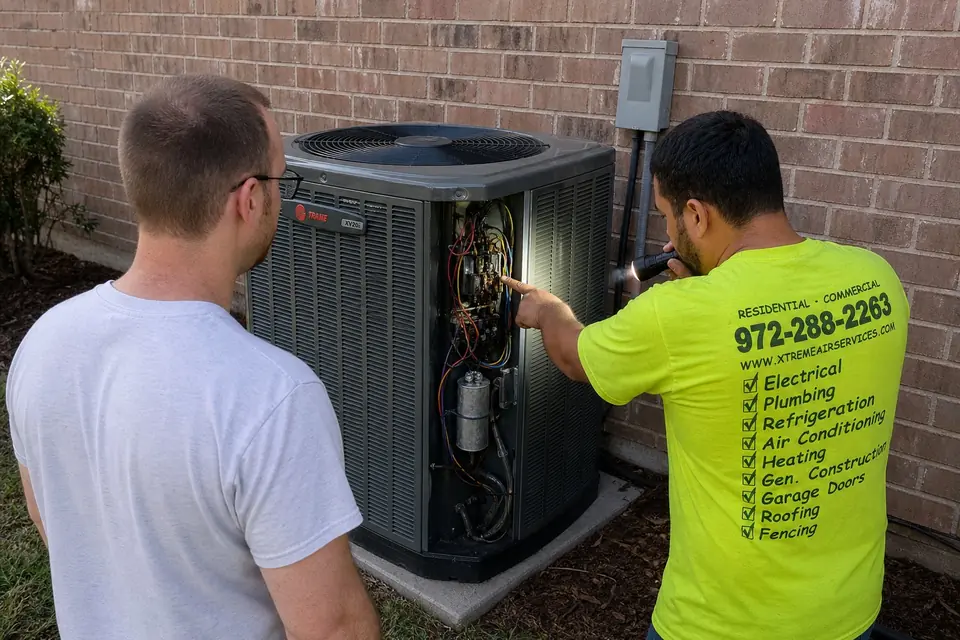
Call today if you notice any of these:
- No cooling during Plano’s summer heat, especially if a baby, an older family member, someone with a health condition, or a pet is in the home. A house can heat up fast once the AC stops.
- No heat during a hard freeze. North Texas cold fronts can drop temperatures quickly, and a cold house puts people and pipes at risk.
- A burning, melting, or electrical smell from the vents or the unit. It’s smart to switch the system off at the thermostat until it’s checked.
- Water dripping from the ceiling or a stain spreading under the attic. Many homes here have the indoor unit in the attic, so a clogged drain line or overflowing pan can soak drywall and insulation fast.
- A breaker that trips again right after you reset it. That’s the system telling you something electrical is wrong. Don’t keep flipping it back on.
- The outdoor unit humming while the fan doesn’t spin, or loud grinding, banging, or screeching. Running a struggling motor or compressor can make a small failure much bigger.
- Ice on the copper lines or the indoor coil while the house is still warm. Keep running it and you’re likely to get weak airflow, water leaks, and extra strain.
If you smell gas or a carbon monoxide alarm goes off, treat it as a safety emergency before you treat it as a repair. Follow your gas company’s emergency guidance first. Once everyone’s safe, our team can handle carbon monoxide testing and furnace repair.
Here’s the good news. Most emergency calls come down to a single common failure that gets fixed on the first visit. A failed capacitor, a burned-out fan motor, or a clogged drain line can stop your whole system, but fixing it is often simple once a technician finds it. Calling early usually means a smaller fix, before one bad part wears out the parts around it.
Timing shouldn’t drive your decision either. Xtreme Air Services charges no extra for nights or weekends. If your AC quits on a Saturday night in August, the price is the same as it would be on a Tuesday morning. You don’t need to suffer through the weekend to avoid an overtime bill.
Now the honest part. Some problems can wait for a regular appointment. If your system still keeps the house comfortable but runs a little longer than it used to, or one room is a few degrees warmer than the rest, you can usually book a normal visit. The same goes for a slight rise in your energy bill or a filter that’s overdue. That holds as long as nothing smells, leaks, ices up, or trips a breaker. Those are real issues worth fixing, but they’re not reasons to lose sleep tonight.
When It’s Safe to Schedule Instead of Call for Emergency Service
If your home is still safe and livable, you usually don’t need emergency service. You need a normal appointment, and sometimes you don’t need a technician at all. Before you call anyone, take five minutes and check a few simple things. Sometimes one of them is the whole problem.
- Look at the thermostat. Make sure it’s set to Cool or Heat, not Off or Fan Only. Check that the set temperature is lower than the room in summer, or higher in winter. A blank screen often just means the batteries are dead.
- Check the air filter. A filter packed with dust can choke airflow until the system barely cools or heats. Put in a fresh one and give the house a few hours to catch up.
- Check the breaker one time. If it’s tripped, reset it once. If it trips again, that’s the emergency sign from the list above, so stop there.
- Check the outdoor shutoff. Most outdoor units have a small disconnect box mounted on the wall nearby. It can get bumped during yard work, fence repair, or a landscaping job.
Some things look or sound worrying but are normal. You don’t need to call about these:
- A dusty, burning smell the first time your furnace runs in the fall. That’s dust that settled on the heating parts over the summer, and it should fade after a short while. A smell that sticks around, or smells like melting plastic or wiring, is a different story.
- A cloud of steam coming off your heat pump’s outdoor unit on a cold morning. That’s the defrost cycle melting frost off the coil, and it stops on its own.
- Water dripping from a small pipe outside near your foundation in summer. That’s the condensate line doing its job. It carries away moisture the system pulls out of your indoor air.
- A quick click at the thermostat or a short hum when the system starts up.
The weather outside matters too. Say your AC quits on a mild spring or fall day in Plano. If the house stays in the 70s with the windows open, a next-day or next-week appointment is perfectly fine. That same failure during a late-summer heat wave is a different call. Heat works the same way. A furnace that won’t fire on a 60-degree November afternoon can wait. A furnace that won’t fire the night a hard freeze rolls in can’t.
So when should you book a regular visit? Book one if your quick checks didn’t fix it but the house is still comfortable. Book one if the system works but something about it seems off. A standard AC system repair visit or an HVAC maintenance tune-up is the right fit here. Try to get it on the calendar within a few days instead of letting it slide for weeks, for the reasons covered above.
One more thing to watch. If a quick fix works but the same problem keeps coming back, something underneath needs a look. That could be a filter that clogs again in a couple of weeks, or a breaker that trips every few days. It’s still not an emergency, but it’s worth scheduling so a small issue doesn’t keep returning.
What Happens When You Call for Emergency Service
When you call Xtreme Air Services, you talk to a real person, not a phone tree. Tell us what’s going on, and we’ll work on getting a technician to your Plano home the same day. Same-day service is available, and there’s no extra charge for nights or weekends.
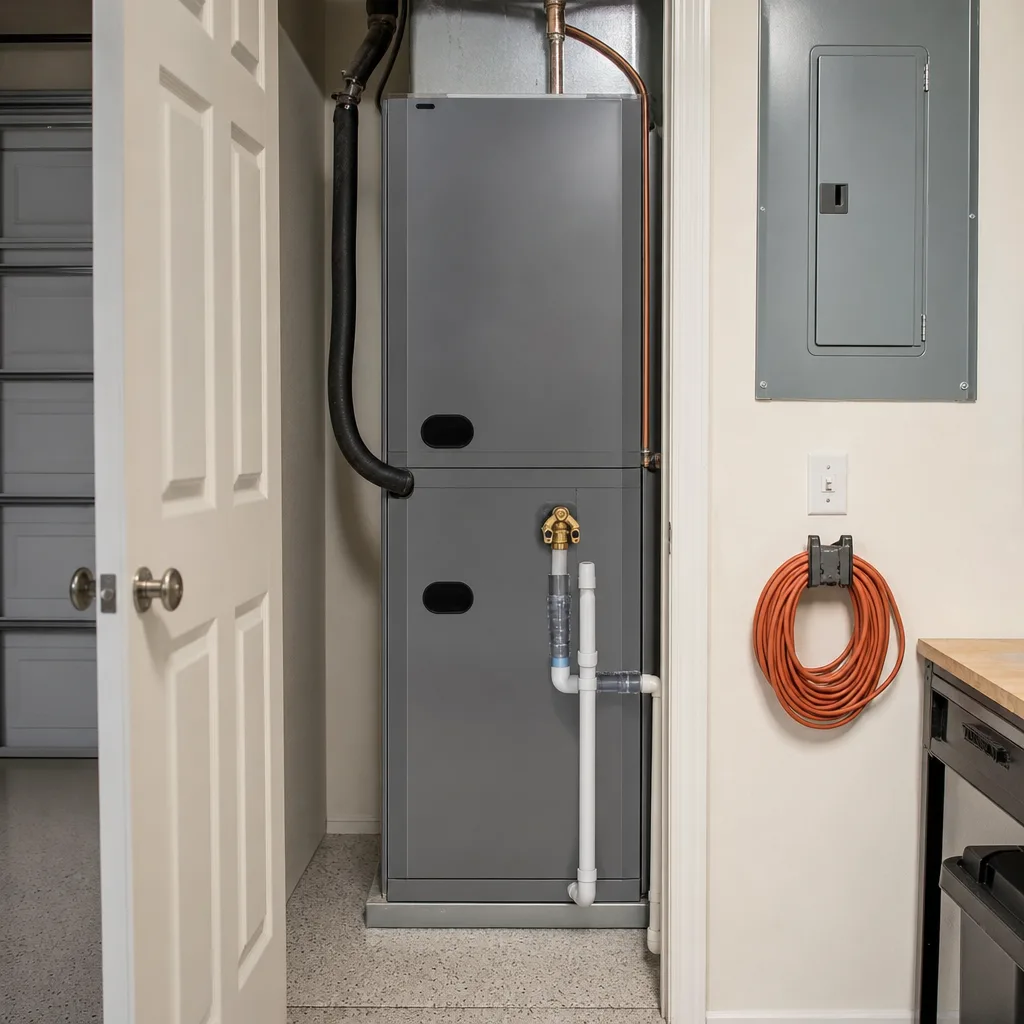
You don’t need to know the right technical words. Just tell us what you see, hear, and smell. These details help us show up ready:
- What the system is doing. For example, it’s blowing warm air, won’t turn on, is leaking, or is making a new noise.
- When it started, and whether anything happened first, like a storm, a power flicker, or a tripped breaker.
- Where your equipment sits. If your indoor unit is in the attic, tell us whether the access is in a hallway, closet, or garage.
- Whether anyone at home is especially sensitive to heat or cold.
While you wait, clear a path to the attic access and the outdoor unit, and put pets in another room. If you already shut the system off because of a smell or a breaker that keeps tripping, leave it off.
Once the technician arrives, the visit follows four steps:
- Find the failed part. The technician tracks down what stopped your system so you’re not paying for guesses.
- Give you the price first. You get upfront flat-rate pricing and approve it before any work starts. There’s no meter running, and you’re free to say no.
- Repair or replace the part. Most calls come down to one failed part, so this step is often quick.
- Make sure it works. The technician tests the system to confirm it runs correctly, then cleans up before leaving.
Here’s what it costs. The service-call fee runs $26 to $99, and it’s credited toward the repair if you go ahead with us. The most common emergency job, finding and fixing a single failed part, runs $200 to $525. Emergency repairs overall typically fall between $200 and $900. Where your repair lands depends on how much has failed, the part’s cost and availability, and your equipment’s age and brand. A night or weekend call doesn’t change the price.
Your quoted price includes the diagnosis, labor, the standard replacement part, testing, and cleanup. Some items aren’t included unless they’re quoted separately: additional failed parts, major components, code upgrades, and permits. If the technician finds a second problem, you’ll hear about it and get a separate price before anything changes. Financing usually isn’t needed for a smaller repair like this, but it’s available on larger repairs and replacements.
The person who comes to your door is a licensed, insured, background-checked, and drug-tested technician. Our HVAC license number is TACLA29023C. You’ll know who’s in your home and what you’re paying before the work begins.
Call 469-217-9095
Have questions? We’re happy to help.
Call Today, Get Service Today. Xtreme Air Services — West Plano is ready to help.
Common Failures That Trigger an Emergency Call
Your heating and cooling system has a lot of parts, but only a handful cause most sudden breakdowns. Knowing what they are can take some of the worry out of the moment. A dead system often sounds expensive, and many times it’s one small part.
These are the usual suspects when an AC quits in the Plano heat:
- A failed capacitor. This small part gives the motors in your outdoor unit the jolt they need to start. Long stretches of summer heat wear it down. When it fails, you’ll often hear the outdoor unit hum while the fan sits still, or the system won’t start at all.
- A stuck or burned contactor. This is the switch that tells the outdoor unit to turn on. If it fails, the inside fan may run while the outside unit stays quiet, so you only get room-temperature air from the vents.
- A worn-out outdoor fan motor. That fan pushes heat away from the outdoor unit. Once it stops, the system overheats and shuts itself down, sometimes after only a few minutes of running.
- A failed blower motor. This is the fan inside, usually in the attic, that moves air through your vents. When it goes, you’ll hear the outdoor unit running but feel little or no air in the house.
- A clogged drain line. Your AC pulls water out of the air as it cools. If algae or dirt plugs the drain, the pan overflows. Many systems have a safety switch that shuts the AC off to stop a leak, so the house warms up even though nothing looks broken.
- A frozen coil. Low airflow or low refrigerant can turn the indoor coil into a block of ice. The system keeps running, but the air coming out barely cools.
- A refrigerant leak. Refrigerant doesn’t get used up. If it’s low, there’s a leak somewhere, and adding more without finding the leak only buys you time.
Winter has its own short list. On a gas furnace, a cracked ignitor or a dirty flame sensor can keep the burners from lighting or make them shut off a few seconds after they start. A flame sensor that just needs a cleaning is one of the simplest no-heat repairs there is. On a heat pump, the same capacitor and fan motor problems from summer can show up when a cold front pushes the system hard.
Notice the pattern. Most of these are single parts that wear out from heat, dust, and hours of running. A technician who finds the right one can often have your system working again the same visit. That’s why the diagnosis matters so much. Replacing parts on a guess costs you money and can leave the real problem in place.
A few failures are bigger. A compressor that has stopped for good, a control board that’s fried, or a refrigerant leak inside the coil can mean a major component, and those are quoted separately, as covered in the pricing above. Often, though, a small part fails first. A weak capacitor makes the compressor strain every time it starts. A clogged filter starves the blower and freezes the coil. Fixing the small part early is how you keep it from becoming the big one.
If one of these sounds like what’s happening in your home, our team handles each of them, from AC capacitor replacement and drain line cleaning to blower motor repair, frozen coil repair, and furnace ignitor replacement.
Watch Our Video
See How We Handle Emergency HVAC service in Plano
Xtreme Air Services — West Plano
What Emergency HVAC Service Costs
You already saw our numbers in the visit steps above. What matters just as much is how a company arrives at its price. Two repairs that fix the same broken part can end with very different bills, depending on how the contractor charges.
Most HVAC companies use one of two pricing models. With time-and-materials pricing, you pay an hourly labor rate plus the cost of parts. A slow diagnosis, a hard-to-reach attic unit, or a second trip for a part all add to your bill, and you don’t know the total until the job is done. With flat-rate pricing, the price is set by the repair itself, not the clock. We use upfront flat-rate pricing, and you approve it before any work starts. If the technician has to crawl farther into a hot Plano attic than expected, your price doesn’t change.
Many companies also add an emergency or after-hours fee on top of the repair. As you saw earlier, we don’t. That matters most in July and August, when systems across North Texas are running hard and a breakdown is just as likely to happen at 10 p.m. as at noon.
Here’s what tends to move a repair toward the low or high end of our range:
- How much has failed. One worn capacitor is a small job. A capacitor that failed and overheated the fan motor next to it means two parts.
- The part itself. A common part on a widely used system is easier to get, and usually costs less, than a part for a less common unit.
- Your equipment’s age and brand. Parts for older or discontinued systems can be harder to find and can cost more.
- Whether it’s a major component. A failed compressor, control board, or coil is quoted separately and is a different conversation from a single-part fix.
That last point is where repair or replace comes up. If a major part fails on an older system, the technician can walk you through both options so you can choose with real numbers in front of you. Financing is available on larger repairs and replacements, including AC replacement.
Whoever you call, ask these questions before you say yes:
- Is there a service-call fee, and is it credited toward the repair?
- Is this a flat price or an hourly rate?
- Does the price include the part, labor, testing, and cleanup?
- Do you charge more for nights, weekends, or holidays?
- If you find a second problem, will I get a separate price before you fix it?
- Will this job need a permit or a code upgrade, and is that included?
A company that answers all six clearly, before it touches your system, is one you can trust with your home. If an answer is vague, that’s your cue to ask again or call someone else.
Call 469-217-9095
Frequently Asked Questions
Common questions about Emergency HVAC service
What counts as a real HVAC emergency versus something that can wait?
An HVAC emergency is anything that threatens your safety or your home, like no cooling in extreme heat, no heat during a freeze, a burning smell, water leaking from the attic unit, or a breaker that keeps tripping. If your system still keeps the house comfortable and nothing smells, leaks, ices up, or trips a breaker, you can usually book a normal appointment instead.
Can I keep running my AC if it’s blowing warm air but not making any strange noises or smells?
You can usually wait for a regular visit if the house still feels okay and nothing seems unsafe. Try checking your thermostat settings and air filter first, since those simple checks sometimes solve the problem without a service call at all.
Do you charge extra for emergency HVAC calls at night or on weekends?
No, you pay the same price whether your AC quits on a Saturday night in August or a Tuesday morning. That means you don’t have to wait out an emergency just to avoid an overtime fee.
Why does my AC or furnace seem to fail suddenly with no warning signs?
Most sudden failures trace back to one worn part, like a failed capacitor, a stuck contactor, or a clogged drain line, that finally gives out after months of hard use. These parts often wear down slowly from summer heat or constant running, so the breakdown feels sudden even though the strain has been building for a while.
Ready to Get Started?
Call (469) 217-9095 Today, Get Service Today.