


HVAC System Repair in Plano: Is It a Simple Fix or Something More?
Repairs that fix the cause, not just the symptom – with quick checks to try first and a clear call on what can wait.
What’s Covered on This Page
- What’s Wrong With Your System
- Repair or Replace: How to Tell
- What You Can Check Before You Call
- When to Call Right Away
- What Happens During a Repair Visit
- Why does my AC quit in the middle of a heat wave instead of just running weaker?
- Is it worth trying to fix my HVAC myself before calling someone?
- How do I know if a repair company is being straight with me about what’s wrong?
What’s Wrong With Your System
When your system acts up, it can feel like the whole thing is giving out. Usually it isn’t. Most HVAC system repair calls come down to a single common failure that gets fixed on the first visit. The trick is matching what you’re noticing to the part that quit.
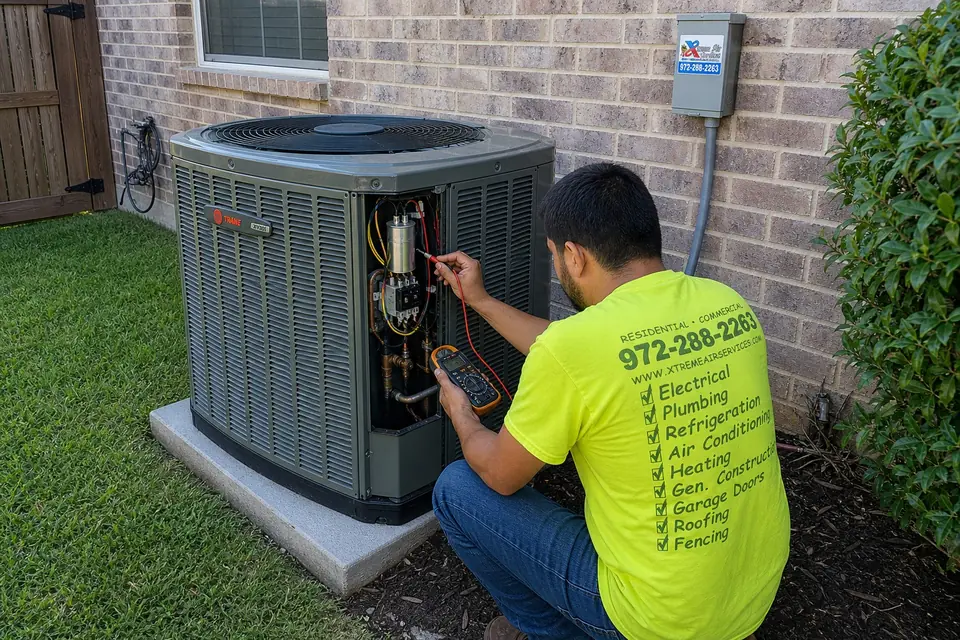
Here’s what the most common signs usually mean:
- The outdoor unit hums but the fan won’t spin, or the AC won’t start at all. This often points to a worn-out capacitor. That’s the small part that gives the motors a kick to get going, and long stretches of Texas heat wear it down.
- Warm air comes from the vents while the outdoor unit runs. The usual suspects are low refrigerant from a leak or a dirty condenser coil. Less often, it’s the compressor, which is the heart of the outdoor unit.
- Airflow is weak, and you spot ice on the copper line or the indoor coil. That’s a frozen coil. It’s usually caused by a clogged filter, a blower problem, or low refrigerant.
- You find water around the indoor unit or a stain on the ceiling. A clogged AC drain line is the likely cause. If your air handler sits in the attic, as it does in a lot of North Texas homes, that water can end up in your ceiling.
- The system clicks on and off fast, won’t respond, or ignores the thermostat. Look at the thermostat, a sensor, the wiring, or the circuit board.
- You hear grinding, squealing, or rattling. That usually means a blower motor or fan motor is wearing out, or something has come loose.
- The furnace won’t light during a cold front, or it lights and then shuts right off. A dirty flame sensor or a worn ignitor is the usual cause.
- Your bills climb while the house never quite cools down. Dirty coils, a slow refrigerant leak, or leaky ducts can all make your system run longer for less comfort.
Guessing at the cause can cost you. Topping off refrigerant without fixing the leak only buys a few weeks. Swapping a thermostat won’t help if the control board is the real problem. That’s why our technicians test first. We find the failed part, repair or replace it, and then check that your whole system runs correctly before we leave.
Sometimes the news is bigger. If more than one part has failed, or the trouble is a major component like the compressor, we’ll tell you plainly. You’ll get the upfront flat-rate price before anything happens, so the decision stays yours. For most homeowners, though, the fix is one part and one visit, not a new system.
Repair or Replace: How to Tell
Here’s the honest answer. If your system is fairly young and one part failed, repair it. Most HVAC repairs are a single part, like a capacitor, a motor, or a drain line. For that kind of job, your new system money should stay in your pocket.
Our most common repair runs $150 to $400. That price covers diagnosis, labor, the standard replacement part, testing, and cleanup. Nobody should talk you into a new system over a part like that.
Replacement starts to make sense when the repair stops being a small fix and becomes a pattern. These are the signs worth taking seriously:
- A major part failed on an older system. A dead compressor or a leaking coil on an aging unit is a big repair. You’d be putting expensive new parts into old equipment.
- You’re calling for repairs every season. One repair is normal. A new problem every summer usually means the whole system is wearing out, not just one part.
- More than one part has failed at once. When several parts quit together, the repair bill can climb past what the system is worth.
- Your system uses an older refrigerant that’s no longer made for new equipment. Finding the right refrigerant gets harder and costs more over time, so every leak repair hurts more.
- Your home never feels right anymore. Some rooms stay hot, humidity hangs around, and your bills keep rising even after repairs. That points to a system that can’t keep up anymore.
A long Plano summer is hard on any outdoor unit. Weeks of triple-digit afternoons keep the compressor running for hours, and attic air handlers sit in some of the hottest air in your house. Age matters, but so does how hard your system has worked. Two systems the same age can be in very different shape.
Here’s a simple way to think about it. Picture a 15-year-old system with a failed compressor, after two other repairs in the last few years. Replacing it is often the better long-term choice. Now picture an 8-year-old system with a burned-out capacitor. That’s a repair, every time.
When our technicians find a bigger problem, you get both options in plain numbers: what the repair costs and what it would buy you. Major parts and extra failed parts aren’t part of a standard repair price, so they’re always quoted separately before any work starts. You’ll never be surprised by a bigger bill halfway through.
If replacement turns out to be the right call, financing is available on larger repairs and replacements. As a Trane Comfort Specialist, we can walk you through high-efficiency options. Those systems use less power to cool your home and do a better job pulling humidity out of the air, which matters a lot in North Texas.
Either way, the choice is yours. Our job is to give you the facts so you can make it with confidence.
What You Can Check Before You Call
Not every problem needs a technician. Before you call anyone, spend ten minutes on the checks below. If one of them gets your system running again, you’ve saved yourself the $26-$99 service-call fee and the wait. That’s a good day, and we’d rather you have it.

- Check the thermostat first. Make sure it’s set to Cool or Heat, not Off or Fan. Set the temperature a few degrees past what the room is right now. If it runs on batteries and the screen is blank or dim, put in fresh ones. Also check whether a schedule or an app setting is overriding what you set.
- Look at your breakers. Your AC usually has its own double breaker in the main panel, and there’s often a shutoff box mounted on the wall near the outdoor unit. If a breaker has tripped, flip it fully off and then back on one time. If it trips again, leave it off.
- Pull out the air filter. If it’s gray, caked with dust, or bowed in the middle, swap in a new one. A choked filter can make the airflow weak and can lead to a frozen coil.
- Let a frozen system thaw. If you see ice, turn the cooling off and set the fan to On for a few hours. Put in a clean filter before you turn the cooling back on.
- Check the drain pan. Many indoor units have a safety switch that shuts the system down when the pan under the coil fills with water. If the pan is full, that switch may be the reason nothing is running.
- Clear around the outdoor unit. Pull back grass clippings, leaves, and anything stacked against it. The unit needs open space on every side to get rid of heat, and a cramped unit works harder through a long Plano summer.
- Open your vents. Make sure supply vents and the big return grille aren’t blocked by furniture, rugs, or closed dampers.
Some signs mean it’s time to stop checking and let a pro take over. Don’t push past these:
- The breaker trips again right after you reset it.
- You smell burning or see scorch marks anywhere on the unit or the wiring.
- The outdoor unit hums but the fan won’t spin. Don’t poke at the fan or open the panel. The capacitor inside can hold a strong electrical charge even when the power is off.
- The ice comes back after the coil has thawed and you’ve put in a clean filter.
- You hear hissing near the copper lines, or the drain pan fills up again soon after you dried it.
- The fins on the outdoor unit got flattened in a North Texas hailstorm and the system hasn’t cooled right since.
None of these are things to fix with a screwdriver and a video. They mean a part has failed or there’s a leak. Those take testing tools and training to fix safely and correctly.
One more honest note. If your system came back to life after a breaker reset or a new filter, keep an eye on it for the next few days. If it keeps running well, you’re fine. If the same problem shows up again within a week, the quick fix only covered up a bigger issue, and that’s worth having looked at.
Have questions? We’re happy to help.
Call Today, Get Service Today. Xtreme Air Services — West Plano is ready to help.
When to Call Right Away
Some problems can wait a day or two. If your system is still running but cooling a little less, or a noise just started, you can usually book a regular visit. Other problems shouldn’t sit overnight. The difference comes down to who’s in your home, what the weather is doing, and whether something is getting damaged while you wait.
Call the same day if any of these fit your situation:
- Your AC is out in summer heat and someone at home handles heat poorly. That includes babies, older parents, anyone who’s sick, and pets. A Plano house with no cooling can get uncomfortable fast on a triple-digit afternoon.
- Water is dripping from the ceiling or spreading around the indoor unit. With an attic air handler, every hour of dripping can mean more soaked drywall and insulation. Turn the system off to slow the leak, then call.
- Your heat quits during a hard North Texas freeze. A cold front can drop temperatures quickly, and a house with no heat gets cold quickly too.
- The system won’t turn on at all, and the inside temperature keeps climbing or falling.
- You run a business and the cooling or refrigeration is down. A warm dining room, a hot server closet, or a failing walk-in cooler means lost customers, lost inventory, or both.
A lot of people put off calling because it’s late on a Friday or the middle of a weekend. They assume they’ll pay extra. With us, you won’t. There’s no extra charge for nights or weekends, so a Saturday repair costs the same as a Tuesday repair. You don’t have to sweat it out until Monday just to protect your budget.
Here’s what happens when you call. You talk to a real person, and same-day service is available. Our office is right here in Plano at 5055 W Park Blvd. A licensed, insured, background-checked technician comes to your home and tracks down the failed part. Then you get an upfront flat-rate price before any work starts. The $26-$99 service-call fee is credited toward the repair if you go ahead with us. If you’d rather not, there’s no pressure.
That’s the whole point of this page. Most HVAC trouble is one failed part. It deserves a fast, honest diagnosis and a clear price, not a sales pitch for a new system. Our HVAC License #TACLA29023C, our Trane Comfort Specialist credential, and our 4.8-star reputation across 2,900+ reviews on Google, Angi, and HomeAdvisor all come from doing it that way. Your neighbors trust us because we fix what’s broken and tell you the truth about what isn’t.
Call 469-217-9095
Watch Our Video
See How We Handle HVAC system repair in Plano
Xtreme Air Services — West Plano
What Happens During a Repair Visit
A repair visit has three parts. First you find the failed part. Then you fix it. Then you prove the whole system works. A little prep on your end makes all three go faster, and knowing what a good visit looks like helps you spot a careless one.
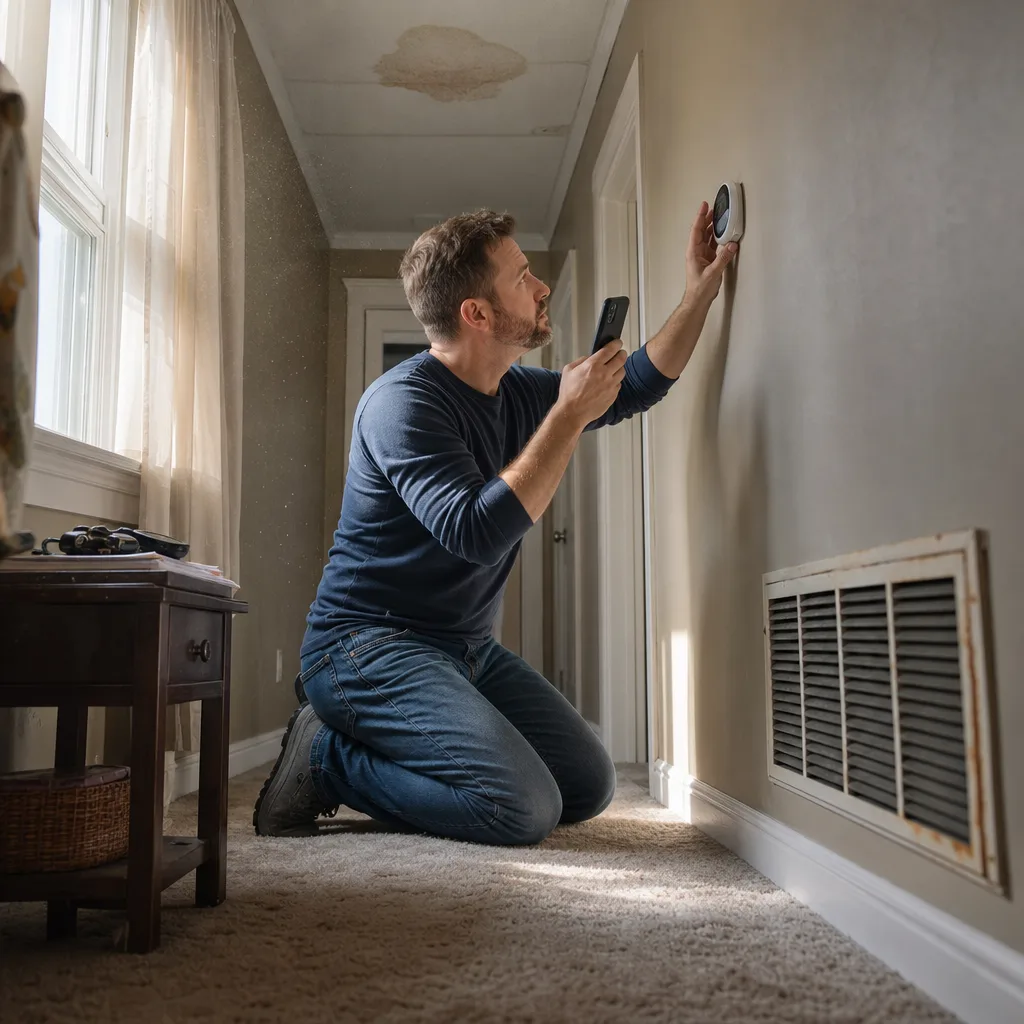
Before the technician gets there, a few small things save real time:
- Write down what you noticed and when it started. “It ran fine Tuesday, started blowing warm air Wednesday night, and the breaker tripped once” is worth more than any guess.
- Don’t change things right before the visit. If you swapped the filter or reset a breaker, say so. Those details point toward the cause.
- Clear a path to the indoor unit. If it’s in the attic, move boxes away from the pull-down ladder. If it’s in a closet, empty the floor in front of it.
- Unlock the side gate to the outdoor unit and put pets in another room.
- If you can, find the sticker on the outdoor unit with the model and serial number. It tells the technician the system’s age and which parts fit.
A solid diagnosis looks at the whole system, not just the part you suspect. That usually means checking the electrical parts that start the motors, reading refrigerant pressures and temperatures, measuring airflow, checking the drain line, and confirming the thermostat is telling the system to run. This matters because one failure can hide another. A dead capacitor might be the reason your AC stopped, but a motor that’s been straining for months could be the reason the capacitor died.
Once the cause is found, you get the upfront flat-rate price, and nothing happens until you say yes. This is your moment to ask questions. Good ones include:
- What failed, and what do you think caused it?
- Is anything else close to failing that I should know about?
- Does this price cover everything you just described?
- Can I see the old part when you’re done?
A technician who knows the work will answer those plainly. If the answers feel vague, that tells you something.
After the repair, testing is the part people skip, and it’s the part that counts. You should see the system run a full cycle, feel cool air at the vents within a few minutes, and hear the outdoor unit start and stop cleanly. If the problem was a clogged drain line, water should flow freely out the end of it. Testing and cleanup are part of the job, so you shouldn’t be left with dust on the floor or a panel sitting loose.
For the next day or two, keep an eye on things. It’s normal for the house to take a few hours to catch up after a long stretch without cooling, especially in the afternoon heat. It’s not normal for the same noise, leak, or warm air to come back. If it does, call right away while the details are fresh.
Frequently Asked Questions
Common questions about HVAC system repair
Why does my AC quit in the middle of a heat wave instead of just running weaker?
A part like a capacitor or motor often fails all at once, not gradually, and summer heat speeds that failure along. Hot days push the outdoor unit to run for hours at a time, which wears down electrical parts faster than mild weather does. That’s why a system can seem fine one afternoon and stop completely the next.
Is it worth trying to fix my HVAC myself before calling someone?
Some basics are worth checking yourself, like the thermostat setting, the breaker, and the air filter. Those three things fix a surprising number of no-cool calls. But if the outdoor unit hums without the fan spinning, or you smell burning, stop and call a technician instead of opening the panel yourself.
How do I know if a repair company is being straight with me about what’s wrong?
A trustworthy technician explains what failed, why it failed, and shows you the old part if you ask. Vague answers or pressure to replace the whole system over a single part are red flags. Ask whether the price covers everything they described, and expect a clear yes or no before any work starts.
Ready to Get Started?
Call (469) 217-9095 Today, Get Service Today.