


Water Softener Installation in Plano: Know What You’re Paying For
Whole-home softeners that treat water where it enters your house, usually installed the same day.
What’s Covered on This Page
- What’s Included in a Water Softener Installation
- Signs Your Home Needs a Whole-Home Softener
- When a Full Installation Is Not the Right Call
- How the Installation Day Works
- Why DIY Installation Is Risky
- How long does it take before I notice softer water after installation?
- Will my softener still work during a hard freeze?
- Can I keep using water while the softener is being installed?
What’s Included in a Water Softener Installation
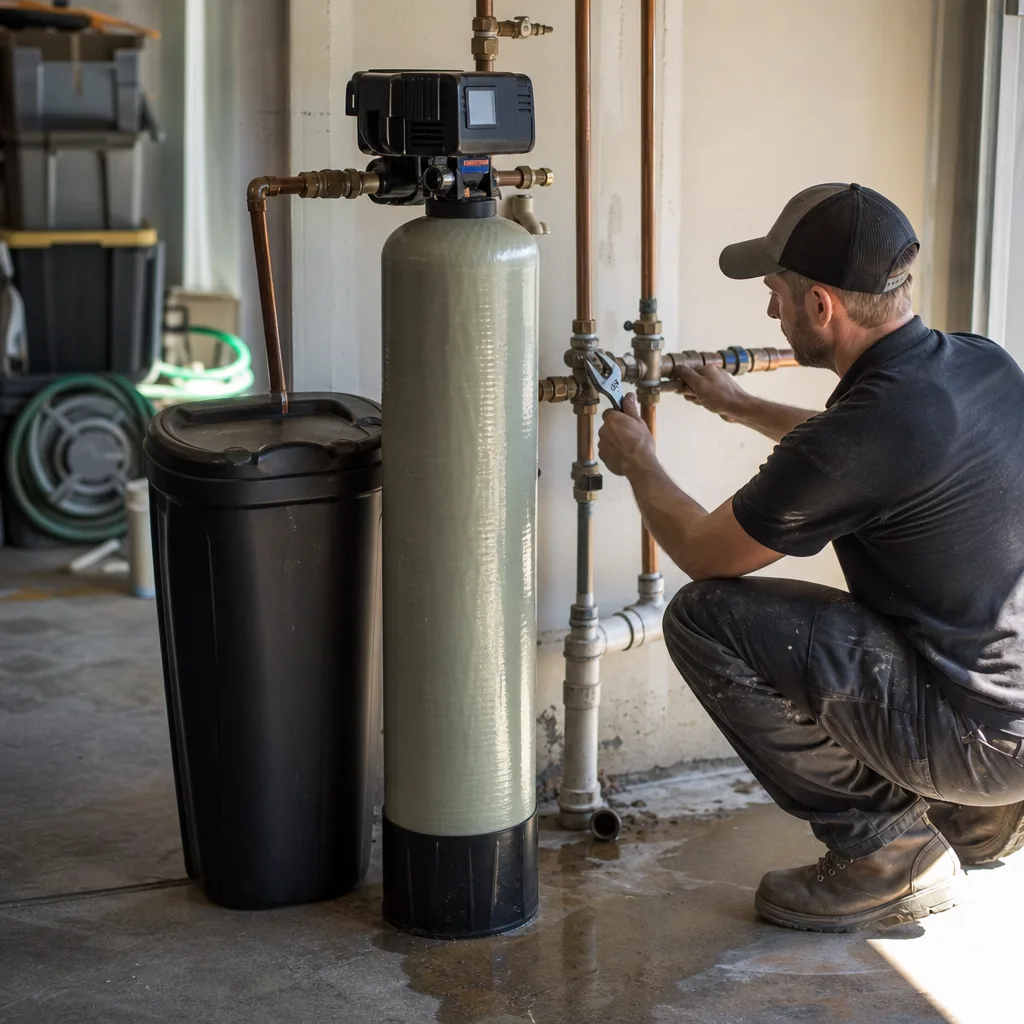
Our most common job is putting a whole-home water softener at your main water supply, with a bypass and a drain line, then connecting and testing it. Most of these jobs are done the same day. Here’s what that covers.
- The softener and materials. The unit itself and the fittings and parts needed to connect it.
- Professional installation. The softener is set at your main supply so every tap in the house gets treated water, not just one sink.
- Bypass connection. A bypass valve lets you route water around the softener. If the unit ever needs service, you can keep water running in your home while it’s offline.
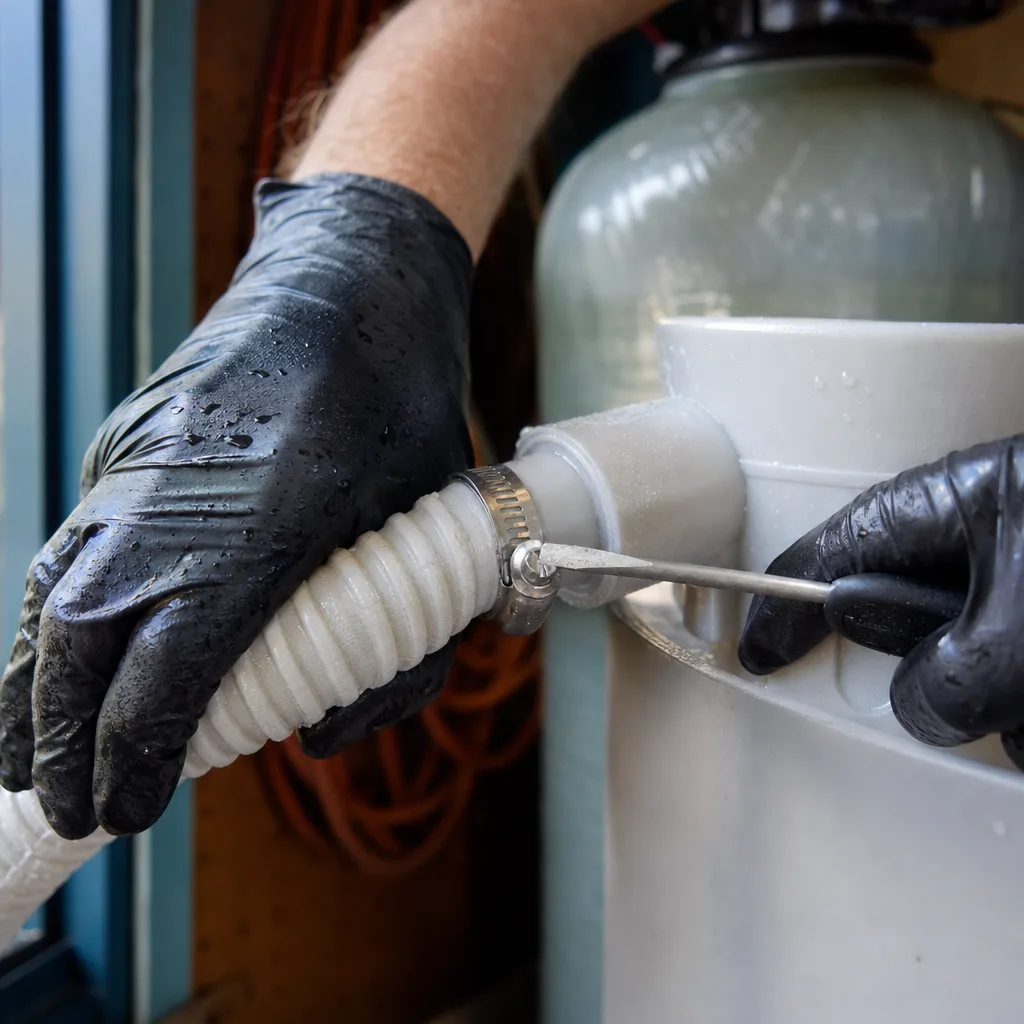
- Drain connection. A softener rinses itself clean on a schedule, and that rinse water needs a proper place to go. The drain line carries it away.
- Startup and testing. A new softener has to be filled, set up for your home, and checked before it’s ready to use. You shouldn’t be left to figure that out alone.
- Haul-away of the old unit. If you’re replacing a worn-out softener, the old one leaves with us. It won’t end up in your garage or at the curb.
Some work isn’t part of a standard installation. We’d rather tell you now than surprise you on install day.
- A plumbing loop, if none exists. A loop is a set of pipes built into the house where a softener can tie in. Many homes have one, often near the garage or water heater. If yours doesn’t, adding one is extra work.
- Electrical. Many softener control valves need a nearby outlet. If there isn’t one, that’s separate from the plumbing work. Our team also does outlet and switch installation, so you won’t need to call someone else.
- Code corrections. If existing plumbing near the install spot doesn’t meet code, fixing it isn’t part of the base job.
- Permits, unless your quote says otherwise. Check your written quote to see whether permits are listed.
Why does this matter? Two quotes can look far apart when they aren’t covering the same work. One might include the drain line and haul-away. Another might leave them out and add them later. When you’re comparing, ask each company to list what’s included and what isn’t, the same way we have here.
Quick ways to tell where you stand: Is there a capped pipe connection or loop near your garage or water heater? Is there an outlet within reach of that spot? If the answer to both is yes, your install is more likely to stay within the standard job. If you’re not sure, that’s fine. These are the things a technician checks before giving you a price, so nothing gets added after the work begins.
Signs Your Home Needs a Whole-Home Softener
Hard water leaves clues all over your house. The minerals in it, mostly calcium and magnesium, don’t stay in the water. They end up on your faucets, your dishes, inside your pipes, and inside your water heater. If you’re seeing several of these signs in more than one room, a whole-home softener is likely the fix.
- White, chalky crust on faucets and showerheads. That’s mineral scale. It builds back up soon after you scrub it off.
- Spots on glasses and cloudy film on glass shower doors. Your dishes come out of the dishwasher looking dirty even though they’re clean.
- Soap that won’t lather. Minerals fight soap, so you use more shampoo, dish soap, and laundry detergent to get the same result.
- A ring around the tub or sink that keeps coming back, no matter which cleaner you try.
- Towels and clothes that feel stiff or scratchy after washing.
- Weak spray from a showerhead that used to work fine. Scale can clog the small holes over time.
- A water heater that pops or rumbles. Minerals settle at the bottom of the tank and harden. The heater has to work harder to heat water through that layer.
That last one matters most to your wallet. Scale doesn’t just look bad. It builds up inside appliances that use water, like your water heater, dishwasher, washing machine, and ice maker. Hard water is a common reality across North Texas, so these problems don’t go away on their own.
Here’s a simple test: are the problems in one spot, or everywhere? If the kitchen faucet, both bathrooms, and the laundry room all show scale and spots, the issue is the water coming into your home. That’s why a softener goes at the main supply, so every tap gets treated water. A small filter on one sink can’t fix spots in the shower.
To be straight with you, a softener isn’t the answer to every water problem. Here’s when you probably don’t need one:
- Only one faucet has weak flow. Unscrew the aerator at the tip and soak it in white vinegar overnight. That often fixes it for free.
- Low pressure in the whole house, at every tap. That points to a plumbing issue like a failing pressure regulator, not hard water.
- Your water tastes or smells like chlorine. A softener doesn’t remove that. A carbon filtration system does.
- Orange or rust-colored stains. That can point to iron, which may need iron filtration instead of, or along with, a softener.
- You mainly want better drinking water. A reverse osmosis system under the kitchen sink may be the better fit.
If your signs match the first list, you’re dealing with hard water. If they match the second list, a softener alone won’t solve it. Knowing which one you have keeps you from paying for equipment you don’t need.
When a Full Installation Is Not the Right Call
A new softener is a real investment, so it’s worth ruling out the cases where you don’t need one. We covered water problems a softener can’t fix in the last section. This section is about something else: times when you do have hard water, but a brand-new installation still isn’t your best move.
If you already have a softener and the spots and scale are back, don’t assume it’s dead. Many problems take five minutes to check yourself:
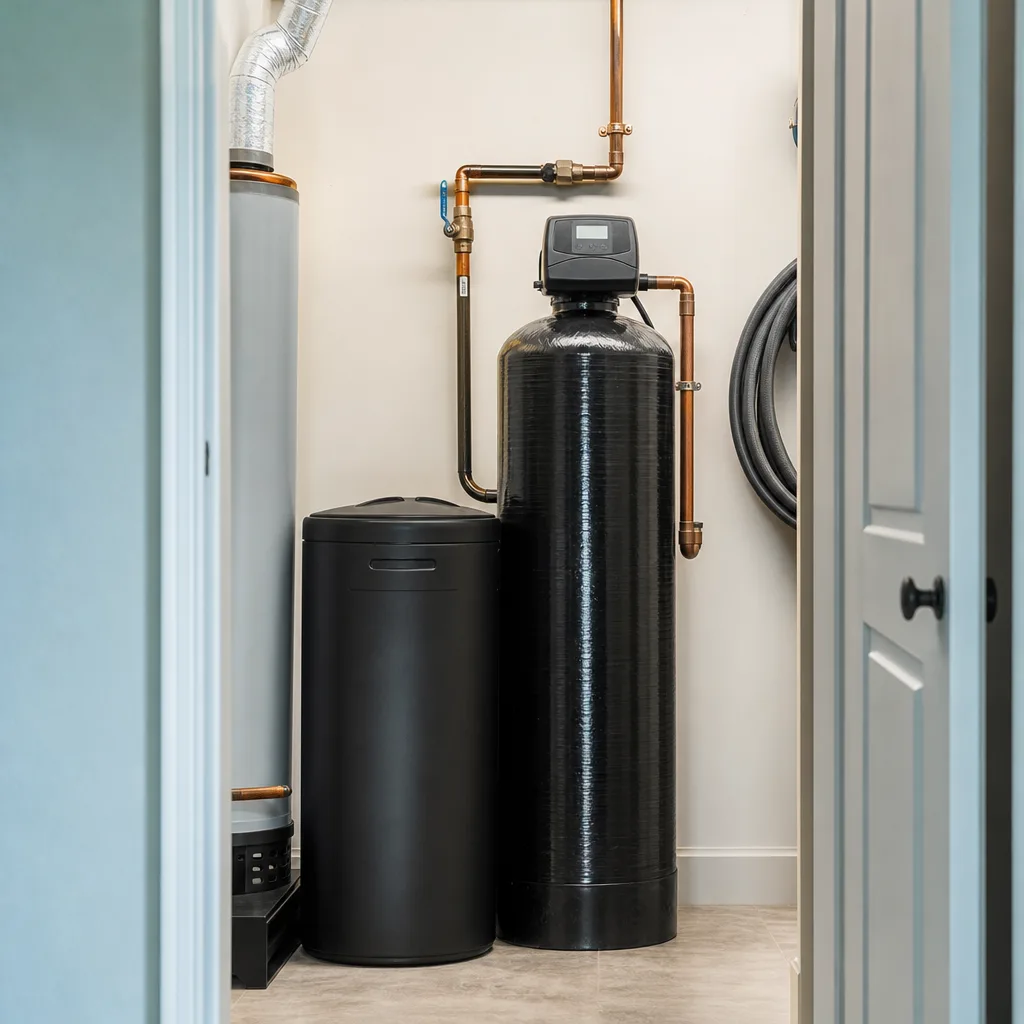
- The salt is low or gone. Lift the lid on the brine tank. That’s the tall tank, usually the bigger one. If you can see the bottom or the water, add softener salt and give it a day or two.
- There’s a salt bridge. Sometimes salt forms a hard crust near the top of the tank. It looks full, but there’s an empty space underneath, so the softener can’t make brine. Push gently on the salt with a broom handle. If it breaks through, you found the problem.
- The bypass valve got turned. If someone worked on your plumbing, the softener may still be set to bypass. Your water would be flowing right around it.
- The clock is wrong. Some older timer-style control valves lose their settings after a power outage. That can happen during North Texas storm season. If the unit is cleaning itself at the wrong time, or not at all, resetting it may be all it needs.
If none of that works, you may still only need water softener repair or maintenance, not a new system. A worn part or a valve that needs servicing usually costs far less than replacing the whole unit. Replacement makes sense when the softener is old, leaking, or keeps failing. It also makes sense if it was never sized right for your household. It doesn’t make sense just because it stopped working once.
If you rent, the plumbing belongs to your landlord. Don’t pay to install a whole-home softener at the main supply without written approval. Ask them first. Some owners will handle it themselves once they see scale on the fixtures they’re paying to replace.
If your home has no plumbing loop and no easy drain access, the job may cost more than the standard install. As we noted above, adding a loop and doing electrical work are separate. That doesn’t mean you shouldn’t do it. It means you should get those costs in writing before you decide. If the full number doesn’t fit your budget right now, waiting is a fair choice. Hard water wears on your water heater and fixtures over time, not overnight.
If you’re not sure how hard your water really is, test it before buying anything. A softener that’s too big or too small for your water won’t serve you well. Knowing the number first protects your money.
None of these are reasons to put up with hard water forever. They’re reasons to make sure you’re buying the right fix, at the right time, for the home you have.
Have questions? We’re happy to help.
Call Today, Get Service Today. Xtreme Air Services — West Plano is ready to help.
How the Installation Day Works
Most of our softener installations are done the same day. Here’s how that day usually goes, so you can plan around it and know what a good install looks like.
Before any work starts, you should have a clear price. We use upfront flat-rate pricing, and you approve it before the job begins. There’s no meter running while someone works. If your home needs a loop, an outlet, or a code fix, that should show up in writing first. Nothing should get added halfway through. Our service-call fee runs $26 to $99, and it’s credited toward the work if you go ahead with us.
A few simple steps on your end make the day go smoother:
- Clear a path to the install spot. That’s usually the garage or near the water heater. Move boxes, bikes, and storage bins out of the way.
- Plan for the water to be off for part of the day. Fill a pitcher, run the dishwasher early, and hold off on laundry.
- Keep pets in another room. Doors to the garage may be open while equipment comes in.
- If you have an old softener, empty anything you’ve stored on or around it.
Here’s what happens during a typical install. The main water gets shut off. The softener is tied into the supply line with a bypass valve, and the drain line is run so rinse water has somewhere to go. Then the water comes back on slowly to push air out of the lines. The brine tank gets salt and water. The control valve is set for your water’s hardness and the size of your household. Last, the unit runs its first cleaning cycle, and every connection gets checked for leaks.
Before the job wraps up, make sure you know three things. Where’s the bypass valve, and how do you turn it? How do you check the salt and add more? What should the control panel normally look like? If any of that isn’t clear, ask. It’s your home, and you should feel comfortable running the equipment in it.
Your water won’t be fully soft the moment the install is done. Your water heater still holds a tank of hard water, and that has to cycle through first. Give it a few days of normal use. You’ll likely notice the water feels slick on your skin in the shower. That’s normal for soft water, not leftover soap. You’ll also find you need less shampoo and detergent than before.
One more North Texas note. If your softener sits in an unheated garage, hard winter freezes can be tough on the lines and the valve. Ask about the install spot and what to do when a cold front is coming. A few minutes of planning now can save you a frozen, cracked fitting in January.
Our licensed and insured technicians handle the plumbing, and we have no extra charge for nights or weekends. Flexible financing is available on qualifying installations, on approved credit.
Call 469-217-9095
Watch Our Video
See How We Handle Water softener installation in Plano
Xtreme Air Services — West Plano
Why DIY Installation Is Risky
Some handy homeowners can install a softener themselves. If your home already has a softener loop and an outlet right there, and you’re comfortable working on water lines, it’s a fair project to consider. The trouble is that most of the risk is in the parts the videos skip. Here’s what can go wrong.
You’re cutting into the main line. This isn’t a sink faucet. A softener ties into the pipe that feeds your whole house. One fitting that isn’t fully seated can drip slowly behind a wall or under boxes in the garage for weeks before you notice. A fitting that lets go under full pressure can flood the garage in minutes.
The drain line has to be done right. Pushing the drain hose into a floor drain or standpipe isn’t enough. The line needs an air gap, which is a small open space between the end of the hose and the drain. Without it, dirty water from the drain can get pulled back toward your softener and your home’s water. The brine tank also has an overflow fitting. If that isn’t connected, a stuck valve can send salty water across your floor.
Your plumbing may be part of your electrical grounding. In many homes, the metal water pipe helps ground the electrical system. A softener and its bypass are often plastic. Put one in the middle of a copper line and you can break that path without knowing it. The fix is a bonding jumper, a heavy wire that bridges around the softener. It’s easy to miss and hard to spot later.
Heat can ruin parts before you ever turn the water on. If you solder copper too close to the control valve or bypass, the heat can warp plastic parts and damage seals. The softener might look fine on day one and start leaking a month later.
Setup is where a lot of DIY jobs quietly fail. The control valve has to be set for your water’s hardness and your household’s water use. Set it too low and you’ll still see spots and scale. Set it too high and you’ll burn through salt and water for no reason. Either way, the softener runs, so nothing looks wrong. You just don’t get what you paid for.
Ask yourself these questions before you start:
- Do you know where your main shutoff is, and does it fully close?
- Can you cut, fit, and seal copper or PEX lines with no leaks?
- Do you know whether your water pipes are part of your home’s electrical grounding?
- Does your drain spot have room for a proper air gap?
- Do you know your water’s hardness number, so you can program the valve?
- Have you checked whether the City of Plano requires a permit for this work at your address?
If you can answer yes to all of them, you may be fine doing it yourself. If any answer is “I’m not sure,” that’s the part most likely to cause trouble. Water damage, a grounding problem, or a softener that never works right will cost you more than the install you were trying to save on.
Frequently Asked Questions
Common questions about Water softener installation
How long does it take before I notice softer water after installation?
Give it a few days of normal use before you judge the results. Your water heater still holds a tank of hard water when the softener goes in, and that water has to cycle through the fixtures first. Once it does, you’ll likely notice your skin feels slick in the shower and you need less shampoo and detergent than before.
Will my softener still work during a hard freeze?
It can, but a softener in an unheated garage needs some protection during winter storms. North Texas cold fronts can be tough on softener lines and valves if they’re exposed to freezing temperatures. Ask your technician about the install spot and what steps to take when a freeze is coming so you don’t end up with a cracked fitting in January.
Can I keep using water while the softener is being installed?
Your main water gets shut off for part of the install day, so plan around it. Fill a pitcher ahead of time, run the dishwasher early, and hold off on laundry until the work is done. Most installs are finished the same day, so the interruption is short.
Ready to Get Started?
Call (469) 217-9095 Today, Get Service Today.