


Whole-Home Water Filtration Installation in Plano
Point-of-entry filtration for every tap in the house, compared honestly with softeners and reverse osmosis.
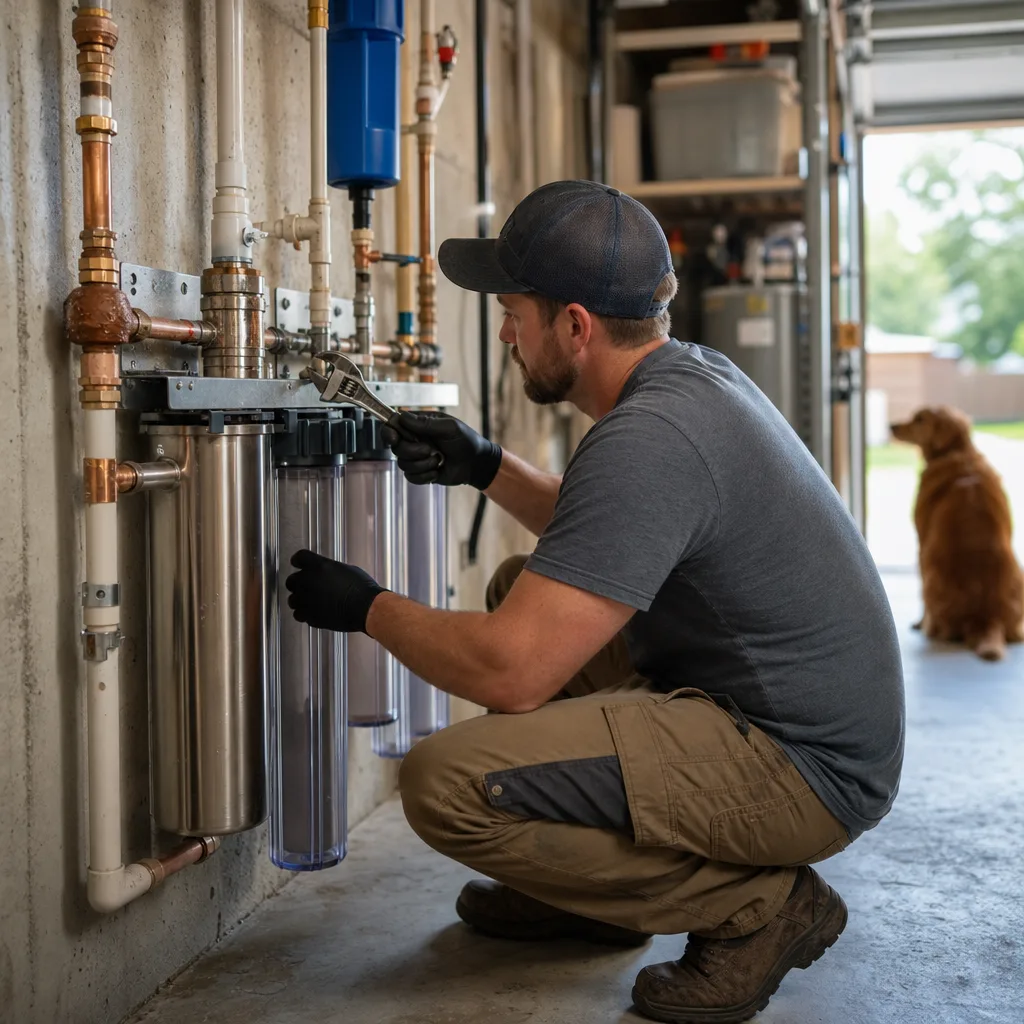
What’s Covered on This Page
- Plano’s Municipal Water Supply Is the Reason to Consider Filtration
- Whole-Home Filtration Is Different From a Softener or an Under-Sink Filter
- What the Installation Includes and What It Costs
- Permits Matter for Main-Line Water Treatment Installations
- Professional Installation Protects Your Home’s Main Water Line
- Where does Plano’s tap water come from?
- Can I install a whole-home water filtration system myself?
Plano’s Municipal Water Supply Is the Reason to Consider Filtration
If you live in Plano, your water comes from the city’s public supply, not a private well. That matters. City water has to meet federal drinking water standards, and the city puts out a yearly water quality report you can read for yourself. So we’ll be straight with you: you don’t need a filter to make Plano water safe to drink.
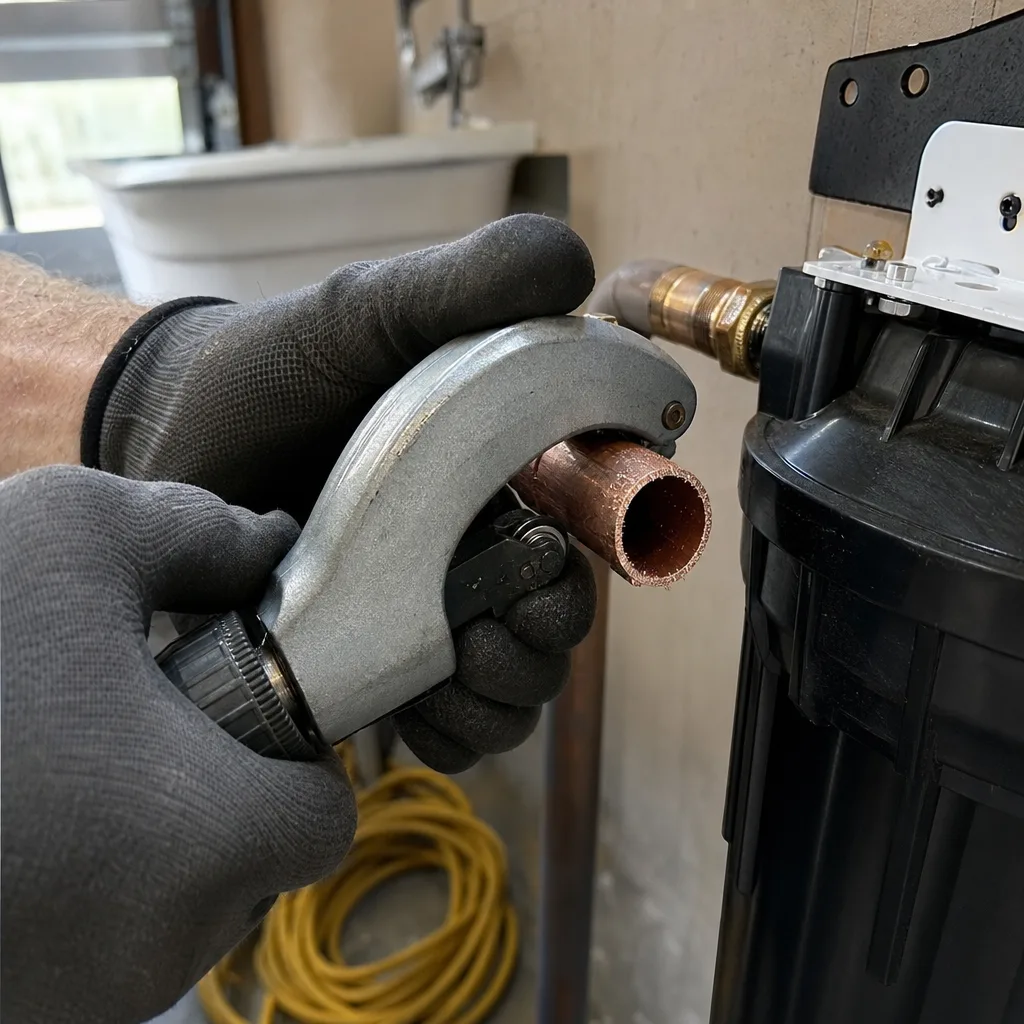
What you may want is water that tastes better, smells better, and is easier on your home. Treated city water picks up a few things on its way to your faucet, and those are what a whole-home system goes after.
- Disinfectant taste and smell. Water utilities add a disinfectant to keep bacteria from growing in the pipes. It’s there for a good reason. Still, a lot of people notice a pool-like smell in the shower or a flat taste in a glass of water. A carbon filter is the usual way to take it out.
- Sediment. Your water travels through miles of city mains and service lines before it reaches you. Fine grit and rust flakes can end up clogging faucet aerators, toilet fill valves, and the screens on your appliances. A sediment stage catches that before it gets inside.
- Hard minerals. North Texas water tends to be hard. That’s what leaves white spots on your glasses and builds scale inside your water heater. A filter by itself doesn’t remove hardness. That’s a water softener’s job, and many homes pair the two.
Why put it at the main line and not under the sink? A pitcher or an under-sink filter only helps one spot. Your shower, washing machine, ice maker, and water heater still get untreated water. A point-of-entry system sits where the water supply comes into your home. That means every fixture gets filtered water, including the hot side.
Where your main line sits also shapes the job. Many North Texas homes are built on a slab, so the supply line often comes up near the garage or an outside wall. That’s usually where the system goes. How much room there is, whether a drain is close by, and whether your home already has a plumbing loop for water treatment all affect how simple the install will be.
The right setup depends on what’s in your water. Two houses on the same Plano street can have different results, because the age and condition of each home’s pipes play a part. That’s why it makes sense to start with water testing before you pick a system. You’ll know whether you need carbon only, carbon plus a sediment stage, or a filter paired with a softener. And you won’t pay for stages you don’t need.
Whole-Home Filtration Is Different From a Softener or an Under-Sink Filter
These three get mixed up all the time, and it’s easy to see why. They all sit on your plumbing and they all make your water “better.” But each one does a different job, needs different things at the install spot, and asks different upkeep from you. Knowing the difference keeps you from buying the wrong system, or buying two when one would do.
- Whole-home filter: Water passes through layers of media, usually a sediment stage and then carbon. The carbon grabs the things that cause taste and smell, and the sediment stage traps grit. Nothing is added to your water. Upkeep means swapping cartridges or replacing media on a schedule. Some larger carbon tanks also flush themselves now and then, so they need a drain nearby.
- Water softener: This one doesn’t filter at all. It runs water through resin beads that trade the hard minerals for a small amount of sodium. That’s called ion exchange. Every so often, the softener rinses the beads with salty water to recharge them. So it needs a drain, a steady supply of salt, and usually a power outlet for the control valve.
- Under-sink filter: This is a small unit for one faucet, most often the kitchen. A reverse osmosis model pushes water through a very fine membrane. It removes more dissolved stuff than a whole-home carbon filter can. It makes water slowly, stores it in a small tank, and sends some water down the drain as it works. It’s built for drinking and cooking water, not for showers or laundry.
So which one is “best”? That’s the wrong question. Ask what’s bugging you. If the shower smells like a pool and your coffee tastes off, a whole-home filter is aimed right at that. If you’re scrubbing white crust off the shower glass and worried about your water heater, that’s a softener. If you want the cleanest possible glass of water from one tap, an under-sink reverse osmosis system does that best.
Plenty of homes end up with two of the three, and that’s fine when it’s planned. When a filter and softener share a line, the filter usually goes first. That way, the carbon takes out the disinfectant before it reaches the softener’s resin beads, and the sediment stage keeps grit from fouling them. A whole-home filter plus a drinking-water unit at the kitchen sink is another common pairing. You get better water everywhere, and extra-clean water where you drink it.
The choice also changes what your install spot needs. A cartridge-style filter can go in with very little around it. A backwashing filter or a softener needs a drain close by and often an outlet. Many Plano homes have the main line coming up in the garage, and that may or may not have a drain or a pre-built plumbing loop for water treatment. Those details are why two installs that look alike on paper can be different jobs in person. They’re also why we look at your water and your setup before recommending anything.
If testing shows hardness is your real problem, our water softener installation page covers that service. If drinking water is your main concern, see our reverse osmosis system installation page. Many homes get the most from pairing one of those with a whole-home filter.
What the Installation Includes and What It Costs
Let’s talk numbers, because that’s usually the next thing on your mind. Our typical price range for whole-home water filtration is $1,500 to $4,500. The most common job runs $2,100 to $3,300. That job is a point-of-entry system installed at your main supply so it treats the whole home, connected and tested. We price it by system type, so a basic cartridge setup and a larger carbon tank won’t land in the same spot in that range.
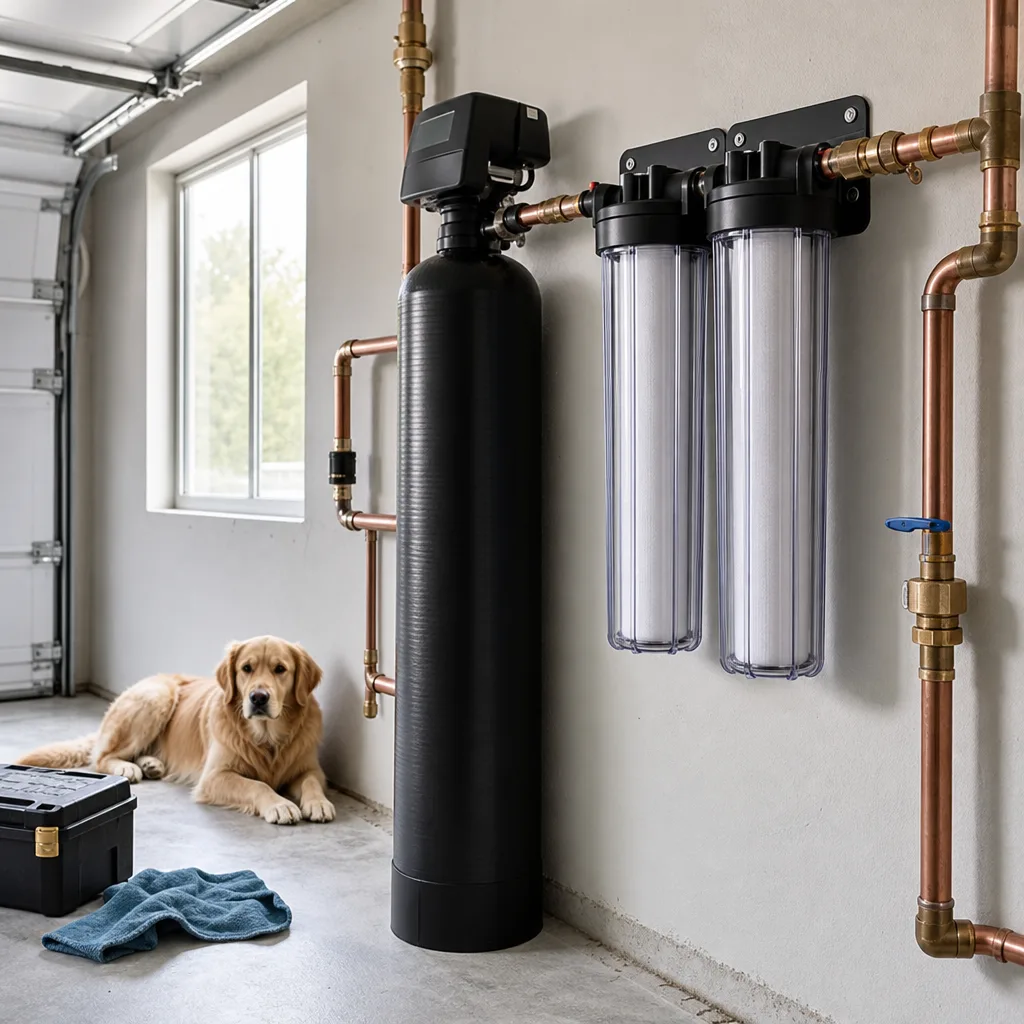
Here’s what’s included in the installation price:
- The system and all materials
- Professional installation
- All connections to your water supply
- Startup and testing, so you know it’s working before we leave
- Haul-away of your old unit, if you have one
And here’s what’s not included unless your quote says so:
- A plumbing loop, if your home doesn’t already have one
- Electrical work, such as adding an outlet for a control valve
- Code corrections to existing plumbing
- Permits
We list these separately on purpose. They depend on your house, not on the filter. If your garage already has a loop and a drain nearby, you won’t pay for them. If it doesn’t, you’ll know before any work starts.
So what pushes a job toward the low or high end? Five things:
- Filtration type and stages. A single carbon stage costs less than sediment plus carbon, or a system built to pair with a softener.
- Flow rate and capacity. A big household with three showers and a washer running at once needs a system that can keep up without dropping your water pressure.
- Condition of your existing plumbing. Old or corroded pipe near the main line may need fixing before the system can tie in.
- Drain access. Systems that flush themselves need a drain close by, and running one adds work.
- Code upgrades. If something at the main line isn’t up to current code, it has to be corrected.
Our service-call fee is $26 to $99, and it’s credited toward the job if you go ahead with Xtreme Air Services. You’ll get upfront flat-rate pricing, and you approve the price before any work starts. No meter running and no surprises when the job’s done.
If the number is bigger than you planned for, that’s okay. We offer flexible financing on qualifying installations and larger jobs, on approved credit.
Whoever you hire, ask these questions before you say yes. They’re the ones that keep a fair quote from turning into a different bill:
- Is water testing part of the recommendation, or are you guessing?
- Does the price include a plumbing loop, or does my home already have one?
- Will this system need a drain or an outlet, and is that in the quote?
- Who handles the permit, if one is needed?
- What do replacement cartridges or media cost, and how often will I need them?
A good installer will answer every one of those without hesitating. If you call us, you’ll talk to a real person who can walk you through each answer for your home.
Not sure what your Whole-home water filtration installation project needs? Ask us.
Call Today, Get Service Today. Xtreme Air Services — West Plano is ready to help.
Permits Matter for Main-Line Water Treatment Installations
A whole-home filter isn’t a gadget you plug in. To install one, we cut into your main water line, the pipe that feeds every faucet, toilet, and appliance in your home. That makes it real plumbing work, and work on your main supply can need a permit and an inspection in Plano. It’s worth checking before anyone picks up a pipe cutter.
A permit might sound like red tape for a filter. Here’s what it protects:
- Your drinking water. Systems that flush themselves send water down a drain. If that drain line isn’t set up right, dirty water can be pulled back toward your supply. Done right, the drain line ends with an air gap, a small open space that stops backflow.
- Your water pressure. A bypass valve lets water skip the system during a cartridge change or a repair, so your house never goes dry. Valves and fittings sized wrong can choke your flow at every tap.
- Your home’s electrical safety. Many North Texas homes have the main line coming up in the garage, close to where you’d add an outlet for a control valve. Water and power that close together need to be done carefully.
- Your paper trail. When you sell your home, an inspector or buyer may ask about equipment on the main line. A closed permit shows the work was checked.
Here’s the honest part. Not every water treatment job needs a permit. A simple swap of an existing unit, done on the plumbing loop that’s already there, may not. A small filter under your kitchen sink usually doesn’t touch the main line at all. Rules can change, so the right move is to check with the City of Plano for your address before the job starts, not after.
Who pulls the permit matters too. In Texas, connecting equipment to your home’s water supply is licensed work. If a seller tells you to install it yourself, or an installer says permits “aren’t a thing” for water filters, take that as a warning sign. An unpermitted tie-in can mean a failed inspection when you sell, or a leak at the main that your insurance company asks hard questions about.
As covered in the pricing section, permits aren’t part of the installed price unless your quote says so. That’s on purpose, because not every job needs one. Your written quote should say plainly whether a permit applies to your home and who’s getting it. If it says nothing, ask.
Xtreme Air Services is a licensed and insured plumbing contractor, and our plumbing work runs under a licensed master plumber. When we look at your water test and your main line, we’ll tell you whether your job needs a permit, what the inspection covers, and how it fits your timeline. You’ll know all of that before you approve a thing.
Call 469-217-9095
Watch Our Video
See How We Handle Whole-home water filtration installation in Plano
Xtreme Air Services — West Plano
Professional Installation Protects Your Home’s Main Water Line
Your main water line is the one pipe every faucet, toilet, and appliance in your home depends on. When a whole-home system gets tied into it, small mistakes don’t stay small. A slow drip at a fitting in the garage can run for weeks before anyone spots it. A bad cut can leave your whole house without water until it’s fixed. That’s why this job belongs with a licensed plumber and not a weekend how-to video.
Here’s what a careful installer checks that the videos usually skip:
- The main shutoff valve. In older Plano homes, that valve may not have been turned in years. Old valves can stick, or start leaking the moment they’re closed. A pro checks it first and has a plan if it gives out.
- Pipe type. Your main line could be copper, PEX, or CPVC, depending on when your home was built. Each one needs the right fittings. If two different metals are joined without the proper connector, the joint can corrode over time.
- Electrical grounding. In many homes, metal water pipe is part of the electrical grounding path. Cutting in a filter with plastic housings can break that path without anyone noticing. A bonding jumper across the system keeps it connected. It’s easy to miss, and it matters for your family’s safety.
- Flow direction and support. Filter heads and tanks are marked for which way the water should flow. If one goes in backward, it won’t filter the way it should. A large media tank full of water is heavy, so it needs a level, solid spot to sit on.
- Freeze protection. North Texas gets hard winter freezes. A system in an unheated garage or along an outside wall needs protection, or a cracked housing can flood the space.
Then comes startup, which is where you find out whether the work was done right. Startup and testing are part of our installed price. A good startup means turning the water back on slowly, then checking every joint under full pressure. New carbon also has to be flushed. Fresh carbon lets off a fine black dust at first, and it should run clear before you fill a glass. The last check is water pressure at a faucet, so you know the system isn’t choking your flow.
Some of this you can handle yourself. Once the system is in, changing cartridges is usually a homeowner job. You set the bypass, swap the cartridge, check that the O-ring is seated and lightly lubricated, and turn the water back on. If your system has a self-flushing media tank, the control valve does most of the work for you. The only part that really needs a pro is the one you only do once, which is the tie-in to your main.
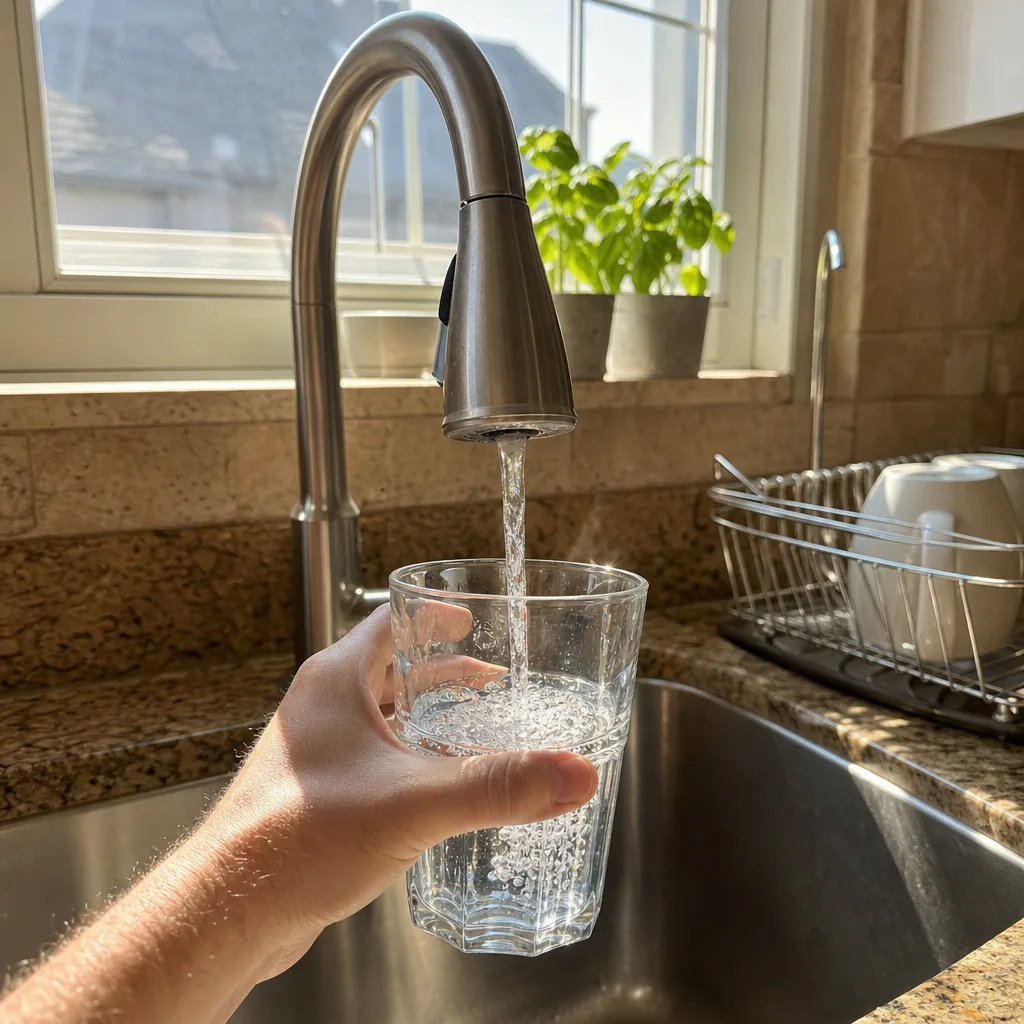
When that tie-in is done right the first time, you stop thinking about it. You just notice the shower doesn’t smell like a pool anymore.
Frequently Asked Questions
Common questions about Whole-home water filtration installation
Where does Plano’s tap water come from?
Plano’s water comes from the city’s public water supply, not a private well. It’s treated and tested to meet federal drinking water standards before it reaches your home, and the city publishes a yearly water quality report. A whole-home filter isn’t needed to make it safe, but it can improve taste, smell, and how it treats your pipes and fixtures.
Can I install a whole-home water filtration system myself?
You can handle some of the upkeep yourself, but the main tie-in is plumbing work best left to a licensed plumber. Installing the system means cutting into your main water line, the single pipe that feeds every faucet and appliance in your home. A mistake there, like a bad cut or a wrong fitting between pipe types, can leave your whole house without water or cause a slow leak that runs for weeks. Once the system is in, swapping cartridges is usually a job you can do yourself.
Ready to Get Started?
Call (469) 217-9095 Today, Get Service Today.