


Sewer Camera Inspection in Sunnyvale: Know What’s Wrong Before You Pay for Repairs
A camera down the line before anyone quotes a repair, so you see the break, the belly, or the root intrusion for yourself.
What’s Covered on This Page
- Signs You Need a Sewer Camera Inspection
- When You Don’t Need a Full Line Camera Inspection Yet
- What Happens During a Sewer Line Camera Inspection
- How Sewer Camera Inspection Pricing Works
- Clay Soil and Older Pipes Around Sunnyvale
- How long does a sewer camera inspection take?
- What should I expect when you show up for a sewer camera inspection?
- Do I need a sewer camera inspection if only one drain is slow?
- Why do older Sunnyvale homes need sewer camera inspections more often?
- Can a sewer camera inspection find tree root problems in the line?
- What happens after a sewer camera inspection if a problem is found?
Signs You Need a Sewer Camera Inspection
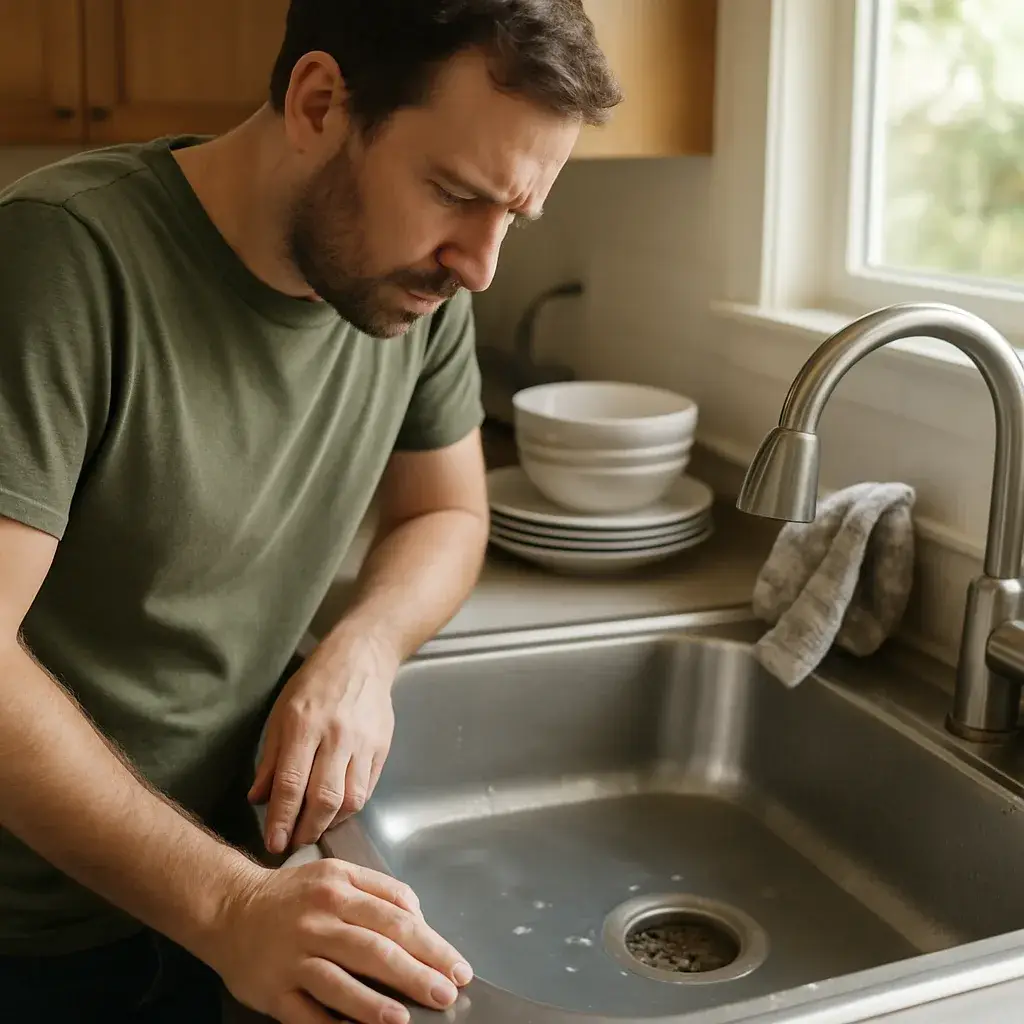
How do you know it’s the sewer line and not just a dirty drain? Look for a pattern rather than one bad day.
- Several drains back up around the same time, such as the shower and washing machine both draining slowly
- A sewage smell in the yard or near a cleanout that won’t go away
- A soggy patch or sudden low spot in the lawn near the sewer line’s path
- Toilets that gurgle or bubble when another fixture drains
- The same clog keeps returning, no matter how many times the line gets snaked
We see it every week: someone has had two or three snake jobs on the same drain, but the clog keeps coming back. The pipe is telling you the real problem is farther down the line.
Many older homes in Sunnyvale still have their original clay or cast iron sewer lines running to the street. Those materials crack easily after tree roots find a seam. Newer construction uses PVC, which holds up better. Still, fittings and cleanout access can shift as the clay soil moves beneath a slab foundation.
Not sure whether you’re seeing an emergency or something to watch? That’s a fair question, and a camera inspection can answer it.
When You Don’t Need a Full Line Camera Inspection Yet
Not every slow drain needs a camera inspection. If only one sink or tub backs up, you probably have a local clog instead of a sewer line problem. A plunger or basic drain cleaning often clears it the same day.
People in Sunnyvale sometimes call because one slow toilet makes them think the whole system is failing. Often, paper or grease is sitting just beyond the trap, nowhere near the main line.
- Only one fixture is affected, rather than several drains at once
- The slow drain is new, not something you’ve fought for months
- You haven’t dealt with tree roots, an older clay pipe, or repeat backups before
- A plunger or plumber’s snake improves the drainage right away
If those signs match what’s happening in your house, save your money and try the simple fix first.
If several drains gurgle at once, that’s a different story. The same applies when your lowest drain backs up as the washing machine runs. That’s when a camera inspection pays off by finding trouble farther down the line.
Don’t call us because a drain ran slowly once. Call when the trouble keeps returning or involves more than one fixture.
What Happens During a Sewer Line Camera Inspection
What happens when we show up? The process is much less messy than many people expect. Here’s how it works from start to finish.
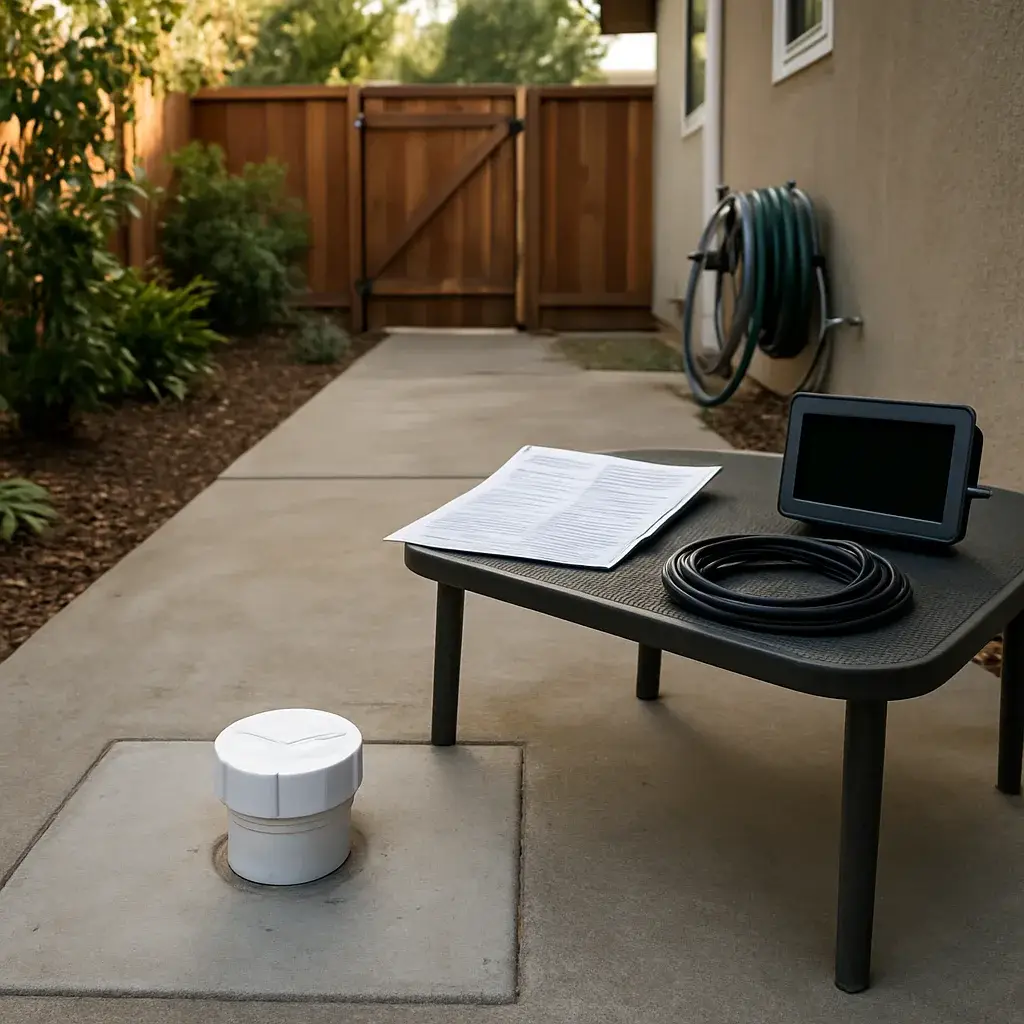
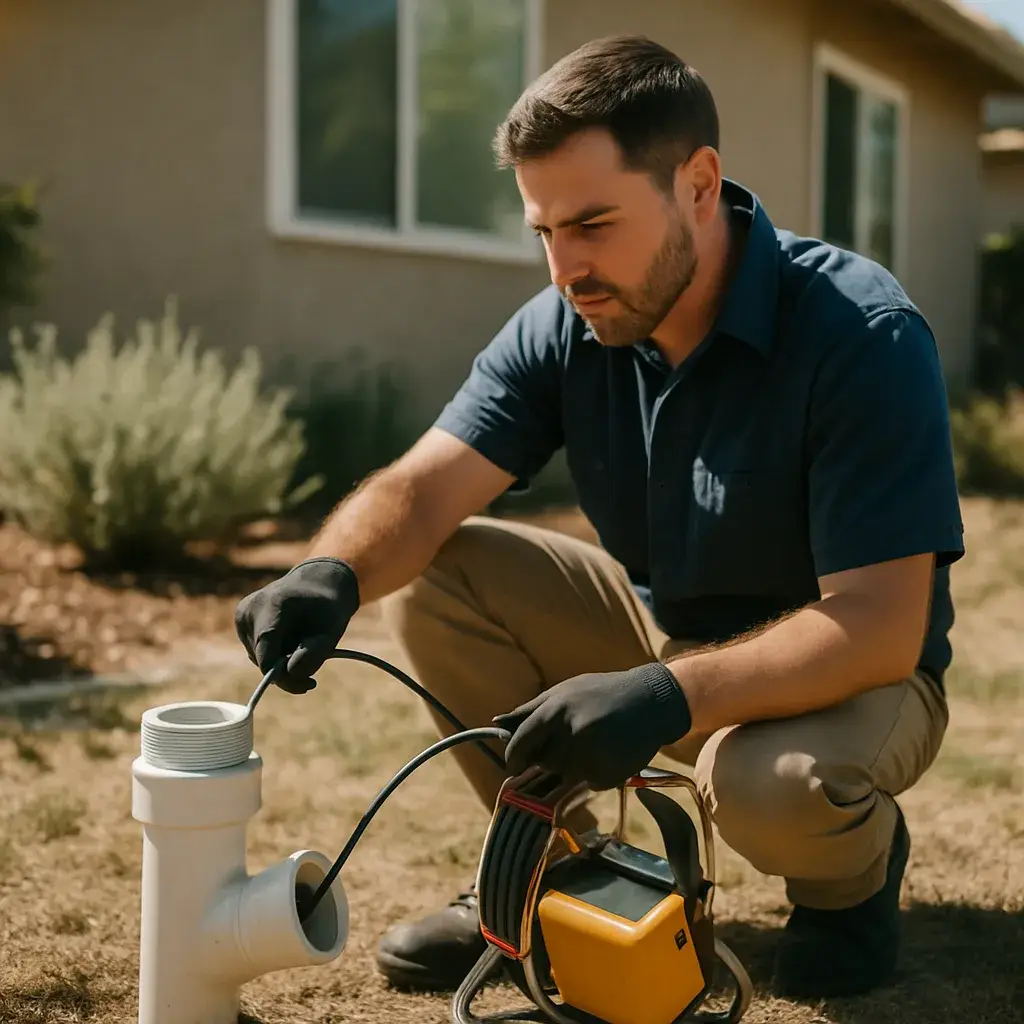
- We find or open the cleanout, the capped pipe near your foundation or in the yard. If there isn’t easy access, we’ll explain your options before touching anything.
- The camera head goes in on a flexible rod. A technician slowly feeds it through the line while watching a live monitor.
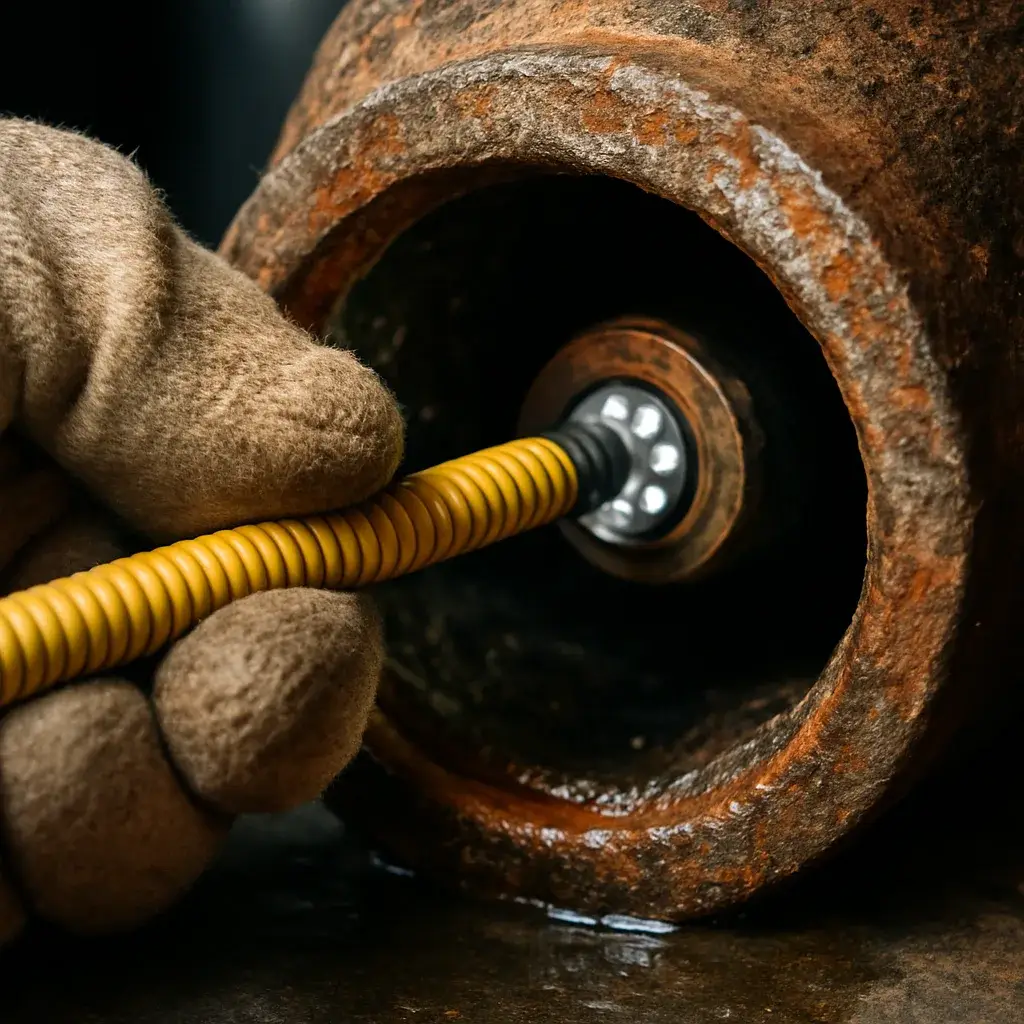
- We look for cracks, roots, bellies, offset joints, and buildup. These problems can cause backups later.
- If we need to mark the location of a problem, we can find it from above ground using a signal from the camera head.
- We pull out the camera, record the details, and prepare a written summary. It explains our findings and what we recommend next.
That’s the process. We don’t dig or tear up your yard just to see what’s happening underground.
Many older homes around Sunnyvale still have clay pipe running beneath the slab. Clay can crack and shift as tree roots push into it over time. On those jobs, the camera shows the location of the damage. We don’t have to tear up the whole line to find it. In newer construction, the problem may be a sagging section caused by settling soil. It may be minor, but it’s still something to watch.
We see this every week: people brace for bad news, then learn they need one small fix or no repair at all.
Not sure what your Sewer camera inspection project needs? Ask us.
Call Today, Get Service Today. Xtreme Air Services is ready to help.
How Sewer Camera Inspection Pricing Works
Cost is usually the second question after, “Can you find the problem?” A sewer camera inspection runs $150 to $500. The most common job is a straightforward on-site camera run with a written summary. That service lands between $150 and $300.
What pushes the cost toward the higher end?
- The length of the line. A short run under a Sunnyvale slab home takes less time than a line stretching to the street.
- Access to the cleanout. The job may take longer if we must work around landscaping, a driveway, or a tight crawlspace.
- Whether the line needs to be located and marked before or after the inspection.
There’s also a service call fee of $26 to $99. That fee gets credited toward the repair if you move forward with us, so you’re not paying twice.
That price covers the camera run and a written summary of our findings and recommendations. It doesn’t include repair work. If the camera finds a cracked pipe or root intrusion, we’ll discuss the repair and its separate cost with you.
Financing isn’t typically offered for the inspection alone because it’s a small job. If the camera finds a larger problem, such as a sewer line repair, financing options may be available for that work.
Ask any provider two questions before booking: what does the quoted price include, and will the fee apply to the repair if you approve it?
Clay Soil and Older Pipes Around Sunnyvale
Sunnyvale sits in the Blackland Prairie clay belt running through this part of Dallas County. The clay swells during wet weather and shrinks after weeks without rain. That movement affects more than your lawn. It also puts pressure on the pipes underneath.
Many local homes were built on slab foundations when cast iron and clay pipe were standard. Some older streets still have Orangeburg pipe. Made from layers of tar paper, it dates to the mid-1900s and wasn’t built to last this long. Each wet-dry cycle can nudge those old joints farther apart.
Have you noticed a soggy patch in the yard that won’t dry out? It may be the first clue that something shifted underground. We often see this on older Sunnyvale lots. A line may hold up for years, then one dry August opens a cracked joint.
Roots follow the moisture into that gap.
That’s why a camera matters more here than in a place with sandier, more stable soil. You can’t see clay movement from the surface. A camera can show the belly in the line, an offset joint, or the spot where roots entered. You can see the problem before it causes another backed-up drain.
Frequently Asked Questions
Common questions about Sewer camera inspection
How long does a sewer camera inspection take?
Most sewer camera inspections take about 30 to 60 minutes from start to finish. The exact time depends on how far the line runs and how easy it is to reach the cleanout. A short line under a Sunnyvale slab home moves faster than one stretching all the way to the street. If landscaping or a driveway blocks the cleanout, we may need extra minutes to get set up. You’ll get a written summary of what the camera found before we leave, so you’re not waiting days for an answer.
What should I expect when you show up for a sewer camera inspection?
You can expect a clean, low-mess process that starts at your cleanout, not inside your home. We locate or open the cleanout near your foundation or yard, then feed a camera through the line on a flexible rod while watching a live monitor. We’re checking for cracks, roots, bellies, and buildup along the way. If access is tight, we’ll walk you through your options before doing anything. You’ll get a clear explanation and a written summary once we’re done.
Do I need a sewer camera inspection if only one drain is slow?
Probably not yet. A single slow drain, like one sink or tub, is usually a local clog rather than a sewer line problem. A plunger or basic drain cleaning often fixes it the same day. Camera inspections earn their keep when several drains back up together, or when the same clog keeps returning after snaking. If you’re only dealing with one fixture and it’s a new issue, try the simple fix first before booking a full line inspection.
Why do older Sunnyvale homes need sewer camera inspections more often?
Older Sunnyvale homes often still have original clay or cast iron sewer lines, and some streets even have Orangeburg pipe from the mid-1900s. These materials crack more easily, especially once tree roots find a seam. The clay soil common to this area also swells and shrinks with wet and dry seasons, which puts extra pressure on pipes under slab foundations. A camera inspection shows exactly where that stress has caused damage, without guessing or digging up your yard.
Can a sewer camera inspection find tree root problems in the line?
Yes, tree roots are one of the most common problems a sewer camera catches. Roots push into cracked or aging clay pipe seams and grow inside the line, which slows or blocks drainage over time. The camera lets us see exactly where roots have entered and how much they’ve affected the pipe. This matters most in older parts of Sunnyvale, where clay and cast iron lines are more likely to have small cracks that roots can find.
What happens after a sewer camera inspection if a problem is found?
If the camera finds a crack, root intrusion, or sagging section, we’ll walk you through exactly what it means and what your options are. You’ll get a written summary of the findings, so you have a clear record to reference. Repair work is a separate step from the inspection, and we’ll discuss that scope with you directly rather than assuming you want the biggest fix. Many jobs turn out to need one small repair, not a full line replacement.
Ready to Get Started?
Call 972-288-2263 Today, Get Service Today.