


What to Expect With Slab Leak Repair
What actually happens during a slab leak repair, from locating the leak under the concrete to testing the line.
What’s Covered on This Page
Why Did My Water Bill Suddenly Go Up?
You didn’t add a pool, no guests stayed over, and your habits haven’t changed. But your water bill still went up. Sometimes a lot. That’s usually the first thing that sends someone looking into what a slab leak actually is.
Here’s what happens. A water line under your slab can get a small crack or pinhole. This can come from the copper aging, from the clay soil under North Texas homes shifting, or the pipe rubbing against concrete. Once that line breaks, water escapes into the ground under your foundation all the time. It doesn’t matter if a faucet is on or off inside. Your meter keeps spinning because the leak is happening underground, out of sight, all day and all night. We’ve noticed this causes real frustration.
Even a leak that’s just a drip can add up over a month. A pinhole opening the width of a pencil lead can waste hundreds of gallons a day. You might never see a puddle in the yard or a wet spot on the floor. This is the part that catches people off guard. Most homeowners expect a leak to be obvious. But a slab leak usually isn’t, at least not at first.
A rising bill by itself won’t tell you where the water is going. It could be a slab leak, a toilet flapper stuck open, or an irrigation line. That’s why we run slab leak detection before we recommend any repair. We use listening equipment and testing. This helps us find the actual point of the leak instead of just guessing based on your bill.
A few other signs often show up with a higher bill: a warm spot on the flooring, the sound of running water when everything is off, or a section of carpet or tile that stays damp. None of these alone confirms a slab leak. But if you see them with an unexplained bill spike, they are worth looking at.
If detection confirms a leak under the slab, we walk you through your repair or reroute options. We explain what’s involved with each choice before any work starts. Costs vary depending on where the leak sits and how we access it. We lay out real numbers on our pricing guide.
Why Does One Spot on My Floor Feel Warm or Damp?
A warm patch on your floor usually means a hot water line is leaking under the slab. If it’s a damp or discolored spot, it points to a leak on the cold side or a sewer line problem. Either way, water finds the easiest path through the concrete and soil under your home. That path isn’t always straight down from the break.
In Sunnyvale and around Dallas, this happens more often than many homeowners expect. That’s because of the expansive clay soil under most slab-on-grade homes here. This clay shifts as it dries out and swells up after rain. This movement stresses copper and galvanized lines under your foundation. Homes built from the 1950s through the 1990s often have older pipes. They’ve had decades of that shifting to deal with.
We often hear about a few other things from people trying to figure out what’s going on with their floor:
- A section of carpet or wood flooring that stays warm even when the AC is running fine
- A water bill that jumps without new usage
- A hissing sound near the floor or a baseboard, especially when nothing is running
- Mineral buildup or a musty smell near one part of your slab foundation
- A slow drop in water pressure at one fixture, while others seem normal
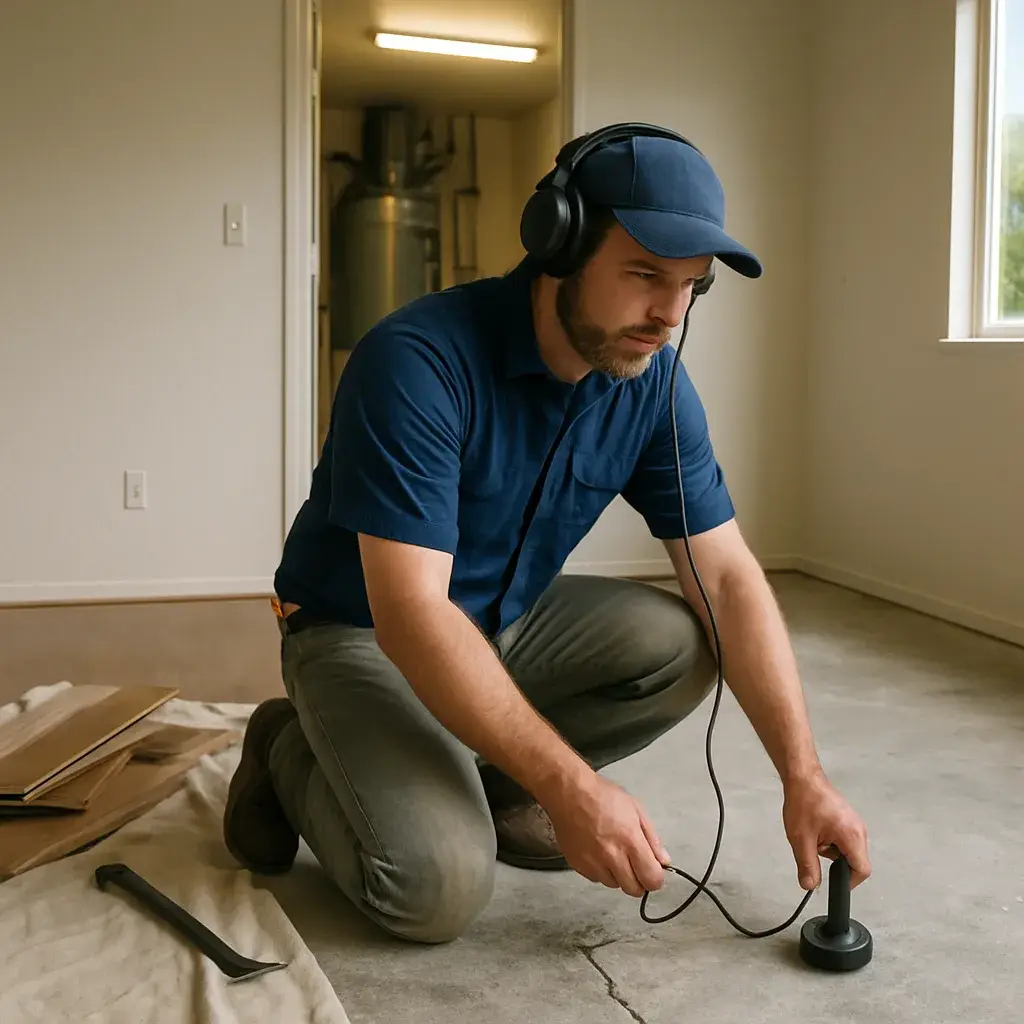
None of these things alone will tell you exactly where the leak is or how bad it is. That’s what slab leak detection is for. We use listening equipment and testing to find the leak’s exact spot. We won’t guess or open up your whole floor. Once we know where it is and how deep, we can talk about whether a spot repair or a reroute makes sense for that line. (You’ll notice we give you options.)
A warm or damp spot doesn’t automatically mean extensive damage. Sometimes it’s just a small pinhole leak that’s been slow for a while. Other times, the water has been moving under the slab longer. It can affect a bigger area. This is something a technician needs to see in person, we wouldn’t guess at it over the phone.
Why Do I Hear Running Water When Everything Is Off?
This is the question we hear most often. You walk past the water heater or a wall and catch a faint hiss or trickle. But every faucet in the house is off. That sound almost always means water is moving somewhere it shouldn’t be. On a slab home (like most in Sunnyvale), that usually points to a supply line running under the concrete.
We’ve noticed this happens in our area more than most. Many homes across Sunnyvale, Mesquite, and the DFW Metroplex sit on slab-on-grade foundations. These were built between the 1950s and 1990s. They often have copper or galvanized supply lines poured right into or under the concrete.
North Texas clay soil expands and contracts hard with our wet-dry swings. That movement puts stress on pipe joints and fittings that weren’t meant to flex. Over years, a joint can wear through. Or a line can rub against rebar or gravel until it opens a small leak. Water finds the path of least resistance, often up through the slab or along a plumbing wall. That’s the sound you’re picking up.
Before we assume it’s a slab leak, we check a few things. Running water sounds have more than one cause, after all.
- Water meter test: Shut off every fixture and irrigation zone. Then watch the meter. If it keeps moving, water is flowing somewhere in the system.
- Toilet and valve check: A running toilet flapper or a stuck irrigation valve mimics the same sound. That’s a much simpler fix.
- Warm spots or damp flooring: A warm patch on tile or carpet often means the leak is on the hot side of the line.
- Water heater cycling: A unit that keeps kicking on with no one using hot water can point to a hot-side slab leak.
If those checks point to the slab, the next step is finding the exact spot. We don’t want to tear up your whole floor. We use listening equipment to trace the pipe path and pinpoint the leak. Then we talk through whether a spot repair or a reroute makes more sense for that section of line. You’ll make the final call.
One limitation worth knowing up front: the sound alone doesn’t tell you how bad the leak is or exactly where it sits. That takes the meter test and the listening equipment together. Which is why we don’t quote a fix over the phone based just on a sound description.
Have questions? We’re happy to help.
Call Today, Get Service Today. Xtreme Air Services is ready to help.
Why Is My Water Lower in Part of the House?
Weak water in one bathroom or just one side of your house often means something is blocking or diverting water before it gets there. A slab leak is a common culprit. Water always finds the easiest path out of a pipe. So, when a line under your foundation leaks, some water escapes underground instead of making it to your faucet.
You’ll usually notice it in specific spots first. Maybe a shower that used to run strong now trickles. Or one kitchen faucet is noticeably weaker than the one in the hallway bathroom. We’ve noticed sometimes there’s a warm spot on the floor (especially over a slab foundation), a faint hissing sound near a wall, or a section of carpet that stays damp for no clear reason. You might also see higher-than-normal water bills without a clear explanation.
- Water pressure drops in one room but stays normal elsewhere in the house
- A warm or damp spot on the floor
- A faint hissing sound near a wall or under a slab area
- Higher than normal water bills
A lot of this comes down to what’s under your home. Sunnyvale and the rest of the Dallas-Fort Worth area sit on expansive clay soil. This soil swells and shrinks with rain and drought, and that movement matters. Slab-on-grade homes built from the 1950s through the 1990s have copper or galvanized lines running under the foundation. Decades of soil movement can rub a pipe against the slab or a rock until it wears through. Newer subdivisions aren’t immune either. Even a small settling crack can put stress on a water line.
When you see a pressure drop like this, the fix starts with finding the leak. We don’t guess. We use slab leak detection to pinpoint the exact location and depth before anyone cuts into a floor. From there, the repair involves either a spot repair on the existing line or rerouting the pipe around the affected section. We’ll pick the option that gets your water back to full with the least disruption to your home.
Uneven water pressure doesn’t automatically mean a slab leak, by the way. It can also come from a partially closed valve, a clogged aerator, or a failing regulator. That’s why locating the actual cause matters more than just reacting to the symptom alone.
Why Are There Small Cracks Near a Suspected Leak Area?
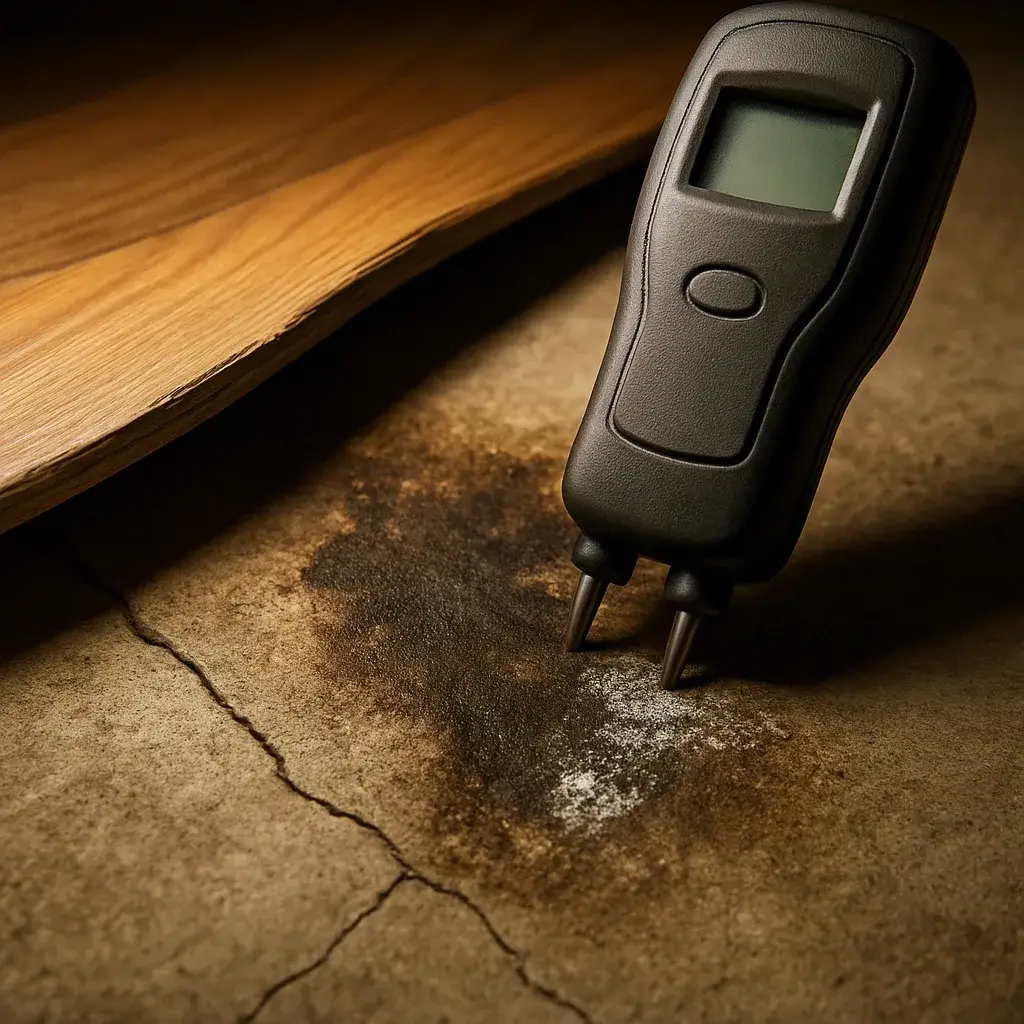
Small cracks near a damp spot usually come from soil movement. It’s not the leak eating through concrete. Water escaping under a slab changes the moisture in the clay soil. North Texas sits on expansive clay. This soil swells when wet and shrinks when dry. That constant push and pull shows up as hairline cracks in your slab, drywall, or tile near where water has been sitting.
We see this pattern a lot. This is especially true on older slab-on-grade homes built from the 1950s through the 1990s across Sunnyvale and nearby towns. A leak feeds moisture into one section of soil. The rest of your yard stays at its normal moisture level. Uneven ground underneath stresses the slab and makes it crack. It’s not a hole getting bigger in the pipe itself.
A crack by itself doesn’t tell us much. What matters more is the pattern. Look for cracks that run near a warm spot on the floor. Maybe it’s near a section of carpet that stays damp, or a wall with a new gap at the baseboard. Those clues help us know where to check first. But they don’t replace actually finding the leak under the slab.
During a diagnostic visit, our technician looks at the cracking. We also check water use, meter movement, and flooring or slab temperature. This helps find the leak itself. Cracks are a symptom of the soil moving. Fixing the leak stops new moisture from being added to that soil. But it doesn’t undo cracking that’s already happened. Repairing drywall, tile, or flooring damaged by a leak is a separate job from the plumbing repair.
If you’re trying to figure out what a repair or reroute involves, we can help. Our slab leak repair page walks through how that part of the job works.
Not every crack near water damage means a slab leak. And not every slab leak produces a visible crack. Some leaks show up first as a higher water bill or a warm patch on tile. There might not be any cracking nearby. That’s why we don’t diagnose based on cracks alone. We confirm the leak location before we talk about repair or reroute options.
Ready to Get Started?
Call 972-288-2263 Today, Get Service Today.