


What Are the Most Common Problems With Tankless Water Heater Installation?
Gas capacity, venting, electrical, and sizing issues that surface before a tankless retrofit – including the cold-water sandwich effect.
What’s Covered on This Page
- Gas Line and Venting Adequacy Are the Most Common Retrofit Issue
- Electrical Work Is Sometimes Needed Even for Gas Units
- Permit Requirements Depend on What the Job Involves
- Correct Sizing Depends on Household Demand, Not Tank-Style Thinking
- The Cold Water Sandwich Effect Is a Known Characteristic, Not a Fault
Gas Line and Venting Adequacy Are the Most Common Retrofit Issue
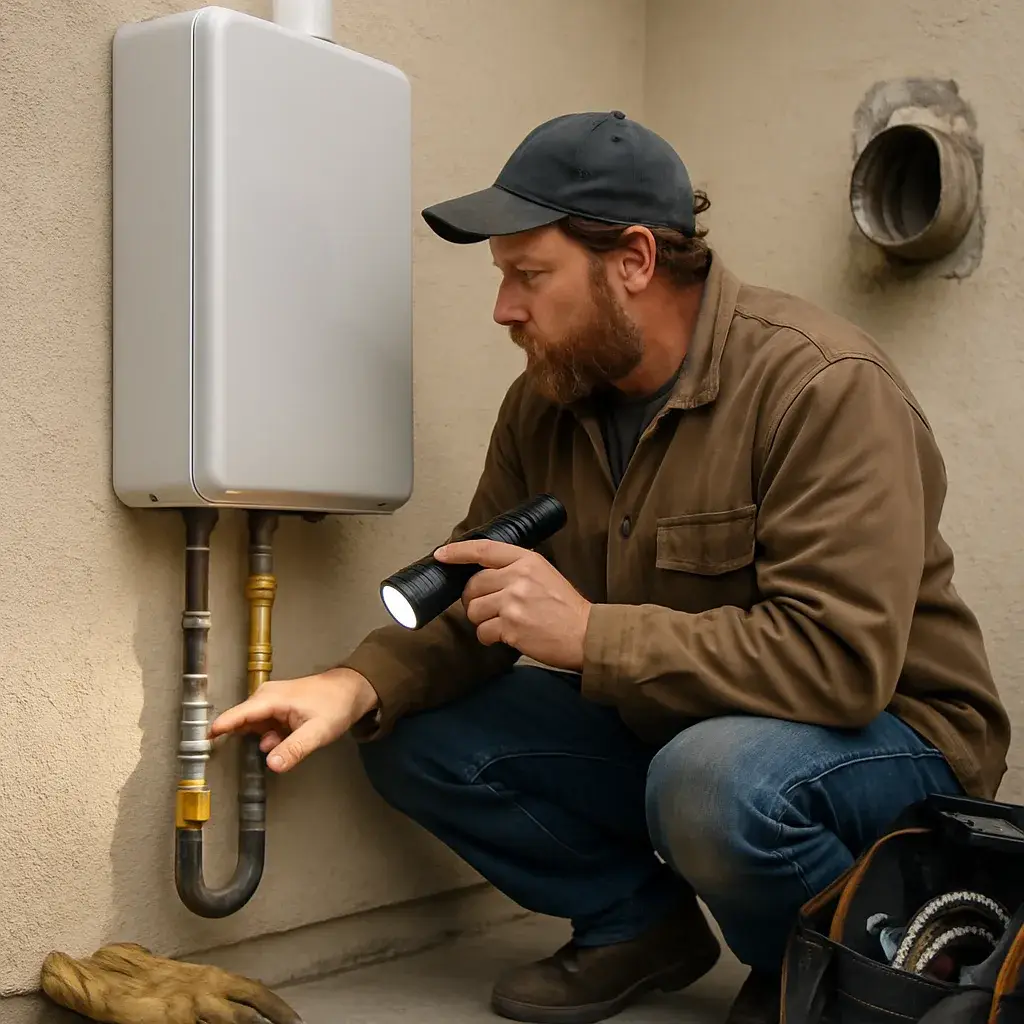
A tankless unit heats water on demand instead of storing it. It burns gas at a much higher rate than a standard tank heater. Homeowners usually notice this the first time we walk through the gas piping in their attic or utility closet. A line that fed a 40,000 BTU tank heater for years often can’t supply a tankless unit rated at 150,000 to 199,000 BTU without an upgrade.
This comes up more in homes built before the 1990s. The gas line was sized for appliances of that era. A half-inch line worked fine for a furnace and a tank heater, but it can fall short once you add a tankless unit’s demand. The fix is usually a larger diameter line from the meter or a dedicated branch, sized to the unit’s actual BTU rating. (It’s a common issue we see in older DFW homes.)
Venting is the second piece. Tank heaters typically vent through a simple flue into a chimney or straight up through the roof. Tankless units, especially high-efficiency condensing models, need dedicated venting. This is rated for the exhaust temperature and condensate they produce. It often means PVC or stainless steel run a specific way. You can’t just tie a tankless unit into an old flue built for a tank heater.
We check both of these during the same-day diagnostic visit. This happens before any quote goes out. If the existing line or vent won’t support the new unit, that gets called out in writing as part of your flat-rate quote. You’ll have the full picture, not a mid-install surprise. Every gas line and venting change is done to code, with permits and inspections pulled when the work requires them.
This is also where a straight swap isn’t always the right call. If a home’s gas service is already near capacity for other appliances, upsizing the line for a tankless unit can mean touching more of the system. More than you expected. We’ll say so plainly rather than quote around it.
Electrical Work Is Sometimes Needed Even for Gas Units
A gas tankless water heater still needs power. The unit fires up using electronic ignition instead of a standing pilot light. That ignition system, the control board, and the exhaust fan all run on electricity. If your home doesn’t already have a dedicated outlet or circuit near the water heater, we have to add one.
This catches people off guard. Especially in older Sunnyvale and DFW homes. The water heater often sits in a garage or closet never wired for anything beyond a light fixture. We’ve walked into installs where the nearest outlet was two rooms away. Or where the existing wiring wasn’t grounded to current code. In those cases, the gas line and venting are only half the job.
- Dedicated circuit installation for the unit’s control board and ignition system.
- GFCI outlet installation where code requires shock protection near water lines.
- Outlet and switch installation or relocation if the current setup is too far from the unit.
- Electrical panel repair or panel replacement and upgrade if the panel can’t handle an added circuit.
Whether you need any of this depends on your home’s age, your panel’s capacity, and the water heater’s location. A house built in the 1970s on a slab foundation is a different animal than a newer subdivision build. We check this during the same visit where we look at your gas line and venting. You won’t get a second surprise after the first one.
We’re licensed for HVAC, plumbing, and electrical work. All under one roof. The electrical piece doesn’t mean bringing in a separate contractor or scheduling a second appointment. You can read more about what the full installation covers on our main service page. It walks through the gas, venting, and electrical pieces together.
Permit Requirements Depend on What the Job Involves
Whether a permit gets pulled comes down to what the job touches. Not just the fact that a water heater is going in. A straight swap of one gas tankless unit for a similar model, using the same gas line, venting path, and water connections, is a smaller scope. A switch from tank to tankless usually means new venting, a resized gas line, or both.
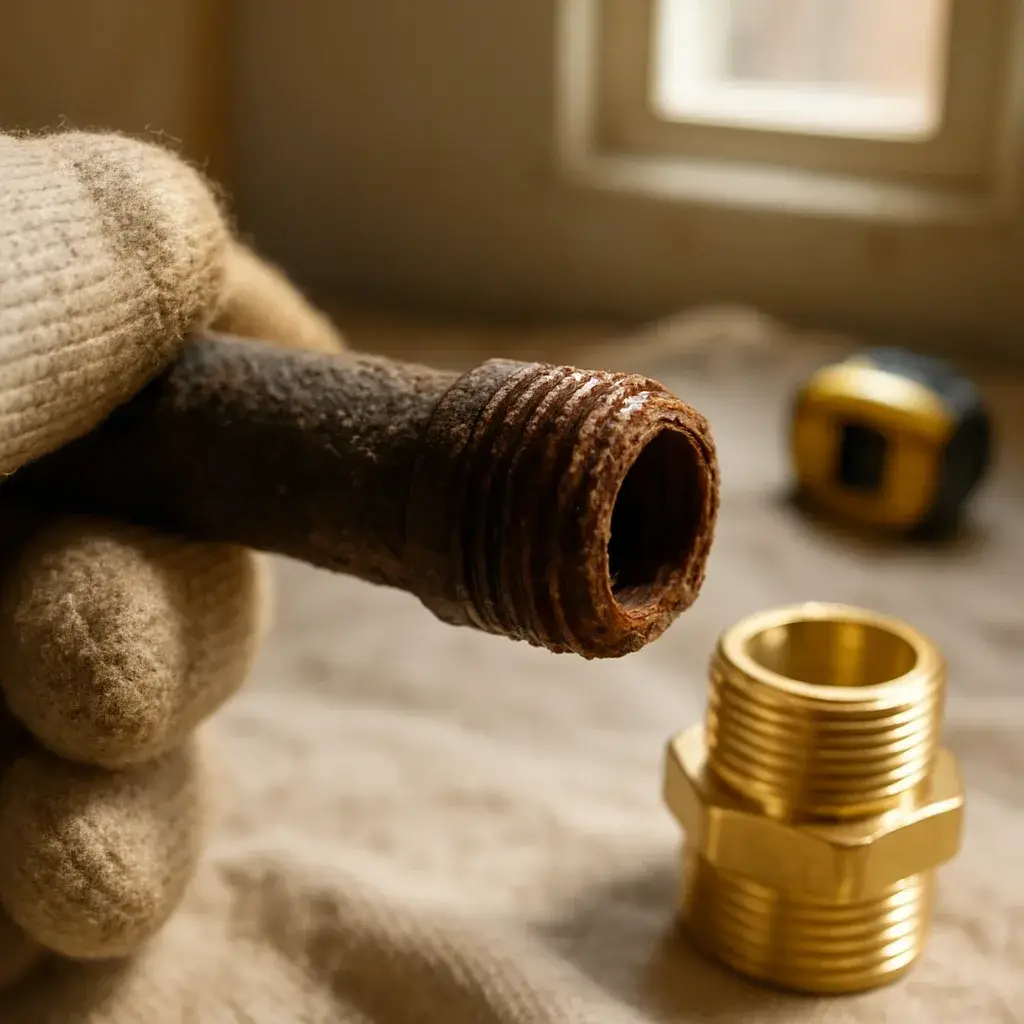
Gas tankless units vent differently than tank-style heaters. Most need a dedicated vent run, often through a sidewall or roof. It’s sized and sealed to the manufacturer’s specs. That venting work, along with any gas line resizing, triggers a permit and a follow-up inspection. This is under Texas plumbing and building code.
Electric tankless units bring their own scope questions. Larger models draw enough power that they need a dedicated circuit. Sometimes a panel upgrade is needed if it can’t support the load. Any of that electrical work carries its own permit path, separate from the plumbing side.
- New or resized gas line to feed the unit.
- New venting route through a wall, attic, or roof.
- Dedicated electrical circuit or panel work for an electric unit.
- Relocating the water heater to a new spot in the home.
- Any change to existing water supply lines beyond a direct swap.
Sunnyvale sits across the Dallas County and Kaufman County line. Which office handles your permit depends on which side of that line the property falls on. That’s a detail worth confirming before work starts. It affects who signs off on the inspection, not just how long it takes.
We pull permits and schedule inspections on jobs that call for them. We use licensed technicians on every install. We get asked now and then about skipping that step to save a little time. Usually on a straightforward swap. We don’t do that. Code exists for a reason on gas and venting work specifically. A job done without the required inspection isn’t one we’ll put our name on.
None of this needs to slow down a decision. A technician can look at your current setup. They tell you what the new install requires. And they let you know upfront whether permitting adds time to the schedule.
Ready when you are – get in touch today.
Call Today, Get Service Today. Xtreme Air Services is ready to help.
Correct Sizing Depends on Household Demand, Not Tank-Style Thinking
The most common question we get about tankless water heater installation isn’t about the unit itself. It’s whether it will keep up with a real household. A tank water heater stores 40 or 50 gallons and you draw it down. A tankless unit doesn’t store anything. It heats water on demand. So its size isn’t measured in gallons at all. It’s measured in gallons per minute it can heat at a given temperature rise.
That’s why sizing a tankless unit off the old tank’s capacity almost always backfires. A home running two showers and a washing machine at the same time on a cold February morning needs a unit rated to handle that combined flow. And it needs to do it at whatever temperature rise North Texas groundwater requires that season. Groundwater temps swing here. A unit that felt fine in July can feel weak during a hard winter freeze if it was sized too close to the edge.
During a consultation, we look at a few real numbers instead of guessing. How many bathrooms and fixtures might run water at once. Whether the home uses a lot of simultaneous hot water (a house full of teenagers showering back to back is different than a couple living alone). We also account for incoming water temperature. Heating winter groundwater to a comfortable shower temp takes more capacity than heating summer groundwater.
- Peak simultaneous fixtures: showers, dishwasher, washing machine running at once.
- Household size and typical hot water habits (back-to-back showers versus staggered use).
- Incoming groundwater temperature, which shifts with North Texas seasons.
- Gas line and venting capacity for gas tankless units (venting affects what size unit a home can support).
This is where we’d tell a homeowner not to buy the biggest unit available just to be safe. Oversizing costs more upfront. It doesn’t fix a home’s actual bottleneck if the real issue is pipe layout or gas supply. Undersizing is the more common complaint people research before buying. It usually traces back to someone sizing off the old tank instead of actual peak demand.
Gas tankless installations also bring venting into the sizing conversation. Venting requirements change with unit output. That’s one reason a phone estimate off square footage alone isn’t reliable. It’s why we walk the actual fixtures and gas line before quoting.
The Cold Water Sandwich Effect Is a Known Characteristic, Not a Fault
If you turn the shower off and back on within a few seconds, you can get a short burst of cold water. Plumbers call this the cold water sandwich. It happens because a tankless unit only fires up its burner when it senses water flow. There’s a brief lag between that flow starting again and the burner catching up. It’s built into how every tankless water heater works. Not a sign that something got installed wrong.
You’ll notice it most in a house where someone pauses the shower to shampoo. Or where two fixtures get used close together, like a shower shutting off right as a dishwasher cycle starts pulling hot water. The leftover warm water sitting in the pipe runs out first. Then a slug of water that never made it to the burner comes through cold. Then the unit catches up and hot water returns. In a slab-on-grade home common across Sunnyvale, Mesquite, and the rest of the DFW area, the length of pipe affects how noticeable this is. A tankless unit mounted close to the point of use usually means a shorter, less noticeable cold spell.
Unit sizing and installation location both play into how often this shows up day to day. We size the system to the home’s fixture count and hot water demand. Where it makes sense, install location gets weighed against run length to the farthest bathroom. None of that erases the cold water sandwich outright, since it’s tied to how tankless technology detects flow. But it does affect how mild or noticeable it is in a given house.
This is one of the real differences between a tank system and a tankless system. It’s worth knowing before you decide which way to go. And it’s something we walk through plainly if you’re comparing the two for your home.
We don’t tell people this doesn’t happen with a tankless system, because it does. What we can tell you is how a given install affects how often you’d notice it. That’s a conversation worth having before the unit goes in, not after.
Ready to Get Started?
Call 972-288-2263 Today, Get Service Today.