


Tankless Water Heater Installation in Sunnyvale: Endless Hot Water, Installed Right
Endless hot water without the tank, with venting and gas capacity checked first so the unit you buy is the unit your home can actually run.
What’s Covered on This Page
- Signs Your Home Is Ready for a Tankless Upgrade
- Gas Tankless vs. Electric: Matching the System to Household Demand
- When a Traditional Tank Still Makes More Sense
- What Happens During Tankless Installation Day in Sunnyvale
- How Tankless Installation Pricing Works
- How long does tankless water heater installation take?
- What should I expect when the technician arrives?
- Can a tankless unit fit in my small water heater closet?
- Do I need to upgrade my electrical panel or gas line for a tankless unit?
- Is tankless water heater installation worth it for a small household?
- Should I choose a gas or electric tankless water heater?
Signs Your Home Is Ready for a Tankless Upgrade
You don’t wake up thinking about your water heater. Then one morning, the shower runs lukewarm halfway through. Or the tank starts ticking and rumbling like there’s gravel inside it. That’s usually when people start searching for tankless water heater installation.
- Your tank is past the 10- to 12-year mark. You’re also seeing rust at the base or a slow drip near the fittings.
- Two showers back to back drain it dry. Running the laundry and dishwasher together may also leave someone with cold water.
- You’re trying to free up space in a tight utility closet or garage corner.
- Your gas or electric bill keeps creeping up every winter with no clear reason.
- Your home was built before the 2000s, and its water heater sits in a small closet that can’t fit a bigger tank.
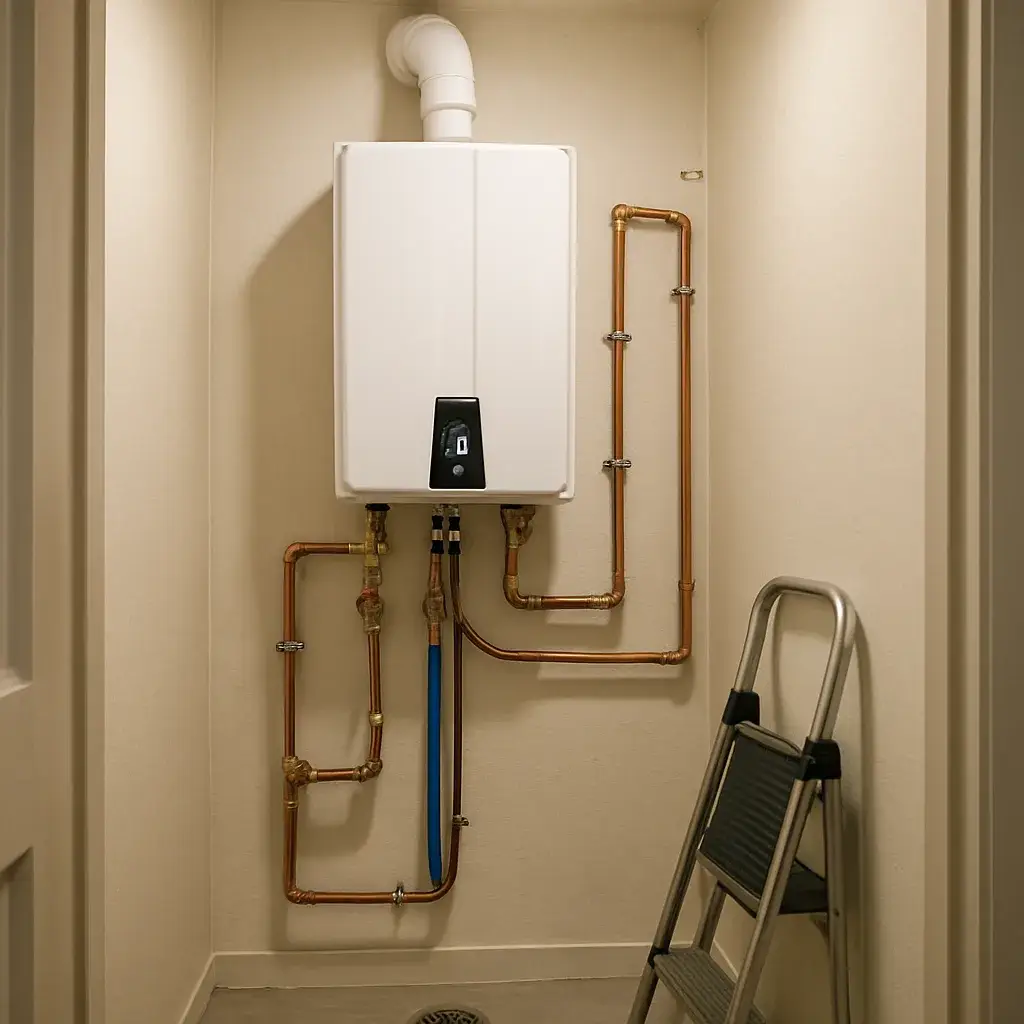
That last problem shows up often in older Sunnyvale homes. Builders squeezed a 40-gallon tank into a closet barely bigger than the unit itself. There’s no room to size up without opening the wall. A tankless unit solves that problem because it’s small and mounts flat against the wall.
If your tank is under ten years old and keeping up, don’t fix what isn’t broken. Wait it out. If two or more of those signs sound familiar, it’s worth talking through your options.
Gas Tankless vs. Electric: Matching the System to Household Demand
Gas or electric? That’s the choice once you’ve decided to go tankless. Gas units heat faster and handle larger households, but they need proper venting to the outside. That venting is part of the job, not an add-on. Electric units don’t need a gas line or venting. They pull power straight from your panel instead.
Which one fits your house? It usually comes down to how much hot water you use at once. Your home’s existing gas and electrical setup also matters.
- A family using two showers and a dishwasher at once needs more flow than a couple living alone.
- Gas tankless units generally deliver higher flow rates for larger households.
- Electric units cost less to install when there’s no gas line to tap into.
- Older homes may need a panel upgrade before an electric tankless unit can be added safely.
- Newer subdivisions around Sunnyvale often have 200-amp panels. Those panels usually have room for an electric unit.
We ask about your daily routine before we talk about equipment. How many bathrooms run at once? When do you use the dishwasher and washing machine? Do you have a tub that takes a long time to fill? Those details help us size your unit better than a brochure spec sheet.
Bigger isn’t automatically better. An oversized gas unit with venting through a tight attic run can cost more to install. A smaller model may handle your home’s needs just fine.
When a Traditional Tank Still Makes More Sense
Tankless isn’t the right call for every home. We’ll tell you that straight, even though we install these units every day.
A traditional tank can work well in a smaller home with one bathroom and low water use. The larger upfront cost of going tankless may not pay off quickly. That’s often true when only one or two people are showering and running the dishwasher. The same applies if you’re renting out a property and plan to sell in a few years. A tank heater costs less to replace and may be more familiar to the next owner.
Electrical capacity matters too. Electric tankless units pull a lot of power. Some older homes with smaller panels can’t support one without an upgrade first. You need to factor that cost in before you commit.
Gas tankless has its own catch. It needs specific venting. If your current setup doesn’t support it, rerouting the vent adds more work to the job.
Not sure which option fits? That’s a fair question. It’s usually quick to answer once we see your setup.
If your water heater works well and your usage is light, there’s no rush to switch. Save the upgrade for when the old tank needs replacing.
Ready when you are – get in touch today.
Call Today, Get Service Today. Xtreme Air Services is ready to help.
What Happens During Tankless Installation Day in Sunnyvale
You’ve booked the job. What happens on installation day? It usually goes more smoothly than people expect, especially after the old tank is out of the way. Here’s the general order our technicians follow.
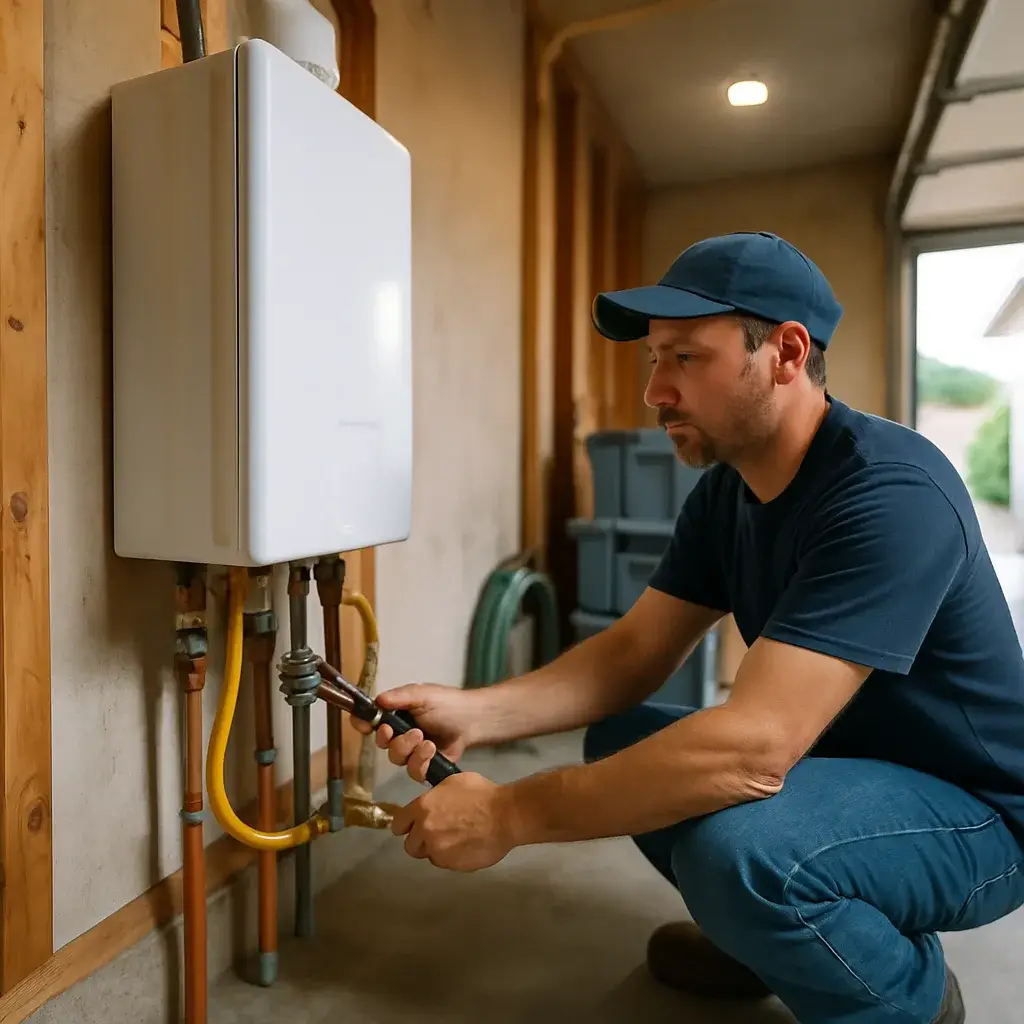
- We shut off the water, gas, and power to the old unit. Then we drain and disconnect it.
- We haul out the old tank. In many Sunnyvale homes, it’s in a garage corner or tight closet, so removal takes care.
- We check the gas line size. Tankless units draw more gas than tank models. Some older Sunnyvale properties need a larger line to keep up.
- We run venting for the new unit. Gas tankless models need specific venting, and that’s part of the installation.
- We mount the new unit on the wall and connect the water, gas, and power. Then we start it up.
- We test hot water at several fixtures and check for leaks. We also confirm that the flow rate matches your home’s needs.
A straightforward swap using your existing connections usually wraps up in one visit. That’s the case when no major changes are needed. Homes that need a gas line upgrade or new venting path take longer. We’ll explain that work before we start, not after.
Xtreme Air Services is licensed and insured, and every technician entering your house is background-checked. That matters when someone is working near your gas and water lines.
How Tankless Installation Pricing Works
Cost is usually the next question. Tankless water heater installation pricing isn’t a random number. It comes down to a handful of real factors. Once you know them, the quote makes sense.
- Equipment size and capacity, since a larger household needs a larger unit
- The brand and model you choose
- How easy or difficult it is to reach your existing connections
- The condition of your current plumbing, gas line, or electrical setup
- Whether your home needs a code upgrade before installation
- Proper venting for gas tankless units, which is part of the job
For most homes in Sunnyvale, the typical price range is $3,000 to $6,500. Our most common job is a straightforward, like-for-like swap that uses your existing connections. No major rework is needed. That job usually costs between $3,700 and $5,100. The price covers the unit, materials, professional installation, startup, testing, and removal of your old tank.
What’s not included? Duct, electrical, or plumbing changes, code corrections, and permits aren’t included unless we list them ahead of time. You won’t see surprise line items afterward – that’s the point of upfront flat-rate pricing.
If you’re starting with a diagnosis, our service-call fee runs $26 to $99. We credit that fee toward the job if you move forward with us. If the total still feels high, we offer financing on qualifying installations. You don’t have to pay the full amount at once.
Frequently Asked Questions
Common questions about Tankless water heater installation
How long does tankless water heater installation take?
A straightforward swap using your existing gas line, venting, and electrical setup usually takes one visit. If your home needs a larger gas line or a new venting path, plan for extra time. We check your setup first and tell you which situation applies before we start any work, so there are no surprises mid-job.
What should I expect when the technician arrives?
Your technician starts by shutting off the water, gas, and power to your old tank, then drains and removes it. From there, they check your gas line size, run any needed venting, and mount the new unit on the wall. Every Xtreme Air Services technician is background-checked and licensed, which matters since they’re working near your gas and water lines the whole visit.
Can a tankless unit fit in my small water heater closet?
Yes, this is one of the most common reasons Sunnyvale homeowners switch. Many older homes here have a 40-gallon tank squeezed into a closet with no room to size up. A tankless unit mounts flat against the wall and takes up far less space, so it solves that tight-closet problem without opening up a wall.
Do I need to upgrade my electrical panel or gas line for a tankless unit?
Sometimes, depending on your home’s age and current setup. Electric tankless units draw a lot of power, and some older Sunnyvale panels need an upgrade to handle one safely. Gas tankless units draw more gas than tank models, so some properties need a larger gas line. We check both before we quote the job, so you know what’s involved upfront.
Is tankless water heater installation worth it for a small household?
Not always, and we’ll tell you that directly. If you’re in a smaller home with one bathroom and light water use, a traditional tank may serve you just as well. Tankless makes the most sense when you’re often running out of hot water, dealing with an aging tank, or trying to reclaim closet space. We look at your actual usage before recommending either option.
Should I choose a gas or electric tankless water heater?
It depends on your household’s hot water demand and your home’s existing setup. Gas units heat faster and handle larger households better, but they need proper venting. Electric units skip the gas line and venting but pull more power from your panel. We ask about your daily routine, like how many showers run at once, to help match the right type to your home.
Ready to Get Started?
Call 972-288-2263 Today, Get Service Today.