


Ventilated Ceiling Repairs in Sunnyvale: Get Airflow Back Fast
Ventilated ceiling repairs for Sunnyvale homes, restoring airflow when rooms turn stuffy and stale.
What’s Covered on This Page
- Warning Signs Your Ceiling Vent Needs Repair
- When You Might Not Need a Full Repair
- Why Sunnyvale Heat Speeds Up Ceiling Vent Wear
- What Happens During a Ceiling Vent Repair Visit
- What Affects Ceiling Vent Repair Costs
- How fast can you get someone out to fix a rattling ceiling vent in Sunnyvale?
- What happens when your technician shows up for a ceiling vent repair?
- Why do ceiling vents fail so often in Sunnyvale homes?
- How do you figure out why one vent has weak airflow while the others are fine?
- Will I need to replace my whole duct system to fix one noisy vent?
Warning Signs Your Ceiling Vent Needs Repair
So how do you know it’s time to call instead of just wiping down the vent cover? Most of the time it’s not subtle. A vent that rattles or hums every time the AC kicks on is one of the first things you’ll notice. So is a room that stays warm even though the vent looks like it’s blowing.
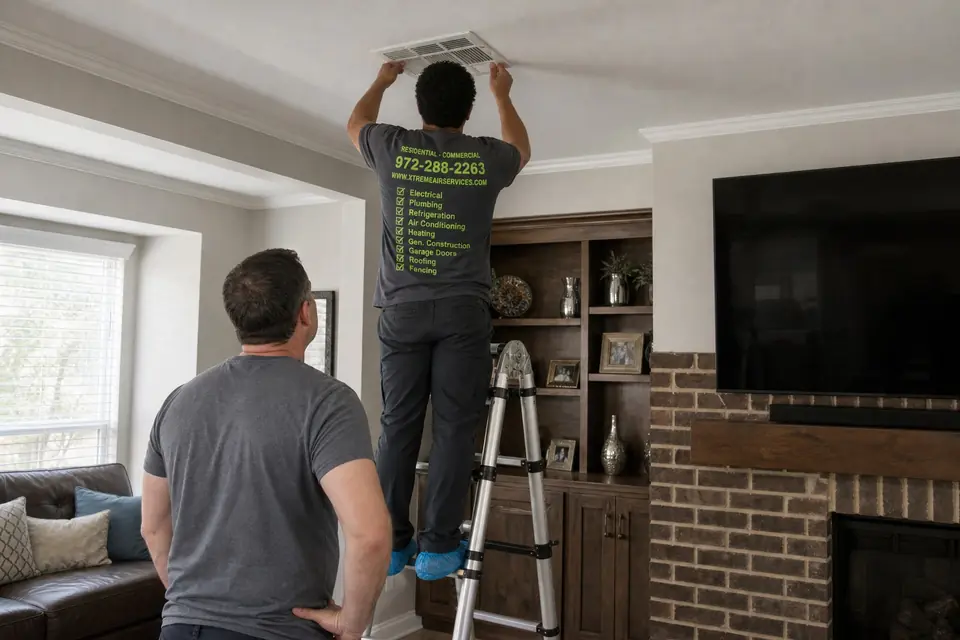
We hear the same handful of complaints every week.
- Rattling, ticking, or whistling coming from the vent when the system runs
- Weak or no airflow from one ceiling vent while others work fine
- A brownish ring or water stain spreading around the vent cover
- The vent damper won’t open or close, so air dumps into one spot
- A musty smell right under the vent, even when the filter’s clean
Here’s the part a lot of homeowners miss. In Sunnyvale, most ceiling vents tie back to ductwork running through the attic, and attic temps swing hard between a summer afternoon and a cool morning. That constant expansion and contraction loosens seals and boot connections over time. That’s why a vent that was fine last spring can suddenly rattle or leak once the heat sets in. It’s one worn part at the connection point, not a duct-wide failure.
When You Might Not Need a Full Repair
Not every noisy vent or musty smell means your ventilated ceiling system is failing. Sometimes it’s just dust, a loose cover, or normal attic behavior during a Texas summer. We’d rather tell you that straight than send someone out for nothing.
A rattling vent cover is usually just a loose screw, not a broken fan motor. Grab a screwdriver, tighten it, see if the noise stops. That’s a five-minute fix, not a service call.
- The vent cover or grille looks dusty but the airflow still feels strong when you hold your hand under it
- A ceiling fan tied into the system just needs cleaning, not replacing
- The sound only happens on very windy days and stops on its own
- You smell something musty after a heavy rain but there’s no visible moisture or staining
- A breaker tripped once during a storm and reset fine on its own
Here’s the thing though. If the airflow feels weak, if the noise is constant, or if you see moisture staining around the vent, that’s different. That’s not a five-minute fix, that’s a system telling you a part failed.
When someone calls us confused about whether it’s serious, the fact that they’re asking already tells us something’s off. Trust that instinct. But if it’s just dust or a loose cover, save your money and handle it yourself first.
Why Sunnyvale Heat Speeds Up Ceiling Vent Wear
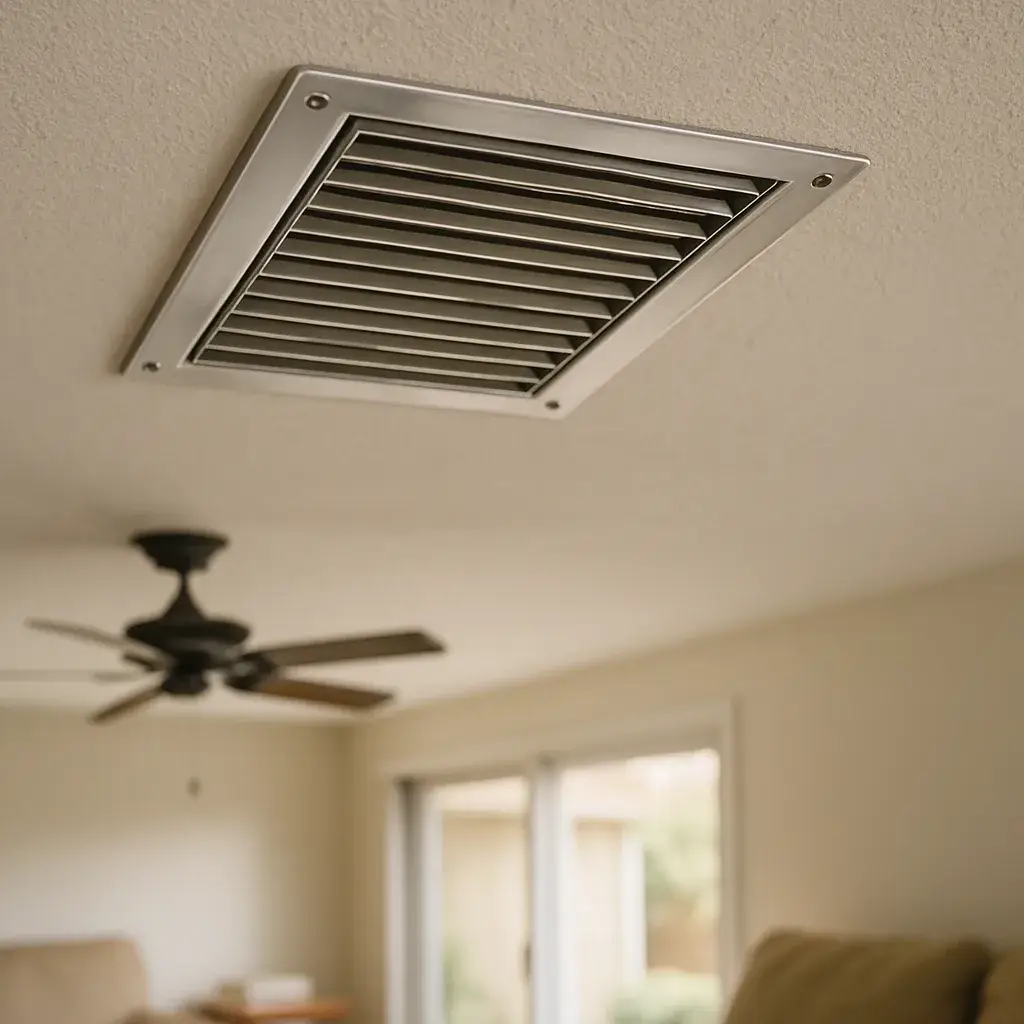
Sunnyvale attics don’t cool down much in the summer, even after the sun goes low. Most ventilated ceiling systems run their motor, wiring, and housing right up in that space, and heat is hard on all three. Plastic housings get brittle. Wiring insulation dries out and cracks. Motor bearings that would last years in a mild climate wear down faster when they’re baking for months straight.
We see it every July.
Homes across Sunnyvale built in the 80s and 90s often have the original duct booster or ventilation fan still tucked up there, never swapped, just running through one hot season after another. Newer subdivisions aren’t immune either. The equipment’s newer but the attic still hits the same brutal temps every summer. So the part that finally gives out isn’t usually random, it’s the part that took the most heat for the longest stretch.
That’s exactly why most of the calls we run out here end the same way, we find the one component that finally quit, swap it, and get airflow moving again. The system around it is usually fine. That’s the pattern that matters most when you’re trying to figure out what you’re dealing with.
Have questions? We’re happy to help.
Call Today, Get Service Today. Xtreme Air Services is ready to help.
What Happens During a Ceiling Vent Repair Visit
You call, we show up, and here’s what happens next. A technician starts at the vent itself, then follows the duct run back to find where airflow drops off. Most ceiling vent problems come down to one failed part, not a whole system falling apart. Usually it’s the same handful of culprits, a stuck damper, a worn motor, or a cracked boot where the duct meets the ceiling.
- Inspect the vent, the ceiling opening, and the duct connection above it
- Check airflow at the register and test any motor or electrical parts tied to it
- Pinpoint the failed part causing the noise, leak, or weak airflow
- Walk you through what’s wrong and confirm the flat-rate price before any work starts
- Repair or replace the failed part and reseal the ceiling connection
- Run the system again to confirm even airflow through the vent
- Clean up any dust or debris before heading out
That last step matters more than people think. Ceiling work always kicks up drywall dust, and we don’t leave a mess behind.
Most of these visits wrap up in one trip. Our technicians are licensed and insured, and pricing is flat-rate and explained before we touch anything, so you know the number going in and won’t get surprised on the way out.
What Affects Ceiling Vent Repair Costs
So what makes one ceiling vent repair cheap and another one climb? A lot of it comes down to what’s broken. A stuck damper or a cracked vent boot is usually a quick fix. A motor that’s seized up, or a run of ductwork that’s crushed behind drywall, takes more time and more parts.
- How far the failure has spread, one bad part versus several
- Whether the exact part is on the truck or has to be ordered
- The age and brand of your system, older units sometimes need harder-to-find parts
- Whether more than one component failed at the same time
- The time of day, though nights and weekends never cost extra with us
Most homes we see in Sunnyvale run their ceiling vent ductwork through the attic, and Texas summer heat up there is brutal on plastic housings and motor bearings. That’s usually why a vent that worked fine in spring suddenly quits in July.
On the pricing side, jobs in this category typically run $200 to $1,000. Most calls, though, are a single common failure fixed on the first visit, and those land between $200 and $550. We charge a $26 to $99 service call fee to come look at it, but that gets credited toward the repair if you move forward with us. What’s included is the diagnosis, labor, and the standard part, plus testing and cleanup. If something extra turns up, like a second failed part or a code upgrade, we’ll quote that separately before we touch it.
Financing isn’t usually part of a repair this size, but it’s there if a bigger fix or replacement ends up being the better call.
Frequently Asked Questions
Common questions about Ventilated ceiling repairs
How fast can you get someone out to fix a rattling ceiling vent in Sunnyvale?
Most ceiling vent repairs get scheduled within a day or two of your call. We know a rattling vent or weak airflow gets more annoying the longer it sits, especially once summer heat pushes your AC to run longer each day. When you call, we’ll ask what you’re hearing or feeling at the vent so we can bring the right parts on the first trip. That usually means one visit fixes the problem instead of two.
What happens when your technician shows up for a ceiling vent repair?
Your technician starts at the vent itself, then traces the duct run back to find where airflow drops off. They’ll check the damper, test any motor or wiring involved, and pinpoint the exact part causing the noise or leak. Before any work starts, you’ll get a flat-rate price and a plain explanation of what’s wrong. Most jobs wrap up in one trip, and cleanup is part of the visit, so you’re not left with drywall dust.
Why do ceiling vents fail so often in Sunnyvale homes?
Attic heat is the main culprit. Sunnyvale attics stay hot well into the evening, and that constant swing between a scorching afternoon and a cooler night puts stress on duct seals and boot connections. Plastic housings get brittle, wiring insulation cracks, and motor bearings wear down faster than they would in a milder climate. Homes built in the 80s and 90s often still have their original vent fan running through decades of hot summers, which is usually the part that finally gives out.
How do you figure out why one vent has weak airflow while the others are fine?
We follow the duct run from the vent back through the attic to find exactly where airflow drops. Weak airflow from a single vent almost always points to one failed part, like a stuck damper or a cracked boot where the duct meets the ceiling, not a system-wide problem. Your technician checks the register, tests any electrical components tied to that vent, and confirms the fix by running the system again before calling it done.
Will I need to replace my whole duct system to fix one noisy vent?
Almost never. Most ceiling vent problems come down to a single worn part, like a loose damper, a seized motor, or a cracked connection, not the entire ductwork system failing. Even in older Sunnyvale homes where the original ventilation fan has run for decades, we usually find and swap the one component that took the most heat over the years. The rest of the system typically checks out fine once that part is replaced.
Ready to Get Started?
Call 972-288-2263 Today, Get Service Today.