

When Isn’t Whole-Home Standby Generator Installation the Right Call?
An honest look at the homes and situations where a whole-home standby system is not worth the money, and what we would put in its place.
What’s Covered on This Page
- Who We’re Not the Best Fit For
- When a Smaller Backup Solution Might Fit Your Home Better
- What We’d Suggest Instead
- When is whole-home standby generator installation the wrong choice?
- Who shouldn’t hire us for this job?
- What should I do instead, and who should I call?
- Does living outside your service area rule this out completely?
Who We’re Not the Best Fit For
A whole-home standby generator install is not the right fit for every home or every homeowner, and we’d rather say that here than after we’ve quoted your job. If you live outside our 60 mile service radius around Sunnyvale, we’re not the right call. We cover Dallas, Fort Worth, Plano, Frisco, Allen, Irving, Carrollton, and the surrounding communities, but past that line we won’t send a crew out for an install we can’t get back to for startup testing, warranty work, or an annual service call down the road. A generator only pays off if someone can show up when it matters. We tell people straight when that someone isn’t going to be us.
We’re also not the right shop if the plan is to skip permits or inspections to save time. Standby generators tie into your home’s gas line and electrical panel, and most cities in the Metroplex require a permit and an inspection for that kind of work. We pull the permits and schedule the inspections when they’re required, because that’s how the transfer switch and gas hookup get signed off as done to code (and that part matters). If the ask is to install quietly and skip that step, we’ll pass on the job. It’s not a matter of preference. It’s what a licensed electrical and gas contractor is allowed to do.
If you’ve already bought a generator somewhere else and just want us to bolt it in, that’s usually not a fit either. We back our generator installs with a workmanship warranty, and that warranty only makes sense on equipment we sourced, sized, and can verify ourselves. Generator sizing depends on your home’s electrical load, the gas line size and pressure available, and where the unit and transfer switch can sit relative to your panel. When we don’t control the equipment going in, we can’t stand behind the install the same way, so we generally don’t take on labor-only jobs for customer-supplied units.
There’s also a real gap between what a standby generator project involves and a simpler backup power need. If what you want is a portable unit for occasional outages, that’s a different scope, different cost, and a much smaller job than a permanently wired, automatically switching system with a dedicated pad and gas connection. We’d tell you that upfront rather than sell you into a bigger project than you need. A quick backup power assessment usually sorts out which direction fits your home and your budget before either of us spends time on a quote that doesn’t match what you’re after (and nobody needs that extra round). We have that same conversation with Sunnyvale homeowners every month, and it saves everyone a wasted appointment.
None of this is about turning away business for the sake of it. It’s that a generator installed outside code, on equipment we didn’t spec, or too far out for us to service properly, doesn’t do you much good in the moment you need it, which is usually during a storm with the power already out. If your situation matches what’s above, the better move is a licensed generator installation contractor closer to you, or a straightforward conversation with us about backup power assessment and generator sizing before you commit to anything.
Watch Our Video
See How We Handle Whole-Home Standby Generator Installation in Sunnyvale
Xtreme Air Services — Serving Sunnyvale and surrounding areas
When a Smaller Backup Solution Might Fit Your Home Better
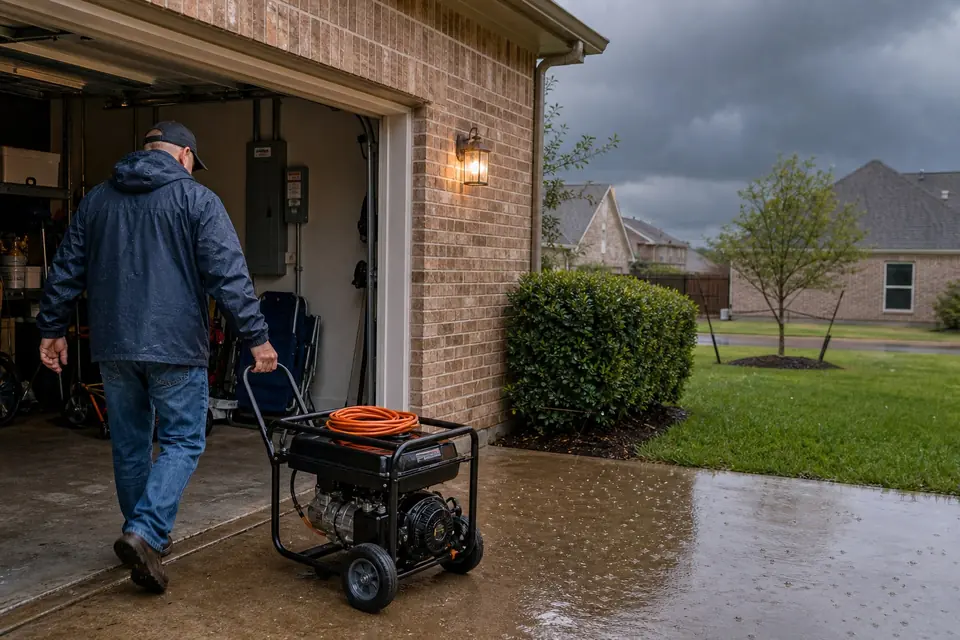
A whole-home standby generator is not the right call for every house, and we’ll say that before you ever get a quote. If you live alone in a smaller home, run window units instead of central air, or only lose power a couple times a year for an hour or two, a portable generator hookup covers your real needs for a fraction of the investment. We install those too, and we’d rather point you there than sell you a $10,000-plus system that sits idle most of the year. A Whole-Home Standby Generator Installation in Sunnyvale earns its cost when outages run long or hit often enough to justify it.
Here’s how we think about it. Whole-home standby generators run $8,000 to $18,000 installed, with a typical turnkey job landing between $10,000 and $14,000 once you factor in the generator size, the gas line run, the transfer switch type, and any pad or site work. That price makes sense for a family that can’t afford to lose the fridge, the well pump, medical equipment, or a home office during a multi-day outage. It does not make as much sense if your outages are rare and short, or if your home’s electrical load is small enough that a portable unit can carry the essentials. Plenty of Sunnyvale homes land in that category, especially the smaller places in the older part of town.
We’ve walked plenty of homeowners through this exact math. Some come in dead set on a standby system because a neighbor has one, and once we run the numbers on their actual usage, a portable generator with the right hookup gets them through a storm without the bigger commitment. Others start out asking about a portable unit and realize, once we talk through gas line capacity and transfer switch options, that their home’s setup points toward a standby system instead. Either direction is fine with us. Our job during a backup power assessment and generator sizing consultation is to match the equipment to your house, not to your neighbor’s house (by the way, that saves a lot of back-and-forth).
Renters and anyone who doesn’t own the property outright are another group where a standby system usually is not practical. A whole-home unit ties into your gas line, your electrical panel, and a permanent pad outside the home. That’s not something we’d recommend installing on a property you don’t plan to stay in long-term. A portable generator hookup gives you real backup power without that kind of permanent investment. That is often the better fit for a Sunnyvale rental, or a property you are not planning to hold long term.
Same goes for homes with limited outdoor space or HOA restrictions on permanent equipment. A standby generator needs clearance from windows and doors, a stable pad, and a location the gas line can reasonably reach. If your lot or your HOA rules don’t allow for that, we’ll tell you up front rather than quote a job we’re not sure will pass inspection. Sunnyvale setback and permitting rules apply to us like anyone else, and we would rather find the problem before the pad is poured.
If you’re still working out which direction fits your situation, our Whole-Home Standby Generator Installation page walks through what’s included in a full standby installation, from the transfer switch to startup and testing. But if a portable generator hookup or a smaller backup plan sounds closer to what you need, give us a call and we’ll talk through it before you spend money on more than you need.
What We’d Suggest Instead
If a whole-home standby generator turns out to not be the right fit for your situation, you still have real options for backup power and peace of mind. We’d rather walk you through those than sell you a system that sits unused or gets returned to the drawing board halfway through a quote.
The first alternative is a portable generator hookup. If your main concern is running a few key circuits during a storm outage, a fridge, some lights, a window unit, a portable generator with a proper hookup can cover that without the gas line work, concrete pad, or transfer switch that a standby system needs. It costs a lot less to get in place and it doesn’t require the same site prep. The tradeoff is you have to be home to set it up and fuel it, and it won’t run your whole HVAC system the way a standby unit will. Through a long Sunnyvale outage in August, that difference is the whole conversation.
If sizing is the sticking point, sometimes what looks like a “no” on a full whole-home unit is really a “not yet” until we run the numbers. We offer generator sizing and consultation, and backup power assessment, as separate steps before any install commitment. If your panel, your gas service, or your home’s layout doesn’t support the generator size you had in mind, we’ll tell you that during the consultation instead of after a deposit. That’s not us being difficult. It’s just what the load calculation shows. We would rather say that in a Sunnyvale driveway than after a deposit clears.
For older homes on tight lots in parts of Dallas, Garland, or Mesquite, we’ve run into cases where there simply isn’t a code-compliant spot for the pad and the required clearances from windows, doors, and property lines. When that happens, we’re not going to force a placement that won’t pass inspection. In those cases, a portable setup or a smaller footprint generator may be the more workable answer, and we’ll say so directly. Older Sunnyvale properties with tight side yards hit this more often than the newer builds.
If your goal is really just keeping the lights and outlets running rather than the whole HVAC system, a transfer switch installation paired with a portable or smaller generator can do that job for less money and less site disruption than a full standby install. We install transfer switches as a standalone service, so this does not have to be an all-or-nothing decision. A fair number of Sunnyvale homeowners start there and add the generator a season or two later.
And if the issue is timing, maybe your gas line needs upgrading first, or you’re mid-remodel, we can talk about generator fuel line connection and gas line work as a separate project now, with the standby unit itself scheduled once the rest of the home is ready. Doing it in that order usually saves you from tearing into finished work twice. On the deeper Sunnyvale lots, where the gas run from the meter can be long, that sequencing matters even more.
None of this is about talking you out of backup power. It’s about matching the setup to your actual home, panel, gas service, and budget instead of assuming the biggest system is always the right one. If you want to see where our generator installation options overlap with what your property can support, that’s exactly what our Generator Installation Service in Sunnyvale page walks through in more detail.
See our full whole-home standby generator installation in Sunnyvale for what the complete job involves.
Frequently Asked Questions
Common questions about Whole-Home Standby Generator Installation in Sunnyvale
When is whole-home standby generator installation the wrong choice?
It’s the wrong choice when your home only loses power for short stretches a few times a year. It’s also not the right call if you rent, live under HOA rules that block permanent equipment, or don’t have room for a pad and gas line. In those cases, a portable generator hookup usually covers what you need.
Who shouldn’t hire us for this job?
We’re not the right fit if you live outside our service area around Sunnyvale, Dallas, Fort Worth, Plano, Frisco, Allen, Irving, and Carrollton. We also won’t take a job if the plan is to skip permits and inspections, or if you want us to install a generator you already bought elsewhere. We back what we install, and that only works when we source and size the equipment ourselves.
What should I do instead, and who should I call?
If your home matches one of the situations above, we’d point you toward a licensed generator installation contractor closer to your location, or a conversation with us about a backup power assessment. That assessment looks at your electrical load, gas line, and outage history to see whether a standby system or a portable hookup fits better. Either answer is fine with us.
Does living outside your service area rule this out completely?
It rules out us specifically, not the idea of a standby generator. We stay within a set distance of Sunnyvale so we can handle startup testing, warranty work, and yearly service calls without a long drive. Past that line, a generator still needs someone who can reach it quickly, which is why we’d send you to a contractor based nearer to your home.
Ready to Get Started?
Call 972-288-2263 Today, Get Service Today.